
Orphic Hymns · Hymn 78
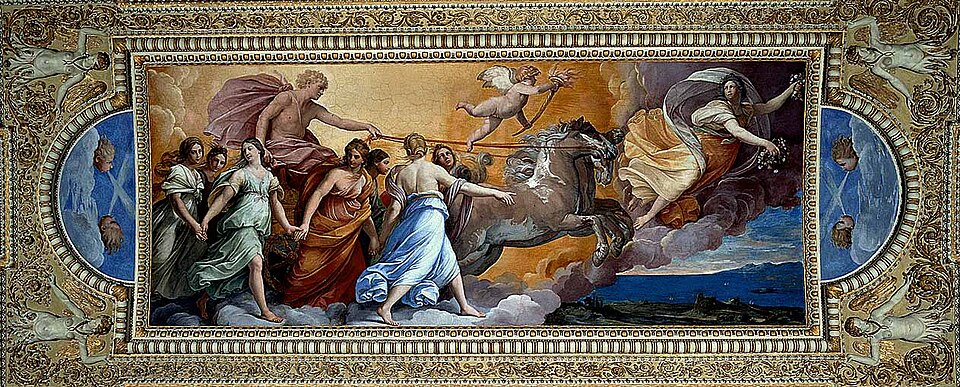
Eos, Dawn
Ἠοῦς
Prayer and ritual
These hymns may be spoken as complete prayers to the Gods. Within the Temple’s practice, a ritual is a direct theurgical act; hymnody gathers the mind and turns it toward the Divine, helping the initiate enter reverent communion with the Gods.
Use a hymn on its own in place of another prayer, or add it to the prayer portion of a suitable ritual. Choose according to the deity addressed and the petition expressed in the hymn. When combining them, preserve the ritual’s prescribed sequence and let the hymn give voice to its purpose.
The petition of this hymn
For the renewal of sacred light and the fruitful beginning of the day’s work.
Use this hymn as a prayer at dawn or at the opening of a day of sacred work. It may supplement a rite of renewal or illumination, with its last verse asking that the initiates receive an increase of holy light.
English hieratic rendering
Hymn 78 · An English rendering aligned with the Greek lines.
- Hear, O Goddess, bringing mortals the day that gives them light,
- bright-shining Eos, reddening throughout the cosmos,
- messenger of the great God, the illustrious Titan,
- you who send the dark and black-hued passage of night,
- through your risings, beneath the lower places of Earth,
- leader of works, attendant of life for mortals.
- In you the race of speaking mortals rejoices, and there is none
- who escapes your presence shining high above,
- when you shake sweet sleep away from the eyelids;
- every mortal rejoices, every creeping creature, and all the other tribes
- of four-footed beasts, winged beings, and the countless dwellers in the sea.
- For you provide a life of labour for all mortals.
- But, blessed and pure one, increase the sacred light for the initiates.
Ancient Greek & pronunciation
Read the English pronunciation spelling directly below each Greek line.
- Κλῦθι, θεά, θνητοῖς φαεσίμβροτον ἦμαρ ἄγουσα,KLEE-thee, theh-AH, thnee-TEES fah-eh-SEEM-vroh-tohn EE-mahr AH-ghoo-sah,
- Ἠοῖ λαμπροφαής, ἐρυθαινομένη κατὰ κόσμον,ee-EE lahm-broh-fah-EES, eh-ree-theh-noh-MEH-nee kah-TAH KOH-zmohn,
- ἀγγελίεια θεοῦ μεγάλου Τιτῆνος ἀγαυοῦ,ahn-geh-LEE-ee-ah theh-OO meh-GHAH-loo tee-TEE-nohs ah-ghah-VOO,
- ἣ νυκτὸς ζοφόεντα κελαινόχρωτα πορείηνEE neek-TOHS zoh-FOH-ehn-dah keh-leh-NOH-khroh-tah poh-REE-een
- ἀντολίαις ταῖς σαῖς πέμπεις ὑπὸ νέρτερα γαίης·ahn-doh-LEE-ehs TEHS SEHS PEHM-bees ee-POH NEHR-teh-rah YEH-ees·
- ἔργων ἡγήτειρα, βίου πρόπολε θνητοῖσιν·EHR-ghohn ee-YEE-tee-rah, VEE-oo PROH-poh-leh thnee-TEE-seen·
- ᾗ χαίρει θνητῶν μερόπων γένος· οὐδέ τίς ἐστιν,EE HYEH-ree thnee-TOHN meh-ROH-pohn YEH-nohs· oo-DHEH TEES eh-steen,
- ὃς φεύγει τὴν σὴν ὄψιν καθυπέρτερον οὖσαν,OHS FEHV-yee TEEN SEEN OHP-seen kah-thee-PEHR-teh-rohn OO-sahn,
- ἡνίκα τὸν γλυκὺν ὕπνον ἀπὸ βλεφάρων ἀποσείσῃς,ee-NEE-kah TOHN ghlee-KEEN EEP-nohn ah-POH vleh-FAH-rohn ah-poh-SEE-sees,
- πᾶς δὲ βροτὸς γήθει, πᾶν ἑρπετὸν ἄλλα τε φῦλαPAHS DHEH vroh-TOHS YEE-thee, PAHN ehr-peh-TOHN AH-lah teh FEE-lah
- τετραπόδων πτηνῶν τε καὶ εἰναλίων πολυεθνῶν·teh-trah-POH-dhohn ptee-NOHN teh KEH ee-nah-LEE-ohn poh-lee-ehth-NOHN·
- πᾶσι γὰρ ἐργάσιμον βίοτον θνητοῖσι πορίζεις.PAH-see GHAHR ehr-GHAH-see-mohn VEE-oh-tohn thnee-TEE-see poh-REE-zees.
- ἀλλά, μάκαιρ’, ἁγνή, μύσταις ἱερὸν φάος αὔξοις.ah-LAH, MAH-kehr’, ahgh-NEE, MEE-stehs ee-eh-ROHN FAH-ohs AHFK-sees.
Short sound guide for English speakers
Every line beneath the Greek uses English pronunciation spellings. Say each hyphenated syllable in sequence and emphasize the syllable in CAPITALS. For example, οὐρανόθεν is oo-rah-NOH-thehn. Read adjacent vowels separately: theh-AH has two syllables; oo-rah-NEE-een has four. Hyphens guide the voice; they do not mark pauses.
| Spelling | Sound to make |
|---|---|
| ah · eh · ee · oh · oo | father · met · see · go without its final glide · moon. Keep these vowels clear in unstressed syllables too. |
| th · dh | The unvoiced th in thin · the voiced th in this. Thus DHEE begins with the sound in “thee.” |
| kh | The ch in Scottish loch or German Bach: let air pass at the back of the mouth, without closing it into a k. |
| hy | The breathy beginning of a carefully spoken Hugh. Raise the middle of the tongue toward the roof of the mouth and let air pass without voice. In shy, sound s followed by hy; do not use the English sh sound or the English word “shy.” |
| gh | Make the kh sound above, then add voice. Keep the passage open; this is a flowing sound, not a hard g. |
| y · g | y as in yes, with gentle friction · always a hard g as in get. |
| r | Tap the tongue lightly behind the upper teeth, or use a light roll. |
| ks · ps | Sound both consonants, even at the beginning of a word: ks as in backs, ps as in lips. |
| n-g · m-b · n-d | Sound the nasal and the following consonant. In AHN-geh-leh, the n-g group is like finger, with the g audible. |
Always sound s as in hiss, even at the end of DHEE-kees; z is voiced, as in zero. All other consonants have their usual English sounds. Initial consonant groups may be unfamiliar: sound every written consonant, without inserting an extra vowel. A word without capitals carries no written stress in the Greek. Where two syllables have capitals, both written accents are retained. An apostrophe marks a vowel already elided in the Greek; do not add it back. A hyphen at the end of a Greek verse joins the unfinished word to the next verse.
These spellings follow the Modern Greek liturgical reading used throughout this library. Breathings and iota subscripts are silent; separately pronounced vowels remain separate. The few Greek consonants without an exact English equivalent use the sound cues above. Ancient vowel length, pitch accent and metre are not reconstructed.
Hymn notes
Sacred meaning
Eos opens the visible day and leads living beings into the work of life. Her rising sends the dark course of night beneath the earth and awakens the creatures of land, air, and sea. The closing prayer gathers this universal dawn into the initiates’ own increase of sacred light.
Ancient offering rubric: Manna incense.
Textual note
The Titan announced by Dawn is the solar divinity within the hymn’s imagery. The digital misspelling ἀγγελλιεια has been restored to Abel’s ἀγγελίεια in verse 3.
Text and attribution
Greek text: Eugenius Abel, Orphica (1885), printed pages 98. The text follows the printed main reading of this edition; source-specific variants are recorded where relevant. Read the digitised edition. Greek source. Wikisource transcription, revision 124496; checked and corrected against Abel’s print. The English hieratic rendering and suggested devotional use are new editorial work. The applications are guidance for this library, not additional lines of the ancient poem.