
Texts and transmission
Sources and collection scope
The contents of this edition
This library presents complete hymns from the collections and authors listed below. Its Orphic section contains all 87 numbered hymns together with the opening Prayer to Mousaios, giving 88 pages. Original collection numbers are retained; they are not renumbered to conceal exclusions.
| Collection | Hymn pages | Greek lines |
|---|---|---|
| Orphic Hymns | 88 | 1106 |
| Homeric Hymns | 29 | 685 |
| Hymns of Callimachus | 4 | 619 |
| Hymns of Proclus | 7 | 185 |
| Hymns of Mesomedes | 7 | 114 |
| Hymn of Sappho | 1 | 28 |
| Hymn of Theocritus | 1 | 224 |
| Hymns from Ancient Inscriptions | 3 | 59 |
| Other Ancient Hymns | 2 | 27 |
The supplementary selection includes independent prayers transmitted within other ancient works, the complete Aphrodite ode of Sappho, the hymn to the Dioscuri that forms Theocritus’s entire Idyll 22, and three epigraphic hymns. It does not claim to catalogue every hymnic passage embedded in Greek epic, drama, philosophical prose or later religious literature.
Complete poems and the condition of their texts
No explicitly fragmentary poem or poem with an unsupplied missing passage is included. A continuous critical text can nevertheless contain a disputed word, a conjecture or restored letters. Such readings are identified in the individual notes. An editorial restoration is not represented as an undamaged manuscript reading.
Excluded on this basis are Homeric Hymn 1 to Dionysus; Homeric Hymns 2, 3 and 4, whose cited texts contain internal lacunae; Callimachus’s Hymns 4 and 6; Cleanthes’s Hymn to Zeus with its internal lacuna; the fragmentary eighth hymn attributed to Proclus; and the damaged paean of Philodamus. Sappho’s ode is numbered “fragment 1” in modern collections, but survives as a complete poem; the word “fragment” in that catalogue number does not mean that this ode is an excerpt.
Greek editions
- Orphic Hymns and Proclus: Eugenius Abel, Orphica (1885). Digitised print. The printed main text is the base; differences from Wikisource’s transcription have been checked and recorded. Proclus’s seven complete hymns follow Abel’s appendix.
- Homeric Hymns: Hugh G. Evelyn-White, Hesiod, the Homeric Hymns and Homerica (1914). Digitised print; Perseus Greek transcriptions. Hymns 5–33 are retained in their original sequence.
- Callimachus: A. W. Mair, Callimachus and Lycophron; Aratus (1921). Digitised print; Perseus Greek transcriptions. Hymns 1, 2, 3 and 5.
- Mesomedes and the associated musical hymns: Carl von Jan, Musici scriptores Graeci, Supplementum: Melodiarum reliquiae (1899), digitised print; Ulrich von Wilamowitz-Moellendorff, Griechische Verskunst (1921), digitised print. Uncertain attributions, including the invocation of the Muse and the hymn to Physis, are explained on their pages.
- Sappho: Herbert Weir Smyth, Greek Melic Poets (1900), digitised print. The editorial reading at lines 18–19 is identified explicitly.
- Theocritus: Roger James Cholmeley, The Idylls of Theocritus, revised edition (1919), as identified in the Perseus Greek text of the Idylls; the complete Idyll 22.
- Aristotle and Ariphron: their complete poems quoted in Athenaeus 15.51 and 15.63, respectively, using Georg Kaibel’s Greek edition (1890, volume III) and Charles Burton Gulick’s Greek edition (1941, volume VII). Perseus source files. No modern English translation is reproduced.
- Aristonous and Isyllus: Fouilles de Delphes III.2.191 and 192, and Inscriptiones Graecae IV².1.128, section IV. Apollo, Hestia, Asklepios, in PHI Greek Inscriptions. Reading lines are rearranged for recitation, while the complete continuous critical text and all material restorations are accounted for in the notes.
English renderings and ritual applications
The English texts are new translations made for reverent recitation. They preserve the poem’s divine names, images, relations and petitions while seeking the force of its meaning in natural English. Matching line numbers permit comparison with the Greek; sentences may continue across line breaks. Interpretative notes and suggested ritual applications are separate from the translated hymn.
The association of a hymn with justice, health, wisdom, love or another purpose follows its address and petition. These suggestions belong to this devotional edition and are not additional ancient ritual instructions.
Transcription and reading
Ancient spelling and dialect are preserved according to the named edition. Textual variants are not silently combined into a new ancient poem. Where typography is normalised, such as musical word separators or iota adscript, the page records it. Square or angle brackets and daggers retain editorial meaning where used. The pronunciation line reads supplied letters as part of the word and does not pronounce editorial brackets. Consult the reading guide for the English pronunciation spellings, syllable breaks and stress capitals used in the declared Modern Greek reading.
Source attribution and reuse
The ancient compositions and the early printed base editions are public-domain historical texts. Digital source transcriptions are credited separately. Perseus files that declare the Creative Commons Attribution-ShareAlike 4.0 licence retain that attribution and licence for the adapted Greek transcription. Wikisource is credited for the initial Orphic transcription; its CC BY-SA attribution is retained. Corrections, typography, line arrangement and translations made for this edition are identified above; no endorsement by any source institution is implied.
Historical artwork
The banners reproduce existing artworks and photographs, selected for the deity or subject of each hymn. Related imagery is identified in its caption. Image files are included locally, with their individual source credits and reuse terms. Wide display frames may show a detail; select an image to see the full supplied file. No image pixels have been altered for this edition.
Artwork credits: 67 images
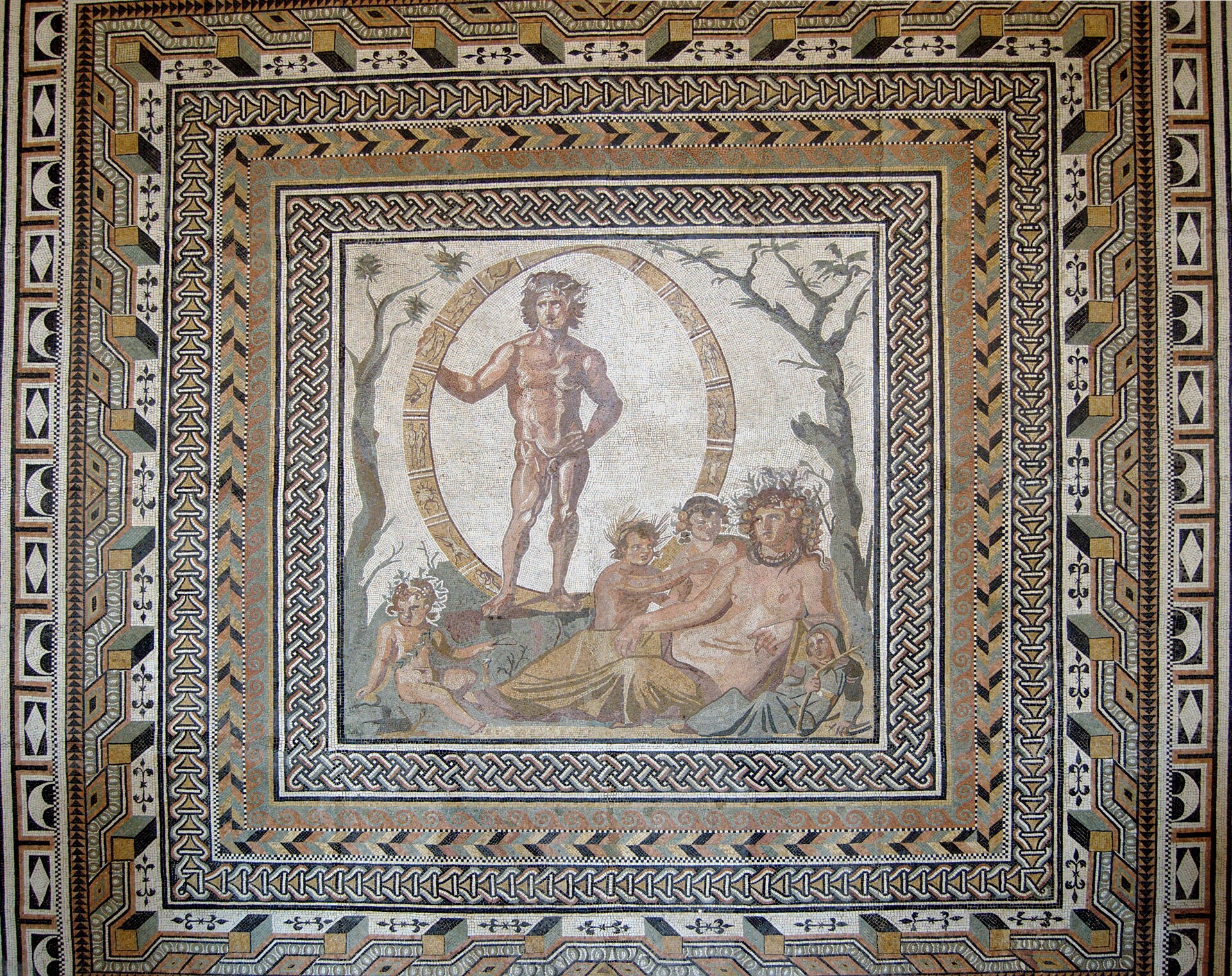
- Aion and Tellus within the cycle of the seasons. Photograph: Bibi Saint-Pol (2007); Public domain.. Source record · Public domain · Image file.
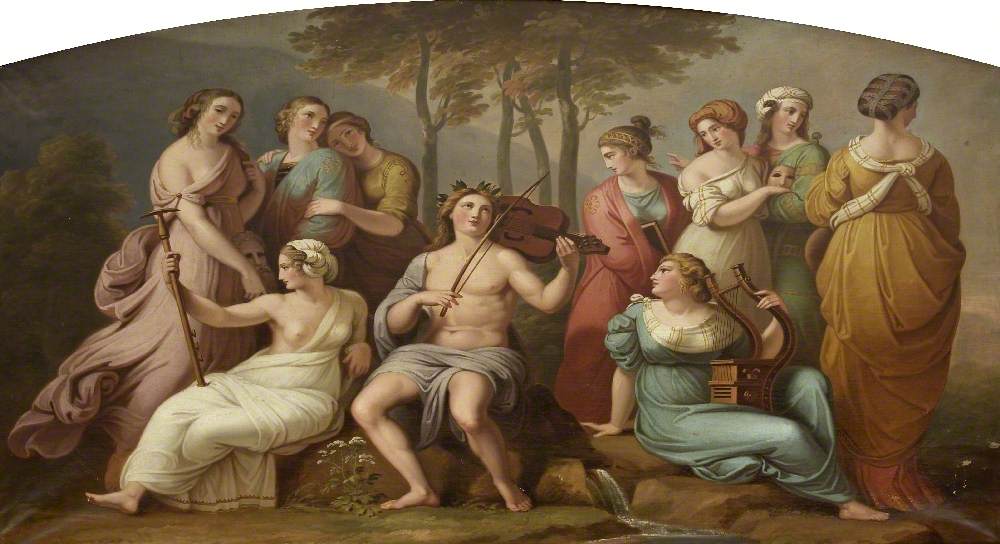
- Apollo and the Muses on Parnassus, after Raphael. Samuel Woodforde, after Raphael; National Trust, Stourhead. Image via Art UK and Wikimedia Commons, public domain.. Source record · Public domain · Image file.
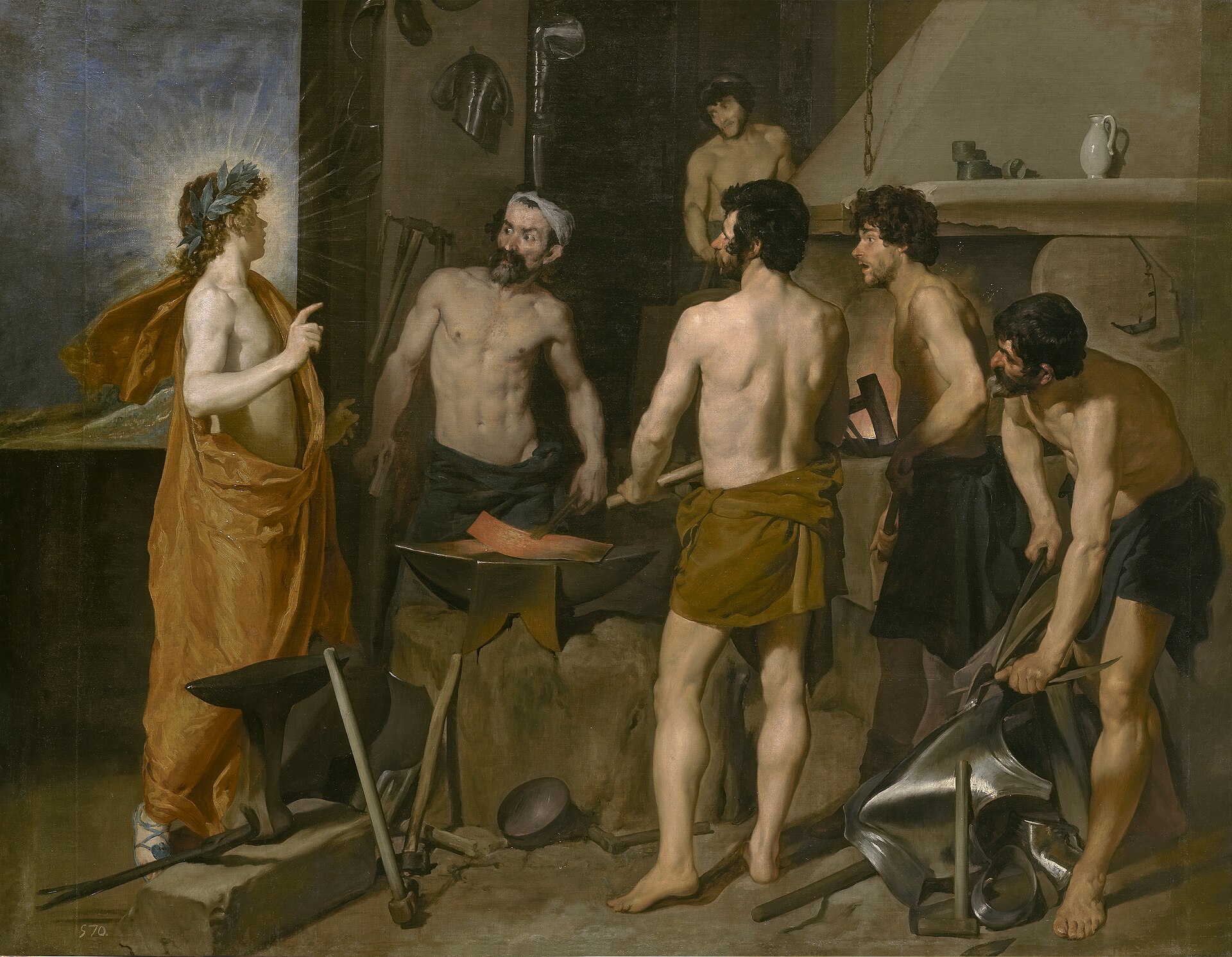
- Apollo in the Forge of Vulcan. Diego Velázquez, Apollo in the Forge of Vulcan, Museo Nacional del Prado. Wikimedia Commons. Public domain.. Source record · Public domain · Image file.
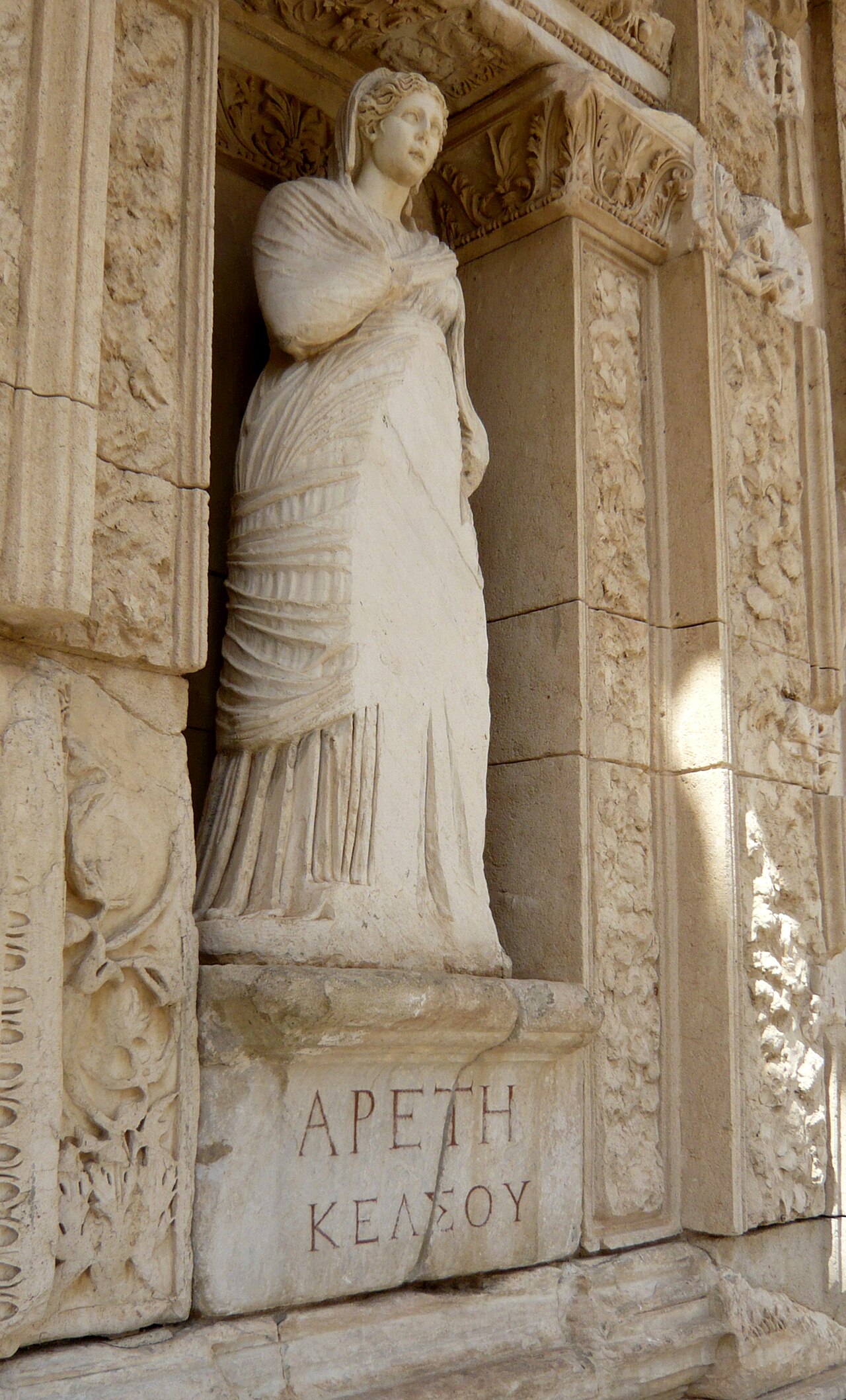
- Arete at the Library of Celsus, Ephesus. Library of Celsus, Ephesus; photograph by Nikater, 2008.. Source record · CC BY-SA 4.0 · Image file.
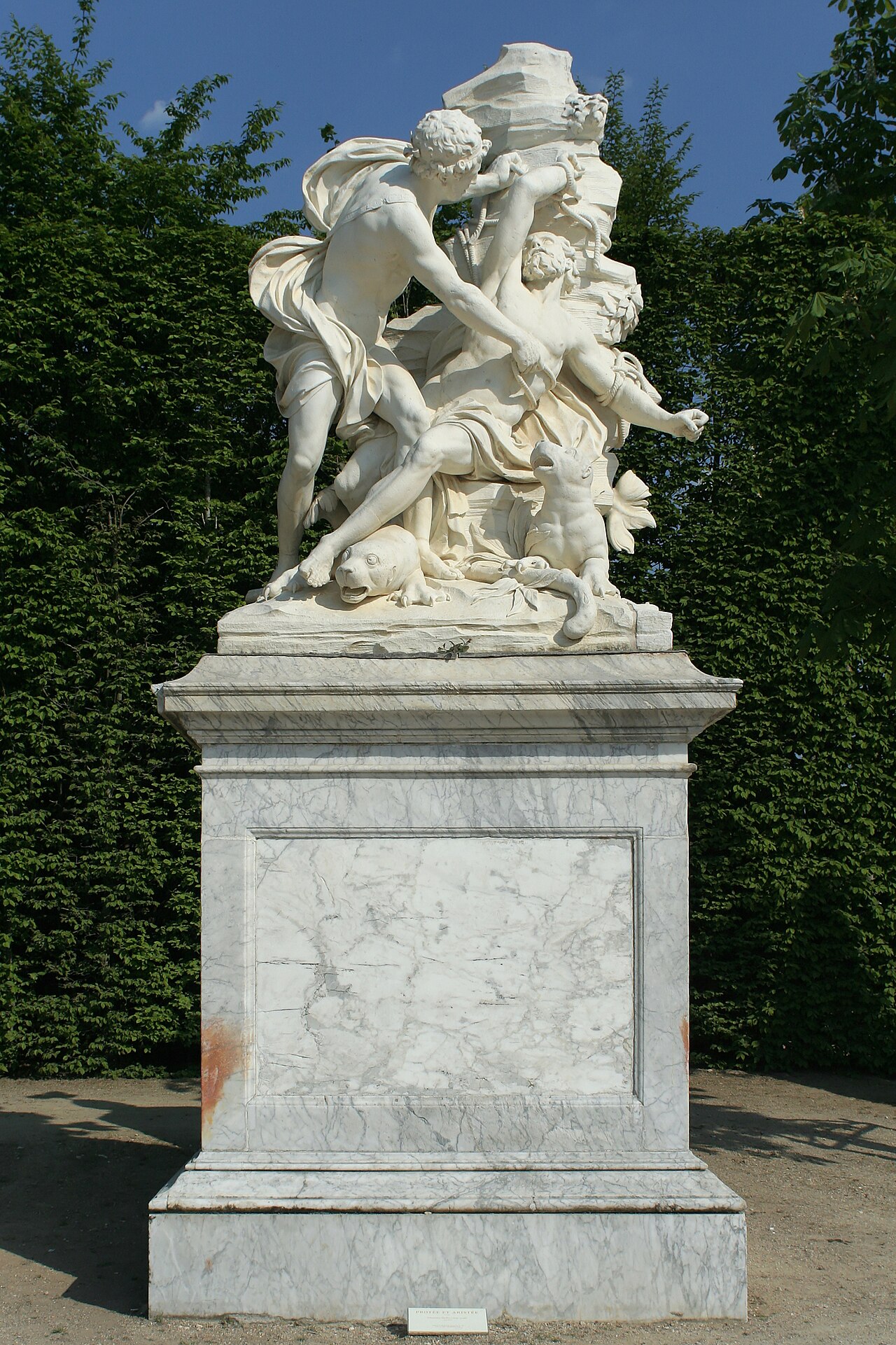
- Aristaeus and Proteus. Photograph: Coyau / Wikimedia Commons (2011); CC BY-SA 3.0.. Source record · CC BY-SA 3.0 · Image file.
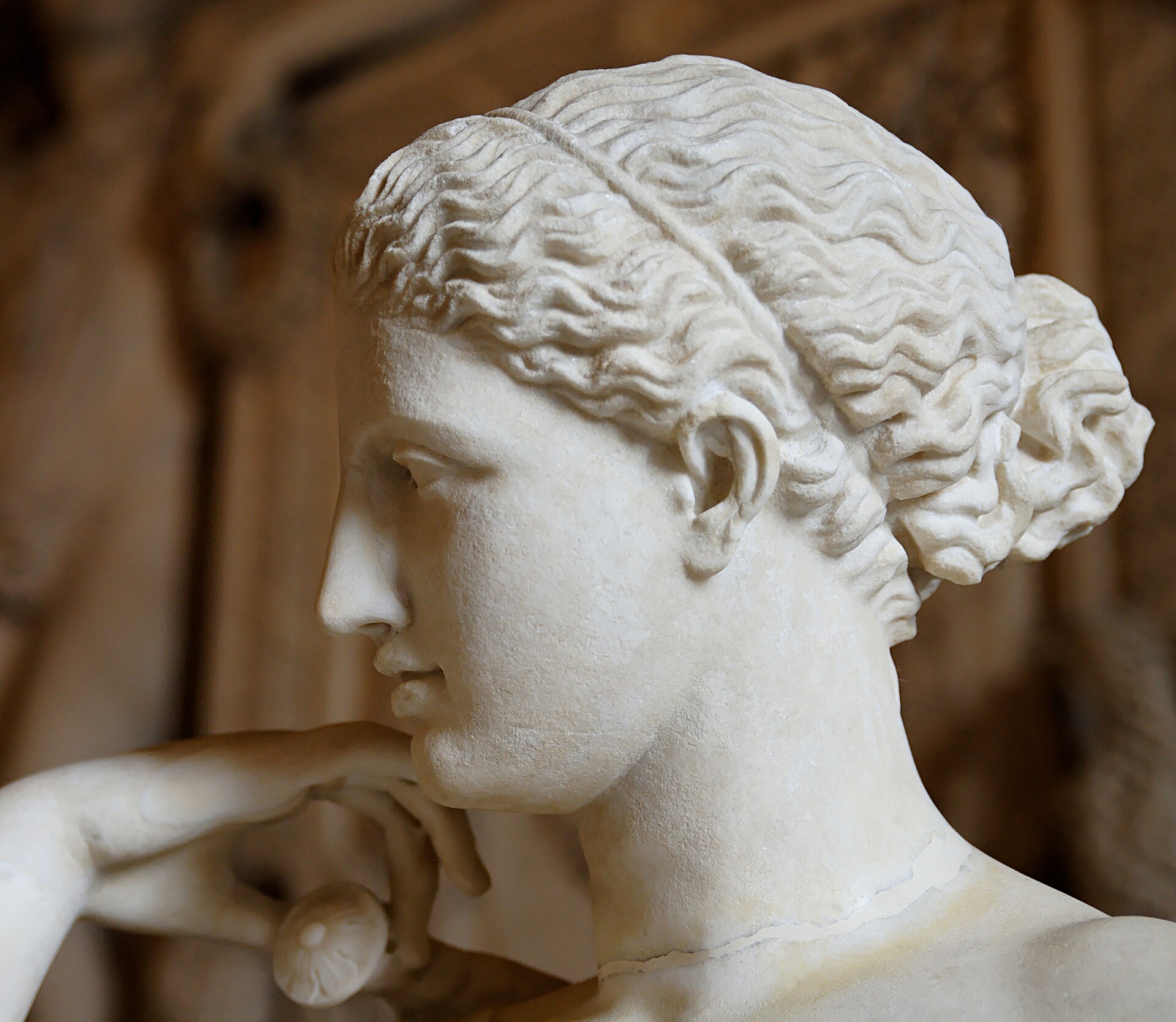
- Artemis of Gabii, head detail. Photograph: Marie-Lan Nguyen / Jastrow (2007); Public domain.. Source record · Public domain · Image file.
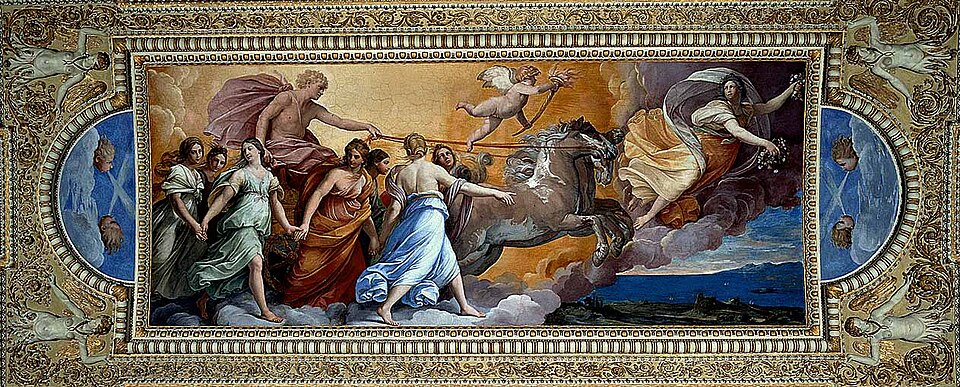
- Aurora. Guido Reni, Aurora, Casino dell’Aurora, Rome. Web Gallery of Art / Wikimedia Commons. Public domain.. Source record · Public domain · Image file.
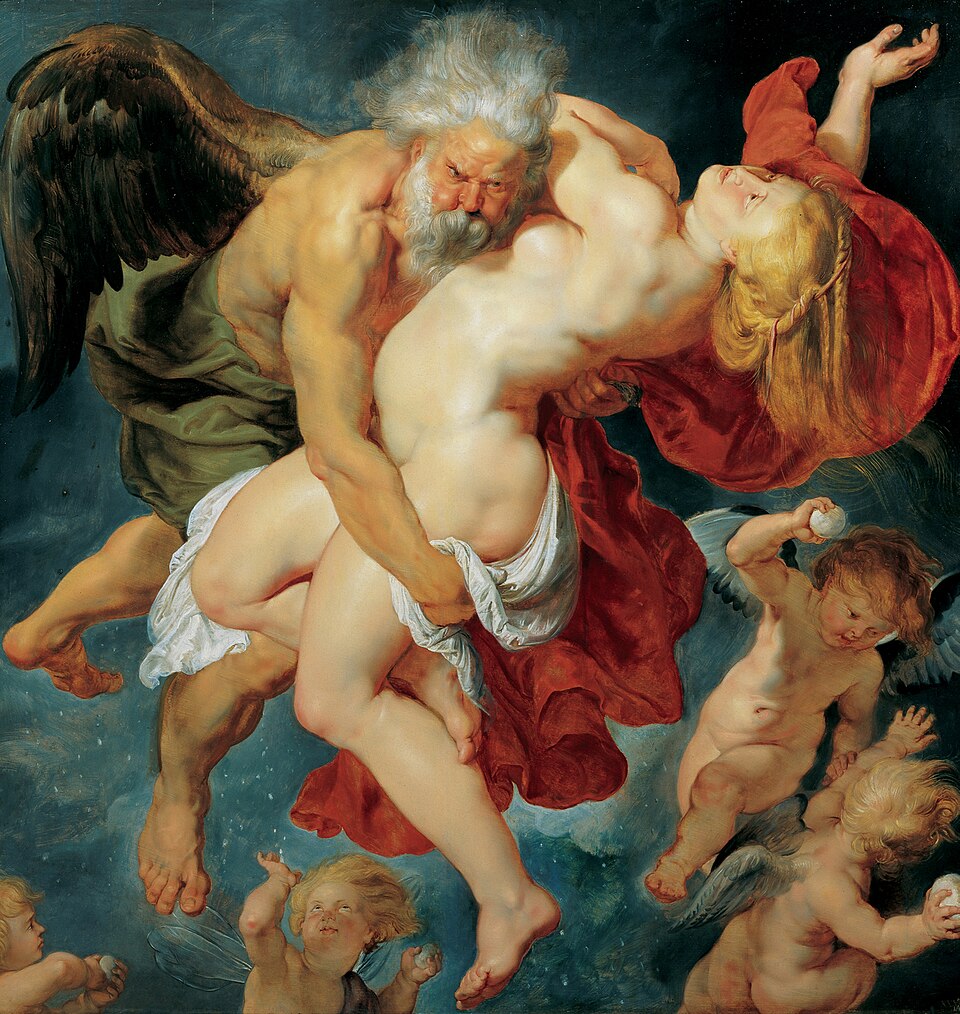
- Boreas abducting Oreithyia. Peter Paul Rubens, Boreas abducting Oreithyia, Academy of Fine Arts Vienna. Wikimedia Commons. Public domain.. Source record · Public domain · Image file.
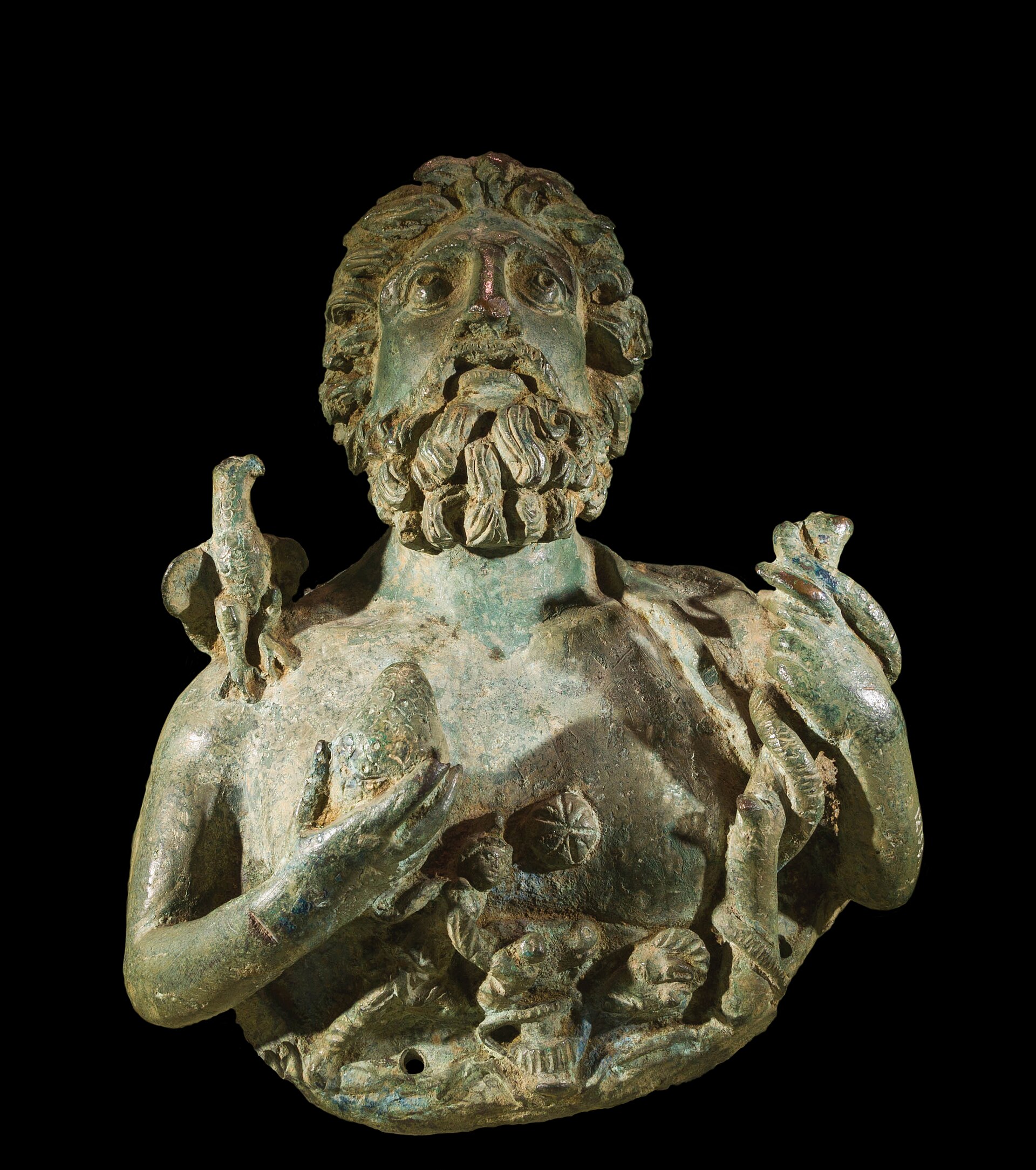
- Bronze bust of Sabazios. Photograph by Jebulon, Wikimedia Commons, CC0 1.0.. Source record · CC0 1.0 · Image file.
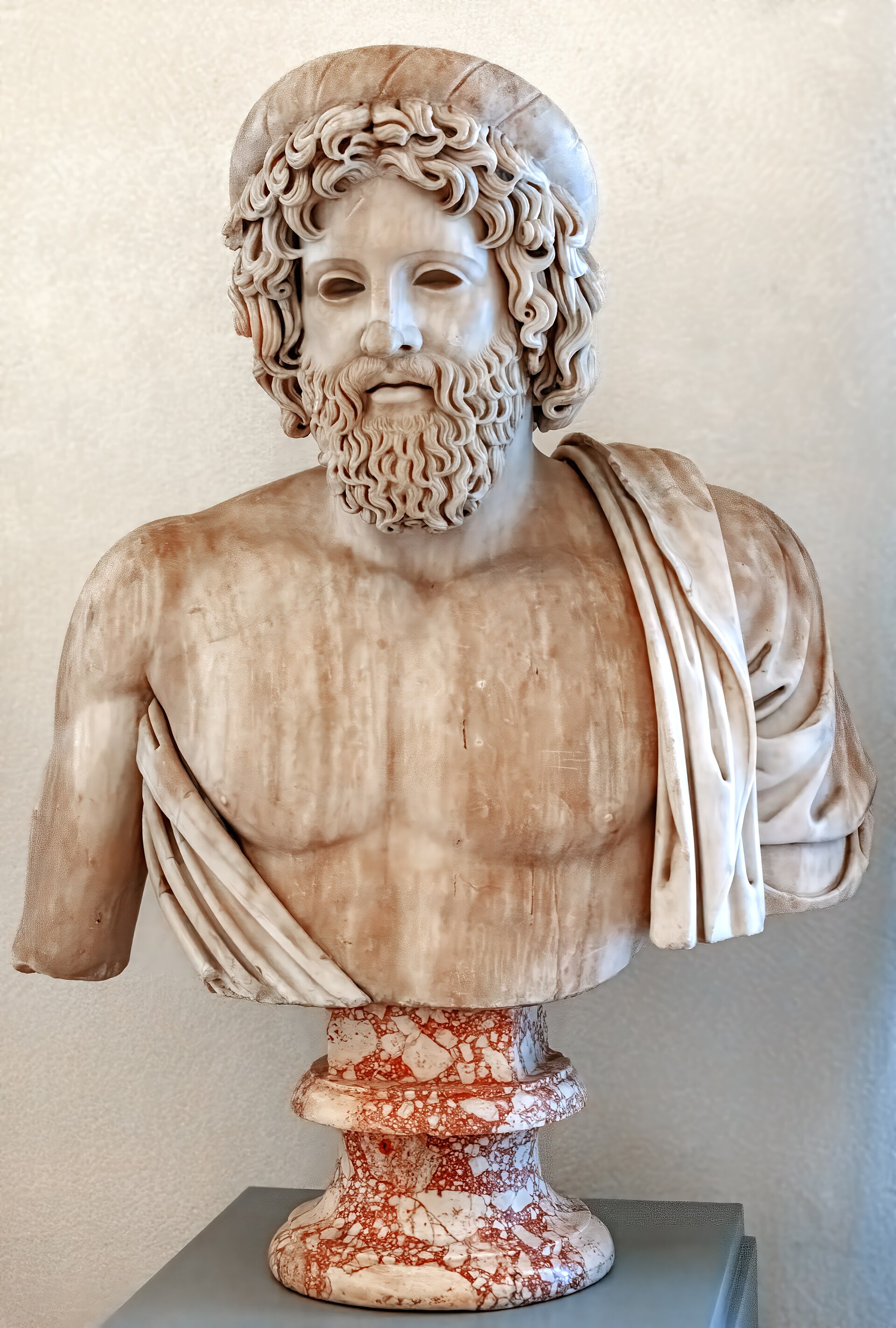
- Bust of Asclepius. Bust of Asclepius, Museo Archeologico Nazionale, Venice, inv. 60. Photograph by Didier Descouens, CC BY-SA 4.0, via Wikimedia Commons.. Source record · CC BY-SA 4.0 · Image file.
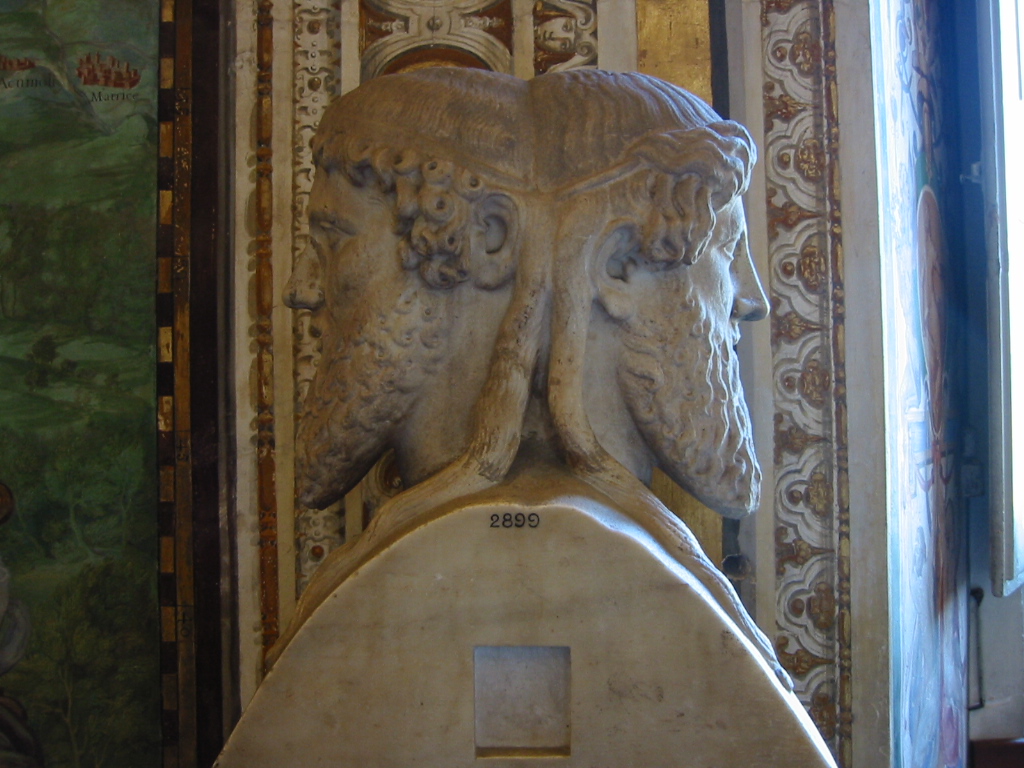
- Bust of Janus, Vatican Museums. Vatican Museums; photograph by Fubar Obfusco, released into the public domain.. Source record · Public domain · Image file.
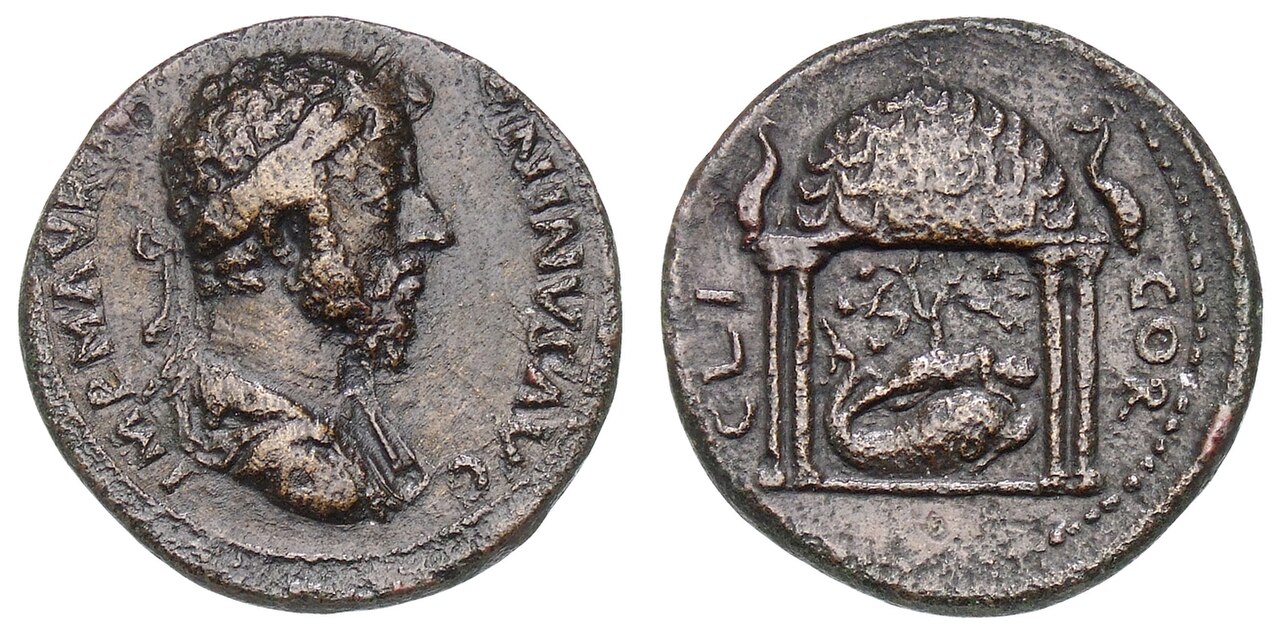
- Coin of Corinth showing Melicertes-Palaemon in his temple. Münzkabinett, Staatliche Museen zu Berlin, object 2355430. Photograph by Reinhard Saczewski. Public Domain Mark, via Wikimedia Commons.. Source record · Public domain · Image file.
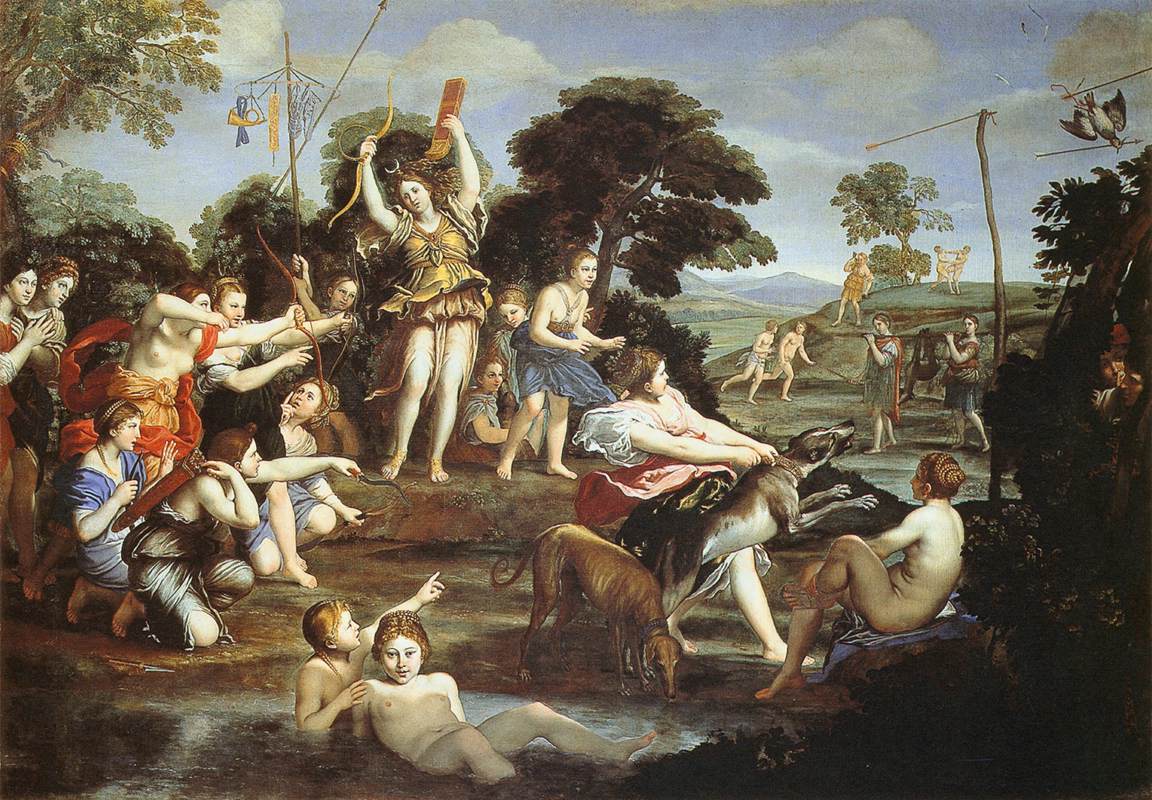
- Diana and her Nymphs. Domenichino; Galleria Borghese. Image via Web Gallery of Art and Wikimedia Commons, public domain.. Source record · Public domain · Image file.
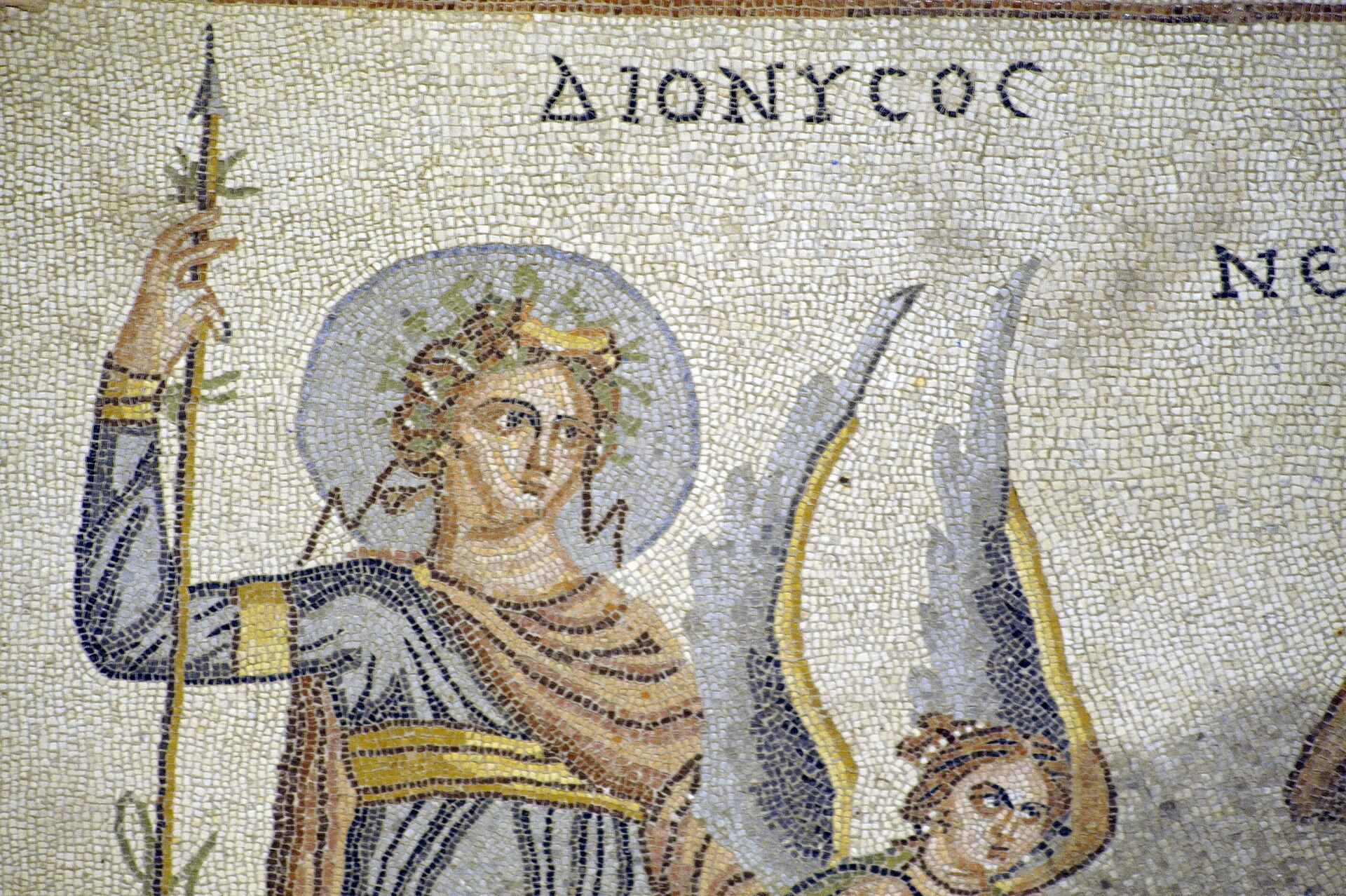
- Dionysus, detail of the Triumph mosaic from Zeugma. Photograph by Dosseman, Wikimedia Commons, CC BY-SA 4.0.. Source record · CC BY-SA 4.0 · Image file.
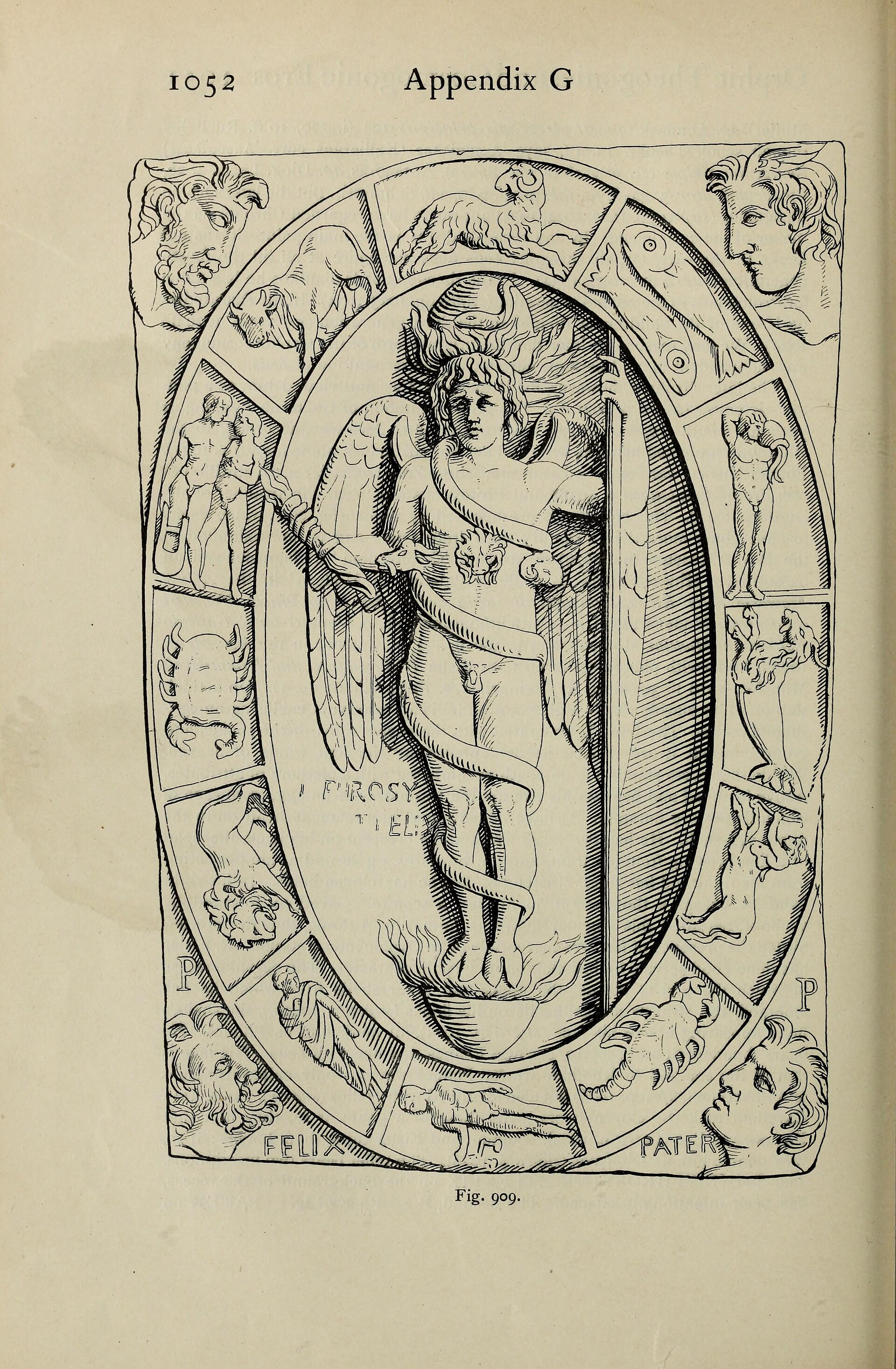
- Engraving of the Modena relief of Phanes. Public-domain scan of Cook, Zeus: A Study in Ancient Religion; Public domain.. Source record · Public domain · Image file.
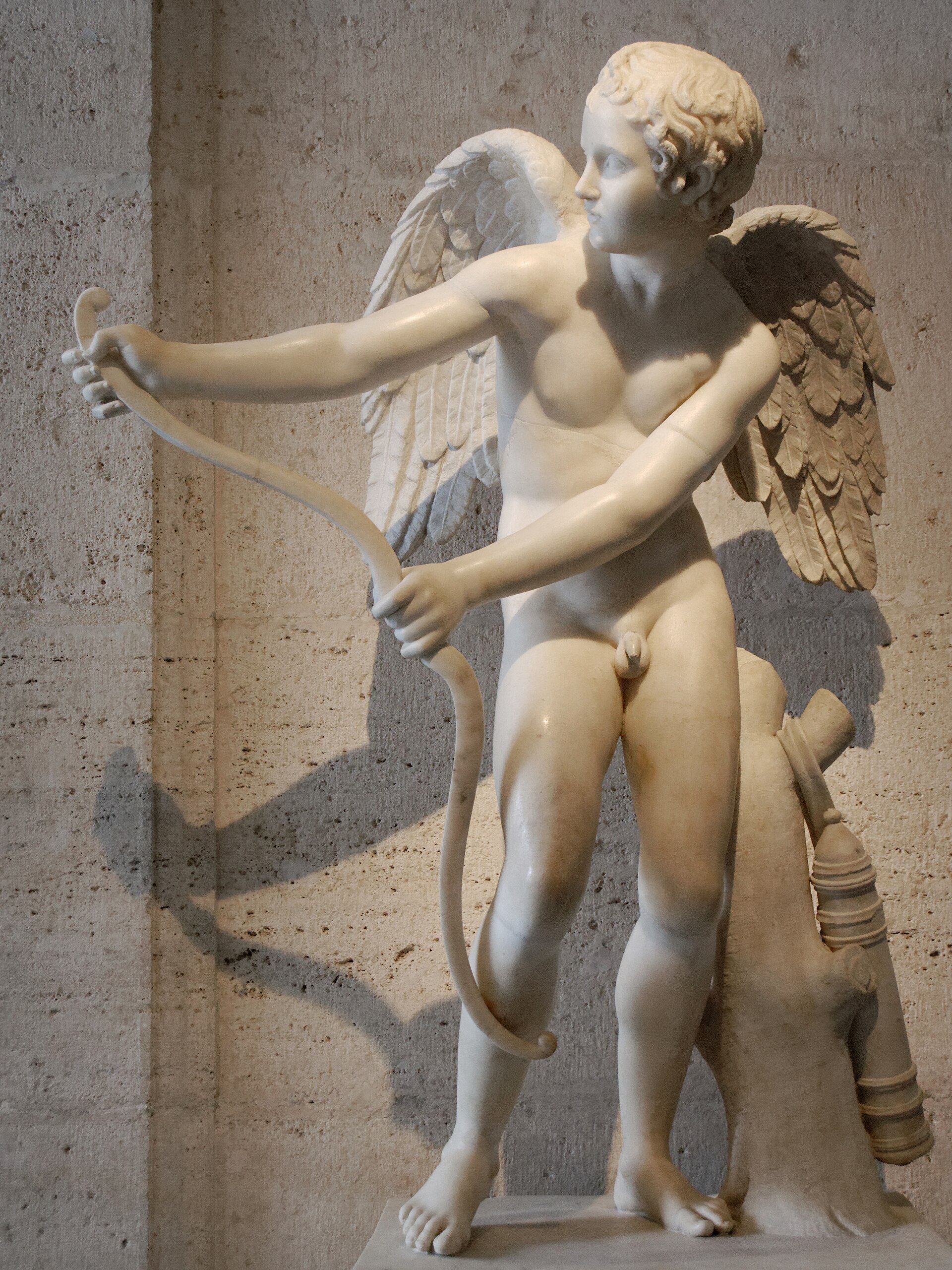
- Eros Stringing His Bow. Photograph by Marie-Lan Nguyen, Wikimedia Commons, CC BY 2.5.. Source record · CC BY 2.5 · Image file.
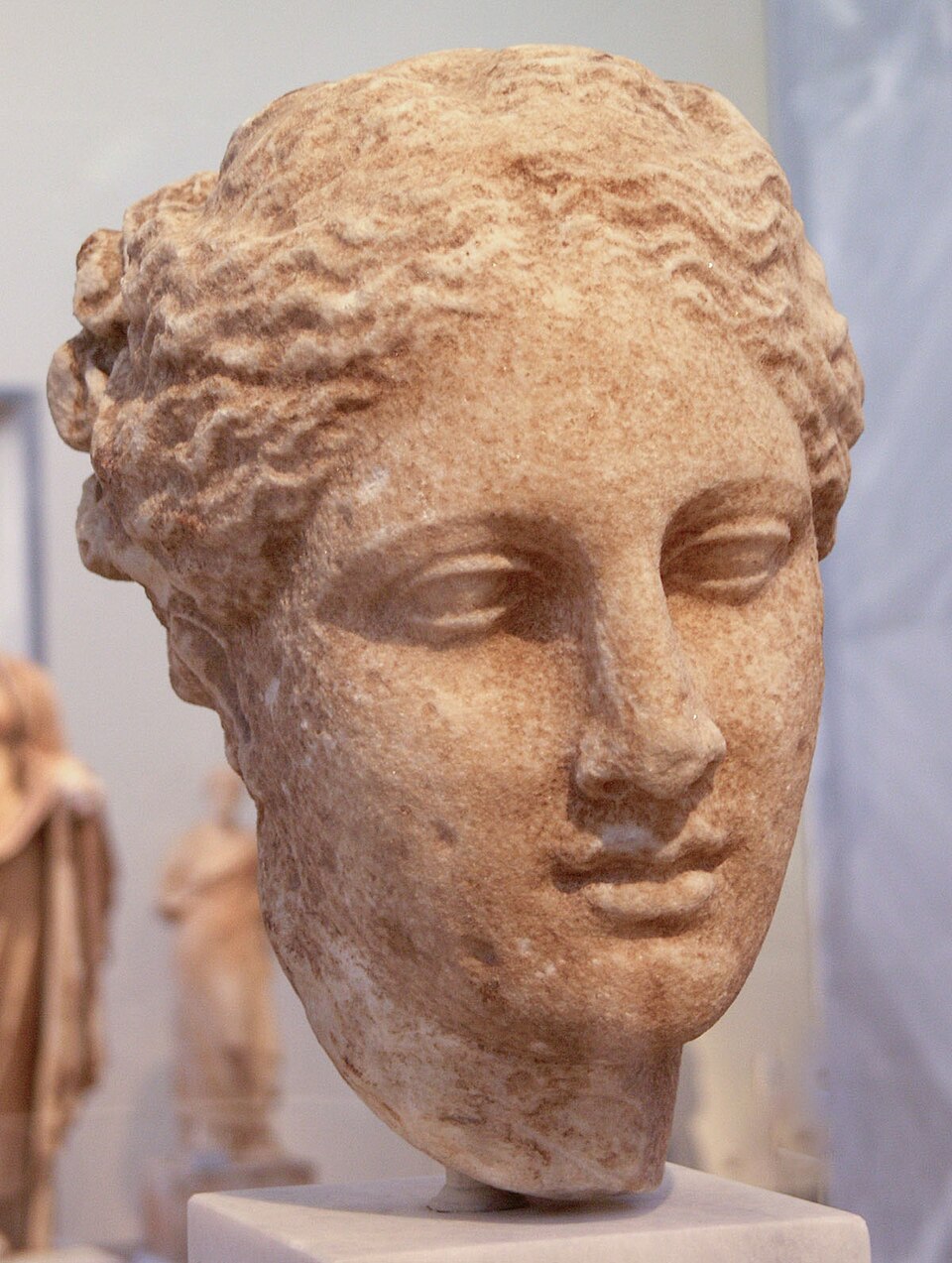
- Female head, probably Hygieia, from Tegea. Female head, probably Hygieia, NAMA 3602. Photograph by Marsyas, CC BY 2.5, via Wikimedia Commons.. Source record · CC BY 2.5 · Image file.
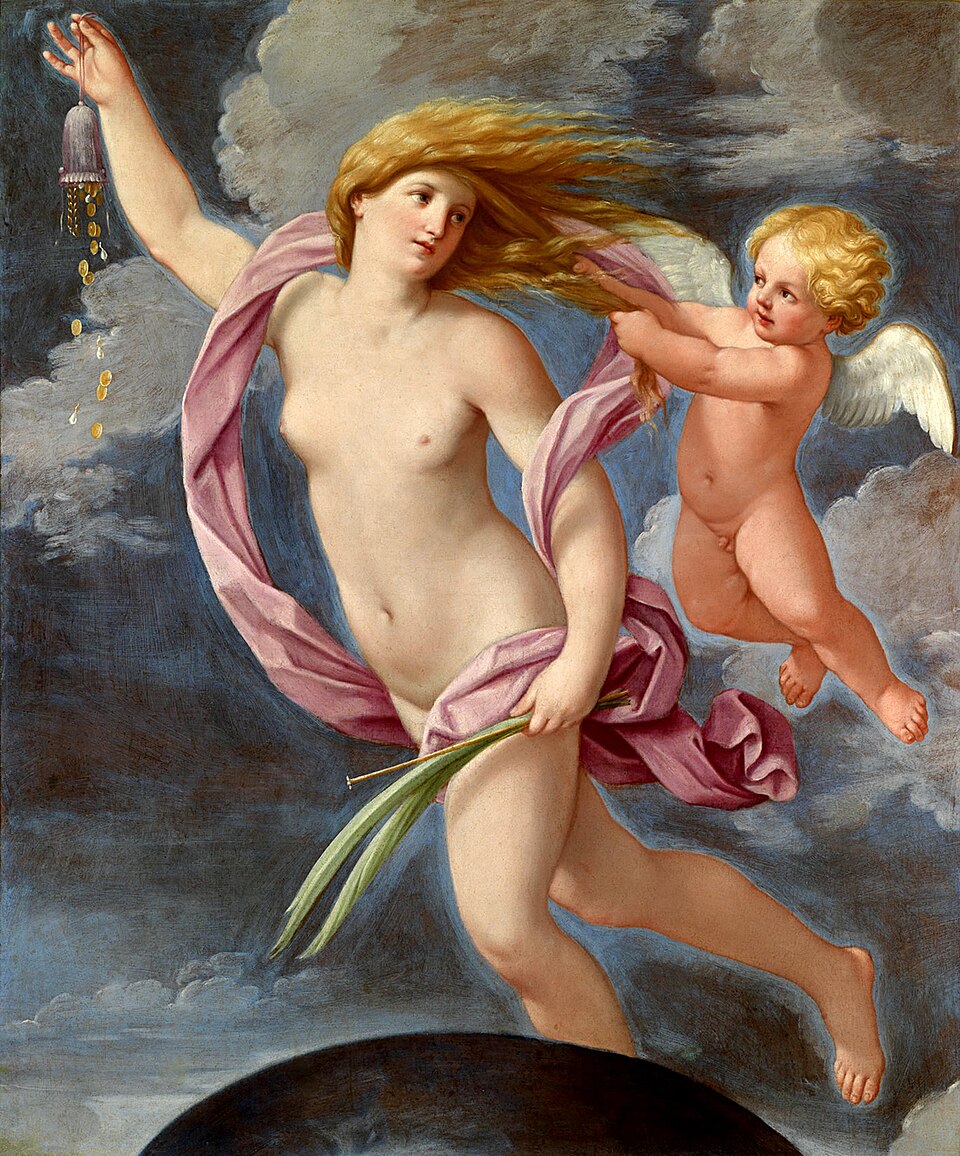
- Fortuna with a Purse. Guido Reni, Fortuna with a Purse, private collection. Wikimedia Commons. Public domain.. Source record · Public domain · Image file.
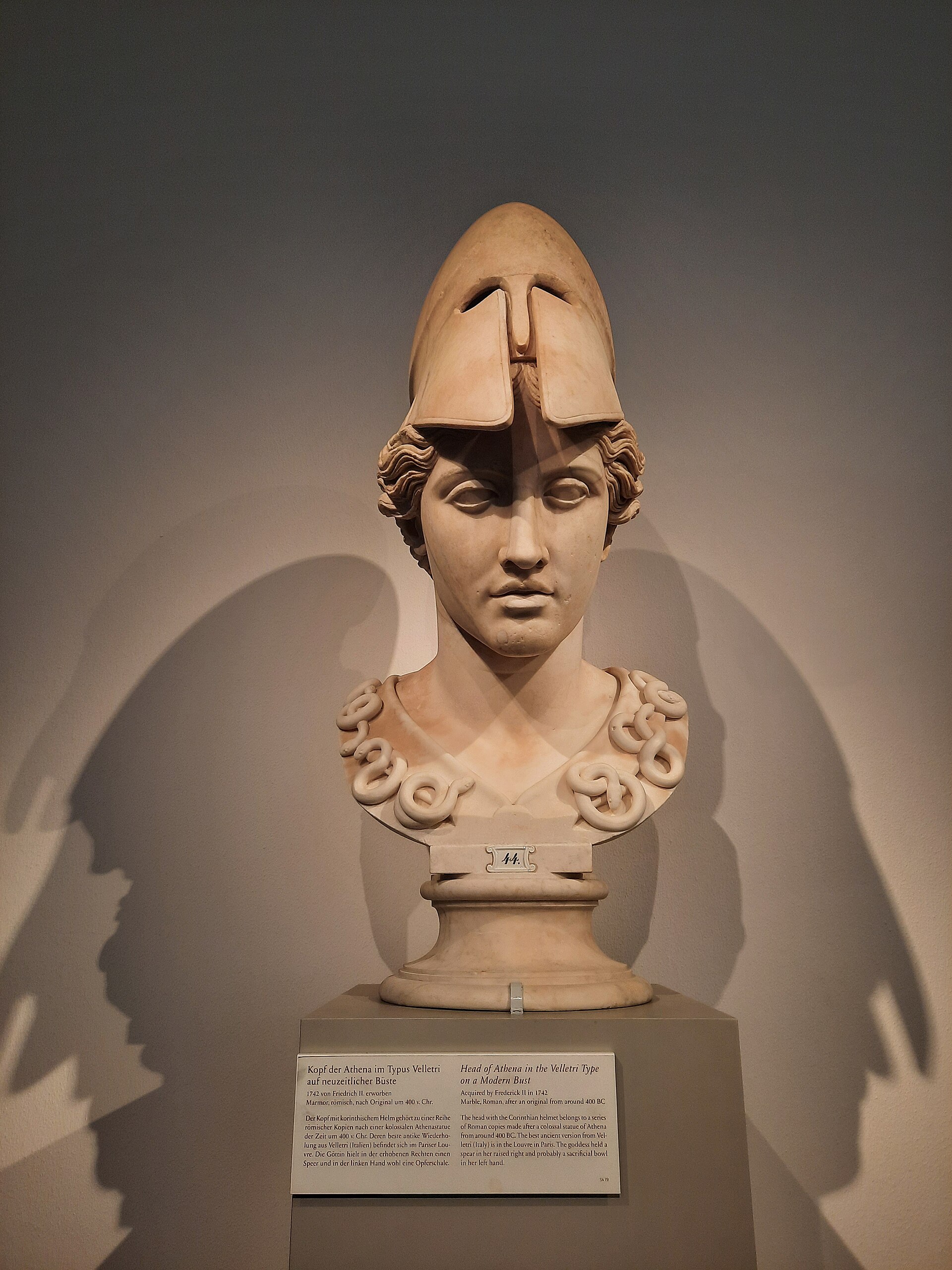
- Head of Athena in the Velletri type on a modern bust. Photograph by Jamie Heath, Wikimedia Commons, CC BY-SA 2.0.. Source record · CC BY-SA 2.0 · Image file.
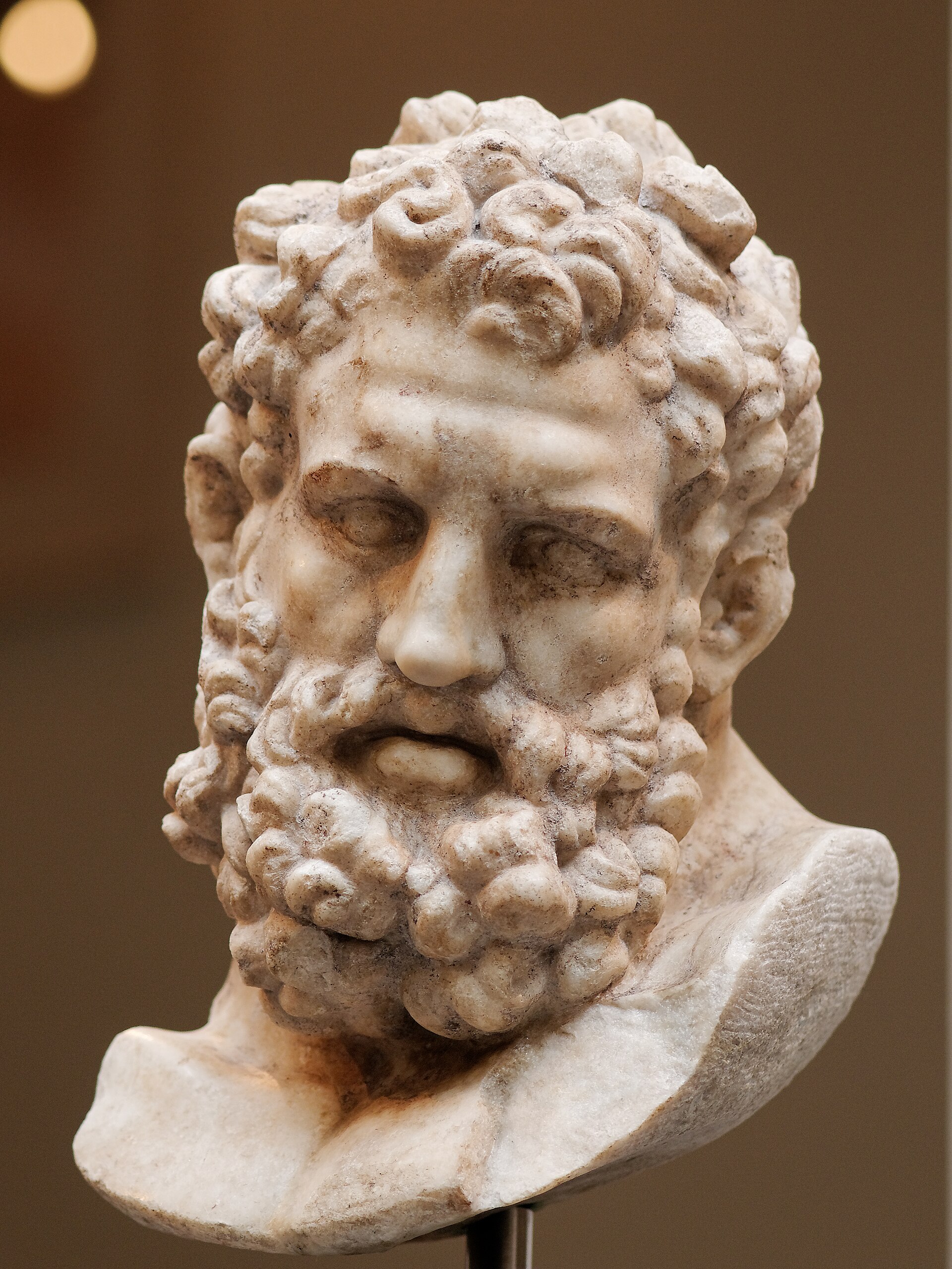
- Head of Herakles of the Farnese type. Photograph: Marie-Lan Nguyen (2011); CC BY 2.5.. Source record · CC BY 2.5 · Image file.
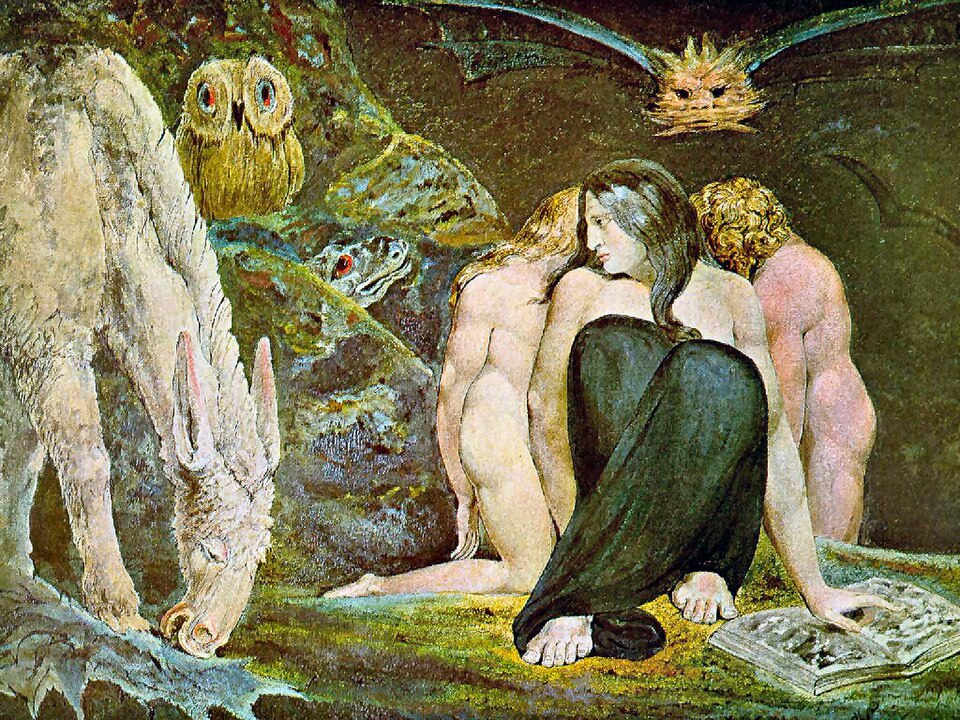
- Hecate, or The Night of Enitharmon’s Joy. William Blake, Hecate, or The Night of Enitharmon’s Joy, Tate Collection. Wikimedia Commons. Public domain.. Source record · Public domain · Image file.
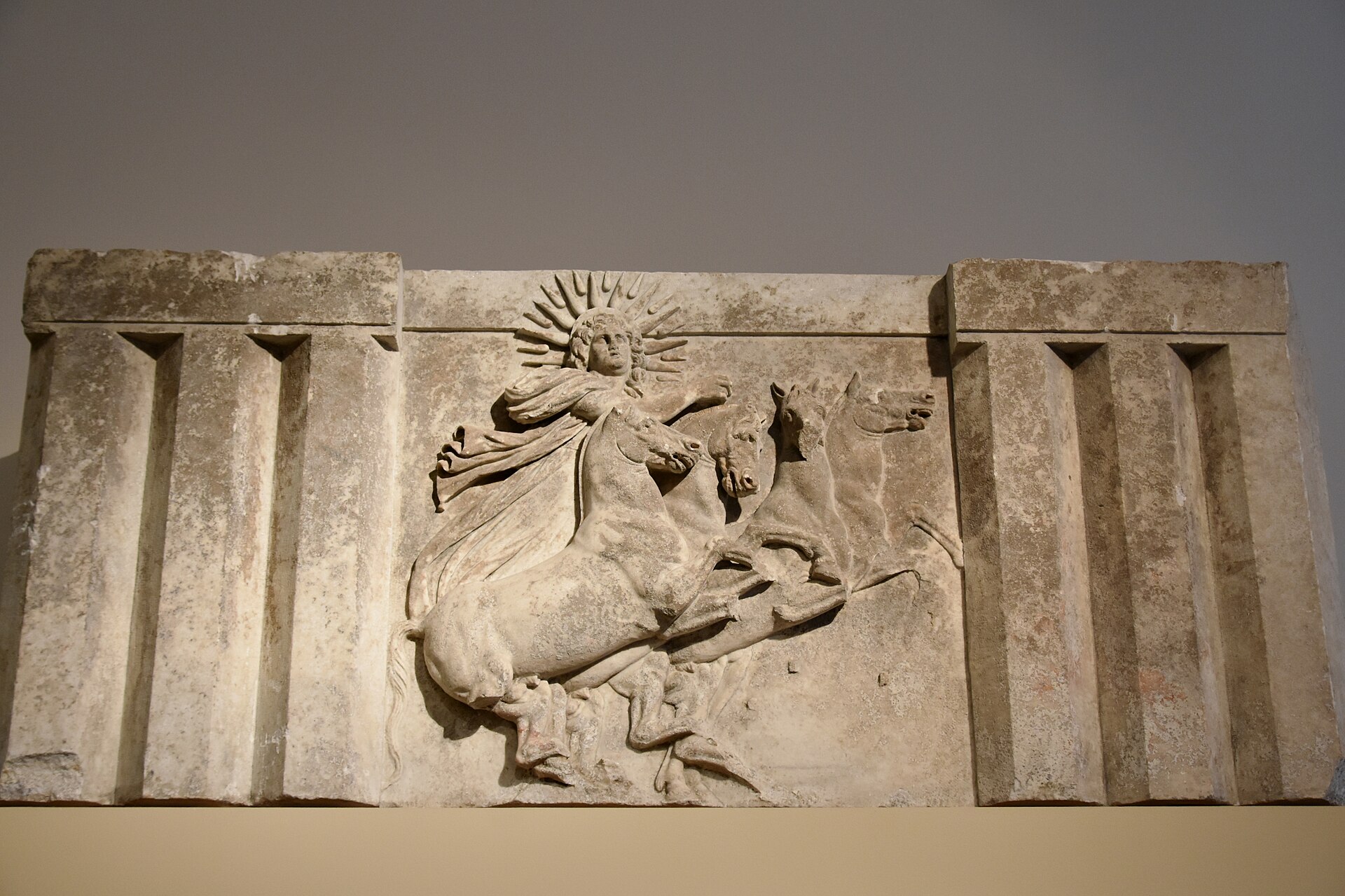
- Helios in a quadriga. Photograph: Richard Mortel (2018); CC BY 2.0.. Source record · CC BY 2.0 · Image file.
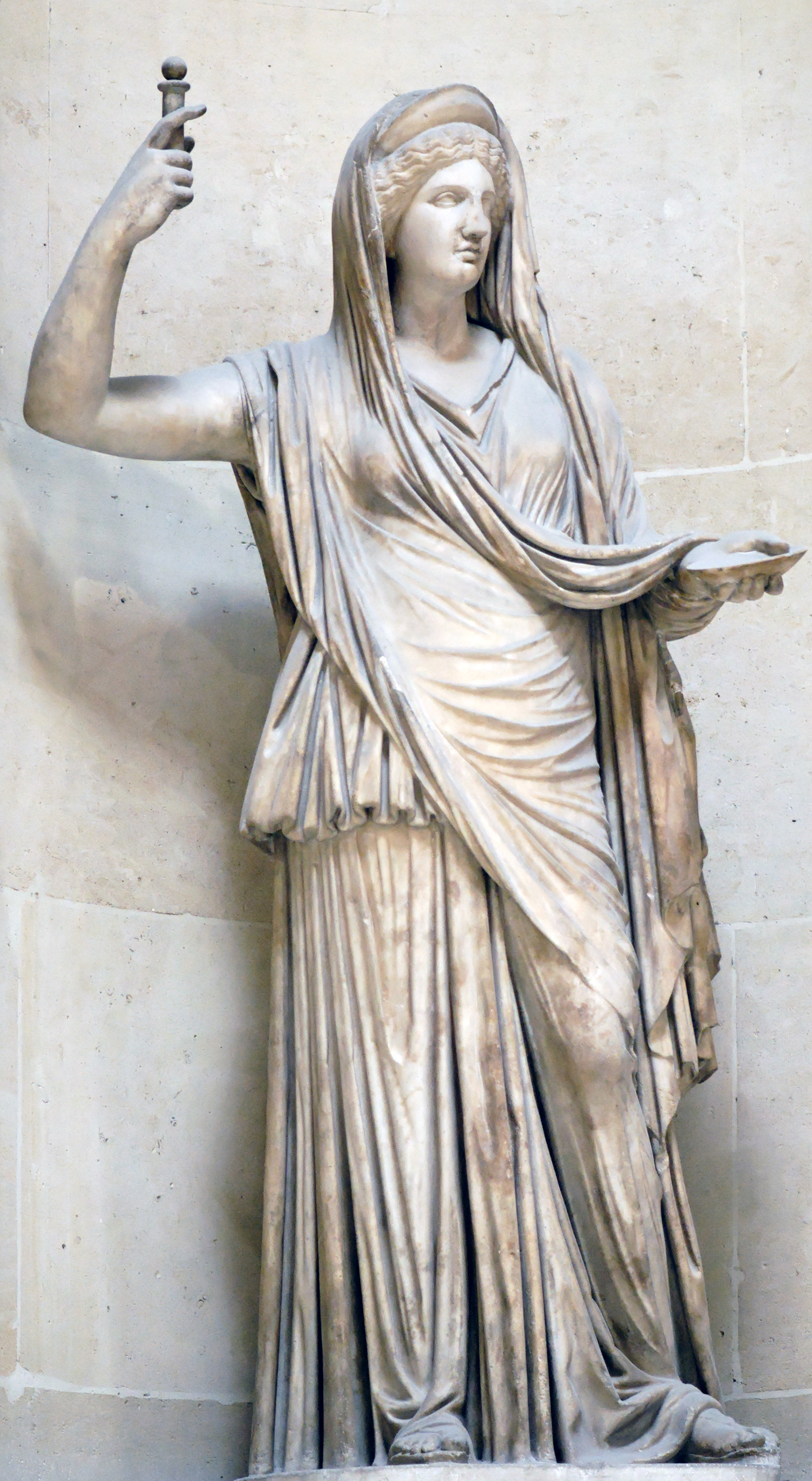
- Hera Campana. Photograph: Marie-Lan Nguyen (2006); Public domain.. Source record · Public domain · Image file.
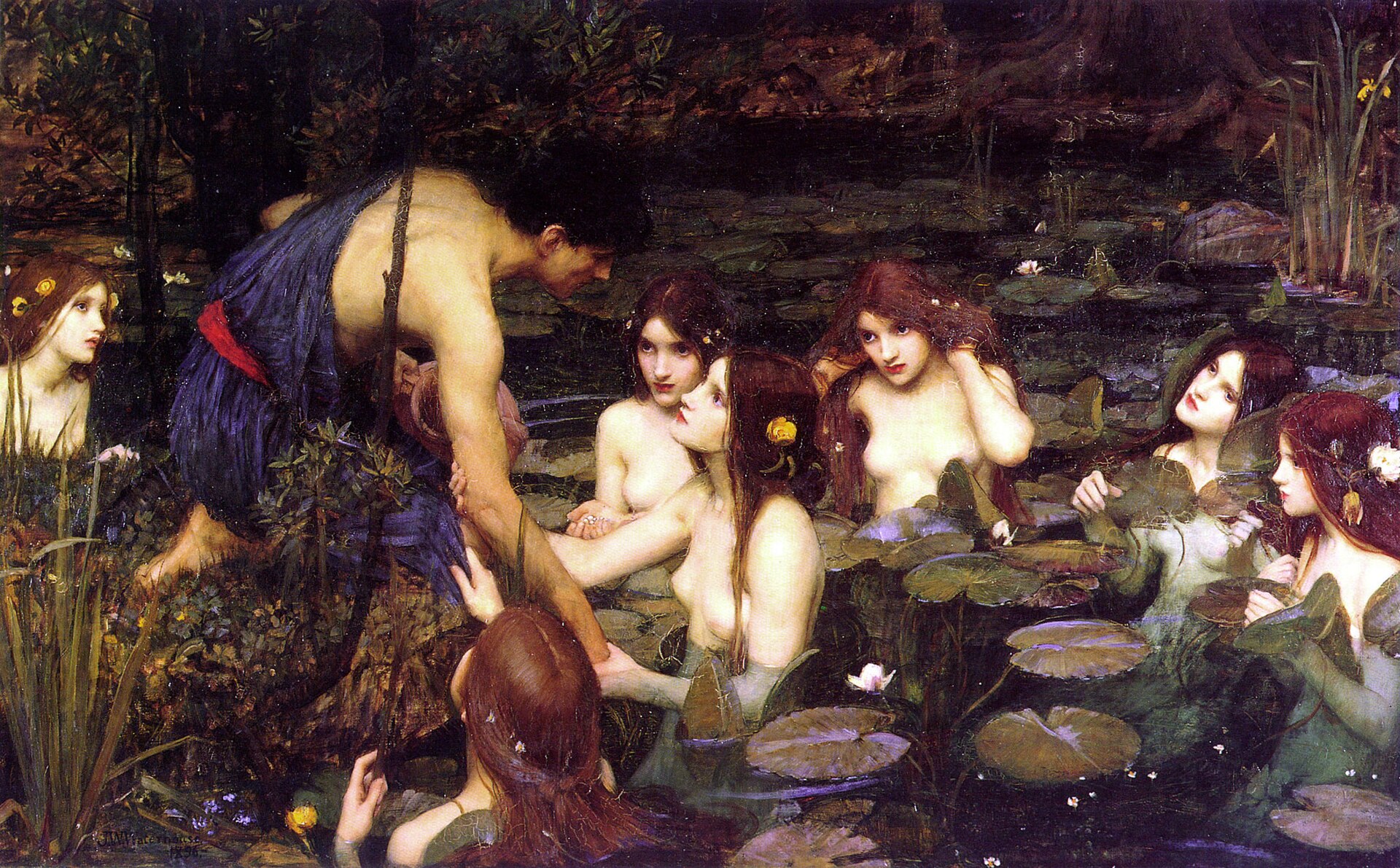
- Hylas and the Nymphs. John William Waterhouse; Manchester Art Gallery. Public-domain reproduction via Wikimedia Commons.. Source record · Public domain · Image file.
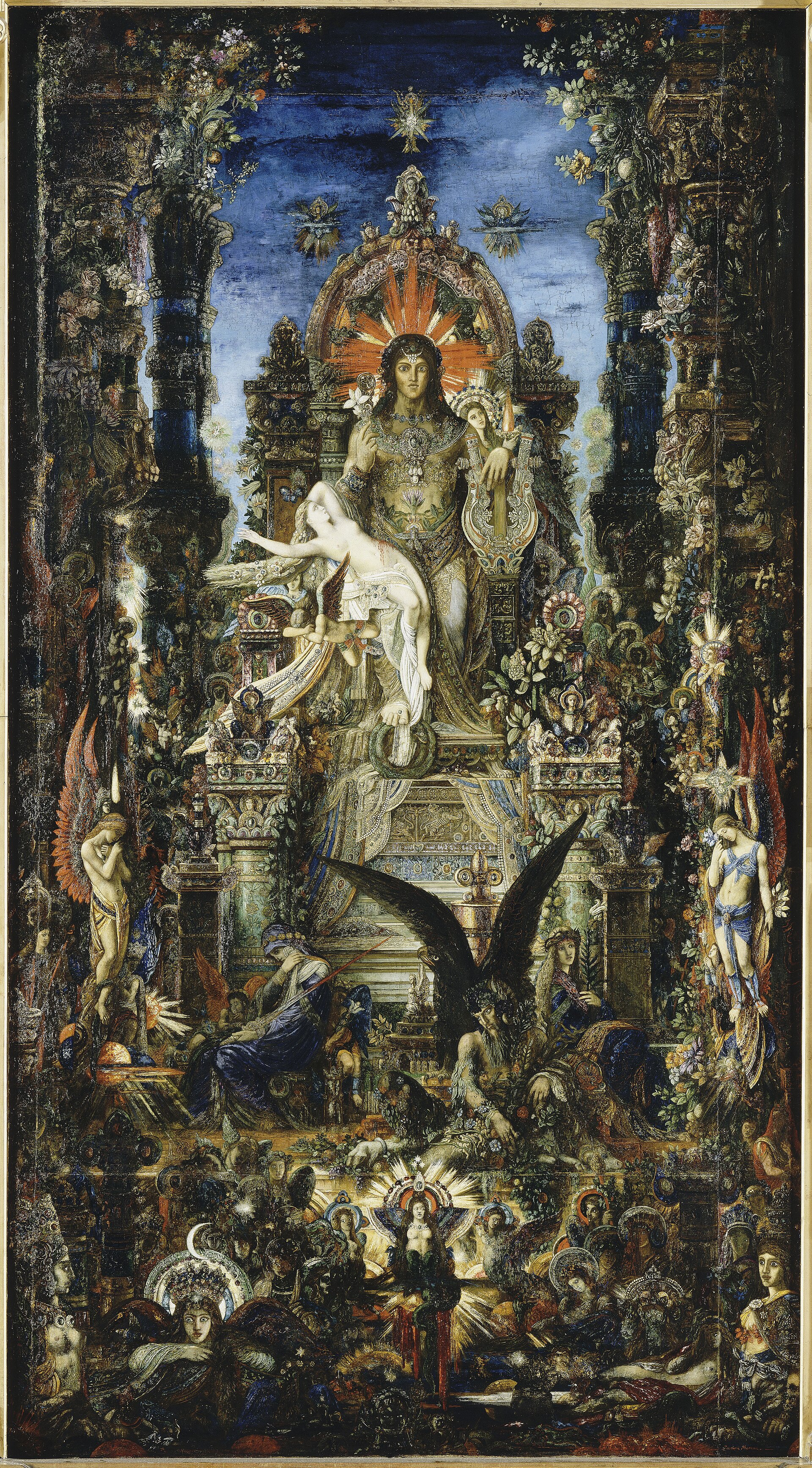
- Jupiter and Semele. Gustave Moreau; Musée Gustave Moreau. Public-domain reproduction via Wikimedia Commons.. Source record · Public domain · Image file.
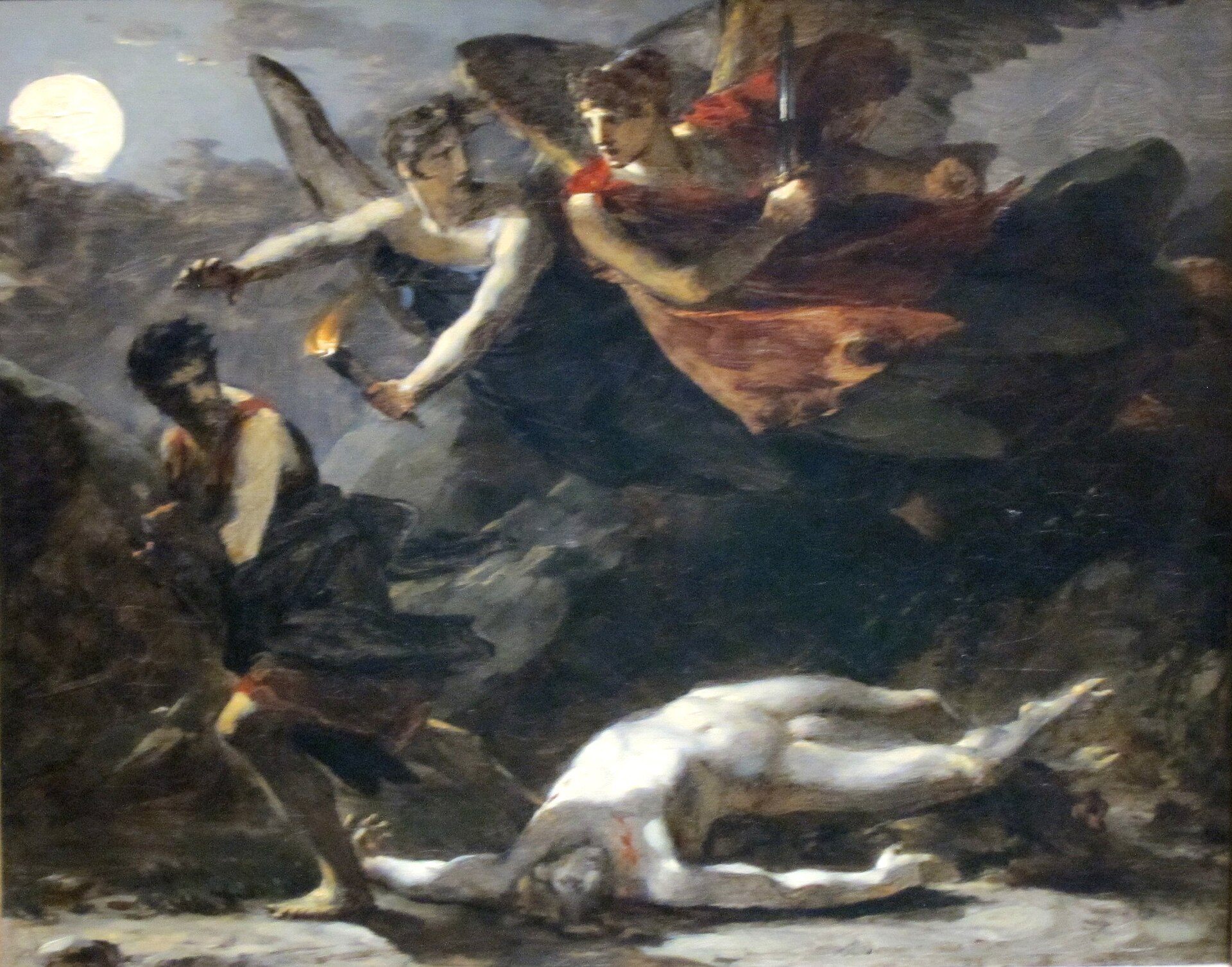
- Justice and Divine Vengeance Pursuing Crime. Pierre-Paul Prud’hon, J. Paul Getty Museum. Photograph by Wmpearl, CC0, via Wikimedia Commons.. Source record · CC0 · Image file.
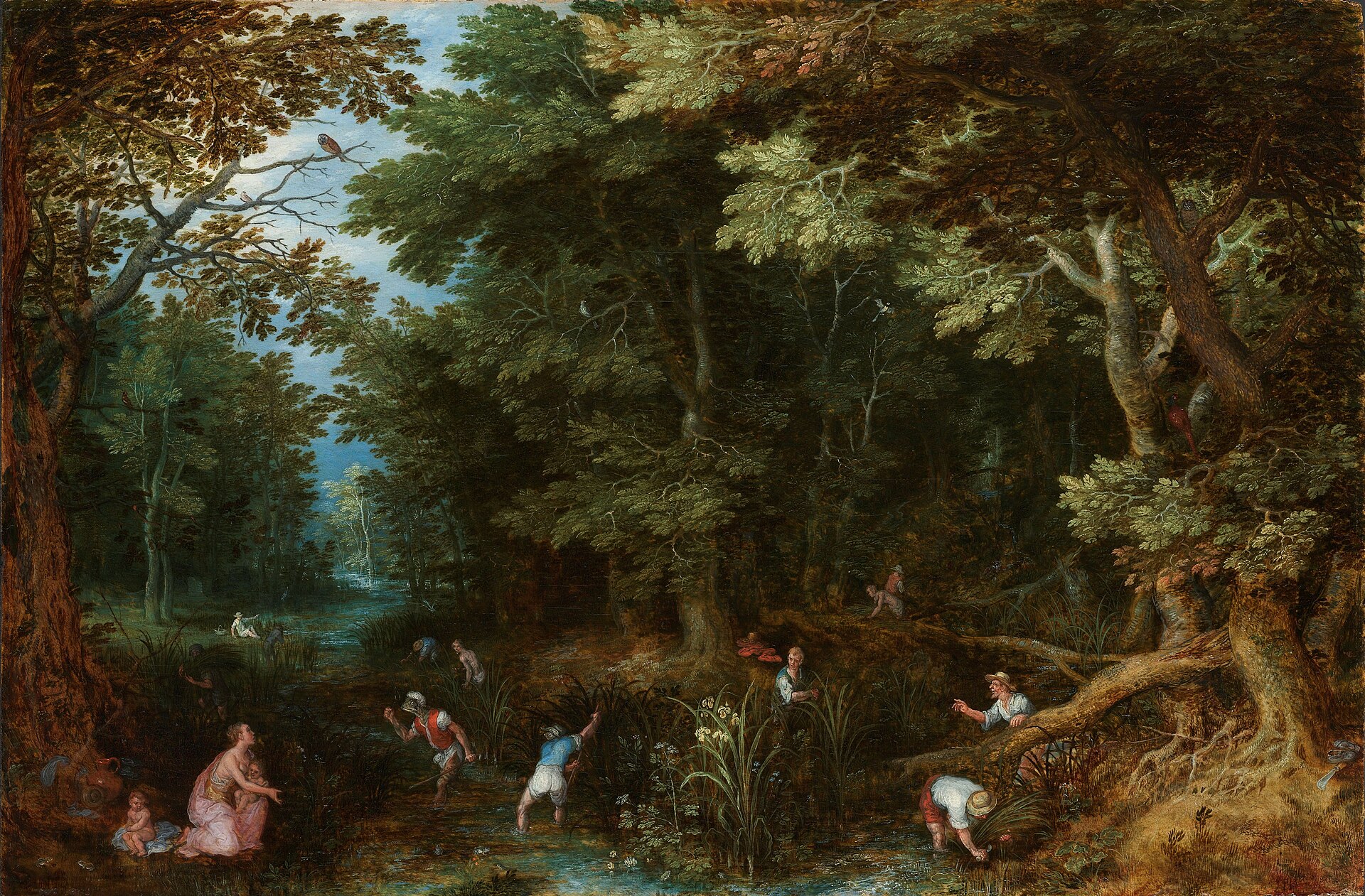
- Latona and the Lycian Peasants. Jan Brueghel the Elder; Rijksmuseum, SK-A-70. Image via Wikimedia Commons, CC0 1.0.. Source record · CC0 1.0 · Image file.
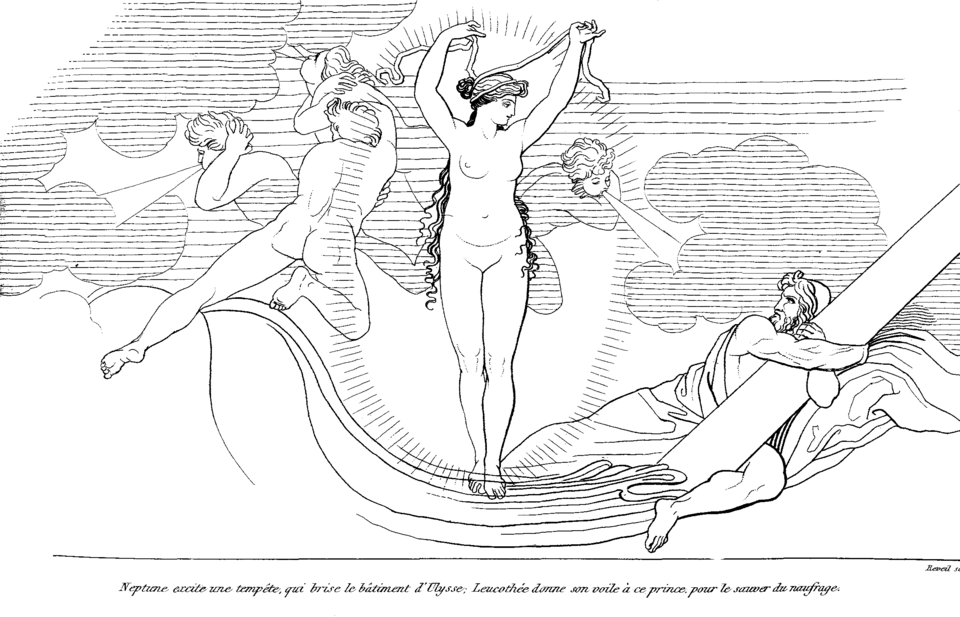
- Leucothea gives her veil to Odysseus. John Flaxman (design), Réveil (engraving), illustration to the Odyssey. Boston College digital collection / Wikimedia Commons. Public domain.. Source record · Public domain · Image file.
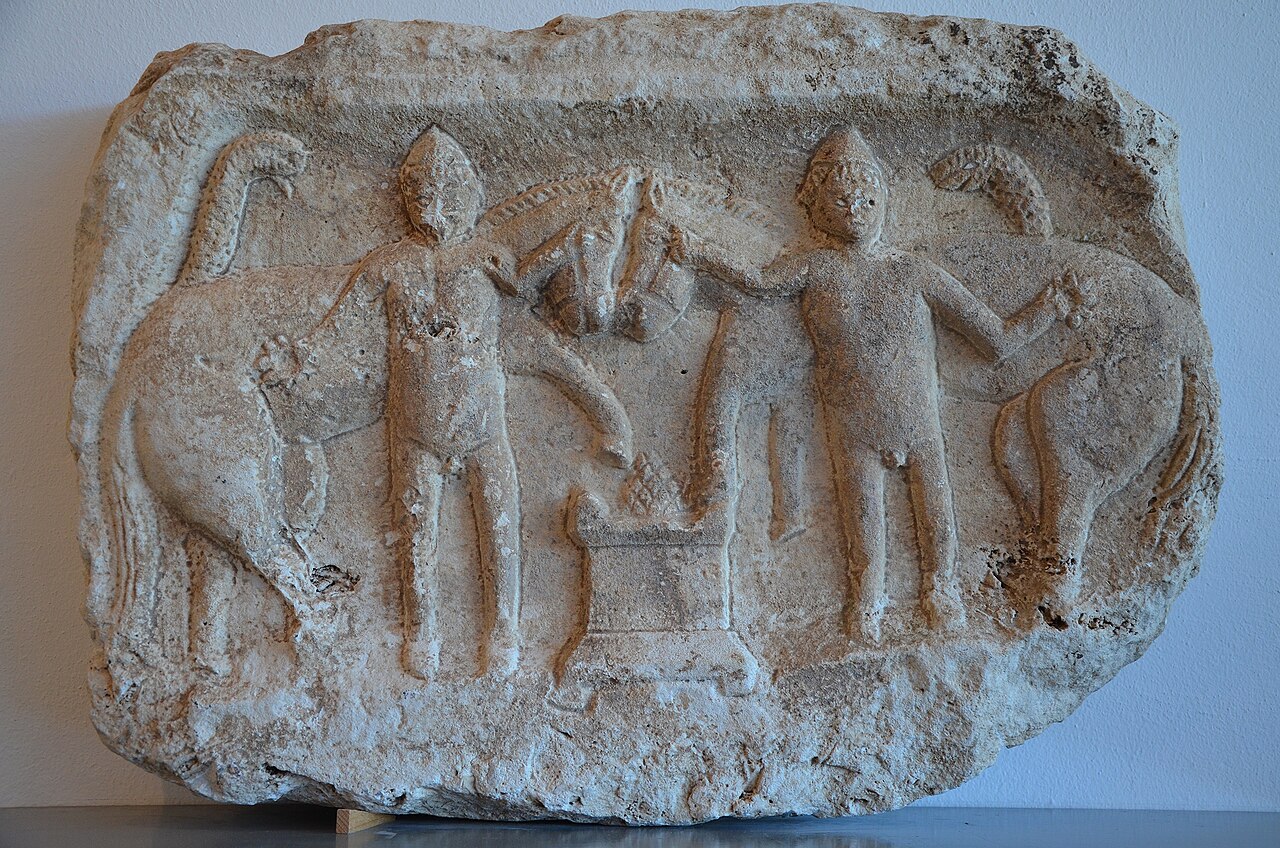
- Marble relief of the Dioscuri. Archaeological Museum Narona, Vid, Croatia; photograph by Carole Raddato, 2013.. Source record · CC BY-SA 2.0 · Image file.
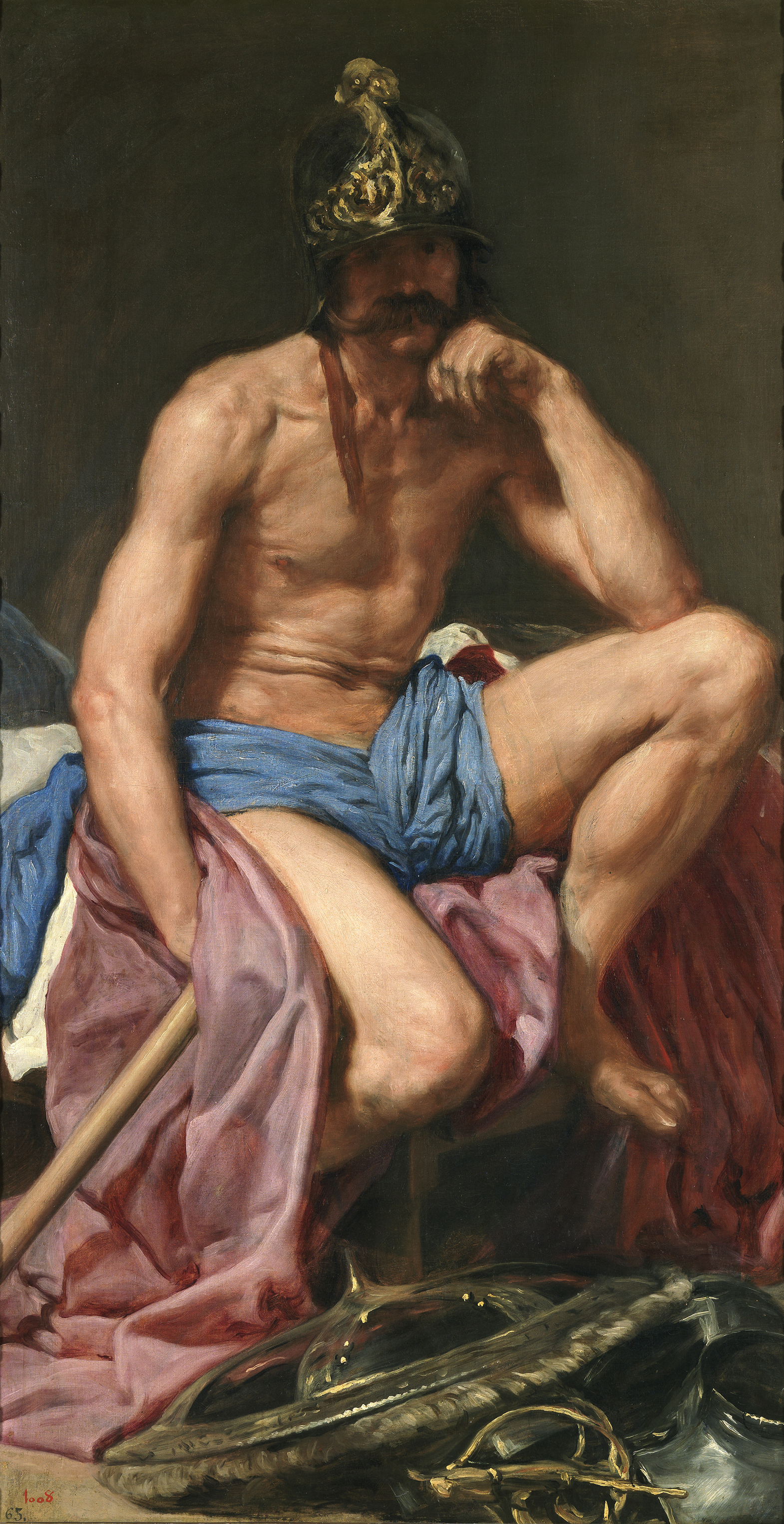
- Mars Resting. Diego Velázquez, Mars Resting, Museo Nacional del Prado. Wikimedia Commons. Public domain.. Source record · Public domain · Image file.
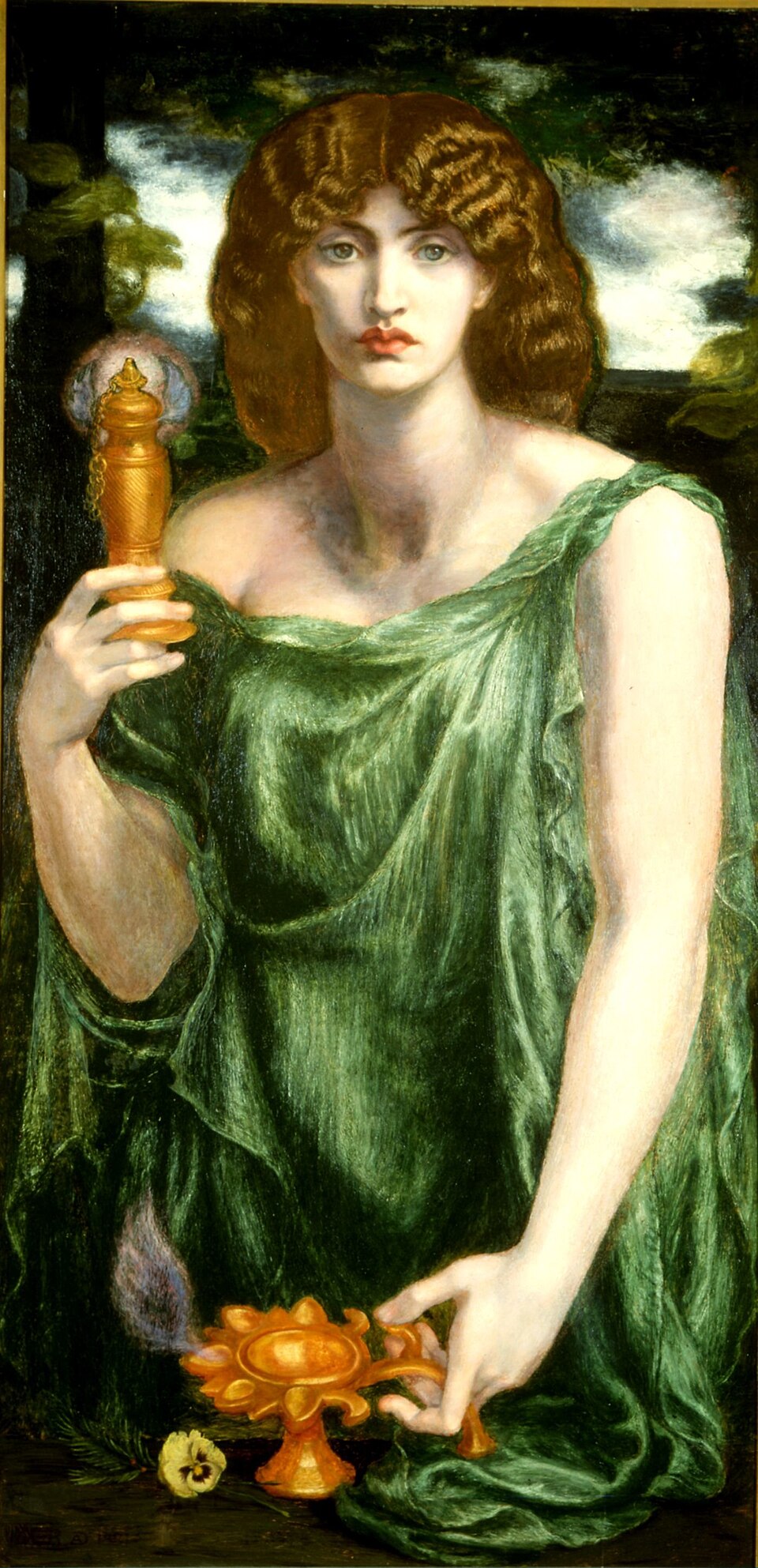
- Mnemosyne, also called The Lamp of Memory. Dante Gabriel Rossetti, Mnemosyne. Delaware Art Museum, Samuel and Mary R. Bancroft Memorial, CC BY 3.0, via Wikimedia Commons.. Source record · CC BY 3.0 · Image file.
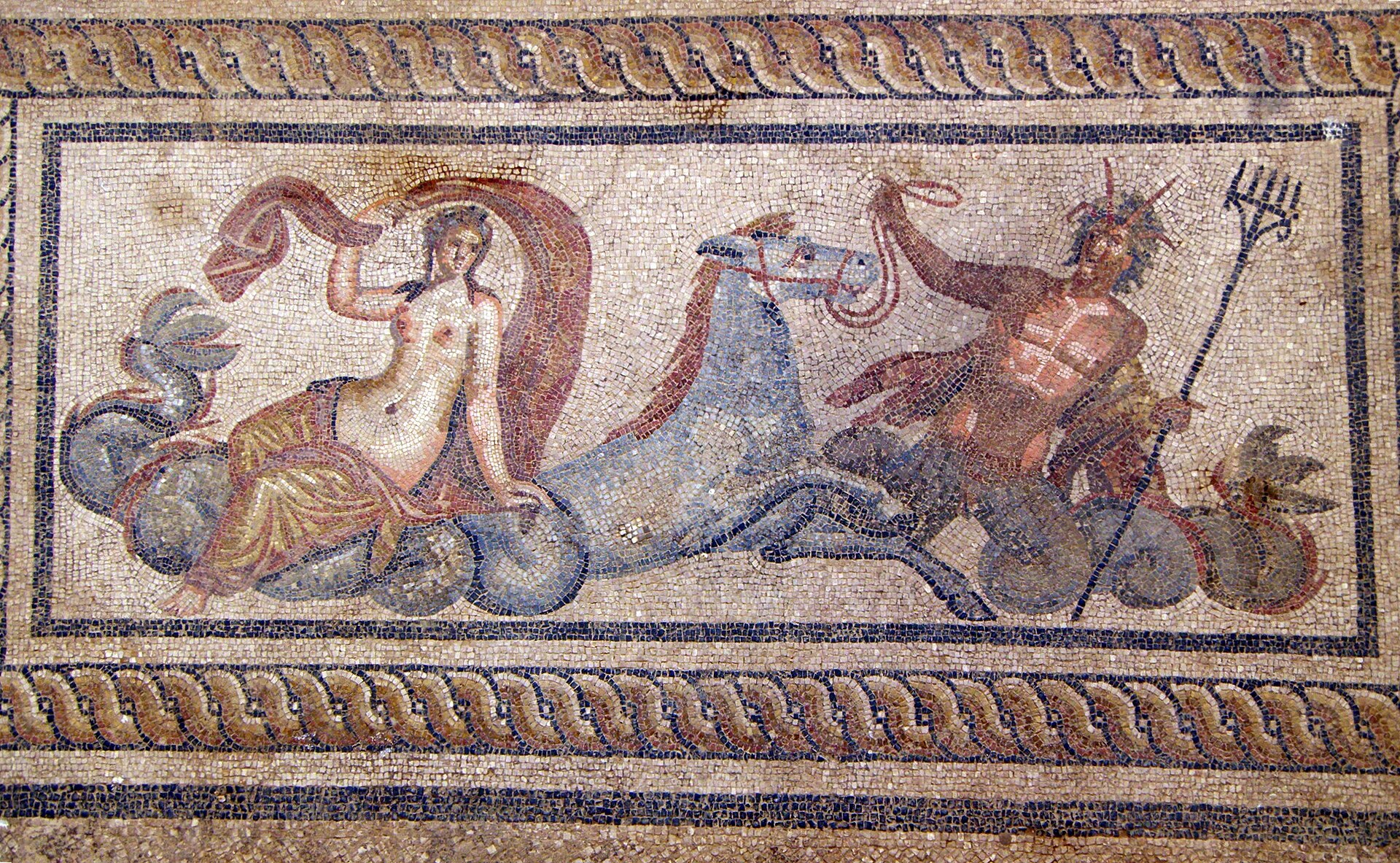
- Nereid on a hippocamp with Triton. Photograph: Carole Raddato (2011); CC BY-SA 2.0.. Source record · CC BY-SA 2.0 · Image file.
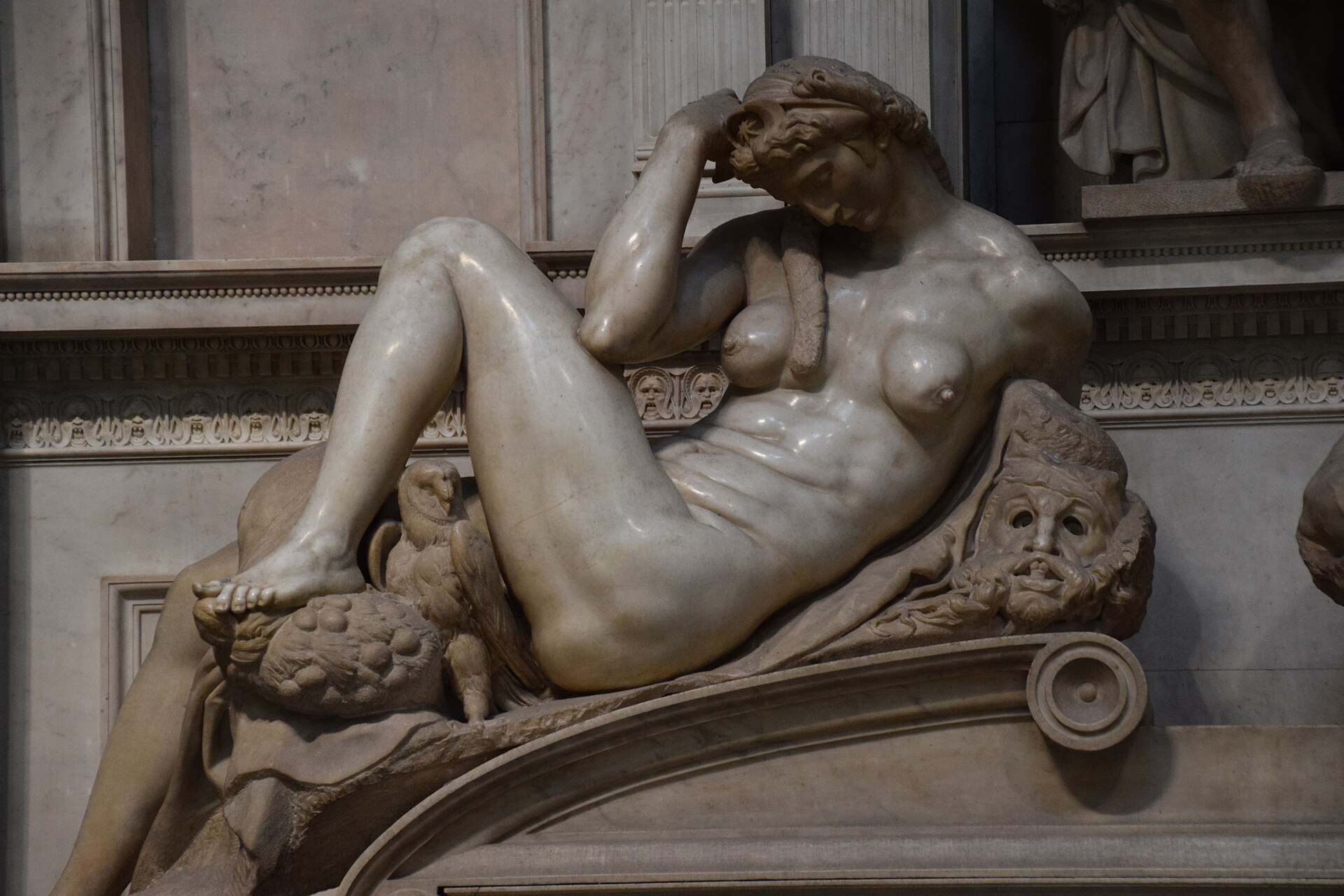
- Night. Photograph: George M. Groutas (2019); CC BY 2.0.. Source record · CC BY 2.0 · Image file.
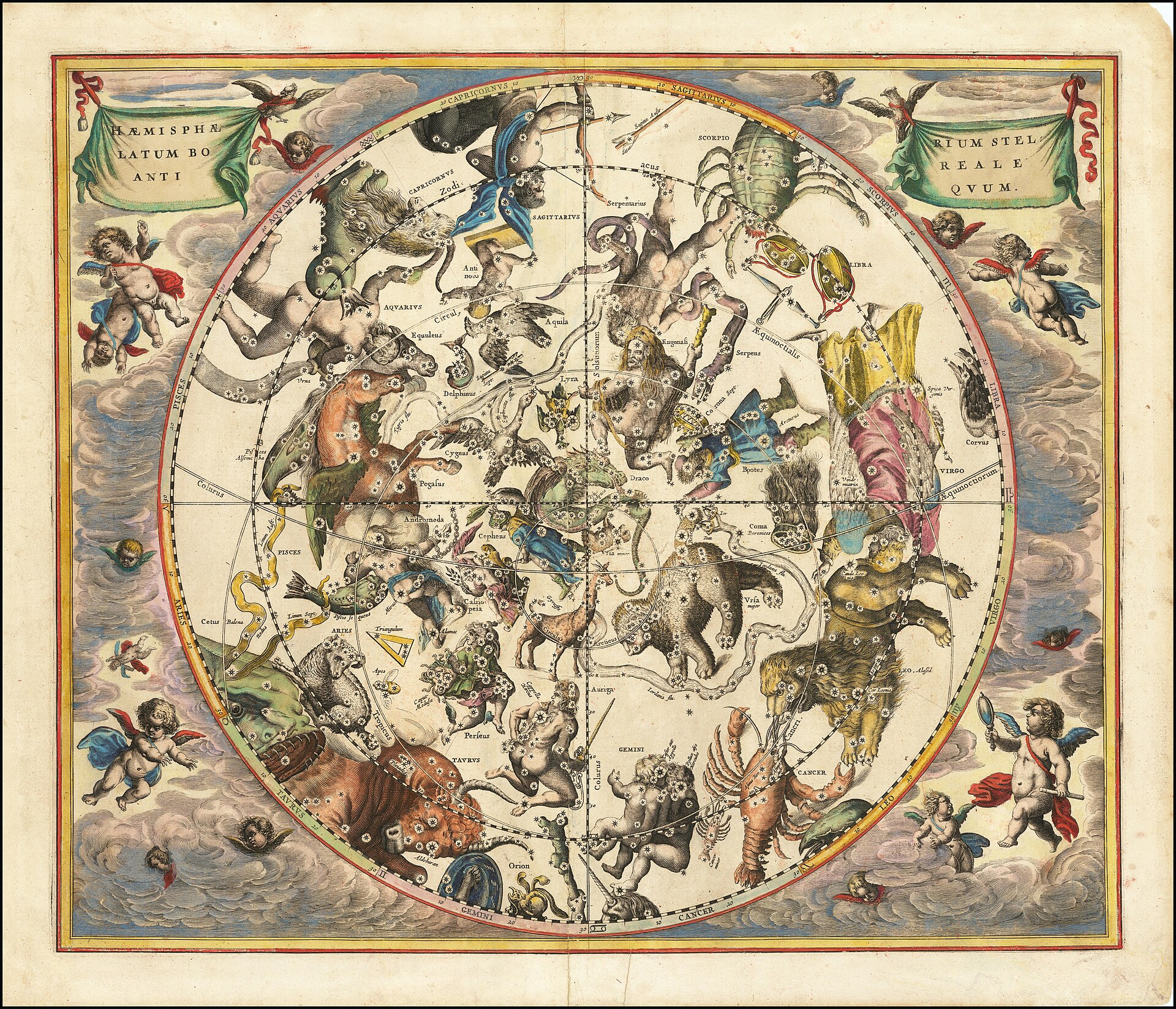
- Northern celestial hemisphere. Andreas Cellarius; digital image via Barry Lawrence Ruderman Antique Maps / Wikimedia Commons; Public domain.. Source record · Public domain · Image file.
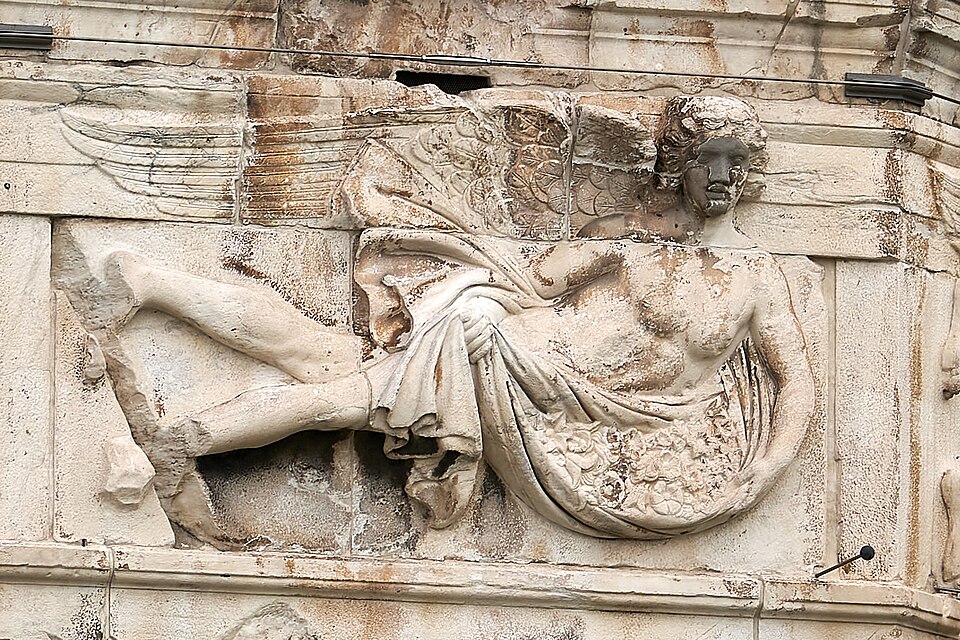
- Notus on the Tower of the Winds. Tower of the Winds, Athens. Photograph by PhPi4, CC BY-SA 4.0, via Wikimedia Commons.. Source record · CC BY-SA 4.0 · Image file.
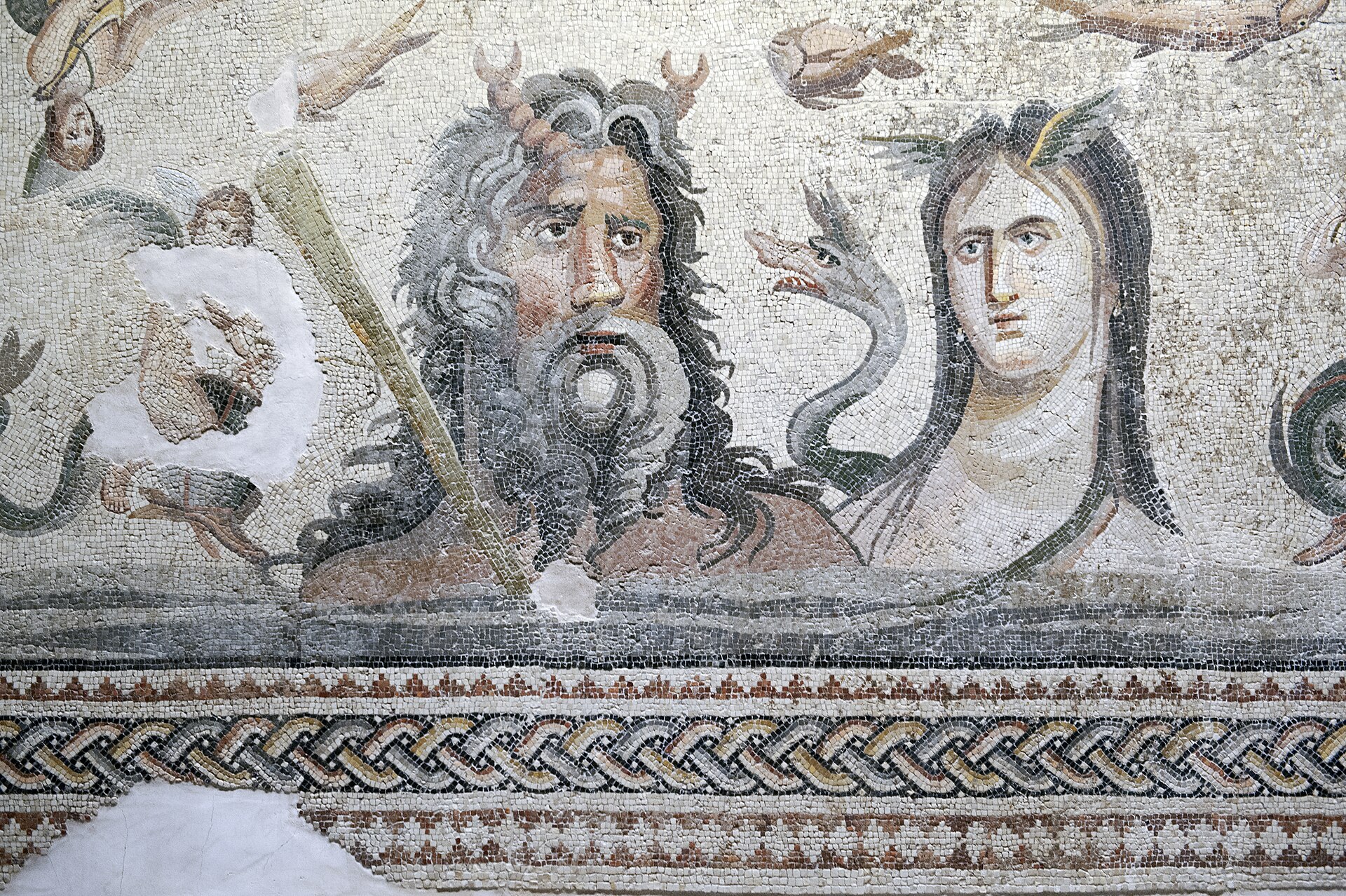
- Oceanus and Tethys mosaic. Zeugma Mosaic Museum. Photograph by Bernard Gagnon, CC BY-SA 3.0, via Wikimedia Commons.. Source record · CC BY-SA 3.0 · Image file.
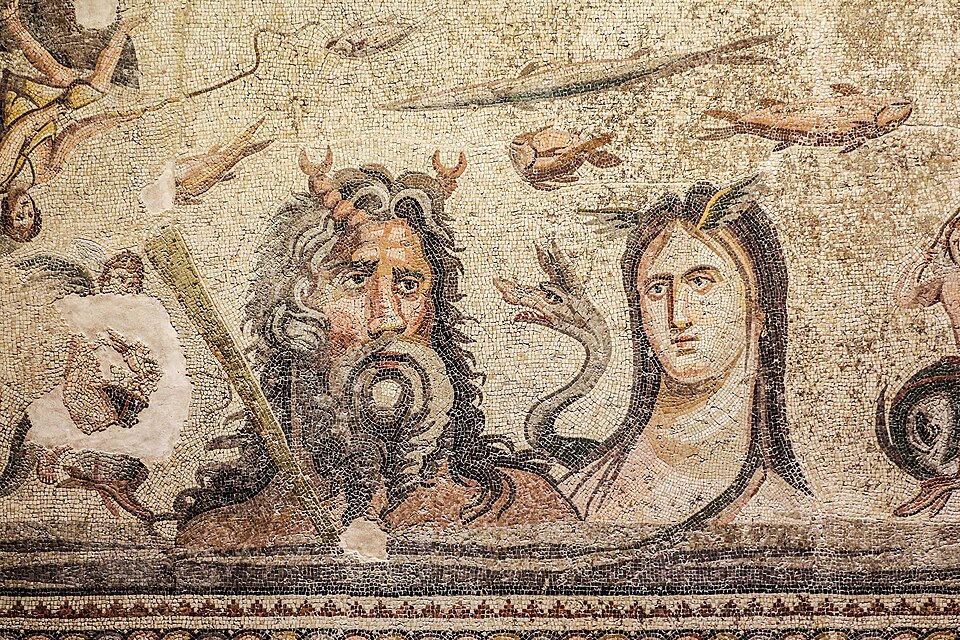
- Oceanus and Tethys with a sea creature. Photograph: Dosseman (2011); CC BY-SA 4.0.. Source record · CC BY-SA 4.0 · Image file.
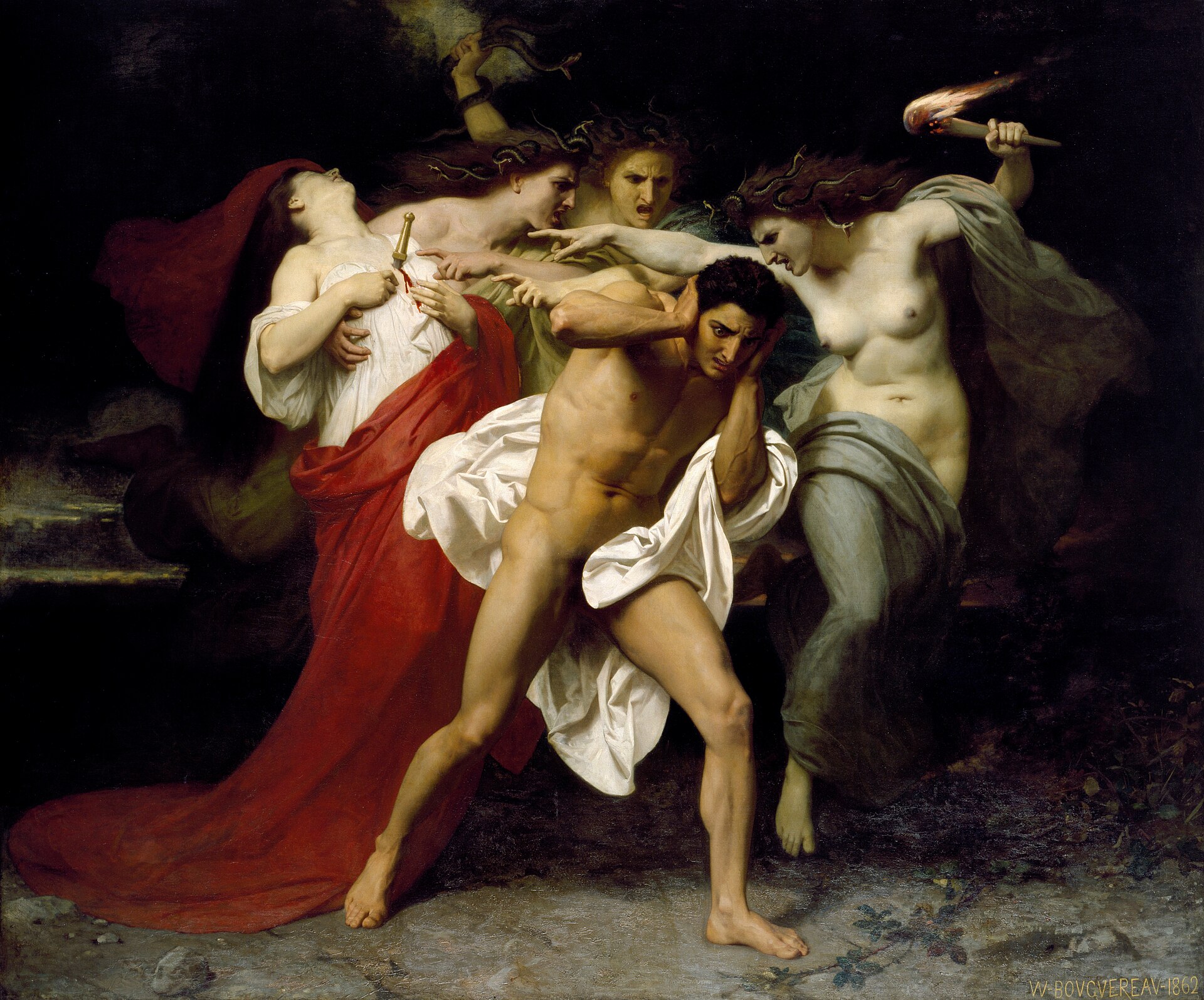
- Orestes Pursued by the Furies. William-Adolphe Bouguereau, Orestes Pursued by the Furies, Chrysler Museum of Art. Google Art Project / Wikimedia Commons. Public domain.. Source record · Public domain · Image file.
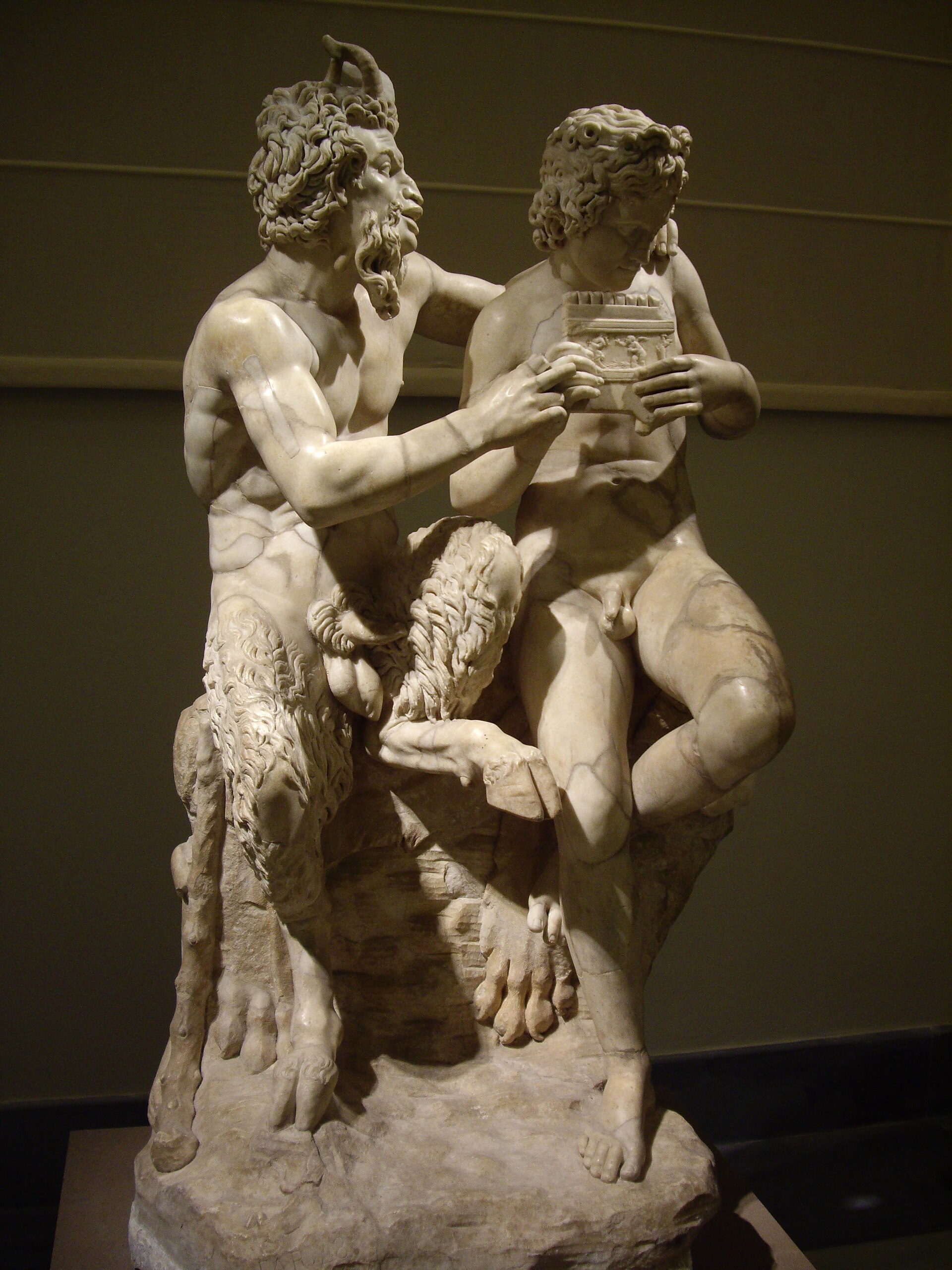
- Pan teaching Daphnis to play the pipes. Photograph: virtusincertus (2009); CC BY 2.0.. Source record · CC BY 2.0 · Image file.
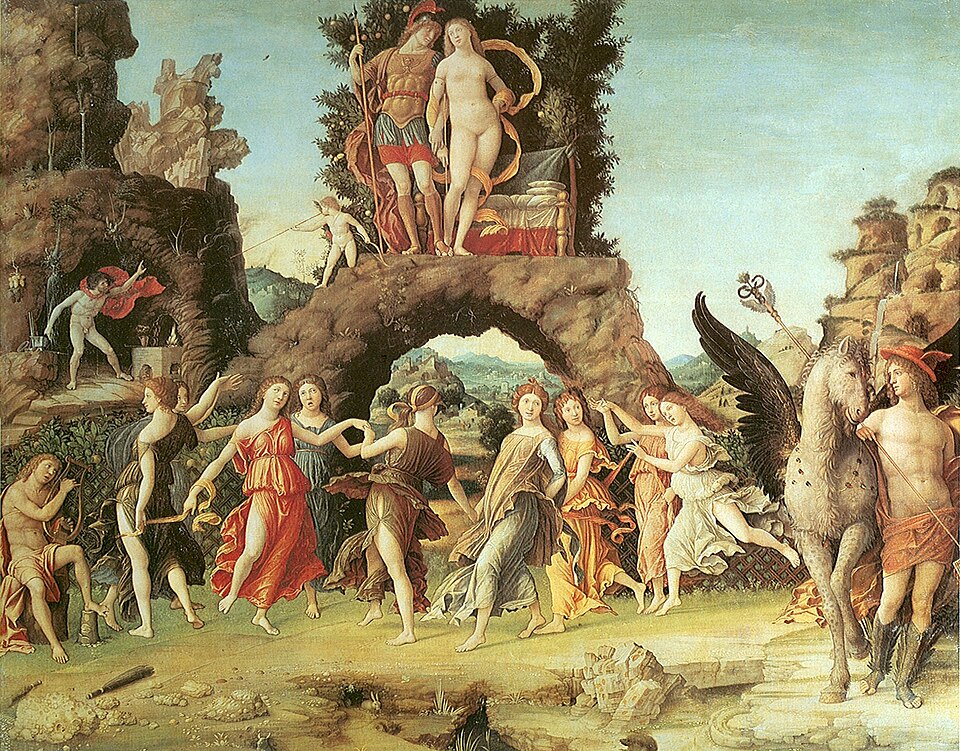
- Parnassus. Andrea Mantegna, Parnassus, Musée du Louvre. Wikimedia Commons. Public domain.. Source record · Public domain · Image file.
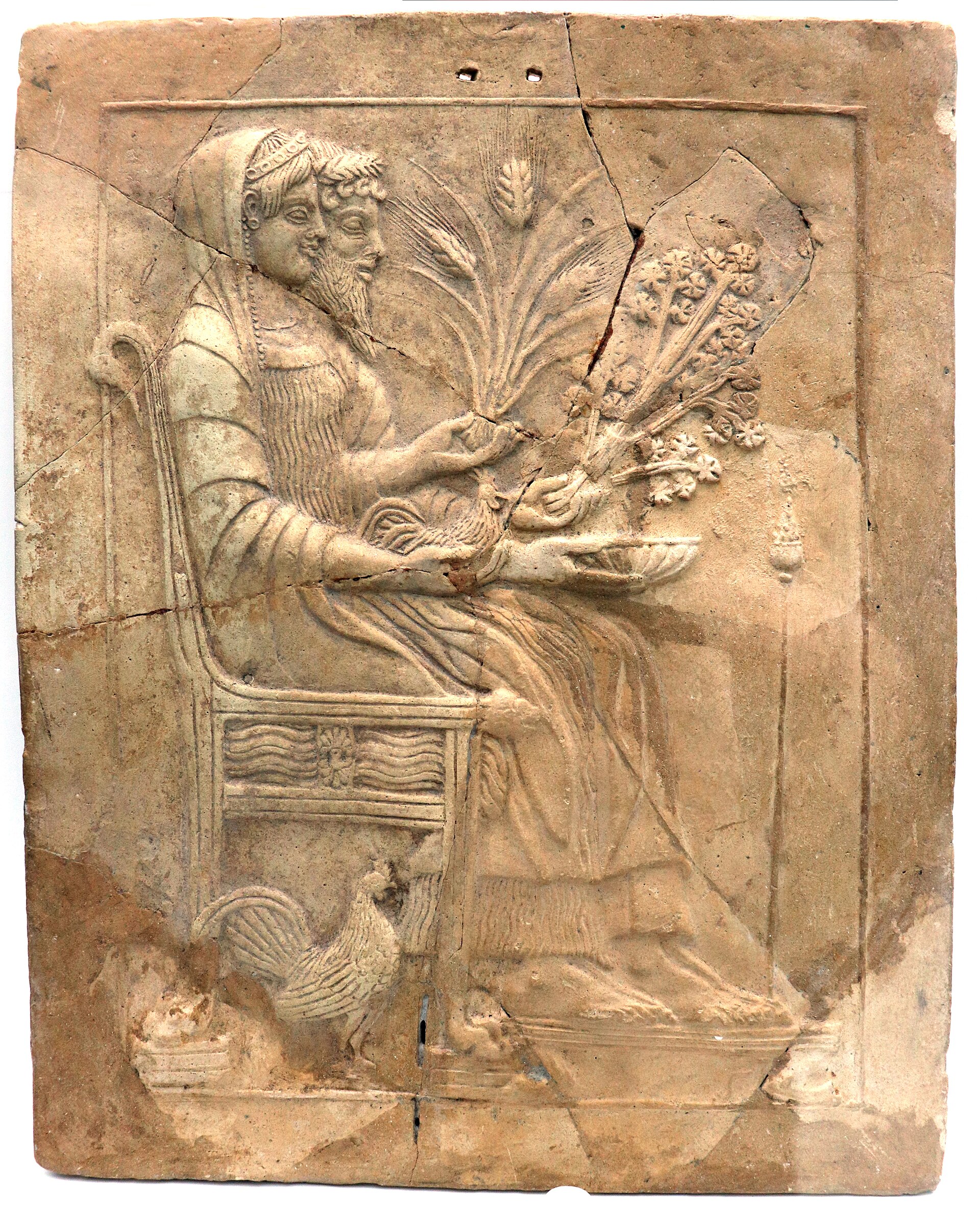
- Persephone and Hades enthroned. Photograph: Fabien Bièvre-Perrin; CC BY-SA 4.0.. Source record · CC BY-SA 4.0 · Image file.
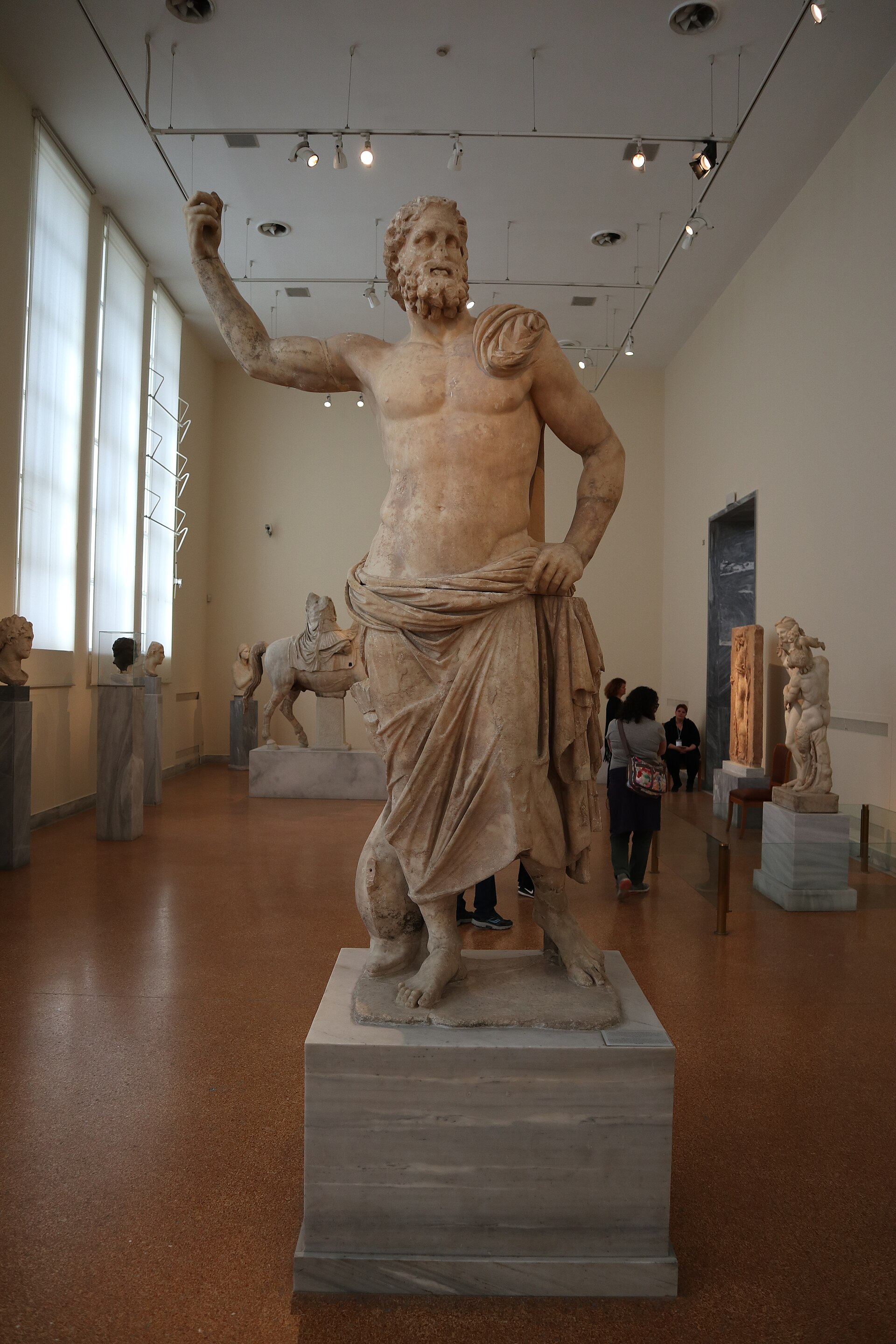
- Poseidon from Melos. Photograph: George E. Koronaios (2018); CC0.. Source record · CC0 · Image file.
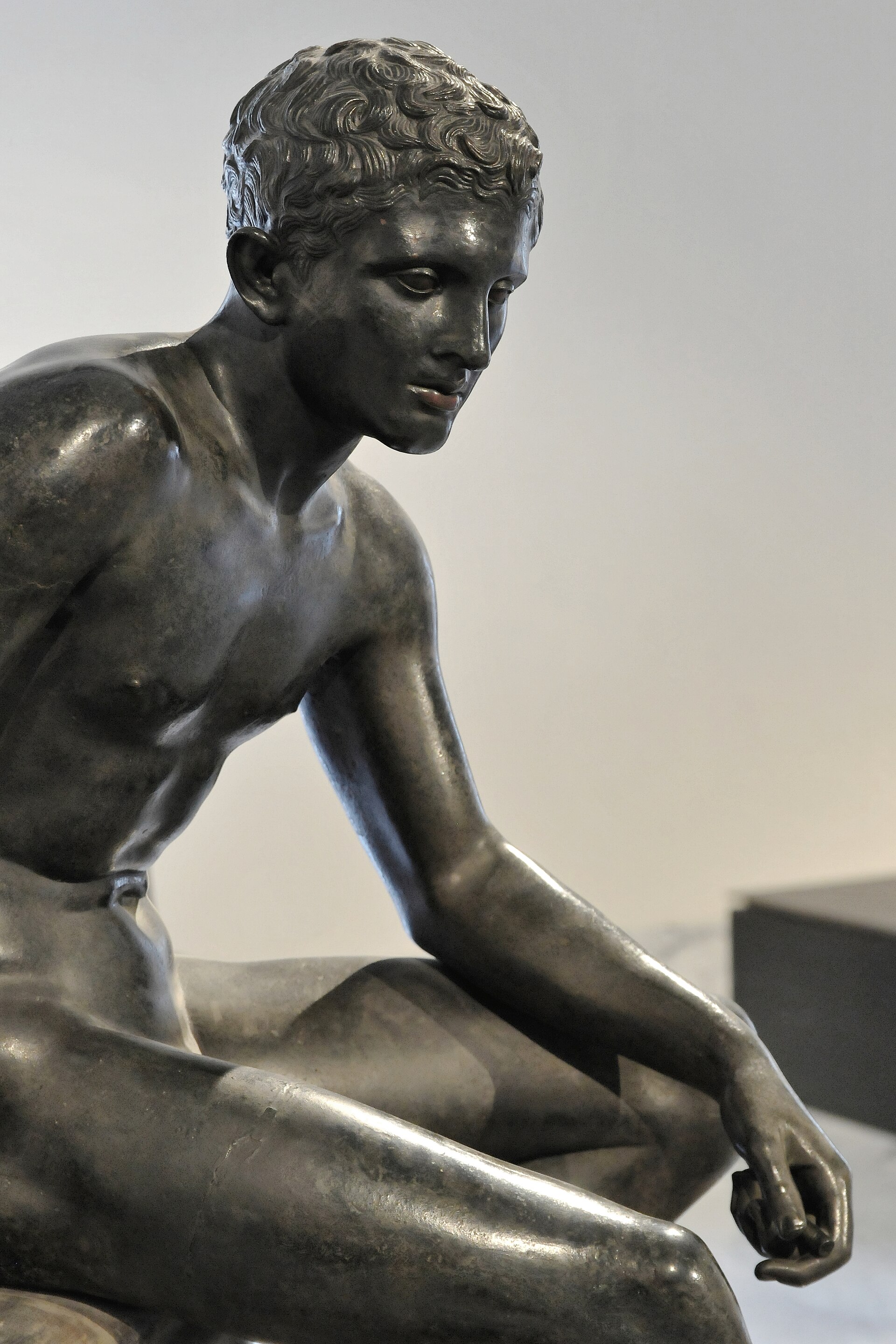
- Resting Hermes, detail. Photograph: Marie-Lan Nguyen (2011); CC BY 2.5.. Source record · CC BY 2.5 · Image file.
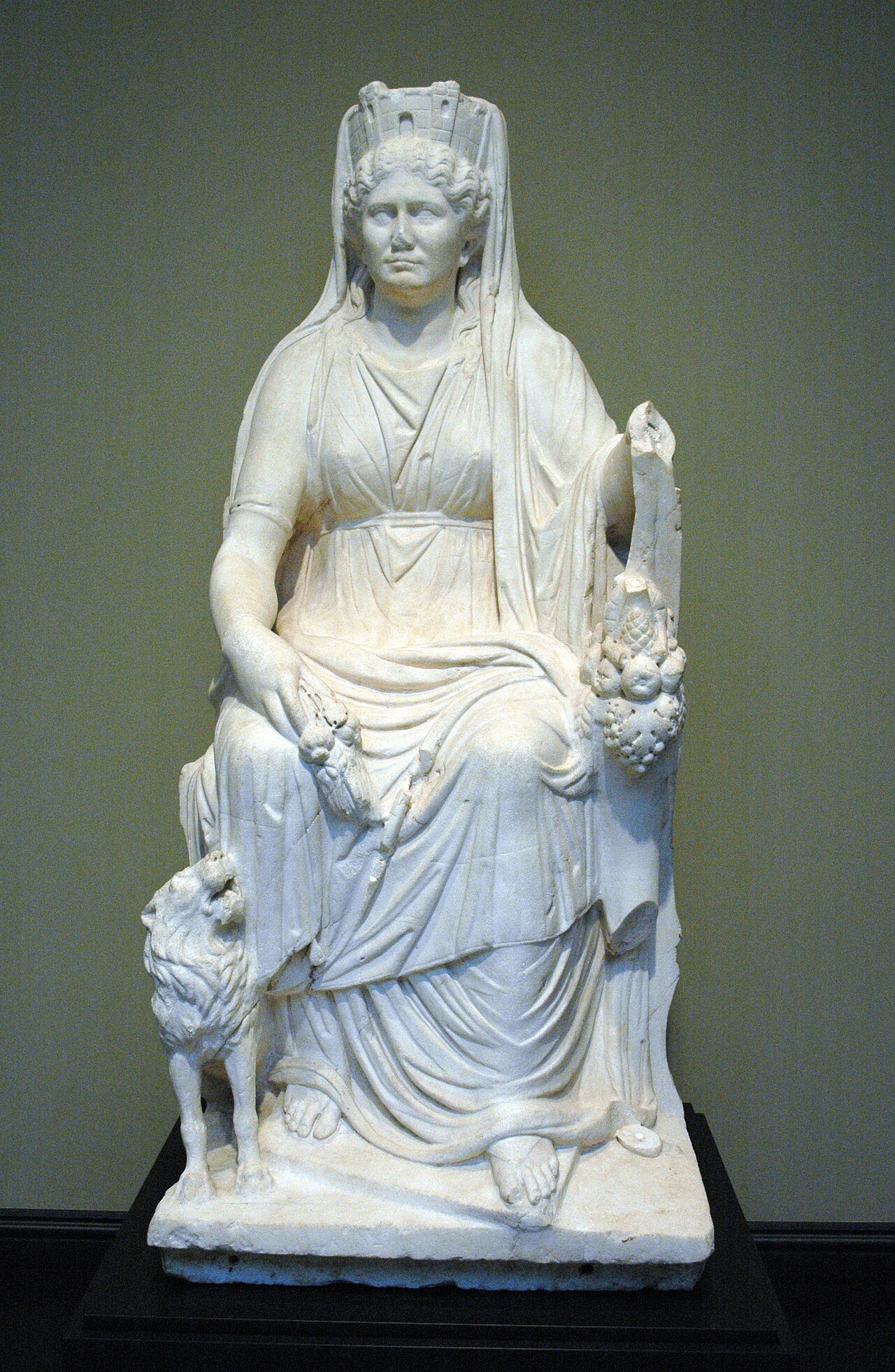
- Roman woman portrayed as Cybele. Photograph: Marshall Astor (2007); CC BY-SA 2.0.. Source record · CC BY-SA 2.0 · Image file.
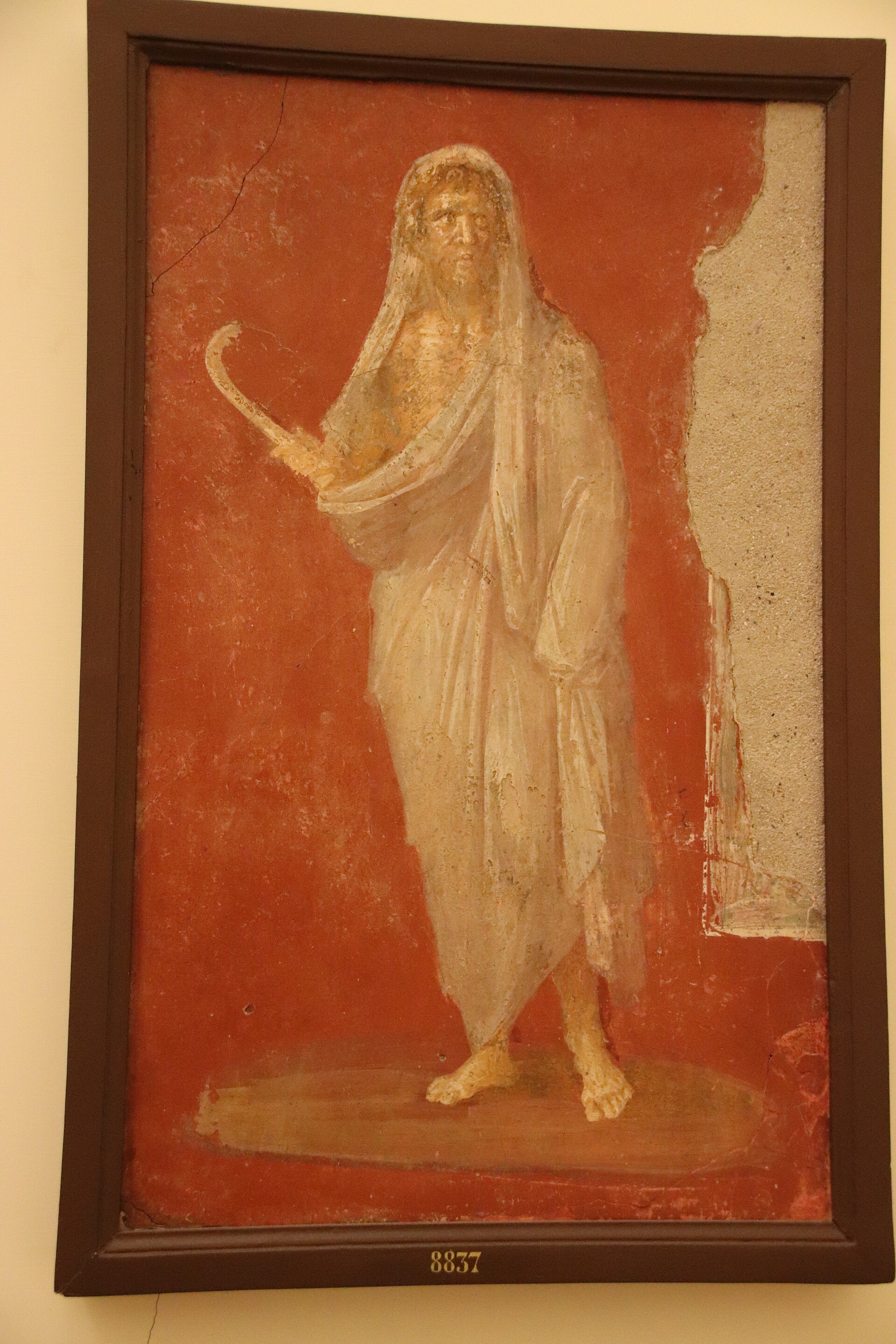
- Saturn holding a sickle. Photograph: Gary Todd (2019); Public domain.. Source record · Public domain · Image file.
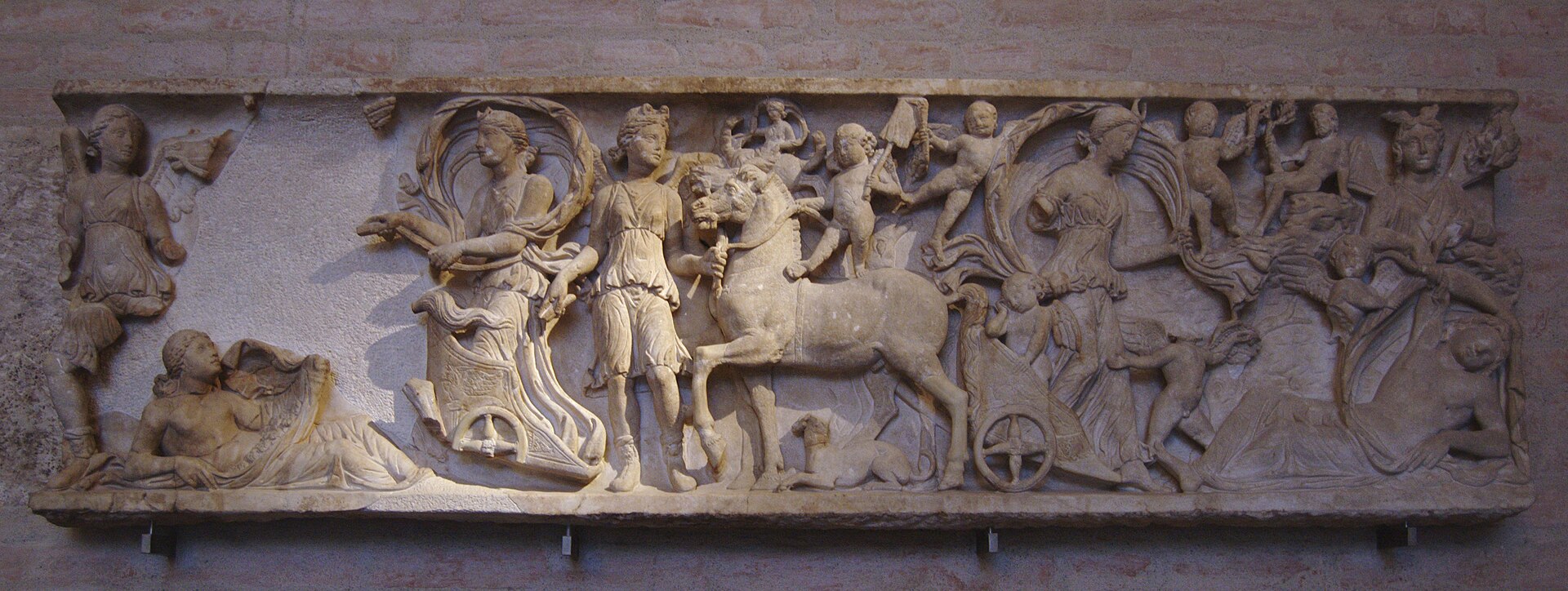
- Selene and Endymion sarcophagus relief. Photograph: Bibi Saint-Pol (2007); Public domain.. Source record · Public domain · Image file.
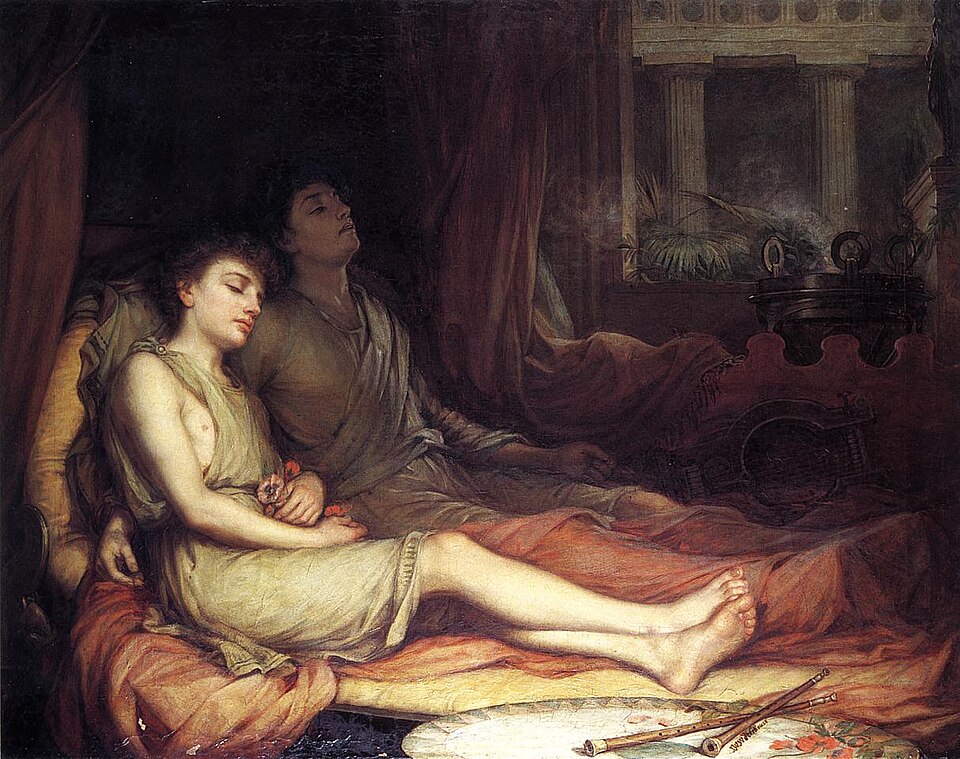
- Sleep and his Half-brother Death. John William Waterhouse, Sleep and his Half-brother Death, 1874. Wikimedia Commons. Public domain.. Source record · Public domain · Image file.
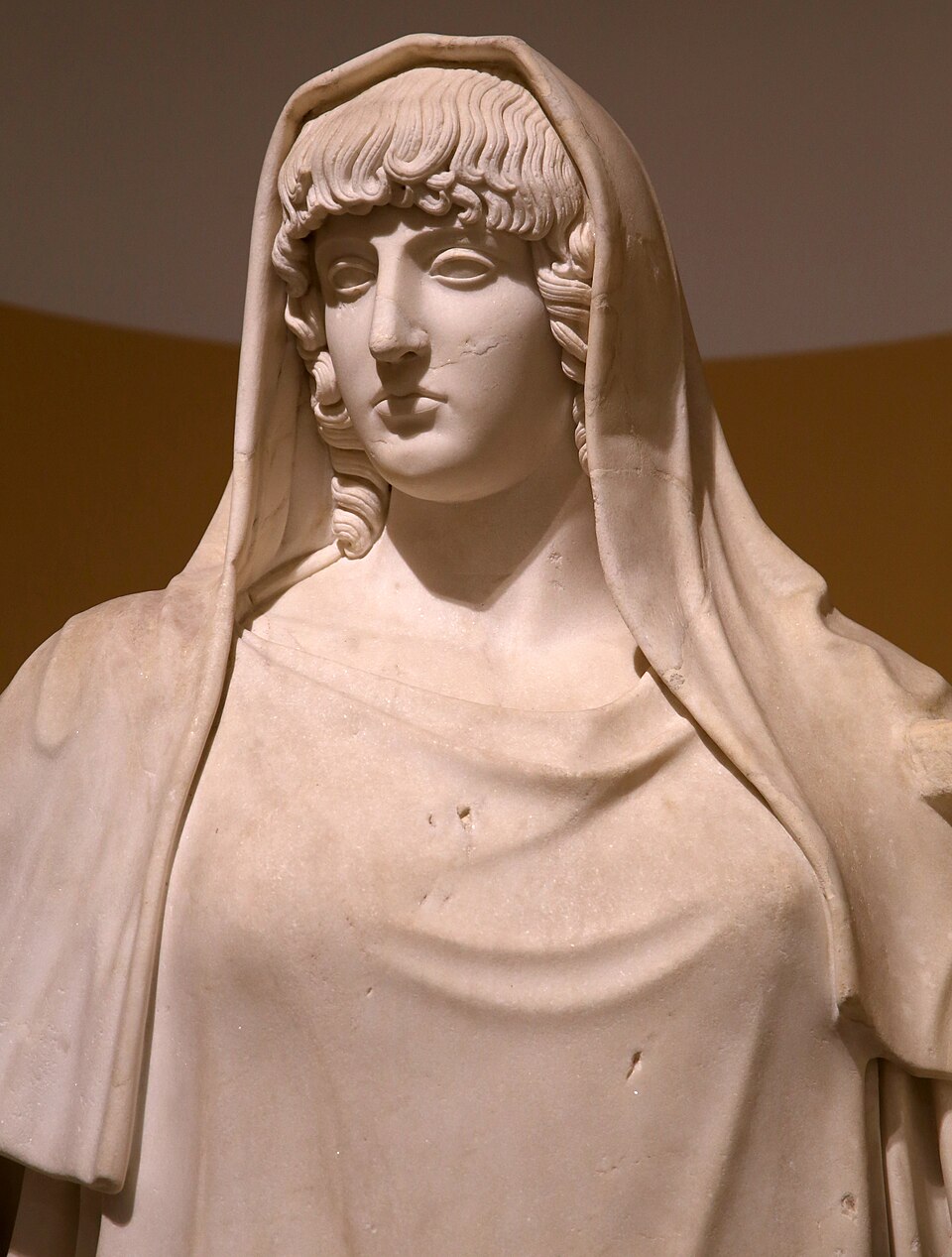
- Statue traditionally called the Hestia Giustiniani, detail. Hestia Giustiniani, Torlonia Collection, MT 490. Photograph by Sailko, CC BY 3.0, via Wikimedia Commons.. Source record · CC BY 3.0 · Image file.
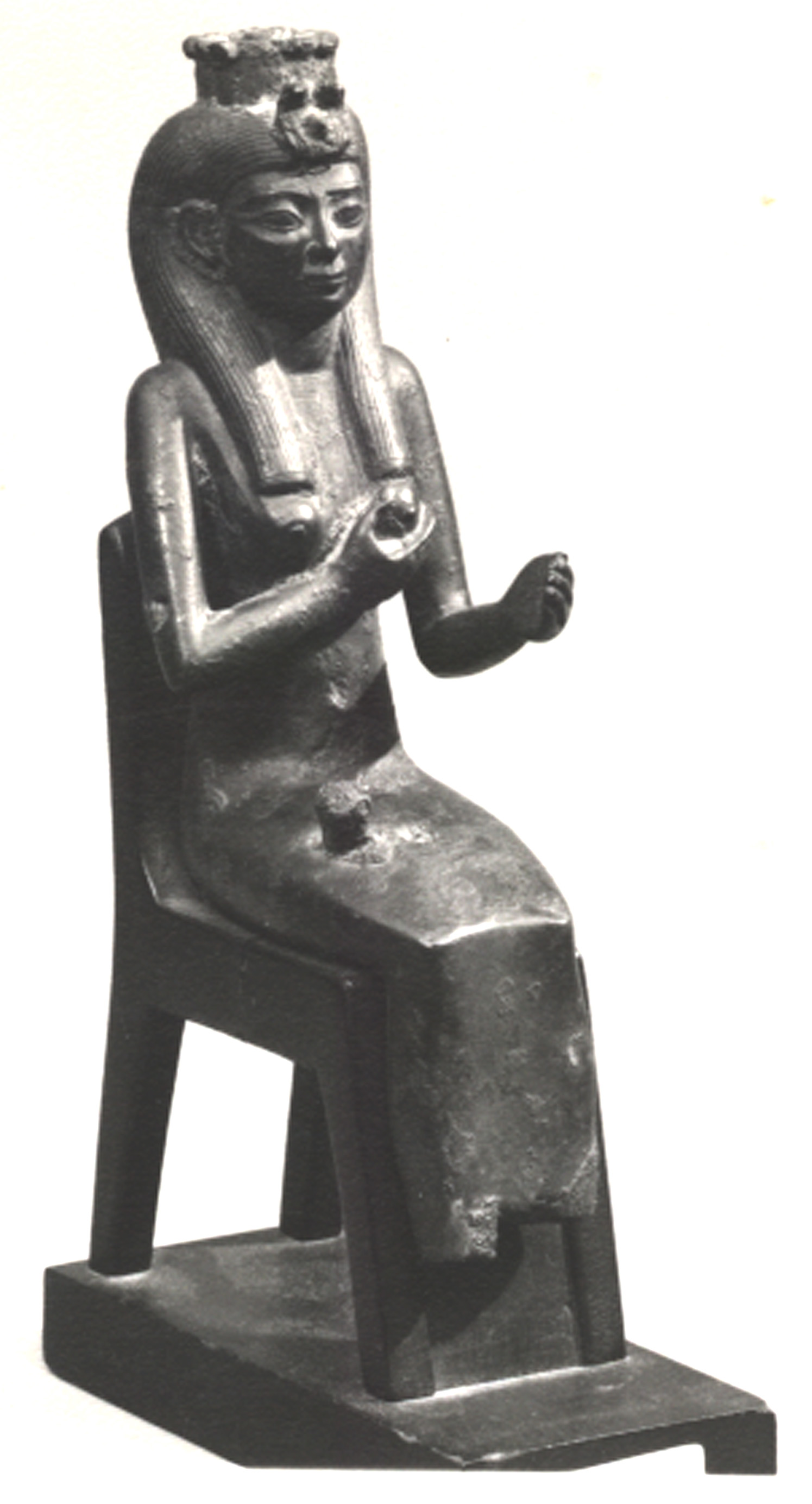
- Statuette of Isis. The Metropolitan Museum of Art, 66.99.121; ca. 712–343 BCE. Purchase, Fletcher Fund and The Guide Foundation Inc. Gift, 1966.. Source record · Public domain / CC0 · Image file.
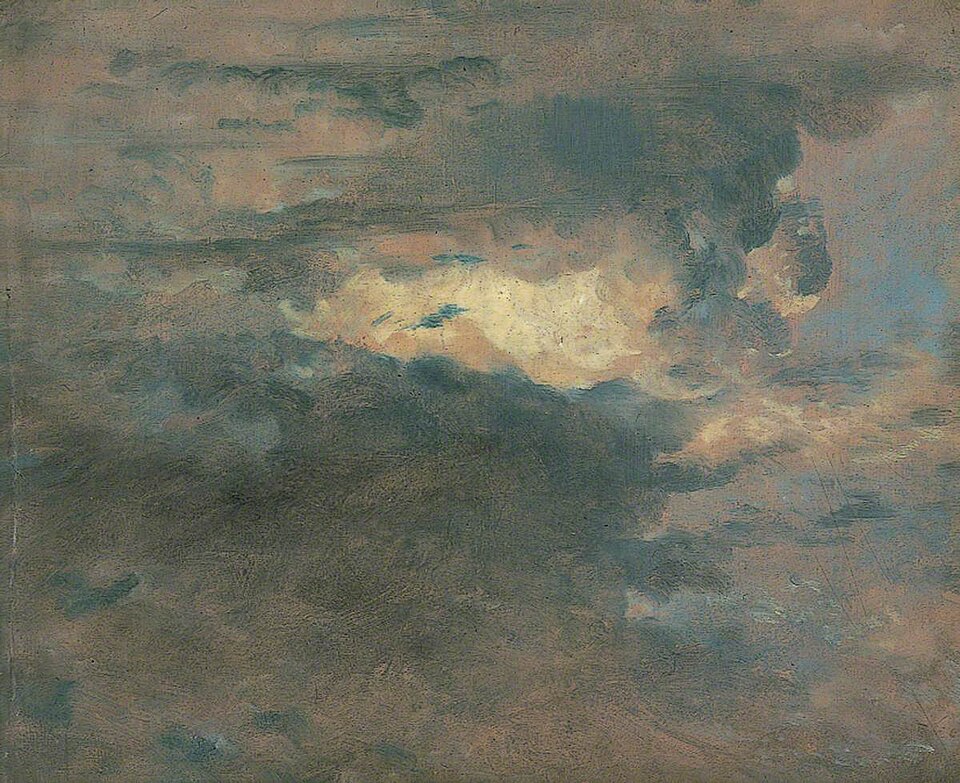
- Study of Clouds, Evening, 31 August 1822. John Constable; digital image via Birmingham Museums Trust / Art UK / Wikimedia Commons; Public domain.. Source record · Public domain · Image file.
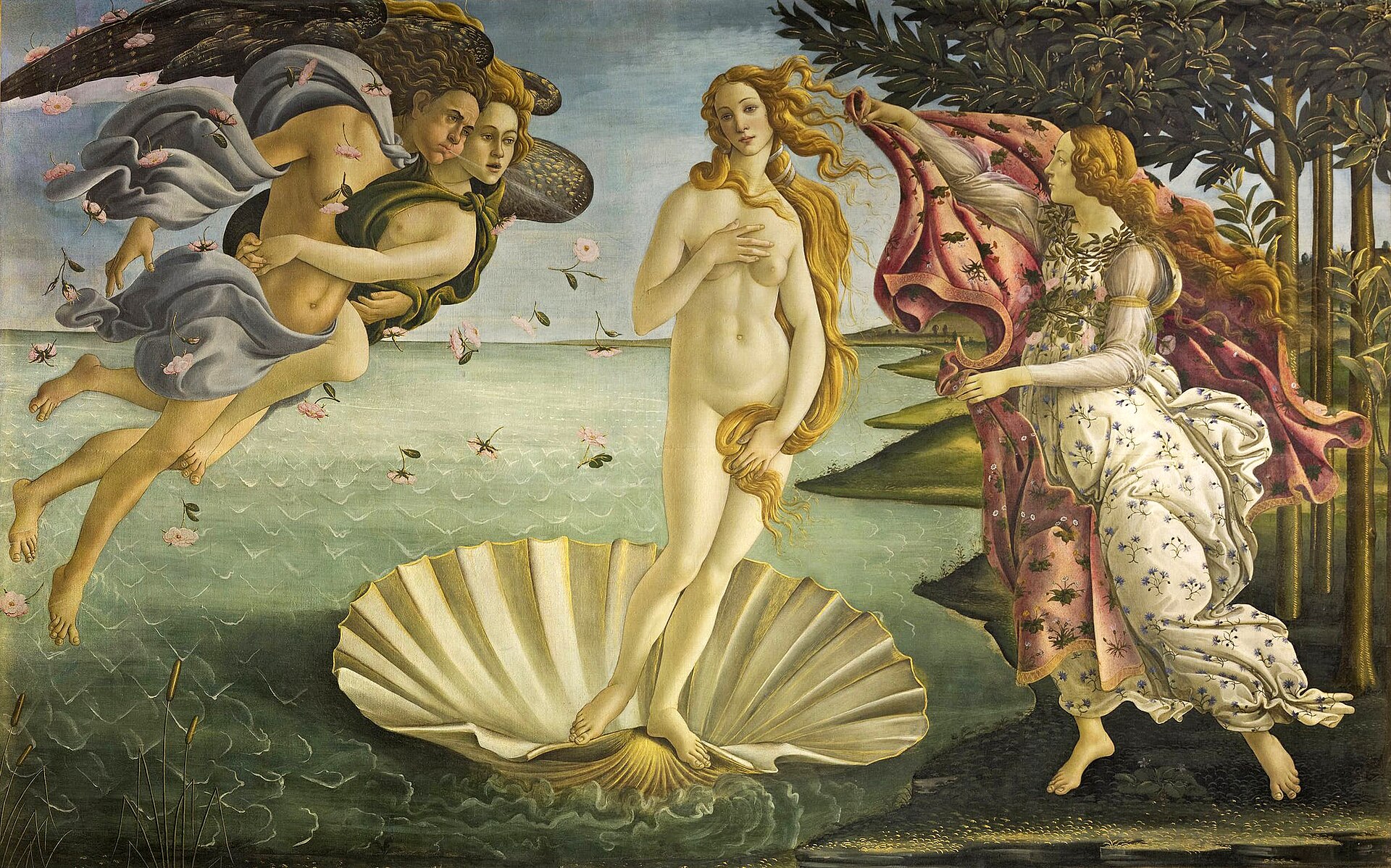
- The Birth of Venus. Sandro Botticelli; Uffizi Galleries. Public-domain reproduction via Wikimedia Commons.. Source record · Public domain · Image file.
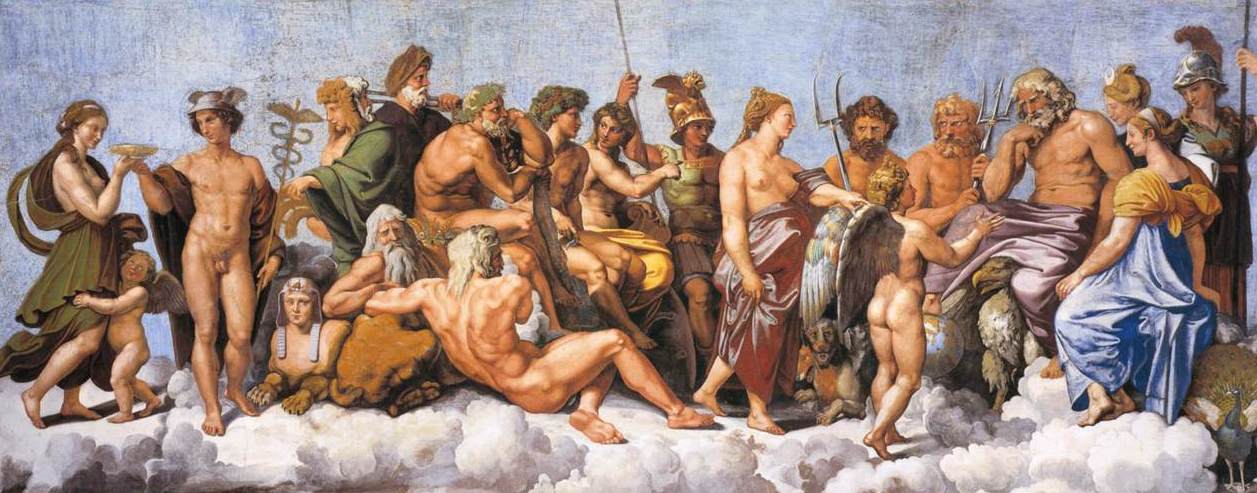
- The Council of Gods. Raphael; image via Web Gallery of Art / Wikimedia Commons; Public domain.. Source record · Public domain · Image file.
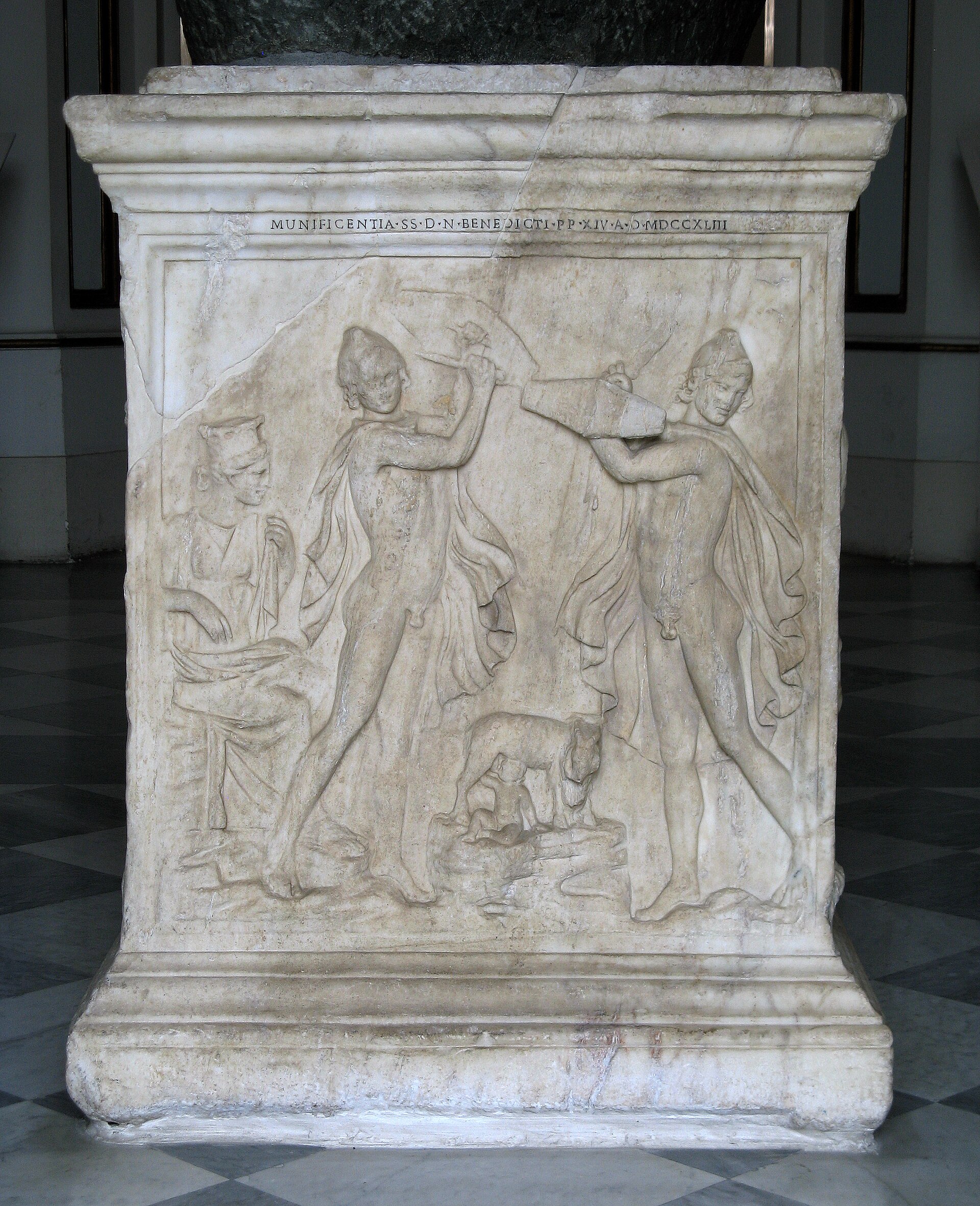
- The Curetes guarding the infant Zeus, relief on a statue base. Photograph by Mark Landon, Wikimedia Commons, CC BY 4.0.. Source record · CC BY 4.0 · Image file.
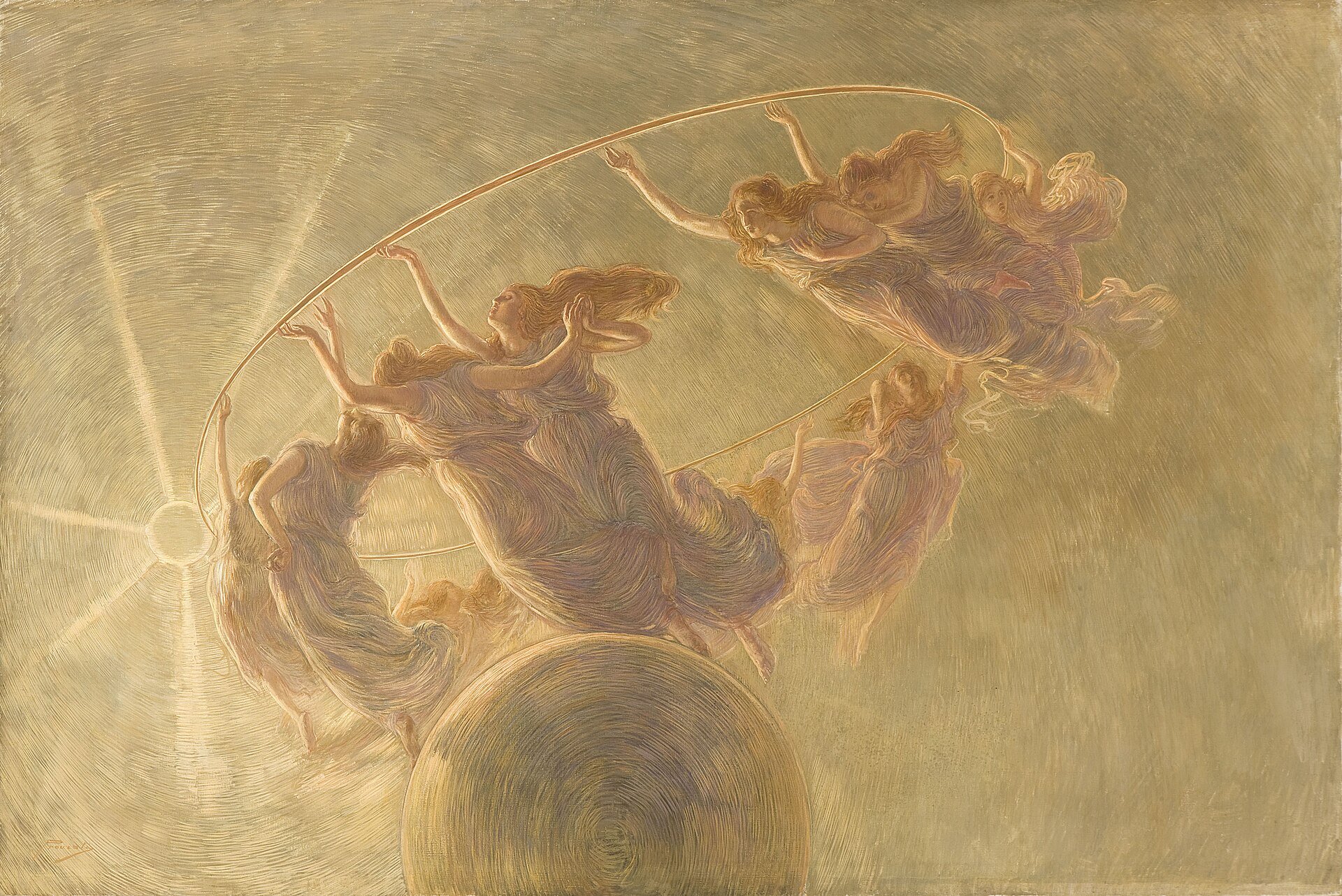
- The Dance of the Hours. Gaetano Previati; Fondazione Cariplo / Artgate, Wikimedia Commons, CC BY-SA 3.0.. Source record · CC BY-SA 3.0 · Image file.
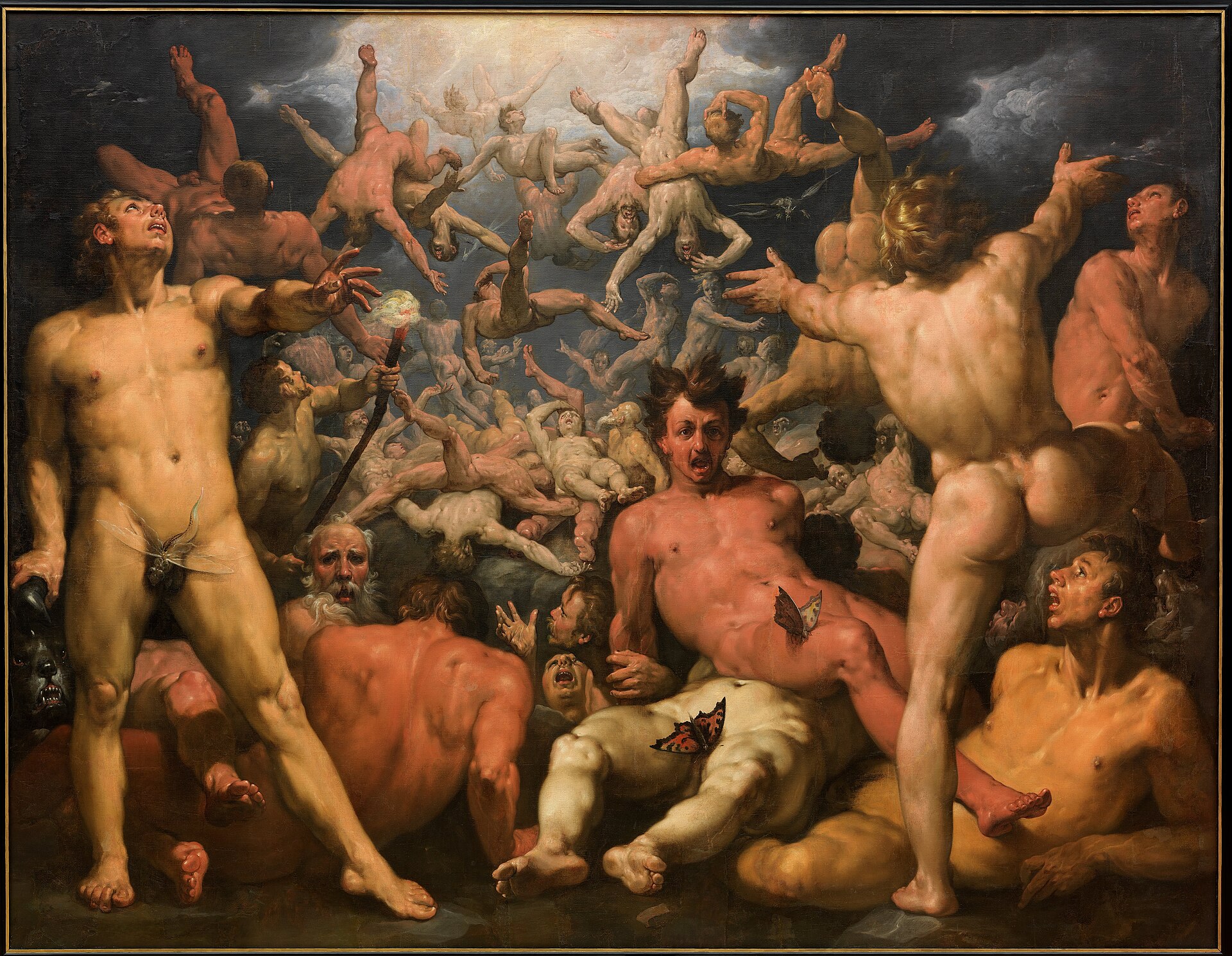
- The Fall of the Titans. Cornelis Cornelisz. van Haarlem; Statens Museum for Kunst. Image via Google Arts & Culture and Wikimedia Commons, public domain.. Source record · Public domain · Image file.
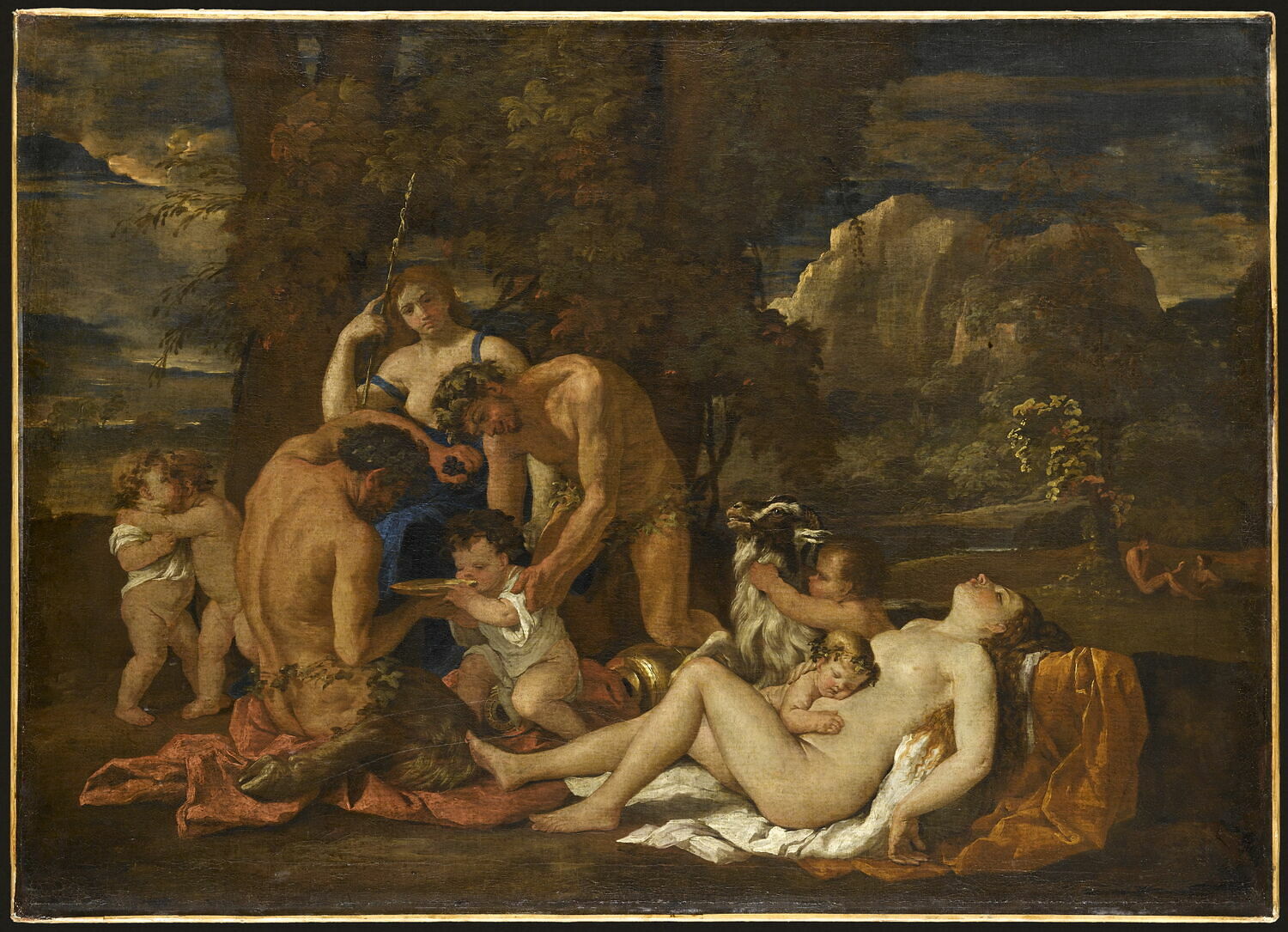
- The Nurture of Bacchus. Nicolas Poussin; Louvre Museum, INV 7295. Public-domain reproduction via Wikimedia Commons.. Source record · Public domain · Image file.
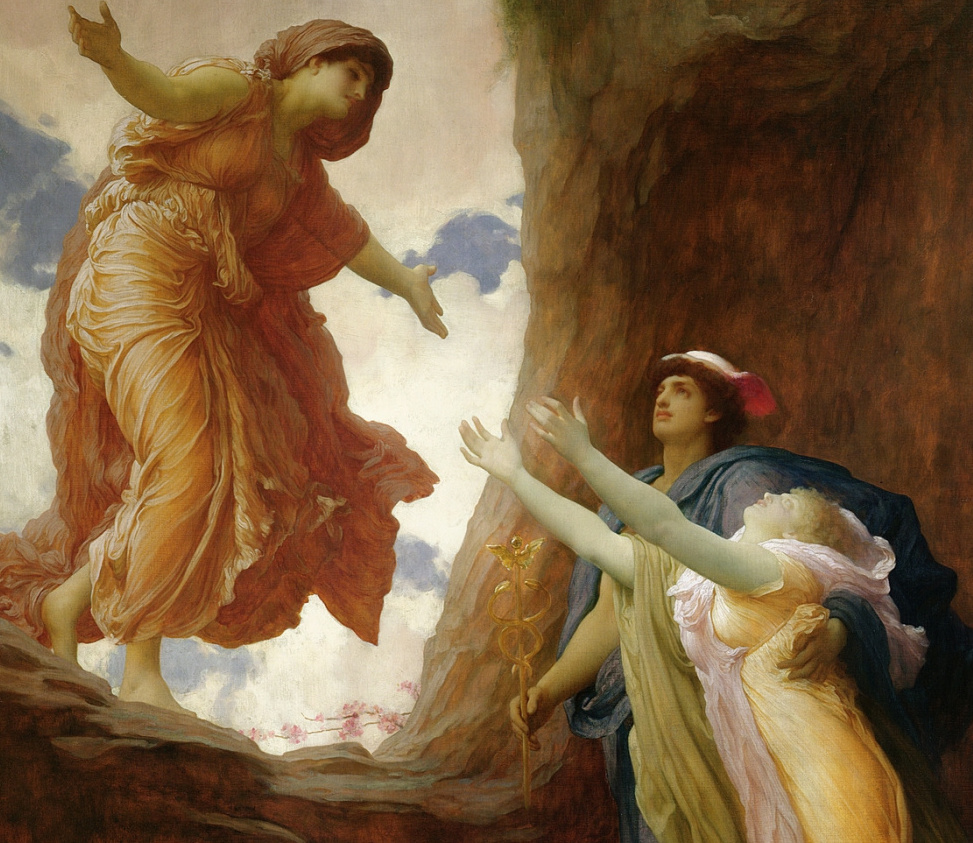
- The Return of Persephone. Frederic Leighton; Leeds Art Gallery. Public-domain reproduction via Wikimedia Commons.. Source record · Public domain · Image file.
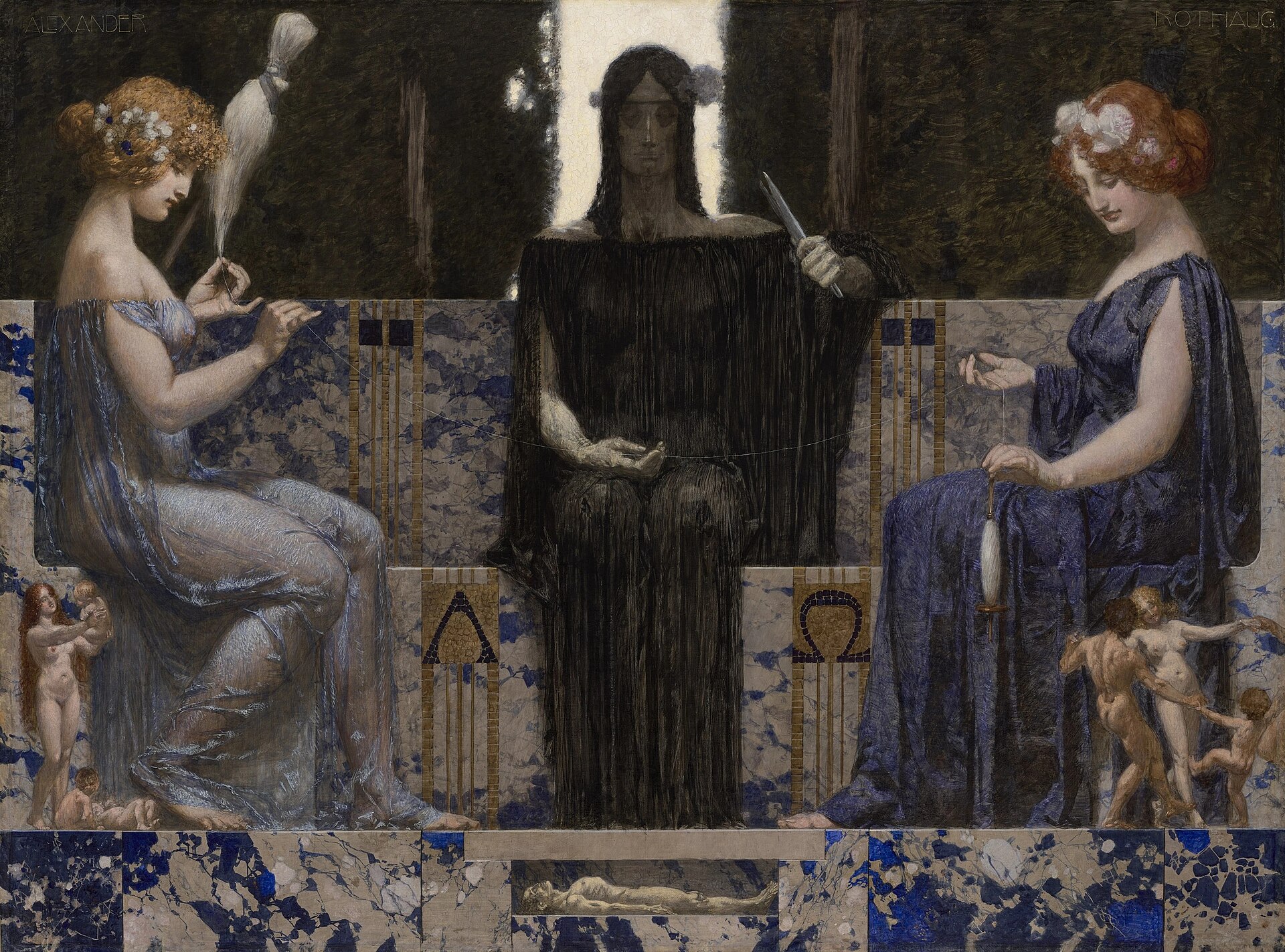
- The Three Fates. Alexander Rothaug, The Three Fates; image via Kilgore Gallery and Wikimedia Commons, public domain.. Source record · Public domain · Image file.
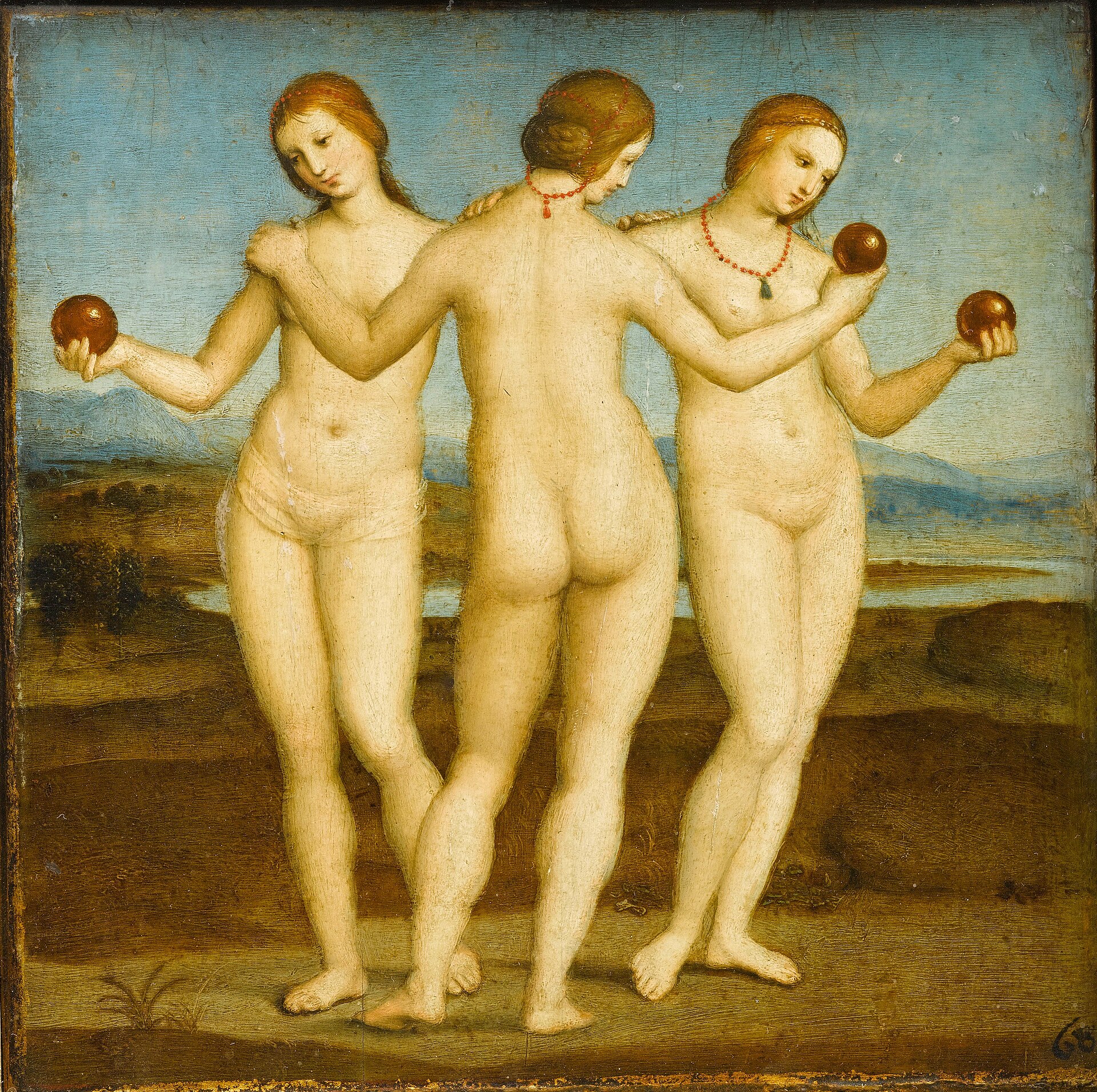
- The Three Graces. Raphael, The Three Graces, Musée Condé. Google Art Project / Wikimedia Commons. Public domain.. Source record · Public domain · Image file.
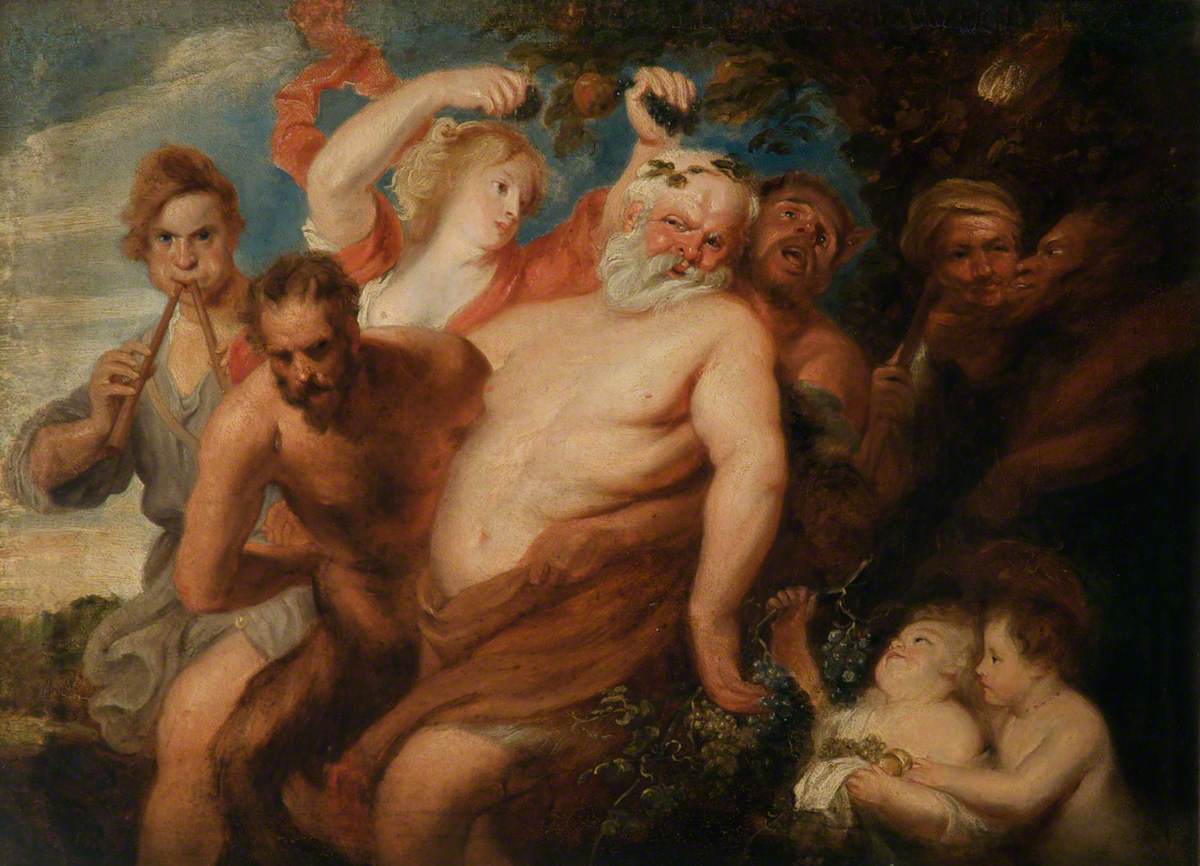
- The Triumph of Silenus, copy after the studio of Peter Paul Rubens. Thomas Robson, after the studio of Peter Paul Rubens; Warrington Museum & Art Gallery. Image via Art UK and Wikimedia Commons, public domain.. Source record · Public domain · Image file.
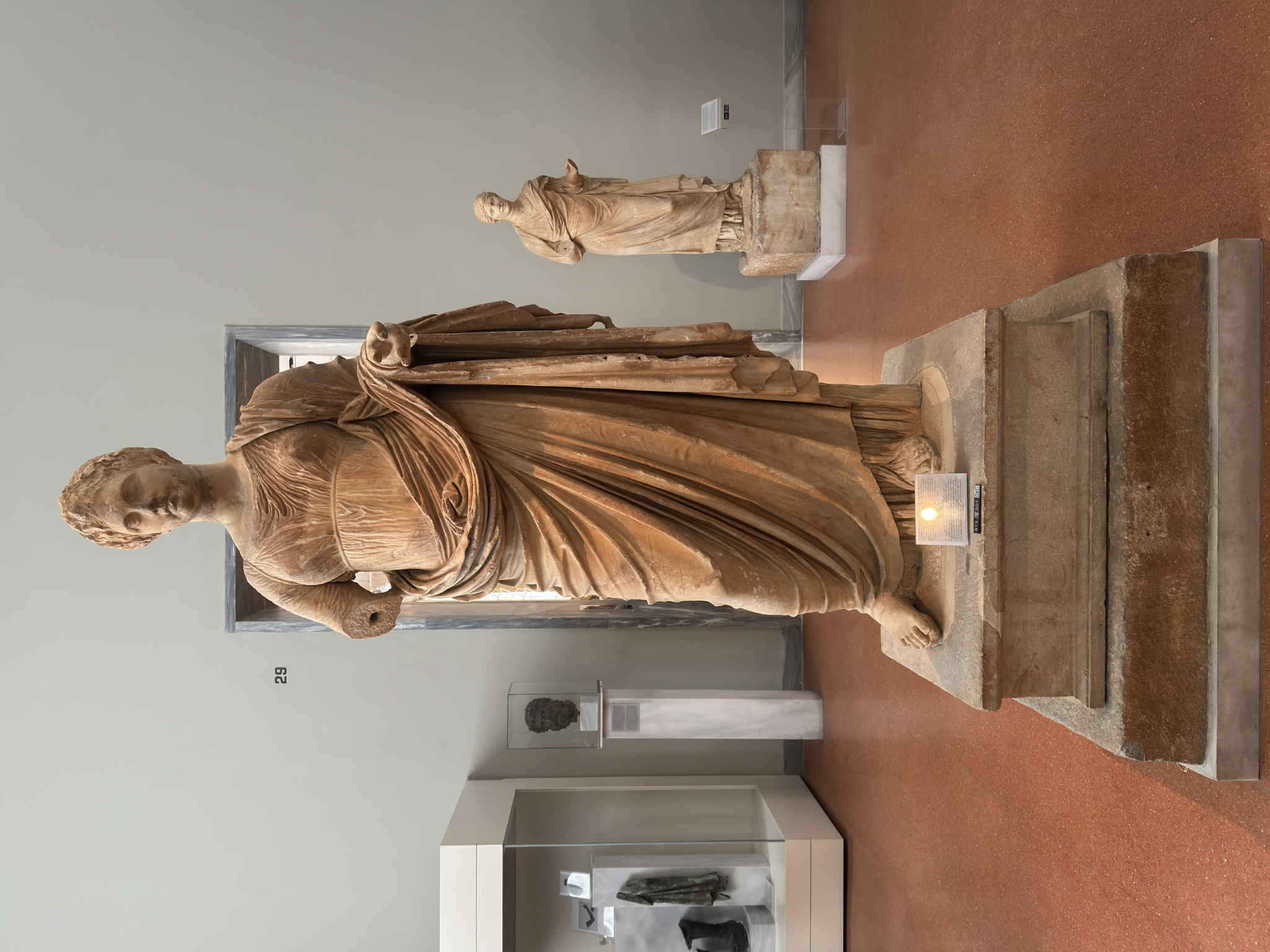
- Themis of Rhamnous, NAMA 231. Themis of Rhamnous, National Archaeological Museum, Athens. Photograph by Furius, CC0, via Wikimedia Commons.. Source record · CC0 · Image file.
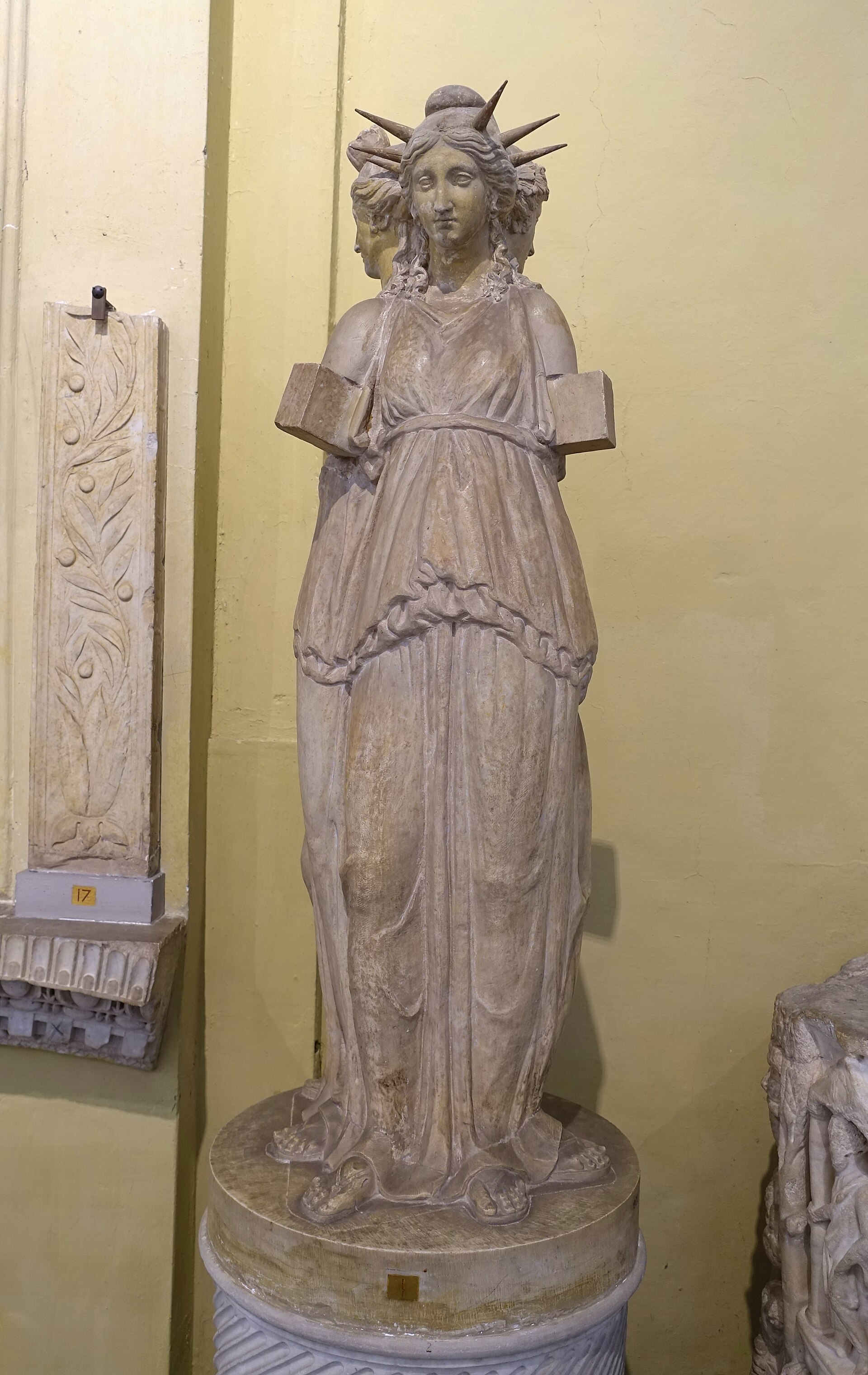
- Triple Hecate. Photograph: Daderot (2019); CC0 1.0.. Source record · CC0 1.0 · Image file.
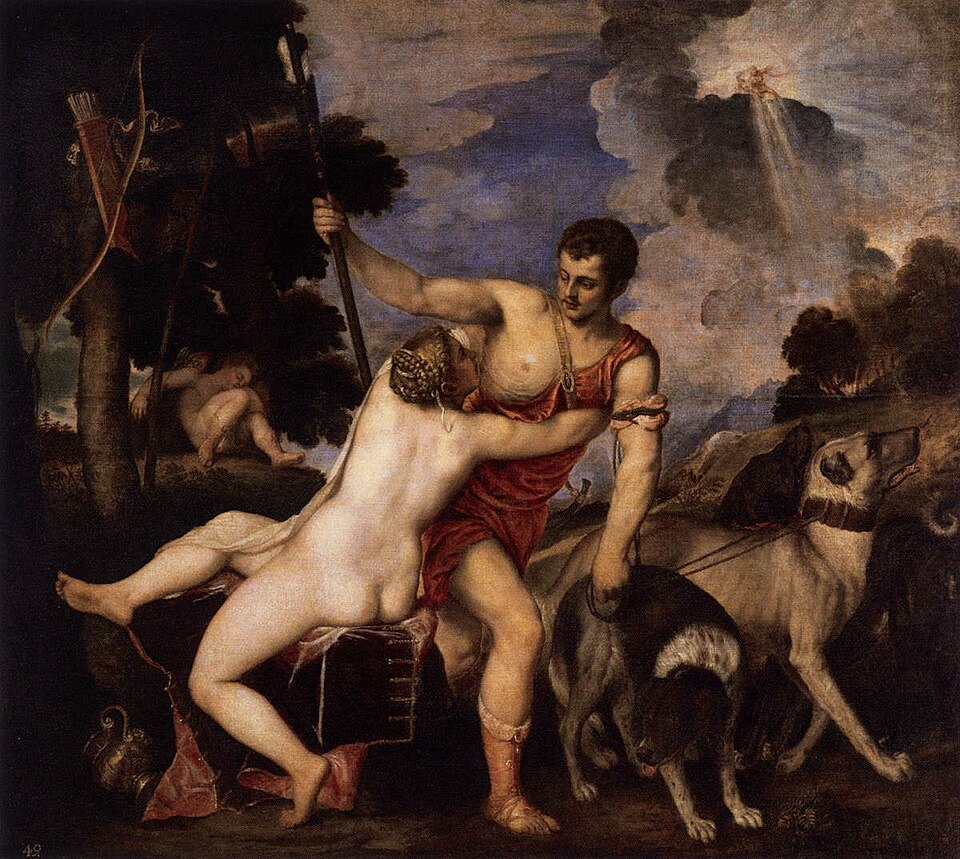
- Venus and Adonis. Titian; Museo Nacional del Prado. Image via Web Gallery of Art and Wikimedia Commons, public domain.. Source record · Public domain · Image file.
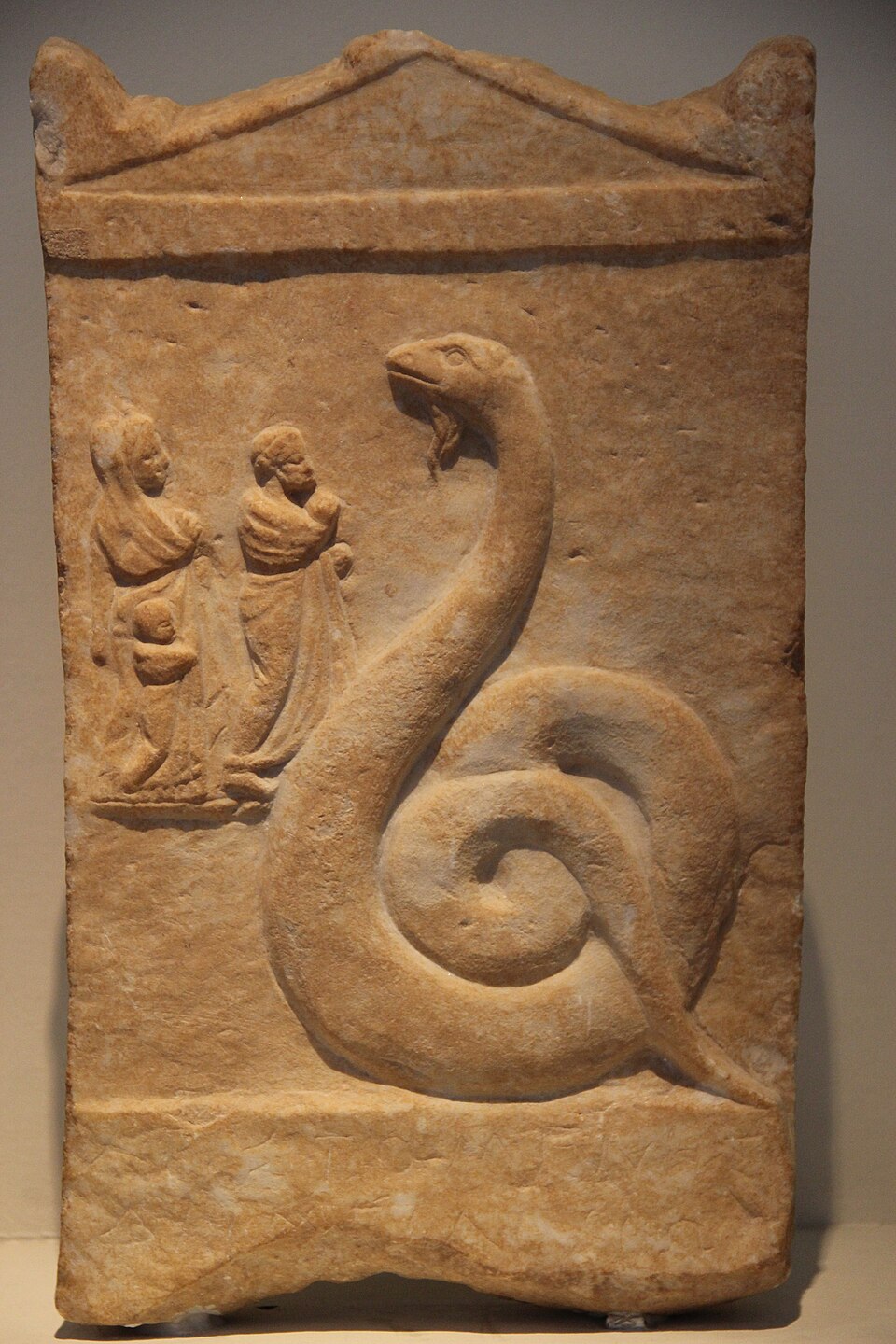
- Votive relief of Zeus Meilichios as a serpent. Votive relief dedicated by Aristomenes, National Archaeological Museum, Athens. Photograph by Gary Todd, CC0, via Wikimedia Commons.. Source record · CC0 · Image file.
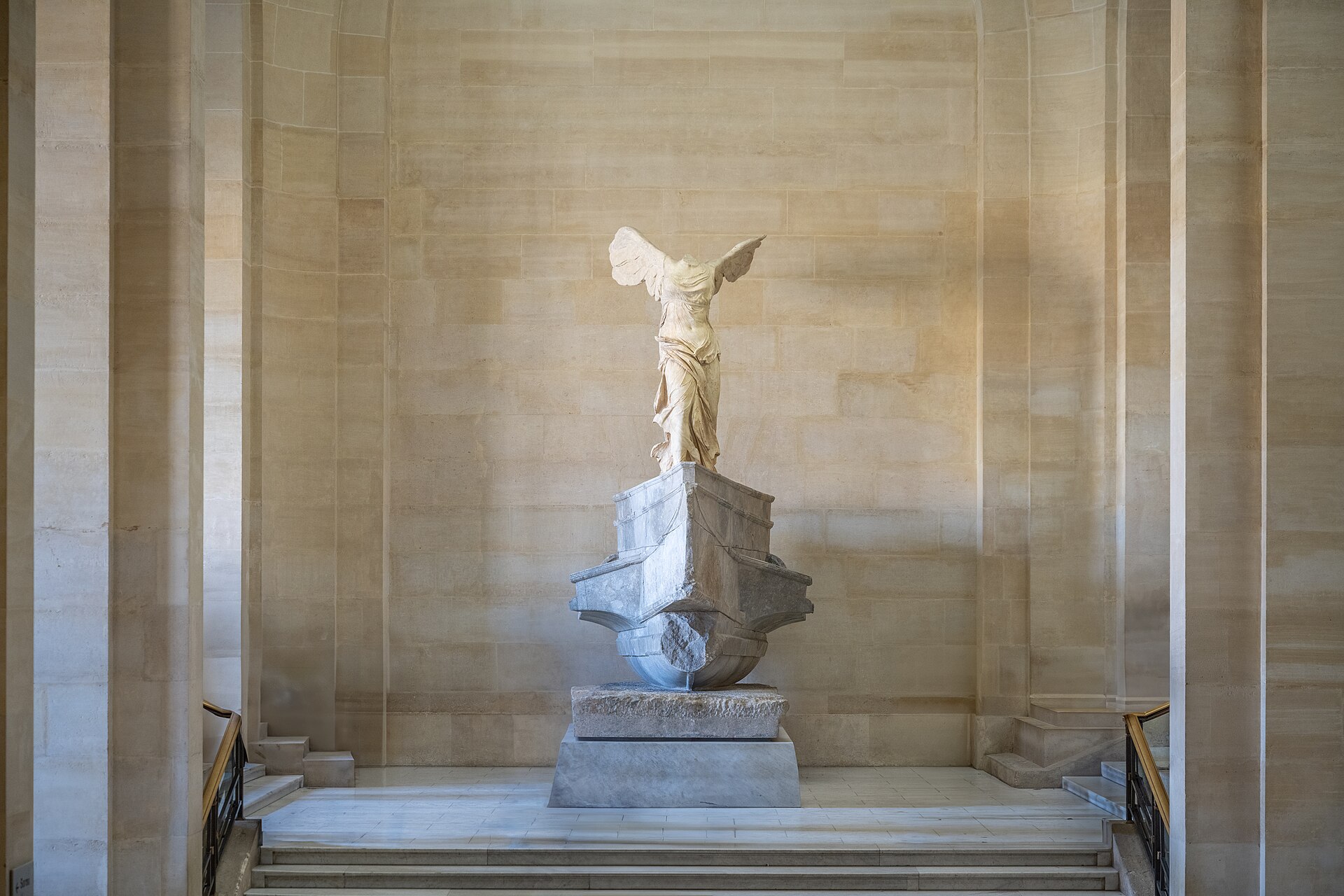
- Winged Victory of Samothrace. Photograph by Wilfredo Rafael Rodriguez Hernandez (Wilfredor), Wikimedia Commons, CC0 1.0.. Source record · CC0 1.0 · Image file.
- Zephyrus on the Tower of the Winds. Tower of the Winds, Athens. Photograph by George E. Koronaios, CC BY-SA 4.0, via Wikimedia Commons.. Source record · CC BY-SA 4.0 · Image file.
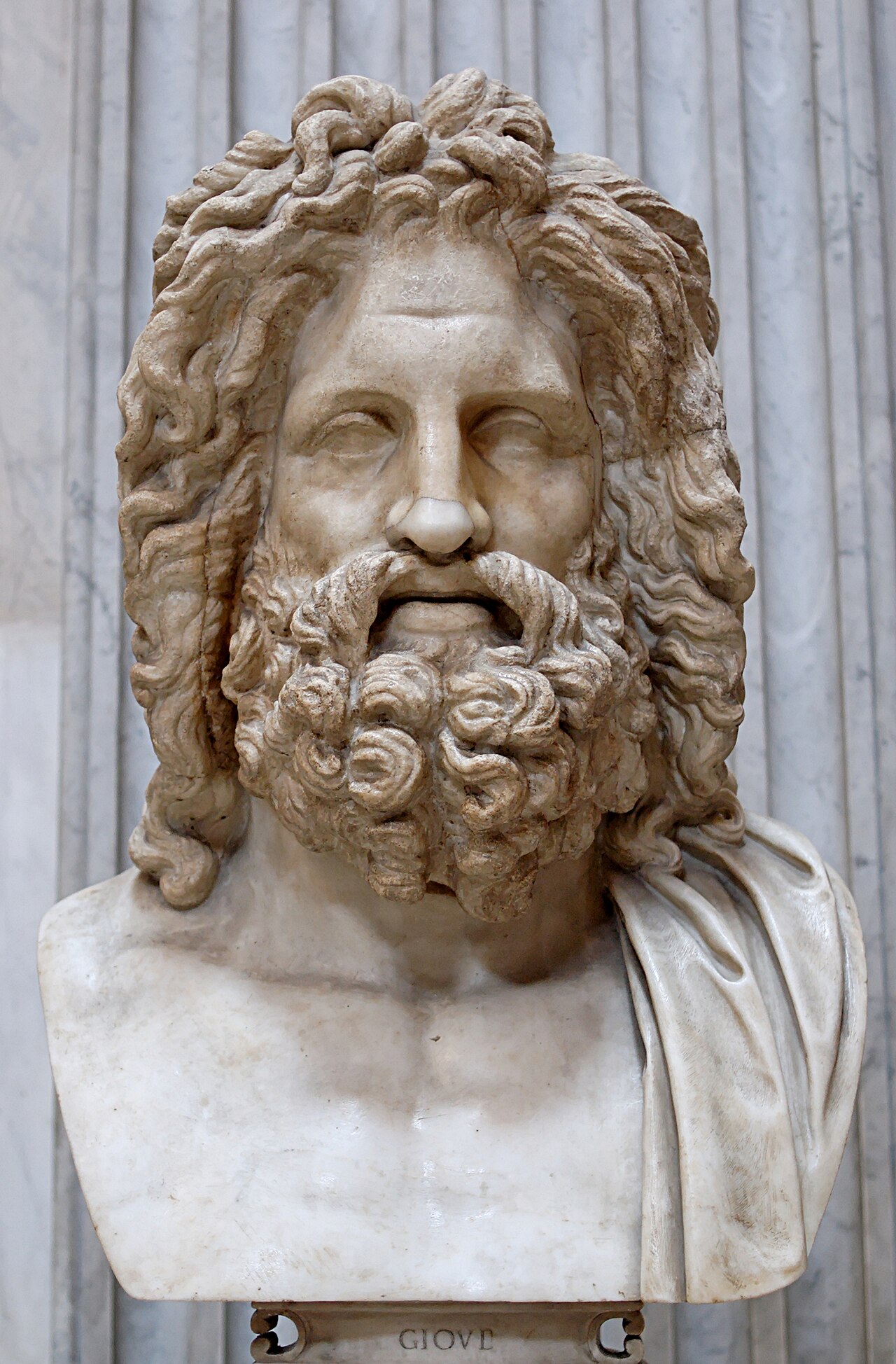
- Zeus of Otricoli. Photograph: Marie-Lan Nguyen / Jastrow (2006); Public domain.. Source record · Public domain · Image file.

_-_Apollo_and_the_Muses_on_Parnassus_(after_Raphael)_-_732279_-_Stourhead.jpg)
.jpg)






_Bust_of_Asclepius_in_Correr_Museum.jpg)







.jpg)
.jpg)


.jpg)






,_Archaeological_museum_Narona,_Vid,_Croatia_(11528135523).jpg)
.jpg)
_Rossetti.jpg)
_and_a_Triton,_late_1st_or_2nd_century_AD,_Ephesus,_Turkey.jpg)
,_The_Sagrestia_Nuova_at_the_Medici_Chapel.jpg)




_-_Google_Art_Project.jpg)






.jpg)



_-_Study_of_Clouds,_Evening,_31_August_1822_-_1929P45_-_Birmingham_Museums_Trust.jpg)

_04.jpg)



_(cropped).jpg)


_-_The_Triumph_of_Silenus_(copy_after_the_studio_of_Peter_Paul_Rubens)_-_WAGMG_,_1877.89_-_Warrington_Museum_and_Art_Gallery.jpg)
.jpg)


.jpg)