_Rossetti.jpg)
Orphic Hymns · Hymn 77
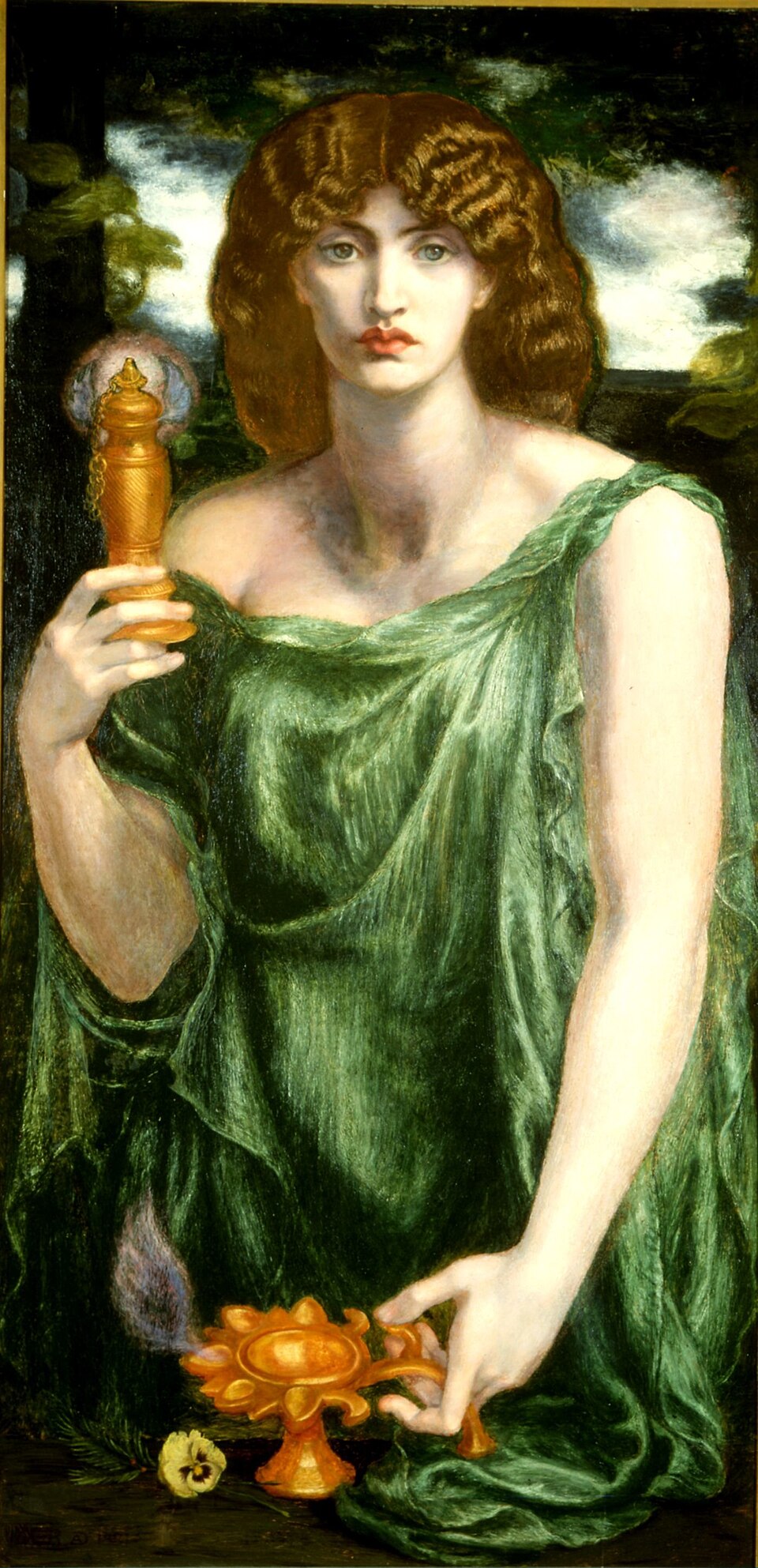
Mnemosyne, Memory
Μνημοσύνης
Prayer and ritual
These hymns may be spoken as complete prayers to the Gods. Within the Temple’s practice, a ritual is a direct theurgical act; hymnody gathers the mind and turns it toward the Divine, helping the initiate enter reverent communion with the Gods.
Use a hymn on its own in place of another prayer, or add it to the prayer portion of a suitable ritual. Choose according to the deity addressed and the petition expressed in the hymn. When combining them, preserve the ritual’s prescribed sequence and let the hymn give voice to its purpose.
The petition of this hymn
For faithful remembrance of sacred rites and the strengthening of clear thought.
Pray this hymn alone before recalling or learning sacred material. Add it to an initiation or ritual of remembrance when asking that the meaning and sequence of the holy rite remain present to the initiate.
English hieratic rendering
Hymn 77 · An English rendering aligned with the Greek lines.
- I call Mnemosyne, Queen and bedfellow of Zeus,
- who bore the sacred Muses, holy and clear-voiced,
- ever keeping memory apart from mind-harming deception,
- holding together all the mind that dwells within mortal souls,
- strengthening the powerful, steadfast reasoning of mortals,
- most sweet, loving wakefulness, bringing all things to remembrance,
- whatever each one has entrusted as understanding within the breast,
- never turning aside, awakening the mind in all.
- But, blessed Goddess, awaken in the initiates the remembrance
- of the holy rite, and send forgetfulness far away from them.
Ancient Greek & pronunciation
Read the English pronunciation spelling directly below each Greek line.
- Μνημοσύνην καλέω, Ζηνὸς σύλλεκτρον, ἄνασσαν,mnee-moh-SEE-neen kah-LEH-oh, zee-NOHS SEE-lehk-trohn, AH-nah-sahn,
- ἣ Μούσας τέκνωσ’ ἱεράς, ὁσίας, λιγυφώνους,EE MOO-sahs TEHK-nohs’ ee-eh-RAHS, oh-SEE-ahs, lee-yee-FOH-noos,
- ἐκτὸς ἔχουσ’ ἀπάτης μνήμην βλαψίφρονος αἰεί,ehk-TOHS EH-khoos’ ah-PAH-tees MNEE-meen vlahp-SEE-froh-nohs eh-EE,
- πάντα νόον συνέχουσα βροτῶν ψυχῇσι σύνοικον,PAHN-dah NOH-ohn see-NEH-khoo-sah vroh-TOHN psee-HYEE-see SEE-nee-kohn,
- εὐδύνατον κρατερὸν θνητῶν αὔξουσα λογισμόν,ehv-DHEE-nah-tohn krah-teh-ROHN thnee-TOHN AHFK-soo-sah loh-yee-ZMOHN,
- ἡδυτάτη, φιλάγρυπνος ὑπομνήσκουσά τε πάντα,ee-dhee-TAH-tee, fee-LAH-ghreep-nohs ee-pohm-NEE-skoo-SAH teh PAHN-dah,
- ὧν ἂν ἕκαστος ἀεὶ στέρνοις γνώμην κατάθηται,OHN AHN EH-kah-stohs ah-EE STEHR-nees GHNOH-meen kah-TAH-thee-teh,
- οὔτι παρεκβαίνουσ’, ἐπεγείρουσα φρένα πᾶσιν.OO-tee pah-rehk-VEH-noos’, eh-peh-YEE-roo-sah FREH-nah PAH-seen.
- ἀλλά, μάκαιρα θεά, μύσταις μνήμην ἐπέγειρεah-LAH, MAH-keh-rah theh-AH, MEE-stehs MNEE-meen eh-PEH-yee-reh
- εὐιέρου τελετῆς, λήθην δ’ ἀπὸ τῶνδ’ ἀπόπεμπε.eh-vee-EH-roo teh-leh-TEES, LEE-theen dh’ ah-POH TOHNDH’ ah-POH-pehm-beh.
Short sound guide for English speakers
Every line beneath the Greek uses English pronunciation spellings. Say each hyphenated syllable in sequence and emphasize the syllable in CAPITALS. For example, οὐρανόθεν is oo-rah-NOH-thehn. Read adjacent vowels separately: theh-AH has two syllables; oo-rah-NEE-een has four. Hyphens guide the voice; they do not mark pauses.
| Spelling | Sound to make |
|---|---|
| ah · eh · ee · oh · oo | father · met · see · go without its final glide · moon. Keep these vowels clear in unstressed syllables too. |
| th · dh | The unvoiced th in thin · the voiced th in this. Thus DHEE begins with the sound in “thee.” |
| kh | The ch in Scottish loch or German Bach: let air pass at the back of the mouth, without closing it into a k. |
| hy | The breathy beginning of a carefully spoken Hugh. Raise the middle of the tongue toward the roof of the mouth and let air pass without voice. In shy, sound s followed by hy; do not use the English sh sound or the English word “shy.” |
| gh | Make the kh sound above, then add voice. Keep the passage open; this is a flowing sound, not a hard g. |
| y · g | y as in yes, with gentle friction · always a hard g as in get. |
| r | Tap the tongue lightly behind the upper teeth, or use a light roll. |
| ks · ps | Sound both consonants, even at the beginning of a word: ks as in backs, ps as in lips. |
| n-g · m-b · n-d | Sound the nasal and the following consonant. In AHN-geh-leh, the n-g group is like finger, with the g audible. |
Always sound s as in hiss, even at the end of DHEE-kees; z is voiced, as in zero. All other consonants have their usual English sounds. Initial consonant groups may be unfamiliar: sound every written consonant, without inserting an extra vowel. A word without capitals carries no written stress in the Greek. Where two syllables have capitals, both written accents are retained. An apostrophe marks a vowel already elided in the Greek; do not add it back. A hyphen at the end of a Greek verse joins the unfinished word to the next verse.
These spellings follow the Modern Greek liturgical reading used throughout this library. Breathings and iota subscripts are silent; separately pronounced vowels remain separate. The few Greek consonants without an exact English equivalent use the sound cues above. Ancient vowel length, pitch accent and metre are not reconstructed.
Hymn notes
Sacred meaning
Memory is the mother of the Muses and the guardian of the mind against harmful deception. The hymn praises her as sustaining thought and strengthening reason without wandering from what has been entrusted to the heart. Its final petition is exact: awaken remembrance of the holy rite and send forgetfulness away.
Ancient offering rubric: Frankincense.
Text and attribution
Greek text: Eugenius Abel, Orphica (1885), printed pages 97, 98. The text follows the printed main reading of this edition; source-specific variants are recorded where relevant. Read the digitised edition. Greek source. Wikisource transcription, revision 124491; checked and corrected against Abel’s print. The English hieratic rendering and suggested devotional use are new editorial work. The applications are guidance for this library, not additional lines of the ancient poem.