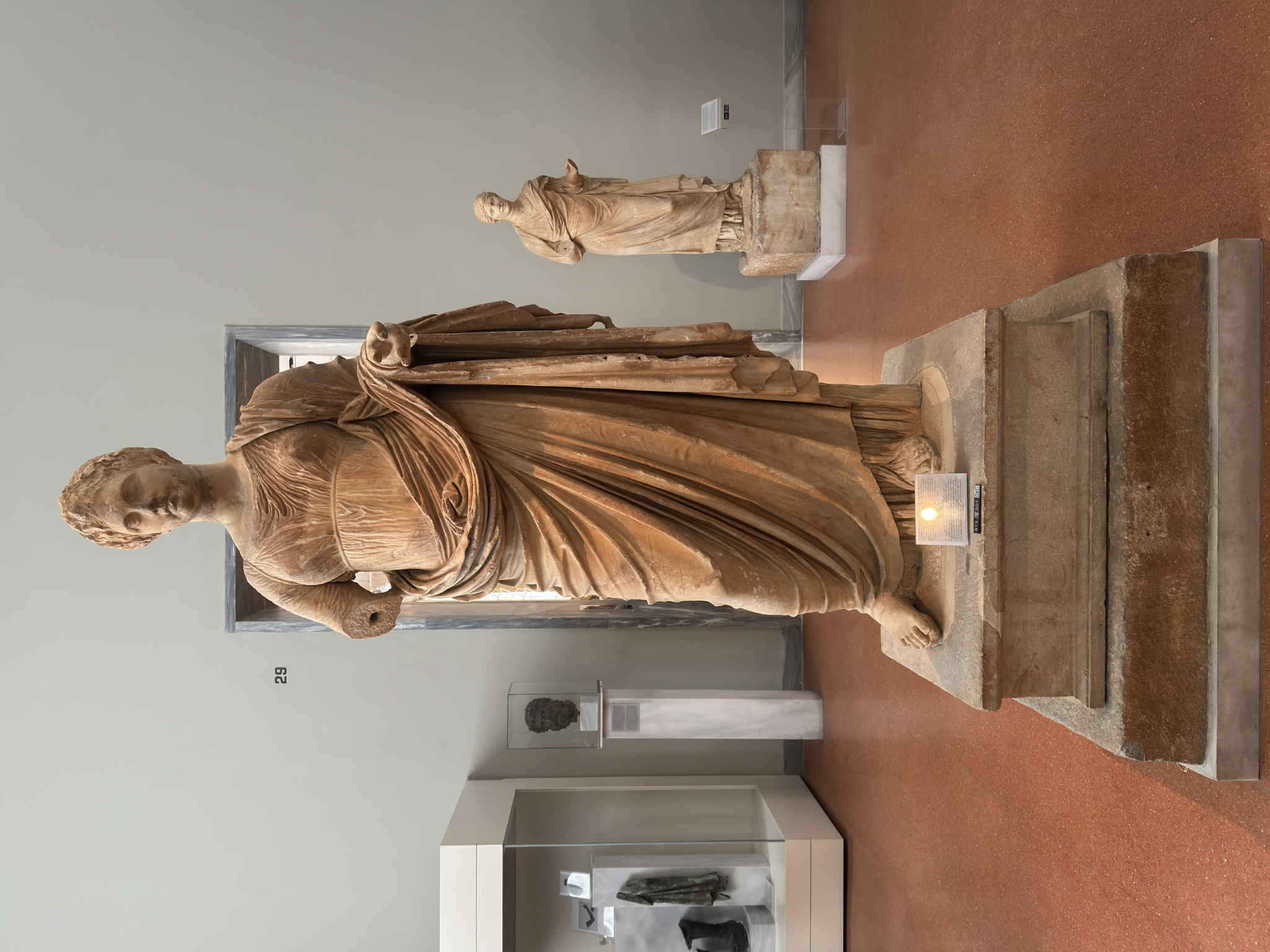
.jpg)
Orphic Hymns · Hymn 79
Themis
Θέμιδος
Prayer and ritual
These hymns may be spoken as complete prayers to the Gods. Within the Temple’s practice, a ritual is a direct theurgical act; hymnody gathers the mind and turns it toward the Divine, helping the initiate enter reverent communion with the Gods.
Use a hymn on its own in place of another prayer, or add it to the prayer portion of a suitable ritual. Choose according to the deity addressed and the petition expressed in the hymn. When combining them, preserve the ritual’s prescribed sequence and let the hymn give voice to its purpose.
The petition of this hymn
For divine ordinance, right ritual order, and guidance in sacred understanding.
Recite the hymn alone when asking Themis to guide a judgment or sacred undertaking. It may supplement a rite for justice or initiation, especially when the work concerns the rightful order of worship and the reception of divine counsel.
English hieratic rendering
Hymn 79 · An English rendering aligned with the Greek lines.
- I call pure Themis, child of Heaven, noble in her father,
- the youthful shoot of Gaia, maiden with a face fresh as a flower bud,
- who first revealed to mortals the sacred oracle,
- giving ordinances to the Gods in the hidden place of Delphi,
- upon the Pythian ground, when she reigned at Pytho;
- she who taught Lord Phoebus the ways of divine ordinance.
- All-honoured, radiant in form, revered, moving through the night,
- you first revealed the holy rites to mortals,
- crying the Lord's sacred shout through the Bacchic nights.
- From you come the honours of the Blessed and their pure mysteries.
- But, blessed one, come rejoicing with gracious counsel
- to your holy rites among those who serve the mysteries, O Maiden.
Ancient Greek & pronunciation
Read the English pronunciation spelling directly below each Greek line.
- Οὐρανόπαιδ’ ἁγνὴν καλέω, Θέμιν εὐπατέρειαν,oo-rah-NOH-pehdh’ ahgh-NEEN kah-LEH-oh, THEH-meen ehf-pah-TEH-ree-ahn,
- Γαίης τὸ βλάστημα νέον, καλυκώπιδα κούρην,YEH-ees TOH VLAH-stee-mah NEH-ohn, kah-lee-KOH-pee-dhah KOO-reen,
- ἣ πρώτη κατέδειξε βροτοῖς μαντήιον ἁγνὸνEE PROH-tee kah-TEH-dheek-seh vroh-TEES mahn-DEE-ee-ohn ahgh-NOHN
- Δελφικῷ ἐν κευθμῶνι θεμιστεύουσα θεοῖσι,dhehl-fee-KOH ehn kehfth-MOH-nee theh-mee-STEH-voo-sah theh-EE-see,
- Πυθίῳ ἐν δαπέδῳ, ὅτε Πυθοῖ ἐμβασίλευεν·pee-THEE-oh ehn dhah-PEH-dhoh, OH-teh pee-THEE ehm-vah-SEE-leh-vehn·
- ἣ καὶ Φοῖβον ἄνακτα θεμιστοσύνας ἐδίδαξε·EE KEH FEE-vohn AH-nahk-tah theh-mee-stoh-SEE-nahs eh-DHEE-dhahk-seh·
- πάντιμ’, ἀγλαόμορφε, σεβάσμιε, νυκτιπόλευτε·PAHN-deem’, ah-ghlah-OH-mohr-feh, seh-VAH-zmee-eh, neek-tee-POH-lehf-teh·
- πρώτη γὰρ τελετὰς ἁγίας θνητοῖς ἀνέφηνας,PROH-tee GHAHR teh-leh-TAHS ah-YEE-ahs thnee-TEES ah-NEH-fee-nahs,
- Βακχιακὰς ἀνὰ νύκτας ἐπευάζουσα ἄνακτα·vahk-hyee-ah-KAHS ah-NAH NEEK-tahs eh-peh-VAH-zoo-sah AH-nahk-tah·
- ἐκ σέο γὰρ τιμαὶ μακάρων μυστήριά θ’ ἁγνά.ehk SEH-oh GHAHR tee-MEH mah-KAH-rohn mee-STEE-ree-AH th’ ahgh-NAH.
- ἀλλά, μάκαιρ’, ἔλθοις κεχαρημένη εὔφρονι βουλῇah-LAH, MAH-kehr’, EHL-thees keh-khah-ree-MEH-nee EH-froh-nee voo-LEE
- εὐιέρους ἐπὶ μυστιπόλοις τελετὰς σέο, κούρη.eh-vee-EH-roos eh-PEE mee-stee-POH-lees teh-leh-TAHS SEH-oh, KOO-ree.
Short sound guide for English speakers
Every line beneath the Greek uses English pronunciation spellings. Say each hyphenated syllable in sequence and emphasize the syllable in CAPITALS. For example, οὐρανόθεν is oo-rah-NOH-thehn. Read adjacent vowels separately: theh-AH has two syllables; oo-rah-NEE-een has four. Hyphens guide the voice; they do not mark pauses.
| Spelling | Sound to make |
|---|---|
| ah · eh · ee · oh · oo | father · met · see · go without its final glide · moon. Keep these vowels clear in unstressed syllables too. |
| th · dh | The unvoiced th in thin · the voiced th in this. Thus DHEE begins with the sound in “thee.” |
| kh | The ch in Scottish loch or German Bach: let air pass at the back of the mouth, without closing it into a k. |
| hy | The breathy beginning of a carefully spoken Hugh. Raise the middle of the tongue toward the roof of the mouth and let air pass without voice. In shy, sound s followed by hy; do not use the English sh sound or the English word “shy.” |
| gh | Make the kh sound above, then add voice. Keep the passage open; this is a flowing sound, not a hard g. |
| y · g | y as in yes, with gentle friction · always a hard g as in get. |
| r | Tap the tongue lightly behind the upper teeth, or use a light roll. |
| ks · ps | Sound both consonants, even at the beginning of a word: ks as in backs, ps as in lips. |
| n-g · m-b · n-d | Sound the nasal and the following consonant. In AHN-geh-leh, the n-g group is like finger, with the g audible. |
Always sound s as in hiss, even at the end of DHEE-kees; z is voiced, as in zero. All other consonants have their usual English sounds. Initial consonant groups may be unfamiliar: sound every written consonant, without inserting an extra vowel. A word without capitals carries no written stress in the Greek. Where two syllables have capitals, both written accents are retained. An apostrophe marks a vowel already elided in the Greek; do not add it back. A hyphen at the end of a Greek verse joins the unfinished word to the next verse.
These spellings follow the Modern Greek liturgical reading used throughout this library. Breathings and iota subscripts are silent; separately pronounced vowels remain separate. The few Greek consonants without an exact English equivalent use the sound cues above. Ancient vowel length, pitch accent and metre are not reconstructed.
Hymn notes
Sacred meaning
Themis unites cosmic descent, the Delphic oracle, and the institution of mysteries. The hymn presents her as teacher even of Phoebus in divine ordinances and as the revealer of holy rites to mortals. Its prayer asks her to attend the rites with joy and benevolent counsel.
Ancient offering rubric: Frankincense.
Text and attribution
Greek text: Eugenius Abel, Orphica (1885), printed pages 98, 99. The text follows the printed main reading of this edition; source-specific variants are recorded where relevant. Read the digitised edition. Greek source. Wikisource transcription, revision 124499; checked and corrected against Abel’s print. The English hieratic rendering and suggested devotional use are new editorial work. The applications are guidance for this library, not additional lines of the ancient poem.