
Orphic Hymns · Hymn 76
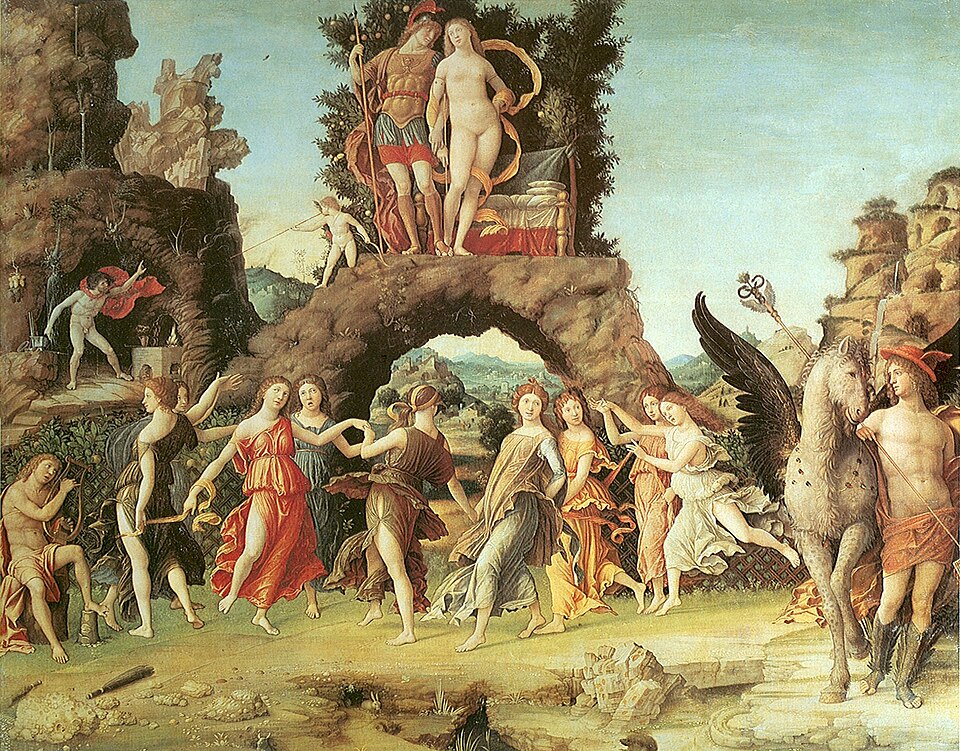
The Muses
Μουσῶν
Prayer and ritual
These hymns may be spoken as complete prayers to the Gods. Within the Temple’s practice, a ritual is a direct theurgical act; hymnody gathers the mind and turns it toward the Divine, helping the initiate enter reverent communion with the Gods.
Use a hymn on its own in place of another prayer, or add it to the prayer portion of a suitable ritual. Choose according to the deity addressed and the petition expressed in the hymn. When combining them, preserve the ritual’s prescribed sequence and let the hymn give voice to its purpose.
The petition of this hymn
For inspiration, sound understanding, and excellence in sacred learning and song.
Recite the hymn alone before study, composition, or sacred song. It may supplement an initiation or devotional ritual as a prayer that the Muses nourish the soul and guide the mind toward worthy expression.
English hieratic rendering
Hymn 76 · An English rendering aligned with the Greek lines.
- Daughters of Mnemosyne and of loudly thundering Zeus,
- Pierian Muses of mighty name and radiant renown,
- most desired by the mortals beside whom you stand, manifold in form,
- bringing forth the blameless excellence of all learning,
- nourishers of the soul, givers of right direction to understanding,
- sovereign guides of the mind in its strength,
- you who revealed to mortals the rites through which the mysteries are served:
- Clio and Euterpe, Thalia and Melpomene,
- Terpsichore and Erato, Polyhymnia and Urania,
- Calliope too, with your Mother and the pure Goddess Eunomia.
- Come, O Goddesses, manifold and pure, to the initiates,
- bringing good renown and lovely zeal rich in hymns.
Ancient Greek & pronunciation
Read the English pronunciation spelling directly below each Greek line.
- Μνημοσύνης καὶ Ζηνὸς ἐριγδούποιο θύγατρες,mnee-moh-SEE-nees KEH zee-NOHS eh-reegh-DHOO-pee-oh THEE-ghah-trehs,
- Μοῦσαι Πιερίδες, μεγαλώνυμοι, ἀγλαόφημοι,MOO-seh pee-eh-REE-dhehs, meh-ghah-LOH-nee-mee, ah-ghlah-OH-fee-mee,
- θνητοῖς, οἷς κε παρῆτε, ποθεινόταται, πολύμορφοι,thnee-TEES, EES keh pah-REE-teh, poh-thee-NOH-tah-teh, poh-LEE-mohr-fee,
- πάσης παιδείης ἀρετὴν γεννῶσαι ἄμεμπτον,PAH-sees peh-DHEE-ees ah-reh-TEEN yeh-NOH-seh AH-mehmb-tohn,
- θρέπτειραι ψυχῆς, διανοίης ὀρθοδότειραι,THREHP-tee-reh psee-HYEES, dhee-ah-NEE-ees ohr-thoh-DHOH-tee-reh,
- καὶ νόου εὐδυνάτοιο καθηγήτειραι ἄνασσαι,KEH NOH-oo ehv-dhee-NAH-tee-oh kah-thee-YEE-tee-reh AH-nah-seh,
- αἳ τελετὰς θνητοῖς ἀνεδείξατε μυστιπολεύτους,EH teh-leh-TAHS thnee-TEES ah-neh-DHEEK-sah-teh mee-stee-poh-LEHF-toos,
- Κλειώ τ’ Εὐτέρπη τε Θάλειά τε Μελπομένη τεklee-OH t’ ehf-TEHR-pee teh THAH-lee-AH teh mehl-poh-MEH-nee teh
- Τερψιχόρη τ’ Ἐρατώ τε Πολύμνιά τ’ Οὐρανίη τεtehrp-see-KHOH-ree t’ eh-rah-TOH teh poh-LEEM-nee-AH t’ oo-rah-NEE-ee teh
- Καλλιόπη σὺν μητρὶ καὶ Εὐνομίῃ θεᾷ ἁγνῇ.kah-lee-OH-pee SEEN mee-TREE KEH ehv-noh-MEE-ee theh-AH ahgh-NEE.
- ἀλλὰ μόλοιτε, θεαί, μύσταις, πολυποίκιλοι, ἁγναί,ah-LAH MOH-lee-teh, theh-EH, MEE-stehs, poh-lee-PEE-kee-lee, ahgh-NEH,
- εὐκλείην ζῆλόν τ’ ἐρατὸν πολύυμνον ἄγουσαι.ehf-KLEE-een ZEE-LOHN t’ eh-rah-TOHN poh-LEE-eem-nohn AH-ghoo-seh.
Short sound guide for English speakers
Every line beneath the Greek uses English pronunciation spellings. Say each hyphenated syllable in sequence and emphasize the syllable in CAPITALS. For example, οὐρανόθεν is oo-rah-NOH-thehn. Read adjacent vowels separately: theh-AH has two syllables; oo-rah-NEE-een has four. Hyphens guide the voice; they do not mark pauses.
| Spelling | Sound to make |
|---|---|
| ah · eh · ee · oh · oo | father · met · see · go without its final glide · moon. Keep these vowels clear in unstressed syllables too. |
| th · dh | The unvoiced th in thin · the voiced th in this. Thus DHEE begins with the sound in “thee.” |
| kh | The ch in Scottish loch or German Bach: let air pass at the back of the mouth, without closing it into a k. |
| hy | The breathy beginning of a carefully spoken Hugh. Raise the middle of the tongue toward the roof of the mouth and let air pass without voice. In shy, sound s followed by hy; do not use the English sh sound or the English word “shy.” |
| gh | Make the kh sound above, then add voice. Keep the passage open; this is a flowing sound, not a hard g. |
| y · g | y as in yes, with gentle friction · always a hard g as in get. |
| r | Tap the tongue lightly behind the upper teeth, or use a light roll. |
| ks · ps | Sound both consonants, even at the beginning of a word: ks as in backs, ps as in lips. |
| n-g · m-b · n-d | Sound the nasal and the following consonant. In AHN-geh-leh, the n-g group is like finger, with the g audible. |
Always sound s as in hiss, even at the end of DHEE-kees; z is voiced, as in zero. All other consonants have their usual English sounds. Initial consonant groups may be unfamiliar: sound every written consonant, without inserting an extra vowel. A word without capitals carries no written stress in the Greek. Where two syllables have capitals, both written accents are retained. An apostrophe marks a vowel already elided in the Greek; do not add it back. A hyphen at the end of a Greek verse joins the unfinished word to the next verse.
These spellings follow the Modern Greek liturgical reading used throughout this library. Breathings and iota subscripts are silent; separately pronounced vowels remain separate. The few Greek consonants without an exact English equivalent use the sound cues above. Ancient vowel length, pitch accent and metre are not reconstructed.
Hymn notes
Sacred meaning
The Muses are daughters of Memory and thundering Zeus, and their gift reaches beyond song into the nourishment and right direction of thought. The hymn also credits them with revealing rites of initiation. Its full naming of the nine places artistic inspiration within an ordered company of divine teachers.
Ancient offering rubric: Frankincense.
Textual note
Abel prints εὐκλείην, “good renown”, in verse 12. In verse 10 the mother accompanying the Muses is Mnemosyne, named at the opening; Eunomia is separately invoked.
At line 10, Καλλιόπη follows Abel’s printed main text, without an iota subscript.
Text and attribution
Greek text: Eugenius Abel, Orphica (1885), printed pages 97. The text follows the printed main reading of this edition; source-specific variants are recorded where relevant. Read the digitised edition. Greek source. Wikisource transcription, revision 124486; checked and corrected against Abel’s print. The English hieratic rendering and suggested devotional use are new editorial work. The applications are guidance for this library, not additional lines of the ancient poem.