_-_Google_Art_Project.jpg)
Orphic Hymns · Hymn 70
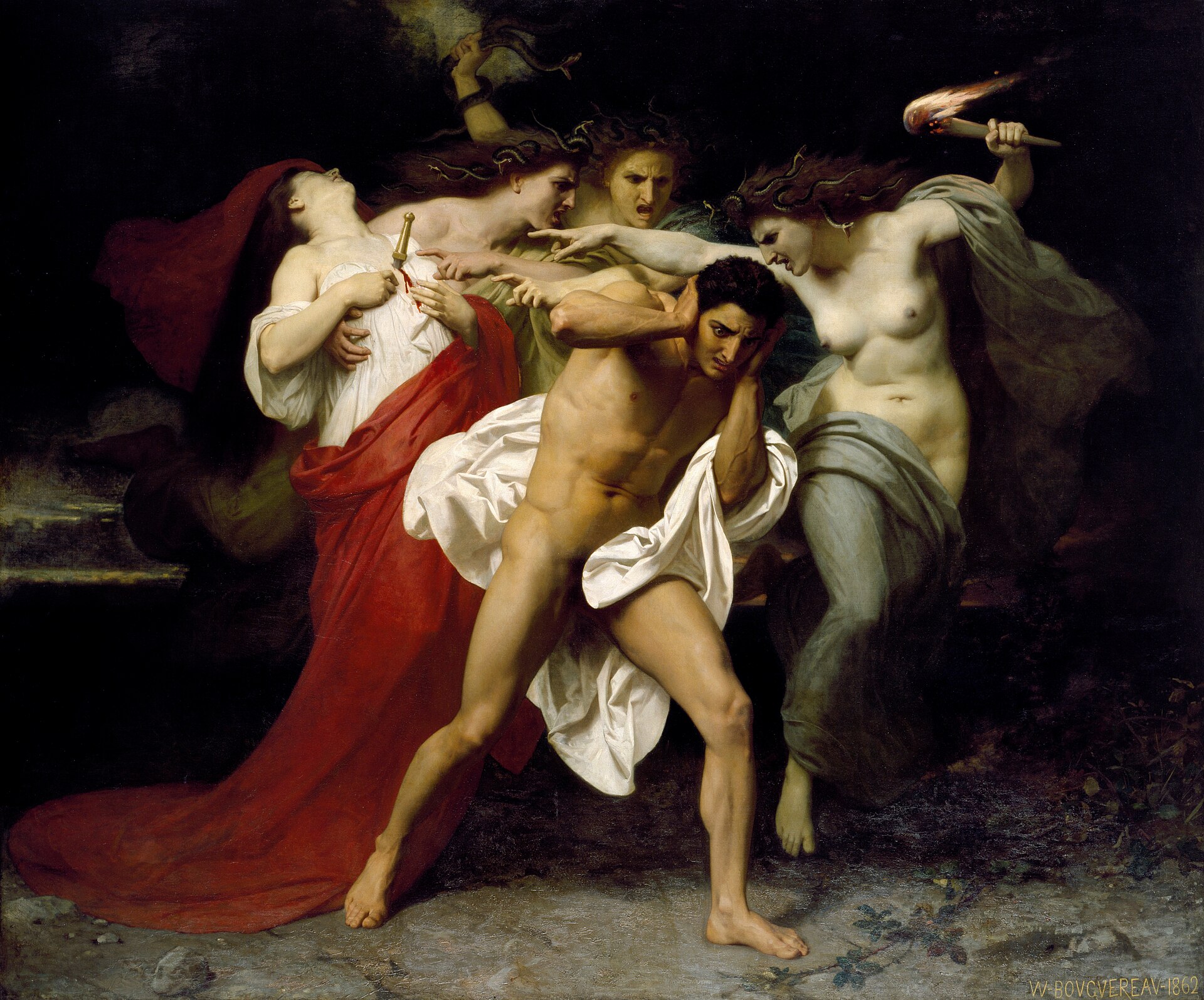
The Eumenides
Εὐμενίδων
Prayer and ritual
These hymns may be spoken as complete prayers to the Gods. Within the Temple’s practice, a ritual is a direct theurgical act; hymnody gathers the mind and turns it toward the Divine, helping the initiate enter reverent communion with the Gods.
Use a hymn on its own in place of another prayer, or add it to the prayer portion of a suitable ritual. Choose according to the deity addressed and the petition expressed in the hymn. When combining them, preserve the ritual’s prescribed sequence and let the hymn give voice to its purpose.
The petition of this hymn
For the gracious approach of the Goddesses who oversee justice and necessity.
Offer this hymn alone as a reverent petition for the Eumenides to draw near in holiness. In a rite for justice or purification, use it to acknowledge their sovereign judgment and ask that their presence meet upright intentions.
English hieratic rendering
Hymn 70 · An English rendering aligned with the Greek lines.
- Hear me, Eumenides of mighty name, with gracious counsel,
- pure daughters of great chthonic Zeus
- and of Persephone, the lovely maiden of beautiful tresses,
- you who look down upon the life of all impious mortals,
- punishers of the unjust, standing over necessity,
- dark-hued Queens, flashing from your eyes
- the terrible reflected blaze of flesh-consuming light,
- everlasting, fearsome of gaze, to be averted, sovereign in yourselves,
- loosening the limbs with frenzy, grim, nightly, mistresses of many fates,
- maidens of the night, serpent-haired, fearsome of gaze:
- I call upon you to draw near to holy intentions.
Ancient Greek & pronunciation
Read the English pronunciation spelling directly below each Greek line.
- Κλῦτέ μευ, Εὐμενίδες μεγαλώνυμοι, εὔφρονι βουλῇ,KLEE-TEH mehv, ehv-meh-NEE-dhehs meh-ghah-LOH-nee-mee, EH-froh-nee voo-LEE,
- ἁγναὶ θυγατέρες μεγάλοιο Διὸς χθονίοιοahgh-NEH thee-ghah-TEH-rehs meh-GHAH-lee-oh dhee-OHS khthoh-NEE-ee-oh
- Φερσεφόνης τ’, ἐρατῆς κούρης καλλιπλοκάμοιο,fehr-seh-FOH-nees t’, eh-rah-TEES KOO-rees kah-lee-ploh-KAH-mee-oh,
- αἳ πάντων καθορᾶτε βίον θνητῶν ἀσεβούντων,EH PAHN-dohn kah-thoh-RAH-teh VEE-ohn thnee-TOHN ah-seh-VOON-dohn,
- τῶν ἀδίκων τιμωροί, ἐφεστηκυῖαι ἀνάγκῃ,TOHN ah-DHEE-kohn tee-moh-REE, eh-feh-stee-KEE-eh ah-NAHN-gee,
- κυανόχρωτοι ἄνασσαι, ἀπαστράπτουσαι ἀπ’ ὄσσωνkee-ah-NOH-khroh-tee AH-nah-seh, ah-pah-STRAHP-too-seh ahp’ OH-sohn
- δεινὴν ἀνταυγῆ φάεος σαρκοφθόρον αἴγλην·dhee-NEEN ahn-dahv-YEE FAH-eh-ohs sahr-kohf-THOH-rohn EH-ghleen·
- ἀίδιοι, φοβερῶπες, ἀπόστροφοι, αὐτοκράτειραι,ah-EE-dhee-ee, foh-veh-ROH-pehs, ah-POH-stroh-fee, ahf-toh-KRAH-tee-reh,
- λυσιμελεῖς οἴστρῳ, βλοσυραί, νύχιαι, πολύποτμοι,lee-see-meh-LEES EE-stroh, vloh-see-REH, NEE-hyee-eh, poh-LEE-poht-mee,
- νυκτέριαι κοῦραι, ὀφιοπλόκαμοι, φοβερῶπες·neek-TEH-ree-eh KOO-reh, oh-fee-oh-PLOH-kah-mee, foh-veh-ROH-pehs·
- ὑμᾶς κικλήσκω γνώμαις ὁσίῃσι πελάζειν.ee-MAHS kee-KLEE-skoh GHNOH-mehs oh-SEE-ee-see peh-LAH-zeen.
Short sound guide for English speakers
Every line beneath the Greek uses English pronunciation spellings. Say each hyphenated syllable in sequence and emphasize the syllable in CAPITALS. For example, οὐρανόθεν is oo-rah-NOH-thehn. Read adjacent vowels separately: theh-AH has two syllables; oo-rah-NEE-een has four. Hyphens guide the voice; they do not mark pauses.
| Spelling | Sound to make |
|---|---|
| ah · eh · ee · oh · oo | father · met · see · go without its final glide · moon. Keep these vowels clear in unstressed syllables too. |
| th · dh | The unvoiced th in thin · the voiced th in this. Thus DHEE begins with the sound in “thee.” |
| kh | The ch in Scottish loch or German Bach: let air pass at the back of the mouth, without closing it into a k. |
| hy | The breathy beginning of a carefully spoken Hugh. Raise the middle of the tongue toward the roof of the mouth and let air pass without voice. In shy, sound s followed by hy; do not use the English sh sound or the English word “shy.” |
| gh | Make the kh sound above, then add voice. Keep the passage open; this is a flowing sound, not a hard g. |
| y · g | y as in yes, with gentle friction · always a hard g as in get. |
| r | Tap the tongue lightly behind the upper teeth, or use a light roll. |
| ks · ps | Sound both consonants, even at the beginning of a word: ks as in backs, ps as in lips. |
| n-g · m-b · n-d | Sound the nasal and the following consonant. In AHN-geh-leh, the n-g group is like finger, with the g audible. |
Always sound s as in hiss, even at the end of DHEE-kees; z is voiced, as in zero. All other consonants have their usual English sounds. Initial consonant groups may be unfamiliar: sound every written consonant, without inserting an extra vowel. A word without capitals carries no written stress in the Greek. Where two syllables have capitals, both written accents are retained. An apostrophe marks a vowel already elided in the Greek; do not add it back. A hyphen at the end of a Greek verse joins the unfinished word to the next verse.
These spellings follow the Modern Greek liturgical reading used throughout this library. Breathings and iota subscripts are silent; separately pronounced vowels remain separate. The few Greek consonants without an exact English equivalent use the sound cues above. Ancient vowel length, pitch accent and metre are not reconstructed.
Hymn notes
Sacred meaning
The Eumenides are here daughters of chthonic Zeus and Persephone. Their burning gaze and fearsome night imagery accompany their watch over impiety and injustice. The hymn’s opening appeal to gracious counsel returns in its closing request that they approach holy purposes.
Ancient offering rubric: Aromatic incense.
Text and attribution
Greek text: Eugenius Abel, Orphica (1885), printed pages 95. The text follows the printed main reading of this edition; source-specific variants are recorded where relevant. Read the digitised edition. Greek source. Wikisource transcription, revision 124470; checked and corrected against Abel’s print. The English hieratic rendering and suggested devotional use are new editorial work. The applications are guidance for this library, not additional lines of the ancient poem.