_-_Google_Art_Project.jpg)
Orphic Hymns · Hymn 69
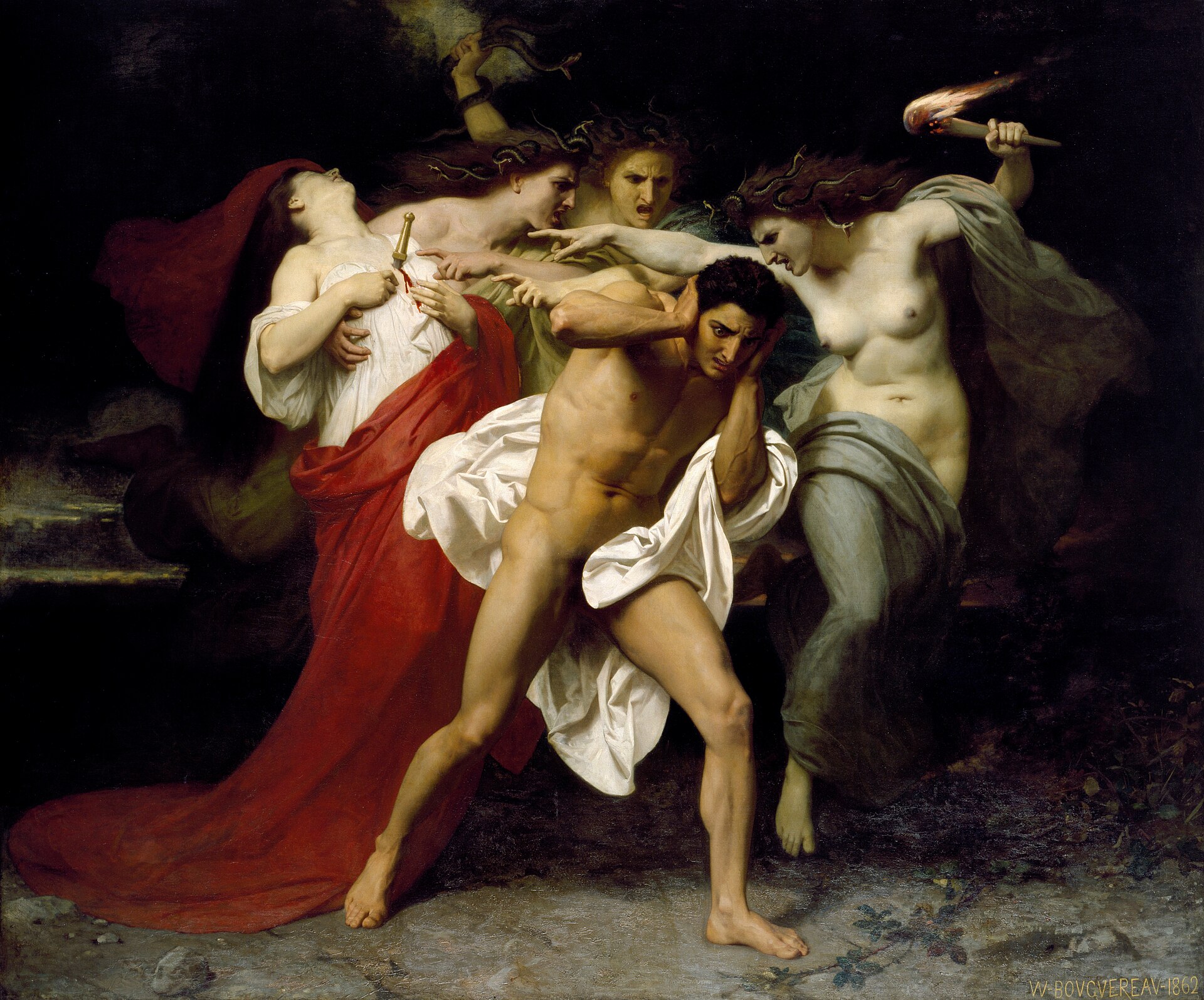
The Erinyes
Ἐριννύων
Prayer and ritual
These hymns may be spoken as complete prayers to the Gods. Within the Temple’s practice, a ritual is a direct theurgical act; hymnody gathers the mind and turns it toward the Divine, helping the initiate enter reverent communion with the Gods.
Use a hymn on its own in place of another prayer, or add it to the prayer portion of a suitable ritual. Choose according to the deity addressed and the petition expressed in the hymn. When combining them, preserve the ritual’s prescribed sequence and let the hymn give voice to its purpose.
The petition of this hymn
For release from impious purposes and a merciful disposition of divine judgment.
Recite the hymn as a prayer to approach the Erinyes with reverence and to ask for a gentler course of life. It may supplement a ritual for justice or purification, preserving the hymn’s own closing request for a mild and gracious response.
English hieratic rendering
Hymn 69 · An English rendering aligned with the Greek lines.
- Hear, all-honoured Goddesses, mighty in your thunder, crying the sacred shout,
- Tisiphone and Alecto and divine Megaera,
- night-dwellers of the depths, keeping your homes beneath the hidden places,
- in a mist-filled cavern beside the sacred water of Styx,
- ever angered by the unholy counsels of mortals,
- frenzied and majestic, crying aloud over the bonds of necessity,
- clothed in skins of beasts, avengers, greatly strong, bringing grievous pain,
- terrible chthonic maidens of Hades, manifold in form,
- aerial, unseen, swift as thought,
- you who over the boundless peoples of all mortals
- keep watch with the eye of Dike, forever ministers of judgment.
- But, O Goddesses, Fates, serpent-haired and many-formed,
- turn your judgment of our life toward gentleness and a tender mind.
Ancient Greek & pronunciation
Read the English pronunciation spelling directly below each Greek line.
- Κλῦτε, θεαὶ πάντιμοι, ἐρίβρομοι, εὐάστειραι,KLEE-teh, theh-EH PAHN-dee-mee, eh-REE-vroh-mee, eh-VAH-stee-reh,
- Τισιφόνη τε καὶ Ἀλληκτὼ καὶ δῖα Μέγαιρα·tee-see-FOH-nee teh KEH ah-leek-TOH KEH DHEE-ah MEH-yeh-rah·
- νυκτέριαι, μυχίαι, ὑπὸ κεύθεσιν οἰκί’ ἔχουσαιneek-TEH-ree-eh, mee-HYEE-eh, ee-POH KEHF-theh-seen ee-KEE’ EH-khoo-seh
- ἄντρῳ ἐν ἠερόεντι παρὰ Στυγὸς ἱερὸν ὕδωρ,AHN-droh ehn ee-eh-ROH-ehn-dee pah-RAH stee-GHOHS ee-eh-ROHN EE-dhohr,
- οὐχ ὁσίαις βουλῇσι βροτῶν κεκοτημέναι αἰεὶookh oh-SEE-ehs voo-LEE-see vroh-TOHN keh-koh-tee-MEH-neh eh-EE
- λυσσήρεις, ἀγέρωχοι, ἐπευάζουσαι ἀνάγκαις,lee-SEE-rees, ah-YEH-roh-hyee, eh-peh-VAH-zoo-seh ah-NAHN-gehs,
- θηρόπεπλοι, τιμωροί, ἐρισθενέες, βαρυαλγεῖς,thee-ROH-peh-plee, tee-moh-REE, eh-rees-theh-NEH-ehs, vah-ree-ahl-YEES,
- Ἀίδεω χθόνιαι, φοβεραὶ κόραι, αἰολόμορφοι,ah-EE-dheh-oh KHTHOH-nee-eh, foh-veh-REH KOH-reh, eh-oh-LOH-mohr-fee,
- ἠέριαι, ἀφανεῖς, ὠκυδρόμοι ὥστε νόημα,ee-EH-ree-eh, ah-fah-NEES, oh-kee-DHROH-mee OH-steh NOH-ee-mah,
- αἵτ’ αἰεὶ θνητῶν πάντων ἐπ’ ἀπείρονα φῦλαEHT’ eh-EE thnee-TOHN PAHN-dohn ehp’ ah-PEE-roh-nah FEE-lah
- ὄμμα Δίκης ἐφορᾶτε, δικασπόλοι αἰὲν ἐοῦσαι.OH-mah DHEE-kees eh-foh-RAH-teh, dhee-kah-SPOH-lee eh-EHN eh-OO-seh.
- ἀλλά, θεαὶ Μοῖραι, ὀφιοπλόκαμοι, πολύμορφοι,ah-LAH, theh-EH MEE-reh, oh-fee-oh-PLOH-kah-mee, poh-LEE-mohr-fee,
- πρηΰνοον μετάθεσθε βίου μαλακόφρονα δόξαν.pree-EE-noh-ohn meh-TAH-thehs-theh VEE-oo mah-lah-KOH-froh-nah DHOHK-sahn.
Short sound guide for English speakers
Every line beneath the Greek uses English pronunciation spellings. Say each hyphenated syllable in sequence and emphasize the syllable in CAPITALS. For example, οὐρανόθεν is oo-rah-NOH-thehn. Read adjacent vowels separately: theh-AH has two syllables; oo-rah-NEE-een has four. Hyphens guide the voice; they do not mark pauses.
| Spelling | Sound to make |
|---|---|
| ah · eh · ee · oh · oo | father · met · see · go without its final glide · moon. Keep these vowels clear in unstressed syllables too. |
| th · dh | The unvoiced th in thin · the voiced th in this. Thus DHEE begins with the sound in “thee.” |
| kh | The ch in Scottish loch or German Bach: let air pass at the back of the mouth, without closing it into a k. |
| hy | The breathy beginning of a carefully spoken Hugh. Raise the middle of the tongue toward the roof of the mouth and let air pass without voice. In shy, sound s followed by hy; do not use the English sh sound or the English word “shy.” |
| gh | Make the kh sound above, then add voice. Keep the passage open; this is a flowing sound, not a hard g. |
| y · g | y as in yes, with gentle friction · always a hard g as in get. |
| r | Tap the tongue lightly behind the upper teeth, or use a light roll. |
| ks · ps | Sound both consonants, even at the beginning of a word: ks as in backs, ps as in lips. |
| n-g · m-b · n-d | Sound the nasal and the following consonant. In AHN-geh-leh, the n-g group is like finger, with the g audible. |
Always sound s as in hiss, even at the end of DHEE-kees; z is voiced, as in zero. All other consonants have their usual English sounds. Initial consonant groups may be unfamiliar: sound every written consonant, without inserting an extra vowel. A word without capitals carries no written stress in the Greek. Where two syllables have capitals, both written accents are retained. An apostrophe marks a vowel already elided in the Greek; do not add it back. A hyphen at the end of a Greek verse joins the unfinished word to the next verse.
These spellings follow the Modern Greek liturgical reading used throughout this library. Breathings and iota subscripts are silent; separately pronounced vowels remain separate. The few Greek consonants without an exact English equivalent use the sound cues above. Ancient vowel length, pitch accent and metre are not reconstructed.
Hymn notes
Sacred meaning
The Erinyes watch over mortal peoples with the eye of Dike. Their terrible imagery expresses the inescapable force with which they confront unholy counsels. The prayer does not end with that terror: it asks these serpent-haired Goddesses, addressed also as Fates, to change their judgment toward gentleness.
Ancient offering rubric: Storax and manna incense.
Textual note
Abel’s main text reads μυχίαι in verse 3 and βουλῇσι in verse 5. The translation preserves the final address to these Goddesses as Μοῖραι, “Fates”.
Text and attribution
Greek text: Eugenius Abel, Orphica (1885), printed pages 94. The text follows the printed main reading of this edition; source-specific variants are recorded where relevant. Read the digitised edition. Greek source. Wikisource transcription, revision 124464; checked and corrected against Abel’s print. The English hieratic rendering and suggested devotional use are new editorial work. The applications are guidance for this library, not additional lines of the ancient poem.