
Orphic Hymns · Hymn 71
Melinoe
Μειλινόης
Prayer and ritual
These hymns may be spoken as complete prayers to the Gods. Within the Temple’s practice, a ritual is a direct theurgical act; hymnody gathers the mind and turns it toward the Divine, helping the initiate enter reverent communion with the Gods.
Use a hymn on its own in place of another prayer, or add it to the prayer portion of a suitable ritual. Choose according to the deity addressed and the petition expressed in the hymn. When combining them, preserve the ritual’s prescribed sequence and let the hymn give voice to its purpose.
The petition of this hymn
For release from the soul’s agitation and a gracious encounter with the Goddess of night manifestations.
Recite the hymn alone when asking Melinoe to turn a gracious face toward the initiate. It may be added to a rite for purification or protection from disturbing night manifestations, retaining the final petition that frenzy depart to the ends of the earth.
English hieratic rendering
Hymn 71 · An English rendering aligned with the Greek lines.
- I call Melinoe, saffron-robed nymph of the underworld,
- whom beside the outpourings of Cocytus revered
- Persephone bore in the sacred bed of Zeus, son of Cronus,
- who, wearing Pluto's semblance, lay with her through guileful deception;
- and through Persephone's wrath her twofold bodily hue was rent.
- She drives mortals to frenzy with aerial apparitions,
- revealing the outline of her form in strange appearances,
- now manifest, now darkened, shining in the night,
- through encounters on her courses in the gloom of night.
- But, O Goddess, I entreat you, Queen of those beneath the earth,
- may you send the soul's frenzy away to the boundaries of Earth,
- showing the initiates a gracious and sacred face.
Ancient Greek & pronunciation
Read the English pronunciation spelling directly below each Greek line.
- Μειλινόην καλέω, νύμφην χθονίην, κροκόπεπλον,mee-lee-NOH-een kah-LEH-oh, NEEM-feen khthoh-NEE-een, kroh-KOH-peh-plohn,
- ἣν παρὰ Κωκυτοῦ προχοαῖς ἐλοχεύσατο σεμνὴEEN pah-RAH koh-kee-TOO proh-khoh-EHS eh-loh-HYEHF-sah-toh sehm-NEE
- Φερσεφόνη λέκτροις ἱεροῖς Ζηνὸς Κρονίοιο,fehr-seh-FOH-nee LEHK-trees ee-eh-REES zee-NOHS kroh-NEE-ee-oh,
- ᾗ ψευσθεὶς Πλούτων’ ἐμίγη δολίαις ἀπάτῃσι,EE psehfs-THEES PLOO-tohn’ eh-MEE-yee dhoh-LEE-ehs ah-PAH-tee-see,
- θυμῷ Φερσεφόνης δὲ δισώματον ἔσπασε χροιήν,thee-MOH fehr-seh-FOH-nees DHEH dhee-SOH-mah-tohn EH-spah-seh khree-EEN,
- ἣ θνητοὺς μαίνει φαντάσμασιν ἠερίοισιν,EE thnee-TOOS MEH-nee fahn-DAH-zmah-seen ee-eh-REE-ee-seen,
- ἀλλοκότοις ἰδέαις μορφῆς τύπον ἐκπροφανοῦσα,ah-loh-KOH-tees ee-DHEH-ehs mohr-FEES TEE-pohn ehk-proh-fah-NOO-sah,
- ἄλλοτε μὲν προφανής, ποτὲ δὲ σκοτόεσσα, νυχαυγής,AH-loh-teh MEHN proh-fah-NEES, poh-TEH DHEH skoh-TOH-eh-sah, nee-khahv-YEES,
- ἀνταίαις ἐφόδοισι κατὰ ζοφοειδέα νύκτα.ahn-DEH-ehs eh-FOH-dhee-see kah-TAH zoh-foh-ee-DHEH-ah NEEK-tah.
- ἀλλά, θεά, λίτομαί σε, καταχθονίων βασίλεια,ah-LAH, theh-AH, LEE-toh-MEH seh, kah-tahkh-thoh-NEE-ohn vah-SEE-lee-ah,
- ψυχῆς ἐκπέμποις οἶστρον ἐπὶ τέρματα γαίης,psee-HYEES ehk-PEHM-bees EE-strohn eh-PEE TEHR-mah-tah YEH-ees,
- εὐμενὲς εὐίερον μύσταις φαίνουσα πρόσωπον.ehv-meh-NEHS eh-VEE-eh-rohn MEE-stehs FEH-noo-sah PROH-soh-pohn.
Short sound guide for English speakers
Every line beneath the Greek uses English pronunciation spellings. Say each hyphenated syllable in sequence and emphasize the syllable in CAPITALS. For example, οὐρανόθεν is oo-rah-NOH-thehn. Read adjacent vowels separately: theh-AH has two syllables; oo-rah-NEE-een has four. Hyphens guide the voice; they do not mark pauses.
| Spelling | Sound to make |
|---|---|
| ah · eh · ee · oh · oo | father · met · see · go without its final glide · moon. Keep these vowels clear in unstressed syllables too. |
| th · dh | The unvoiced th in thin · the voiced th in this. Thus DHEE begins with the sound in “thee.” |
| kh | The ch in Scottish loch or German Bach: let air pass at the back of the mouth, without closing it into a k. |
| hy | The breathy beginning of a carefully spoken Hugh. Raise the middle of the tongue toward the roof of the mouth and let air pass without voice. In shy, sound s followed by hy; do not use the English sh sound or the English word “shy.” |
| gh | Make the kh sound above, then add voice. Keep the passage open; this is a flowing sound, not a hard g. |
| y · g | y as in yes, with gentle friction · always a hard g as in get. |
| r | Tap the tongue lightly behind the upper teeth, or use a light roll. |
| ks · ps | Sound both consonants, even at the beginning of a word: ks as in backs, ps as in lips. |
| n-g · m-b · n-d | Sound the nasal and the following consonant. In AHN-geh-leh, the n-g group is like finger, with the g audible. |
Always sound s as in hiss, even at the end of DHEE-kees; z is voiced, as in zero. All other consonants have their usual English sounds. Initial consonant groups may be unfamiliar: sound every written consonant, without inserting an extra vowel. A word without capitals carries no written stress in the Greek. Where two syllables have capitals, both written accents are retained. An apostrophe marks a vowel already elided in the Greek; do not add it back. A hyphen at the end of a Greek verse joins the unfinished word to the next verse.
These spellings follow the Modern Greek liturgical reading used throughout this library. Breathings and iota subscripts are silent; separately pronounced vowels remain separate. The few Greek consonants without an exact English equivalent use the sound cues above. Ancient vowel length, pitch accent and metre are not reconstructed.
Hymn notes
Sacred meaning
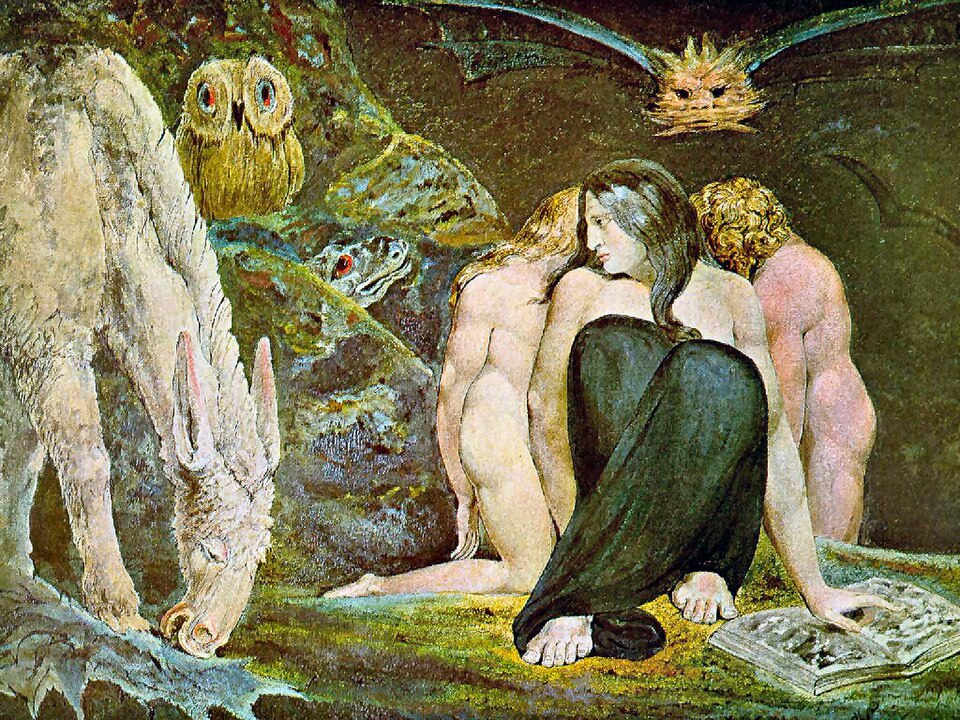
Melinoe appears through shifting forms, sometimes manifest and sometimes dark, within the night. The hymn relates her birth to Persephone and Zeus in a difficult passage that links deception, wrath, and a twofold bodily appearance. The prayer seeks the transformation of an afflicting encounter into a benevolent and sacred presence.
Ancient offering rubric: Aromatic incense.
Textual note
Verses 4–5 contain compressed and disputed syntax concerning Zeus, Pluto, Persephone, and the twofold appearance. The English takes Zeus as assuming Pluto’s semblance in verse 4; verse 5 preserves wrath, rending, and the twofold hue without assigning an uncertain personal agent. Abel’s main text reads ἐκπέμποις in verse 11. This interpretive difficulty is retained openly.
Text and attribution
Greek text: Eugenius Abel, Orphica (1885), printed pages 95. The text follows the printed main reading of this edition; source-specific variants are recorded where relevant. Read the digitised edition. Greek source. Wikisource transcription, revision 155641; checked and corrected against Abel’s print. The English hieratic rendering and suggested devotional use are new editorial work. The applications are guidance for this library, not additional lines of the ancient poem.