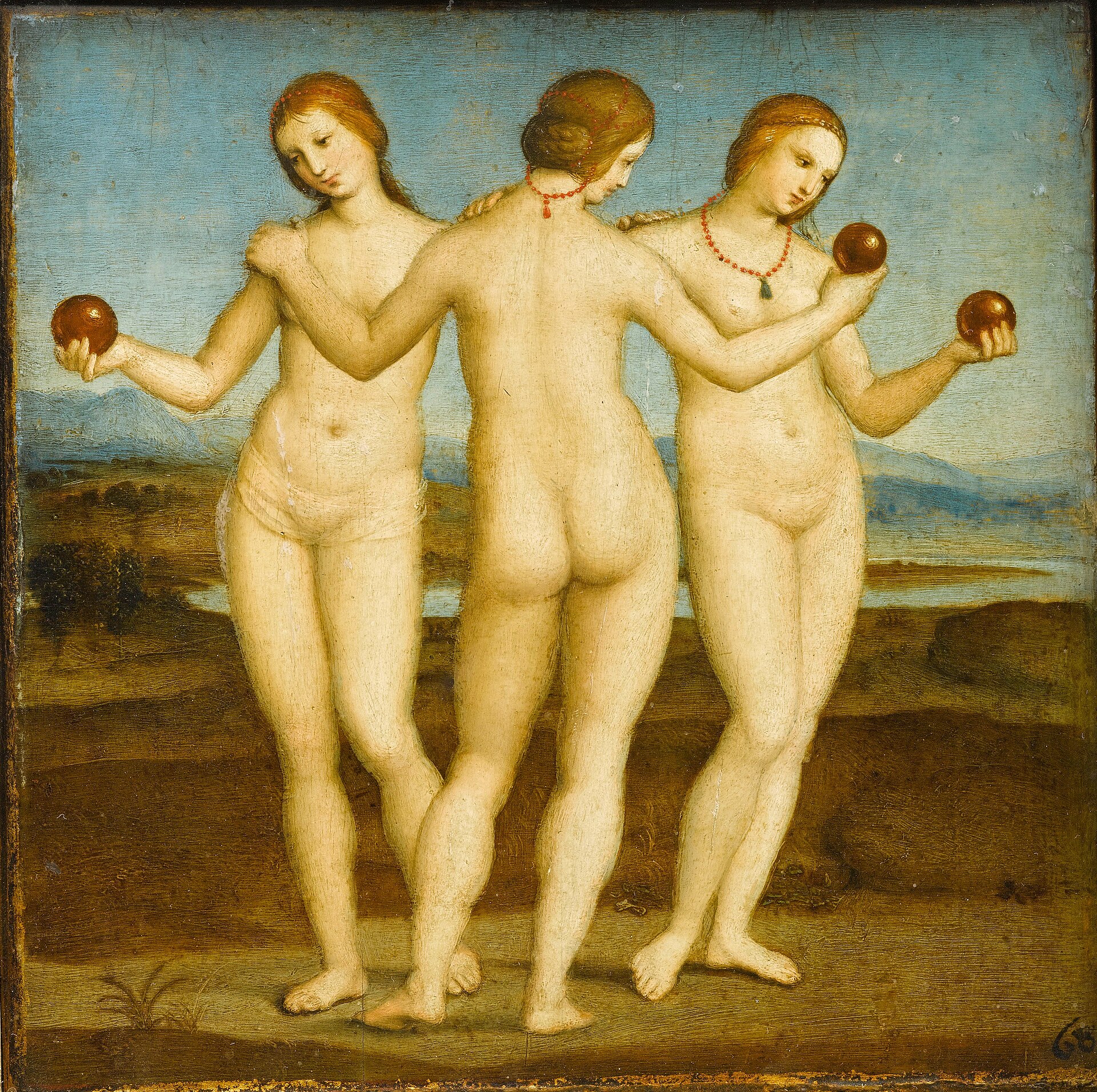

Orphic Hymns · Hymn 60
The Graces
Χαρίτων
Prayer and ritual
These hymns may be spoken as complete prayers to the Gods. Within the Temple’s practice, a ritual is a direct theurgical act; hymnody gathers the mind and turns it toward the Divine, helping the initiate enter reverent communion with the Gods.
Use a hymn on its own in place of another prayer, or add it to the prayer portion of a suitable ritual. Choose according to the deity addressed and the petition expressed in the hymn. When combining them, preserve the ritual’s prescribed sequence and let the hymn give voice to its purpose.
The petition of this hymn
For the grace that makes wisdom, virtue, work, and companionship fruitful in joy.
Recite this hymn as a prayer for gracious presence and shared gladness. It may supplement a rite of thanksgiving, harmonious fellowship, or the dedication of artistic work, with the closing petition offered for the initiates together.
English hieratic rendering
Hymn 60 · An English rendering aligned with the Greek lines.
- Hear me, O Graces of mighty name and radiant honour,
- daughters of Zeus and of deep-bosomed Eurynome,
- Aglaia and Thalia, and Euphrosyne rich in blessing,
- mothers of gladness, beloved, kindly of heart, and pure,
- ever-changing in form, ever-blooming, longed for by mortals.
- For neither the swift flames of the Sun, nor those of the Moon,
- nor the ease bestowed by wisdom, virtue, and courage in labour,
- nor the splendour of life's most beautiful flowering youth,
- awakens the joys of living apart from you.
- O sought in prayer, circling in the dance, with faces fresh as flower buds, full of longing's charm,
- come, bestowers of blessing, ever gentle toward the initiates.
Ancient Greek & pronunciation
Read the English pronunciation spelling directly below each Greek line.
- Κλῦτέ μευ, ὦ Χάριτες μεγαλώνυμοι, ἀγλαότιμοι,KLEE-TEH mehv, OH KHAH-ree-tehs meh-ghah-LOH-nee-mee, ah-ghlah-OH-tee-mee,
- θυγατέρες Ζηνός τε καὶ Εὐρυνόμης βαθυκόλπου,thee-ghah-TEH-rehs zee-NOHS teh KEH eh-vree-NOH-mees vah-thee-KOHL-poo,
- Ἀγλαΐη Θαλίη τε καὶ Εὐφροσύνη πολύολβε,ah-ghlah-EE-ee thah-LEE-ee teh KEH eh-froh-SEE-nee poh-LEE-ohl-veh,
- χαρμοσύνης γενέτειραι, ἐράσμιαι, εὔφρονες, ἁγναί,khahr-moh-SEE-nees yeh-NEH-tee-reh, eh-RAH-zmee-eh, EH-froh-nehs, ahgh-NEH,
- αἰολόμορφοι, ἀειθαλέες, θνητοῖσι ποθειναί·eh-oh-LOH-mohr-fee, ah-ee-thah-LEH-ehs, thnee-TEE-see poh-thee-NEH·
- οὔτε γὰρ ἠελίου ταχιναὶ φλόγες οὔτε σελήνηςOO-teh GHAHR ee-eh-LEE-oo tah-hyee-NEH FLOH-yehs OO-teh seh-LEE-nees
- καὶ σοφίης ἀρετῆς τε καὶ ἐργάσιμου θρασύτητοςKEH soh-FEE-ees ah-reh-TEES teh KEH ehr-GHAH-see-moo thrah-SEE-tee-tohs
- εὐχέρει’ οὔτε βίου λιπαρῆς περικαλλέος ἥβηςehf-HYEH-ree’ OO-teh VEE-oo lee-pah-REES peh-ree-kah-LEH-ohs EE-vees
- ὑμῶν χωρὶς ἐγείρει εὐφροσύνας βιότοιο·ee-MOHN khoh-REES eh-YEE-ree eh-froh-SEE-nahs vee-OH-tee-oh·
- εὐκταῖαι, κυκλάδες, καλυκώπιδες, ἱμερόεσσαι·ehfk-TEH-eh, kee-KLAH-dhehs, kah-lee-KOH-pee-dhehs, ee-meh-ROH-eh-seh·
- ἔλθοιτ’ ὀλβοδότειραι, ἀεὶ μύσταισι προσηνεῖς.EHL-theet’ ohl-voh-DHOH-tee-reh, ah-EE MEE-steh-see proh-see-NEES.
Short sound guide for English speakers
Every line beneath the Greek uses English pronunciation spellings. Say each hyphenated syllable in sequence and emphasize the syllable in CAPITALS. For example, οὐρανόθεν is oo-rah-NOH-thehn. Read adjacent vowels separately: theh-AH has two syllables; oo-rah-NEE-een has four. Hyphens guide the voice; they do not mark pauses.
| Spelling | Sound to make |
|---|---|
| ah · eh · ee · oh · oo | father · met · see · go without its final glide · moon. Keep these vowels clear in unstressed syllables too. |
| th · dh | The unvoiced th in thin · the voiced th in this. Thus DHEE begins with the sound in “thee.” |
| kh | The ch in Scottish loch or German Bach: let air pass at the back of the mouth, without closing it into a k. |
| hy | The breathy beginning of a carefully spoken Hugh. Raise the middle of the tongue toward the roof of the mouth and let air pass without voice. In shy, sound s followed by hy; do not use the English sh sound or the English word “shy.” |
| gh | Make the kh sound above, then add voice. Keep the passage open; this is a flowing sound, not a hard g. |
| y · g | y as in yes, with gentle friction · always a hard g as in get. |
| r | Tap the tongue lightly behind the upper teeth, or use a light roll. |
| ks · ps | Sound both consonants, even at the beginning of a word: ks as in backs, ps as in lips. |
| n-g · m-b · n-d | Sound the nasal and the following consonant. In AHN-geh-leh, the n-g group is like finger, with the g audible. |
Always sound s as in hiss, even at the end of DHEE-kees; z is voiced, as in zero. All other consonants have their usual English sounds. Initial consonant groups may be unfamiliar: sound every written consonant, without inserting an extra vowel. A word without capitals carries no written stress in the Greek. Where two syllables have capitals, both written accents are retained. An apostrophe marks a vowel already elided in the Greek; do not add it back. A hyphen at the end of a Greek verse joins the unfinished word to the next verse.
These spellings follow the Modern Greek liturgical reading used throughout this library. Breathings and iota subscripts are silent; separately pronounced vowels remain separate. The few Greek consonants without an exact English equivalent use the sound cues above. Ancient vowel length, pitch accent and metre are not reconstructed.
Hymn notes
Sacred meaning
The three daughters of Zeus and Eurynome are invoked as the living source of delight. The hymn teaches that even light, wisdom, courage, and youth do not awaken the joy of life apart from their presence. Their gift is the grace through which good things become beloved and life becomes celebratory.
Ancient offering rubric: Storax.
Textual note
Abel prints these eleven verses, including the passage on the gifts of life in verses 6–9. His apparatus records that those four verses were transferred here from the hymn to the Erinyes by Ruhnken. The translation follows their position in Abel’s main text.
At line 9, εὐφροσύνας follows the breathing placement in Abel’s printed main text.
Text and attribution
Greek text: Eugenius Abel, Orphica (1885), printed pages 90. The text follows the printed main reading of this edition; source-specific variants are recorded where relevant. Read the digitised edition. Greek source. Wikisource transcription, revision 124409; checked and corrected against Abel’s print. The English hieratic rendering and suggested devotional use are new editorial work. The applications are guidance for this library, not additional lines of the ancient poem.