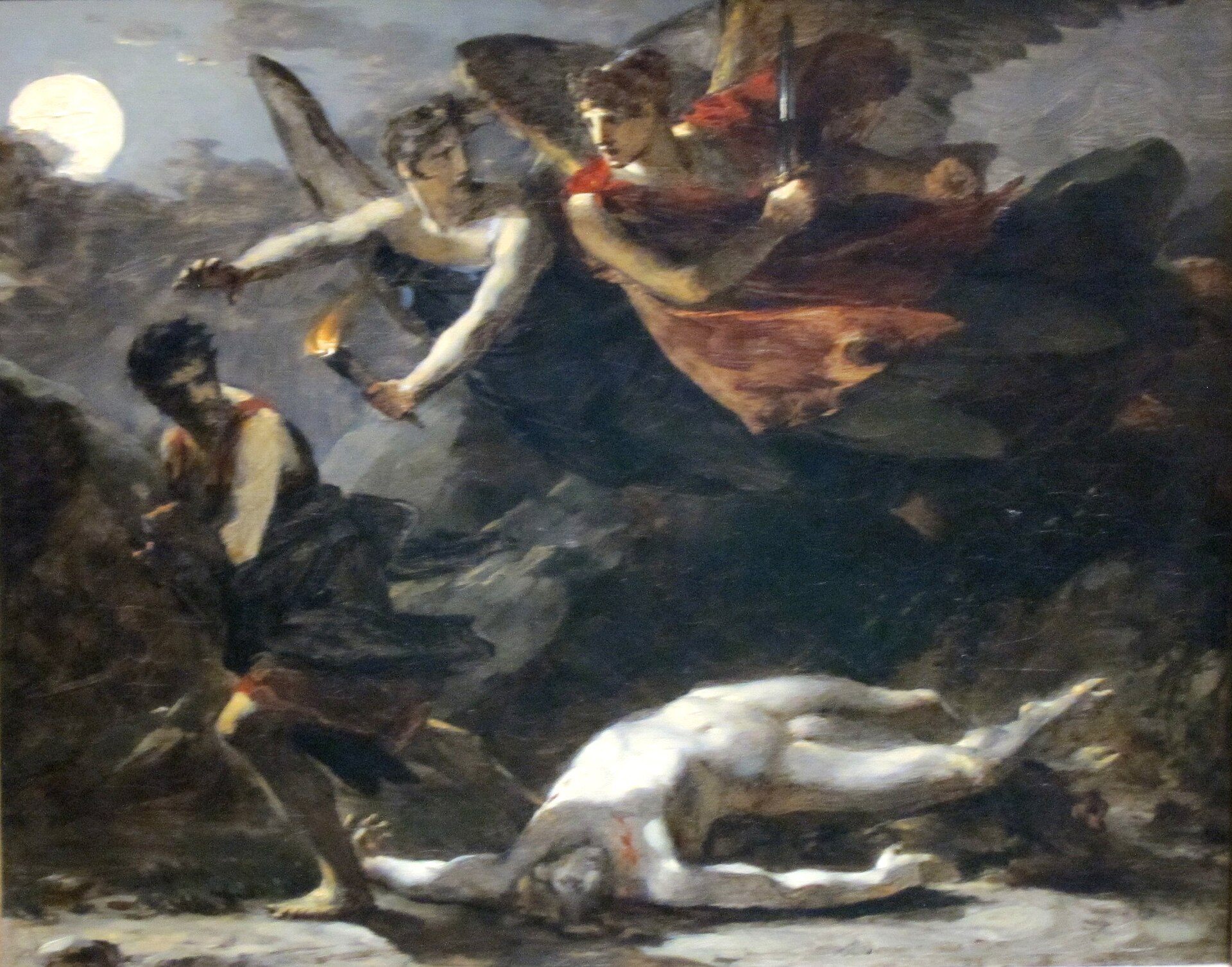

Orphic Hymns · Hymn 61
Nemesis
Νεμέσεως
Prayer and ritual
These hymns may be spoken as complete prayers to the Gods. Within the Temple’s practice, a ritual is a direct theurgical act; hymnody gathers the mind and turns it toward the Divine, helping the initiate enter reverent communion with the Gods.
Use a hymn on its own in place of another prayer, or add it to the prayer portion of a suitable ritual. Choose according to the deity addressed and the petition expressed in the hymn. When combining them, preserve the ritual’s prescribed sequence and let the hymn give voice to its purpose.
The petition of this hymn
For sound judgment, release from arrogant purposes, and alignment with divine justice.
Use the hymn alone when asking Nemesis to correct the disposition of the mind. In a rite seeking justice, add it as a petition for truthful judgment and the ending of impious, unstable intentions, including one’s own.
English hieratic rendering
Hymn 61 · An English rendering aligned with the Greek lines.
- O Nemesis, I acclaim you, Goddess, greatest Queen,
- all-seeing, beholding the life of mortals in their many peoples,
- everlasting, deeply revered, you alone delight in the just,
- and hate the devious word, forever shifting and unsteady.
- All mortals fear you, taking your yoke upon their necks;
- for the purpose of every being is ever your concern, and none escapes you,
- no soul grown arrogant in the heedless rush of words.
- You behold all, you hear all, you judge all;
- in you abide the judgments of mortals, O Spirit supreme above all.
- Come, blessed and pure, ever a helper to the initiates;
- grant us good understanding, bringing to an end those utterly hateful
- purposes that are unholy, overweening, and forever changing.
Ancient Greek & pronunciation
Read the English pronunciation spelling directly below each Greek line.
- Ὦ Νέμεσι, κλῄζω σε, θεά, βασίλεια μεγίστη,OH NEH-meh-see, KLEE-zoh seh, theh-AH, vah-SEE-lee-ah meh-YEE-stee,
- πανδερκής, ἐσορῶσα βίον θνητῶν πολυφύλων·pahn-dhehr-KEES, eh-soh-ROH-sah VEE-ohn thnee-TOHN poh-lee-FEE-lohn·
- ἀιδίη, πολύσεμνε, μόνη χαίρουσα δικαίοις,ah-ee-DHEE-ee, poh-LEE-sehm-neh, MOH-nee HYEH-roo-sah dhee-KEH-ees,
- ἀλλ’ ἔχθουσα λόγον πολυποίκιλον, ἄστατον αἰεί,ahl’ EHKH-thoo-sah LOH-ghohn poh-lee-PEE-kee-lohn, AH-stah-tohn eh-EE,
- ἣν πάντες δεδίασι βροτοὶ ζυγὸν αὐχένι θέντες·EEN PAHN-dehs dheh-DHEE-ah-see vroh-TEE zee-GHOHN ahf-HYEH-nee THEHN-dehs·
- σοὶ γὰρ ἀεὶ γνώμη πάντων μέλει, οὐδέ σε λήθειSEE GHAHR ah-EE GHNOH-mee PAHN-dohn MEH-lee, oo-DHEH seh LEE-thee
- ψυχὴ ὑπερφρονέουσα λόγων ἀδιακρίτῳ ὁρμῇ.psee-HYEE ee-pehr-froh-NEH-oo-sah LOH-ghohn ah-dhee-ah-KREE-toh ohr-MEE.
- πάντ’ ἐσορᾷς καὶ πάντ’ ἐπακούεις, πάντα βραβεύεις·PAHND’ eh-soh-RAHS KEH PAHND’ eh-pah-KOO-ees, PAHN-dah vrah-VEH-vees·
- ἐν σοὶ δ’ εἰσὶ δίκαι θνητῶν, πανυπέρτατε δαῖμον.ehn SEE dh’ ee-SEE DHEE-keh thnee-TOHN, pah-nee-PEHR-tah-teh DHEH-mohn.
- ἐλθέ, μάκαιρ’, ἁγνή, μύσταις ἐπιτάρροθος αἰεί·ehl-THEH, MAH-kehr’, ahgh-NEE, MEE-stehs eh-pee-TAH-roh-thohs eh-EE·
- δὸς δ’ ἀγαθὴν διάνοιαν ἔχειν, παύουσα πανεχθεῖςDHOHS dh’ ah-ghah-THEEN dhee-AH-nee-ahn EH-hyeen, PAH-voo-sah pah-nehkh-THEES
- γνώμας οὐχ ὁσίας, πανυπέρφρονας, ἀλλοπροσάλλας.GHNOH-mahs ookh oh-SEE-ahs, pah-nee-PEHR-froh-nahs, ah-loh-proh-SAH-lahs.
Short sound guide for English speakers
Every line beneath the Greek uses English pronunciation spellings. Say each hyphenated syllable in sequence and emphasize the syllable in CAPITALS. For example, οὐρανόθεν is oo-rah-NOH-thehn. Read adjacent vowels separately: theh-AH has two syllables; oo-rah-NEE-een has four. Hyphens guide the voice; they do not mark pauses.
| Spelling | Sound to make |
|---|---|
| ah · eh · ee · oh · oo | father · met · see · go without its final glide · moon. Keep these vowels clear in unstressed syllables too. |
| th · dh | The unvoiced th in thin · the voiced th in this. Thus DHEE begins with the sound in “thee.” |
| kh | The ch in Scottish loch or German Bach: let air pass at the back of the mouth, without closing it into a k. |
| hy | The breathy beginning of a carefully spoken Hugh. Raise the middle of the tongue toward the roof of the mouth and let air pass without voice. In shy, sound s followed by hy; do not use the English sh sound or the English word “shy.” |
| gh | Make the kh sound above, then add voice. Keep the passage open; this is a flowing sound, not a hard g. |
| y · g | y as in yes, with gentle friction · always a hard g as in get. |
| r | Tap the tongue lightly behind the upper teeth, or use a light roll. |
| ks · ps | Sound both consonants, even at the beginning of a word: ks as in backs, ps as in lips. |
| n-g · m-b · n-d | Sound the nasal and the following consonant. In AHN-geh-leh, the n-g group is like finger, with the g audible. |
Always sound s as in hiss, even at the end of DHEE-kees; z is voiced, as in zero. All other consonants have their usual English sounds. Initial consonant groups may be unfamiliar: sound every written consonant, without inserting an extra vowel. A word without capitals carries no written stress in the Greek. Where two syllables have capitals, both written accents are retained. An apostrophe marks a vowel already elided in the Greek; do not add it back. A hyphen at the end of a Greek verse joins the unfinished word to the next verse.
These spellings follow the Modern Greek liturgical reading used throughout this library. Breathings and iota subscripts are silent; separately pronounced vowels remain separate. The few Greek consonants without an exact English equivalent use the sound cues above. Ancient vowel length, pitch accent and metre are not reconstructed.
Hymn notes
Sacred meaning
Nemesis sees the inward disposition as fully as the outward deed. Her universal judgment is joined to a precise closing prayer: grant good understanding and bring arrogant, impious counsels to an end. The worshipper therefore approaches justice through a willingness to be set right.
Text and attribution
Greek text: Eugenius Abel, Orphica (1885), printed pages 90, 91. The text follows the printed main reading of this edition; source-specific variants are recorded where relevant. Read the digitised edition. Greek source. Wikisource transcription, revision 124437; checked and corrected against Abel’s print. The English hieratic rendering and suggested devotional use are new editorial work. The applications are guidance for this library, not additional lines of the ancient poem.