
Orphic Hymns · Hymn 59
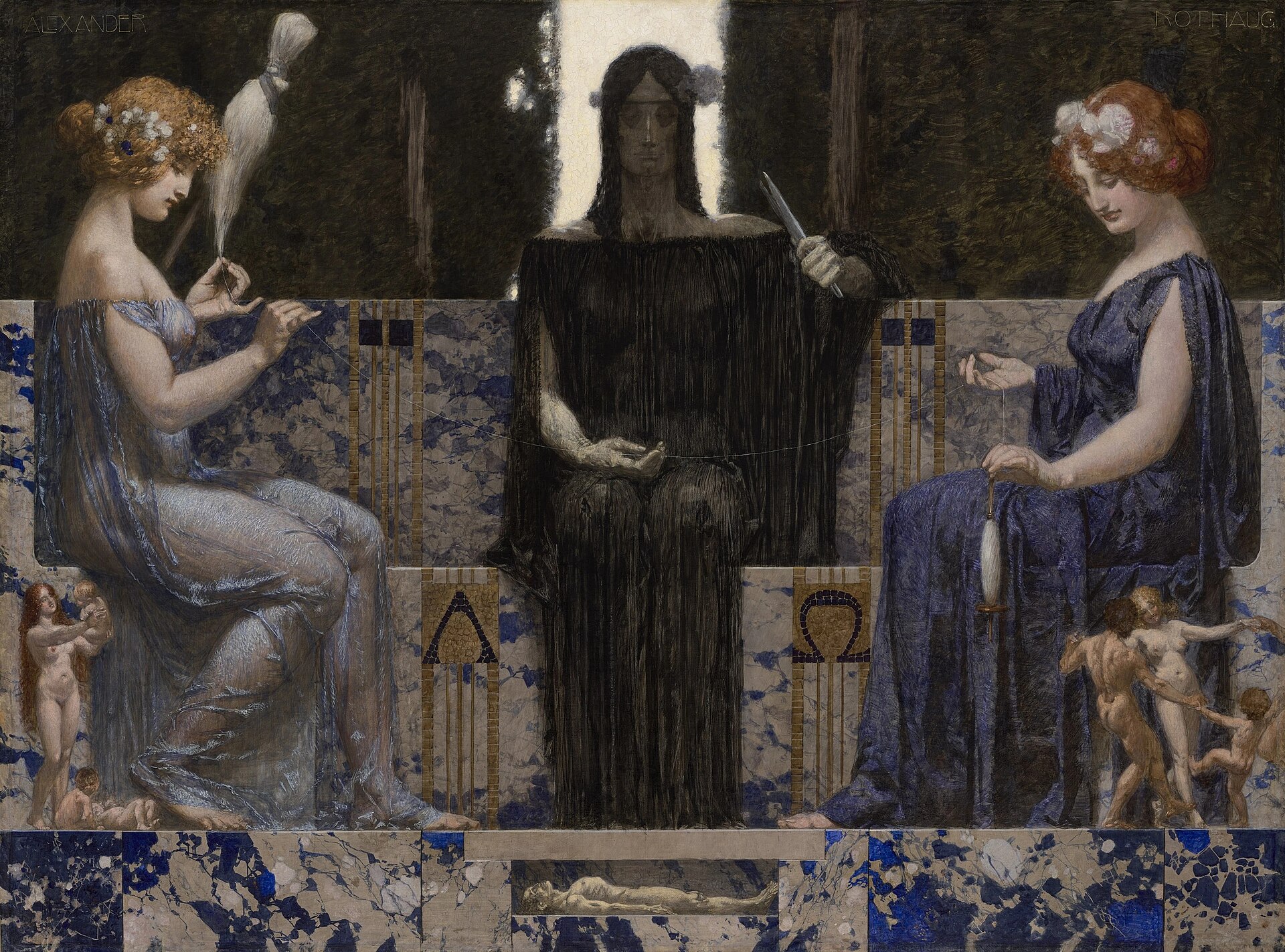
The Fates
Μοιρῶν
Prayer and ritual
These hymns may be spoken as complete prayers to the Gods. Within the Temple’s practice, a ritual is a direct theurgical act; hymnody gathers the mind and turns it toward the Divine, helping the initiate enter reverent communion with the Gods.
Use a hymn on its own in place of another prayer, or add it to the prayer portion of a suitable ritual. Choose according to the deity addressed and the petition expressed in the hymn. When combining them, preserve the ritual’s prescribed sequence and let the hymn give voice to its purpose.
The petition of this hymn
For the Fates’ gentle counsel, the easing of care, and a gracious encounter with the order of life.
Recite this hymn alone as a prayer for the Fates’ gentle presence amid uncertainty. It may also accompany a rite concerned with just order, protection, or a life transition, retaining its final appeal that the initiates be released from care through gracious counsel.
English hieratic rendering
Hymn 59 · An English rendering aligned with the Greek lines.
- O boundless Fates, beloved children of black Night,
- hear me praying, many-named ones, you who by the lake
- of darkness, where grievous water beneath the heat of night
- bursts forth in the shadowed, gleaming recess of a fair-stoned cave,
- have your dwelling, and fly over the boundless earth of mortals.
- From there, toward the renowned mortal race, with light hope,
- you advance, wrapped in purple veils,
- upon the field of fate, where the all-earthly chariot is driven
- by the glory of Justice, beside the boundary of hope and cares,
- of primeval law and the boundless, well-ordered rule.
- For Fate alone sees all within life, and no other
- of the immortals who possess the summit of snowy Olympus,
- save the perfect eye of Zeus; for all that happens to us,
- Fate and the mind of Zeus know it all, through all things.
- But come to me, airy ones, gentle-minded and mild of heart,
- Atropos and Lachesis and Clotho, nobly fathered,
- nocturnal, unseen, unturning, ever unwearied,
- givers of all, removers of necessity from mortals:
- O Fates, hear my holy libations and prayers,
- and come to the initiates, bringing forgetfulness of care through gracious counsel.
Ancient Greek & pronunciation
Read the English pronunciation spelling directly below each Greek line.
- Μοῖραι ἀπειρέσιοι, Νυκτὸς φίλα τέκνα μελαίνης,MEE-reh ah-pee-REH-see-ee, neek-TOHS FEE-lah TEHK-nah meh-LEH-nees,
- κλῦτέ μευ εὐχομένου, πολυώνυμοι, αἵτ’ ἐπὶ λίμνηςKLEE-TEH mehv ehf-khoh-MEH-noo, poh-lee-OH-nee-mee, EHT’ eh-PEE LEEM-nees
- ὀρφναίης, ἵνα λυγρὸν ὕδωρ νυχίης ὑπὸ θέρμηςohrf-NEH-ees, EE-nah lee-GHROHN EE-dhohr nee-HYEE-ees ee-POH THEHR-mees
- ῥήγνυται ἐν σκιερῷ λιπαρῷ μυχῷ εὐλίθου ἄντρου,REEGH-nee-teh ehn skee-eh-ROH lee-pah-ROH mee-KHOH eh-VLEE-thoo AHN-droo,
- ναίουσαι πεπότησθε βροτῶν ἐπ’ ἀπείρονα γαῖαν·NEH-oo-seh peh-POH-tees-theh vroh-TOHN ehp’ ah-PEE-roh-nah YEH-ahn·
- ἔνθεν ἐπὶ βρότεον δόκιμον γένος ἐλπίδι κούφῃEHN-thehn eh-PEE VROH-teh-ohn DHOH-kee-mohn YEH-nohs ehl-PEE-dhee KOO-fee
- στείχετε πορφυρέῃσι καλυψάμεναι ὀθόνῃσιSTEE-hyeh-teh pohr-fee-REH-ee-see kah-leep-SAH-meh-neh oh-THOH-nee-see
- μορσίμῳ ἐν πεδίῳ, ὅθι πάγγεον ἅρμα διώκειmohr-SEE-moh ehn peh-DHEE-oh, OH-thee PAHN-geh-ohn AHR-mah dhee-OH-kee
- δόξα δίκης παρὰ τέρμα καὶ ἐλπίδος ἠδὲ μεριμνῶνDHOHK-sah DHEE-kees pah-RAH TEHR-mah KEH ehl-PEE-dhohs ee-DHEH meh-reem-NOHN
- καὶ νόμου ὠγυγίου καὶ ἀπείρονος εὐνόμου ἀρχῆς·KEH NOH-moo oh-yee-YEE-oo KEH ah-PEE-roh-nohs ehv-NOH-moo ahr-HYEES·
- Μοῖρα γὰρ ἐν βιότῳ καθορᾷ μόνη, οὐδέ τις ἄλλοςMEE-rah GHAHR ehn vee-OH-toh kah-thoh-RAH MOH-nee, oo-DHEH tees AH-lohs
- ἀθανάτων, οἳ ἔχουσι κάρη νιφόεντος Ὀλύμπου,ah-thah-NAH-tohn, EE EH-khoo-see KAH-ree nee-FOH-ehn-dohs oh-LEEM-boo,
- καὶ Διὸς ὄμμα τέλειον· ἐπεί γ’ ὅσα γίγνεται ἡμῖν,KEH dhee-OHS OH-mah TEH-lee-ohn· eh-PEE gh’ OH-sah YEEGH-neh-teh ee-MEEN,
- Μοῖρά τε καὶ Διὸς οἶδε νόος διὰ παντὸς ἅπαντα.MEE-RAH teh KEH dhee-OHS EE-dheh NOH-ohs dhee-AH pahn-DOHS AH-pahn-dah.
- ἀλλά μοι ἠέριαι μαλακόφρονες, ἠπιόθυμοι,ah-LAH mee ee-EH-ree-eh mah-lah-KOH-froh-nehs, ee-pee-OH-thee-mee,
- Ἄτροπε καὶ Λάχεσι, Κλωθώ, μόλετ’, εὐπατέρειαι,AH-troh-peh KEH LAH-hyeh-see, kloh-THOH, MOH-leht’, ehf-pah-TEH-ree-eh,
- νυκτέριαι, ἀφανεῖς, ἀμετάτροποι, αἰὲν ἀτειρεῖς,neek-TEH-ree-eh, ah-fah-NEES, ah-meh-TAH-troh-pee, eh-EHN ah-tee-REES,
- παντοδότειραι, ἀφαιρέτιδες θνητοῖσιν ἀνάγκης·pahn-doh-DHOH-tee-reh, ah-feh-REH-tee-dhehs thnee-TEE-seen ah-NAHN-gees·
- Μοῖραι, ἀκούσατ’ ἐμῶν ὁσίων λοιβῶν τε καὶ εὐχῶν,MEE-reh, ah-KOO-saht’ eh-MOHN oh-SEE-ohn lee-VOHN teh KEH ehf-KHOHN,
- ἐρχόμεναι μύσταις λαθικηδέες εὔφρονι βουλῇ.ehr-KHOH-meh-neh MEE-stehs lah-thee-kee-DHEH-ehs EH-froh-nee voo-LEE.
Short sound guide for English speakers
Every line beneath the Greek uses English pronunciation spellings. Say each hyphenated syllable in sequence and emphasize the syllable in CAPITALS. For example, οὐρανόθεν is oo-rah-NOH-thehn. Read adjacent vowels separately: theh-AH has two syllables; oo-rah-NEE-een has four. Hyphens guide the voice; they do not mark pauses.
| Spelling | Sound to make |
|---|---|
| ah · eh · ee · oh · oo | father · met · see · go without its final glide · moon. Keep these vowels clear in unstressed syllables too. |
| th · dh | The unvoiced th in thin · the voiced th in this. Thus DHEE begins with the sound in “thee.” |
| kh | The ch in Scottish loch or German Bach: let air pass at the back of the mouth, without closing it into a k. |
| hy | The breathy beginning of a carefully spoken Hugh. Raise the middle of the tongue toward the roof of the mouth and let air pass without voice. In shy, sound s followed by hy; do not use the English sh sound or the English word “shy.” |
| gh | Make the kh sound above, then add voice. Keep the passage open; this is a flowing sound, not a hard g. |
| y · g | y as in yes, with gentle friction · always a hard g as in get. |
| r | Tap the tongue lightly behind the upper teeth, or use a light roll. |
| ks · ps | Sound both consonants, even at the beginning of a word: ks as in backs, ps as in lips. |
| n-g · m-b · n-d | Sound the nasal and the following consonant. In AHN-geh-leh, the n-g group is like finger, with the g audible. |
Always sound s as in hiss, even at the end of DHEE-kees; z is voiced, as in zero. All other consonants have their usual English sounds. Initial consonant groups may be unfamiliar: sound every written consonant, without inserting an extra vowel. A word without capitals carries no written stress in the Greek. Where two syllables have capitals, both written accents are retained. An apostrophe marks a vowel already elided in the Greek; do not add it back. A hyphen at the end of a Greek verse joins the unfinished word to the next verse.
These spellings follow the Modern Greek liturgical reading used throughout this library. Breathings and iota subscripts are silent; separately pronounced vowels remain separate. The few Greek consonants without an exact English equivalent use the sound cues above. Ancient vowel length, pitch accent and metre are not reconstructed.
Hymn notes
Sacred meaning
The daughters of Night move from their hidden dwelling into the whole field of mortal life. Fate’s complete vision is joined with the mind of Zeus, encompassing what comes to pass. Although their decree is unturning, the hymn invokes them as gentle givers who can remove necessity and bring forgetfulness of grief.
Ancient offering rubric: Aromatic substances.
Textual note
The syntax and imagery of verses 6–10 are difficult in the inherited text; this version retains their chariot, Justice, hope, cares, law, and rule without inventing a new cosmological mechanism. Verse 13 is read as the exception for Zeus to the preceding statement, in accord with verse 14.
Text and attribution
Greek text: Eugenius Abel, Orphica (1885), printed pages 89, 90. The text follows the printed main reading of this edition; source-specific variants are recorded where relevant. Read the digitised edition. Greek source. Wikisource transcription, revision 124406; checked and corrected against Abel’s print. The English hieratic rendering and suggested devotional use are new editorial work. The applications are guidance for this library, not additional lines of the ancient poem.