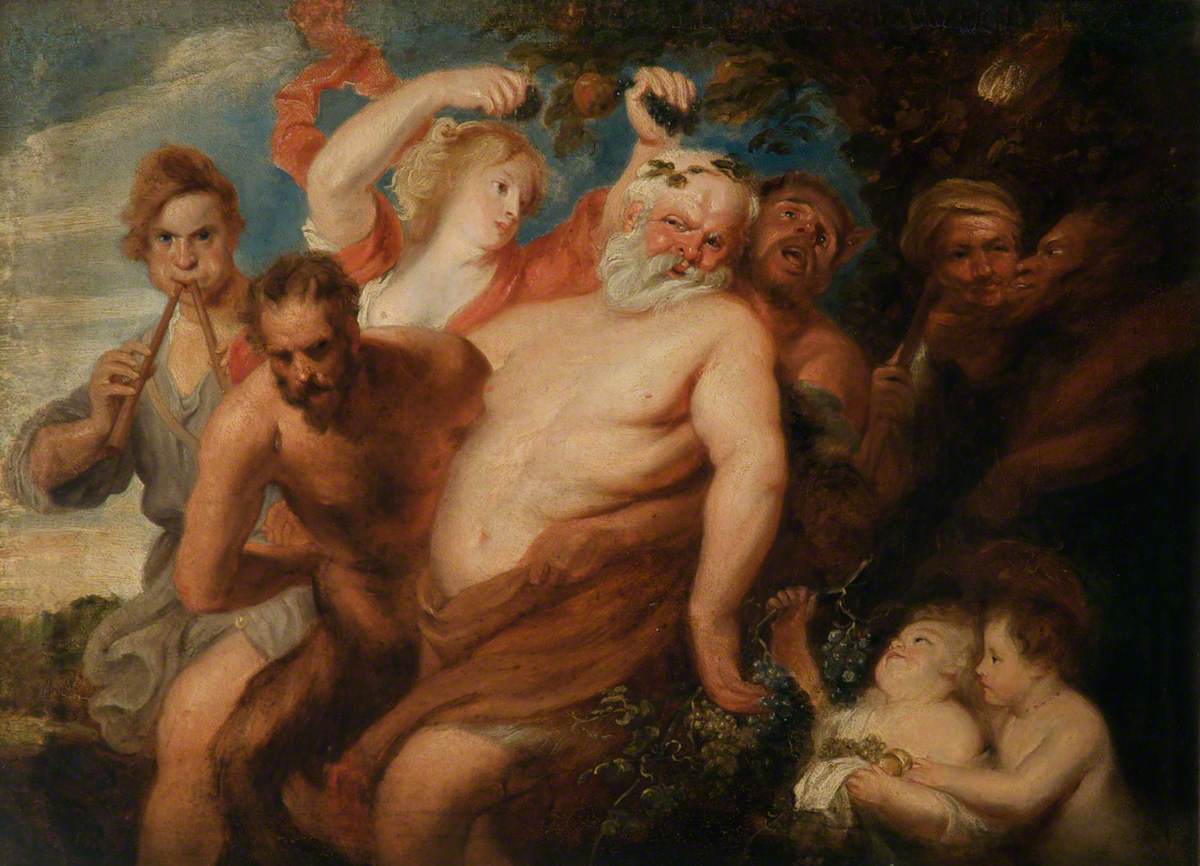
_-_The_Triumph_of_Silenus_(copy_after_the_studio_of_Peter_Paul_Rubens)_-_WAGMG_,_1877.89_-_Warrington_Museum_and_Art_Gallery.jpg)
Orphic Hymns · Hymn 54
Silenus, Satyrs, and Bacchants
Σιληνοῦ Σατύρου Βακχῶν
Prayer and ritual
These hymns may be spoken as complete prayers to the Gods. Within the Temple’s practice, a ritual is a direct theurgical act; hymnody gathers the mind and turns it toward the Divine, helping the initiate enter reverent communion with the Gods.
Use a hymn on its own in place of another prayer, or add it to the prayer portion of a suitable ritual. Choose according to the deity addressed and the petition expressed in the hymn. When combining them, preserve the ritual’s prescribed sequence and let the hymn give voice to its purpose.
The petition of this hymn
For the peaceful and joyful guidance of the Dionysian company in sacred celebration.
Recite this hymn alone to honor Silenus and the companions of Bacchus. It may also supplement a Dionysian rite, particularly one centered upon sacred song or nocturnal celebration, following the hymn’s own prayer for serenity within the company.
English hieratic rendering
Hymn 54 · An English rendering aligned with the Greek lines.
- Hear me, O deeply revered nurturer, nurse of Bacchus,
- foremost among the Sileni, honored by all the gods
- and by mortal human beings in the seasons of the third-year feast,
- pure fulfiller of rites, venerable leader of the pastoral company’s initiation,
- raiser of the sacred cry, lover of wakeful vigil with the fair-girdled nurses,
- leading the Naiads and the ivy-bearing Bacchants:
- come here to the rite of all the gods with all the Satyrs,
- beast-shaped, sounding the sacred cry of sovereign Bacchus,
- with the Bacchants ushering forth the revered and fulfilling rites of the winepress,
- revealing the mysteries that shine by night in sacred initiations,
- crying the holy cry, lover of the thyrsus, bringing serenity to the companies.
Ancient Greek & pronunciation
Read the English pronunciation spelling directly below each Greek line.
- Κλῦθί μευ, ὦ πολύσεμνε τροφός, Βάκχοιο τιθηνέ,KLEE-THEE mehv, OH poh-LEE-sehm-neh troh-FOHS, VAHK-hyee-oh tee-thee-NEH,
- Σιληνῶν ὄχ’ ἄριστε, τετιμένε πᾶσι θεοῖσιsee-lee-NOHN OHKH’ AH-ree-steh, teh-tee-MEH-neh PAH-see theh-EE-see
- καὶ θνητοῖσι βροτοῖσιν ἐπὶ τριετηρίσιν ὥραις,KEH thnee-TEE-see vroh-TEE-seen eh-PEE tree-eh-tee-REE-seen OH-rehs,
- ἁγνοτελές, γεραρός, θιάσου νομίου τελετάρχα,ahgh-noh-teh-LEHS, yeh-rah-ROHS, thee-AH-soo noh-MEE-oo teh-leh-TAHR-khah,
- εὐαστής, φιλάγρυπνε σὺν εὐζώνοισι τιθήναις,eh-vah-STEES, fee-LAH-ghreep-neh SEEN ehv-ZOH-nee-see tee-THEE-nehs,
- Νάϊσι καὶ Βάκχαις ἡγούμενε κισσοφόροισι·NAH-ee-see KEH VAHK-hyehs ee-GHOO-meh-neh kee-soh-FOH-ree-see·
- δεῦρ’ ἐπὶ πάνθειον τελετὴν Σατύροις ἅμα πᾶσιDHEHVR’ eh-PEE PAHN-thee-ohn teh-leh-TEEN sah-TEE-rees AH-mah PAH-see
- θηροτύποις, εὔασμα διδοὺς Βάκχοιο ἄνακτος,thee-roh-TEE-pees, EH-vah-zmah dhee-DHOOS VAHK-hyee-oh AH-nahk-tohs,
- σὺν Βάκχαις λήναια τελεσφόρα σεμνὰ προπέμπων,SEEN VAHK-hyehs LEE-neh-ah teh-leh-SFOH-rah sehm-NAH proh-PEHM-bohn,
- ὄργια νυκτιφαῆ τελεταῖς ἁγίαις ἀναφαίνων,OHR-yee-ah neek-tee-fah-EE teh-leh-TEHS ah-YEE-ehs ah-nah-FEH-nohn,
- εὐάζων, φιλόθυρσε, γαληνιόων θιάσοισιν.eh-VAH-zohn, fee-LOH-theer-seh, ghah-lee-nee-OH-ohn thee-AH-see-seen.
Short sound guide for English speakers
Every line beneath the Greek uses English pronunciation spellings. Say each hyphenated syllable in sequence and emphasize the syllable in CAPITALS. For example, οὐρανόθεν is oo-rah-NOH-thehn. Read adjacent vowels separately: theh-AH has two syllables; oo-rah-NEE-een has four. Hyphens guide the voice; they do not mark pauses.
| Spelling | Sound to make |
|---|---|
| ah · eh · ee · oh · oo | father · met · see · go without its final glide · moon. Keep these vowels clear in unstressed syllables too. |
| th · dh | The unvoiced th in thin · the voiced th in this. Thus DHEE begins with the sound in “thee.” |
| kh | The ch in Scottish loch or German Bach: let air pass at the back of the mouth, without closing it into a k. |
| hy | The breathy beginning of a carefully spoken Hugh. Raise the middle of the tongue toward the roof of the mouth and let air pass without voice. In shy, sound s followed by hy; do not use the English sh sound or the English word “shy.” |
| gh | Make the kh sound above, then add voice. Keep the passage open; this is a flowing sound, not a hard g. |
| y · g | y as in yes, with gentle friction · always a hard g as in get. |
| r | Tap the tongue lightly behind the upper teeth, or use a light roll. |
| ks · ps | Sound both consonants, even at the beginning of a word: ks as in backs, ps as in lips. |
| n-g · m-b · n-d | Sound the nasal and the following consonant. In AHN-geh-leh, the n-g group is like finger, with the g audible. |
Always sound s as in hiss, even at the end of DHEE-kees; z is voiced, as in zero. All other consonants have their usual English sounds. Initial consonant groups may be unfamiliar: sound every written consonant, without inserting an extra vowel. A word without capitals carries no written stress in the Greek. Where two syllables have capitals, both written accents are retained. An apostrophe marks a vowel already elided in the Greek; do not add it back. A hyphen at the end of a Greek verse joins the unfinished word to the next verse.
These spellings follow the Modern Greek liturgical reading used throughout this library. Breathings and iota subscripts are silent; separately pronounced vowels remain separate. The few Greek consonants without an exact English equivalent use the sound cues above. Ancient vowel length, pitch accent and metre are not reconstructed.
Hymn notes
Sacred meaning
Silenus appears as nurturer and venerable leader, gathering nurses, Naiads, Satyrs, and Bacchants around the god. The many voices and forms belong to one revelatory celebration. Its closing serenity shows that ecstatic movement and a calm sacred company are held together.
Ancient offering rubric: Manna.
Textual note
The third-year festival is biennial in ancient inclusive reckoning. Sileni, Satyrs, Naiads, and Bacchants remain distinct named members of the sacred company.
Text and attribution
Greek text: Eugenius Abel, Orphica (1885), printed pages 86. The text follows the printed main reading of this edition; source-specific variants are recorded where relevant. Read the digitised edition. Greek source. Wikisource transcription, revision 124390; checked and corrected against Abel’s print. The English hieratic rendering and suggested devotional use are new editorial work. The applications are guidance for this library, not additional lines of the ancient poem.