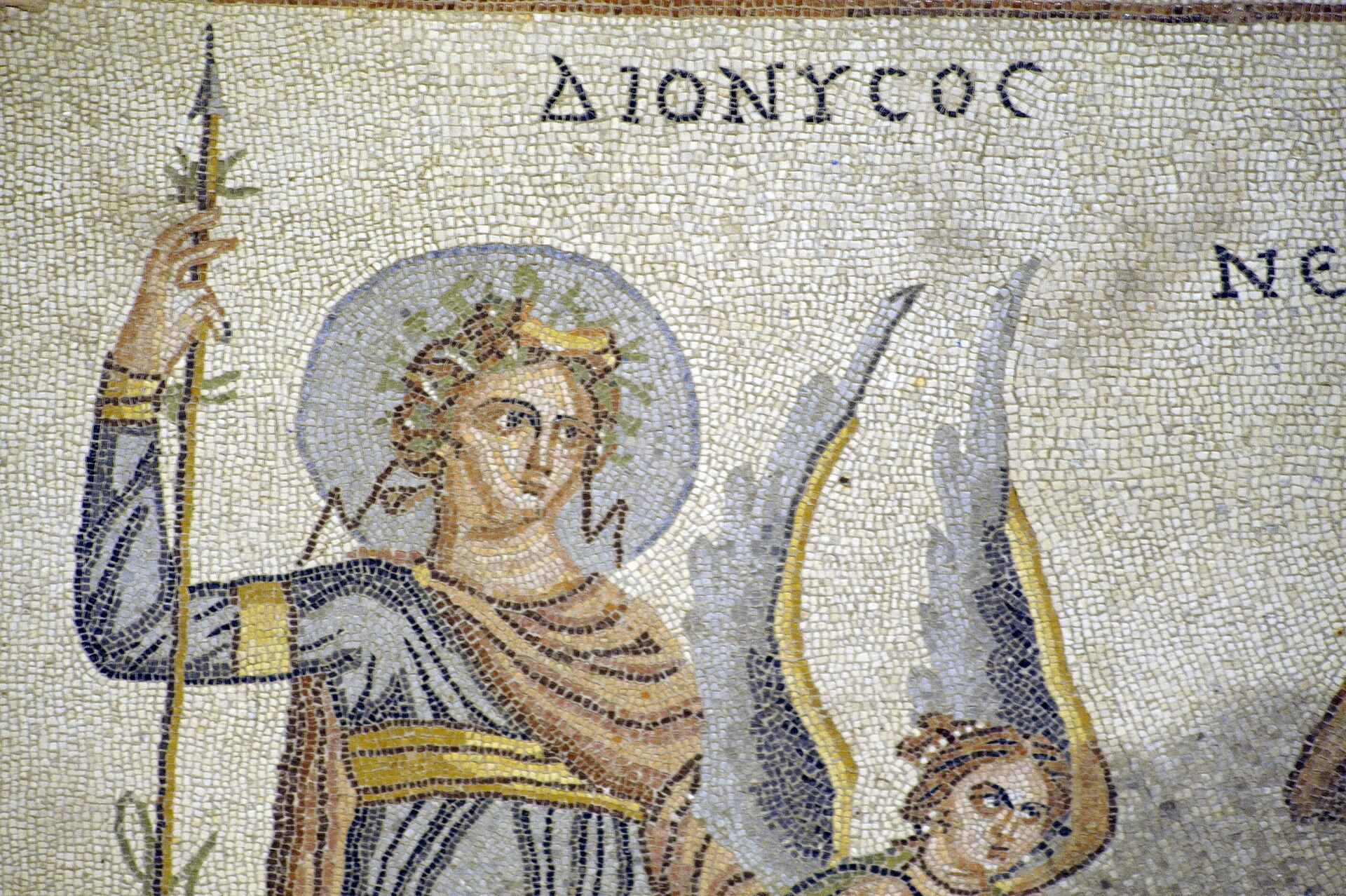

Orphic Hymns · Hymn 53
Dionysus of the Returning Year
Ἀμφιετοῦς
Prayer and ritual
These hymns may be spoken as complete prayers to the Gods. Within the Temple’s practice, a ritual is a direct theurgical act; hymnody gathers the mind and turns it toward the Divine, helping the initiate enter reverent communion with the Gods.
Use a hymn on its own in place of another prayer, or add it to the prayer portion of a suitable ritual. Choose according to the deity addressed and the petition expressed in the hymn. When combining them, preserve the ritual’s prescribed sequence and let the hymn give voice to its purpose.
The petition of this hymn
For the return of fruitful life from sacred repose and the awakening of Dionysian joy in the recurring seasons.
This hymn may be offered alone as a prayer for renewal and fruitful return. It may also accompany an established Dionysian or seasonal rite, following its invitation that the god emerge with a radiant face and ripened sacred fruits.
English hieratic rendering
Hymn 53 · An English rendering aligned with the Greek lines.
- I call upon Bacchus of the returning year, Dionysus beneath the earth,
- awakening together with the maidens, the Nymphs of lovely tresses,
- who, resting beside Persephone in her sacred halls,
- lulls the third-year span to sleep, the sacred Bacchic season.
- But when you yourself awaken the third-year revel once again,
- he turns to hymn with the fair-girdled nurses,
- raising the sacred cry and stirring dances in the circling seasons.
- Come, blessed Bacchus of green fruit, horn-bearing, fruitful,
- enter the rite of all the gods with a radiant countenance,
- abounding in sacred fruits that bring generation to fulfillment.
Ancient Greek & pronunciation
Read the English pronunciation spelling directly below each Greek line.
- Ἀμφιετῆ καλέω Βάκχον, χθόνιον Διόνυσον,ahm-fee-eh-TEE kah-LEH-oh VAHK-khohn, KHTHOH-nee-ohn dhee-OH-nee-sohn,
- ἐγρόμενον κούραις ἅμα νύμφαις εὐπλοκάμοισιν,eh-GHROH-meh-nohn KOO-rehs AH-mah NEEM-fehs ehf-ploh-KAH-mee-seen,
- ὃς παρὰ Φερσεφόνης ἱεροῖσι δόμοισιν ἰαύωνOHS pah-RAH fehr-seh-FOH-nees ee-eh-REE-see DHOH-mee-seen ee-AH-vohn
- κοιμίζει τριετῆρα χρόνον, Βακχήιον ἁγνόν.kee-MEE-zee tree-eh-TEE-rah KHROH-nohn, vahk-HYEE-ee-ohn ahgh-NOHN.
- αὐτὸς δ’ ἡνίκα τὸν τριετῆ πάλι κῶμον ἐγείρῃς,ahf-TOHS dh’ ee-NEE-kah TOHN tree-eh-TEE PAH-lee KOH-mohn eh-YEE-rees,
- εἰς ὕμνον τρέπεται σὺν εὐζώνοισι τιθήναιςees EEM-nohn TREH-peh-teh SEEN ehv-ZOH-nee-see tee-THEE-nehs
- εὐάζων κινῶν τε χοροὺς ἐνὶ κυκλάσιν ὥραις.eh-VAH-zohn kee-NOHN teh khoh-ROOS eh-NEE kee-KLAH-seen OH-rehs.
- ἀλλά, μάκαρ, χλοόκαρπε, κερασφόρε, κάρπιμε Βάκχε,ah-LAH, MAH-kahr, khloh-OH-kahr-peh, keh-rah-SFOH-reh, KAHR-pee-meh VAHK-hyeh,
- βαῖν’ ἐπὶ πάνθειον τελετὴν γανόωντι προσώπῳVEHN’ eh-PEE PAHN-thee-ohn teh-leh-TEEN ghah-NOH-ohn-dee proh-SOH-poh
- εὐιέροις καρποῖσι τελεσσιγόνοισι βρυάζων.eh-vee-EH-rees kahr-PEE-see teh-leh-see-GHOH-nee-see vree-AH-zohn.
Short sound guide for English speakers
Every line beneath the Greek uses English pronunciation spellings. Say each hyphenated syllable in sequence and emphasize the syllable in CAPITALS. For example, οὐρανόθεν is oo-rah-NOH-thehn. Read adjacent vowels separately: theh-AH has two syllables; oo-rah-NEE-een has four. Hyphens guide the voice; they do not mark pauses.
| Spelling | Sound to make |
|---|---|
| ah · eh · ee · oh · oo | father · met · see · go without its final glide · moon. Keep these vowels clear in unstressed syllables too. |
| th · dh | The unvoiced th in thin · the voiced th in this. Thus DHEE begins with the sound in “thee.” |
| kh | The ch in Scottish loch or German Bach: let air pass at the back of the mouth, without closing it into a k. |
| hy | The breathy beginning of a carefully spoken Hugh. Raise the middle of the tongue toward the roof of the mouth and let air pass without voice. In shy, sound s followed by hy; do not use the English sh sound or the English word “shy.” |
| gh | Make the kh sound above, then add voice. Keep the passage open; this is a flowing sound, not a hard g. |
| y · g | y as in yes, with gentle friction · always a hard g as in get. |
| r | Tap the tongue lightly behind the upper teeth, or use a light roll. |
| ks · ps | Sound both consonants, even at the beginning of a word: ks as in backs, ps as in lips. |
| n-g · m-b · n-d | Sound the nasal and the following consonant. In AHN-geh-leh, the n-g group is like finger, with the g audible. |
Always sound s as in hiss, even at the end of DHEE-kees; z is voiced, as in zero. All other consonants have their usual English sounds. Initial consonant groups may be unfamiliar: sound every written consonant, without inserting an extra vowel. A word without capitals carries no written stress in the Greek. Where two syllables have capitals, both written accents are retained. An apostrophe marks a vowel already elided in the Greek; do not add it back. A hyphen at the end of a Greek verse joins the unfinished word to the next verse.
These spellings follow the Modern Greek liturgical reading used throughout this library. Breathings and iota subscripts are silent; separately pronounced vowels remain separate. The few Greek consonants without an exact English equivalent use the sound cues above. Ancient vowel length, pitch accent and metre are not reconstructed.
Hymn notes
Sacred meaning
Dionysus rests in Persephone’s sacred house and rises with the Nymphs into the returning celebration. His awakening releases sacred song and dance within the circling seasons. The hymn seeks his arrival as the power that brings fruit to completion.
Ancient offering rubric: All incense except frankincense; pour a libation of milk.
Textual note
The printed poem shifts from second person in verse 5 to third person in verse 6; the translation preserves this inherited shift. Verse 7 is restored as εὐάζων and χορούς, sacred acclamation and dances, rather than the digital εὐνάζων and χρόνους. The third-year reckoning denotes the biennial cycle.
Text and attribution
Greek text: Eugenius Abel, Orphica (1885), printed pages 86. The text follows the printed main reading of this edition; source-specific variants are recorded where relevant. Read the digitised edition. Greek source. Wikisource transcription, revision 124392; checked and corrected against Abel’s print. The English hieratic rendering and suggested devotional use are new editorial work. The applications are guidance for this library, not additional lines of the ancient poem.