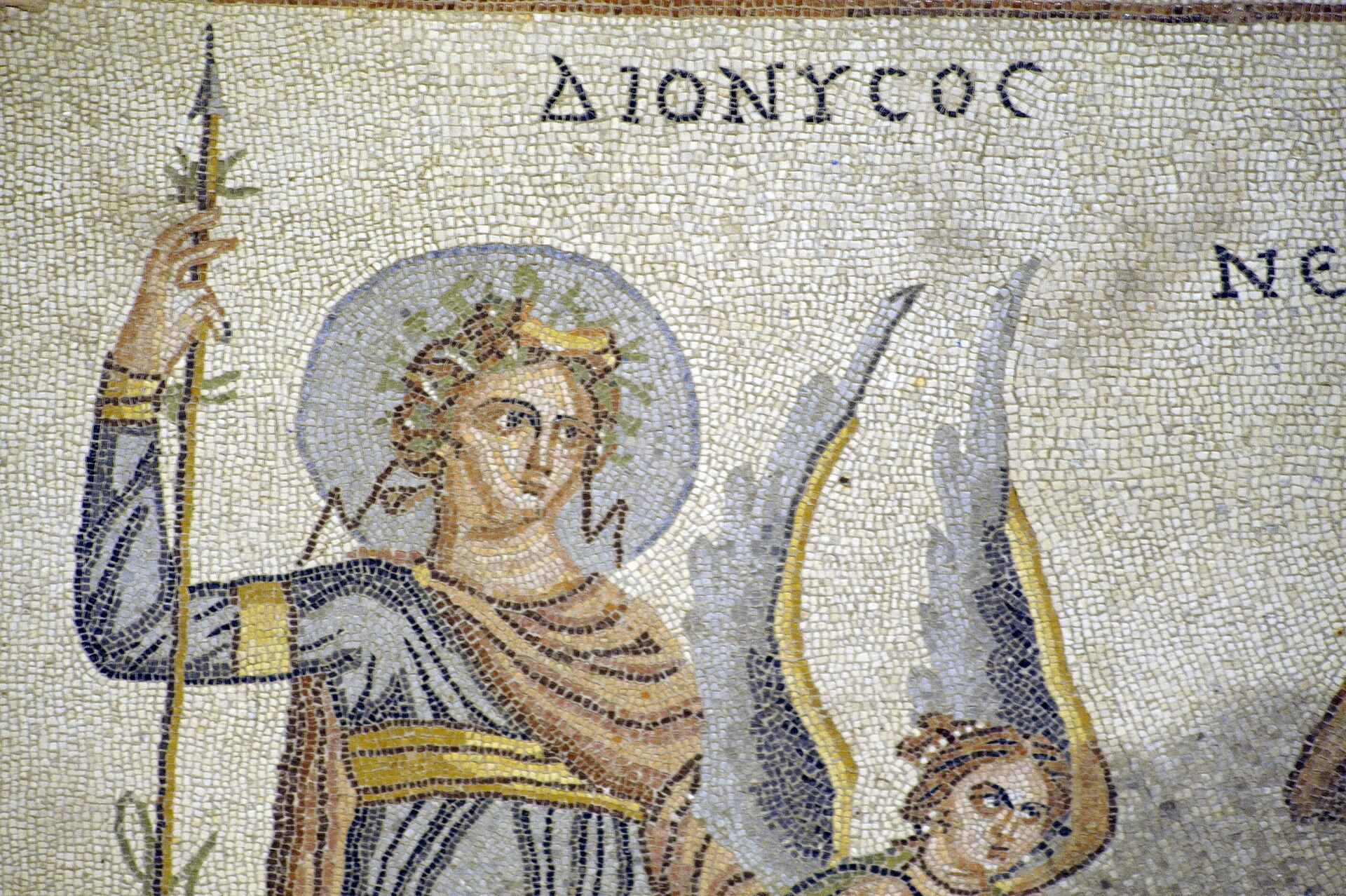

Orphic Hymns · Hymn 52
Dionysus of the Third-Year Feast
Τριετηρικοῦ
Prayer and ritual
These hymns may be spoken as complete prayers to the Gods. Within the Temple’s practice, a ritual is a direct theurgical act; hymnody gathers the mind and turns it toward the Divine, helping the initiate enter reverent communion with the Gods.
Use a hymn on its own in place of another prayer, or add it to the prayer portion of a suitable ritual. Choose according to the deity addressed and the petition expressed in the hymn. When combining them, preserve the ritual’s prescribed sequence and let the hymn give voice to its purpose.
The petition of this hymn
For the joyful fullness of Dionysus in his many sacred forms and his gracious attendance upon the initiates.
Recite this hymn alone in praise of Dionysus’s manifold presence. It may also accompany a Dionysian initiation or renewal rite, carrying the final invitation that he come in abundance and enduring grace.
English hieratic rendering
Hymn 52 · An English rendering aligned with the Greek lines.
- I call upon you, blessed, many-named, frenzied Bacchus,
- bull-horned, lord of the winepress, fire-sown, Nysian liberator,
- nurtured in the thigh, cradled in the basket, fire-breathing lord of initiation,
- nocturnal Eubouleus, wearer of the headband, shaker of the thyrsus,
- ineffable sacred mystery, threefold in nature, hidden shoot of Zeus,
- firstborn, Erikepaios, father of gods and also their son,
- eater of raw flesh, scepter-bearer, frenzied in dance, leader of revels,
- celebrating the sacred third-year feasts around the nurses,
- earth-breaker, blazing with fire, Epaphios, youth of two mothers,
- mountain-wanderer, Eros, robed in fawnskin, lord of the recurring feast,
- Paian who wields the thyrsus as a spear, cherished at the breast, adorned with grapes,
- Bassareus, rejoicing in ivy, attended by many maidens, glorious youth:
- come, blessed one, abounding for the initiates, ever gracious.
Ancient Greek & pronunciation
Read the English pronunciation spelling directly below each Greek line.
- Κικλήσκω σε, μάκαρ, πολυώνυμε, μαινόλα, Βακχεῦ,kee-KLEE-skoh seh, MAH-kahr, poh-lee-OH-nee-meh, meh-NOH-lah, vahk-HYEHV,
- ταυρόκερως, ληναῖε, πυρίσπορε, Νύσιε, λυσεῦ,tah-VROH-keh-rohs, lee-NEH-eh, pee-REE-spoh-reh, NEE-see-eh, lee-SEHV,
- μηροτρεφής, λικνῖτα, πυρίπνοε καὶ τελετάρχα,mee-roh-treh-FEES, leek-NEE-tah, pee-REEP-noh-eh KEH teh-leh-TAHR-khah,
- νυκτέρι’, Εὐβουλεῦ, μιτρηφόρε, θυρσοτινάκτα,neek-TEH-ree’, eh-voo-LEHV, mee-tree-FOH-reh, theer-soh-tee-NAHK-tah,
- ὄργιον ἄρρητον, τριφυές, κρύφιον Διὸς ἔρνος,OHR-yee-ohn AH-ree-tohn, tree-fee-EHS, KREE-fee-ohn dhee-OHS EHR-nohs,
- πρωτόγον’, ἠρικεπαῖε, θεῶν πάτερ ἠδὲ καὶ υἱέ,proh-TOH-ghohn’, ee-ree-keh-PEH-eh, theh-OHN PAH-tehr ee-DHEH KEH ee-EH,
- ὠμάδιε, σκηπτοῦχε, χοροιμανές, ἡγέτα κώμων,oh-MAH-dhee-eh, skeep-TOO-hyeh, khoh-ree-mah-NEHS, ee-YEH-tah KOH-mohn,
- βακχεύων ἁγίας τριετηρίδας ἀμφὶ τιθήνας,vahk-HYEH-vohn ah-YEE-ahs tree-eh-tee-REE-dhahs ahm-FEE tee-THEE-nahs,
- ῥηξίχθον, πυριφεγγές, ἐπάφιε, κοῦρε διμῆτορ,reek-SEEKH-thohn, pee-ree-fehn-GEHS, eh-PAH-fee-eh, KOO-reh dhee-MEE-tohr,
- οὐρεσίφοιτος, Ἔρως, νεβριδοστόλος, ἀμφιέτηρε,oo-reh-SEE-fee-tohs, EH-rohs, neh-vree-dhoh-STOH-lohs, ahm-fee-EH-tee-reh,
- Παιὰν θυρσεγχής, ὑποκόλπιε, βοτρυόκοσμε,peh-AHN theer-sehn-HYEES, ee-poh-KOHL-pee-eh, voh-tree-OH-koh-zmeh,
- Βάσσαρε, κισσοχαρές, πολυπάρθενε κύδιμε κοῦρε·VAH-sah-reh, kee-soh-khah-REHS, poh-lee-PAHR-theh-neh KEE-dhee-meh KOO-reh·
- ἐλθέ, μάκαρ, μύστῃσι βρύων κεχαρισμένος αἰεί.ehl-THEH, MAH-kahr, MEE-stee-see VREE-ohn keh-khah-ree-ZMEH-nohs eh-EE.
Short sound guide for English speakers
Every line beneath the Greek uses English pronunciation spellings. Say each hyphenated syllable in sequence and emphasize the syllable in CAPITALS. For example, οὐρανόθεν is oo-rah-NOH-thehn. Read adjacent vowels separately: theh-AH has two syllables; oo-rah-NEE-een has four. Hyphens guide the voice; they do not mark pauses.
| Spelling | Sound to make |
|---|---|
| ah · eh · ee · oh · oo | father · met · see · go without its final glide · moon. Keep these vowels clear in unstressed syllables too. |
| th · dh | The unvoiced th in thin · the voiced th in this. Thus DHEE begins with the sound in “thee.” |
| kh | The ch in Scottish loch or German Bach: let air pass at the back of the mouth, without closing it into a k. |
| hy | The breathy beginning of a carefully spoken Hugh. Raise the middle of the tongue toward the roof of the mouth and let air pass without voice. In shy, sound s followed by hy; do not use the English sh sound or the English word “shy.” |
| gh | Make the kh sound above, then add voice. Keep the passage open; this is a flowing sound, not a hard g. |
| y · g | y as in yes, with gentle friction · always a hard g as in get. |
| r | Tap the tongue lightly behind the upper teeth, or use a light roll. |
| ks · ps | Sound both consonants, even at the beginning of a word: ks as in backs, ps as in lips. |
| n-g · m-b · n-d | Sound the nasal and the following consonant. In AHN-geh-leh, the n-g group is like finger, with the g audible. |
Always sound s as in hiss, even at the end of DHEE-kees; z is voiced, as in zero. All other consonants have their usual English sounds. Initial consonant groups may be unfamiliar: sound every written consonant, without inserting an extra vowel. A word without capitals carries no written stress in the Greek. Where two syllables have capitals, both written accents are retained. An apostrophe marks a vowel already elided in the Greek; do not add it back. A hyphen at the end of a Greek verse joins the unfinished word to the next verse.
These spellings follow the Modern Greek liturgical reading used throughout this library. Breathings and iota subscripts are silent; separately pronounced vowels remain separate. The few Greek consonants without an exact English equivalent use the sound cues above. Ancient vowel length, pitch accent and metre are not reconstructed.
Hymn notes
Sacred meaning
The hymn places infant, father, son, Eros, and healer within the god’s many-named manifestation. His hidden birth and ecstatic dance are held together by his lordship over initiation. The concluding prayer asks that the god come to the initiates in abundance, ever gracious.
Ancient offering rubric: Aromatic substances.
Textual note
The third-year observance is biennial by ancient inclusive reckoning. Erikepaios and Epaphios remain sacred epithets; the translation preserves the explicit identification with Eros.
Text and attribution
Greek text: Eugenius Abel, Orphica (1885), printed pages 85. The text follows the printed main reading of this edition; source-specific variants are recorded where relevant. Read the digitised edition. Greek source. Wikisource transcription, revision 124385; checked and corrected against Abel’s print. The English hieratic rendering and suggested devotional use are new editorial work. The applications are guidance for this library, not additional lines of the ancient poem.