
Orphic Hymns · Hymn 51
The Nymphs
Νυμφῶν
Prayer and ritual
These hymns may be spoken as complete prayers to the Gods. Within the Temple’s practice, a ritual is a direct theurgical act; hymnody gathers the mind and turns it toward the Divine, helping the initiate enter reverent communion with the Gods.
Use a hymn on its own in place of another prayer, or add it to the prayer portion of a suitable ritual. Choose according to the deity addressed and the petition expressed in the hymn. When combining them, preserve the ritual’s prescribed sequence and let the hymn give voice to its purpose.
The petition of this hymn
For the living abundance of waters, woods, and meadows, and for the Nymphs’ nourishing gift of health.
Use this hymn as a prayer of reverence for the Nymphs and the places they inhabit. It may also supplement a rite for healing, the blessing of water, or the flourishing of land and household, with its final petition for a healthful stream in seasons of growth.
English hieratic rendering
Hymn 51 · An English rendering aligned with the Greek lines.
- O Nymphs, daughters of Ocean of the vast depths,
- whose homes lie in the earth’s water-threaded recesses,
- running in hidden courses, nurses of Bacchus, earthly, filled with joy,
- nurturers of fruit, meadow-dwellers, winding in your courses, pure,
- lovers of caves, delighting in caverns, wandering through the air,
- nymphs of springs, swift runners, robed in dew, light in your steps,
- manifest and unseen, dwellers in valleys, rich in flowers,
- leaping with Pan upon the mountains, raisers of the sacred cry,
- flowing from rock, clear-voiced, humming, mountain-wanderers,
- maidens of the wild, of fountains, and of woodland dwellings,
- fragrant virgins, white-robed, breathing sweetly in the breezes,
- guardians of goats and flocks, friends of beasts, splendid in fruit,
- delighting in woodland, tender, nourishing many and fostering growth,
- Hamadryad maidens, lovers of play, whose paths are watery,
- Nysian, ecstatic, healing, delighting in spring,
- with Bacchus and Deo bearing grace to mortals:
- come to these sacred offerings of praise with rejoicing hearts,
- pouring a healthful stream in the seasons that nourish growth.
Ancient Greek & pronunciation
Read the English pronunciation spelling directly below each Greek line.
- Νύμφαι, θυγατέρες μεγακήτεος Ὠκεανοῖο,NEEM-feh, thee-ghah-TEH-rehs meh-ghah-KEE-teh-ohs oh-keh-ah-NEE-oh,
- ὑγροπόροις γαίης ὑπὸ κεύθεσιν οἰκί’ ἔχουσαι,ee-ghroh-POH-rees YEH-ees ee-POH KEHF-theh-seen ee-KEE’ EH-khoo-seh,
- κρυψίδρομοι, Βάκχοιο τροφοί, χθόνιαι, πολυγηθεῖς,kreep-SEE-dhroh-mee, VAHK-hyee-oh troh-FEE, KHTHOH-nee-eh, poh-lee-yee-THEES,
- καρποτρόφοι, λειμωνιάδες, σκολιοδρόμοι, ἁγναί,kahr-poh-TROH-fee, lee-moh-nee-AH-dhehs, skoh-lee-oh-DHROH-mee, ahgh-NEH,
- ἀντροχαρεῖς, σπήλυγξι κεχαρμέναι, ἠερόφοιτοι,ahn-droh-khah-REES, SPEE-leenk-see keh-khahr-MEH-neh, ee-eh-ROH-fee-tee,
- πηγαῖαι, δρομάδες, δροσοείμονες, ἴχνεσι κοῦφαι,pee-YEH-eh, dhroh-MAH-dhehs, dhroh-soh-EE-moh-nehs, EEKH-neh-see KOO-feh,
- φαινόμεναι, ἀφανεῖς, αὐλωνιάδες, πολυανθεῖς,feh-NOH-meh-neh, ah-fah-NEES, ah-vloh-nee-AH-dhehs, poh-lee-ahn-THEES,
- σὺν Πανὶ σκιρτῶσαι ἀν’ οὔρεα, εὐάστειραι,SEEN pah-NEE skeer-TOH-seh ahn’ OO-reh-ah, eh-VAH-stee-reh,
- πετρόρυτοι, λιγυραί, βομβήτριαι, οὐρεσίφοιτοι,peh-TROH-ree-tee, lee-yee-REH, vohm-VEE-tree-eh, oo-reh-SEE-fee-tee,
- ἀγρότεραι κοῦραι, κρουνίτιδες ὑλονόμοι τε,ah-GHROH-teh-reh KOO-reh, kroo-NEE-tee-dhehs ee-loh-NOH-mee teh,
- παρθένοι εὐώδεις, λευχείμονες, εὔπνοοι αὔραις,pahr-THEH-nee eh-VOH-dhees, lehf-HYEE-moh-nehs, EHFP-noh-ee AH-vrehs,
- αἰπολικαί, νόμιαι, θηρσὶν φίλαι, ἀγλαόκαρποι,eh-poh-lee-KEH, NOH-mee-eh, theer-SEEN FEE-leh, ah-ghlah-OH-kahr-pee,
- δρυμοχαρεῖς, ἁπαλαί, πολυθρέμμονες αὐξίτροφοί τε,dhree-moh-khah-REES, ah-pah-LEH, poh-lee-THREH-moh-nehs ahfk-SEE-troh-FEE teh,
- κοῦραι ἁμαδρυάδες, φιλοπαίγμονες, ὑγροκέλευθοι,KOO-reh ah-mah-dhree-AH-dhehs, fee-loh-PEHGH-moh-nehs, ee-ghroh-KEH-lehf-thee,
- Νυσαῖαι, μανικαί, παιωνίδες, εἰαροτερπεῖς,nee-SEH-eh, mah-nee-KEH, peh-oh-NEE-dhehs, ee-ah-roh-tehr-PEES,
- σὺν Βάκχῳ Δηοῖ τε χάριν θνητοῖσι φέρουσαι·SEEN VAHK-khoh dhee-EE teh KHAH-reen thnee-TEE-see FEH-roo-seh·
- ἔλθετ’ ἐπ’ εὐφήμοις ἱεροῖς κεχαρηότι θυμῷEHL-theht’ ehp’ eh-FEE-mees ee-eh-REES keh-khah-ree-OH-tee thee-MOH
- νᾶμα χέουσ’ ὑγιεινὸν ἀεξιτρόφοισιν ἐν ὥραις.NAH-mah HYEH-oos’ ee-yee-ee-NOHN ah-ehk-see-TROH-fee-seen ehn OH-rehs.
Short sound guide for English speakers
Every line beneath the Greek uses English pronunciation spellings. Say each hyphenated syllable in sequence and emphasize the syllable in CAPITALS. For example, οὐρανόθεν is oo-rah-NOH-thehn. Read adjacent vowels separately: theh-AH has two syllables; oo-rah-NEE-een has four. Hyphens guide the voice; they do not mark pauses.
| Spelling | Sound to make |
|---|---|
| ah · eh · ee · oh · oo | father · met · see · go without its final glide · moon. Keep these vowels clear in unstressed syllables too. |
| th · dh | The unvoiced th in thin · the voiced th in this. Thus DHEE begins with the sound in “thee.” |
| kh | The ch in Scottish loch or German Bach: let air pass at the back of the mouth, without closing it into a k. |
| hy | The breathy beginning of a carefully spoken Hugh. Raise the middle of the tongue toward the roof of the mouth and let air pass without voice. In shy, sound s followed by hy; do not use the English sh sound or the English word “shy.” |
| gh | Make the kh sound above, then add voice. Keep the passage open; this is a flowing sound, not a hard g. |
| y · g | y as in yes, with gentle friction · always a hard g as in get. |
| r | Tap the tongue lightly behind the upper teeth, or use a light roll. |
| ks · ps | Sound both consonants, even at the beginning of a word: ks as in backs, ps as in lips. |
| n-g · m-b · n-d | Sound the nasal and the following consonant. In AHN-geh-leh, the n-g group is like finger, with the g audible. |
Always sound s as in hiss, even at the end of DHEE-kees; z is voiced, as in zero. All other consonants have their usual English sounds. Initial consonant groups may be unfamiliar: sound every written consonant, without inserting an extra vowel. A word without capitals carries no written stress in the Greek. Where two syllables have capitals, both written accents are retained. An apostrophe marks a vowel already elided in the Greek; do not add it back. A hyphen at the end of a Greek verse joins the unfinished word to the next verse.
These spellings follow the Modern Greek liturgical reading used throughout this library. Breathings and iota subscripts are silent; separately pronounced vowels remain separate. The few Greek consonants without an exact English equivalent use the sound cues above. Ancient vowel length, pitch accent and metre are not reconstructed.
Hymn notes
Sacred meaning
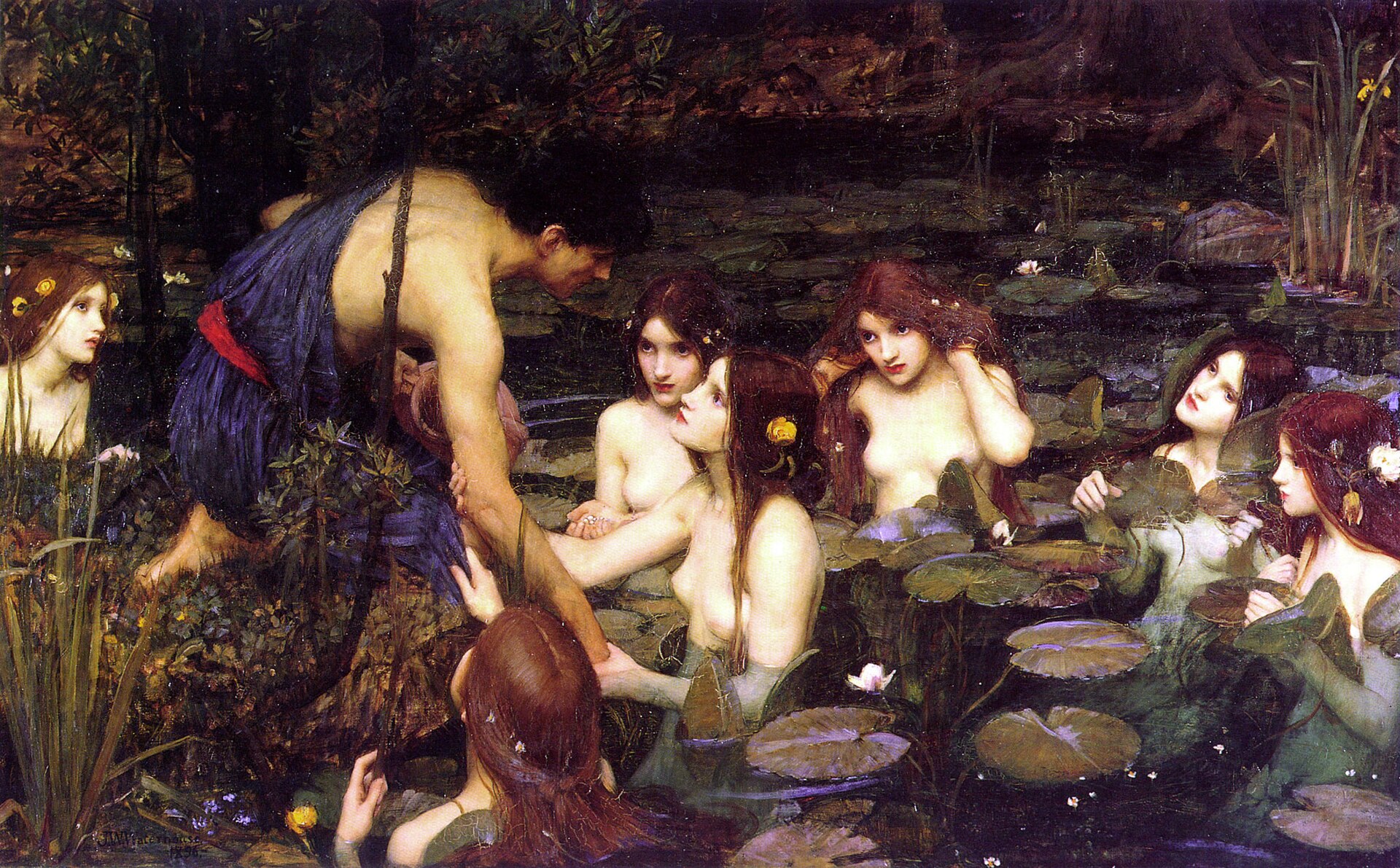
The Nymphs appear through flowing water, cave, grove, breeze, and flower. Their nurture of Bacchus links the earth’s flourishing to sacred joy and initiation. Together with Bacchus and Deo they bear grace to mortals, and the closing prayer seeks that grace as healthful nourishment.
Ancient offering rubric: Aromatic substances.
Textual note
Ocean’s opening epithet follows the printed μεγακήτεος. Deo is Demeter; Hamadryads are the tree-bound Nymphs named by the hymn.
Text and attribution
Greek text: Eugenius Abel, Orphica (1885), printed pages 84, 85. The text follows the printed main reading of this edition; source-specific variants are recorded where relevant. Read the digitised edition. Greek source. Wikisource transcription, revision 124382; checked and corrected against Abel’s print. The English hieratic rendering and suggested devotional use are new editorial work. The applications are guidance for this library, not additional lines of the ancient poem.