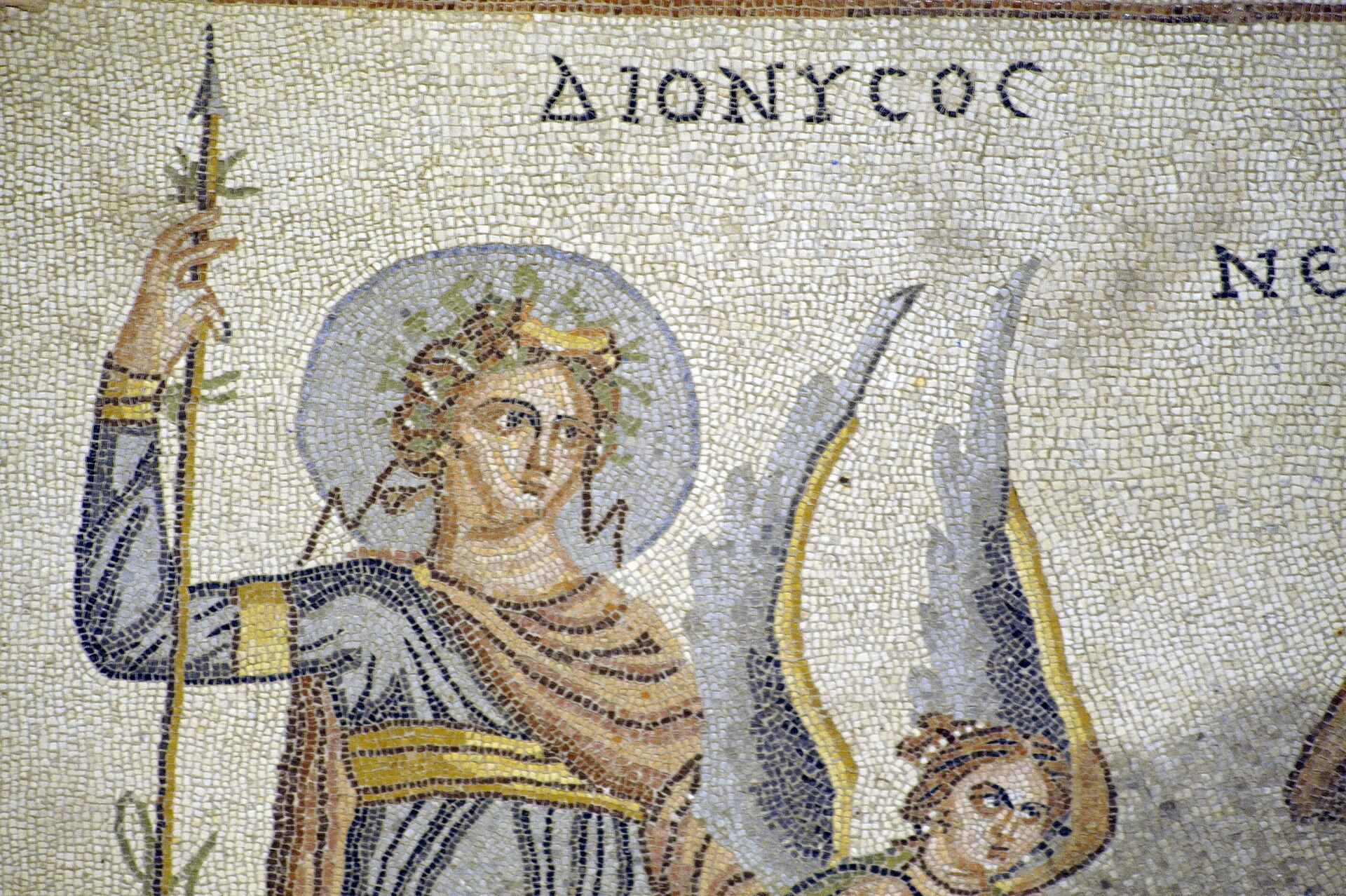

Orphic Hymns · Hymn 50
Dionysus the Liberator of the Winepress
Λυσίου Ληναίου
Prayer and ritual
These hymns may be spoken as complete prayers to the Gods. Within the Temple’s practice, a ritual is a direct theurgical act; hymnody gathers the mind and turns it toward the Divine, helping the initiate enter reverent communion with the Gods.
Use a hymn on its own in place of another prayer, or add it to the prayer portion of a suitable ritual. Choose according to the deity addressed and the petition expressed in the hymn. When combining them, preserve the ritual’s prescribed sequence and let the hymn give voice to its purpose.
The petition of this hymn
For release from care and toil, fruitful renewal, and the sweet presence of Dionysus.
The hymn may be offered alone as a prayer for relief from sorrow and renewed fruitfulness. It may also accompany a Dionysian rite of liberation or renewal, giving voice to the request that the god come gently and bearing fruit.
English hieratic rendering
Hymn 50 · An English rendering aligned with the Greek lines.
- Hear, blessed son of Zeus, Bacchus of the winepress, born of two mothers,
- much-remembered seed, many-named divine liberator,
- secretly born, sacred blossom of the blessed gods, Bacchus of the joyful cry,
- well-nourished and fruitful, increasing the fruit of many joys,
- earth-breaker, lord of the winepress, mighty in strength, of manifold form,
- revealed to mortals as a remedy that ends toil, a sacred flower,
- a joy to humankind that delights to banish grief, Epaphios of the beautiful hair,
- liberator, frenzied with the thyrsus, resounding, joyfully acclaimed, kindly to all
- mortals and immortals to whom you will to reveal yourself:
- now I call you to come to the initiates, sweet and fruit-bearing.
Ancient Greek & pronunciation
Read the English pronunciation spelling directly below each Greek line.
- Κλῦθι, μάκαρ, Διὸς υἷ’, ἐπιλήνιε Βάκχε, διμῆτορ,KLEE-thee, MAH-kahr, dhee-OHS EE’, eh-pee-LEE-nee-eh VAHK-hyeh, dhee-MEE-tohr,
- σπέρμα πολύμνηστον, πολυώνυμε, λύσιε δαῖμον,SPEHR-mah poh-LEEM-nee-stohn, poh-lee-OH-nee-meh, LEE-see-eh DHEH-mohn,
- κρυψίγονον μακάρων ἱερὸν θάλος, εὔιε Βάκχε,kreep-SEE-ghoh-nohn mah-KAH-rohn ee-eh-ROHN THAH-lohs, EH-vee-eh VAHK-hyeh,
- εὐτραφές, εὔκαρπος, πολυγηθέα καρπὸν ἀέξων,ehf-trah-FEHS, EHF-kahr-pohs, poh-lee-yee-THEH-ah kahr-POHN ah-EHK-sohn,
- ῥηξίχθον, ληναῖε, μεγασθενές, αἰολόμορφε,reek-SEEKH-thohn, lee-NEH-eh, meh-ghahs-theh-NEHS, eh-oh-LOH-mohr-feh,
- παυσίπονον θνητοῖσι φανεὶς ἄκος, ἱερὸν ἄνθοςpahf-SEE-poh-nohn thnee-TEE-see fah-NEES AH-kohs, ee-eh-ROHN AHN-thohs
- χάρμα βροτοῖς φιλάλυπον, ἐπάφιε, καλλιέθειρε,KHAHR-mah vroh-TEES fee-LAH-lee-pohn, eh-PAH-fee-eh, kah-lee-EH-thee-reh,
- λύσιε, θυρσομανές, βρόμι’, εὔιε, πᾶσιν εὔφρον,LEE-see-eh, theer-soh-mah-NEHS, VROH-mee’, EH-vee-eh, PAH-seen EH-frohn,
- οἷς ἐθέλεις θνητῶν ἠδ’ ἀθανάτων σε πιφαύσκειν·EES eh-THEH-lees thnee-TOHN eedh’ ah-thah-NAH-tohn seh pee-FAHF-skeen·
- νῦν σε καλῶ μύστῃσι μολεῖν ἡδύν, φερέκαρπον.NEEN seh kah-LOH MEE-stee-see moh-LEEN ee-DHEEN, feh-REH-kahr-pohn.
Short sound guide for English speakers
Every line beneath the Greek uses English pronunciation spellings. Say each hyphenated syllable in sequence and emphasize the syllable in CAPITALS. For example, οὐρανόθεν is oo-rah-NOH-thehn. Read adjacent vowels separately: theh-AH has two syllables; oo-rah-NEE-een has four. Hyphens guide the voice; they do not mark pauses.
| Spelling | Sound to make |
|---|---|
| ah · eh · ee · oh · oo | father · met · see · go without its final glide · moon. Keep these vowels clear in unstressed syllables too. |
| th · dh | The unvoiced th in thin · the voiced th in this. Thus DHEE begins with the sound in “thee.” |
| kh | The ch in Scottish loch or German Bach: let air pass at the back of the mouth, without closing it into a k. |
| hy | The breathy beginning of a carefully spoken Hugh. Raise the middle of the tongue toward the roof of the mouth and let air pass without voice. In shy, sound s followed by hy; do not use the English sh sound or the English word “shy.” |
| gh | Make the kh sound above, then add voice. Keep the passage open; this is a flowing sound, not a hard g. |
| y · g | y as in yes, with gentle friction · always a hard g as in get. |
| r | Tap the tongue lightly behind the upper teeth, or use a light roll. |
| ks · ps | Sound both consonants, even at the beginning of a word: ks as in backs, ps as in lips. |
| n-g · m-b · n-d | Sound the nasal and the following consonant. In AHN-geh-leh, the n-g group is like finger, with the g audible. |
Always sound s as in hiss, even at the end of DHEE-kees; z is voiced, as in zero. All other consonants have their usual English sounds. Initial consonant groups may be unfamiliar: sound every written consonant, without inserting an extra vowel. A word without capitals carries no written stress in the Greek. Where two syllables have capitals, both written accents are retained. An apostrophe marks a vowel already elided in the Greek; do not add it back. A hyphen at the end of a Greek verse joins the unfinished word to the next verse.
These spellings follow the Modern Greek liturgical reading used throughout this library. Breathings and iota subscripts are silent; separately pronounced vowels remain separate. The few Greek consonants without an exact English equivalent use the sound cues above. Ancient vowel length, pitch accent and metre are not reconstructed.
Hymn notes
Sacred meaning
The hidden divine birth becomes manifest as the fruit that brings joy and eases mortal labor. The god’s power breaks through the earth and appears in many forms. The conclusion seeks this liberating presence for the initiates without losing the hymn’s emphasis on gracious revelation.
Textual note
No incense appears in the printed heading. Epaphios is retained as an epithet rather than forced into a single uncertain derivation.
Text and attribution
Greek text: Eugenius Abel, Orphica (1885), printed pages 84. The text follows the printed main reading of this edition; source-specific variants are recorded where relevant. Read the digitised edition. Greek source. Wikisource transcription, revision 124379; checked and corrected against Abel’s print. The English hieratic rendering and suggested devotional use are new editorial work. The applications are guidance for this library, not additional lines of the ancient poem.