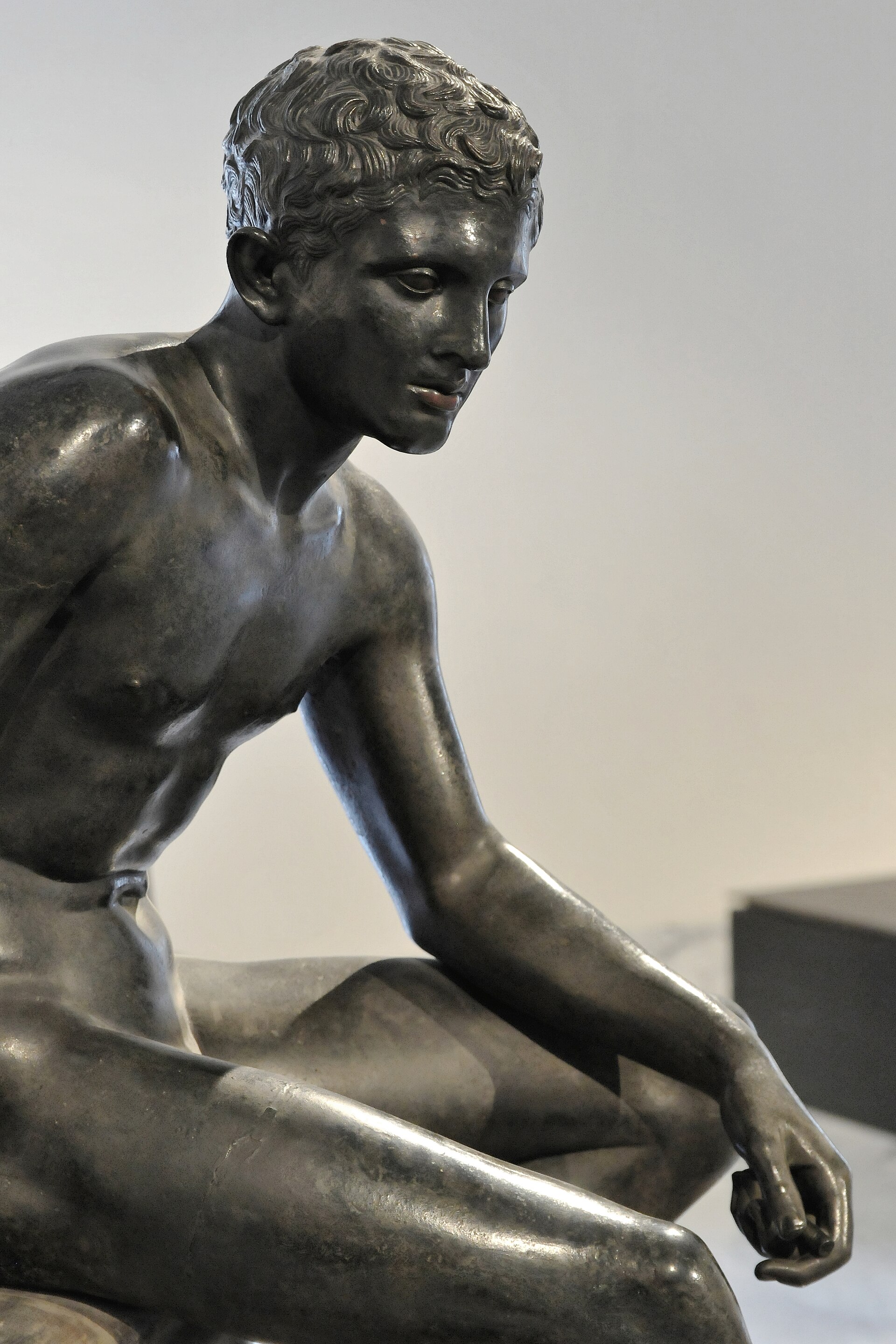

Orphic Hymns · Hymn 28
Hermes
Ἑρμοῦ
Prayer and ritual
These hymns may be spoken as complete prayers to the Gods. Within the Temple’s practice, a ritual is a direct theurgical act; hymnody gathers the mind and turns it toward the Divine, helping the initiate enter reverent communion with the Gods.
Use a hymn on its own in place of another prayer, or add it to the prayer portion of a suitable ritual. Choose according to the deity addressed and the petition expressed in the hymn. When combining them, preserve the ritual’s prescribed sequence and let the hymn give voice to its purpose.
The petition of this hymn
Prayer to Hermes for fruitful work, graceful speech, and the powers of memory. It honours his mediation, ingenuity, care for mortals, and the peaceful power of his staff.
Use independently before study, skilled work, trade, or an important act of speaking. It may supplement an established rite to Hermes seeking wise communication or honourable success, with the final requests for work, speech, and memory kept together.
English hieratic rendering
Hymn 28 · An English rendering aligned with the Greek lines.
- Hear me, Hermes, messenger of Zeus, son of Maia,
- with a heart that conquers all, lord of contests, ruler of mortals,
- kindly, of manifold counsel, messenger and slayer of Argos,
- with winged sandals, lover of humankind, revealer of speech to mortals,
- who delight in exercises and cunning deceits, wearing the sacred headband,
- interpreter of all, giver of profit in trade, releaser of care,
- who hold in your hands the blameless weapon of peace,
- of Korykos, blessed giver of good fortune, of manifold speech,
- helper in work, friend to mortals in necessity,
- the mighty weapon of the tongue, revered among humankind.
- Hear me as I pray, granting a good fulfilment of life
- in works, in the graces of speech, and in powers of memory.
Ancient Greek & pronunciation
Read the English pronunciation spelling directly below each Greek line.
- Κλῦθί μευ, Ἑρμεία, Διὸς ἄγγελε, Μαιάδος υἱέ,KLEE-THEE mehv, ehr-MEE-ah, dhee-OHS AHN-geh-leh, meh-AH-dhohs ee-EH,
- παγκρατὲς ἦτορ ἔχων, ἐναγώνιε, κοίρανε θνητῶν,pahn-grah-TEHS EE-tohr EH-khohn, eh-nah-GHOH-nee-eh, KEE-rah-neh thnee-TOHN,
- εὔφρον, ποικιλόβουλε, διάκτορος Ἀργειφόντα,EH-frohn, pee-kee-LOH-voo-leh, dhee-AHK-toh-rohs ahr-yee-FOHN-dah,
- πτηνοπέδιλε, φίλανδρε, λόγου θνητοῖσι προφῆτα,ptee-noh-PEH-dhee-leh, FEE-lahn-dhreh, LOH-ghoo thnee-TEE-see proh-FEE-tah,
- γυμνάσιν ὃς χαίρεις δολίαις τ’ ἀπάταις, στροφιοῦχε,yeem-NAH-seen OHS HYEH-rees dhoh-LEE-ehs t’ ah-PAH-tehs, stroh-fee-OO-hyeh,
- ἑρμηνεῦ πάντων, κερδέμπορε, λυσιμέριμνε,ehr-mee-NEHV PAHN-dohn, kehr-DHEHM-boh-reh, lee-see-MEH-reem-neh,
- ὃς χείρεσσιν ἔχεις εἰρήνης ὅπλον ἀμεμφές,OHS HYEE-reh-seen EH-hyees ee-REE-nees OH-plohn ah-mehm-FEHS,
- Κωρυκιῶτα, μάκαρ, ἐριούνιε, ποικιλόμυθε,koh-ree-kee-OH-tah, MAH-kahr, eh-ree-OO-nee-eh, pee-kee-LOH-mee-theh,
- ἐργασίαις ἐπαρωγέ, φίλε θνητοῖς ἐν ἀνάγκαις,ehr-ghah-SEE-ehs eh-pah-roh-YEH, FEE-leh thnee-TEES ehn ah-NAHN-gehs,
- γλώσσης δεινὸν ὅπλον τὸ σεβάσμιον ἀνθρώποισι·GHLOH-sees dhee-NOHN OH-plohn TOH seh-VAH-zmee-ohn ahn-THROH-pee-see·
- κλῦθί μευ εὐχομένου, βιότου τέλος ἐσθλὸν ὀπάζωνKLEE-THEE mehv ehf-khoh-MEH-noo, vee-OH-too TEH-lohs ehsth-LOHN oh-PAH-zohn
- ἐργασίῃσι, λόγου χάρισιν, καὶ μνημοσύνῃσιν.ehr-ghah-SEE-ee-see, LOH-ghoo KHAH-ree-seen, KEH mnee-moh-SEE-nee-seen.
Short sound guide for English speakers
Every line beneath the Greek uses English pronunciation spellings. Say each hyphenated syllable in sequence and emphasize the syllable in CAPITALS. For example, οὐρανόθεν is oo-rah-NOH-thehn. Read adjacent vowels separately: theh-AH has two syllables; oo-rah-NEE-een has four. Hyphens guide the voice; they do not mark pauses.
| Spelling | Sound to make |
|---|---|
| ah · eh · ee · oh · oo | father · met · see · go without its final glide · moon. Keep these vowels clear in unstressed syllables too. |
| th · dh | The unvoiced th in thin · the voiced th in this. Thus DHEE begins with the sound in “thee.” |
| kh | The ch in Scottish loch or German Bach: let air pass at the back of the mouth, without closing it into a k. |
| hy | The breathy beginning of a carefully spoken Hugh. Raise the middle of the tongue toward the roof of the mouth and let air pass without voice. In shy, sound s followed by hy; do not use the English sh sound or the English word “shy.” |
| gh | Make the kh sound above, then add voice. Keep the passage open; this is a flowing sound, not a hard g. |
| y · g | y as in yes, with gentle friction · always a hard g as in get. |
| r | Tap the tongue lightly behind the upper teeth, or use a light roll. |
| ks · ps | Sound both consonants, even at the beginning of a word: ks as in backs, ps as in lips. |
| n-g · m-b · n-d | Sound the nasal and the following consonant. In AHN-geh-leh, the n-g group is like finger, with the g audible. |
Always sound s as in hiss, even at the end of DHEE-kees; z is voiced, as in zero. All other consonants have their usual English sounds. Initial consonant groups may be unfamiliar: sound every written consonant, without inserting an extra vowel. A word without capitals carries no written stress in the Greek. Where two syllables have capitals, both written accents are retained. An apostrophe marks a vowel already elided in the Greek; do not add it back. A hyphen at the end of a Greek verse joins the unfinished word to the next verse.
These spellings follow the Modern Greek liturgical reading used throughout this library. Breathings and iota subscripts are silent; separately pronounced vowels remain separate. The few Greek consonants without an exact English equivalent use the sound cues above. Ancient vowel length, pitch accent and metre are not reconstructed.
Hymn notes
Sacred meaning
Hermes unites interpretation, speech, contest, commerce, and release from care within one mediating power. The contrast between cunning deceits and the blameless weapon of peace preserves the breadth of his art rather than restricting the hymn to a single moral epithet.
Ancient offering rubric: Frankincense.
Textual note
The rare στροφιοῦχε is rendered wearing the sacred headband. LSJ identifies it with the wearer of the στρόφιον, the priestly headband. The Greek follows Abel's printed conjecture, recorded in his apparatus as replacing τροφιοῦχε. The reference to cunning deceits is preserved.
Text and attribution
Greek text: Eugenius Abel, Orphica (1885), printed pages 73. The text follows the printed main reading of this edition; source-specific variants are recorded where relevant. Read the digitised edition. Greek source. Wikisource transcription, revision 124279; checked and corrected against Abel’s print. The English hieratic rendering and suggested devotional use are new editorial work. The applications are guidance for this library, not additional lines of the ancient poem.