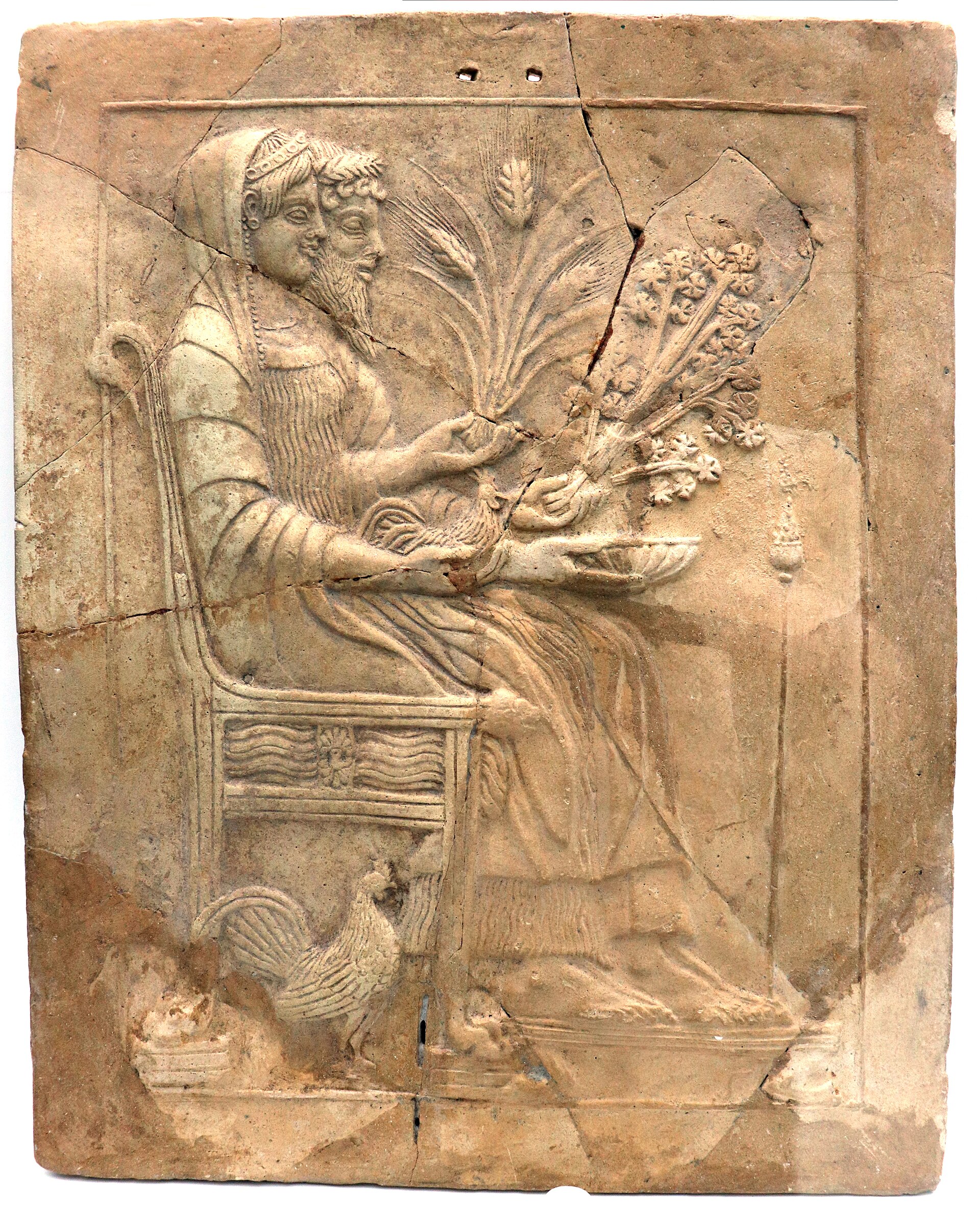

Orphic Hymns · Hymn 29
Persephone
Ὕμνος Φερσεφόνης
Prayer and ritual
These hymns may be spoken as complete prayers to the Gods. Within the Temple’s practice, a ritual is a direct theurgical act; hymnody gathers the mind and turns it toward the Divine, helping the initiate enter reverent communion with the Gods.
Use a hymn on its own in place of another prayer, or add it to the prayer portion of a suitable ritual. Choose according to the deity addressed and the petition expressed in the hymn. When combining them, preserve the ritual’s prescribed sequence and let the hymn give voice to its purpose.
The petition of this hymn
Prayer to Persephone for the fruits of Earth, peace, health, and a blessed life reaching old age. It honours her sovereignty over life and death and the hidden gates of the Earth.
Recite independently in prayer for flourishing life under her care. It may supplement an established rite to Persephone concerning fertility, initiation, or the passage of life, with the final vision of a good old age entering her realm kept intact.
English hieratic rendering
Hymn 29 · An English rendering aligned with the Greek lines.
- Persephone, daughter of great Zeus, come, blessed one,
- only begotten Goddess, and receive these pleasing sacred offerings,
- greatly honoured wife of Plouton, faithful giver of life,
- who hold the gates of Hades in the hollows beneath the Earth,
- Praxidike, with lovely tresses, holy offspring of Deo,
- mother of the Eumenides, Queen of those beneath the Earth,
- the Maiden whom Zeus begot in unions beyond utterance,
- mother of loudly thundering Eubouleus of many forms,
- playmate of the Seasons, bearer of light, splendid of form,
- revered Maiden, ruler of all, abounding in fruit,
- brightly shining, horned, alone desired by mortals,
- of the spring, rejoicing in the breezes of the meadows,
- revealing your sacred form in shoots with green fruit,
- wed in the autumn to a marriage bed reached by abduction.
- You alone are life and death to mortals who labour greatly,
- Persephone, for you forever nourish all and slay all.
- Hear, blessed Goddess, and send up fruits from the Earth,
- flourishing in Peace and in Health with her gentle hand,
- and in a life rich in blessings that brings splendid old age
- to your realm, O Queen, and to mighty Plouton.
Ancient Greek & pronunciation
Read the English pronunciation spelling directly below each Greek line.
- Φερσεφόνη, θυγάτερ μεγάλου Διός, ἐλθέ, μάκαιρα,fehr-seh-FOH-nee, thee-GHAH-tehr meh-GHAH-loo dhee-OHS, ehl-THEH, MAH-keh-rah,
- μουνογένεια θεά, κεχαρισμένα δ’ ἱερὰ δέξαι,moo-noh-YEH-nee-ah theh-AH, keh-khah-ree-ZMEH-nah dh’ ee-eh-RAH DHEHK-seh,
- Πλούτωνος πολύτιμε δάμαρ, κεδνή, βιοδῶτι,PLOO-toh-nohs poh-LEE-tee-meh DHAH-mahr, kehdh-NEE, vee-oh-DHOH-tee,
- ἣ κατέχεις Ἀίδαο πύλας ὑπὸ κεύθεα γαίης,EE kah-TEH-hyees ah-EE-dhah-oh PEE-lahs ee-POH KEHF-theh-ah YEH-ees,
- Πραξιδίκη, ἐρασιπλόκαμος, Δηοῦς θάλος ἁγνόν,prahk-see-DHEE-kee, eh-rah-see-PLOH-kah-mohs, dhee-OOS THAH-lohs ahgh-NOHN,
- Εὐμενίδων γενέτειρα, καταχθονίων βασίλεια,ehv-meh-NEE-dhohn yeh-NEH-tee-rah, kah-tahkh-thoh-NEE-ohn vah-SEE-lee-ah,
- ἣν Ζεὺς ἀρρήτοισι γοναῖς τεκνώσατο κούρην,EEN ZEHFS ah-REE-tee-see ghoh-NEHS tehk-NOH-sah-toh KOO-reen,
- μῆτερ ἐριβρεμέτου πολυμόρφου Εὐβουλῆος,MEE-tehr eh-ree-vreh-MEH-too poh-lee-MOHR-foo eh-voo-LEE-ohs,
- Ὡρῶν συμπαίκτειρα, φαεσφόρος, ἀγλαόμορφε·oh-ROHN seem-BEHK-tee-rah, fah-eh-SFOH-rohs, ah-ghlah-OH-mohr-feh·
- σεμνή, παντοκράτειρα, κόρη καρποῖσι βρύουσα,sehm-NEE, pahn-doh-KRAH-tee-rah, KOH-ree kahr-PEE-see VREE-oo-sah,
- εὐφεγγές, κερόεσσα, μόνη θνητοῖσι ποθεινή,eh-fehn-GEHS, keh-ROH-eh-sah, MOH-nee thnee-TEE-see poh-thee-NEE,
- εἰαρινή, λειμωνιάσιν χαίρουσα πνοῇσιν,ee-ah-ree-NEE, lee-moh-nee-AH-seen HYEH-roo-sah pnoh-EE-seen,
- ἱερὸν ἐκφαίνουσα δέμας βλαστοῖς χλοοκάρποις,ee-eh-ROHN ehk-FEH-noo-sah DHEH-mahs vlah-STEES khloh-oh-KAHR-pees,
- ἁρπαγιμαῖα λέχη μετοπωρινὰ νυμφευθεῖσα·ahr-pah-yee-MEH-ah LEH-hyee meh-toh-poh-ree-NAH neem-fehf-THEE-sah·
- ζωὴ καὶ θάνατος μούνη θνητοῖς πολυμόχθοις,zoh-EE KEH THAH-nah-tohs MOO-nee thnee-TEES poh-lee-MOHKH-thees,
- Φερσεφόνη· φέρβεις γὰρ ἀεὶ καὶ πάντα φονεύεις.fehr-seh-FOH-nee· FEHR-vees GHAHR ah-EE KEH PAHN-dah foh-NEH-vees.
- κλῦθι, μάκαιρα θεά, καρποὺς δ’ ἀνάπεμπ’ ἀπὸ γαίηςKLEE-thee, MAH-keh-rah theh-AH, kahr-POOS dh’ ah-NAH-pehmb’ ah-POH YEH-ees
- εἰρήνῃ θάλλουσα καὶ ἠπιόχειρ’ ὑγιείῃee-REE-nee THAH-loo-sah KEH ee-pee-OH-hyeer’ ee-yee-EE-ee
- καὶ βίῳ εὐόλβῳ λιπαρὸν γῆρας κατάγοντιKEH VEE-oh eh-VOHL-voh lee-pah-ROHN YEE-rahs kah-TAH-ghohn-dee
- πρὸς σὸν χῶρον, ἄνασσα, καὶ εὐδύνατον Πλούτωνα.PROHS SOHN KHOH-rohn, AH-nah-sah, KEH ehv-DHEE-nah-tohn PLOO-toh-nah.
Short sound guide for English speakers
Every line beneath the Greek uses English pronunciation spellings. Say each hyphenated syllable in sequence and emphasize the syllable in CAPITALS. For example, οὐρανόθεν is oo-rah-NOH-thehn. Read adjacent vowels separately: theh-AH has two syllables; oo-rah-NEE-een has four. Hyphens guide the voice; they do not mark pauses.
| Spelling | Sound to make |
|---|---|
| ah · eh · ee · oh · oo | father · met · see · go without its final glide · moon. Keep these vowels clear in unstressed syllables too. |
| th · dh | The unvoiced th in thin · the voiced th in this. Thus DHEE begins with the sound in “thee.” |
| kh | The ch in Scottish loch or German Bach: let air pass at the back of the mouth, without closing it into a k. |
| hy | The breathy beginning of a carefully spoken Hugh. Raise the middle of the tongue toward the roof of the mouth and let air pass without voice. In shy, sound s followed by hy; do not use the English sh sound or the English word “shy.” |
| gh | Make the kh sound above, then add voice. Keep the passage open; this is a flowing sound, not a hard g. |
| y · g | y as in yes, with gentle friction · always a hard g as in get. |
| r | Tap the tongue lightly behind the upper teeth, or use a light roll. |
| ks · ps | Sound both consonants, even at the beginning of a word: ks as in backs, ps as in lips. |
| n-g · m-b · n-d | Sound the nasal and the following consonant. In AHN-geh-leh, the n-g group is like finger, with the g audible. |
Always sound s as in hiss, even at the end of DHEE-kees; z is voiced, as in zero. All other consonants have their usual English sounds. Initial consonant groups may be unfamiliar: sound every written consonant, without inserting an extra vowel. A word without capitals carries no written stress in the Greek. Where two syllables have capitals, both written accents are retained. An apostrophe marks a vowel already elided in the Greek; do not add it back. A hyphen at the end of a Greek verse joins the unfinished word to the next verse.
These spellings follow the Modern Greek liturgical reading used throughout this library. Breathings and iota subscripts are silent; separately pronounced vowels remain separate. The few Greek consonants without an exact English equivalent use the sound cues above. Ancient vowel length, pitch accent and metre are not reconstructed.
Hymn notes
Sacred meaning
The Maiden of spring and green shoots is also the Queen of the underworld and the mother of divine powers. The text holds nurture and death together in her sovereignty, so its petition embraces the whole course of life rather than fruitfulness alone.
Textual note
Praxidike, Deo, the Eumenides, and Eubouleus occur explicitly in the Greek and are retained. Line 14 preserves the autumnal marriage by abduction; line 16 preserves both nourishing and slaying. No mythic content is removed.
Text and attribution
Greek text: Eugenius Abel, Orphica (1885), printed pages 73, 74. The text follows the printed main reading of this edition; source-specific variants are recorded where relevant. Read the digitised edition. Greek source. Wikisource transcription, revision 124297; checked and corrected against Abel’s print. The English hieratic rendering and suggested devotional use are new editorial work. The applications are guidance for this library, not additional lines of the ancient poem.