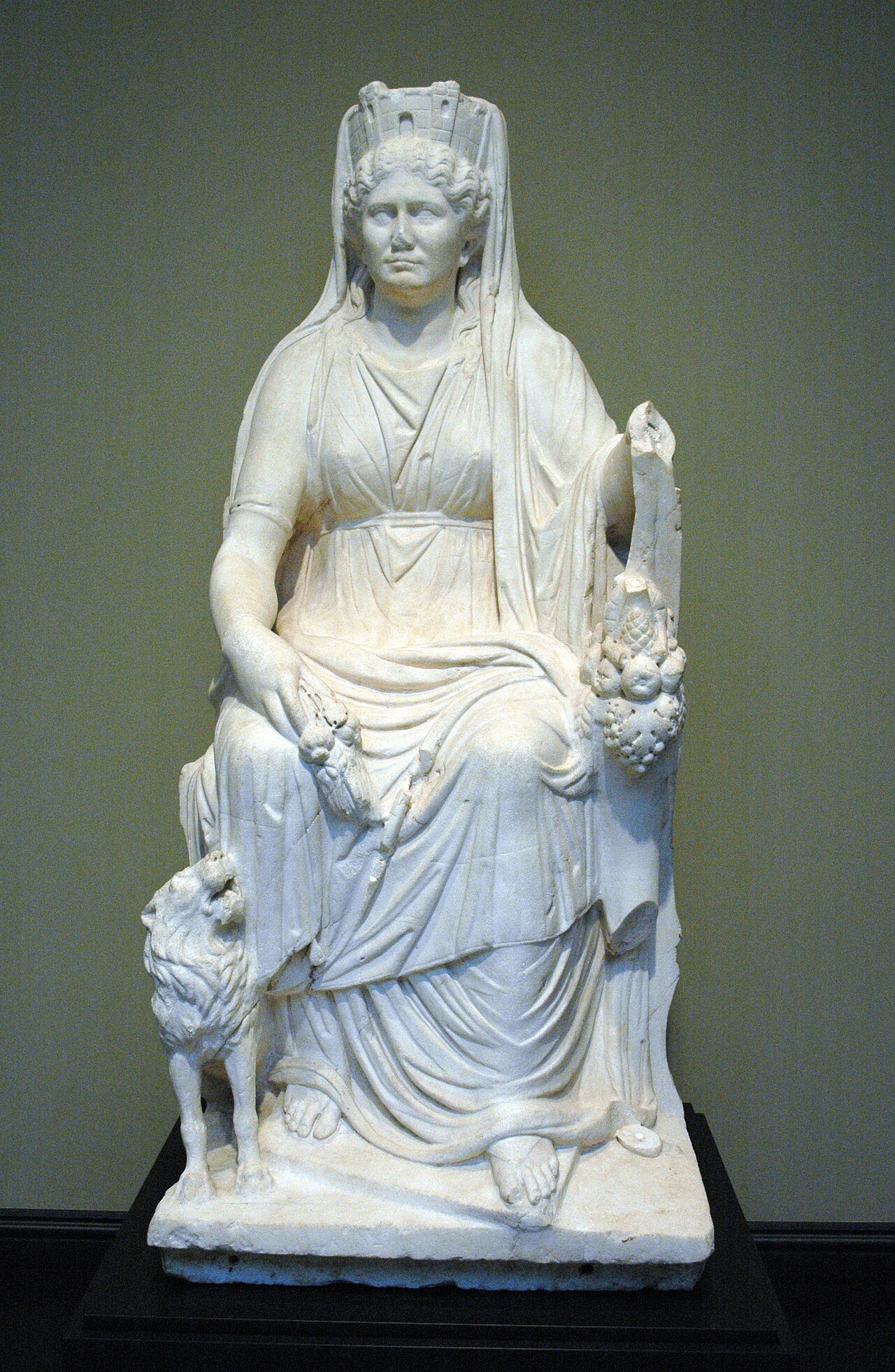

Orphic Hymns · Hymn 27
Mother of the Gods
Μητρὸς θεῶν
Prayer and ritual
These hymns may be spoken as complete prayers to the Gods. Within the Temple’s practice, a ritual is a direct theurgical act; hymnody gathers the mind and turns it toward the Divine, helping the initiate enter reverent communion with the Gods.
Use a hymn on its own in place of another prayer, or add it to the prayer portion of a suitable ritual. Choose according to the deity addressed and the petition expressed in the hymn. When combining them, preserve the ritual’s prescribed sequence and let the hymn give voice to its purpose.
The petition of this hymn
Prayer to the Mother for her joyful presence at the holy rite and for the sustaining gifts from which all life is born. It honours her central sovereignty over Earth, rivers, and Sea.
Recite independently in thanksgiving for nourishment and the gifts of prosperity. It may supplement an established rite to the Mother, joining its purpose to her sustaining presence and to the closing invitation that she rejoice in reverence.
English hieratic rendering
Hymn 27 · An English rendering aligned with the Greek lines.
- Mother of the deathless Gods, honoured by the Gods, nourisher of all,
- come here, sovereign Goddess, Lady, in answer to the prayers addressed to you,
- yoking the swift chariot of bull slaying lions,
- bearer of the sceptre of the glorious vault, many named and venerable,
- who hold the central throne of the Cosmos, because you yourself
- hold the Earth, giving kindly nourishment to mortals.
- From you was born the race of Immortals and of mortals;
- by you the rivers and all the Sea are held forever,
- you who are called Hestia; and they call you Giver of Prosperity,
- because you bestow upon mortals the gifts of every good.
- Come to the rite, O Lady, rejoicing in the drum,
- subduer of all, saviour of Phrygia, consort of Kronos,
- child of Ouranos, eldest, sustainer of life, lover of ecstasy.
- Come in gladness, taking delight in acts of reverence.
Ancient Greek & pronunciation
Read the English pronunciation spelling directly below each Greek line.
- Ἀθανάτων θεότιμε θεῶν μῆτερ, τροφὲ πάντων,ah-thah-NAH-tohn theh-OH-tee-meh theh-OHN MEE-tehr, troh-FEH PAHN-dohn,
- τῇδε μόλοις, κράντειρα θεά, σέο, πότνι’, ἐπ’ εὐχαῖς,TEE-dheh MOH-lees, KRAHN-dee-rah theh-AH, SEH-oh, POHT-nee’, ehp’ ehf-HYEHS,
- ταυροφόνων ζεύξασα ταχύδρομον ἅρμα λεόντων,tah-vroh-FOH-nohn ZEHFK-sah-sah tah-HYEE-dhroh-mohn AHR-mah leh-OHN-dohn,
- σκηπτοῦχε κλεινοῖο πόλου, πολυώνυμε, σεμνή,skeep-TOO-hyeh klee-NEE-oh POH-loo, poh-lee-OH-nee-meh, sehm-NEE,
- ἣ κατέχεις κόσμοιο μέσον θρόνον, οὕνεκεν αὐτὴEE kah-TEH-hyees KOH-zmee-oh MEH-sohn THROH-nohn, OO-neh-kehn ahf-TEE
- γαῖαν ἔχεις, θνητοῖσι τροφὰς παρέχουσα προσηνεῖς.YEH-ahn EH-hyees, thnee-TEE-see troh-FAHS pah-REH-khoo-sah proh-see-NEES.
- ἐκ σέο δ’ ἀθανάτων τε γένος θνητῶν τ’ ἐλοχεύθη,ehk SEH-oh dh’ ah-thah-NAH-tohn teh YEH-nohs thnee-TOHN t’ eh-loh-HYEHF-thee,
- σοὶ ποταμοὶ κρατέονται ἀεὶ καὶ πᾶσα θάλασσα,SEE poh-tah-MEE krah-TEH-ohn-deh ah-EE KEH PAH-sah THAH-lah-sah,
- Ἱστίη αὐδαχθεῖσα· σὲ δ’ ὀλβοδότιν καλέουσι,ee-STEE-ee ahv-dhahkh-THEE-sah· SEH dh’ ohl-voh-DHOH-teen kah-LEH-oo-see,
- παντοίων ἀγαθῶν θνητοῖς ὅτι δῶρα χαρίζῃ.pahn-DEE-ohn ah-ghah-THOHN thnee-TEES OH-tee DHOH-rah khah-REE-zee.
- ἔρχεο πρὸς τελετήν, ὦ πότνια, τυμπανοτερπές,EHR-hyeh-oh PROHS teh-leh-TEEN, OH POHT-nee-ah, teem-bah-noh-tehr-PEHS,
- πανδαμάτορ, Φρυγίης σώτειρα, Κρόνου συνόμευνε,pahn-dhah-MAH-tohr, free-YEE-ees SOH-tee-rah, KROH-noo see-NOH-mehv-neh,
- Οὐρανόπαι, πρέσβειρα, βιοθρέπτειρα, φίλοιστρε·oo-rah-NOH-peh, PREHZ-vee-rah, vee-oh-THREHP-tee-rah, FEE-lee-streh·
- ἔρχεο γηθόσυνος, κεχαρισμένη εὐσεβίῃσιν.EHR-hyeh-oh yee-THOH-see-nohs, keh-khah-ree-ZMEH-nee ehf-seh-VEE-ee-seen.
Short sound guide for English speakers
Every line beneath the Greek uses English pronunciation spellings. Say each hyphenated syllable in sequence and emphasize the syllable in CAPITALS. For example, οὐρανόθεν is oo-rah-NOH-thehn. Read adjacent vowels separately: theh-AH has two syllables; oo-rah-NEE-een has four. Hyphens guide the voice; they do not mark pauses.
| Spelling | Sound to make |
|---|---|
| ah · eh · ee · oh · oo | father · met · see · go without its final glide · moon. Keep these vowels clear in unstressed syllables too. |
| th · dh | The unvoiced th in thin · the voiced th in this. Thus DHEE begins with the sound in “thee.” |
| kh | The ch in Scottish loch or German Bach: let air pass at the back of the mouth, without closing it into a k. |
| hy | The breathy beginning of a carefully spoken Hugh. Raise the middle of the tongue toward the roof of the mouth and let air pass without voice. In shy, sound s followed by hy; do not use the English sh sound or the English word “shy.” |
| gh | Make the kh sound above, then add voice. Keep the passage open; this is a flowing sound, not a hard g. |
| y · g | y as in yes, with gentle friction · always a hard g as in get. |
| r | Tap the tongue lightly behind the upper teeth, or use a light roll. |
| ks · ps | Sound both consonants, even at the beginning of a word: ks as in backs, ps as in lips. |
| n-g · m-b · n-d | Sound the nasal and the following consonant. In AHN-geh-leh, the n-g group is like finger, with the g audible. |
Always sound s as in hiss, even at the end of DHEE-kees; z is voiced, as in zero. All other consonants have their usual English sounds. Initial consonant groups may be unfamiliar: sound every written consonant, without inserting an extra vowel. A word without capitals carries no written stress in the Greek. Where two syllables have capitals, both written accents are retained. An apostrophe marks a vowel already elided in the Greek; do not add it back. A hyphen at the end of a Greek verse joins the unfinished word to the next verse.
These spellings follow the Modern Greek liturgical reading used throughout this library. Breathings and iota subscripts are silent; separately pronounced vowels remain separate. The few Greek consonants without an exact English equivalent use the sound cues above. Ancient vowel length, pitch accent and metre are not reconstructed.
Hymn notes
Sacred meaning
Her central cosmic throne, lion chariot, and mastery of waters express a Mother whose gifts support Gods and mortals. The text also calls her Hestia and consort of Kronos, preserving a network of divine relations rather than reducing her to a single image.
Ancient offering rubric: Various incense materials.
Textual note
The printed Ἱστίη is rendered Hestia, the established English form of the divine name. Φρυγίης σώτειρα is construed together as saviour of Phrygia.
Text and attribution
Greek text: Eugenius Abel, Orphica (1885), printed pages 72, 73. The text follows the printed main reading of this edition; source-specific variants are recorded where relevant. Read the digitised edition. Greek source. Wikisource transcription, revision 124276; checked and corrected against Abel’s print. The English hieratic rendering and suggested devotional use are new editorial work. The applications are guidance for this library, not additional lines of the ancient poem.