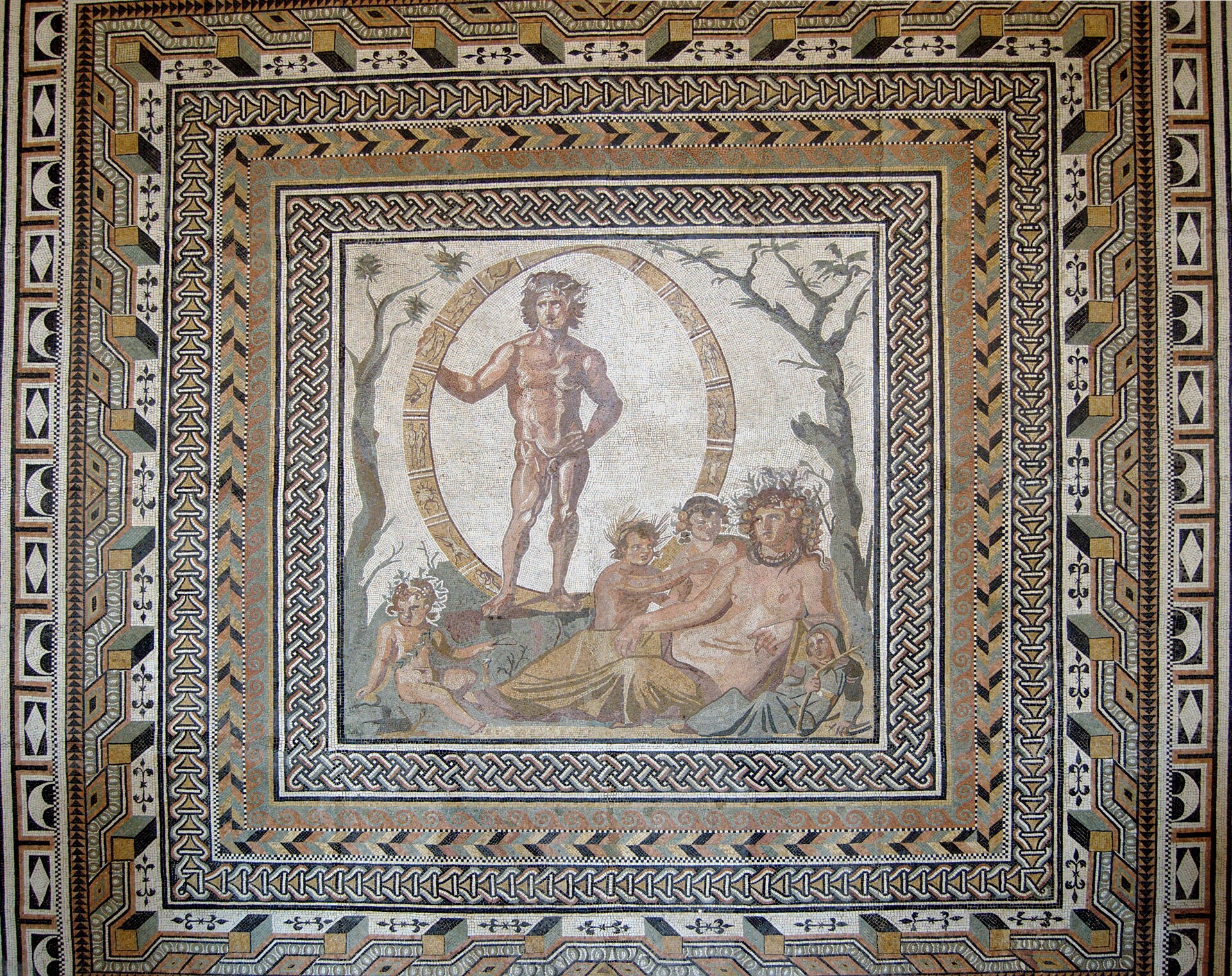

Orphic Hymns · Hymn 26
Gaia: Earth
Γῆς
Prayer and ritual
These hymns may be spoken as complete prayers to the Gods. Within the Temple’s practice, a ritual is a direct theurgical act; hymnody gathers the mind and turns it toward the Divine, helping the initiate enter reverent communion with the Gods.
Use a hymn on its own in place of another prayer, or add it to the prayer portion of a suitable ritual. Choose according to the deity addressed and the petition expressed in the hymn. When combining them, preserve the ritual’s prescribed sequence and let the hymn give voice to its purpose.
The petition of this hymn
Prayer to Gaia for the growth of joyous fruits in blessed seasons. It honours Earth as universal nourisher, giver, receiver, and the enduring seat of the Cosmos.
Recite independently in gratitude for the land and its nourishment. It may supplement an established rite for cultivation, harvest, or the flourishing of a household, directing the petition toward the fruits and favourable seasons named in the close.
English hieratic rendering
Hymn 26 · An English rendering aligned with the Greek lines.
- Gaia, Goddess, mother of the blessed Gods and mortal humankind,
- nourisher of all, giver of all, bringer of fulfilment, destroyer of all,
- making growth flourish, bearing fruit, abounding in beautiful seasons,
- seat of the deathless Cosmos, Maiden of manifold splendour,
- who in the pangs of birth bring forth fruit of every kind,
- everlasting, deeply revered, deep of breast, blessed in your portion,
- rejoicing in sweet scented green growth, Daimon rich in flowers,
- lover of rain, about whom the richly fashioned Cosmos of the Stars
- revolves by everlasting Nature and by mighty currents.
- But, blessed Goddess, increase the fruits that bring abundant joy,
- with kindly heart, together with the richly blessed seasons.
Ancient Greek & pronunciation
Read the English pronunciation spelling directly below each Greek line.
- Γαῖα θεά, μῆτερ μακάρων θνητῶν τ’ ἀνθρώπων,YEH-ah theh-AH, MEE-tehr mah-KAH-rohn thnee-TOHN t’ ahn-THROH-pohn,
- πάντροφε, πανδώτειρα, τελεσφόρε, παντολέτειρα,PAHN-droh-feh, pahn-DHOH-tee-rah, teh-leh-SFOH-reh, pahn-doh-LEH-tee-rah,
- αὐξιθαλές, φερέκαρπε, καλαῖς ὥρῃσι βρύουσα·ahfk-see-thah-LEHS, feh-REH-kahr-peh, kah-LEHS OH-ree-see VREE-oo-sah·
- ἕδρανον ἀθανάτου κόσμου, πολυποίκιλε κούρη,EH-dhrah-nohn ah-thah-NAH-too KOH-zmoo, poh-lee-PEE-kee-leh KOO-ree,
- ἣ λοχίαις ὠδῖσι κύεις καρπὸν πολυειδῆ,EE loh-HYEE-ehs oh-DHEE-see KEE-ees kahr-POHN poh-lee-ee-DHEE,
- ἀιδίη, πολύσεμνε, βαθύστερν’, ὀλβιόμοιρε,ah-ee-DHEE-ee, poh-LEE-sehm-neh, vah-THEE-stehrn’, ohl-vee-OH-mee-reh,
- ἡδυπνόοις χαίρουσα χλόαις, πολυάνθεμε δαῖμον,ee-dheep-NOH-ees HYEH-roo-sah KHLOH-ehs, poh-lee-AHN-theh-meh DHEH-mohn,
- ὀμβροχαρές, περὶ τὴν κόσμος πολυδαίδαλος ἄστρωνohm-vroh-khah-REHS, peh-REE TEEN KOH-zmohs poh-lee-DHEH-dhah-lohs AH-strohn
- εἱλεῖται φύσει ἀενάῳ καὶ ῥεύμασι δεινοῖς.ee-LEE-teh FEE-see ah-eh-NAH-oh KEH REHV-mah-see dhee-NEES.
- ἀλλά, μάκαιρα θεά, καρποὺς αὔξοις πολυγηθεῖςah-LAH, MAH-keh-rah theh-AH, kahr-POOS AHFK-sees poh-lee-yee-THEES
- εὐμενὲς ἦτορ ἔχουσα, σὺν εὐόλβοισιν ἐν ὥραις.ehv-meh-NEHS EE-tohr EH-khoo-sah, SEEN eh-VOHL-vee-seen ehn OH-rehs.
Short sound guide for English speakers
Every line beneath the Greek uses English pronunciation spellings. Say each hyphenated syllable in sequence and emphasize the syllable in CAPITALS. For example, οὐρανόθεν is oo-rah-NOH-thehn. Read adjacent vowels separately: theh-AH has two syllables; oo-rah-NEE-een has four. Hyphens guide the voice; they do not mark pauses.
| Spelling | Sound to make |
|---|---|
| ah · eh · ee · oh · oo | father · met · see · go without its final glide · moon. Keep these vowels clear in unstressed syllables too. |
| th · dh | The unvoiced th in thin · the voiced th in this. Thus DHEE begins with the sound in “thee.” |
| kh | The ch in Scottish loch or German Bach: let air pass at the back of the mouth, without closing it into a k. |
| hy | The breathy beginning of a carefully spoken Hugh. Raise the middle of the tongue toward the roof of the mouth and let air pass without voice. In shy, sound s followed by hy; do not use the English sh sound or the English word “shy.” |
| gh | Make the kh sound above, then add voice. Keep the passage open; this is a flowing sound, not a hard g. |
| y · g | y as in yes, with gentle friction · always a hard g as in get. |
| r | Tap the tongue lightly behind the upper teeth, or use a light roll. |
| ks · ps | Sound both consonants, even at the beginning of a word: ks as in backs, ps as in lips. |
| n-g · m-b · n-d | Sound the nasal and the following consonant. In AHN-geh-leh, the n-g group is like finger, with the g audible. |
Always sound s as in hiss, even at the end of DHEE-kees; z is voiced, as in zero. All other consonants have their usual English sounds. Initial consonant groups may be unfamiliar: sound every written consonant, without inserting an extra vowel. A word without capitals carries no written stress in the Greek. Where two syllables have capitals, both written accents are retained. An apostrophe marks a vowel already elided in the Greek; do not add it back. A hyphen at the end of a Greek verse joins the unfinished word to the next verse.
These spellings follow the Modern Greek liturgical reading used throughout this library. Breathings and iota subscripts are silent; separately pronounced vowels remain separate. The few Greek consonants without an exact English equivalent use the sound cues above. Ancient vowel length, pitch accent and metre are not reconstructed.
Hymn notes
Sacred meaning
The Earth brings forth many kinds of fruit through divine birthpangs and sustains the world while the Stars circle about her. Giving and destruction are both retained in her epithets, expressing the whole cycle that her nourishing presence encompasses.
Ancient offering rubric: Every kind of seed except beans and aromatic substances.
Textual note
The unusual heading is translated as printed, including its exclusion of beans and aromatic substances. Line 6 follows Abel's πολύσεμνε rather than the alternate πολύσεπτε; both concern reverence, but the declared text is kept consistent.
Text and attribution
Greek text: Eugenius Abel, Orphica (1885), printed pages 72. The text follows the printed main reading of this edition; source-specific variants are recorded where relevant. Read the digitised edition. Greek source. Wikisource transcription, revision 124271; checked and corrected against Abel’s print. The English hieratic rendering and suggested devotional use are new editorial work. The applications are guidance for this library, not additional lines of the ancient poem.