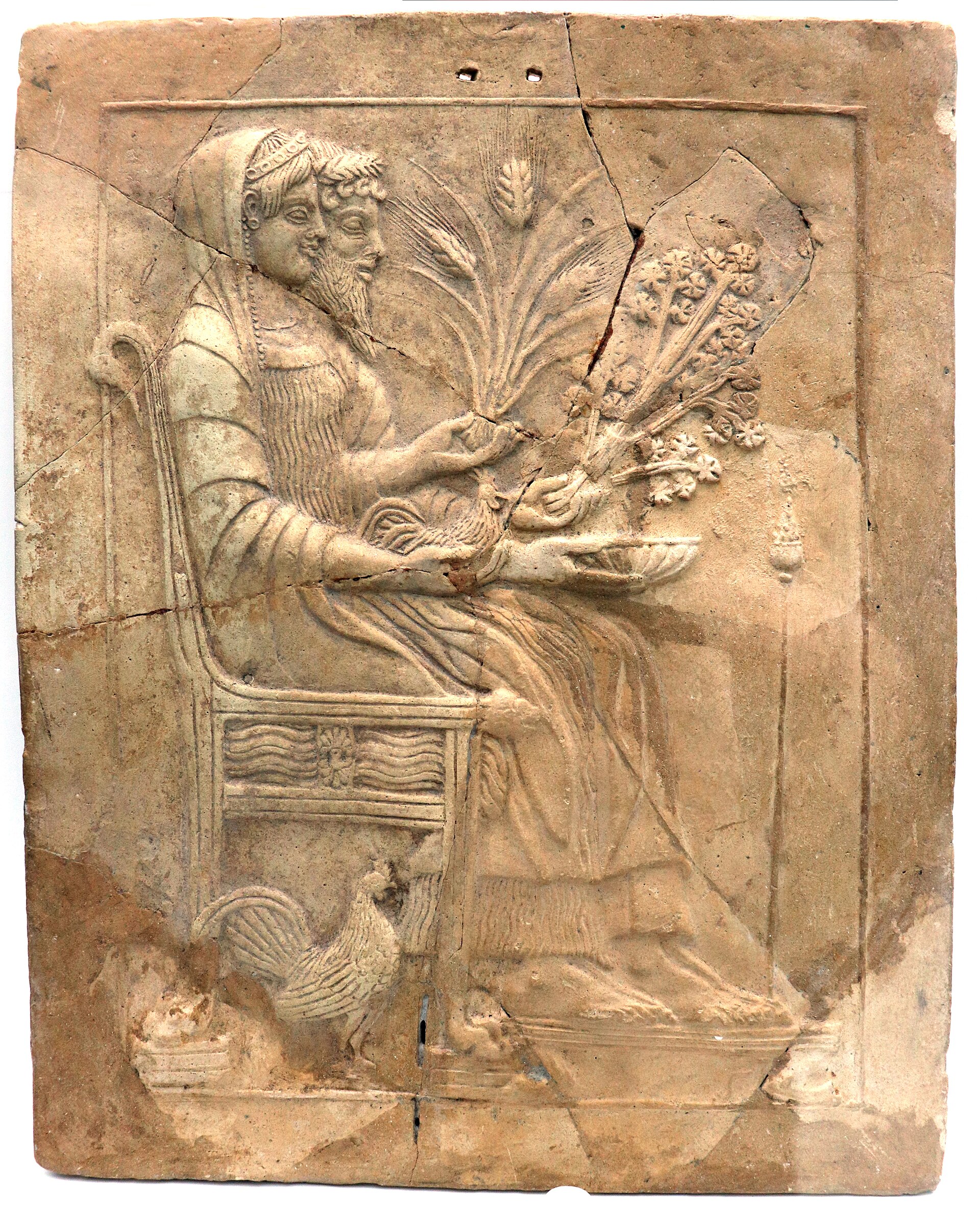

Orphic Hymns · Hymn 18
Plouton
Εἰς Πλούτωνα
Prayer and ritual
These hymns may be spoken as complete prayers to the Gods. Within the Temple’s practice, a ritual is a direct theurgical act; hymnody gathers the mind and turns it toward the Divine, helping the initiate enter reverent communion with the Gods.
Use a hymn on its own in place of another prayer, or add it to the prayer portion of a suitable ritual. Choose according to the deity addressed and the petition expressed in the hymn. When combining them, preserve the ritual’s prescribed sequence and let the hymn give voice to its purpose.
The petition of this hymn
Prayer to Plouton as keeper of Earth's keys, giver of its fruits, and judge of hidden and manifest deeds. It seeks his gracious presence among the initiates.
Recite independently in reverence toward the Lord of the unseen realm and the gifts sustained beneath the Earth. It may supplement an established rite to Plouton concerned with initiation, the fruits of Earth, or a just ordering of deeds, without altering the hymn's final welcome.
English hieratic rendering
Hymn 18 · An English rendering aligned with the Greek lines.
- O one of mighty heart who dwell in the house beneath the Earth,
- in the deeply shadowed meadow of Tartaros, bereft of light,
- Zeus beneath the Earth, bearer of the sceptre, receive these sacred offerings gladly.
- Plouton, you hold the keys of all the Earth,
- enriching the mortal race with the fruits of the years.
- You received as the third portion Earth, the Queen of all,
- seat of the Immortals, mighty support of mortals.
- You established your throne beneath the dusky realm,
- far reaching, unwearied, breathless Hades, common to all,
- and dark blue Acheron, which holds the roots of Earth.
- You rule over mortals through death, O receiver of many.
- Euboulos, who once took the child of Demeter of the pure rites
- as your bride, snatched from the meadow, and across the Sea
- with four horses led her beneath an Attic cavern
- in the district of Eleusis, where stand the gates of Hades,
- you alone are the judge of deeds unseen and manifest,
- divine, ruling all things, most holy, splendid in honour,
- rejoicing in the solemn servants of the mysteries and in holy worship.
- I call you to come graciously, rejoicing in the initiates.
Ancient Greek & pronunciation
Read the English pronunciation spelling directly below each Greek line.
- Ὦ τὸν ὑποχθόνιον ναίων δόμον, ὀβριμόθυμε,OH TOHN ee-pohkh-THOH-nee-ohn NEH-ohn DHOH-mohn, oh-vree-MOH-thee-meh,
- Ταρτάριον λειμῶνα βαθύσκιον ἠδὲ λιπαυγῆ,tahr-TAH-ree-ohn lee-MOH-nah vah-THEE-skee-ohn ee-DHEH lee-pahv-YEE,
- Ζεῦ χθόνιε, σκηπτοῦχε, τάδ’ ἱερὰ δέξο προθύμως·ZEHV KHTHOH-nee-eh, skeep-TOO-hyeh, TAHDH’ ee-eh-RAH DHEHK-soh proh-THEE-mohs·
- Πλούτων, ὃς κατέχεις γαίης κληῖδας ἁπάσης,PLOO-tohn, OHS kah-TEH-hyees YEH-ees klee-EE-dhahs ah-PAH-sees,
- πλουτοδοτῶν γενεὴν βροτέην καρποῖς ἐνιαυτῶν·ploo-toh-dhoh-TOHN yeh-neh-EEN vroh-TEH-een kahr-PEES eh-nee-ahf-TOHN·
- ὃς τριτάτης μοίρης ἔλαχες χθόνα παμβασίλειαν,OHS tree-TAH-tees MEE-rees EH-lah-hyehs KHTHOH-nah pahm-vah-SEE-lee-ahn,
- ἕδρανον ἀθανάτων, θνητῶν στήριγμα κραταιόν·EH-dhrah-nohn ah-thah-NAH-tohn, thnee-TOHN STEE-reegh-mah krah-teh-OHN·
- ὃς θρόνον ἐστήριξας ὑπὸ ζοφοειδέα χῶρον,OHS THROH-nohn eh-STEE-reek-sahs ee-POH zoh-foh-ee-DHEH-ah KHOH-rohn,
- τηλέπορον τ’, ἀκάμαντα, λιπόπνοον, ἄκριτον ᾅδην,tee-LEH-poh-rohn t’, ah-KAH-mahn-dah, lee-POHP-noh-ohn, AH-kree-tohn AH-dheen,
- κυάνεόν τ’ Ἀχέρονθ’, ὃς ἔχει ῥιζώματα γαίης·kee-AH-neh-OHN t’ ah-HYEH-rohnth’, OHS EH-hyee ree-ZOH-mah-tah YEH-ees·
- ὃς κρατέεις θνητῶν θανάτου χάριν, ὦ πολυδέγμον·OHS krah-TEH-ees thnee-TOHN thah-NAH-too KHAH-reen, OH poh-lee-DHEHGH-mohn·
- Εὔβουλ’, ἁγνοπόλου Δημήτερος ὅς ποτε παῖδαEH-vool’, ahgh-noh-POH-loo dhee-MEE-teh-rohs OHS poh-teh PEH-dhah
- νυμφεύσας λειμῶνος ἀποσπαδίην διὰ πόντουneem-FEHF-sahs lee-MOH-nohs ah-poh-spah-DHEE-een dhee-AH POHN-doo
- τετρώροις ἵπποισιν ὑπ’ Ἀτθίδος ἤγαγες ἄντρονteh-TROH-rees EE-pee-seen eep’ aht-THEE-dhohs EE-ghah-yehs AHN-drohn
- δήμου Ἐλευσῖνος, τόθι περ πύλαι εἴσ’ Ἀίδαο.DHEE-moo eh-lehf-SEE-nohs, TOH-thee pehr PEE-leh EES’ ah-EE-dhah-oh.
- μοῦνος ἔφυς ἀφανῶν ἔργων φανερῶν τε βραβευτής,MOO-nohs EH-fees ah-fah-NOHN EHR-ghohn fah-neh-ROHN teh vrah-vehf-TEES,
- ἔνθεε, παντοκράτωρ, ἱερώτατος, ἀγλαότιμε,EHN-theh-eh, pahn-doh-KRAH-tohr, ee-eh-ROH-tah-tohs, ah-ghlah-OH-tee-meh,
- σεμνοῖς μυστιπόλοις χαίρων ὁσίοις τε σεβασμοῖς·sehm-NEES mee-stee-POH-lees HYEH-rohn oh-SEE-ees teh seh-vah-ZMEES·
- ἵλαον ἀγκαλέω σε μολεῖν κεχαρηότα μύσταις.EE-lah-ohn ahn-gah-LEH-oh seh moh-LEEN keh-khah-ree-OH-tah MEE-stehs.
Short sound guide for English speakers
Every line beneath the Greek uses English pronunciation spellings. Say each hyphenated syllable in sequence and emphasize the syllable in CAPITALS. For example, οὐρανόθεν is oo-rah-NOH-thehn. Read adjacent vowels separately: theh-AH has two syllables; oo-rah-NEE-een has four. Hyphens guide the voice; they do not mark pauses.
| Spelling | Sound to make |
|---|---|
| ah · eh · ee · oh · oo | father · met · see · go without its final glide · moon. Keep these vowels clear in unstressed syllables too. |
| th · dh | The unvoiced th in thin · the voiced th in this. Thus DHEE begins with the sound in “thee.” |
| kh | The ch in Scottish loch or German Bach: let air pass at the back of the mouth, without closing it into a k. |
| hy | The breathy beginning of a carefully spoken Hugh. Raise the middle of the tongue toward the roof of the mouth and let air pass without voice. In shy, sound s followed by hy; do not use the English sh sound or the English word “shy.” |
| gh | Make the kh sound above, then add voice. Keep the passage open; this is a flowing sound, not a hard g. |
| y · g | y as in yes, with gentle friction · always a hard g as in get. |
| r | Tap the tongue lightly behind the upper teeth, or use a light roll. |
| ks · ps | Sound both consonants, even at the beginning of a word: ks as in backs, ps as in lips. |
| n-g · m-b · n-d | Sound the nasal and the following consonant. In AHN-geh-leh, the n-g group is like finger, with the g audible. |
Always sound s as in hiss, even at the end of DHEE-kees; z is voiced, as in zero. All other consonants have their usual English sounds. Initial consonant groups may be unfamiliar: sound every written consonant, without inserting an extra vowel. A word without capitals carries no written stress in the Greek. Where two syllables have capitals, both written accents are retained. An apostrophe marks a vowel already elided in the Greek; do not add it back. A hyphen at the end of a Greek verse joins the unfinished word to the next verse.
These spellings follow the Modern Greek liturgical reading used throughout this library. Breathings and iota subscripts are silent; separately pronounced vowels remain separate. The few Greek consonants without an exact English equivalent use the sound cues above. Ancient vowel length, pitch accent and metre are not reconstructed.
Hymn notes
Sacred meaning
The underworld King is also the giver of agricultural abundance, and his authority embraces life's support and the reception of the dead. The Eleusinian passage binds the marriage of Persephone to a sacred geography and to the initiates' request for divine favour.
Textual note
The hymn preserves the taking of Persephone from the meadow and the passage to Eleusis. ἄκριτον in line 9 is rendered common to all, reflecting the indiscriminate reach of Hades; it can also suggest an undivided or indistinct realm.
Text and attribution
Greek text: Eugenius Abel, Orphica (1885), printed pages 68, 69. The text follows the printed main reading of this edition; source-specific variants are recorded where relevant. Read the digitised edition. Greek source. Wikisource transcription, revision 124157; checked and corrected against Abel’s print. The English hieratic rendering and suggested devotional use are new editorial work. The applications are guidance for this library, not additional lines of the ancient poem.