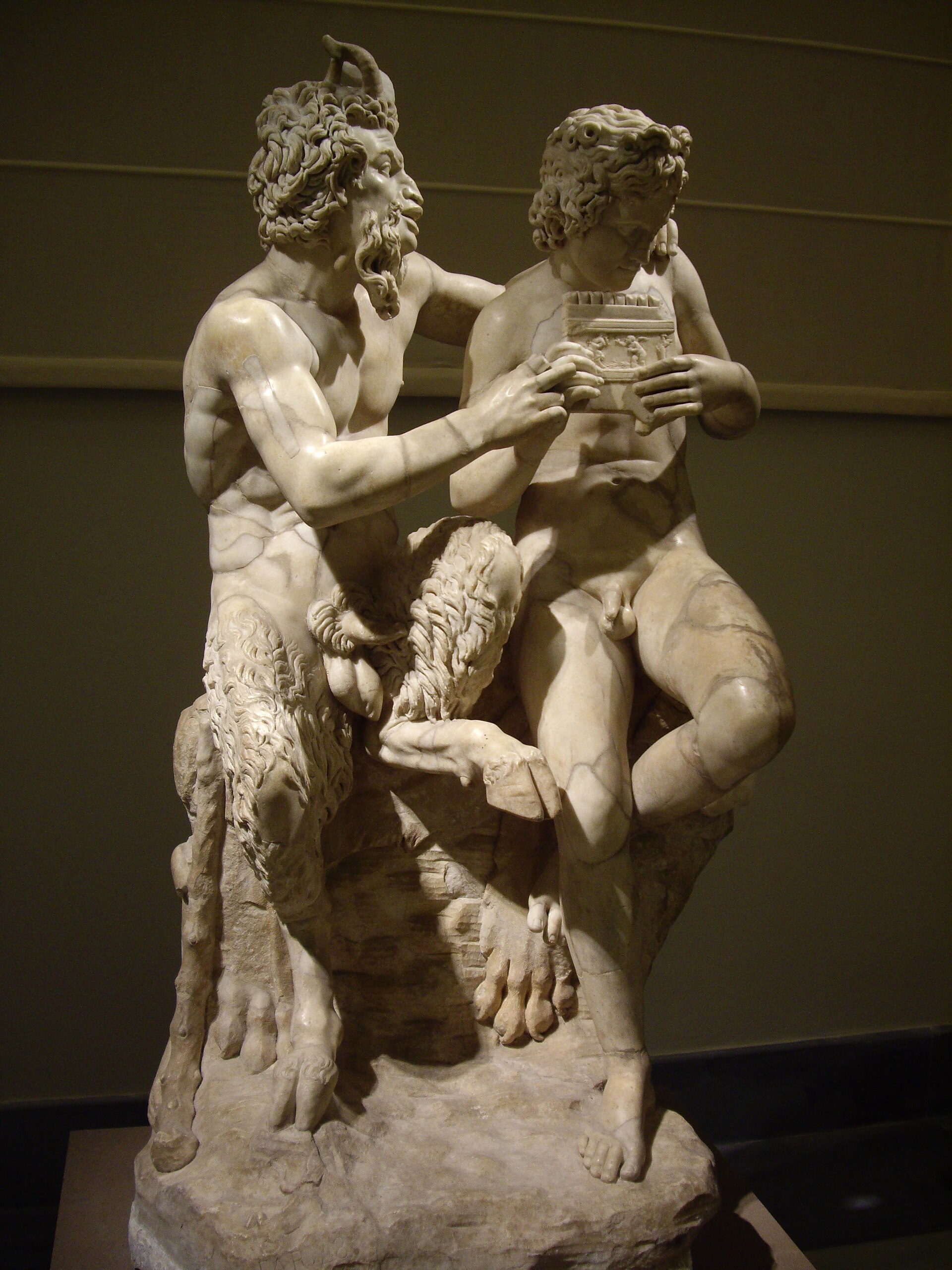

Orphic Hymns · Hymn 11
Pan
Πανός
Prayer and ritual
These hymns may be spoken as complete prayers to the Gods. Within the Temple’s practice, a ritual is a direct theurgical act; hymnody gathers the mind and turns it toward the Divine, helping the initiate enter reverent communion with the Gods.
Use a hymn on its own in place of another prayer, or add it to the prayer portion of a suitable ritual. Choose according to the deity addressed and the petition expressed in the hymn. When combining them, preserve the ritual’s prescribed sequence and let the hymn give voice to its purpose.
The petition of this hymn
Prayer to Pan as the living whole of the Cosmos and its musical harmony. It asks for a good fulfilment of life and the removal of panic to the ends of Earth.
Use independently when seeking steadiness, the harmony of life, or reverent communion with the living world. It may supplement an established rite to Pan or a protective rite whose purpose accords with the hymn's explicit banishing of panic.
English hieratic rendering
Hymn 11 · An English rendering aligned with the Greek lines.
- I call mighty Pan, lord of pastures, the whole of the Cosmos,
- heaven and sea and the Earth, Queen of all,
- and deathless fire, for these are the limbs of Pan.
- Come, blessed leaper, circling one, sharing the throne of the Seasons,
- with the limbs of a goat, celebrant of Bacchic rites, lover of divine rapture, dweller in caves,
- striking the harmony of the Cosmos in playful song,
- helper of visions, awesome in the terrors of mortals,
- rejoicing among the springs with goatherds and herdsmen,
- keen of sight, hunter, friend of Echo, fellow dancer of the Nymphs,
- of every nature, begetter of all, Daimon of many names,
- ruler of the Cosmos, increaser, bearer of light, fruitful Paian,
- lover of caves, mighty in wrath, true Zeus the Horned.
- For upon you the boundless plain of Earth is founded;
- to you yields the deep flowing water of the tireless sea,
- and Okeanos, encircling Earth all about within his waters,
- and the airy portion of nourishment, the spark of living creatures,
- and above your head, the eye of lightest fire.
- For these diverse things move easily at your commands;
- you change the natures of all things through your providence,
- sustaining the race of mortals throughout the boundless Cosmos.
- But, blessed celebrant of Bacchic rites, lover of divine rapture, come to the libations
- that are holy, and grant a good fulfilment of life,
- sending the frenzy of panic to the uttermost ends of Earth.
Ancient Greek & pronunciation
Read the English pronunciation spelling directly below each Greek line.
- Πᾶνα καλῶ κρατερόν, νόμιον, κόσμοιο τὸ σύμπαν,PAH-nah kah-LOH krah-teh-ROHN, NOH-mee-ohn, KOH-zmee-oh TOH SEEM-bahn,
- οὐρανὸν ἠδὲ θάλασσαν ἰδὲ χθόνα παμβασίλειανoo-rah-NOHN ee-DHEH THAH-lah-sahn ee-DHEH KHTHOH-nah pahm-vah-SEE-lee-ahn
- καὶ πῦρ ἀθάνατον· τάδε γὰρ μέλε’ ἐστὶ τὰ Πανός,KEH PEER ah-THAH-nah-tohn· TAH-dheh GHAHR MEH-leh’ eh-STEE TAH pah-NOHS,
- ἐλθέ, μάκαρ, σκιρτητά, περίδρομε, σύνθρονος Ὥραις,ehl-THEH, MAH-kahr, skeer-tee-TAH, peh-REE-dhroh-meh, SEEN-throh-nohs OH-rehs,
- αἰγομελές, βακχευτά, φιλένθεος, ἀντροδίαιτε,eh-ghoh-meh-LEHS, vahk-hyehf-TAH, fee-LEHN-theh-ohs, ahn-droh-DHEE-eh-teh,
- ἁρμονίην κόσμοιο κρέκων φιλοπαίγμονι μολπῇ,ahr-moh-NEE-een KOH-zmee-oh KREH-kohn fee-loh-PEHGH-moh-nee mohl-PEE,
- φαντασιῶν ἐπαρωγέ, φόβων τ’ ἔκπαγλε βροτείων,fahn-dah-see-OHN eh-pah-roh-YEH, FOH-vohn t’ EHK-pah-ghleh vroh-TEE-ohn,
- αἰγονόμοις χαίρων ἀνὰ πίδακας ἠδέ τε βούταις,eh-ghoh-NOH-mees HYEH-rohn ah-NAH PEE-dhah-kahs ee-DHEH teh VOO-tehs,
- εὔσκοπε, θηρητήρ, Ἠχοῦς φίλε, σύγχορε νυμφῶν,EHF-skoh-peh, thee-ree-TEER, ee-KHOOS FEE-leh, SEEN-khoh-reh neem-FOHN,
- παντοφυές, γενέτορ πάντων, πολυώνυμε δαῖμον,pahn-doh-fee-EHS, yeh-NEH-tohr PAHN-dohn, poh-lee-OH-nee-meh DHEH-mohn,
- κοσμοκράτωρ, αὐξητά, φαεσφόρε, κάρπιμε Παιάν,koh-zmoh-KRAH-tohr, ahfk-see-TAH, fah-eh-SFOH-reh, KAHR-pee-meh peh-AHN,
- ἀντροχαρές, βαρύμηνις, ἀληθὴς Ζεὺς ὁ κεράστης.ahn-droh-khah-REHS, vah-REE-mee-nees, ah-lee-THEES ZEHFS oh keh-RAH-stees.
- σοὶ γὰρ ἀπειρέσιον γαίης πέδον ἐστήρικται,SEE GHAHR ah-pee-REH-see-ohn YEH-ees PEH-dhohn eh-STEE-reek-teh,
- εἴκει δ’ ἀκαμάτου πόντου τὸ βαθύρροον ὕδωρEE-kee dh’ ah-kah-MAH-too POHN-doo TOH vah-THEE-roh-ohn EE-dhohr
- Ὠκεανός τε πέριξ ἐνὶ ὕδασι γαῖαν ἑλίσσων,oh-keh-ah-NOHS teh PEH-reeks eh-NEE EE-dhah-see YEH-ahn eh-LEE-sohn,
- ἠέριόν τε μέρισμα τροφῆς, ζωοῖσιν ἔναυσμα,ee-EH-ree-OHN teh MEH-ree-zmah troh-FEES, zoh-EE-seen EH-nahv-zmah,
- καὶ κορυφῆς ἐφύπερθεν ἐλαφροτάτου πυρὸς ὄμμα.KEH koh-ree-FEES eh-FEE-pehr-thehn eh-lah-froh-TAH-too pee-ROHS OH-mah.
- βαίνει γὰρ τάδε ῥεῖα πολύκριτα σῇσιν ἐφετμαῖς·VEH-nee GHAHR TAH-dheh REE-ah poh-LEE-kree-tah SEE-seen eh-feht-MEHS·
- ἀλλάσσεις δὲ φύσεις πάντων ταῖς σῇσι προνοίαιςah-LAH-sees DHEH FEE-sees PAHN-dohn TEHS SEE-see proh-NEE-ehs
- βόσκων ἀνθρώπων γενεὴν κατ’ ἀπείρονα κόσμον.VOH-skohn ahn-THROH-pohn yeh-neh-EEN kaht’ ah-PEE-roh-nah KOH-zmohn.
- ἀλλά, μάκαρ, βακχευτά, φιλένθεε, βαῖν’ ἐπὶ λοιβαῖςah-LAH, MAH-kahr, vahk-hyehf-TAH, fee-LEHN-theh-eh, VEHN’ eh-PEE lee-VEHS
- εὐιέροις, ἀγαθὴν δ’ ὄπασον βιότοιο τελευτὴνeh-vee-EH-rees, ah-ghah-THEEN dh’ OH-pah-sohn vee-OH-tee-oh teh-lehf-TEEN
- Πανικὸν ἐκπέμπων οἶστρον ἐπὶ τέρματα γαίης.pah-nee-KOHN ehk-PEHM-bohn EE-strohn eh-PEE TEHR-mah-tah YEH-ees.
Short sound guide for English speakers
Every line beneath the Greek uses English pronunciation spellings. Say each hyphenated syllable in sequence and emphasize the syllable in CAPITALS. For example, οὐρανόθεν is oo-rah-NOH-thehn. Read adjacent vowels separately: theh-AH has two syllables; oo-rah-NEE-een has four. Hyphens guide the voice; they do not mark pauses.
| Spelling | Sound to make |
|---|---|
| ah · eh · ee · oh · oo | father · met · see · go without its final glide · moon. Keep these vowels clear in unstressed syllables too. |
| th · dh | The unvoiced th in thin · the voiced th in this. Thus DHEE begins with the sound in “thee.” |
| kh | The ch in Scottish loch or German Bach: let air pass at the back of the mouth, without closing it into a k. |
| hy | The breathy beginning of a carefully spoken Hugh. Raise the middle of the tongue toward the roof of the mouth and let air pass without voice. In shy, sound s followed by hy; do not use the English sh sound or the English word “shy.” |
| gh | Make the kh sound above, then add voice. Keep the passage open; this is a flowing sound, not a hard g. |
| y · g | y as in yes, with gentle friction · always a hard g as in get. |
| r | Tap the tongue lightly behind the upper teeth, or use a light roll. |
| ks · ps | Sound both consonants, even at the beginning of a word: ks as in backs, ps as in lips. |
| n-g · m-b · n-d | Sound the nasal and the following consonant. In AHN-geh-leh, the n-g group is like finger, with the g audible. |
Always sound s as in hiss, even at the end of DHEE-kees; z is voiced, as in zero. All other consonants have their usual English sounds. Initial consonant groups may be unfamiliar: sound every written consonant, without inserting an extra vowel. A word without capitals carries no written stress in the Greek. Where two syllables have capitals, both written accents are retained. An apostrophe marks a vowel already elided in the Greek; do not add it back. A hyphen at the end of a Greek verse joins the unfinished word to the next verse.
These spellings follow the Modern Greek liturgical reading used throughout this library. Breathings and iota subscripts are silent; separately pronounced vowels remain separate. The few Greek consonants without an exact English equivalent use the sound cues above. Ancient vowel length, pitch accent and metre are not reconstructed.
Hymn notes
Sacred meaning
Heaven, sea, earth, and fire are named as Pan's limbs, while his music sounds the harmony of the whole. His terrifying and sustaining powers are held together, and the closing petition asks that the force of panic be removed while his blessing remains.
Ancient offering rubric: Various incense materials.
Textual note
Pan is explicitly called true Zeus the Horned in line 12. The divine identification is preserved. The final Πανικὸν οἶστρον is rendered as the frenzy of panic, retaining its association with Pan.
Text and attribution
Greek text: Eugenius Abel, Orphica (1885), printed pages 64, 65. The text follows the printed main reading of this edition; source-specific variants are recorded where relevant. Read the digitised edition. Greek source. Wikisource transcription, revision 124090; checked and corrected against Abel’s print. The English hieratic rendering and suggested devotional use are new editorial work. The applications are guidance for this library, not additional lines of the ancient poem.