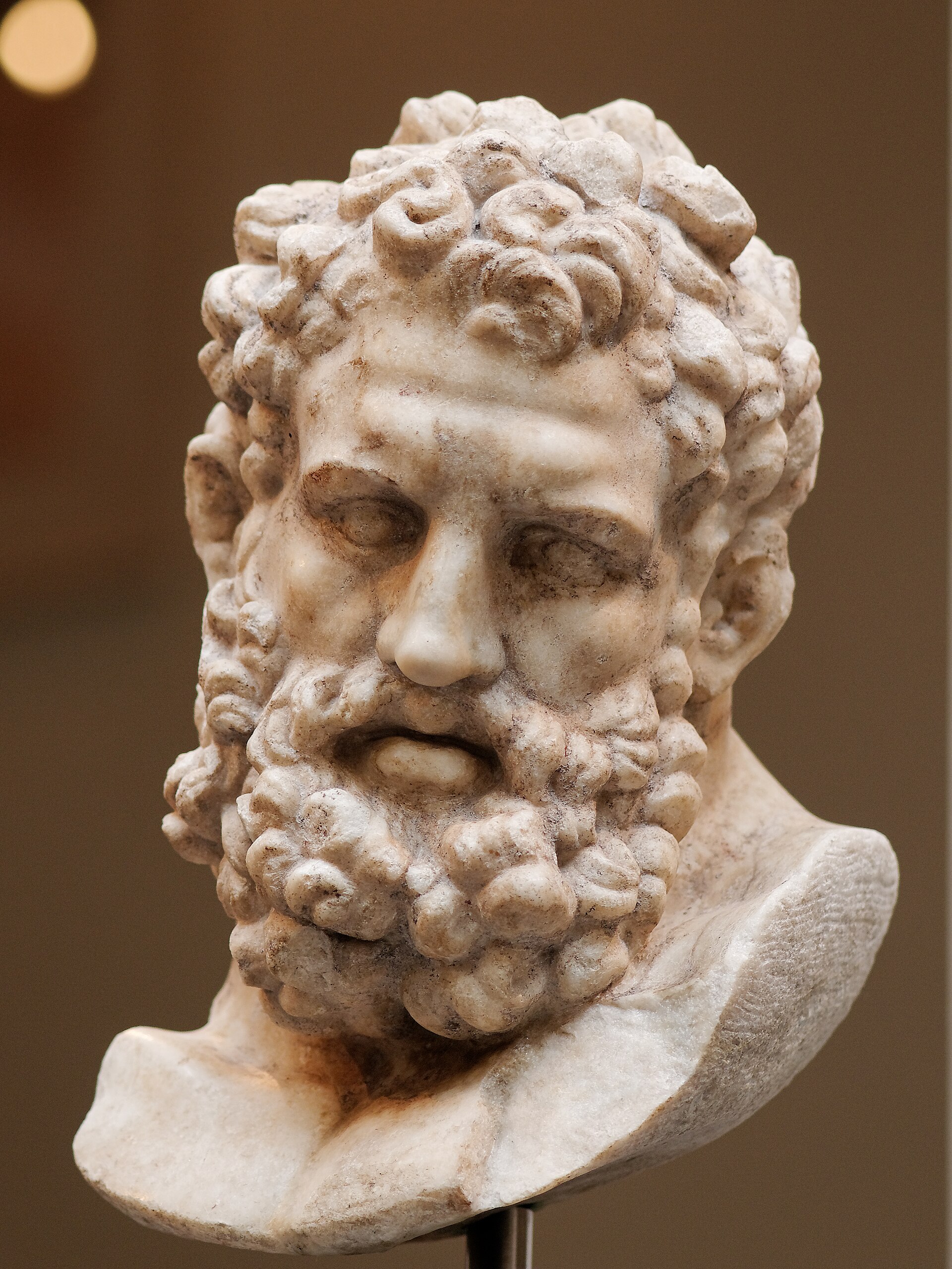

Orphic Hymns · Hymn 12
Herakles
Ἡρακλέους
Prayer and ritual
These hymns may be spoken as complete prayers to the Gods. Within the Temple’s practice, a ritual is a direct theurgical act; hymnody gathers the mind and turns it toward the Divine, helping the initiate enter reverent communion with the Gods.
Use a hymn on its own in place of another prayer, or add it to the prayer portion of a suitable ritual. Choose according to the deity addressed and the petition expressed in the hymn. When combining them, preserve the ritual’s prescribed sequence and let the hymn give voice to its purpose.
The petition of this hymn
Prayer to Herakles for deliverance from disease, calamity, and destructive powers. It honours the strength that establishes peace and completes the twelve labours.
Recite as an independent prayer for fortitude, protection, and restoration. It may supplement an established rite to Herakles or a healing and protective rite, focusing upon the final requests to carry away affliction and bring relief.
English hieratic rendering
Hymn 12 · An English rendering aligned with the Greek lines.
- Herakles of mighty heart, of vast strength, valiant Titan,
- strong of hand, unconquerable, abounding in mighty labours,
- of changing form, father of Time, eternal and kindly,
- ineffable, fierce in spirit, much entreated, ruler of all,
- bearing a heart that conquers all, great strength, archer and seer,
- devourer of all, begetter of all, highest of all, helper of all,
- who brought an end to the savage tribes by driving them from mortals,
- yearning for Peace, who nurtures the young and is splendid in honour,
- self born, unwearied, Earth's most excellent offspring,
- flashing with primordial missiles, Daimon of glorious name,
- who wear about your head the Dawn and black Night,
- passing through twelve labours from the risings to the settings,
- immortal, of vast experience, boundless, unshaken,
- come, blessed one, bringing every charm that soothes disease;
- drive out evil calamities, brandishing a branch in your hand,
- and with winged arrows send away the grievous powers of doom.
Ancient Greek & pronunciation
Read the English pronunciation spelling directly below each Greek line.
- Ἥρακλες ὀβριμόθυμε, μεγασθενές, ἄλκιμε Τιτάν,EE-rah-klehs oh-vree-MOH-thee-meh, meh-ghahs-theh-NEHS, AHL-kee-meh tee-TAHN,
- καρτερόχειρ, ἀδάμαστε, βρύων ἄθλοισι κραταιοῖς,kahr-teh-ROH-hyeer, ah-DHAH-mah-steh, VREE-ohn AHTH-lee-see krah-teh-EES,
- αἰολόμορφε, χρόνου πάτερ, ἀίδιός τε καὶ εὔφρον,eh-oh-LOH-mohr-feh, KHROH-noo PAH-tehr, ah-EE-dhee-OHS teh KEH EH-frohn,
- ἄρρητ’, ἀγριόθυμε, πολύλλιτε, παντοδυνάστα,AH-reet’, ah-ghree-OH-thee-meh, poh-LEE-lee-teh, pahn-doh-dhee-NAH-stah,
- παγκρατὲς ἦτορ ἔχων, κάρτος μέγα, τοξότα, μάντι,pahn-grah-TEHS EE-tohr EH-khohn, KAHR-tohs MEH-ghah, tohk-SOH-tah, MAHN-dee,
- παμφάγε, παγγενέτορ, πανυπέρτατε, πᾶσιν ἀρωγέ,pahm-FAH-yeh, pahn-geh-NEH-tohr, pah-nee-PEHR-tah-teh, PAH-seen ah-roh-YEH,
- ὃς θνητοῖς κατέπαυσας ἀνήμερα φῦλα διώξας,OHS thnee-TEES kah-TEH-pahf-sahs ah-NEE-meh-rah FEE-lah dhee-OHK-sahs,
- εἰρήνην ποθέων κουροτρόφον, ἀγλαότιμον,ee-REE-neen poh-THEH-ohn koo-roh-TROH-fohn, ah-ghlah-OH-tee-mohn,
- αὐτοφυής, ἀκάμας, γαίης βλάστημα φέριστον,ahf-toh-fee-EES, ah-KAH-mahs, YEH-ees VLAH-stee-mah FEH-ree-stohn,
- πρωτογόνοις στράψας βολίσιν, μεγαλώνυμε δαῖμον,proh-toh-GHOH-nees STRAHP-sahs voh-LEE-seen, meh-ghah-LOH-nee-meh DHEH-mohn,
- ὃς περὶ κρατὶ φορεῖς ἠῶ καὶ νύκτα μέλαιναν,OHS peh-REE krah-TEE foh-REES ee-OH KEH NEEK-tah MEH-leh-nahn,
- δώδεκ’ ἀπ’ ἀντολιῶν ἄχρι δυσμῶν ἆθλα διέρπων,DHOH-dhehk’ ahp’ ahn-doh-lee-OHN AH-khree dhee-ZMOHN AHTH-lah dhee-EHR-pohn,
- ἀθάνατος, πολύπειρος, ἀπείριτος, ἀστυφέλικτος·ah-THAH-nah-tohs, poh-LEE-pee-rohs, ah-PEE-ree-tohs, ah-stee-FEH-leek-tohs·
- ἐλθέ, μάκαρ, νούσων θελκτήρια πάντα κομίζων,ehl-THEH, MAH-kahr, NOO-sohn thehlk-TEE-ree-ah PAHN-dah koh-MEE-zohn,
- ἐξέλασον δὲ κακὰς ἄτας κλάδον ἐν χερὶ πάλλων,ehk-SEH-lah-sohn DHEH kah-KAHS AH-tahs KLAH-dhohn ehn hyeh-REE PAH-lohn,
- πτηνοῖς τ’ ἰοβόλοις κῆρας χαλεπὰς ἀπόπεμπε.ptee-NEES t’ ee-oh-VOH-lees KEE-rahs khah-leh-PAHS ah-POH-pehm-beh.
Short sound guide for English speakers
Every line beneath the Greek uses English pronunciation spellings. Say each hyphenated syllable in sequence and emphasize the syllable in CAPITALS. For example, οὐρανόθεν is oo-rah-NOH-thehn. Read adjacent vowels separately: theh-AH has two syllables; oo-rah-NEE-een has four. Hyphens guide the voice; they do not mark pauses.
| Spelling | Sound to make |
|---|---|
| ah · eh · ee · oh · oo | father · met · see · go without its final glide · moon. Keep these vowels clear in unstressed syllables too. |
| th · dh | The unvoiced th in thin · the voiced th in this. Thus DHEE begins with the sound in “thee.” |
| kh | The ch in Scottish loch or German Bach: let air pass at the back of the mouth, without closing it into a k. |
| hy | The breathy beginning of a carefully spoken Hugh. Raise the middle of the tongue toward the roof of the mouth and let air pass without voice. In shy, sound s followed by hy; do not use the English sh sound or the English word “shy.” |
| gh | Make the kh sound above, then add voice. Keep the passage open; this is a flowing sound, not a hard g. |
| y · g | y as in yes, with gentle friction · always a hard g as in get. |
| r | Tap the tongue lightly behind the upper teeth, or use a light roll. |
| ks · ps | Sound both consonants, even at the beginning of a word: ks as in backs, ps as in lips. |
| n-g · m-b · n-d | Sound the nasal and the following consonant. In AHN-geh-leh, the n-g group is like finger, with the g audible. |
Always sound s as in hiss, even at the end of DHEE-kees; z is voiced, as in zero. All other consonants have their usual English sounds. Initial consonant groups may be unfamiliar: sound every written consonant, without inserting an extra vowel. A word without capitals carries no written stress in the Greek. Where two syllables have capitals, both written accents are retained. An apostrophe marks a vowel already elided in the Greek; do not add it back. A hyphen at the end of a Greek verse joins the unfinished word to the next verse.
These spellings follow the Modern Greek liturgical reading used throughout this library. Breathings and iota subscripts are silent; separately pronounced vowels remain separate. The few Greek consonants without an exact English equivalent use the sound cues above. Ancient vowel length, pitch accent and metre are not reconstructed.
Hymn notes
Sacred meaning
Herakles is praised on a cosmic scale as Titan, father of Time, and begetter of all, while the twelve labours extend from rising to setting. Strength is directed toward peace that nurtures the young, and the closing actions turn heroic power toward the worshipper's preservation.
Ancient offering rubric: Frankincense.
Textual note
The number twelve is explicit in line 12. The branch and winged arrows in the final two lines are preserved as textual images; no additional physical actions are prescribed.
Text and attribution
Greek text: Eugenius Abel, Orphica (1885), printed pages 65. The text follows the printed main reading of this edition; source-specific variants are recorded where relevant. Read the digitised edition. Greek source. Wikisource transcription, revision 124095; checked and corrected against Abel’s print. The English hieratic rendering and suggested devotional use are new editorial work. The applications are guidance for this library, not additional lines of the ancient poem.