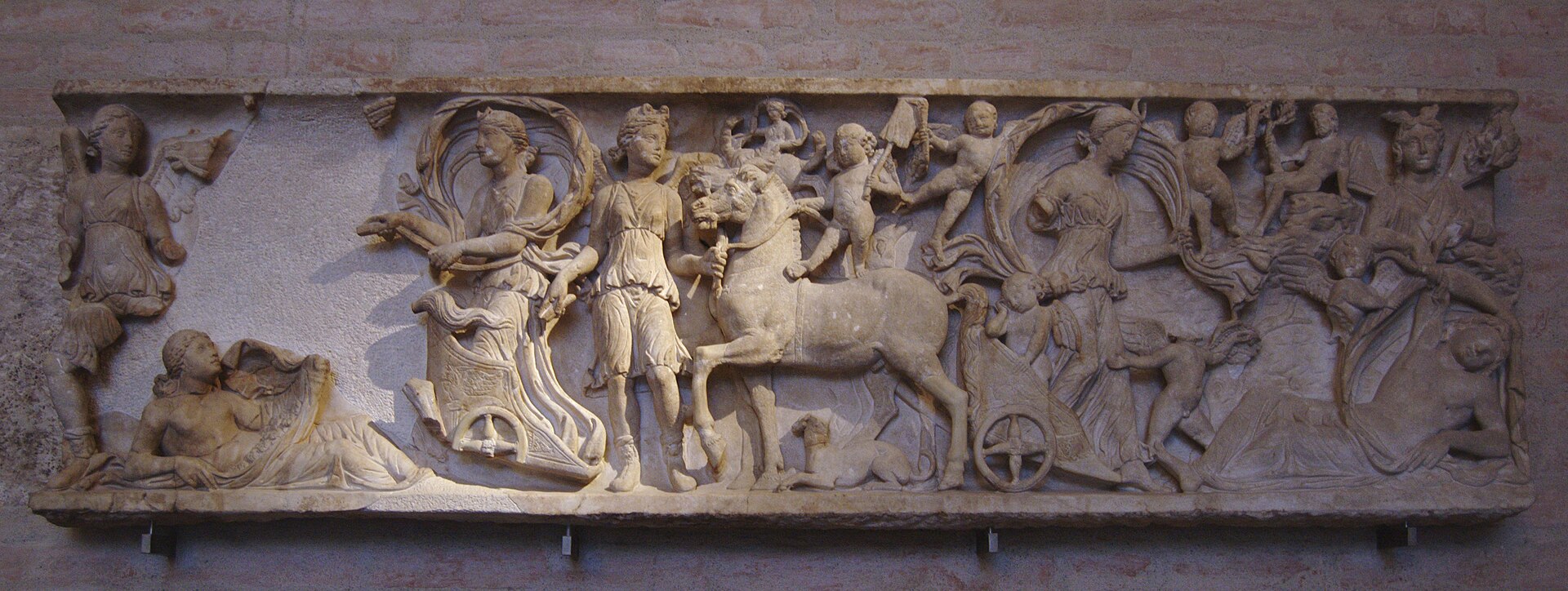

Orphic Hymns · Hymn 09
Selene
Σελήνης
Prayer and ritual
These hymns may be spoken as complete prayers to the Gods. Within the Temple’s practice, a ritual is a direct theurgical act; hymnody gathers the mind and turns it toward the Divine, helping the initiate enter reverent communion with the Gods.
Use a hymn on its own in place of another prayer, or add it to the prayer portion of a suitable ritual. Choose according to the deity addressed and the petition expressed in the hymn. When combining them, preserve the ritual’s prescribed sequence and let the hymn give voice to its purpose.
The petition of this hymn
Prayer to the Moon in her radiance, changing phases, and governance of time. It asks her kindly arrival and protection of new suppliants.
Use independently in a quiet lunar prayer or vigil. It can accompany an established rite to Selene concerned with the cycles of time, protective presence, or attentive contemplation during the night.
English hieratic rendering
Hymn 09 · An English rendering aligned with the Greek lines.
- Hear, Goddess and Queen, bearer of light, divine Selene,
- Mene with horns of a bull, traveller by night, wanderer through the air,
- nocturnal, torchbearing Maiden, lovely among the stars, Mene,
- waxing and waning, female and male,
- shining one, lover of horses, mother of Time, bearer of fruit,
- bright as amber, deep of spirit, illumining all, radiant by night,
- all seeing, lover of wakefulness, abounding in beautiful stars,
- rejoicing in stillness and in Night whose portion is blessed,
- luminous giver of grace, bearer of horns, ornament of Night,
- sovereign of stars, robed in flowing folds, wheeling in your course, Maiden wise in all things,
- come, blessed one, kindly and lovely among the stars, with your own radiance
- shining, and save your new suppliants, O Maiden.
Ancient Greek & pronunciation
Read the English pronunciation spelling directly below each Greek line.
- Κλῦθι, θεὰ βασίλεια, φαεσφόρε, δῖα Σελήνη,KLEE-thee, theh-AH vah-SEE-lee-ah, fah-eh-SFOH-reh, DHEE-ah seh-LEE-nee,
- ταυρόκερως Μήνη, νυκτιδρόμος, ἠεροφοῖτι,tah-VROH-keh-rohs MEE-nee, neek-tee-DHROH-mohs, ee-eh-roh-FEE-tee,
- ἐννυχίη, δαιδοῦχε, κόρη, εὐάστερε, Μήνη,eh-nee-HYEE-ee, dheh-DHOO-hyeh, KOH-ree, eh-VAH-steh-reh, MEE-nee,
- αὐξομένη καὶ λειπομένη, θῆλύς τε καὶ ἄρσην,ahfk-soh-MEH-nee KEH lee-poh-MEH-nee, THEE-LEES teh KEH AHR-seen,
- αὐγάστειρα, φίλιππε, χρόνου μῆτερ, φερέκαρπε,ahv-GHAH-stee-rah, FEE-lee-peh, KHROH-noo MEE-tehr, feh-REH-kahr-peh,
- ἠλεκτρίς, βαρύθυμε, καταυγάστειρα, νυχαυγές,ee-lehk-TREES, vah-REE-thee-meh, kah-tahv-GHAH-stee-rah, nee-khahv-YEHS,
- πανδερκές, φιλάγρυπνε, καλοῖς ἄστροισι βρύουσα,pahn-dhehr-KEHS, fee-LAH-ghreep-neh, kah-LEES AH-stree-see VREE-oo-sah,
- ἡσυχίῃ χαίρουσα καὶ εὐφρόνῃ ὀλβιομοίρῳ,ee-see-HYEE-ee HYEH-roo-sah KEH eh-FROH-nee ohl-vee-oh-MEE-roh,
- λαμπετίη, χαριτῶτι, κερασφόρε, νυκτὸς ἄγαλμα,lahm-beh-TEE-ee, khah-ree-TOH-tee, keh-rah-SFOH-reh, neek-TOHS AH-ghahl-mah,
- ἀστράρχη, τανύπεπλ’, ἑλικοδρόμε, πάνσοφε κούρη,ah-STRAHR-hyee, tah-NEE-pehpl’, eh-lee-koh-DHROH-meh, PAHN-soh-feh KOO-ree,
- ἐλθέ, μάκαιρ’, εὔφρων, εὐάστερε, φέγγεϊ τῷ σῷehl-THEH, MAH-kehr’, EH-frohn, eh-VAH-steh-reh, FEHN-geh-ee TOH SOH
- λαμπομένη, σῴζουσα νέους ἱκέτας σέο, κούρη.lahm-boh-MEH-nee, SOH-zoo-sah NEH-oos ee-KEH-tahs SEH-oh, KOO-ree.
Short sound guide for English speakers
Every line beneath the Greek uses English pronunciation spellings. Say each hyphenated syllable in sequence and emphasize the syllable in CAPITALS. For example, οὐρανόθεν is oo-rah-NOH-thehn. Read adjacent vowels separately: theh-AH has two syllables; oo-rah-NEE-een has four. Hyphens guide the voice; they do not mark pauses.
| Spelling | Sound to make |
|---|---|
| ah · eh · ee · oh · oo | father · met · see · go without its final glide · moon. Keep these vowels clear in unstressed syllables too. |
| th · dh | The unvoiced th in thin · the voiced th in this. Thus DHEE begins with the sound in “thee.” |
| kh | The ch in Scottish loch or German Bach: let air pass at the back of the mouth, without closing it into a k. |
| hy | The breathy beginning of a carefully spoken Hugh. Raise the middle of the tongue toward the roof of the mouth and let air pass without voice. In shy, sound s followed by hy; do not use the English sh sound or the English word “shy.” |
| gh | Make the kh sound above, then add voice. Keep the passage open; this is a flowing sound, not a hard g. |
| y · g | y as in yes, with gentle friction · always a hard g as in get. |
| r | Tap the tongue lightly behind the upper teeth, or use a light roll. |
| ks · ps | Sound both consonants, even at the beginning of a word: ks as in backs, ps as in lips. |
| n-g · m-b · n-d | Sound the nasal and the following consonant. In AHN-geh-leh, the n-g group is like finger, with the g audible. |
Always sound s as in hiss, even at the end of DHEE-kees; z is voiced, as in zero. All other consonants have their usual English sounds. Initial consonant groups may be unfamiliar: sound every written consonant, without inserting an extra vowel. A word without capitals carries no written stress in the Greek. Where two syllables have capitals, both written accents are retained. An apostrophe marks a vowel already elided in the Greek; do not add it back. A hyphen at the end of a Greek verse joins the unfinished word to the next verse.
These spellings follow the Modern Greek liturgical reading used throughout this library. Breathings and iota subscripts are silent; separately pronounced vowels remain separate. The few Greek consonants without an exact English equivalent use the sound cues above. Ancient vowel length, pitch accent and metre are not reconstructed.
Hymn notes
Sacred meaning
Waxing and waning, female and male, the Moon unites complementary conditions within one divine course. Her light and stillness frame a petition for protection, while her horns and authority over the stars declare her celestial sovereignty.
Ancient offering rubric: Aromatic substances.
Textual note
Lines 6 and 9 follow Abel's printed νυχαυγές and κερασφόρε, radiant by night and horn bearing, rather than the alternate λοχείη and τελεσφόρε. The translation corresponds to that declared text.
At line 9, χαριτῶτι follows Abel’s printed main reading, also identified in his apparatus.
Text and attribution
Greek text: Eugenius Abel, Orphica (1885), printed pages 62, 63. The text follows the printed main reading of this edition; source-specific variants are recorded where relevant. Read the digitised edition. Greek source. Wikisource transcription, revision 124084; checked and corrected against Abel’s print. The English hieratic rendering and suggested devotional use are new editorial work. The applications are guidance for this library, not additional lines of the ancient poem.