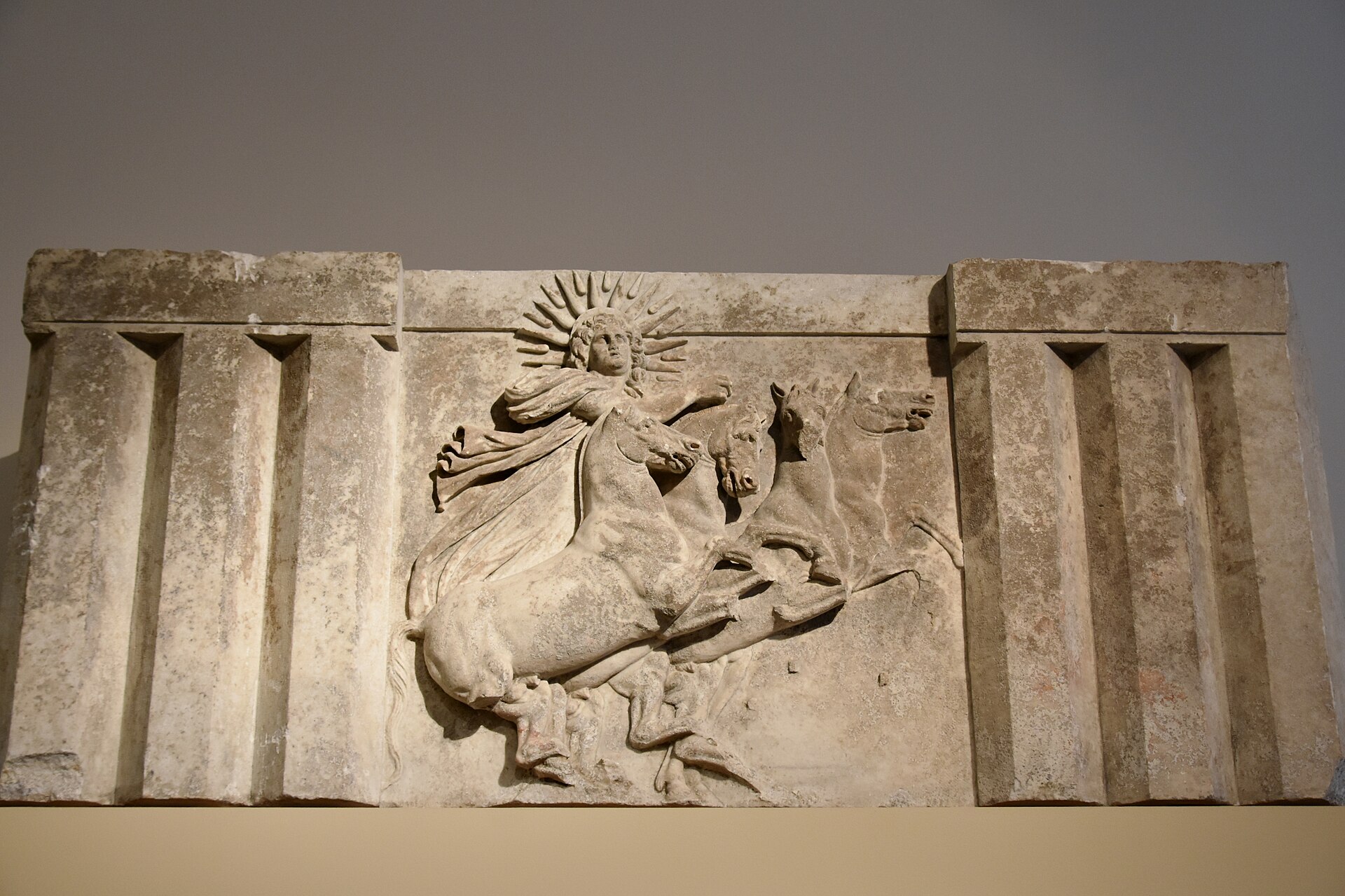
.jpg)
Orphic Hymns · Hymn 08
Helios
Ἡλίου
Prayer and ritual
These hymns may be spoken as complete prayers to the Gods. Within the Temple’s practice, a ritual is a direct theurgical act; hymnody gathers the mind and turns it toward the Divine, helping the initiate enter reverent communion with the Gods.
Use a hymn on its own in place of another prayer, or add it to the prayer portion of a suitable ritual. Choose according to the deity addressed and the petition expressed in the hymn. When combining them, preserve the ritual’s prescribed sequence and let the hymn give voice to its purpose.
The petition of this hymn
Prayer to Helios as the light of life, guardian of righteousness, and harmoniser of the cosmic course. It asks him to reveal a sweet life to the initiates.
Recite independently in prayer for clarity, just conduct, or the flourishing of life. It may supplement an established solar rite, or a petition for justice addressed to an appropriate God, through its explicit invocation of the eye of righteousness.
English hieratic rendering
Hymn 08 · An English rendering aligned with the Greek lines.
- Hear, blessed one, who possess the everlasting, all seeing eye,
- Titan of golden radiance, Hyperion, heavenly light,
- self born, untiring, a sweet sight to living beings,
- begetter of Dawn on your right and Night on your left,
- blending the seasons, dancing with the steps of four feet,
- swift in your course, rushing with a whir, fiery, radiant of face, charioteer,
- driving your road through the revolutions of the boundless circle,
- guide to noble things for the reverent, fierce toward the irreverent,
- of the golden lyre, drawing the harmonious course of the Cosmos,
- revealer of good deeds, youth who nurtures the seasons,
- ruler of the Cosmos, player of the pipe, runner in fire, wheeling in a circle,
- bearer of light, flashing in many hues, bearer of life, fruitful Paian,
- ever flourishing, undefiled, father of Time, immortal Zeus,
- serene, shining upon all, the eye that circles the Cosmos,
- being quenched and shining with your beautiful, luminous rays,
- revealer of righteousness, lover of streams, master of the Cosmos,
- faithful guardian, ever supreme, helper of all,
- eye of righteousness, light of life, O driver of horses,
- urging your chariot of four with the shrill crack of the lash,
- hear these words, and reveal a life of sweetness to the initiates.
Ancient Greek & pronunciation
Read the English pronunciation spelling directly below each Greek line.
- Κλῦθι μάκαρ, πανδερκὲς ἔχων αἰώνιον ὄμμα,KLEE-thee MAH-kahr, pahn-dhehr-KEHS EH-khohn eh-OH-nee-ohn OH-mah,
- Τιτὰν χρυσαυγής, Ὑπερίων, οὐράνιον φῶς,tee-TAHN khree-sahv-YEES, ee-peh-REE-ohn, oo-RAH-nee-ohn FOHS,
- αὐτοφυής, ἀκάμας, ζῴων ἡδεῖα πρόσοψι,ahf-toh-fee-EES, ah-KAH-mahs, ZOH-ohn ee-DHEE-ah PROH-sohp-see,
- δεξιὲ μὲν γενέτωρ ἠοῦς, εὐώνυμε νυκτός,dhehk-see-EH MEHN yeh-NEH-tohr ee-OOS, eh-VOH-nee-meh neek-TOHS,
- κρᾶσιν ἔχων ὡρῶν, τετραβάμοσι ποσσὶ χορεύων,KRAH-seen EH-khohn oh-ROHN, teh-trah-VAH-moh-see poh-SEE khoh-REH-vohn,
- εὔδρομε, ῥοιζήτωρ, πυρόεις, φαιδρωπέ, διφρευτά,EHV-dhroh-meh, ree-ZEE-tohr, pee-ROH-ees, feh-dhroh-PEH, dhee-frehf-TAH,
- ῥόμβου ἀπειρεσίου δινεύμασιν οἶμον ἐλαύνων,ROHM-voo ah-pee-reh-SEE-oo dhee-NEHV-mah-seen EE-mohn eh-LAHV-nohn,
- εὐσεβέσιν καθοδηγὲ καλῶν, ζαμενὴς ἀσεβοῦσι,ehf-seh-VEH-seen kah-thoh-dhee-YEH kah-LOHN, zah-meh-NEES ah-seh-VOO-see,
- χρυσολύρη, κόσμου τὸν ἐναρμόνιον δρόμον ἕλκων,khree-soh-LEE-ree, KOH-zmoo TOHN eh-nahr-MOH-nee-ohn DHROH-mohn EHL-kohn,
- ἔργων σημάντωρ ἀγαθῶν, ὡροτρόφε κοῦρε.EHR-ghohn see-MAHN-dohr ah-ghah-THOHN, oh-roh-TROH-feh KOO-reh.
- κοσμοκράτορ, συρικτά, πυρίδρομε, κυκλοέλικτε,koh-zmoh-KRAH-tohr, see-reek-TAH, pee-REE-dhroh-meh, kee-kloh-EH-leek-teh,
- φωσφόρος, αἰολόλαμπτε, φερέσβιε, κάρπιμε Παιάν,foh-SFOH-rohs, eh-oh-LOH-lahmb-teh, feh-REHZ-vee-eh, KAHR-pee-meh peh-AHN,
- ἀιθαλής, ἀμίαντε, χρόνου πάτερ, ἀθάνατε Ζεῦ,ah-ee-thah-LEES, ah-MEE-ahn-deh, KHROH-noo PAH-tehr, ah-THAH-nah-teh ZEHV,
- εὔδιε, πασιφαές, κόσμου τὸ περίδρομον ὄμμα,EHV-dhee-eh, pah-see-fah-EHS, KOH-zmoo TOH peh-REE-dhroh-mohn OH-mah,
- σβεννύμενος λάμπων τε καλαῖς ἀκτῖσι φαειναῖς,zveh-NEE-meh-nohs LAHM-bohn teh kah-LEHS ahk-TEE-see fah-ee-NEHS,
- δεῖκτα δικαιοσύνης, φιλονάματε, δέσποτα κόσμου,DHEEK-tah dhee-keh-oh-SEE-nees, fee-loh-NAH-mah-teh, DHEH-spoh-tah KOH-zmoo,
- πιστοφύλαξ, αἰεὶ πανυπέρτατε, πᾶσιν ἀρωγέ,pee-stoh-FEE-lahks, eh-EE pah-nee-PEHR-tah-teh, PAH-seen ah-roh-YEH,
- ὄμμα δικαιοσύνης, ζωῆς φῶς· ὦ ἐλάσιππε,OH-mah dhee-keh-oh-SEE-nees, zoh-EES FOHS· OH eh-LAH-see-peh,
- μάστιγι λιγυρῇ τετράορον ἅρμα διώκων·MAH-stee-yee lee-yee-REE teh-TRAH-oh-rohn AHR-mah dhee-OH-kohn·
- κλῦθι λόγων, ἡδὺν δὲ βίον μύστῃσι πρόφαινε.KLEE-thee LOH-ghohn, ee-DHEEN DHEH VEE-ohn MEE-stee-see PROH-feh-neh.
Short sound guide for English speakers
Every line beneath the Greek uses English pronunciation spellings. Say each hyphenated syllable in sequence and emphasize the syllable in CAPITALS. For example, οὐρανόθεν is oo-rah-NOH-thehn. Read adjacent vowels separately: theh-AH has two syllables; oo-rah-NEE-een has four. Hyphens guide the voice; they do not mark pauses.
| Spelling | Sound to make |
|---|---|
| ah · eh · ee · oh · oo | father · met · see · go without its final glide · moon. Keep these vowels clear in unstressed syllables too. |
| th · dh | The unvoiced th in thin · the voiced th in this. Thus DHEE begins with the sound in “thee.” |
| kh | The ch in Scottish loch or German Bach: let air pass at the back of the mouth, without closing it into a k. |
| hy | The breathy beginning of a carefully spoken Hugh. Raise the middle of the tongue toward the roof of the mouth and let air pass without voice. In shy, sound s followed by hy; do not use the English sh sound or the English word “shy.” |
| gh | Make the kh sound above, then add voice. Keep the passage open; this is a flowing sound, not a hard g. |
| y · g | y as in yes, with gentle friction · always a hard g as in get. |
| r | Tap the tongue lightly behind the upper teeth, or use a light roll. |
| ks · ps | Sound both consonants, even at the beginning of a word: ks as in backs, ps as in lips. |
| n-g · m-b · n-d | Sound the nasal and the following consonant. In AHN-geh-leh, the n-g group is like finger, with the g audible. |
Always sound s as in hiss, even at the end of DHEE-kees; z is voiced, as in zero. All other consonants have their usual English sounds. Initial consonant groups may be unfamiliar: sound every written consonant, without inserting an extra vowel. A word without capitals carries no written stress in the Greek. Where two syllables have capitals, both written accents are retained. An apostrophe marks a vowel already elided in the Greek; do not add it back. A hyphen at the end of a Greek verse joins the unfinished word to the next verse.
These spellings follow the Modern Greek liturgical reading used throughout this library. Breathings and iota subscripts are silent; separately pronounced vowels remain separate. The few Greek consonants without an exact English equivalent use the sound cues above. Ancient vowel length, pitch accent and metre are not reconstructed.
Hymn notes
Sacred meaning
The hymn joins the chariot's motion to the lyre's harmony and calls Helios both Paian and immortal Zeus. Its solar vision is therefore at once life giving, ordering, and discerning, illuminating the distinction between reverent and irreverent action.
Ancient offering rubric: Frankincense manna or granules.
Textual note
Line 12 follows Abel's αἰολόλαμπτε, flashing in many hues. The phrase of line 4 places dawn on the right and night on the left; this spatial image is preserved rather than converted into new ritual directions.
At line 13, ἀιθαλής follows Abel’s placement of the breathing on alpha; the pronunciation guide keeps the two opening vowels separate.
Text and attribution
Greek text: Eugenius Abel, Orphica (1885), printed pages 61, 62. The text follows the printed main reading of this edition; source-specific variants are recorded where relevant. Read the digitised edition. Greek source. Wikisource transcription, revision 124081; checked and corrected against Abel’s print. The English hieratic rendering and suggested devotional use are new editorial work. The applications are guidance for this library, not additional lines of the ancient poem.