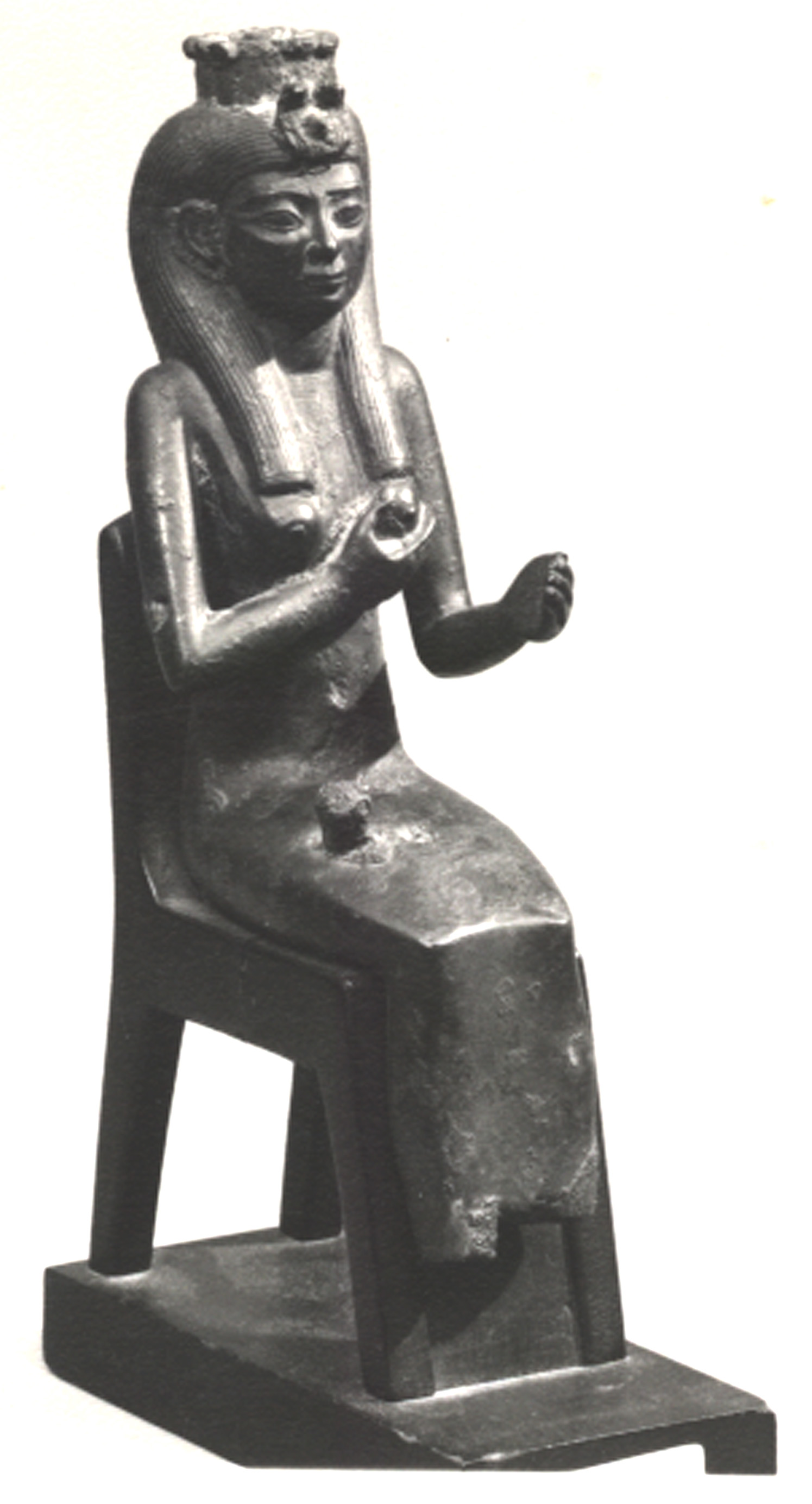
Hymns of Mesomedes · Hymn 06
Isis, Consummation of the Mysteries
Εἰς τὴν Ἶσιν
Prayer and ritual
These hymns may be spoken as complete prayers to the Gods. Within the Temple’s practice, a ritual is a direct theurgical act; hymnody gathers the mind and turns it toward the Divine, helping the initiate enter reverent communion with the Gods.
Use a hymn on its own in place of another prayer, or add it to the prayer portion of a suitable ritual. Choose according to the deity addressed and the petition expressed in the hymn. When combining them, preserve the ritual’s prescribed sequence and let the hymn give voice to its purpose.
The petition of this hymn
For praise of Isis as the unifying consummation of the mysteries and guide of the seasons’ renewing life.
Recite the hymn alone as a prayer of praise to Isis, contemplating the many forms of life gathered in her sacred dance. It may supplement an existing Isiac, initiatory, seasonal, or fertility ritual, especially where the rite honours birth and the ordered renewal of nature.
English hieratic rendering
Hymn 06 · An English rendering aligned with the Greek lines.
- One hymn across the earth
- and aboard ships that traverse the sea
- is sung, in the many forms
- of the mysteries one consummation:
- Isis of the deep-curving horns,
- who of spring, and of summer,
- and of winter guides
- the reins that bring new birth.
- ⟨This⟩ which they call fire,
- the bridal union ⟨of heaven⟩ and of Hades
- and earth’s own marriage,
- the birth-pangs of plants,
- the desires of Cypris,
- the birth of the little child,
- perfect fire beyond utterance,
- the Curetes of Rhea,
- and the harvest of Cronus,
- the stars borne upon chariots,
- all, throughout the sacred courts,
- move in the dance for Isis.
Ancient Greek & pronunciation
Read the English pronunciation spelling directly below each Greek line.
- Εἷς ὕμνος ἀνά τε γᾶνEES EEM-nohs ah-NAH teh GHAHN
- ἀνά τε ναῦς ἁλιπόρουςah-NAH teh NAHFS ah-lee-POH-roos
- ᾄδεται πολυτρόποιςAH-dheh-teh poh-lee-TROH-pees
- ἓν τέλος ἐν ὀργίοις,EHN TEH-lohs ehn ohr-YEE-ees,
- ἁ βαθύκερως Ἶσις,ah vah-THEE-keh-rohs EE-sees,
- ἅ τ’ ἔαρος, ἃ θέρεοςAH t’ EH-ah-rohs, AH THEH-reh-ohs
- ἅ τε χείματος ἄγειAH teh HYEE-mah-tohs AH-yee
- νεογόνους ἡνίας.neh-oh-GHOH-noos ee-NEE-ahs.
- ⟨τοῦτο⟩ τὸ καλεῦσι πῦρTOO-toh TOH kah-LEHF-see PEER
- ⟨οὐρανοῦ τ’⟩ ἄιδου τεoo-rah-NOO t’ AH-ee-dhoo teh
- καὶ χθόνιος ὑμέναιος,KEH KHTHOH-nee-ohs ee-MEH-neh-ohs,
- αἱ φυτῶν ὠδῖνες,eh fee-TOHN oh-DHEE-nehs,
- αἱ Κύπριδος ἵμεροι,eh KEE-pree-dhohs EE-meh-ree,
- τοῦ νηπιάχου γονά,TOO nee-pee-AH-khoo ghoh-NAH,
- πῦρ τέλεον ἄρρητον,PEER TEH-leh-ohn AH-ree-tohn,
- οἱ Ῥέας Κούρητες,ee REH-ahs KOO-ree-tehs,
- ὅ τε Κρόνιος ἄμητος,OH teh KROH-nee-ohs AH-mee-tohs,
- ἄστρα διφρήλατα,AH-strah dhee-FREE-lah-tah,
- πάντα δι’ ἀνακτόρωνPAHN-dah dhee’ ah-nahk-TOH-rohn
- Ἴσιδι χορεύεται.EE-see-dhee khoh-REH-veh-teh.
Short sound guide for English speakers
Every line beneath the Greek uses English pronunciation spellings. Say each hyphenated syllable in sequence and emphasize the syllable in CAPITALS. For example, οὐρανόθεν is oo-rah-NOH-thehn. Read adjacent vowels separately: theh-AH has two syllables; oo-rah-NEE-een has four. Hyphens guide the voice; they do not mark pauses.
| Spelling | Sound to make |
|---|---|
| ah · eh · ee · oh · oo | father · met · see · go without its final glide · moon. Keep these vowels clear in unstressed syllables too. |
| th · dh | The unvoiced th in thin · the voiced th in this. Thus DHEE begins with the sound in “thee.” |
| kh | The ch in Scottish loch or German Bach: let air pass at the back of the mouth, without closing it into a k. |
| hy | The breathy beginning of a carefully spoken Hugh. Raise the middle of the tongue toward the roof of the mouth and let air pass without voice. In shy, sound s followed by hy; do not use the English sh sound or the English word “shy.” |
| gh | Make the kh sound above, then add voice. Keep the passage open; this is a flowing sound, not a hard g. |
| y · g | y as in yes, with gentle friction · always a hard g as in get. |
| r | Tap the tongue lightly behind the upper teeth, or use a light roll. |
| ks · ps | Sound both consonants, even at the beginning of a word: ks as in backs, ps as in lips. |
| n-g · m-b · n-d | Sound the nasal and the following consonant. In AHN-geh-leh, the n-g group is like finger, with the g audible. |
Always sound s as in hiss, even at the end of DHEE-kees; z is voiced, as in zero. All other consonants have their usual English sounds. Initial consonant groups may be unfamiliar: sound every written consonant, without inserting an extra vowel. A word without capitals carries no written stress in the Greek. Where two syllables have capitals, both written accents are retained. An apostrophe marks a vowel already elided in the Greek; do not add it back. A hyphen at the end of a Greek verse joins the unfinished word to the next verse.
These spellings follow the Modern Greek liturgical reading used throughout this library. Breathings and iota subscripts are silent; separately pronounced vowels remain separate. The few Greek consonants without an exact English equivalent use the sound cues above. Ancient vowel length, pitch accent and metre are not reconstructed.
Hymn notes
Sacred meaning
The poem names one hymn and one consummation within manifold mysteries. Its sequence gathers seasonal reins, fire, marriage, vegetal birth, desire, childbirth, the Curetes, the harvest of Cronus, and the stars into a dance for Isis. The images remain distinct while the final movement brings them through her sacred courts; the hymn’s unity does not require erasing the Gods and powers it names.
Textual note
Wilamowitz, Griechische Verskunst (1921), pp. 597–598. This is the complete 20-line hymn as restored in that critical edition. Angle brackets at lines 9 and 10 preserve the editor’s supplements ⟨τοῦτο⟩ and ⟨οὐρανοῦ τ’⟩; their English equivalents are also bracketed. These words are editorial restorations, not an intact manuscript reading. The main text’s τέλεον at line 15 is retained rather than the apparatus reading τέλειον. The compressed marriage sequence at lines 10–11 is rendered across the same two lines; the specific interpretation of the harvest of Cronus remains open.
Text and attribution
Ulrich von Wilamowitz-Moellendorff, Griechische Verskunst (1921), printed main text, pp. 596–599. Greek source. The English hieratic rendering and suggested devotional use are new editorial work. The applications are guidance for this library, not additional lines of the ancient poem.