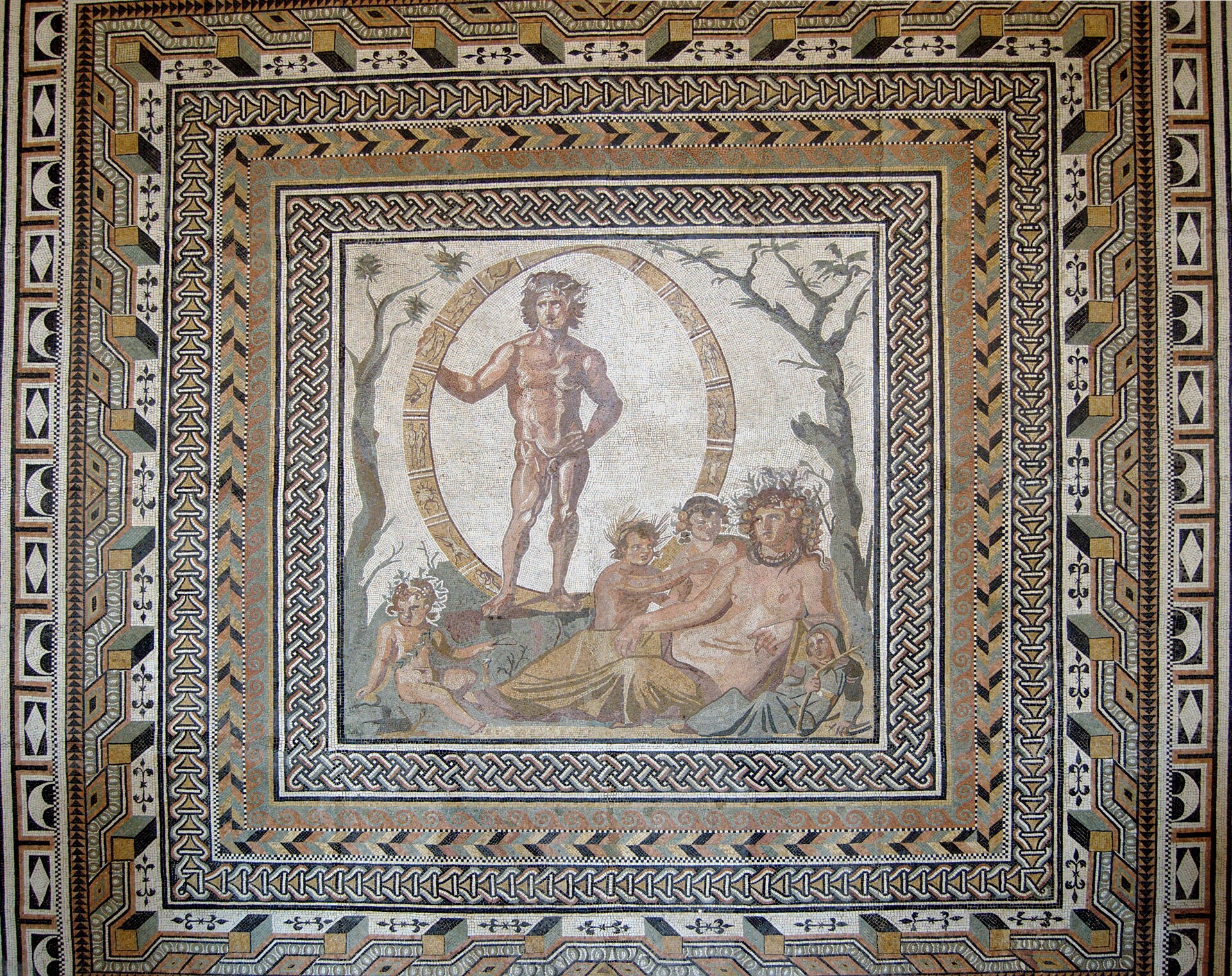

Hymns of Mesomedes · Hymn 05
Physis and the Solar Aion
Εἰς τὴν Φύσιν
Prayer and ritual
These hymns may be spoken as complete prayers to the Gods. Within the Temple’s practice, a ritual is a direct theurgical act; hymnody gathers the mind and turns it toward the Divine, helping the initiate enter reverent communion with the Gods.
Use a hymn on its own in place of another prayer, or add it to the prayer portion of a suitable ritual. Choose according to the deity addressed and the petition expressed in the hymn. When combining them, preserve the ritual’s prescribed sequence and let the hymn give voice to its purpose.
The petition of this hymn
For truthful speech, the soul’s straight course, and the preservation of bodily life under the light of the solar God.
Recite the complete hymn as prayer to Physis and to the solar Aion when seeking integrity of speech and steadiness of life. It may accompany an existing purification, healing, or solar ritual, following the poem’s own movement from the Mother of the cosmos to the Titan’s sustaining regard.
English hieratic rendering
Hymn 05 · An English rendering aligned with the Greek lines.
- O Beginning and Begetting of all,
- most ancient Mother of the cosmos,
- Night and Light and Silence,
- you who keep watch over every utterance
- and announce the children of Zeus
- to Rhea, most glorious.
- For you receive every utterance
- made gentle by the works of humankind.
- And first, for me, may the soul
- advance along the straight line
- by the onward force of a tongue that speaks no falsehood.
- And next may the limbs’ unharmed
- joints and feet endure
- through the allotted measure of this life.
- And you, O God who with radiant beams
- set all the earth alight,
- Aion of flames unquenchable,
- look upon me with your own eyes,
- pouring a pure and holy ray
- upon your own Bacchant, O Paean.
- For toward you I stretch my life,
- dwelling within the flowing substance of limbs.
- Pity, O Titan, so great a
- bondage of a mortal in his frailty.
Ancient Greek & pronunciation
Read the English pronunciation spelling directly below each Greek line.
- Ἀρχὰ καὶ πάντων γένναahr-KHAH KEH PAHN-dohn YEH-nah
- πρεσβίστα κόσμου μήτηρprehz-VEE-stah KOH-zmoo MEE-teer
- καὶ νὺξ καὶ φῶς καὶ σιγά,KEH NEEKS KEH FOHS KEH see-GHAH,
- ἃ φρουρεῖς πάντας μύθουςAH froo-REES PAHN-dahs MEE-thoos
- ἠδ’ ἀγγέλλεις τοὺς Ζηνὸςeedh’ ahn-GEH-lees TOOS zee-NOHS
- παῖδας κυδίστῃ Ῥείῃ.PEH-dhahs kee-DHEE-stee REE-ee.
- δέχῃ γὰρ πάντας μύθουςDHEH-hyee GHAHR PAHN-dahs MEE-thoos
- μειλικτοὺς ἀνδρῶν ἔργοις.mee-leek-TOOS ahn-DHROHN EHR-yees.
- καί μοι πρῶτον μὲν ψυχὰKEH mee PROH-tohn MEHN psee-KHAH
- ὀρθὰν βαίνοι πρὸς γραμμὰνohr-THAHN VEH-nee PROHS ghrah-MAHN
- ἀψευδοῦς γλώσσης ῥύμῃ.ahp-sehv-DHOOS GHLOH-sees REE-mee.
- γυίων δ’ ἀσκηθεῖς αὖθιςYEE-ohn dh’ ah-skee-THEES AHF-thees
- γόμφοι τ’ εἶεν καὶ ταρσοὶGHOHM-fee t’ EE-ehn KEH tahr-SEE
- ζωᾶς ἐς μέτρον τᾶσδε.zoh-AHS ehs MEH-trohn TAHZ-dheh.
- σὺ δ’ ὦ λαμπραῖς ἀκτῖσινSEE dh’ OH lahm-BREHS ahk-TEE-seen
- γαῖαν πᾶσαν πυρσεύων,YEH-ahn PAH-sahn peer-SEH-vohn,
- Αἰὼν ἀσβέστων φλογμῶν,eh-OHN ahz-VEH-stohn flohgh-MOHN,
- ταῖς σαῖς δέρκευ με γλήναιςTEHS SEHS DHEHR-kehv meh GHLEE-nehs
- χεύων ὁλκὰν εὐαγῆHYEH-vohn ohl-KAHN eh-vah-YEE
- τῷ σῷ Παιὰν βακχευτᾷ.TOH SOH peh-AHN vahk-hyehf-TAH.
- εἰς σὲ ζωὰν γὰρ τείνωees SEH zoh-AHN GHAHR TEE-noh
- γυίων ἐνναίων ῥευστοῖς.YEE-ohn eh-NEH-ohn rehf-STEES.
- οἴκτειρον τόσσον ΤιτὰνEEK-tee-rohn TOH-sohn tee-TAHN
- ἀνθρώπου δειλοῦ δεσμόν.ahn-THROH-poo dhee-LOO dheh-ZMOHN.
Short sound guide for English speakers
Every line beneath the Greek uses English pronunciation spellings. Say each hyphenated syllable in sequence and emphasize the syllable in CAPITALS. For example, οὐρανόθεν is oo-rah-NOH-thehn. Read adjacent vowels separately: theh-AH has two syllables; oo-rah-NEE-een has four. Hyphens guide the voice; they do not mark pauses.
| Spelling | Sound to make |
|---|---|
| ah · eh · ee · oh · oo | father · met · see · go without its final glide · moon. Keep these vowels clear in unstressed syllables too. |
| th · dh | The unvoiced th in thin · the voiced th in this. Thus DHEE begins with the sound in “thee.” |
| kh | The ch in Scottish loch or German Bach: let air pass at the back of the mouth, without closing it into a k. |
| hy | The breathy beginning of a carefully spoken Hugh. Raise the middle of the tongue toward the roof of the mouth and let air pass without voice. In shy, sound s followed by hy; do not use the English sh sound or the English word “shy.” |
| gh | Make the kh sound above, then add voice. Keep the passage open; this is a flowing sound, not a hard g. |
| y · g | y as in yes, with gentle friction · always a hard g as in get. |
| r | Tap the tongue lightly behind the upper teeth, or use a light roll. |
| ks · ps | Sound both consonants, even at the beginning of a word: ks as in backs, ps as in lips. |
| n-g · m-b · n-d | Sound the nasal and the following consonant. In AHN-geh-leh, the n-g group is like finger, with the g audible. |
Always sound s as in hiss, even at the end of DHEE-kees; z is voiced, as in zero. All other consonants have their usual English sounds. Initial consonant groups may be unfamiliar: sound every written consonant, without inserting an extra vowel. A word without capitals carries no written stress in the Greek. Where two syllables have capitals, both written accents are retained. An apostrophe marks a vowel already elided in the Greek; do not add it back. A hyphen at the end of a Greek verse joins the unfinished word to the next verse.
These spellings follow the Modern Greek liturgical reading used throughout this library. Breathings and iota subscripts are silent; separately pronounced vowels remain separate. The few Greek consonants without an exact English equivalent use the sound cues above. Ancient vowel length, pitch accent and metre are not reconstructed.
Hymn notes
Sacred meaning
Physis is invoked as the beginning of all, holding Night, Light, and Silence together and receiving human speech in relation to human deeds. The petition joins a truthful tongue and the soul’s straight course with sound joints and feet throughout mortal life. The address then turns to the solar Aion, called Paean and Titan, whose pure ray reaches the worshipper amid the body’s flowing and vulnerable substance.
Textual note
Wilamowitz, Griechische Verskunst (1921), p. 596, with discussion on p. 597. The source heading attributes the hymn to Pythagoras; Wilamowitz prints and discusses it within the Mesomedes material. It is therefore identified here as a hymn transmitted under Pythagoras’s name in the Mesomedean context, without asserting certain personal authorship. The editor’s continuous 24-line main text is followed. Iota adscript in κυδίστηι Ῥείηι, δέχηι, ῥύμηι and τῶι σῶι ... βακχευτᾶι is represented by the equivalent iota subscript. Line 6 takes Ῥείῃ as dative, following the grammatical reading discussed by the editor.
Text and attribution
Ulrich von Wilamowitz-Moellendorff, Griechische Verskunst (1921), printed main text, pp. 596–599. Greek source. The English hieratic rendering and suggested devotional use are new editorial work. The applications are guidance for this library, not additional lines of the ancient poem.