
Hymns of Mesomedes · Hymn 04
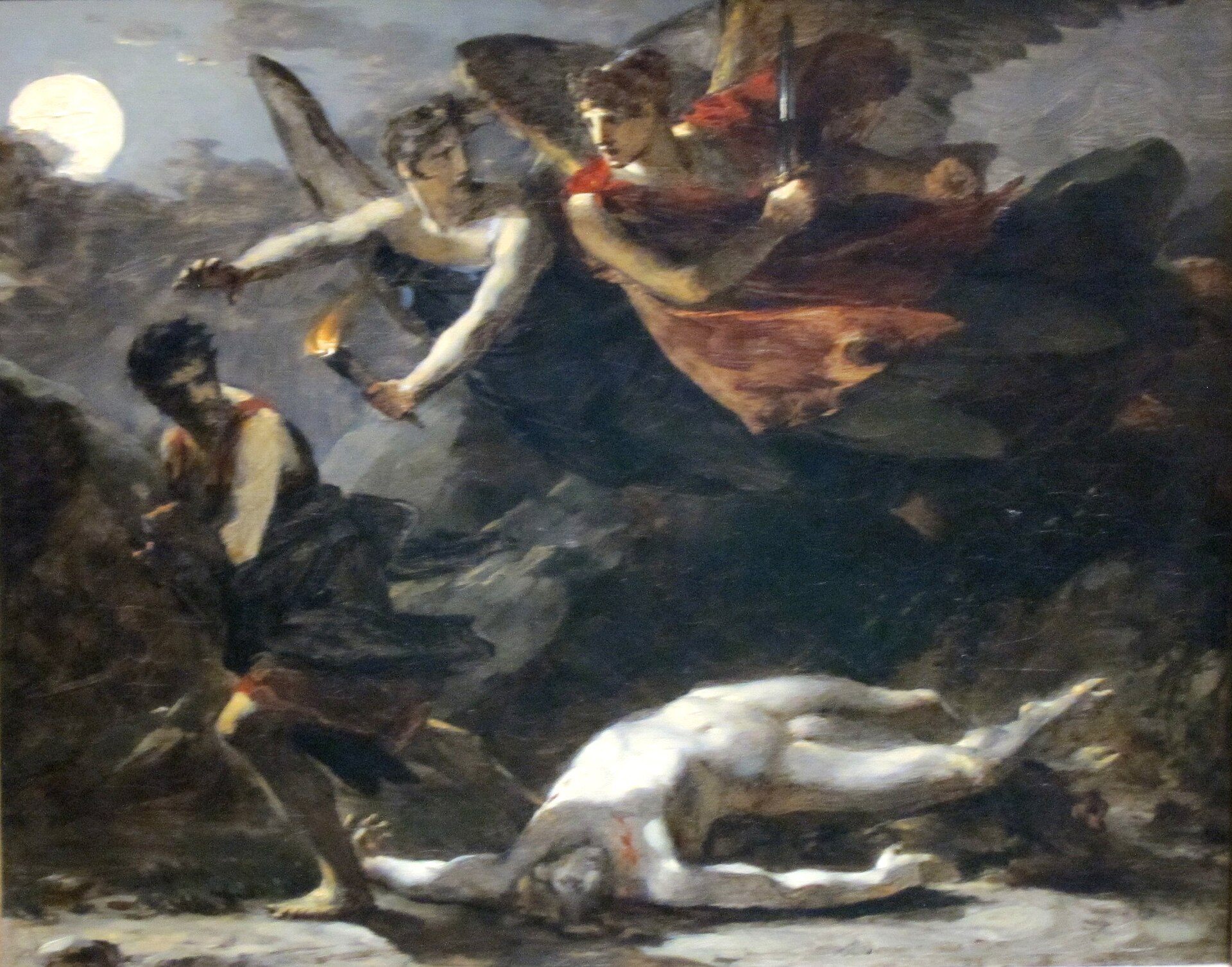
Nemesis: The Measure of Life
Ὕμνος εἰς Νέμεσιν
Prayer and ritual
These hymns may be spoken as complete prayers to the Gods. Within the Temple’s practice, a ritual is a direct theurgical act; hymnody gathers the mind and turns it toward the Divine, helping the initiate enter reverent communion with the Gods.
Use a hymn on its own in place of another prayer, or add it to the prayer portion of a suitable ritual. Choose according to the deity addressed and the petition expressed in the hymn. When combining them, preserve the ritual’s prescribed sequence and let the hymn give voice to its purpose.
The petition of this hymn
For the restoration of just measure and the humbling of destructive arrogance.
Recite as a prayer for justice and right measure in your own life and affairs. In a rite seeking justice, the hymn may accompany the petition, calling upon Nemesis as the Goddess who restrains arrogance and weighs mortal life.
English hieratic rendering
Hymn 04 · An English rendering aligned with the Greek lines.
- O Nemesis, winged balance of life,
- dark-eyed Goddess, daughter of Justice,
- you who restrain the empty snortings of mortals
- with an adamantine bridle;
- hating the ruinous arrogance of humankind,
- you drive black envy away.
- Beneath your restless wheel, where none may tread,
- the gleaming fortune of mortals turns.
- Unseen, you walk close at their feet;
- you bend the neck that rises in pride.
- Ever you measure life by the cubit,
- bowing your brow down toward your bosom,
- holding the balance in your hand.
- Be gracious, blessed minister of justice,
- O Nemesis, winged balance of life.
- We sing Nemesis, the deathless Goddess,
- mighty Victory whose wings stretch wide,
- unerring, and Justice seated beside her,
- you who, in righteous indignation at the vaunting pride of mortals,
- bear it down to Tartarus.
Ancient Greek & pronunciation
Read the English pronunciation spelling directly below each Greek line.
- Νέμεσι, πτερόεσσα βίου ῥοπά,NEH-meh-see, pteh-ROH-eh-sah VEE-oo roh-PAH,
- κυανῶπι θεὰ θύγατερ Δίκας,kee-ah-NOH-pee theh-AH THEE-ghah-tehr DHEE-kahs,
- ἃ κοῦφα φρυάγματα θνατῶνAH KOO-fah free-AHGH-mah-tah thnah-TOHN
- ἐπέχεις ἀδάμαντι χαλινῷ·eh-PEH-hyees ah-DHAH-mahn-dee khah-lee-NOH·
- ἔχθουσα δ’ ὕβριν ὀλοὰν βροτῶνEHKH-thoo-sah dh’ EE-vreen oh-loh-AHN vroh-TOHN
- μέλανα φθόνον ἐκτὸς ἐλαύνεις.MEH-lah-nah FTHOH-nohn ehk-TOHS eh-LAHV-nees.
- Ὑπὸ σὸν τροχὸν ἄστατον ἀστιβῆee-POH SOHN troh-KHOHN AH-stah-tohn ah-stee-VEE
- χαροπὰ μερόπων στρέφεται τύχα·khah-roh-PAH meh-ROH-pohn STREH-feh-teh TEE-khah·
- λήθουσα δὲ πὰρ πόδα βαίνεις,LEE-thoo-sah DHEH PAHR POH-dhah VEH-nees,
- γαυρούμενον αὐχένα κλίνεις.ghah-VROO-meh-nohn ahf-HYEH-nah KLEE-nees.
- Ὑπὸ πῆχυν ἀεὶ βίοτον μετρεῖς,ee-POH PEE-hyeen ah-EE VEE-oh-tohn meh-TREES,
- νεύεις δ’ ὑπὸ κόλπον ὄφρυν κάτωNEH-vees dh’ ee-POH KOHL-pohn OH-freen KAH-toh
- ζυγὸν μετὰ χεῖρα κρατοῦσα.zee-GHOHN meh-TAH HYEE-rah krah-TOO-sah.
- Ἵλαθι μάκαιρα δικασπόλε,EE-lah-thee MAH-keh-rah dhee-kah-SPOH-leh,
- Νέμεσι, πτερόεσσα βίου ῥοπά.NEH-meh-see, pteh-ROH-eh-sah VEE-oo roh-PAH.
- Νέμεσιν θεὸν ᾄδομεν ἀφθίταν,NEH-meh-seen theh-OHN AH-dhoh-mehn ahf-THEE-tahn,
- νίκην τανυσίπτερον ὀμβρίμαν,NEE-keen tah-nee-SEEP-teh-rohn ohm-VREE-mahn,
- νημερτέα καὶ πάρεδρον Δίκαν,nee-mehr-TEH-ah KEH PAH-reh-dhrohn DHEE-kahn,
- ἃ τὰν μεγαλανορίαν βροτῶνAH TAHN meh-ghah-lah-noh-REE-ahn vroh-TOHN
- νεμεσῶσα φέρεις κατὰ ταρτάρου.neh-meh-SOH-sah FEH-rees kah-TAH tahr-TAH-roo.
Short sound guide for English speakers
Every line beneath the Greek uses English pronunciation spellings. Say each hyphenated syllable in sequence and emphasize the syllable in CAPITALS. For example, οὐρανόθεν is oo-rah-NOH-thehn. Read adjacent vowels separately: theh-AH has two syllables; oo-rah-NEE-een has four. Hyphens guide the voice; they do not mark pauses.
| Spelling | Sound to make |
|---|---|
| ah · eh · ee · oh · oo | father · met · see · go without its final glide · moon. Keep these vowels clear in unstressed syllables too. |
| th · dh | The unvoiced th in thin · the voiced th in this. Thus DHEE begins with the sound in “thee.” |
| kh | The ch in Scottish loch or German Bach: let air pass at the back of the mouth, without closing it into a k. |
| hy | The breathy beginning of a carefully spoken Hugh. Raise the middle of the tongue toward the roof of the mouth and let air pass without voice. In shy, sound s followed by hy; do not use the English sh sound or the English word “shy.” |
| gh | Make the kh sound above, then add voice. Keep the passage open; this is a flowing sound, not a hard g. |
| y · g | y as in yes, with gentle friction · always a hard g as in get. |
| r | Tap the tongue lightly behind the upper teeth, or use a light roll. |
| ks · ps | Sound both consonants, even at the beginning of a word: ks as in backs, ps as in lips. |
| n-g · m-b · n-d | Sound the nasal and the following consonant. In AHN-geh-leh, the n-g group is like finger, with the g audible. |
Always sound s as in hiss, even at the end of DHEE-kees; z is voiced, as in zero. All other consonants have their usual English sounds. Initial consonant groups may be unfamiliar: sound every written consonant, without inserting an extra vowel. A word without capitals carries no written stress in the Greek. Where two syllables have capitals, both written accents are retained. An apostrophe marks a vowel already elided in the Greek; do not add it back. A hyphen at the end of a Greek verse joins the unfinished word to the next verse.
These spellings follow the Modern Greek liturgical reading used throughout this library. Breathings and iota subscripts are silent; separately pronounced vowels remain separate. The few Greek consonants without an exact English equivalent use the sound cues above. Ancient vowel length, pitch accent and metre are not reconstructed.
Hymn notes
Sacred meaning
Nemesis is the winged turning of life and the daughter of Dike. Her bridle restrains empty pride; her wheel changes fortune, and her measure reveals the limits of mortal power. The final praise unites her with mighty Victory and with Justice at her side, while asking that she receive the worshipper graciously.
Textual note
The full twenty-line text follows Jan, including the closing praise. Its imagery of brow, bosom and balance in verses 11–13 is preserved without substituting a different action. In verses 16–18 Nemesis, Victory and Dike are closely associated; the rendering keeps that association and the presence of Dike beside her.
Text and attribution
Carl von Jan, Musici scriptores Graeci, Supplementum: Melodiarum reliquiae (1899). Greek transcribed from the printed score; musical syllable separators are joined to recover ordinary words. Musical notation is not reproduced. Printed pp. 54–59. Greek source. The English hieratic rendering and suggested devotional use are new editorial work. The applications are guidance for this library, not additional lines of the ancient poem.