.jpg)
Hymns of Mesomedes · Hymn 03
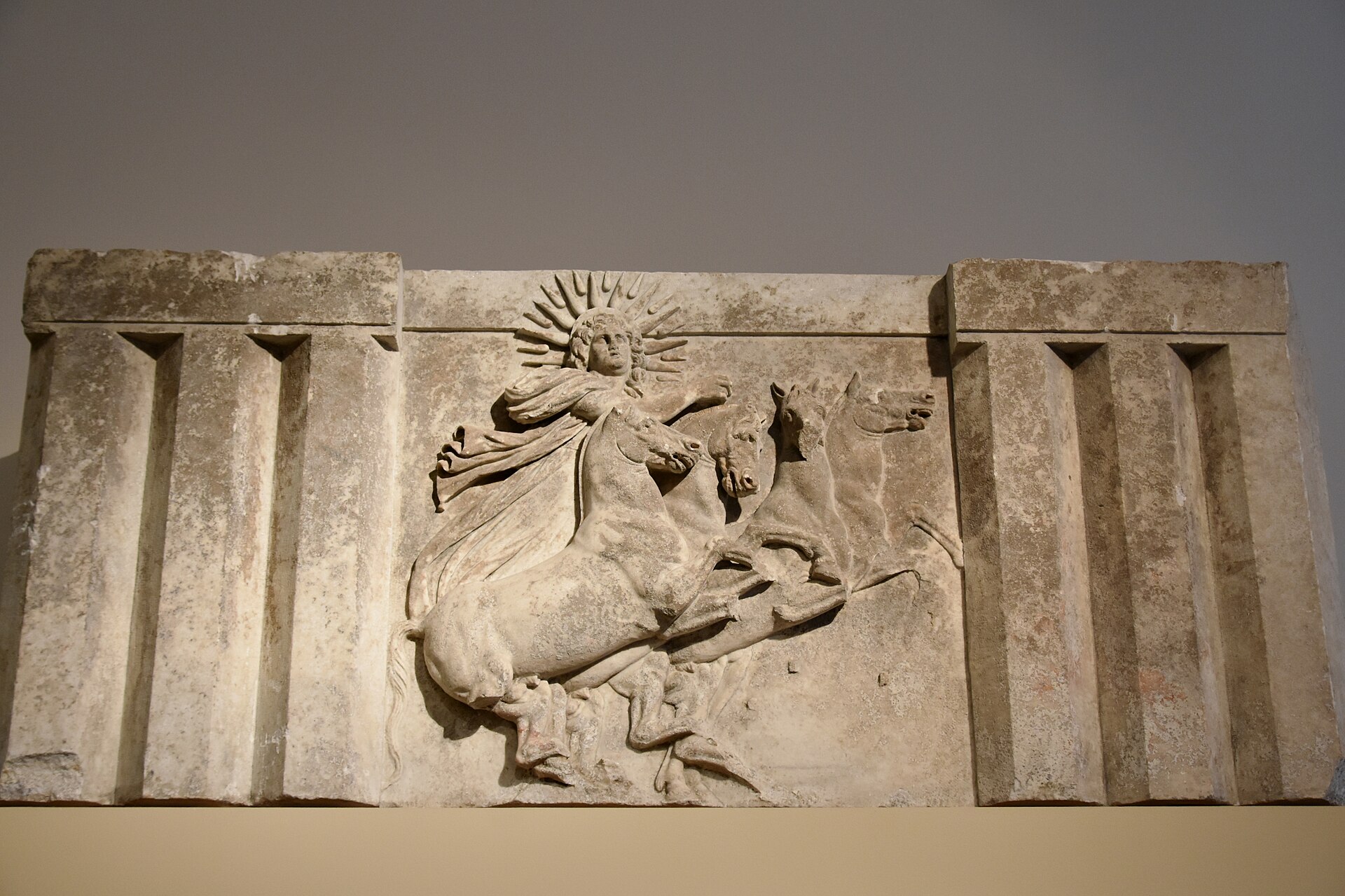
Helios: The Radiance of Day
Ὕμνος εἰς Ἥλιον
Prayer and ritual
These hymns may be spoken as complete prayers to the Gods. Within the Temple’s practice, a ritual is a direct theurgical act; hymnody gathers the mind and turns it toward the Divine, helping the initiate enter reverent communion with the Gods.
Use a hymn on its own in place of another prayer, or add it to the prayer portion of a suitable ritual. Choose according to the deity addressed and the petition expressed in the hymn. When combining them, preserve the ritual’s prescribed sequence and let the hymn give voice to its purpose.
The petition of this hymn
For reverent attention to the light that orders the day and harmonises the heavens.
Recite at dawn or before a solar rite, allowing the opening call to stillness to prepare the mind. The hymn may stand alone as praise of Helios, with contemplation of the ordered movement of Sun, Moon and stars.
English hieratic rendering
Hymn 03 · An English rendering aligned with the Greek lines.
- Let the whole Aether keep reverent silence,
- Earth and sea and the breathing winds;
- let mountains and valleys fall still,
- and the echoes and voices of birds.
- For he is about to come among us:
- Phoebus of the unshorn, beautiful hair.
- O Father of Dawn whose eyelids shine like snow,
- you who drive the rosy chariot of your steeds
- upon their winged footsteps,
- glorying in your golden hair,
- around the boundless vault of Heaven
- weaving your ray through its many turnings,
- circling the all-seeing fountain of radiance
- about the whole Earth.
- The rivers of your immortal fire
- bring forth the lovely day.
- For you the clear-sky chorus of the stars
- dances through sovereign Olympus,
- ever singing its untrammelled song,
- delighting in the lyre of Phoebus.
- Before you the bright-eyed Moon
- leads the measured season of time,
- drawn onward by her white young bulls.
- And the gracious Mind rejoices in you,
- turning the cosmos through its many pathways.
Ancient Greek & pronunciation
Read the English pronunciation spelling directly below each Greek line.
- Εὐφαμείτω πᾶς αἰθήρ,eh-fah-MEE-toh PAHS eh-THEER,
- γῆ καὶ πόντος καὶ πνοαί,YEE KEH POHN-dohs KEH pnoh-EH,
- οὔρεα τέμπεα σιγάτω,OO-reh-ah TEHM-beh-ah see-GHAH-toh,
- ἦχοι φθόγγοι τ’ ὀρνίθων.EE-hyee FTHOHN-gee t’ ohr-NEE-thohn.
- μέλλει γὰρ πρὸς ἡμᾶς βαίνεινMEH-lee GHAHR PROHS ee-MAHS VEH-neen
- Φοῖβος ἀκερσεκόμας εὐχαίτας.FEE-vohs ah-kehr-seh-KOH-mahs ehf-HYEH-tahs.
- Χιονοβλεφάρου πάτερ Ἀοῦς,hyee-oh-noh-vleh-FAH-roo PAH-tehr ah-OOS,
- ῥοδόεσσαν ὃς ἄντυγα πώλωνroh-DHOH-eh-sahn OHS AHN-dee-ghah POH-lohn
- πτανοῖς ὑπ’ ἴχνεσσι διώκεις,ptah-NEES eep’ EEKH-neh-see dhee-OH-kees,
- χρυσέαισιν ἀγαλλόμενος κόμαις,khree-SEH-eh-seen ah-ghah-LOH-meh-nohs KOH-mehs,
- περὶ νῶτον ἀπείριτον οὐρανοῦpeh-REE NOH-tohn ah-PEE-ree-tohn oo-rah-NOO
- ἀκτῖνα πολύστροφον ἀμπλέκων,ahk-TEE-nah poh-LEE-stroh-fohn ahm-BLEH-kohn,
- αἴγλας πολυδερκέα παγὰνEH-ghlahs poh-lee-dhehr-KEH-ah pah-GHAHN
- περὶ γαῖαν ἅπασαν ἑλίσσων·peh-REE YEH-ahn AH-pah-sahn eh-LEE-sohn·
- ποταμοὶ δὲ σέθεν πυρὸς ἀμβρότουpoh-tah-MEE DHEH SEH-thehn pee-ROHS ahm-VROH-too
- τίκτουσιν ἐπήρατον ἁμέραν.TEEK-too-seen eh-PEE-rah-tohn ah-MEH-rahn.
- Σοὶ μὲν χορὸς εὔδιος ἀστέρωνSEE MEHN khoh-ROHS EHV-dhee-ohs ah-STEH-rohn
- κατ’ Ὄλυμπον ἄνακτα χορεύειkaht’ OH-leem-bohn AH-nahk-tah khoh-REH-vee
- ἄνετον μέλος αἰὲν ἀείδων,AH-neh-tohn MEH-lohs eh-EHN ah-EE-dhohn,
- Φοιβηΐδι τερπόμενος λύρᾳ.fee-vee-EE-dhee tehr-POH-meh-nohs LEE-rah.
- Γλαυκὰ δὲ πάροιθε Σελάναghlahf-KAH DHEH PAH-ree-theh seh-LAH-nah
- χρόνον ὥριον ἁγεμονεύειKHROH-nohn OH-ree-ohn ah-yeh-moh-NEH-vee
- λευκῶν ὑπὸ σύρμασι μόσχων·lehf-KOHN ee-POH SEER-mah-see MOHS-khohn·
- γάνυται δέ τέ σοι νόος εὐμενὴςGHAH-nee-teh DHEH TEH see NOH-ohs ehv-meh-NEES
- πολυοίμονα κόσμον ἑλίσσων.poh-lee-EE-moh-nah KOH-zmohn eh-LEE-sohn.
Short sound guide for English speakers
Every line beneath the Greek uses English pronunciation spellings. Say each hyphenated syllable in sequence and emphasize the syllable in CAPITALS. For example, οὐρανόθεν is oo-rah-NOH-thehn. Read adjacent vowels separately: theh-AH has two syllables; oo-rah-NEE-een has four. Hyphens guide the voice; they do not mark pauses.
| Spelling | Sound to make |
|---|---|
| ah · eh · ee · oh · oo | father · met · see · go without its final glide · moon. Keep these vowels clear in unstressed syllables too. |
| th · dh | The unvoiced th in thin · the voiced th in this. Thus DHEE begins with the sound in “thee.” |
| kh | The ch in Scottish loch or German Bach: let air pass at the back of the mouth, without closing it into a k. |
| hy | The breathy beginning of a carefully spoken Hugh. Raise the middle of the tongue toward the roof of the mouth and let air pass without voice. In shy, sound s followed by hy; do not use the English sh sound or the English word “shy.” |
| gh | Make the kh sound above, then add voice. Keep the passage open; this is a flowing sound, not a hard g. |
| y · g | y as in yes, with gentle friction · always a hard g as in get. |
| r | Tap the tongue lightly behind the upper teeth, or use a light roll. |
| ks · ps | Sound both consonants, even at the beginning of a word: ks as in backs, ps as in lips. |
| n-g · m-b · n-d | Sound the nasal and the following consonant. In AHN-geh-leh, the n-g group is like finger, with the g audible. |
Always sound s as in hiss, even at the end of DHEE-kees; z is voiced, as in zero. All other consonants have their usual English sounds. Initial consonant groups may be unfamiliar: sound every written consonant, without inserting an extra vowel. A word without capitals carries no written stress in the Greek. Where two syllables have capitals, both written accents are retained. An apostrophe marks a vowel already elided in the Greek; do not add it back. A hyphen at the end of a Greek verse joins the unfinished word to the next verse.
These spellings follow the Modern Greek liturgical reading used throughout this library. Breathings and iota subscripts are silent; separately pronounced vowels remain separate. The few Greek consonants without an exact English equivalent use the sound cues above. Ancient vowel length, pitch accent and metre are not reconstructed.
Hymn notes
Sacred meaning
The opening hush prepares creation for the coming of Phoebus. The solar praise then unfolds through golden hair, the circling ray, and the rivers of immortal fire that bring forth day. Stars and Moon participate in this ordered chorus, while a benevolent mind rejoices in the many courses of the cosmos.
Textual note
The six-line call to sacred silence is retained before the nineteen-line solar hymn, as in Jan’s edition. Jan’s main text reads παγὰν, “fountain,” in verse 13, and πολυοίμονα, “of many pathways,” in verse 25. These readings are preserved rather than replaced by alternatives from other editions.
Text and attribution
Carl von Jan, Musici scriptores Graeci, Supplementum: Melodiarum reliquiae (1899). Greek transcribed from the printed score; musical syllable separators are joined to recover ordinary words. Musical notation is not reproduced. Printed pp. 48–55. Greek source. The English hieratic rendering and suggested devotional use are new editorial work. The applications are guidance for this library, not additional lines of the ancient poem.