,_Archaeological_museum_Narona,_Vid,_Croatia_(11528135523).jpg)
Homeric Hymns · Hymn 33
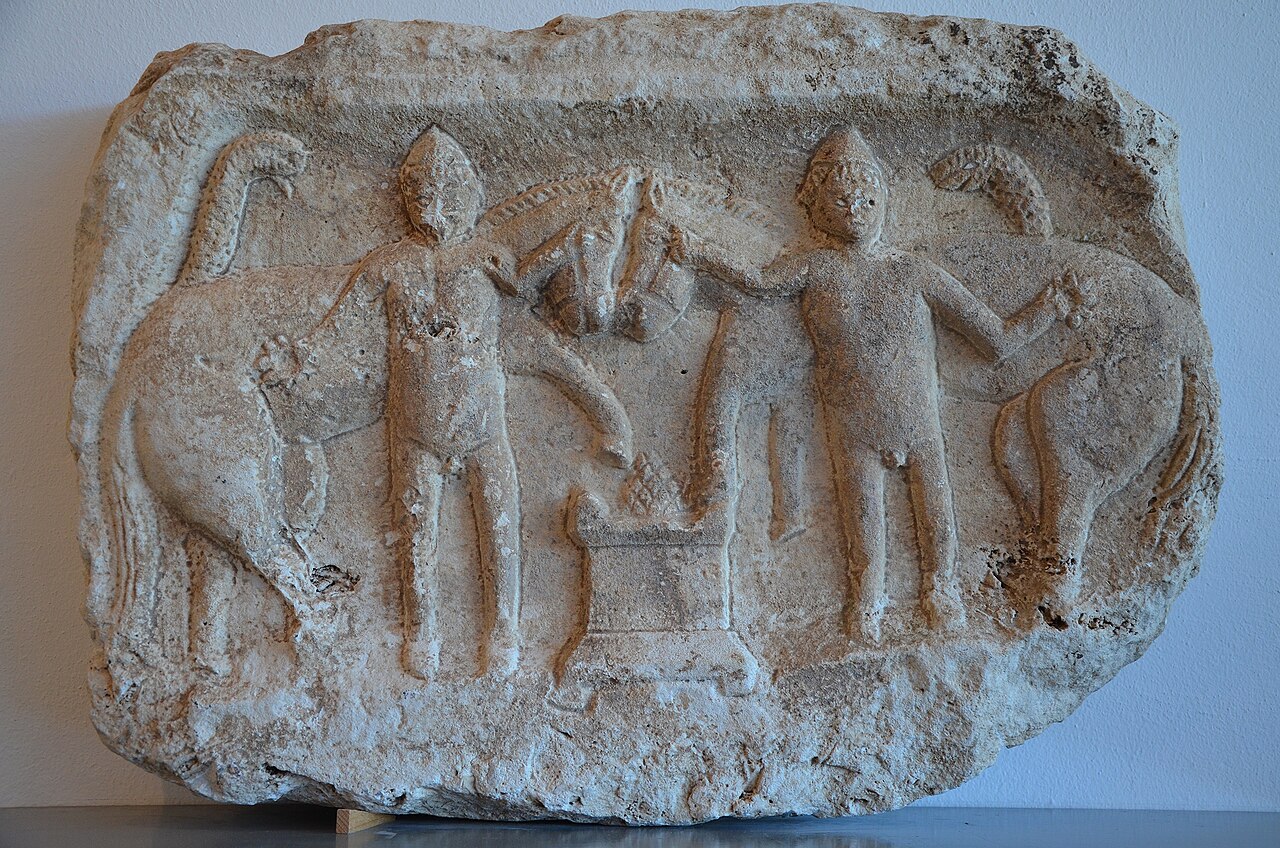
Dioskouroi, Rescuers at Sea
Διόσκουροι
Prayer and ritual
These hymns may be spoken as complete prayers to the Gods. Within the Temple’s practice, a ritual is a direct theurgical act; hymnody gathers the mind and turns it toward the Divine, helping the initiate enter reverent communion with the Gods.
Use a hymn on its own in place of another prayer, or add it to the prayer portion of a suitable ritual. Choose according to the deity addressed and the petition expressed in the hymn. When combining them, preserve the ritual’s prescribed sequence and let the hymn give voice to its purpose.
The petition of this hymn
Invoke the Dioskouroi’s saving presence for seafarers exposed to storms and hardship.
Read the hymn as a prayer before a voyage or as thanksgiving for safe return. It may supplement a protective rite for travellers, with the sudden divine appearance and the calming of wind and waves furnishing the central sacred images.
English hieratic rendering
Hymn 33 · An English rendering aligned with the Greek lines.
- Tell of the sons of Zeus, Muses with flashing eyes,
- the sons of Tyndareos, splendid children of Leda of the lovely ankles,
- Kastor the tamer of horses and blameless Polydeukes,
- whom, beneath the summit of the great mountain Taygetos,
- having joined in love with the Son of Kronos of the dark clouds,
- she bore as sons who save the people upon the Earth
- and swift sailing ships when winter storms
- rage over the pitiless Sea. From their ships the sailors
- call in prayer upon the sons of great Zeus,
- with white lambs, having climbed to the highest part
- of the stern; the mighty wind and the wave of the Sea
- have thrust it beneath the water. Suddenly the Gods appear,
- darting through the aether on tawny wings,
- and at once still the gusts of violent winds,
- and lay smooth the waves upon the expanse of the white Sea,
- beautiful signs of release from toil. At the sight
- people rejoice, and cease from their grievous labour.
- Hail, sons of Tyndareos, riders upon swift horses;
- and I shall remember both you and another song.
Ancient Greek & pronunciation
Read the English pronunciation spelling directly below each Greek line.
- ἀμφὶ Διὸς κούρους, ἑλικώπιδες ἔσπετε Μοῦσαι,ahm-FEE dhee-OHS KOO-roos, eh-lee-KOH-pee-dhehs EH-speh-teh MOO-seh,
- Τυνδαρίδας, Λήδης καλλισφύρου ἀγλαὰ τέκνα,teen-dhah-REE-dhahs, LEE-dhees kah-lee-SFEE-roo ah-ghlah-AH TEHK-nah,
- Κάστορά θ’ ἱππόδαμον καὶ ἀμώμητον Πολυδεύκεα,KAH-stoh-RAH th’ ee-POH-dhah-mohn KEH ah-MOH-mee-tohn poh-lee-DHEHF-keh-ah,
- τοὺς ὑπὸ Ταϋγέτου κορυφῇ ὄρεος μεγάλοιοTOOS ee-POH tah-ee-YEH-too koh-ree-FEE OH-reh-ohs meh-GHAH-lee-oh
- μιχθεῖσ’ ἐν φιλότητι κελαινεφέι Κρονίωνιmeekh-THEES’ ehn fee-LOH-tee-tee keh-leh-neh-FEH-ee kroh-NEE-oh-nee
- σωτῆρας τέκε παῖδας ἐπιχθονίων ἀνθρώπωνsoh-TEE-rahs TEH-keh PEH-dhahs eh-peekh-thoh-NEE-ohn ahn-THROH-pohn
- ὠκυπόρων τε νεῶν, ὅτε τε σπέρχωσιν ἄελλαιoh-kee-POH-rohn teh neh-OHN, OH-teh teh SPEHR-khoh-seen AH-eh-leh
- χειμέριαι κατὰ πόντον ἀμείλιχον· οἳ δ’ ἀπὸ νηῶνhyee-MEH-ree-eh kah-TAH POHN-dohn ah-MEE-lee-khohn· EE dh’ ah-POH nee-OHN
- εὐχόμενοι καλέουσι Διὸς κούρους μεγάλοιοehf-KHOH-meh-nee kah-LEH-oo-see dhee-OHS KOO-roos meh-GHAH-lee-oh
- ἄρνεσσιν λευκοῖσιν, ἐπ’ ἀκρωτήρια βάντεςAHR-neh-seen lehf-KEE-seen, ehp’ ah-kroh-TEE-ree-ah VAHN-dehs
- πρύμνης· τὴν δ’ ἄνεμός τε μέγας καὶ κῦμα θαλάσσηςPREEM-nees· TEEN dh’ AH-neh-MOHS teh MEH-ghahs KEH KEE-mah thah-LAH-sees
- θῆκαν ὑποβρυχίην· οἳ δ’ ἐξαπίνης ἐφάνησανTHEE-kahn ee-poh-vree-HYEE-een· EE dh’ ehk-sah-PEE-nees eh-FAH-nee-sahn
- ξουθῇσι πτερύγεσσι δι’ αἰθέρος ἀίξαντες,ksoo-THEE-see pteh-REE-yeh-see dhee’ eh-THEH-rohs ah-EEK-sahn-dehs,
- αὐτίκα δ’ ἀργαλέων ἀνέμων κατέπαυσαν ἀέλλας,ahf-TEE-kah dh’ ahr-ghah-LEH-ohn ah-NEH-mohn kah-TEH-pahf-sahn ah-EH-lahs,
- κύματα δ’ ἐστόρεσαν λευκῆς ἁλὸς ἐν πελάγεσσι,KEE-mah-tah dh’ eh-STOH-reh-sahn lehf-KEES ah-LOHS ehn peh-LAH-yeh-see,
- σήματα καλά, πόνου ἀπονόσφισιν· οἳ δὲ ἰδόντεςSEE-mah-tah kah-LAH, POH-noo ah-poh-NOH-sfee-seen· EE DHEH ee-DHOHN-dehs
- γήθησαν, παύσαντο δ’ ὀιζυροῖο πόνοιο.YEE-thee-sahn, PAHF-sahn-doh dh’ oh-ee-zee-REE-oh POH-nee-oh.
- χαίρετε, Τυνδαρίδαι, ταχέων ἐπιβήτορες ἵππων·HYEH-reh-teh, teen-dhah-REE-dheh, tah-HYEH-ohn eh-pee-VEE-toh-rehs EE-pohn·
- αὐτὰρ ἐγὼν ὑμέων τε καὶ ἄλλης μνήσομ’ ἀοιδῆς.ahf-TAHR eh-GHOHN ee-MEH-ohn teh KEH AH-lees MNEE-sohm’ ah-ee-DHEES.
Short sound guide for English speakers
Every line beneath the Greek uses English pronunciation spellings. Say each hyphenated syllable in sequence and emphasize the syllable in CAPITALS. For example, οὐρανόθεν is oo-rah-NOH-thehn. Read adjacent vowels separately: theh-AH has two syllables; oo-rah-NEE-een has four. Hyphens guide the voice; they do not mark pauses.
| Spelling | Sound to make |
|---|---|
| ah · eh · ee · oh · oo | father · met · see · go without its final glide · moon. Keep these vowels clear in unstressed syllables too. |
| th · dh | The unvoiced th in thin · the voiced th in this. Thus DHEE begins with the sound in “thee.” |
| kh | The ch in Scottish loch or German Bach: let air pass at the back of the mouth, without closing it into a k. |
| hy | The breathy beginning of a carefully spoken Hugh. Raise the middle of the tongue toward the roof of the mouth and let air pass without voice. In shy, sound s followed by hy; do not use the English sh sound or the English word “shy.” |
| gh | Make the kh sound above, then add voice. Keep the passage open; this is a flowing sound, not a hard g. |
| y · g | y as in yes, with gentle friction · always a hard g as in get. |
| r | Tap the tongue lightly behind the upper teeth, or use a light roll. |
| ks · ps | Sound both consonants, even at the beginning of a word: ks as in backs, ps as in lips. |
| n-g · m-b · n-d | Sound the nasal and the following consonant. In AHN-geh-leh, the n-g group is like finger, with the g audible. |
Always sound s as in hiss, even at the end of DHEE-kees; z is voiced, as in zero. All other consonants have their usual English sounds. Initial consonant groups may be unfamiliar: sound every written consonant, without inserting an extra vowel. A word without capitals carries no written stress in the Greek. Where two syllables have capitals, both written accents are retained. An apostrophe marks a vowel already elided in the Greek; do not add it back. A hyphen at the end of a Greek verse joins the unfinished word to the next verse.
These spellings follow the Modern Greek liturgical reading used throughout this library. Breathings and iota subscripts are silent; separately pronounced vowels remain separate. The few Greek consonants without an exact English equivalent use the sound cues above. Ancient vowel length, pitch accent and metre are not reconstructed.
Hymn notes
Sacred meaning
The sailors call from a stern already overwhelmed by the Sea, and the brothers appear swiftly through the aether. Their presence becomes recognizable in the stilling of the storm and the return of gladness. The hymn presents divine rescue through signs that transform immediate human distress.
Textual note
The white lambs belong to the ancient narrative of supplication. Their mention is translated in full; this page does not turn the narrative into a newly prescribed performance direction.
Text and attribution
Greek text: Hugh G. Evelyn-White, Hymn 33 To the Dioscuri (1914), Perseus Digital Library. Greek source. The English hieratic rendering and suggested devotional use are new editorial work. The applications are guidance for this library, not additional lines of the ancient poem.