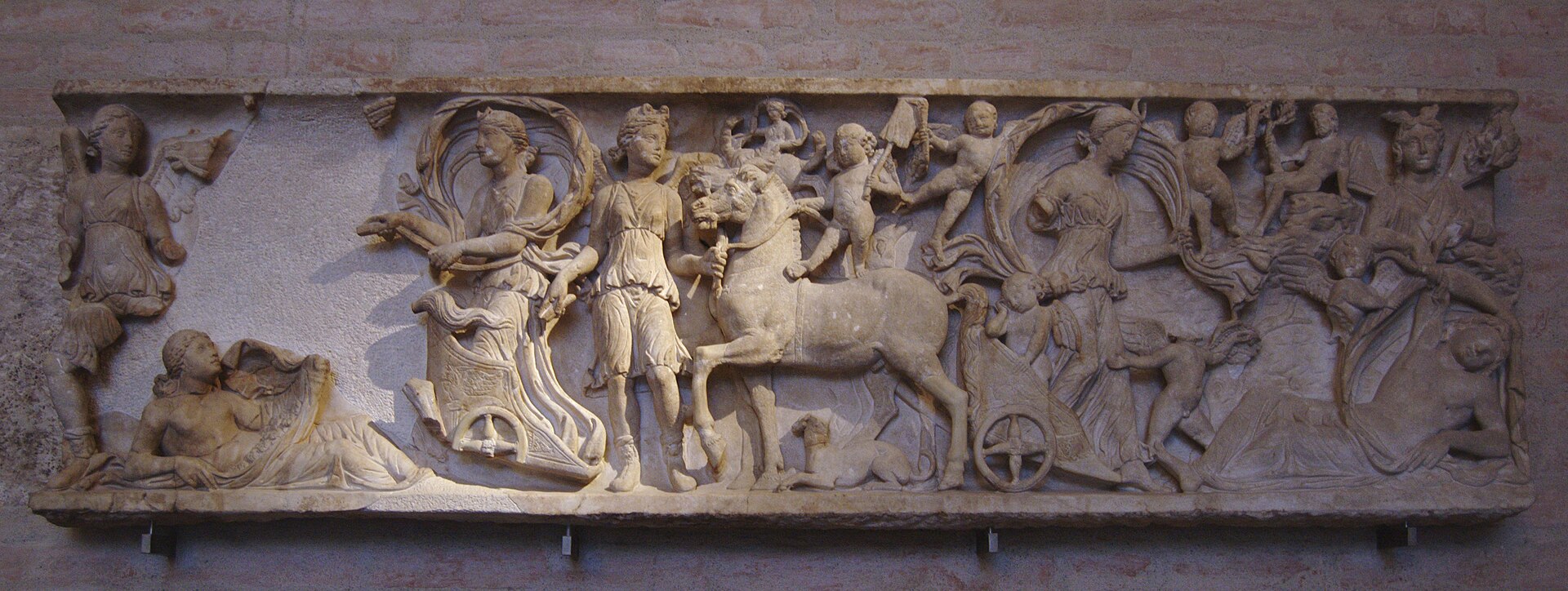

Homeric Hymns · Hymn 32
Selene, Radiant Moon
Σελήνη
Prayer and ritual
These hymns may be spoken as complete prayers to the Gods. Within the Temple’s practice, a ritual is a direct theurgical act; hymnody gathers the mind and turns it toward the Divine, helping the initiate enter reverent communion with the Gods.
Use a hymn on its own in place of another prayer, or add it to the prayer portion of a suitable ritual. Choose according to the deity addressed and the petition expressed in the hymn. When combining them, preserve the ritual’s prescribed sequence and let the hymn give voice to its purpose.
The petition of this hymn
Honour Selene’s light, full orb, and signs through the changing month.
Offer this hymn as a standalone prayer during lunar contemplation. It may supplement a rite concerned with the ordering of time or the clarity of sacred attention, keeping its emphasis on Selene’s visible radiance and the sign she offers to mortals.
English hieratic rendering
Hymn 32 · An English rendering aligned with the Greek lines.
- Tell me, Muses, how to sing the Moon with her far spreading wings,
- sweet voiced daughters of Zeus, Son of Kronos, knowers of song.
- From her immortal head a radiance shown in Heaven
- encircles Earth, and great beauty arises
- beneath her shining light; the unlit air gleams
- from her golden crown, and her rays dwell within it,
- when, having bathed her lovely body in Okeanos,
- and clothed herself in garments shining far, divine Selene
- has yoked her horses with proud necks, gleaming,
- and eagerly drives onward the steeds with lovely manes,
- at evening, in the middle of the month. Then her great orb grows full,
- and her rays become most brilliant as she waxes
- from Heaven; a sure token and a sign she stands for mortals.
- Once the Son of Kronos joined with her in love and in the bed;
- and, conceiving, she bore the Maiden Pandeia,
- whose beauty is distinguished among the immortal Gods.
- Hail, sovereign Lady, Goddess of the white arms, divine Selene,
- kindly and lovely haired. Beginning with you, I shall sing the glorious deeds
- of men who are demigods, whose works the singers celebrate,
- servants of the Muses, from their lovely mouths.
Ancient Greek & pronunciation
Read the English pronunciation spelling directly below each Greek line.
- μήνην ἀείδειν τανυσίπτερον ἔσπετε, Μοῦσαι,MEE-neen ah-EE-dheen tah-nee-SEEP-teh-rohn EH-speh-teh, MOO-seh,
- ἡδυεπεῖς κοῦραι Κρονίδεω Διός, ἵστορες ᾠδῆς·ee-dhee-eh-PEES KOO-reh kroh-NEE-dheh-oh dhee-OHS, EE-stoh-rehs oh-DHEES·
- ἧς ἄπο αἴγλη γαῖαν ἑλίσσεται οὐρανόδεικτοςEES AH-poh EH-ghlee YEH-ahn eh-LEE-seh-teh oo-rah-NOH-dheek-tohs
- κρατὸς ἀπʼ ἀθανάτοιο, πολὺς δʼ ὑπὸ κόσμος ὄρωρενkrah-TOHS ahp’ ah-thah-NAH-tee-oh, poh-LEES dh’ ee-POH KOH-zmohs OH-roh-rehn
- αἴγλης λαμπούσης· στίλβει δέ τʼ ἀλάμπετος ἀὴρEH-ghlees lahm-BOO-sees· STEEL-vee DHEH t’ ah-LAHM-beh-tohs ah-EER
- χρυσέου ἀπὸ στεφάνου, ἀκτῖνες δʼ ἐνδιάονται,khree-SEH-oo ah-POH steh-FAH-noo, ahk-TEE-nehs dh’ ehn-dhee-AH-ohn-deh,
- εὖτʼ ἂν ἀπʼ Ὠκεανοῖο λοεσσαμένη χρόα καλόν,EHFT’ AHN ahp’ oh-keh-ah-NEE-oh loh-eh-sah-MEH-nee KHROH-ah kah-LOHN,
- εἵματα ἑσσαμένη τηλαυγέα δῖα Σελήνη,EE-mah-tah eh-sah-MEH-nee tee-lahv-YEH-ah DHEE-ah seh-LEE-nee,
- ζευξαμένη πώλους ἐριαύχενας, αἰγλήεντας,zehfk-sah-MEH-nee POH-loos eh-ree-AHF-hyeh-nahs, eh-GHLEE-ehn-dahs,
- ἐσσυμένως προτέρωσʼ ἐλάσῃ καλλίτριχας ἵππους,eh-see-MEH-nohs proh-TEH-rohs’ eh-LAH-see kah-LEE-tree-khahs EE-poos,
- ἑσπερίη, διχόμηνος· ὃ δὲ πλήθει μέγας ὄγμοςeh-speh-REE-ee, dhee-KHOH-mee-nohs· OH DHEH PLEE-thee MEH-ghahs OHGH-mohs
- λαμπρόταταί τʼ αὐγαὶ τότʼ ἀεξομένης τελέθουσινlahm-BROH-tah-TEH t’ ahv-YEH TOHT’ ah-ehk-soh-MEH-nees teh-LEH-thoo-seen
- οὐρανόθεν· τέκμωρ δὲ βροτοῖς καὶ σῆμα τέτυκται.oo-rah-NOH-thehn· TEHK-mohr DHEH vroh-TEES KEH SEE-mah TEH-teek-teh.
- τῇ ῥά ποτε Κρονίδης ἐμίγη φιλότητι καὶ εὐνῇ·TEE RAH poh-teh kroh-NEE-dhees eh-MEE-yee fee-LOH-tee-tee KEH ehv-NEE·
- ἣ δʼ ὑποκυσαμένη Πανδείην γείνατο κούρην,EE dh’ ee-poh-kee-sah-MEH-nee pahn-DHEE-een YEE-nah-toh KOO-reen,
- ἐκπρεπὲς εἶδος ἔχουσαν ἐν ἀθανάτοισι θεοῖσι.ehk-preh-PEHS EE-dhohs EH-khoo-sahn ehn ah-thah-NAH-tee-see theh-EE-see.
- χαῖρε, ἄνασσα, θεὰ λευκώλενε, δῖα Σελήνη,HYEH-reh, AH-nah-sah, theh-AH lehf-KOH-leh-neh, DHEE-ah seh-LEE-nee,
- πρόφρον, ἐυπλόκαμος· σέο δʼ ἀρχόμενος κλέα φωτῶνPROH-frohn, eh-ee-PLOH-kah-mohs· SEH-oh dh’ ahr-KHOH-meh-nohs KLEH-ah foh-TOHN
- ᾄσομαι ἡμιθέων, ὧν κλείουσʼ ἔργματʼ ἀοιδοί,AH-soh-meh ee-mee-THEH-ohn, OHN KLEE-oos’ EHRGH-maht’ ah-ee-DHEE,
- Μουσάων θεράποντες, ἀπὸ στομάτων ἐροέντων.moo-SAH-ohn theh-RAH-pohn-dehs, ah-POH stoh-MAH-tohn eh-roh-EHN-dohn.
Short sound guide for English speakers
Every line beneath the Greek uses English pronunciation spellings. Say each hyphenated syllable in sequence and emphasize the syllable in CAPITALS. For example, οὐρανόθεν is oo-rah-NOH-thehn. Read adjacent vowels separately: theh-AH has two syllables; oo-rah-NEE-een has four. Hyphens guide the voice; they do not mark pauses.
| Spelling | Sound to make |
|---|---|
| ah · eh · ee · oh · oo | father · met · see · go without its final glide · moon. Keep these vowels clear in unstressed syllables too. |
| th · dh | The unvoiced th in thin · the voiced th in this. Thus DHEE begins with the sound in “thee.” |
| kh | The ch in Scottish loch or German Bach: let air pass at the back of the mouth, without closing it into a k. |
| hy | The breathy beginning of a carefully spoken Hugh. Raise the middle of the tongue toward the roof of the mouth and let air pass without voice. In shy, sound s followed by hy; do not use the English sh sound or the English word “shy.” |
| gh | Make the kh sound above, then add voice. Keep the passage open; this is a flowing sound, not a hard g. |
| y · g | y as in yes, with gentle friction · always a hard g as in get. |
| r | Tap the tongue lightly behind the upper teeth, or use a light roll. |
| ks · ps | Sound both consonants, even at the beginning of a word: ks as in backs, ps as in lips. |
| n-g · m-b · n-d | Sound the nasal and the following consonant. In AHN-geh-leh, the n-g group is like finger, with the g audible. |
Always sound s as in hiss, even at the end of DHEE-kees; z is voiced, as in zero. All other consonants have their usual English sounds. Initial consonant groups may be unfamiliar: sound every written consonant, without inserting an extra vowel. A word without capitals carries no written stress in the Greek. Where two syllables have capitals, both written accents are retained. An apostrophe marks a vowel already elided in the Greek; do not add it back. A hyphen at the end of a Greek verse joins the unfinished word to the next verse.
These spellings follow the Modern Greek liturgical reading used throughout this library. Breathings and iota subscripts are silent; separately pronounced vowels remain separate. The few Greek consonants without an exact English equivalent use the sound cues above. Ancient vowel length, pitch accent and metre are not reconstructed.
Hymn notes
Sacred meaning
Selene bathes in Okeanos, clothes herself in shining garments, and drives her bright horses onward. Her waxing light reaches fullness and becomes a token for human observers. Her union with Zeus and the birth of Pandeia join this celestial manifestation to divine generation.
Text and attribution
Greek text: Hugh G. Evelyn-White, Hymn 32 To Selene (1914), Perseus Digital Library. Greek source. The English hieratic rendering and suggested devotional use are new editorial work. The applications are guidance for this library, not additional lines of the ancient poem.