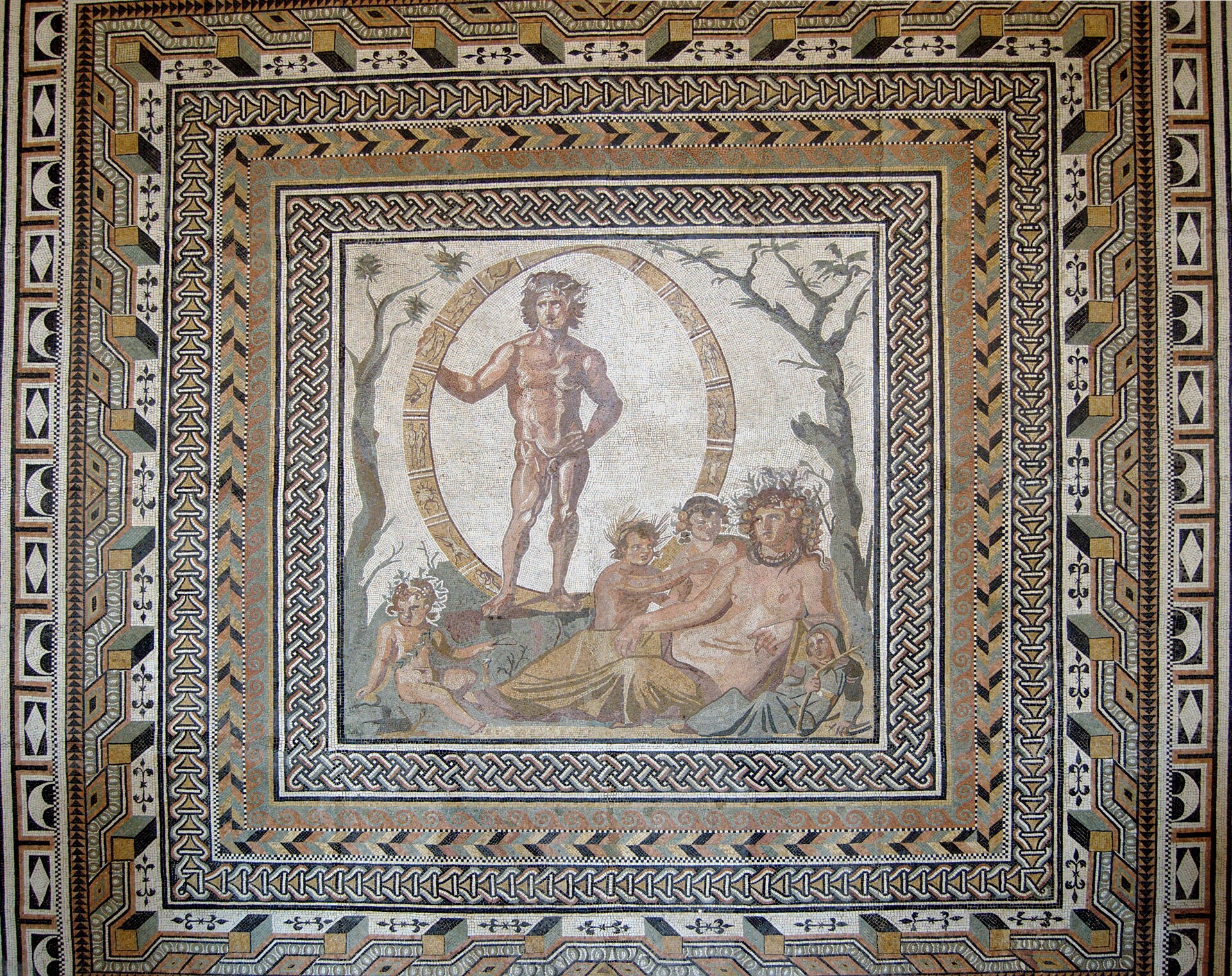

Homeric Hymns · Hymn 30
Gaia, Mother of All
Γαῖα
Prayer and ritual
These hymns may be spoken as complete prayers to the Gods. Within the Temple’s practice, a ritual is a direct theurgical act; hymnody gathers the mind and turns it toward the Divine, helping the initiate enter reverent communion with the Gods.
Use a hymn on its own in place of another prayer, or add it to the prayer portion of a suitable ritual. Choose according to the deity addressed and the petition expressed in the hymn. When combining them, preserve the ritual’s prescribed sequence and let the hymn give voice to its purpose.
The petition of this hymn
Praise Earth as nourisher of all life and seek a livelihood that gladdens the heart.
Recite the hymn as gratitude for food, land, children, and the conditions that sustain a household. It may accompany a rite for fertility or prosperity, joining material abundance to the poem’s images of good laws, youthful gladness, and communal celebration.
English hieratic rendering
Hymn 30 · An English rendering aligned with the Greek lines.
- I shall sing Gaia, Mother of all, whose foundations are firm,
- eldest, who nourishes everything that exists upon the Earth,
- all that travels over the divine land, all that travels the Sea,
- and all that flies: these are nourished from your abundance.
- From you people become blessed with children and with fruit,
- sovereign Lady; yours is the power to give livelihood and to take it away
- from mortal humankind. Blessed is the one whom in your heart
- you willingly honour; for that person all things are abundant.
- Their life bearing fields grow heavy, and in the countryside
- their cattle flourish, while their house is filled with good things.
- They themselves rule with good laws in cities of beautiful women,
- and great prosperity and wealth attend them.
- Their children exult in the gladness of fresh youth,
- and maidens, playing with kindly hearts in dances rich in flowers,
- leap among the tender blossoms of the grass:
- these are those you honour, revered Goddess, generous Daimon.
- Hail, Mother of Gods, consort of starry Ouranos;
- in kindness grant a heart gladdening life in return for this song.
- And I shall remember both you and another song.
Ancient Greek & pronunciation
Read the English pronunciation spelling directly below each Greek line.
- γαῖαν παμμήτειραν ἀείσομαι, ἠυθέμεθλον,YEH-ahn pah-MEE-tee-rahn ah-EE-soh-meh, ee-ee-THEH-mehth-lohn,
- πρεσβίστην, ἣ φέρβει ἐπὶ χθονὶ πάνθʼ ὁπόσʼ ἐστίν,prehz-VEE-steen, EE FEHR-vee eh-PEE khthoh-NEE PAHNTH’ oh-POHS’ eh-STEEN,
- ἠμὲν ὅσα χθόνα δῖαν ἐπέρχεται ἠδʼ ὅσα πόντονee-MEHN OH-sah KHTHOH-nah DHEE-ahn eh-PEHR-hyeh-teh eedh’ OH-sah POHN-dohn
- ἠδʼ ὅσα πωτῶνται, τάδε φέρβεται ἐκ σέθεν ὄλβου.eedh’ OH-sah poh-TOHN-deh, TAH-dheh FEHR-veh-teh ehk SEH-thehn OHL-voo.
- ἐκ σέο δʼ εὔπαιδές τε καὶ εὔκαρποι τελέθουσι,ehk SEH-oh dh’ EHF-peh-DHEHS teh KEH EHF-kahr-pee teh-LEH-thoo-see,
- πότνια, σεῦ δʼ ἔχεται δοῦναι βίον ἠδʼ ἀφελέσθαιPOHT-nee-ah, SEHV dh’ EH-hyeh-teh DHOO-neh VEE-ohn eedh’ ah-feh-LEHS-theh
- θνητοῖς ἀνθρώποισιν· ὃ δʼ ὄλβιος, ὅν κε σὺ θυμῷthnee-TEES ahn-THROH-pee-seen· OH dh’ OHL-vee-ohs, OHN keh SEE thee-MOH
- πρόφρων τιμήσῃς· τῷ τʼ ἄφθονα πάντα πάρεστι.PROH-frohn tee-MEE-sees· TOH t’ AHF-thoh-nah PAHN-dah PAH-reh-stee.
- βρίθει μέν σφιν ἄρουρα φερέσβιος ἠδὲ κατʼ ἀγροὺςVREE-thee MEHN sfeen AH-roo-rah feh-REHZ-vee-ohs ee-DHEH kaht’ ah-GHROOS
- κτήνεσιν εὐθηνεῖ, οἶκος δʼ ἐμπίπλαται ἐσθλῶν·KTEE-neh-seen ehf-thee-NEE, EE-kohs dh’ ehm-BEE-plah-teh ehsth-LOHN·
- αὐτοὶ δʼ εὐνομίῃσι πόλιν κάτα καλλιγύναικαahf-TEE dh’ ehv-noh-MEE-ee-see POH-leen KAH-tah kah-lee-YEE-neh-kah
- κοιρανέουσʼ, ὄλβος δὲ πολὺς καὶ πλοῦτος ὀπηδεῖ·kee-rah-NEH-oos’, OHL-vohs DHEH poh-LEES KEH PLOO-tohs oh-pee-DHEE·
- παῖδες δʼ εὐφροσύνῃ νεοθηλέι κυδιόωσιPEH-dhehs dh’ eh-froh-SEE-nee neh-oh-thee-LEH-ee kee-dhee-OH-oh-see
- παρθενικαί τε χοροῖς πολυανθέσιν εὔφρονι θυμῷpahr-theh-nee-KEH teh khoh-REES poh-lee-ahn-THEH-seen EH-froh-nee thee-MOH
- παίζουσαι σκαίρουσι κατʼ ἄνθεα μαλθακὰ ποίης,PEH-zoo-seh SKEH-roo-see kaht’ AHN-theh-ah mahl-thah-KAH PEE-ees,
- οὕς κε σὺ τιμήσῃς, σεμνὴ θεά, ἄφθονε δαῖμον.OOS keh SEE tee-MEE-sees, sehm-NEE theh-AH, AHF-thoh-neh DHEH-mohn.
- χαῖρε, θεῶν μήτηρ, ἄλοχʼ Οὐρανοῦ ἀστερόεντος,HYEH-reh, theh-OHN MEE-teer, AH-lohkh’ oo-rah-NOO ah-steh-ROH-ehn-dohs,
- πρόφρων δʼ ἀντʼ ᾠδῆς βίοτον θυμήρεʼ ὄπαζε·PROH-frohn dh’ ahnd’ oh-DHEES VEE-oh-tohn thee-MEE-reh’ OH-pah-zeh·
- αὐτὰρ ἐγὼ καὶ σεῖο καὶ ἄλλης μνήσομʼ ἀοιδῆς.ahf-TAHR eh-GHOH KEH SEE-oh KEH AH-lees MNEE-sohm’ ah-ee-DHEES.
Short sound guide for English speakers
Every line beneath the Greek uses English pronunciation spellings. Say each hyphenated syllable in sequence and emphasize the syllable in CAPITALS. For example, οὐρανόθεν is oo-rah-NOH-thehn. Read adjacent vowels separately: theh-AH has two syllables; oo-rah-NEE-een has four. Hyphens guide the voice; they do not mark pauses.
| Spelling | Sound to make |
|---|---|
| ah · eh · ee · oh · oo | father · met · see · go without its final glide · moon. Keep these vowels clear in unstressed syllables too. |
| th · dh | The unvoiced th in thin · the voiced th in this. Thus DHEE begins with the sound in “thee.” |
| kh | The ch in Scottish loch or German Bach: let air pass at the back of the mouth, without closing it into a k. |
| hy | The breathy beginning of a carefully spoken Hugh. Raise the middle of the tongue toward the roof of the mouth and let air pass without voice. In shy, sound s followed by hy; do not use the English sh sound or the English word “shy.” |
| gh | Make the kh sound above, then add voice. Keep the passage open; this is a flowing sound, not a hard g. |
| y · g | y as in yes, with gentle friction · always a hard g as in get. |
| r | Tap the tongue lightly behind the upper teeth, or use a light roll. |
| ks · ps | Sound both consonants, even at the beginning of a word: ks as in backs, ps as in lips. |
| n-g · m-b · n-d | Sound the nasal and the following consonant. In AHN-geh-leh, the n-g group is like finger, with the g audible. |
Always sound s as in hiss, even at the end of DHEE-kees; z is voiced, as in zero. All other consonants have their usual English sounds. Initial consonant groups may be unfamiliar: sound every written consonant, without inserting an extra vowel. A word without capitals carries no written stress in the Greek. Where two syllables have capitals, both written accents are retained. An apostrophe marks a vowel already elided in the Greek; do not add it back. A hyphen at the end of a Greek verse joins the unfinished word to the next verse.
These spellings follow the Modern Greek liturgical reading used throughout this library. Breathings and iota subscripts are silent; separately pronounced vowels remain separate. The few Greek consonants without an exact English equivalent use the sound cues above. Ancient vowel length, pitch accent and metre are not reconstructed.
Hymn notes
Sacred meaning
Gaia nourishes creatures of land, Sea, and air, and has the power both to give and to take livelihood. Her favour is visible in fruitful fields, thriving animals, ordered cities, and joyful children. The prayer gathers these forms of flourishing into a request for a life pleasing to the heart.
Text and attribution
Greek text: Hugh G. Evelyn-White, Hymn 30 To Earth (1914), Perseus Digital Library. Greek source. The English hieratic rendering and suggested devotional use are new editorial work. The applications are guidance for this library, not additional lines of the ancient poem.