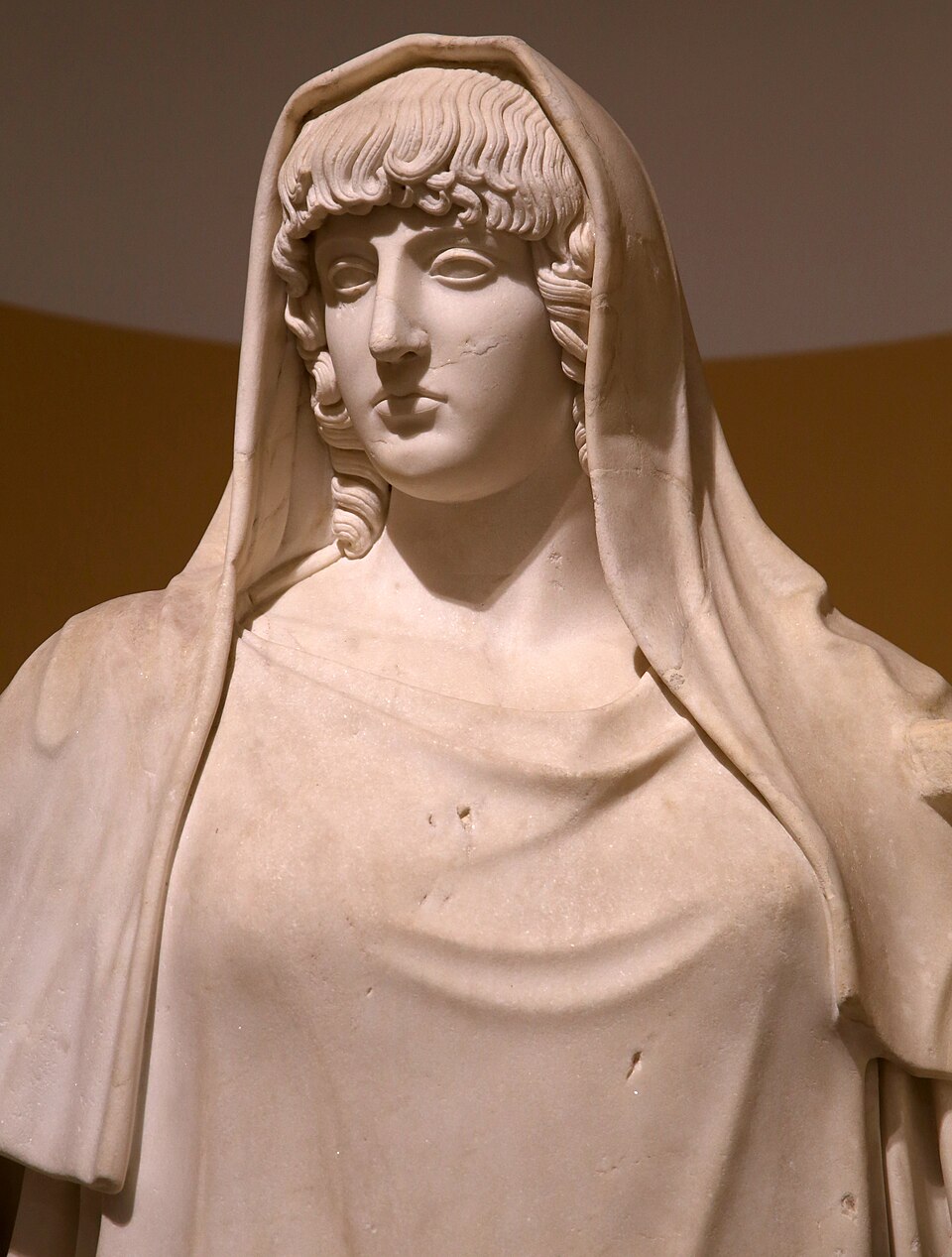

Homeric Hymns · Hymn 29
Hestia and Hermes
Ἑστία καὶ Ἑρμῆς
Prayer and ritual
These hymns may be spoken as complete prayers to the Gods. Within the Temple’s practice, a ritual is a direct theurgical act; hymnody gathers the mind and turns it toward the Divine, helping the initiate enter reverent communion with the Gods.
Use a hymn on its own in place of another prayer, or add it to the prayer portion of a suitable ritual. Choose according to the deity addressed and the petition expressed in the hymn. When combining them, preserve the ritual’s prescribed sequence and let the hymn give voice to its purpose.
The petition of this hymn
Invite Hestia and Hermes to sustain the household in shared goodwill, thought, and flourishing life.
Offer this hymn as household prayer or before a communal meal. It may supplement a rite for domestic harmony or the good ordering of work, preserving the poem’s joint invocation and its description of Hestia’s first and last share.
English hieratic rendering
Hymn 29 · An English rendering aligned with the Greek lines.
- Hestia, you who in the lofty dwellings of all,
- both immortal Gods and mortals who walk upon the Earth,
- have received an everlasting seat, the honour of the eldest,
- holding a noble and revered privilege; for without you
- there are no feasts among mortals where one does not, first and last,
- begin by pouring wine sweet as honey to Hestia.
- And you, Slayer of Argos, son of Zeus and Maia,
- Messenger of the blessed ones, bearer of the golden wand, giver of good things,
- come graciously to my aid, with the revered and beloved Goddess.
- Dwell in these beautiful halls, each knowing what is dear
- to the other's heart; for both of you, knowing the noble works
- of people upon the Earth, attend upon their thought and their youth.
- Hail, daughter of Kronos, both you and Hermes of the golden wand;
- and I shall remember both you and another song.
Ancient Greek & pronunciation
Read the English pronunciation spelling directly below each Greek line.
- ἑστίη, ἣ πάντων ἐν δώμασιν ὑψηλοῖσινeh-STEE-ee, EE PAHN-dohn ehn DHOH-mah-seen eep-see-LEE-seen
- ἀθανάτων τε θεῶν χαμαὶ ἐρχομένων τ’ ἀνθρώπωνah-thah-NAH-tohn teh theh-OHN khah-MEH ehr-khoh-MEH-nohn t’ ahn-THROH-pohn
- ἕδρην ἀίδιον ἔλαχες, πρεσβηίδα τιμήν,EH-dhreen ah-EE-dhee-ohn EH-lah-hyehs, prehz-vee-EE-dhah tee-MEEN,
- καλὸν ἔχουσα γέρας καὶ τίμιον· οὐ γὰρ ἄτερ σοῦkah-LOHN EH-khoo-sah YEH-rahs KEH TEE-mee-ohn· oo GHAHR AH-tehr SOO
- εἰλαπίναι θνητοῖσιν, ἵν’ οὐ πρώτῃ πυμάτῃ τεee-lah-PEE-neh thnee-TEE-seen, EEN’ oo PROH-tee pee-MAH-tee teh
- Ἑστίῃ ἀρχόμενος σπένδει μελιηδέα οἶνον·eh-STEE-ee ahr-KHOH-meh-nohs SPEHN-dhee meh-lee-ee-DHEH-ah EE-nohn·
- καὶ σύ μοι, Ἀργειφόντα, Διὸς καὶ Μαιάδος υἱέ,KEH SEE mee, ahr-yee-FOHN-dah, dhee-OHS KEH meh-AH-dhohs ee-EH,
- ἄγγελε τῶν μακάρων, χρυσόρραπι, δῶτορ ἐάων,AHN-geh-leh TOHN mah-KAH-rohn, khree-SOH-rah-pee, DHOH-tohr eh-AH-ohn,
- ἵλαος ὢν ἐπάρηγε σὺν αἰδοίῃ τε φίλῃ τε.EE-lah-ohs OHN eh-PAH-ree-yeh SEEN eh-DHEE-ee teh FEE-lee teh.
- ναίετε δώματα καλά, φίλα φρεσὶν ἀλλήλοισινNEH-eh-teh DHOH-mah-tah kah-LAH, FEE-lah freh-SEEN ah-LEE-lee-seen
- εἰδότες· ἀμφότεροι γὰρ ἐπιχθονίων ἀνθρώπωνee-DHOH-tehs· ahm-FOH-teh-ree GHAHR eh-peekh-thoh-NEE-ohn ahn-THROH-pohn
- εἰδότες ἔργματα καλὰ νόῳ θ’ ἕσπεσθε καὶ ἥβῃ.ee-DHOH-tehs EHRGH-mah-tah kah-LAH NOH-oh th’ EH-spehs-theh KEH EE-vee.
- χαῖρε, Κρόνου θύγατερ, σύ τε καὶ χρυσόρραπις Ἑρμῆς·HYEH-reh, KROH-noo THEE-ghah-tehr, SEE teh KEH khree-SOH-rah-pees ehr-MEES·
- αὐτὰρ ἐγὼν ὑμέων τε καὶ ἄλλης μνήσομ’ ἀοιδῆς.ahf-TAHR eh-GHOHN ee-MEH-ohn teh KEH AH-lees MNEE-sohm’ ah-ee-DHEES.
Short sound guide for English speakers
Every line beneath the Greek uses English pronunciation spellings. Say each hyphenated syllable in sequence and emphasize the syllable in CAPITALS. For example, οὐρανόθεν is oo-rah-NOH-thehn. Read adjacent vowels separately: theh-AH has two syllables; oo-rah-NEE-een has four. Hyphens guide the voice; they do not mark pauses.
| Spelling | Sound to make |
|---|---|
| ah · eh · ee · oh · oo | father · met · see · go without its final glide · moon. Keep these vowels clear in unstressed syllables too. |
| th · dh | The unvoiced th in thin · the voiced th in this. Thus DHEE begins with the sound in “thee.” |
| kh | The ch in Scottish loch or German Bach: let air pass at the back of the mouth, without closing it into a k. |
| hy | The breathy beginning of a carefully spoken Hugh. Raise the middle of the tongue toward the roof of the mouth and let air pass without voice. In shy, sound s followed by hy; do not use the English sh sound or the English word “shy.” |
| gh | Make the kh sound above, then add voice. Keep the passage open; this is a flowing sound, not a hard g. |
| y · g | y as in yes, with gentle friction · always a hard g as in get. |
| r | Tap the tongue lightly behind the upper teeth, or use a light roll. |
| ks · ps | Sound both consonants, even at the beginning of a word: ks as in backs, ps as in lips. |
| n-g · m-b · n-d | Sound the nasal and the following consonant. In AHN-geh-leh, the n-g group is like finger, with the g audible. |
Always sound s as in hiss, even at the end of DHEE-kees; z is voiced, as in zero. All other consonants have their usual English sounds. Initial consonant groups may be unfamiliar: sound every written consonant, without inserting an extra vowel. A word without capitals carries no written stress in the Greek. Where two syllables have capitals, both written accents are retained. An apostrophe marks a vowel already elided in the Greek; do not add it back. A hyphen at the end of a Greek verse joins the unfinished word to the next verse.
These spellings follow the Modern Greek liturgical reading used throughout this library. Breathings and iota subscripts are silent; separately pronounced vowels remain separate. The few Greek consonants without an exact English equivalent use the sound cues above. Ancient vowel length, pitch accent and metre are not reconstructed.
Hymn notes
Sacred meaning
Hestia holds the enduring seat in the dwellings of Gods and humans, while Hermes brings help and good things. The hymn asks the two to dwell together with mutual understanding. In devotional interpretation, stable presence and active exchange can be held in one household intention.
Textual note
The printed edition places traditional line 10 before line 9. Its reading order and the XML line labels 8,10,9,11 are retained.
At traditional line 11, εἰδότες is Evelyn-White’s conjecture; the printed apparatus records Ἑστίη in the manuscripts. The adopted conjecture is preserved rather than silently treated as unanimous transmission.
Text and attribution
Greek text: Hugh G. Evelyn-White, Hymn 29 To Hestia (1914), Perseus Digital Library. Greek source. The English hieratic rendering and suggested devotional use are new editorial work. The applications are guidance for this library, not additional lines of the ancient poem.