.jpg)
Homeric Hymns · Hymn 28
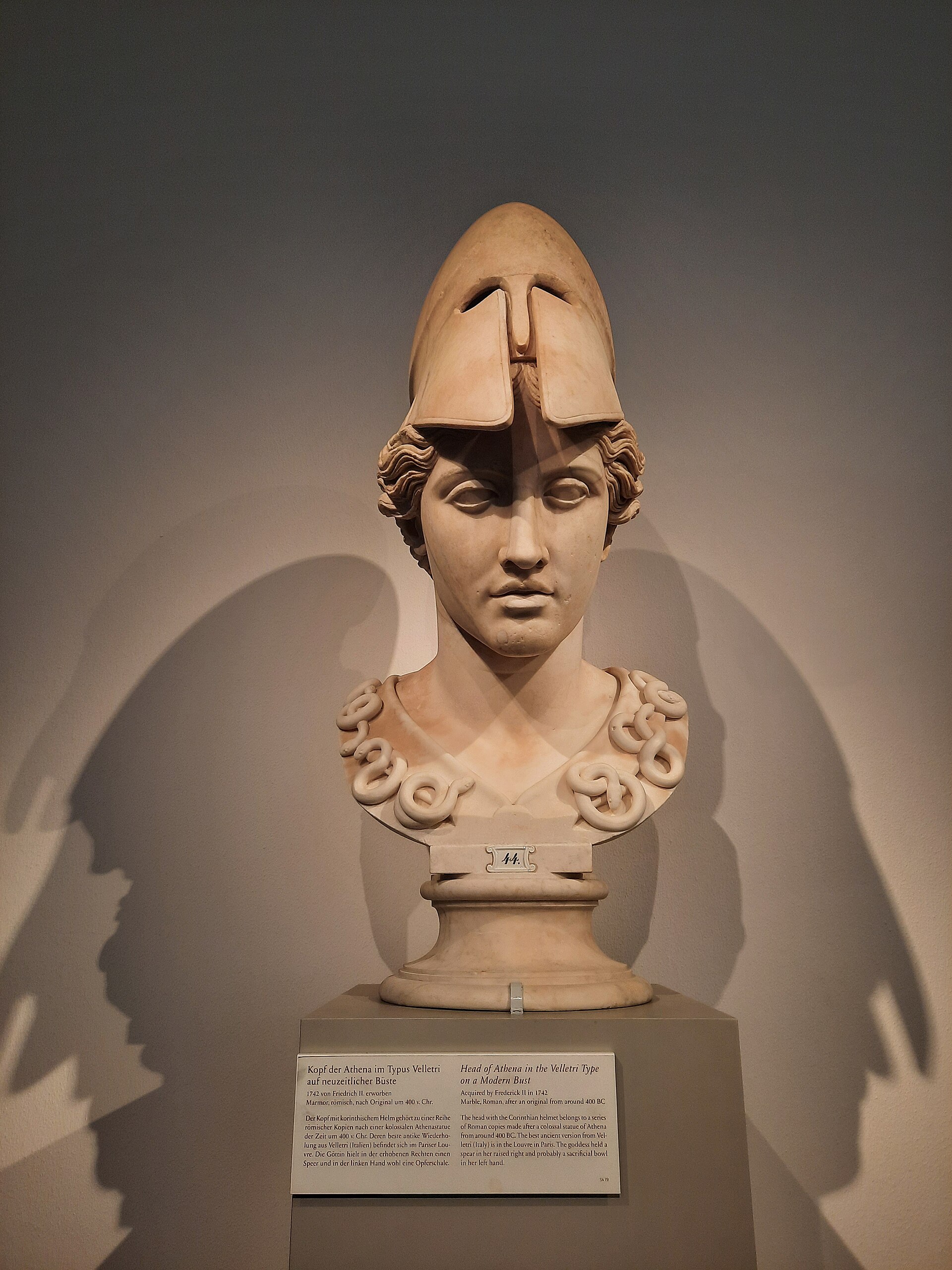
Athena, Born from Zeus
Ἀθηνᾶ
Prayer and ritual
These hymns may be spoken as complete prayers to the Gods. Within the Temple’s practice, a ritual is a direct theurgical act; hymnody gathers the mind and turns it toward the Divine, helping the initiate enter reverent communion with the Gods.
Use a hymn on its own in place of another prayer, or add it to the prayer portion of a suitable ritual. Choose according to the deity addressed and the petition expressed in the hymn. When combining them, preserve the ritual’s prescribed sequence and let the hymn give voice to its purpose.
The petition of this hymn
Honour Athena’s radiant emergence from Zeus and the cosmic force of her wisdom and valour.
Use this hymn as an independent prayer of praise before study, judgement, or demanding work. It may supplement a protective rite or an appeal for wisdom, taking her emergence in golden armour as the central image for contemplation.
English hieratic rendering
Hymn 28 · An English rendering aligned with the Greek lines.
- I begin to sing Pallas Athena, the glorious Goddess,
- bright eyed, of many counsels, whose heart is unyielding,
- the revered Maiden, city guardian, mighty in valour,
- Tritogeneia, whom Zeus the Counsellor himself brought forth
- from his sacred head, bearing armour of war,
- golden and radiant all around. Awe held all the Immortals
- who beheld her; and before Zeus who bears the aegis
- she sprang eagerly from his immortal head,
- brandishing her sharp spear. Great Olympos reeled
- terribly beneath the might of the bright eyed Goddess; Earth on every side
- cried out in dread, and the Sea was stirred,
- seething with dark waves; the salt water surged forth
- suddenly, and the splendid son of Hyperion halted
- his swift footed horses for a long time, until the Maiden
- removed from her immortal shoulders the godlike armour,
- Pallas Athena; and Zeus the Counsellor rejoiced.
- And so hail, child of Zeus who bears the aegis;
- and I shall remember both you and another song.
Ancient Greek & pronunciation
Read the English pronunciation spelling directly below each Greek line.
- Παλλάδ’ Ἀθηναίην, κυδρὴν θεόν, ἄρχομ’ ἀείδεινpah-LAHDH’ ah-thee-NEH-een, kee-DHREEN theh-OHN, AHR-khohm’ ah-EE-dheen
- γλαυκῶπιν, πολύμητιν, ἀμείλιχον ἦτορ ἔχουσαν,ghlahf-KOH-peen, poh-LEE-mee-teen, ah-MEE-lee-khohn EE-tohr EH-khoo-sahn,
- παρθένον αἰδοίην, ἐρυσίπτολιν, ἀλκήεσσαν,pahr-THEH-nohn eh-DHEE-een, eh-ree-SEEP-toh-leen, ahl-KEE-eh-sahn,
- Τριτογενῆ, τὴν αὐτὸς ἐγείνατο μητίετα Ζεὺςtree-toh-yeh-NEE, TEEN ahf-TOHS eh-YEE-nah-toh mee-TEE-eh-tah ZEHFS
- σεμνῆς ἐκ κεφαλῆς, πολεμήια τεύχε’ ἔχουσαν,sehm-NEES ehk keh-fah-LEES, poh-leh-MEE-ee-ah TEHF-hyeh’ EH-khoo-sahn,
- χρύσεα, παμφανόωντα· σέβας δ’ ἔχε πάντας ὁρῶνταςKHREE-seh-ah, pahm-fah-NOH-ohn-dah· SEH-vahs dh’ EH-hyeh PAHN-dahs oh-ROHN-dahs
- ἀθανάτους· ἣ δὲ πρόσθεν Διὸς αἰγιόχοιοah-thah-NAH-toos· EE DHEH PROHS-thehn dhee-OHS eh-yee-OH-hyee-oh
- ἐσσυμένως ὤρουσεν ἀπ’ ἀθανάτοιο καρήνου,eh-see-MEH-nohs OH-roo-sehn ahp’ ah-thah-NAH-tee-oh kah-REE-noo,
- σείσασ’ ὀξὺν ἄκοντα· μέγας δ’ ἐλελίζετ’ ὌλυμποςSEE-sahs’ ohk-SEEN AH-kohn-dah· MEH-ghahs dh’ eh-leh-LEE-zeht’ OH-leem-bohs
- δεινὸν ὑπὸ βρίμης γλαυκώπιδος· ἀμφὶ δὲ γαῖαdhee-NOHN ee-POH VREE-mees ghlahf-KOH-pee-dhohs· ahm-FEE DHEH YEH-ah
- σμερδαλέον ἰάχησεν· ἐκινήθη δ’ ἄρα πόντος,zmehr-dhah-LEH-ohn ee-AH-hyee-sehn· eh-kee-NEE-thee dh’ AH-rah POHN-dohs,
- κύμασι πορφυρέοισι κυκώμενος· ἔκχυτο δ’ ἅλμηKEE-mah-see pohr-fee-REH-ee-see kee-KOH-meh-nohs· EHK-hyee-toh dh’ AHL-mee
- ἐξαπίνης· στῆσεν δ’ Ὑπερίονος ἀγλαὸς υἱὸςehk-sah-PEE-nees· STEE-sehn dh’ ee-peh-REE-oh-nohs ah-ghlah-OHS ee-OHS
- ἵππους ὠκύποδας δηρὸν χρόνον, εἰσότε κούρηEE-poos oh-KEE-poh-dhahs dhee-ROHN KHROH-nohn, ee-SOH-teh KOO-ree
- εἵλετ’ ἀπ’ ἀθανάτων ὤμων θεοείκελα τεύχηEE-leht’ ahp’ ah-thah-NAH-tohn OH-mohn theh-oh-EE-keh-lah TEHF-hyee
- Παλλὰς Ἀθηναίη· γήθησε δὲ μητίετα Ζεύς.pah-LAHS ah-thee-NEH-ee· YEE-thee-seh DHEH mee-TEE-eh-tah ZEHFS.
- καὶ σὺ μὲν οὕτω χαῖρε, Διὸς τέκος αἰγιόχοιο·KEH SEE MEHN OO-toh HYEH-reh, dhee-OHS TEH-kohs eh-yee-OH-hyee-oh·
- αὐτὰρ ἐγὼ καὶ σεῖο καὶ ἄλλης μνήσομ’ ἀοιδῆς.ahf-TAHR eh-GHOH KEH SEE-oh KEH AH-lees MNEE-sohm’ ah-ee-DHEES.
Short sound guide for English speakers
Every line beneath the Greek uses English pronunciation spellings. Say each hyphenated syllable in sequence and emphasize the syllable in CAPITALS. For example, οὐρανόθεν is oo-rah-NOH-thehn. Read adjacent vowels separately: theh-AH has two syllables; oo-rah-NEE-een has four. Hyphens guide the voice; they do not mark pauses.
| Spelling | Sound to make |
|---|---|
| ah · eh · ee · oh · oo | father · met · see · go without its final glide · moon. Keep these vowels clear in unstressed syllables too. |
| th · dh | The unvoiced th in thin · the voiced th in this. Thus DHEE begins with the sound in “thee.” |
| kh | The ch in Scottish loch or German Bach: let air pass at the back of the mouth, without closing it into a k. |
| hy | The breathy beginning of a carefully spoken Hugh. Raise the middle of the tongue toward the roof of the mouth and let air pass without voice. In shy, sound s followed by hy; do not use the English sh sound or the English word “shy.” |
| gh | Make the kh sound above, then add voice. Keep the passage open; this is a flowing sound, not a hard g. |
| y · g | y as in yes, with gentle friction · always a hard g as in get. |
| r | Tap the tongue lightly behind the upper teeth, or use a light roll. |
| ks · ps | Sound both consonants, even at the beginning of a word: ks as in backs, ps as in lips. |
| n-g · m-b · n-d | Sound the nasal and the following consonant. In AHN-geh-leh, the n-g group is like finger, with the g audible. |
Always sound s as in hiss, even at the end of DHEE-kees; z is voiced, as in zero. All other consonants have their usual English sounds. Initial consonant groups may be unfamiliar: sound every written consonant, without inserting an extra vowel. A word without capitals carries no written stress in the Greek. Where two syllables have capitals, both written accents are retained. An apostrophe marks a vowel already elided in the Greek; do not add it back. A hyphen at the end of a Greek verse joins the unfinished word to the next verse.
These spellings follow the Modern Greek liturgical reading used throughout this library. Breathings and iota subscripts are silent; separately pronounced vowels remain separate. The few Greek consonants without an exact English equivalent use the sound cues above. Ancient vowel length, pitch accent and metre are not reconstructed.
Hymn notes
Sacred meaning
Athena is born from the sacred head of Zeus already armed, and the entire cosmos responds to her arrival. Her epiphany unites intelligence, valour, and the power to guard cities. The removal of her armour and Zeus’ joy complete a movement from overwhelming manifestation into divine recognition.
Textual note
The traditional epithet Tritogeneia is preserved by name because its derivation is disputed.
Text and attribution
Greek text: Hugh G. Evelyn-White, Hymn 28 To Athena (1914), Perseus Digital Library. Greek source. The English hieratic rendering and suggested devotional use are new editorial work. The applications are guidance for this library, not additional lines of the ancient poem.