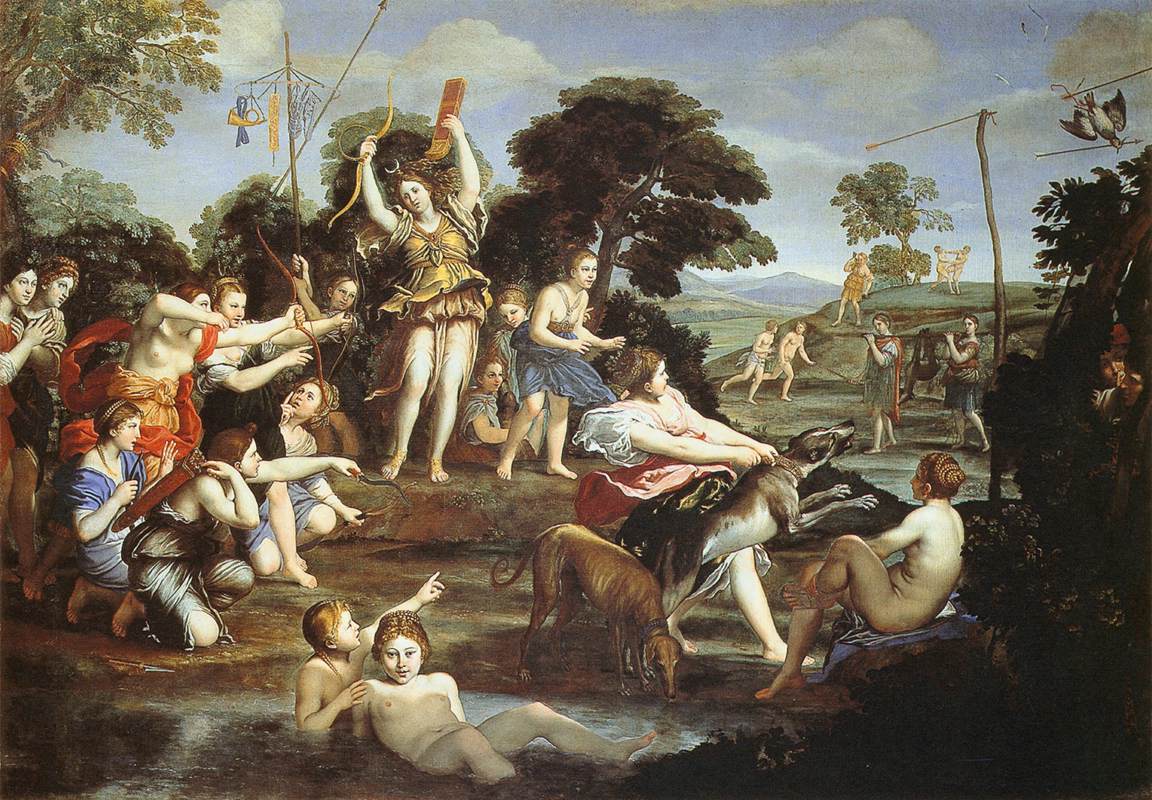

Homeric Hymns · Hymn 27
Artemis, Huntress and Leader of Dance
Ἄρτεμις
Prayer and ritual
These hymns may be spoken as complete prayers to the Gods. Within the Temple’s practice, a ritual is a direct theurgical act; hymnody gathers the mind and turns it toward the Divine, helping the initiate enter reverent communion with the Gods.
Use a hymn on its own in place of another prayer, or add it to the prayer portion of a suitable ritual. Choose according to the deity addressed and the petition expressed in the hymn. When combining them, preserve the ritual’s prescribed sequence and let the hymn give voice to its purpose.
The petition of this hymn
Contemplate Artemis’ force in the wild and her leadership of the divine dance.
Read the hymn independently in praise of Artemis’ full range of power. It may supplement a rite for protection, disciplined strength, or artistic order, following her movement from the hunt into the dance of the Muses and Graces.
English hieratic rendering
Hymn 27 · An English rendering aligned with the Greek lines.
- I sing Artemis of the golden distaff and ringing cry,
- the revered Maiden, slayer of deer, showerer of arrows,
- own sister of Apollon of the golden sword,
- who through shady mountains and windy heights,
- delighting in the hunt, bends her bow of pure gold,
- sending grievous arrows. The summits tremble
- of the lofty mountains, and the deeply shaded woodland resounds
- terribly with the cries of beasts; Earth shudders,
- and the Sea rich in fish. With valiant heart
- she turns on every side, slaying the race of beasts.
- But when the watcher of beasts who showers arrows has taken her delight
- and gladdened her mind, she slackens her well curved bow
- and goes to the great house of her beloved brother,
- Phoibos Apollon, in the rich land of Delphi,
- to order the beautiful dance of the Muses and Graces.
- There, hanging up her backward bending bow and arrows,
- she takes the lead, wearing a gracious adornment about her body,
- beginning the dances; and they, sending forth an immortal voice,
- hymn Leto of the lovely ankles, how she bore children
- far excelling the Immortals in counsel and in deeds.
- Hail, children of Zeus and Leto of lovely hair;
- and I shall remember both you and another song.
Ancient Greek & pronunciation
Read the English pronunciation spelling directly below each Greek line.
- Ἄρτεμιν ἀείδω χρυσηλάκατον, κελαδεινήν,AHR-teh-meen ah-EE-dhoh khree-see-LAH-kah-tohn, keh-lah-dhee-NEEN,
- παρθένον αἰδοίην, ἐλαφηβόλον, ἰοχέαιραν,pahr-THEH-nohn eh-DHEE-een, eh-lah-fee-VOH-lohn, ee-oh-HYEH-eh-rahn,
- αὐτοκασιγνήτην χρυσαόρου Ἀπόλλωνος,ahf-toh-kah-seegh-NEE-teen khree-sah-OH-roo ah-POH-loh-nohs,
- ἣ κατ’ ὄρη σκιόεντα καὶ ἄκριας ἠνεμοέσσαςEE kaht’ OH-ree skee-OH-ehn-dah KEH AH-kree-ahs ee-neh-moh-EH-sahs
- ἄγρῃ τερπομένη παγχρύσεα τόξα τιταίνειAH-ghree tehr-poh-MEH-nee pahn-KHREE-seh-ah TOHK-sah tee-TEH-nee
- πέμπουσα στονόεντα βέλη· τρομέει δὲ κάρηναPEHM-boo-sah stoh-NOH-ehn-dah VEH-lee· troh-MEH-ee DHEH KAH-ree-nah
- ὑψηλῶν ὀρέων, ἰάχει δ’ ἔπι δάσκιος ὕληeep-see-LOHN oh-REH-ohn, ee-AH-hyee dh’ EH-pee DHAH-skee-ohs EE-lee
- δεινὸν ὑπὸ κλαγγῆς θηρῶν, φρίσσει δέ τε γαῖαdhee-NOHN ee-POH klahn-GEES thee-ROHN, FREE-see DHEH teh YEH-ah
- πόντος τ’ ἰχθυόεις· ἣ δ’ ἄλκιμον ἦτορ ἔχουσαPOHN-dohs t’ eekh-thee-OH-ees· EE dh’ AHL-kee-mohn EE-tohr EH-khoo-sah
- πάντη ἐπιστρέφεται θηρῶν ὀλέκουσα γενέθλην.PAHN-dee eh-pee-STREH-feh-teh thee-ROHN oh-LEH-koo-sah yeh-NEHTH-leen.
- αὐτὰρ ἐπὴν τερφθῇ θηροσκόπος ἰοχέαιρα,ahf-TAHR eh-PEEN tehrf-THEE thee-roh-SKOH-pohs ee-oh-HYEH-eh-rah,
- εὐφρήνῃ δὲ νόον, χαλάσασ’ εὐκαμπέα τόξαeh-FREE-nee DHEH NOH-ohn, khah-LAH-sahs’ ehf-kahm-BEH-ah TOHK-sah
- ἔρχεται ἐς μέγα δῶμα κασιγνήτοιο φίλοιο,EHR-hyeh-teh ehs MEH-ghah DHOH-mah kah-seegh-NEE-tee-oh FEE-lee-oh,
- Φοίβου Ἀπόλλωνος, Δελφῶν ἐς πίονα δῆμον,FEE-voo ah-POH-loh-nohs, dhehl-FOHN ehs PEE-oh-nah DHEE-mohn,
- Μουσῶν καὶ Χαρίτων καλὸν χορὸν ἀρτυνέουσα.moo-SOHN KEH khah-REE-tohn kah-LOHN khoh-ROHN ahr-tee-NEH-oo-sah.
- ἔνθα κατακρεμάσασα παλίντονα τόξα καὶ ἰοὺςEHN-thah kah-tah-kreh-MAH-sah-sah pah-LEEN-doh-nah TOHK-sah KEH ee-OOS
- ἡγεῖται χαρίεντα περὶ χροῒ κόσμον ἔχουσα,ee-YEE-teh khah-REE-ehn-dah peh-REE khroh-EE KOH-zmohn EH-khoo-sah,
- ἐξάρχουσα χορούς· αἳ δ’ ἀμβροσίην ὄπ’ ἰεῖσαιehk-SAHR-khoo-sah khoh-ROOS· EH dh’ ahm-vroh-SEE-een OHP’ ee-EE-seh
- ὑμνεῦσιν Λητὼ καλλίσφυρον, ὡς τέκε παῖδαςeem-NEHF-seen lee-TOH kah-LEE-sfee-rohn, ohs TEH-keh PEH-dhahs
- ἀθανάτων βουλῇ τε καὶ ἔργμασιν ἔξοχ’ ἀρίστους.ah-thah-NAH-tohn voo-LEE teh KEH EHRGH-mah-seen EHK-sohkh’ ah-REE-stoos.
- χαίρετε, τέκνα Διὸς καὶ Λητοῦς ἠυκόμοιο·HYEH-reh-teh, TEHK-nah dhee-OHS KEH lee-TOOS ee-ee-KOH-mee-oh·
- αὐτὰρ ἐγὼν ὑμέων τε καὶ ἄλλης μνήσομ’ ἀοιδῆς.ahf-TAHR eh-GHOHN ee-MEH-ohn teh KEH AH-lees MNEE-sohm’ ah-ee-DHEES.
Short sound guide for English speakers
Every line beneath the Greek uses English pronunciation spellings. Say each hyphenated syllable in sequence and emphasize the syllable in CAPITALS. For example, οὐρανόθεν is oo-rah-NOH-thehn. Read adjacent vowels separately: theh-AH has two syllables; oo-rah-NEE-een has four. Hyphens guide the voice; they do not mark pauses.
| Spelling | Sound to make |
|---|---|
| ah · eh · ee · oh · oo | father · met · see · go without its final glide · moon. Keep these vowels clear in unstressed syllables too. |
| th · dh | The unvoiced th in thin · the voiced th in this. Thus DHEE begins with the sound in “thee.” |
| kh | The ch in Scottish loch or German Bach: let air pass at the back of the mouth, without closing it into a k. |
| hy | The breathy beginning of a carefully spoken Hugh. Raise the middle of the tongue toward the roof of the mouth and let air pass without voice. In shy, sound s followed by hy; do not use the English sh sound or the English word “shy.” |
| gh | Make the kh sound above, then add voice. Keep the passage open; this is a flowing sound, not a hard g. |
| y · g | y as in yes, with gentle friction · always a hard g as in get. |
| r | Tap the tongue lightly behind the upper teeth, or use a light roll. |
| ks · ps | Sound both consonants, even at the beginning of a word: ks as in backs, ps as in lips. |
| n-g · m-b · n-d | Sound the nasal and the following consonant. In AHN-geh-leh, the n-g group is like finger, with the g audible. |
Always sound s as in hiss, even at the end of DHEE-kees; z is voiced, as in zero. All other consonants have their usual English sounds. Initial consonant groups may be unfamiliar: sound every written consonant, without inserting an extra vowel. A word without capitals carries no written stress in the Greek. Where two syllables have capitals, both written accents are retained. An apostrophe marks a vowel already elided in the Greek; do not add it back. A hyphen at the end of a Greek verse joins the unfinished word to the next verse.
These spellings follow the Modern Greek liturgical reading used throughout this library. Breathings and iota subscripts are silent; separately pronounced vowels remain separate. The few Greek consonants without an exact English equivalent use the sound cues above. Ancient vowel length, pitch accent and metre are not reconstructed.
Hymn notes
Sacred meaning
Artemis’ arrows stir mountain, woodland, Earth, and Sea; her joy in hunting is stated without diminution. She then hangs up her weapons and leads the beautiful dance in Apollon’s house. A devotional reading can contemplate power that acts intensely and then gives itself to ordered harmony.
Textual note
χρυσηλάκατος is rendered “of the golden distaff”, following LSJ; competing interpretations connect the epithet with golden arrows or a golden bow.
Text and attribution
Greek text: Hugh G. Evelyn-White, Hymn 27 To Artemis (1914), Perseus Digital Library. Greek source. The English hieratic rendering and suggested devotional use are new editorial work. The applications are guidance for this library, not additional lines of the ancient poem.