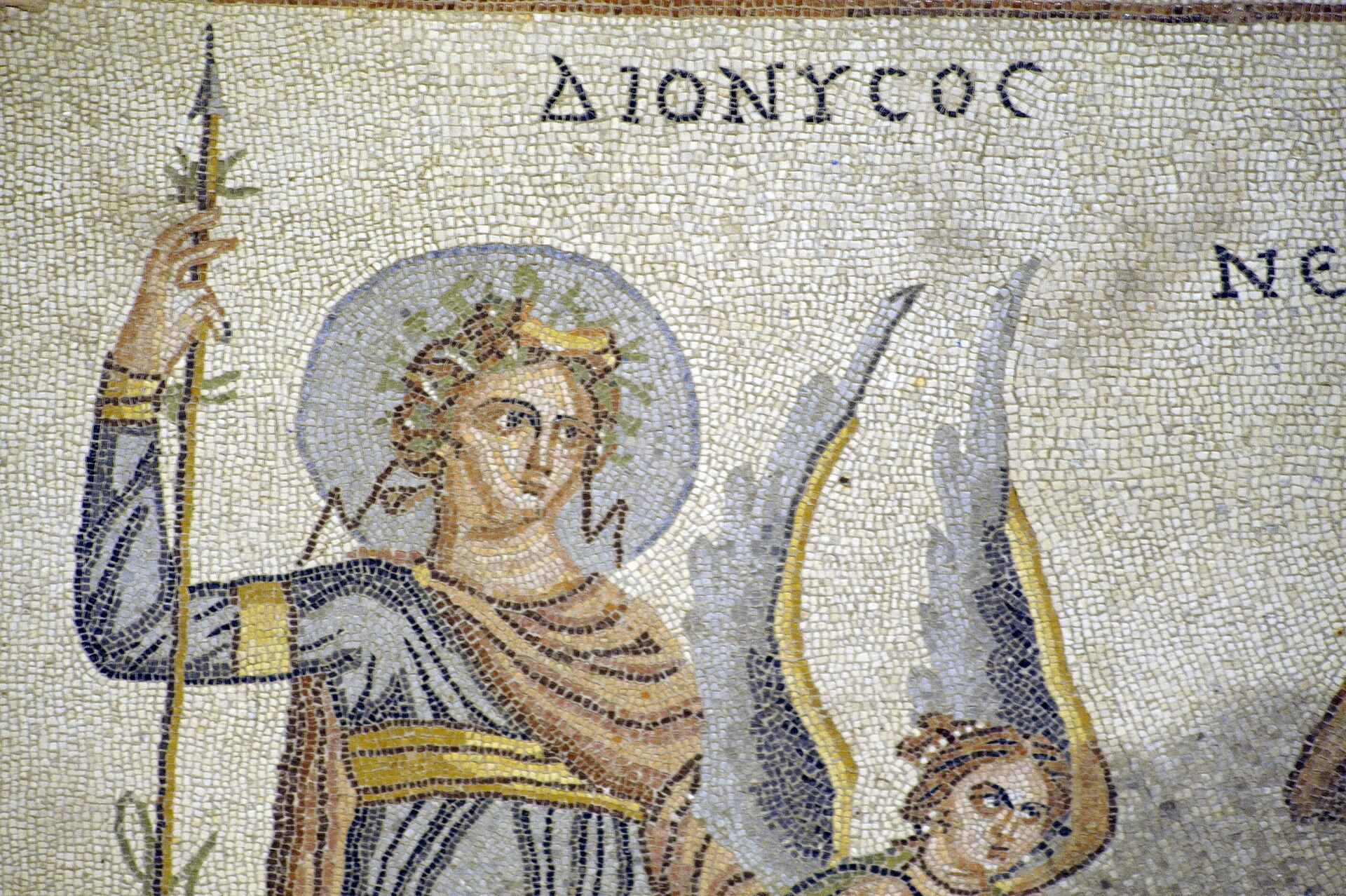

Homeric Hymns · Hymn 26
Dionysos of Nysa
Διόνυσος
Prayer and ritual
These hymns may be spoken as complete prayers to the Gods. Within the Temple’s practice, a ritual is a direct theurgical act; hymnody gathers the mind and turns it toward the Divine, helping the initiate enter reverent communion with the Gods.
Use a hymn on its own in place of another prayer, or add it to the prayer portion of a suitable ritual. Choose according to the deity addressed and the petition expressed in the hymn. When combining them, preserve the ritual’s prescribed sequence and let the hymn give voice to its purpose.
The petition of this hymn
Praise Dionysos’ nurture among the Nymphs and ask to return joyfully through the seasons and years.
Offer this hymn as a prayer of gratitude for growth and recurring abundance. It may accompany a seasonal rite or a celebration of the vine, with its final request giving the rite a clear intention of continuity in joy.
English hieratic rendering
Hymn 26 · An English rendering aligned with the Greek lines.
- I begin to sing Dionysos crowned with ivy, mighty in his roar,
- the splendid son of Zeus and glorious Semele,
- whom the Nymphs of lovely hair received from his sovereign father
- into their bosoms, and reared with devoted care
- in the hollows of Nysa; by his father's will he grew
- in a fragrant cave, numbered among the Immortals.
- When the Goddesses had reared him, praised in many hymns,
- then he would roam through the wooded glens,
- clothed with ivy and laurel; and with him followed
- the Nymphs, while he led the way, and the boundless woodland rang with their cry.
- And so hail, Dionysos rich in clusters of grapes;
- grant that we may come again rejoicing to the returning seasons,
- and from the seasons onward through many years.
Ancient Greek & pronunciation
Read the English pronunciation spelling directly below each Greek line.
- κισσοκόμην Διόνυσον ἐρίβρομον ἄρχομʼ ἀείδειν,kee-soh-KOH-meen dhee-OH-nee-sohn eh-REE-vroh-mohn AHR-khohm’ ah-EE-dheen,
- Ζηνὸς καὶ Σεμέλης ἐρικυδέος ἀγλαὸν υἱόν,zee-NOHS KEH seh-MEH-lees eh-ree-kee-DHEH-ohs ah-ghlah-OHN ee-OHN,
- ὃν τρέφον ἠύκομοι Νύμφαι παρὰ πατρὸς ἄνακτοςOHN TREH-fohn ee-EE-koh-mee NEEM-feh pah-RAH pah-TROHS AH-nahk-tohs
- δεξάμεναι κόλποισι καὶ ἐνδυκέως ἀτίταλλονdhehk-SAH-meh-neh KOHL-pee-see KEH ehn-dhee-KEH-ohs ah-TEE-tah-lohn
- Νύσης ἐν γυάλοις· ὃ δʼ ἀέξετο πατρὸς ἕκητιNEE-sees ehn yee-AH-lees· OH dh’ ah-EHK-seh-toh pah-TROHS EH-kee-tee
- ἄντρῳ ἐν εὐώδει μεταρίθμιος ἀθανάτοισιν.AHN-droh ehn eh-VOH-dhee meh-tah-REETH-mee-ohs ah-thah-NAH-tee-seen.
- αὐτὰρ ἐπειδὴ τόνδε θεαὶ πολύυμνον ἔθρεψαν,ahf-TAHR eh-pee-DHEE TOHN-dheh theh-EH poh-LEE-eem-nohn EH-threhp-sahn,
- δὴ τότε φοιτίζεσκε καθʼ ὑλήεντας ἐναύλους,DHEE TOH-teh fee-TEE-zeh-skeh kahth’ ee-LEE-ehn-dahs eh-NAH-vloos,
- κισσῷ καὶ δάφνῃ πεπυκασμένος· αἳ δʼ ἅμʼ ἕποντοkee-SOH KEH DHAHF-nee peh-pee-kah-ZMEH-nohs· EH dh’ AHM’ EH-pohn-doh
- Νύμφαι, ὃ δʼ ἐξηγεῖτο· βρόμος δʼ ἔχεν ἄσπετον ὕλην.NEEM-feh, OH dh’ ehk-see-YEE-toh· VROH-mohs dh’ EH-hyehn AH-speh-tohn EE-leen.
- καὶ σὺ μὲν οὕτω χαῖρε, πολυστάφυλʼ ὦ Διόνυσε·KEH SEE MEHN OO-toh HYEH-reh, poh-lee-STAH-feel’ OH dhee-OH-nee-seh·
- δὸς δʼ ἡμᾶς χαίροντας ἐς ὥρας αὖτις ἱκέσθαι,DHOHS dh’ ee-MAHS HYEH-rohn-dahs ehs OH-rahs AHF-tees ee-KEHS-theh,
- ἐκ δʼ αὖθʼ ὡράων εἰς τοὺς πολλοὺς ἐνιαυτούς.ehk dh’ AHFTH’ oh-RAH-ohn ees TOOS poh-LOOS eh-nee-ahf-TOOS.
Short sound guide for English speakers
Every line beneath the Greek uses English pronunciation spellings. Say each hyphenated syllable in sequence and emphasize the syllable in CAPITALS. For example, οὐρανόθεν is oo-rah-NOH-thehn. Read adjacent vowels separately: theh-AH has two syllables; oo-rah-NEE-een has four. Hyphens guide the voice; they do not mark pauses.
| Spelling | Sound to make |
|---|---|
| ah · eh · ee · oh · oo | father · met · see · go without its final glide · moon. Keep these vowels clear in unstressed syllables too. |
| th · dh | The unvoiced th in thin · the voiced th in this. Thus DHEE begins with the sound in “thee.” |
| kh | The ch in Scottish loch or German Bach: let air pass at the back of the mouth, without closing it into a k. |
| hy | The breathy beginning of a carefully spoken Hugh. Raise the middle of the tongue toward the roof of the mouth and let air pass without voice. In shy, sound s followed by hy; do not use the English sh sound or the English word “shy.” |
| gh | Make the kh sound above, then add voice. Keep the passage open; this is a flowing sound, not a hard g. |
| y · g | y as in yes, with gentle friction · always a hard g as in get. |
| r | Tap the tongue lightly behind the upper teeth, or use a light roll. |
| ks · ps | Sound both consonants, even at the beginning of a word: ks as in backs, ps as in lips. |
| n-g · m-b · n-d | Sound the nasal and the following consonant. In AHN-geh-leh, the n-g group is like finger, with the g audible. |
Always sound s as in hiss, even at the end of DHEE-kees; z is voiced, as in zero. All other consonants have their usual English sounds. Initial consonant groups may be unfamiliar: sound every written consonant, without inserting an extra vowel. A word without capitals carries no written stress in the Greek. Where two syllables have capitals, both written accents are retained. An apostrophe marks a vowel already elided in the Greek; do not add it back. A hyphen at the end of a Greek verse joins the unfinished word to the next verse.
These spellings follow the Modern Greek liturgical reading used throughout this library. Breathings and iota subscripts are silent; separately pronounced vowels remain separate. The few Greek consonants without an exact English equivalent use the sound cues above. Ancient vowel length, pitch accent and metre are not reconstructed.
Hymn notes
Sacred meaning
Dionysos grows under his father’s will in the care of Nymphs, within the fragrant cave of Nysa. His maturity appears in the procession through wooded glens, clothed in ivy and laurel. The prayer turns that living growth into the hope of returning seasons and many fruitful years.
Text and attribution
Greek text: Hugh G. Evelyn-White, Hymn 26 To Dionysus (1914), Perseus Digital Library. Greek source. The English hieratic rendering and suggested devotional use are new editorial work. The applications are guidance for this library, not additional lines of the ancient poem.