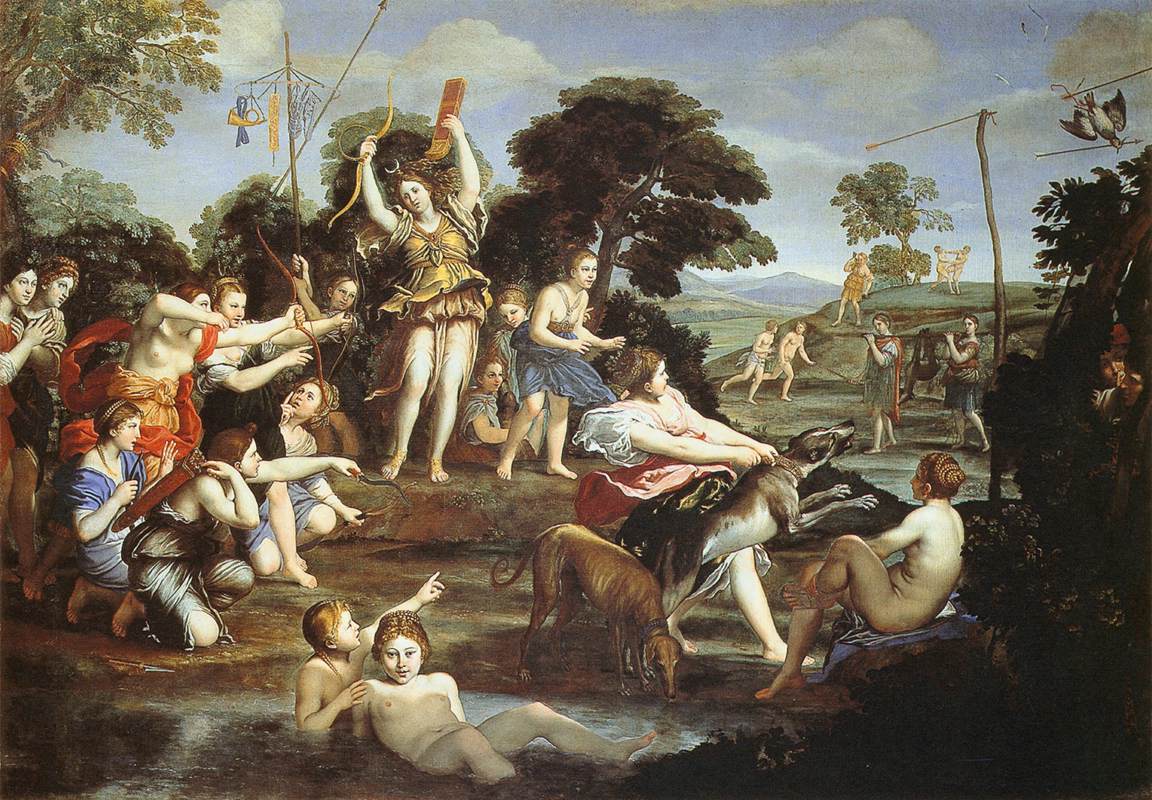

Hymns of Callimachus · Hymn 03
Artemis
εἰς Ἄρτεμιν
Prayer and ritual
These hymns may be spoken as complete prayers to the Gods. Within the Temple’s practice, a ritual is a direct theurgical act; hymnody gathers the mind and turns it toward the Divine, helping the initiate enter reverent communion with the Gods.
Use a hymn on its own in place of another prayer, or add it to the prayer portion of a suitable ritual. Choose according to the deity addressed and the petition expressed in the hymn. When combining them, preserve the ritual’s prescribed sequence and let the hymn give voice to its purpose.
The petition of this hymn
For Artemis’s watch over personal integrity, childbirth, the wild world, and the just flourishing of cities.
The complete hymn may be offered as extended prayer and praise of Artemis, bringing its many names and narratives into attentive recollection. It may also accompany an established rite for protection, aid in childbirth, or communal flourishing; its accounts of ancient offerings, prohibitions, and cult foundations are preserved as the poem’s own testimony.
English hieratic rendering
Hymn 03 · An English rendering aligned with the Greek lines.
- Artemis, whom singers may not lightly forget,
- we hymn: the bow and the hunting of hares are her care,
- the ample chorus, and delight among the mountains.
- Let us begin when, seated upon her father’s knees,
- still a little child, she spoke these words to her begetter:
- “Grant me, dear Father, to preserve my maidenhood forever,
- and many names, that Phoebus may not rival me.
- Grant me arrows and a bow. Yet stay, Father: neither a quiver
- nor a great bow do I ask of you. The Cyclopes will soon
- fashion arrows for me, and a well-curved bow.
- But grant me to bear light, and to gird myself in a tunic
- with an embroidered border reaching to the knee, that I may slay wild beasts.
- Give me sixty daughters of Ocean to dance with me,
- all nine years old, all still maidens without the girdle.
- Give me twenty Nymphs of Amnisus as attendants,
- to tend my hunting boots and, when I no longer shoot lynxes
- or deer, to care well for my swift hounds.
- Give me all the mountains; assign me whichever city
- you will, for seldom does Artemis go down to a town.
- I shall dwell among the mountains, and visit the cities of men
- only when women, worn by the sharp pains
- of childbirth, call me to their aid: the Fates allotted to me,
- from the moment of my birth, the task of helping them,
- because my mother suffered neither while bearing me
- nor while giving birth, but laid me from her limbs without travail.”
- So spoke the child, and longed to touch her father’s beard;
- many times she stretched her hands in vain,
- seeking to reach it. Her father smiled and nodded,
- and caressing her, said: “If goddesses would bear me
- children such as this, little would I heed jealous Hera
- in her anger. Take, my child, all that your heart
- asks, and your father will give still greater gifts besides.
- Thirty cities will I grant you, no single tower alone,
- thirty cities that shall know to honor no other god,
- but you alone, and to bear the name of Artemis.
- Many other cities, inland and on islands,
- you shall share with other gods; and in them all
- shall stand altars and groves of Artemis. Upon the streets
- and harbors you shall also keep watch.” Thus he spoke
- and ratified his word by nodding his head. The maiden went
- to Crete’s white mountain, clothed in forest;
- from there to Ocean, and chose many Nymphs,
- all nine years old, all still maidens without the girdle.
- Greatly the river Caeratus rejoiced, and Tethys rejoiced,
- for they were sending their daughters as companions to Leto’s child.
- Then she went in search of the Cyclopes, and found them
- on the island of Lipara, as it is now called, though then
- its name was Meligunis, at the anvils of Hephaestus,
- standing around the glowing metal: a mighty task pressed upon them,
- for they were making a drinking-trough for Poseidon’s horses.
- The Nymphs were afraid when they saw those terrible giants,
- like the crags of Ossa, and beneath each brow
- a single eye, vast as a shield of fourfold oxhide,
- glaring dreadfully; afraid, too, when they heard the thunder
- of the great resounding anvil, the mighty blast
- of the bellows, and the Cyclopes’ heavy groaning. Aetna cried aloud,
- and Trinacria, dwelling of the Sicanians, cried aloud; neighboring
- Italy cried aloud, and Cyrnus raised a mighty answering roar,
- whenever they lifted their hammers above their shoulders
- and, striking in turn the seething bronze or iron
- from the furnace, toiled with all their strength.
- Therefore the carefree daughters of Ocean could not bear
- to look straight upon them or receive their clamor in their ears.
- No wonder: even the daughters of the blessed gods who are no longer little
- never behold them without a shudder.
- Whenever a little girl disobeys her mother,
- the mother calls the Cyclopes to frighten her child,
- Arges or Steropes; and from the inner room
- Hermes comes, smeared with black soot,
- and at once plays the bogey to the girl; she plunges
- into her mother’s bosom, covering her eyes with her hands.
- But you, maiden, even earlier, when only three years old,
- when Leto came carrying you in her arms,
- at Hephaestus’s invitation to receive the gifts of first welcome,
- and Brontes set you upon his sturdy knees,
- you seized the thick hair upon his mighty breast
- and tore it out by force. That hairless patch remains even now
- in the middle of his chest, as when mange settles
- upon a man’s temple and consumes his hair.
- Therefore with great boldness you addressed them then:
- “Cyclopes, come, fashion for me also a Cydonian bow,
- arrows, and a hollow case to hold the shafts;
- for I too am Leto’s child, like Apollo.
- And if with my bow I catch a solitary wild creature
- or a monstrous beast, the Cyclopes shall eat it.”
- You spoke, and they fulfilled your word. At once you armed yourself, goddess,
- and swiftly went on to find hounds, coming to Pan’s
- Arcadian fold. He was cutting up the flesh of a lynx
- from Maenalus, to feed his nursing hounds.
- The bearded god gave you two hounds with coats half black and half white,
- three reddish, and one spotted; they could seize even lions
- by the throat and drag them backward,
- still living, to the fold. He also gave seven
- Cynosurian bitches, swifter than breezes, the fastest
- in pursuit of fawns and the hare whose eyes do not close,
- in finding the lair of a stag and the porcupine’s burrow,
- and in leading the way upon the track of a gazelle.
- Departing from there, with your hounds speeding after you,
- you found at the foot of the Parrhasian mountain
- deer leaping, a mighty quarry. They had ever grazed
- beside the banks of Anaurus with its black pebbles,
- larger than bulls, and gold flashed from their antlers.
- Suddenly you marveled and spoke within your heart:
- “This would be a first capture worthy of Artemis.”
- There were five in all; four you swiftly caught by running,
- without a chase of hounds, to draw your swift chariot.
- The one that fled across the river Celadon,
- by Hera’s counsel, to become a labor for Heracles
- in later days, was received by the Ceryneian hill.
- Artemis, maiden goddess, slayer of Tityus, golden are your
- weapons and girdle; you yoked a golden chariot,
- and set golden bridles, goddess, upon the deer.
- Where did your antler-drawn car first begin to bear you?
- Upon Thracian Haemus, from where the blast of Boreas
- comes bringing bitter cold to those without a cloak.
- Where did you cut the pine, and from what flame did you kindle it?
- On Mysian Olympus; and you set in it the breath
- of undying light that drips from your father’s thunderbolts.
- How many times, goddess, did you test your silver bow?
- First upon an elm, then you sent the second shaft at an oak,
- the third at a wild beast; the fourth you did not long delay,
- but into a city of unjust people, who committed many wrongs
- against one another and against strangers,
- reckless people upon whom you imprint your grievous anger.
- Plague devours their cattle, and frost their crops;
- old men shear their hair over their sons, and women
- in childbirth die beneath your stroke, or if they escape,
- bring forth children of whom none stands upright upon the ankle.
- But those upon whom you gaze smiling and gracious,
- for them the field bears grain well, the four-footed herds
- breed well, and prosperity increases; they go to no tomb
- except when they carry one who has lived many years.
- Nor does discord wound their households, that discord which has ruined
- even firmly established homes; the wives of brothers
- and their husbands’ sisters place their seats around one table.
- Sovereign, may every true friend of mine be among them,
- and may I be among them myself, O queen; may song ever be my care.
- In it shall be Leto’s marriage, and you in all your fullness,
- Apollo also, and all your mighty labors,
- your hounds, your bows, and the chariots that easily
- bear you, a wonder to behold, when you drive to the house of Zeus.
- There they meet you upon the threshold and receive your burdens:
- Hermes of Acacesium takes your weapons, and Apollo
- whatever beast you bring. So it was before
- mighty Alcides arrived; now Phoebus no longer
- has that task, for the Tirynthian anvil of strength
- always stands before the gates, waiting to see whether you return
- with some rich food. All the gods laugh at him
- unceasingly, and his mother-in-law most of all,
- when from your chariot he carries a great bull or a solitary
- wild boar, struggling, held by its hind foot.
- With these cunning words he instructs you, goddess:
- “Shoot at harmful beasts, that mortals may call you their helper,
- as they call me. Leave gazelles and hares
- to graze upon the mountains. What harm could gazelles and hares
- do? Boars ravage the crops, boars ravage the plantings.
- Bulls also are a great evil to men: shoot at them too.”
- So he spoke, and busily worked over the mighty beast.
- For even when his limbs were made divine beneath the Phrygian oak,
- he did not cease his ravenous eating: that same belly remains,
- with which he once encountered Thiodamas at the plough.
- Meanwhile your Amnisian attendants rub down the deer
- released from the yoke, and bring them abundant grazing,
- having cut from Hera’s meadow
- swift-growing trefoil, which the horses of Zeus also eat.
- They fill the golden troughs
- with water, that the deer may drink to their hearts’ content.
- You yourself enter your father’s house; all alike
- invite you to a seat, but you sit beside Apollo.
- And whenever the Nymphs circle you in the dance
- beside the springs of Egyptian Inopus,
- or at Pitane, for Pitane is yours also, or in Limnae,
- or where, divine one, you came to dwell at Halae Araphenides,
- leaving Scythia and renouncing the customs of the Taurians,
- may my oxen not then, for hire, be cutting
- a four-acre fallow beneath another man’s ploughman.
- For they would return to their stall crippled and weary-necked,
- even if they were oxen of Stymphaea,
- nine years old and drawing by the horns, the very finest
- for cutting a deep furrow. For the god Helios has never
- passed by that beautiful dance, but gazes upon it,
- bringing his chariot to a halt, and the daylight lengthens.
- Which island, which mountain pleased you most,
- which harbor, which city? Which Nymphs did you love
- above the rest, and which heroines did you take as companions?
- Tell us, goddess, and I shall sing it to others.
- Of islands Doliche pleased you, and of cities Perge;
- of mountains Taygetus, and of harbors those of Euripus.
- Above all other Nymphs you loved the Gortynian,
- Britomartis, deer-slayer of the sure eye. Once Minos,
- driven by love for her, ran through the mountains of Crete.
- The Nymph hid now beneath the leafy oaks,
- now in the low meadows; for nine months he roamed
- over cliffs and crags, and never ceased his pursuit,
- until, almost caught, she sprang into the sea
- from the highest cliff and leapt into fishermen’s
- nets, which saved her. Therefore afterward the Cydonians
- called the Nymph Dictynna, and the mountain from which she leapt
- Dictaeum; they raised altars
- and perform sacred offerings. On that day the wreath
- is pine or mastic, and their hands do not touch myrtle,
- for then a branch of myrtle caught the maiden’s robes
- as she fled, and she conceived great anger against the myrtle.
- Queen Oupis, fair-eyed bearer of light, the Cretans also
- call you by a name taken from that Nymph.
- You also chose Cyrene as your companion, and once gave her,
- with your own hands, two hunting hounds; with them the daughter
- of Hypseus won a prize beside the tomb at Iolcus.
- And the golden-haired wife of Cephalus, son of Deion,
- you made your fellow hunter, sovereign. They also say
- you loved beautiful Anticleia as dearly as your own eyes.
- These women first bore the swift bow and, upon their shoulders,
- the arrow-holding quivers; their right shoulders
- were uncovered, and the naked breast was always visible.
- You praised most highly swift-footed Atalanta,
- boar-slaying daughter of Arcadian Iasius,
- and taught her the chase and the art of true aim.
- The hunters summoned against the Calydonian boar
- do not fault her: for the tokens of victory
- went into Arcadia, which still holds the beast’s tusks.
- Nor do I think that Hylaeus and foolish Rhoecus,
- even in Hades and though they hate her, would find fault
- with her archery: their flanks could not bear them false witness,
- from which the summit of Maenalus streamed with blood.
- Mistress of many shrines and many cities, hail, goddess of the Tunic,
- dwelling in Miletus. Neleus made you
- his guide when he put to sea from the land of Cecrops.
- Chesian, Imbrasian, foremost-enthroned goddess, to you Agamemnon
- dedicated the rudder of his ship within your temple,
- as an offering to appease his lack of passage, when you bound the winds,
- while the Achaean ships sailed to bring grief to the Trojan cities,
- stirred to anger over Helen of Rhamnus.
- Proetus indeed established two temples for you,
- one to you as Maiden, because you gathered his daughters
- wandering through the Azanian mountains; the other, in Lusi,
- to you as Gentle, because you took their wild spirit from them.
- For you also the war-loving Amazons
- once set up an image in Ephesus beside the sea,
- beneath an oak trunk, and Hippo performed your sacred rite.
- They themselves, Queen Oupis, danced the armed dance around you,
- first bearing shields, then forming
- a broad circling chorus. Clear-voiced, slender pipes
- accompanied them, that they might strike the ground together.
- For they had not yet bored through the bones of fawns,
- Athena’s work that brings harm to the deer. The echo ran
- to Sardis and the Berecynthian land; with their feet
- they clattered fiercely, and their quivers rang in answer.
- Afterward around that image a broad-founded sanctuary
- was built for you, and Dawn shall behold none more divine
- or richer: readily could it surpass Pytho.
- Therefore insolent Lygdamis, in his madness, threatened
- to sack it. He brought against it an army of horse-milking
- Cimmerians, countless as sand, who dwell close beside
- the crossing of the daughter of Inachus in her bovine form.
- Wretched king, how greatly he transgressed! He was destined
- never to return to Scythia, neither he nor any other
- whose wagons stood upon the Caystrian meadow;
- for your bows are always set before Ephesus in its defense.
- Sovereign of Munychia, watcher over harbors, hail, Pheraean goddess.
- Let no one dishonor Artemis: not even Oeneus,
- who dishonored her altar, saw a fair contest come upon his city.
- Let no one rival her in shooting deer or in true aim;
- for the son of Atreus paid no small price for his boast.
- Let no one court the maiden: neither Otus
- nor Orion courted a fortunate marriage.
- Let no one shun the yearly dance: not even Hippo
- refused to circle the altar without cause for tears.
- Great hail to you, sovereign, and graciously receive this song.
Ancient Greek & pronunciation
Read the English pronunciation spelling directly below each Greek line.
- Ἄρτεμιν (οὐ γὰρ ἐλαφρὸν ἀειδόντεσσι λαθέσθαι)AHR-teh-meen (oo GHAHR eh-lah-FROHN ah-ee-DHOHN-deh-see lah-THEHS-theh)
- ὑμνέομεν, τῇ τόξα λαγωβολίαι τε μέλονταιeem-NEH-oh-mehn, TEE TOHK-sah lah-ghoh-voh-LEE-eh teh MEH-lohn-deh
- καὶ χορὸς ἀμφιλαφὴς καὶ ἐν οὔρεσιν ἑψιάασθαι,KEH khoh-ROHS ahm-fee-lah-FEES KEH ehn OO-reh-seen ehp-see-AH-ahs-theh,
- ἄρχμενοι, ὡς ὅτε πατρὸς ἐφεζομένη γονάτεσσιAHRKH-meh-nee, ohs OH-teh pah-TROHS eh-feh-zoh-MEH-nee ghoh-NAH-teh-see
- παῖς ἔτι κουρίζουσα τάδε προσέειπε γονῆαPEHS EH-tee koo-REE-zoo-sah TAH-dheh proh-SEH-ee-peh ghoh-NEE-ah
- δός μοι παρθενίην αἰώνιον, ἄππα, φυλάσσειν,DHOHS mee pahr-theh-NEE-een eh-OH-nee-ohn, AH-pah, fee-LAH-seen,
- καὶ πολυωνυμίην, ἵνα μή μοι Φοῖβος ἐρίζῃ.KEH poh-lee-oh-nee-MEE-een, EE-nah MEE mee FEE-vohs eh-REE-zee.
- δὸς δʼ ἰοὺς καὶ τόξα—ἔα, πάτερ, οὔ σε φαρέτρηνDHOHS dh’ ee-OOS KEH TOHK-sah—EH-ah, PAH-tehr, OO seh fah-REH-treen
- οὐδʼ αἰτέω μέγα τόξον· ἐμοὶ Κύκλωπες ὀιστοὺςoodh’ eh-TEH-oh MEH-ghah TOHK-sohn· eh-MEE KEE-kloh-pehs oh-ee-STOOS
- αὐτίκα τεχνήσονται, ἐμοὶ δʼ εὐκαμπὲς ἄεμμα·ahf-TEE-kah tehkh-NEE-sohn-deh, eh-MEE dh’ ehf-kahm-BEHS AH-eh-mah·
- ἀλλὰ φαεσφορίην τε καὶ ἐς γόνυ μέχρι χιτῶναah-LAH fah-eh-sfoh-REE-een teh KEH ehs GHOH-nee MEH-khree hyee-TOH-nah
- ζώννυσθαι λεγνωτόν, ἵνʼ ἄγρια θηρία καίνω.ZOH-nees-theh lehgh-noh-TOHN, EEN’ AH-ghree-ah thee-REE-ah KEH-noh.
- δὸς δέ μοι ἑξήκοντα χορίτιδας Ὠκεανίνας,DHOHS DHEH mee ehk-SEE-kohn-dah khoh-REE-tee-dhahs oh-keh-ah-NEE-nahs,
- πάσας εἰνέτεας, πάσας ἔτι παῖδας ἀμίτρους.PAH-sahs ee-NEH-teh-ahs, PAH-sahs EH-tee PEH-dhahs ah-MEE-troos.
- δὸς δέ μοι ἀμφιπόλους Ἀμνισίδας εἴκοσι νύμφας,DHOHS DHEH mee ahm-fee-POH-loos ahm-nee-SEE-dhahs EE-koh-see NEEM-fahs,
- αἵ τέ μοι ἐνδρομίδας τε καὶ ὁππότε μηκέτι λύγκαςEH TEH mee ehn-dhroh-MEE-dhahs teh KEH oh-POH-teh mee-KEH-tee LEEN-gahs
- μήτʼ ἐλάφους βάλλοιμι, θοοὺς κύνας εὖ κομέοιεν,MEET’ eh-LAH-foos VAH-lee-mee, thoh-OOS KEE-nahs EHV koh-MEH-ee-ehn,
- δὸς δέ μοι οὔρεα πάντα· πόλιν δέ μοι ἥντινα νεῖμονDHOHS DHEH mee OO-reh-ah PAHN-dah· POH-leen DHEH mee EEN-dee-nah NEE-mohn
- ἥντινα λῇς· σπαρνὸν γὰρ ὅτʼ Ἄρτεμις ἄστυ κάτεισιν·EEN-dee-nah LEES· spahr-NOHN GHAHR OHT’ AHR-teh-mees AH-stee KAH-tee-seen·
- οὔρεσιν οἰκήσω, πόλεσιν δʼ ἐπιμείξομαι ἀνδρῶνOO-reh-seen ee-KEE-soh, POH-leh-seen dh’ eh-pee-MEEK-soh-meh ahn-DHROHN
- μοῦνον ὅτʼ ὀξείῃσιν ὑπʼ ὠδίνεσσι γυναῖκεςMOO-nohn OHT’ ohk-SEE-ee-seen eep’ oh-DHEE-neh-see yee-NEH-kehs
- τειρόμεναι καλέουσι βοηθόον, ᾗσί με Μοῖραιtee-ROH-meh-neh kah-LEH-oo-see voh-ee-THOH-ohn, EE-SEE meh MEE-reh
- γεινομένην τὸ πρῶτον ἐπεκλήρωσαν ἀρήγειν,yee-noh-MEH-neen TOH PROH-tohn eh-peh-KLEE-roh-sahn ah-REE-yeen,
- ὅττι με καὶ τίκτουσα καὶ οὐκ ἤλγησε φέρουσαOH-tee meh KEH TEEK-too-sah KEH ook EEL-yee-seh FEH-roo-sah
- μήτηρ, ἀλλʼ ἀμογητὶ φίλων ἀπεθήκατο γυίων.MEE-teer, ahl’ ah-moh-yee-TEE FEE-lohn ah-peh-THEE-kah-toh YEE-ohn.
- ὣς ἡ παῖς εἰποῦσα γενειάδος ἤθελε πατρὸςOHS ee PEHS ee-POO-sah yeh-nee-AH-dhohs EE-theh-leh pah-TROHS
- ἅψασθαι, πολλὰς δὲ μάτην ἐτανύσσατο χεῖρας,AHP-sahs-theh, poh-LAHS DHEH MAH-teen eh-tah-NEE-sah-toh HYEE-rahs,
- μέχρις ἵνα ψαύσειε. πατὴρ δʼ ἐπένευσε γελάσσας,MEH-khrees EE-nah PSAHF-see-eh. pah-TEER dh’ eh-PEH-nehf-seh yeh-LAH-sahs,
- φῆ δὲ καταρρέζων ὅτε μοι τοιαῦτα θέαιναιFEE DHEH kah-tah-REH-zohn OH-teh mee tee-AHF-tah THEH-eh-neh
- τίκτοιεν, τυτθόν κεν ἐγὼ ζηλήμονος ἭρηςTEEK-tee-ehn, teet-THOHN kehn eh-GHOH zee-LEE-moh-nohs EE-rees
- χωομένης ἀλέγοιμι. φέρευ, τέκος, ὅσσʼ ἐθελημὸςkhoh-oh-MEH-nees ah-LEH-yee-mee. FEH-rehv, TEH-kohs, OHS’ eh-theh-lee-MOHS
- αἰτίζεις, καὶ δʼ ἄλλα πατὴρ ἔτι μείζονα δώσει.eh-TEE-zees, KEH dh’ AH-lah pah-TEER EH-tee MEE-zoh-nah DHOH-see.
- τρὶς δέκα τοι πτολίεθρα καὶ οὐχ ἕνα πύργον ὀπάσσω,TREES DHEH-kah tee ptoh-LEE-eh-thrah KEH ookh EH-nah PEER-ghohn oh-PAH-soh,
- τρὶς δέκα τοι πτολίεθρα, τὰ μὴ θεὸν ἄλλον ἀέξεινTREES DHEH-kah tee ptoh-LEE-eh-thrah, TAH MEE theh-OHN AH-lohn ah-EHK-seen
- εἴσεται, ἀλλὰ μόνην σὲ καὶ Ἀρτέμιδος καλέεσθαι·EE-seh-teh, ah-LAH MOH-neen SEH KEH ahr-TEH-mee-dhohs kah-LEH-ehs-theh·
- πολλὰς δὲ ξυνῇ πόλιας διαμετρήσασθαιpoh-LAHS DHEH ksee-NEE POH-lee-ahs dhee-ah-meh-TREE-sahs-theh
- μεσσόγεως νήσους τε· καὶ ἐν πάσῃσιν ἔσονταιmeh-SOH-yeh-ohs NEE-soos teh· KEH ehn PAH-see-seen EH-sohn-deh
- Ἀρτέμιδος βωμοί τε καὶ ἄλσεα. καὶ μὲν ἀγυιαῖςahr-TEH-mee-dhohs voh-MEE teh KEH AHL-seh-ah. KEH MEHN ah-yee-EHS
- ἔσσῃ καὶ λιμένεσσιν ἐπίσκοπος. ὣς ὁ μὲν εἰπὼνEH-see KEH lee-MEH-neh-seen eh-PEE-skoh-pohs. OHS oh MEHN ee-POHN
- μῦθον ἐπεκρήηνε καρήατι. βαῖνε δὲ κούρηMEE-thohn eh-peh-KREE-ee-neh kah-REE-ah-tee. VEH-neh DHEH KOO-ree
- λευκὸν ἐπὶ Κρηταῖον ὄρος κεκομημένον ὕλῃ·lehf-KOHN eh-PEE kree-TEH-ohn OH-rohs keh-koh-mee-MEH-nohn EE-lee·
- ἔνθεν ἐπʼ Ὠκεανόν· πολέας δʼ ἐπελέξατο νύμφας,EHN-thehn ehp’ oh-keh-ah-NOHN· poh-LEH-ahs dh’ eh-peh-LEHK-sah-toh NEEM-fahs,
- πάσας εἰνέτεας, πάσας ἔτι παῖδας ἀμίτρους.PAH-sahs ee-NEH-teh-ahs, PAH-sahs EH-tee PEH-dhahs ah-MEE-troos.
- χαῖρε δὲ Καίρατος ποταμὸς μέγα, χαῖρε δὲ Τηθύς,HYEH-reh DHEH KEH-rah-tohs poh-tah-MOHS MEH-ghah, HYEH-reh DHEH tee-THEES,
- οὕνεκα θυγατέρας Λητωίδι πέμπον ἀμορβούς.OO-neh-kah thee-ghah-TEH-rahs lee-toh-EE-dhee PEHM-bohn ah-mohr-VOOS.
- αὖθι δὲ Κύκλωπας μετεκίαθε· τοὺς μὲν ἔτετμεAHF-thee DHEH KEE-kloh-pahs meh-teh-KEE-ah-theh· TOOS MEHN EH-teht-meh
- νήσῳ ἐνὶ Λιπάρῃ (Λιπάρη νέον, ἀλλὰ τότʼ ἔσκενNEE-soh eh-NEE lee-PAH-ree (lee-PAH-ree NEH-ohn, ah-LAH TOHT’ EH-skehn
- οὔνομά οἱ Μελιγουνίς) ἐπʼ ἄκμοσιν ἩφαίστοιοOO-noh-MAH ee meh-lee-ghoo-NEES) ehp’ AHK-moh-seen ee-FEH-stee-oh
- ἑσταότας περὶ μύδρον· ἐπείγετο γὰρ μέγα ἔργον·eh-stah-OH-tahs peh-REE MEE-dhrohn· eh-PEE-yeh-toh GHAHR MEH-ghah EHR-ghohn·
- ἱππείην τετύκοντο Ποσειδάωνι ποτίστρην.ee-PEE-een teh-TEE-kohn-doh poh-see-DHAH-oh-nee poh-TEE-streen.
- αἱ νύμφαι δʼ ἔδδεισαν, ὅπως ἴδον αἰνὰ πέλωραeh NEEM-feh dh’ EH-dhee-sahn, OH-pohs EE-dhohn eh-NAH PEH-loh-rah
- πρηόσιν Ὀσσαίοισιν ἐοικότα, πᾶσι δʼ ὑπʼ ὀφρὺνpree-OH-seen oh-SEH-ee-seen eh-ee-KOH-tah, PAH-see dh’ eep’ oh-FREEN
- φάεα μουνόγληνα σάκει ἴσα τετραβοείῳFAH-eh-ah moo-NOH-ghlee-nah SAH-kee EE-sah teh-trah-voh-EE-oh
- δεινὸν ὑπογλαύσσοντα, καὶ ὁππότε δοῦπον ἄκουσανdhee-NOHN ee-poh-GHLAHF-sohn-dah, KEH oh-POH-teh DHOO-pohn AH-koo-sahn
- ἄκμονος ἠχήσαντος ἐπὶ μέγα πουλύ τʼ ἄημαAHK-moh-nohs ee-HYEE-sahn-dohs eh-PEE MEH-ghah poo-LEE t’ AH-ee-mah
- φυσάων αὐτῶν τε βαρὺν στόνον· αὖε γὰρ Αἴτνη,fee-SAH-ohn ahf-TOHN teh vah-REEN STOH-nohn· AH-veh GHAHR EHT-nee,
- αὖε δὲ Τρινακίη, Σικανῶν ἕδος, αὖε δὲ γείτωνAH-veh DHEH tree-nah-KEE-ee, see-kah-NOHN EH-dhohs, AH-veh DHEH YEE-tohn
- Ἰταλίη, μεγάλην δὲ βοὴν ἐπὶ Κύρνος ἀύτει,ee-tah-LEE-ee, meh-GHAH-leen DHEH voh-EEN eh-PEE KEER-nohs ah-EE-tee,
- εὖθʼ οἵ γε ῥαιστῆρας ἀειράμενοι ὑπὲρ ὤμωνEHFTH’ EE yeh reh-STEE-rahs ah-ee-RAH-meh-nee ee-PEHR OH-mohn
- ἢ χαλκὸν ζείοντα καμινόθεν ἠὲ σίδηρονEE khahl-KOHN ZEE-ohn-dah kah-mee-NOH-thehn ee-EH SEE-dhee-rohn
- ἀμβολαδὶς τετυπόντες ἐπὶ μέγα μοχθήσειαν.ahm-voh-lah-DHEES teh-tee-POHN-dehs eh-PEE MEH-ghah mohkh-THEE-see-ahn.
- τῶ σφέας οὐκ ἐτάλασσαν ἀκηδέες ὨκεανῖναιTOH SFEH-ahs ook eh-TAH-lah-sahn ah-kee-DHEH-ehs oh-keh-ah-NEE-neh
- οὔτʼ ἄντην ἰδέειν οὔτε κτύπον οὔασι δέχθαι.OOT’ AHN-deen ee-DHEH-een OO-teh KTEE-pohn OO-ah-see DHEHKH-theh.
- οὐ νέμεσις· κείνους γε καὶ αἱ μάλα μηκέτι τυτθαὶoo NEH-meh-sees· KEE-noos yeh KEH eh MAH-lah mee-KEH-tee teet-THEH
- οὐδέποτʼ ἀφρικτὶ μακάρων ὁρόωσι θύγατρες.oo-DHEH-poht’ ah-freek-TEE mah-KAH-rohn oh-ROH-oh-see THEE-ghah-trehs.
- ἀλλʼ ὅτε κουράων τις ἀπειθέα μητέρι τεύχοι,ahl’ OH-teh koo-RAH-ohn tees ah-pee-THEH-ah mee-TEH-ree TEHF-hyee,
- μήτηρ μὲν Κύκλωπας ἑῇ ἐπὶ παιδὶ καλιστρεῖ,MEE-teer MEHN KEE-kloh-pahs eh-EE eh-PEE peh-DHEE kah-lee-STREE,
- Ἄργην ἢ Στερόπην· ὁ δὲ δώματος ἐκ μυχάτοιοAHR-yeen EE steh-ROH-peen· oh DHEH DHOH-mah-tohs ehk mee-KHAH-tee-oh
- ἔρχεται Ἑρμείης σποδιῇ κεχρημένος αἰθῇ·EHR-hyeh-teh ehr-MEE-ees spoh-dhee-EE keh-khree-MEH-nohs eh-THEE·
- αὐτίκα τὴν κούρην μορμύσσεται, ἡ δὲ τεκούσηςahf-TEE-kah TEEN KOO-reen mohr-MEE-seh-teh, ee DHEH teh-KOO-sees
- δύνει ἔσω κόλπους θεμένη ἐπὶ φάεσι χεῖρας.DHEE-nee EH-soh KOHL-poos theh-MEH-nee eh-PEE FAH-eh-see HYEE-rahs.
- κοῦρα, σὺ δὲ προτέρω περ, ἔτι τριέτηρος ἐοῦσα,KOO-rah, SEE DHEH proh-TEH-roh pehr, EH-tee tree-EH-tee-rohs eh-OO-sah,
- εὖτʼ ἔμολεν Λητώ σε μετʼ ἀγκαλίδεσσι φέρουσα,EHFT’ EH-moh-lehn lee-TOH seh meht’ ahn-gah-LEE-dheh-see FEH-roo-sah,
- Ἡφαίστου καλέοντος ὅπως ὀπτήρια δοίη,ee-FEH-stoo kah-LEH-ohn-dohs OH-pohs ohp-TEE-ree-ah DHEE-ee,
- Βρόντεώ σε στιβαροῖσιν ἐφεσσαμένου γονάτεσσι,VROHN-deh-OH seh stee-vah-REE-seen eh-feh-sah-MEH-noo ghoh-NAH-teh-see,
- στήθεος ἐκ μεγάλου λασίης ἐδράξαο χαίτης,STEE-theh-ohs ehk meh-GHAH-loo lah-SEE-ees eh-DHRAHK-sah-oh HYEH-tees,
- ὤλοψας δὲ βίηφι· τὸ δʼ ἄτριχον εἰσέτι καὶ νῦνOH-lohp-sahs DHEH VEE-ee-fee· TOH dh’ AH-tree-khohn ee-SEH-tee KEH NEEN
- μεσσάτιον στέρνοιο μένει μέρος, ὡς ὅτε κόρσηνmeh-SAH-tee-ohn STEHR-nee-oh MEH-nee MEH-rohs, ohs OH-teh KOHR-seen
- φωτὸς ἐνιδρυθεῖσα κόμην ἐπενείματʼ ἀλώπηξ.foh-TOHS eh-nee-dhree-THEE-sah KOH-meen eh-peh-NEE-maht’ ah-LOH-peeks.
- τῶ μάλα θαρσαλέη σφε τάδε προσελέξαο τῆμοςTOH MAH-lah thahr-sah-LEH-ee sfeh TAH-dheh proh-seh-LEHK-sah-oh TEE-mohs
- Κύκλωπες, κἠμοί τι Κυδώνιον εἰ δʼ ἄγε τόξονKEE-kloh-pehs, kee-MEE tee kee-DHOH-nee-ohn ee dh’ AH-yeh TOHK-sohn
- ἠδʼ ἰοὺς κοίλην τε κατακληῖδα βελέμνωνeedh’ ee-OOS KEE-leen teh kah-tah-klee-EE-dhah veh-LEHM-nohn
- τεύξατε· καὶ γὰρ ἐγὼ Λητωιὰς ὥσπερ Ἀπόλλων.TEHFK-sah-teh· KEH GHAHR eh-GHOH lee-toh-ee-AHS OH-spehr ah-POH-lohn.
- αἰ δέ κʼ ἐγὼ τόξοις μονιὸν δάκος ἤ τι πέλωρονeh DHEH k’ eh-GHOH TOHK-sees moh-nee-OHN DHAH-kohs EE tee PEH-loh-rohn
- θηρίον ἀγρεύσω, τὸ δέ κεν Κύκλωπες ἔδοιεν.thee-REE-ohn ah-GHREHF-soh, TOH DHEH kehn KEE-kloh-pehs EH-dhee-ehn.
- ἔννεπες· οἱ δʼ ἐτέλεσσαν· ἄφαρ δʼ ὡπλίσσαο, δαῖμον,EH-neh-pehs· ee dh’ eh-TEH-leh-sahn· AH-fahr dh’ oh-PLEE-sah-oh, DHEH-mohn,
- αἶψα δʼ ἐπὶ σκύλακας πάλιν ἤιες· ἵκεο δʼ αὖλινEHP-sah dh’ eh-PEE SKEE-lah-kahs PAH-leen EE-ee-ehs· EE-keh-oh dh’ AH-vleen
- Ἀρκαδικὴν ἔπι Πανός. ὁ δὲ κρέα λυγκὸς ἔταμνεahr-kah-dhee-KEEN EH-pee pah-NOHS. oh DHEH KREH-ah leen-GOHS EH-tahm-neh
- Μαιναλίης, ἵνα οἱ τοκάδες κύνες εἶδαρ ἔδοιεν.meh-nah-LEE-ees, EE-nah ee toh-KAH-dhehs KEE-nehs EE-dhahr EH-dhee-ehn.
- τὶν δʼ ὁ γενειήτης δύο μὲν κύνας ἥμισυ πηγοὺςTEEN dh’ oh yeh-nee-EE-tees DHEE-oh MEHN KEE-nahs EE-mee-see pee-GHOOS
- τρεῖς δὲ παρουαίους ἕνα δʼ αἰόλον, οἵ ῥα λέονταςTREES DHEH pah-roo-EH-oos EH-nah dh’ eh-OH-lohn, EE rah LEH-ohn-dahs
- αὐτοὺς αὖ ἐρύοντες, ὅτε δράξαιντο δεράων,ahf-TOOS AHV eh-REE-ohn-dehs, OH-teh DHRAHK-sehn-doh dheh-RAH-ohn,
- εἷλκον ἔτι ζώοντας ἐπʼ αὐλίον, ἑπτὰ δʼ ἔδωκεEEL-kohn EH-tee ZOH-ohn-dahs ehp’ ah-VLEE-ohn, ehp-TAH dh’ EH-dhoh-keh
- θάσσονας αὐράων Κυνοσουρίδας, αἵ ῥα διῶξαιTHAH-soh-nahs ah-VRAH-ohn kee-noh-soo-REE-dhahs, EH rah dhee-OHK-seh
- ὤκισται νεβρούς τε καὶ οὐ μύοντα λαγωόν,OH-kee-steh neh-VROOS teh KEH oo MEE-ohn-dah lah-ghoh-OHN,
- καὶ κοίτην ἐλάφοιο καὶ ὕστριχος ἔνθα καλιαὶKEH KEE-teen eh-LAH-fee-oh KEH EE-stree-khohs EHN-thah kah-lee-EH
- σημῆναι, καὶ ζορκὸς ἐπʼ ἴχνιον ἡγήσασθαι.see-MEE-neh, KEH zohr-KOHS ehp’ EEKH-nee-ohn ee-YEE-sahs-theh.
- ἔνθεν ἀπερχομένη (μετὰ καὶ κύνες ἐσσεύοντο)EHN-thehn ah-pehr-khoh-MEH-nee (meh-TAH KEH KEE-nehs eh-SEH-vohn-doh)
- εὗρες ἐπὶ προμολῇσʼ ὄρεος τοῦ ΠαρρασίοιοEH-vrehs eh-PEE proh-moh-LEES’ OH-reh-ohs TOO pah-rah-SEE-ee-oh
- σκαιρούσας ἐλάφους, μέγα τι χρέος· αἱ μὲν ἐπʼ ὄχθῃςskeh-ROO-sahs eh-LAH-foos, MEH-ghah tee KHREH-ohs· eh MEHN ehp’ OHKH-thees
- αἰὲν ἐβουκολέοντο μελαμψήφιδος Ἀναύρου,eh-EHN eh-voo-koh-LEH-ohn-doh meh-lahmp-SEE-fee-dhohs ah-NAH-vroo,
- μάσσονες ἢ ταῦροι, κεράων δʼ ἀπελάμπετο χρυσός·MAH-soh-nehs EE TAH-vree, keh-RAH-ohn dh’ ah-peh-LAHM-beh-toh khree-SOHS·
- ἐξαπίνης δʼ ἔταφές τε καὶ ὃν ποτὶ θυμὸν ἔειπεςehk-sah-PEE-nees dh’ EH-tah-FEHS teh KEH OHN poh-TEE thee-MOHN EH-ee-pehs
- τοῦτό κεν Ἀρτέμιδος πρωτάγριον ἄξιον εἴη.TOO-TOH kehn ahr-TEH-mee-dhohs proh-TAH-ghree-ohn AHK-see-ohn EE-ee.
- πέντʼ ἔσαν αἱ πᾶσαι· πίσυρας δʼ ἕλες ὦκα θέουσαPEHND’ EH-sahn eh PAH-seh· PEE-see-rahs dh’ EH-lehs OH-kah THEH-oo-sah
- νόσφι κυνοδρομίης, ἵνα τοι θοὸν ἅρμα φέρωσι.NOH-sfee kee-noh-dhroh-MEE-ees, EE-nah tee thoh-OHN AHR-mah FEH-roh-see.
- τὴν δὲ μίαν Κελάδοντος ὑπὲρ ποταμοῖο φυγοῦσανTEEN DHEH MEE-ahn keh-LAH-dhohn-dohs ee-PEHR poh-tah-MEE-oh fee-GHOO-sahn
- Ἡρης ἐννεσίῃσιν, ἀέθλιον Ἡρακλῆιee-rees eh-neh-SEE-ee-seen, ah-EHTH-lee-ohn ee-rah-KLEE-ee
- ὕστερον ὄφρα γένοιτο, πάγος Κερύνειος ἔδεκτο.EE-steh-rohn OH-frah YEH-nee-toh, PAH-ghohs keh-REE-nee-ohs EH-dhehk-toh.
- Ἄρτεμι Παρθενίη Τιτυοκτόνε, χρύσεα μέν τοιAHR-teh-mee pahr-theh-NEE-ee tee-tee-ohk-TOH-neh, KHREE-seh-ah MEHN tee
- ἔντεα καὶ ζώνη, χρύσεον δʼ ἐζεύξαο δίφρον,EHN-deh-ah KEH ZOH-nee, KHREE-seh-ohn dh’ eh-ZEHFK-sah-oh DHEE-frohn,
- ἐν δʼ ἐβάλευ χρύσεια, θεή, κεμάδεσσι χαλινά.ehn dh’ eh-VAH-lehv KHREE-see-ah, theh-EE, keh-MAH-dheh-see khah-lee-NAH.
- ποῦ δέ σε τὸ πρῶτον κερόεις ὄχος ἤρξατʼ ἀείρειν;POO DHEH seh TOH PROH-tohn keh-ROH-ees OH-khohs EERK-saht’ ah-EE-reen;
- Αἵμῳ ἐπὶ Θρήικι, τόθεν βορέαο κατᾶιξEH-moh eh-PEE THREE-ee-kee, TOH-thehn voh-REH-ah-oh kah-TAH-eeks
- ἔρχεται ἀχλαίνοισι δυσαέα κρυμὸν ἄγουσα.EHR-hyeh-teh ah-KHLEH-nee-see dhee-sah-EH-ah kree-MOHN AH-ghoo-sah.
- ποῦ δʼ ἔταμες πεύκην, ἀπὸ δὲ φλογὸς ἥψαο ποίης;POO dh’ EH-tah-mehs PEHF-keen, ah-POH DHEH floh-GHOHS EEP-sah-oh PEE-ees;
- Μυσῷ ἐν Οὐλύμπῳ, φάεος δʼ ἐνέηκας ἀυτμὴνmee-SOH ehn oo-LEEM-boh, FAH-eh-ohs dh’ eh-NEH-ee-kahs ah-eet-MEEN
- ἀσβέστου, τό ῥα πατρὸς ἀποστάζουσι κεραυνοί.ahz-VEH-stoo, TOH rah pah-TROHS ah-poh-STAH-zoo-see keh-rahv-NEE.
- ποσσάκι δʼ ἀργυρέοιο, θεή, πειρήσαο τόξου;poh-SAH-kee dh’ ahr-yee-REH-ee-oh, theh-EE, pee-REE-sah-oh TOHK-soo;
- πρῶτον ἐπὶ πτελέην, τὸ δὲ δεύτερον ἧκας ἐπὶ δρῦν,PROH-tohn eh-PEE pteh-LEH-een, TOH DHEH DHEHF-teh-rohn EE-kahs eh-PEE DHREEN,
- τὸ τρίτον αὖτʼ ἐπὶ θῆρα. τὸ τέτρατον οὐκέτʼ ἐπὶ δὴνTOH TREE-tohn AHFT’ eh-PEE THEE-rah. TOH TEH-trah-tohn oo-KEHT’ eh-PEE DHEEN
- ἀλλά μιν εἰς ἀδίκων ἔβαλες πόλιν, οἵ τε περὶ σφέαςah-LAH meen ees ah-DHEE-kohn EH-vah-lehs POH-leen, EE teh peh-REE SFEH-ahs
- οἵ τε περὶ ξείνους ἀλιτήμονα πολλά τέλεσκον,EE teh peh-REE KSEE-noos ah-lee-TEE-moh-nah poh-LAH TEH-leh-skohn,
- σχέτλιοι· οἷς τύνη χαλεπὴν ἐμμάξεαι ὀργήν·SHYEHT-lee-ee· EES TEE-nee khah-leh-PEEN eh-MAHK-seh-eh ohr-YEEN·
- κτήνεά φιν λοιμὸς καταβόσκεται, ἔργα δὲ πάχνη,KTEE-neh-AH feen lee-MOHS kah-tah-VOH-skeh-teh, EHR-ghah DHEH PAHKH-nee,
- κείρονται δὲ γέροντες ἐφʼ υἱάσιν, αἱ δὲ γυναῖκεςKEE-rohn-deh DHEH YEH-rohn-dehs ehf’ ee-AH-seen, eh DHEH yee-NEH-kehs
- ἢ βληταὶ θνῄσκουσι λεχωίδες ἠὲ φυγοῦσαιEE vlee-TEH THNEE-skoo-see leh-khoh-EE-dhehs ee-EH fee-GHOO-seh
- τίκτουσιν τῶν οὐδὲν ἐπὶ σφυρὸν ὀρθὸν ἀνέστη.TEEK-too-seen TOHN oo-DHEHN eh-PEE sfee-ROHN ohr-THOHN ah-NEH-stee.
- οἷς δέ κεν εὐμειδής τε καὶ ἵλαος αὐγάσσηαι,EES DHEH kehn ehv-mee-DHEES teh KEH EE-lah-ohs ahv-GHAH-see-eh,
- κείνοις εὖ μὲν ἄρουρα φέρει στάχυν, εὖ δὲ γενέθληKEE-nees EHV MEHN AH-roo-rah FEH-ree STAH-hyeen, EHV DHEH yeh-NEHTH-lee
- τετραπόδων, εὖ δʼ ὄλβος ἀέξεται· οὐδʼ ἐπὶ σῆμαteh-trah-POH-dhohn, EHV dh’ OHL-vohs ah-EHK-seh-teh· oodh’ eh-PEE SEE-mah
- ἔρχονται πλὴν εὖτε πολυχρόνιόν τι φέρωσιν·EHR-khohn-deh PLEEN EHF-teh poh-lee-KHROH-nee-OHN tee FEH-roh-seen·
- οὐδὲ διχοστασίη τρώει γένος, ἥ τε καὶ εὖ περoo-DHEH dhee-khoh-stah-SEE-ee TROH-ee YEH-nohs, EE teh KEH EHV pehr
- οἴκους ἑστηῶτας ἐσίνατο· ταὶ δὲ θυωρὸνEE-koos eh-stee-OH-tahs eh-SEE-nah-toh· TEH DHEH thee-oh-ROHN
- εἰνάτερες γαλόῳ τε μίαν περὶ δίφρα τίθενται.ee-NAH-teh-rehs ghah-LOH-oh teh MEE-ahn peh-REE DHEE-frah TEE-thehn-deh.
- πότνια, τῶν εἴη μὲν ἐμοὶ φίλος ὅστις ἀληθής,POHT-nee-ah, TOHN EE-ee MEHN eh-MEE FEE-lohs OH-stees ah-lee-THEES,
- εἴην δʼ αὐτός, ἄνασσα, μέλοι δέ μοι αἰὲν ἀοιδή·EE-een dh’ ahf-TOHS, AH-nah-sah, MEH-lee DHEH mee eh-EHN ah-ee-DHEE·
- τῇ ἔνι μὲν Λητοῦς γάμος ἔσσεται, ἐν δὲ σὺ πολλή,TEE EH-nee MEHN lee-TOOS GHAH-mohs EH-seh-teh, ehn DHEH SEE poh-LEE,
- ἐν δὲ καὶ Ἀπόλλων, ἐν δʼ οἵ σεο πάντες ἄεθλοι,ehn DHEH KEH ah-POH-lohn, ehn dh’ EE seh-oh PAHN-dehs AH-ehth-lee,
- ἐν δὲ κύνες καὶ τόξα καὶ ἄντυγες, αἵ τέ σε ῥεῖαehn DHEH KEE-nehs KEH TOHK-sah KEH AHN-dee-yehs, EH TEH seh REE-ah
- θηητὴν φορέουσιν, ὅτʼ ἐς Διὸς οἶκον ἐλαύνεις.thee-ee-TEEN foh-REH-oo-seen, OHT’ ehs dhee-OHS EE-kohn eh-LAHV-nees.
- ἔνθα τοι ἀντιόωντες ἐνὶ προμολῇσι δέχονταιEHN-thah tee ahn-dee-OH-ohn-dehs eh-NEE proh-moh-LEE-see DHEH-khohn-deh
- ὅπλα μὲν Ἑρμείης Ἀκακήσιος, αὐτὰρ ἈπόλλωνOH-plah MEHN ehr-MEE-ees ah-kah-KEE-see-ohs, ahf-TAHR ah-POH-lohn
- θηρίον ὅττι φέρῃσθα· πάροιθέ γέ, πρίν περ ἱκέσθαιthee-REE-ohn OH-tee FEH-rees-thah· PAH-ree-THEH YEH, PREEN pehr ee-KEHS-theh
- καρτερὸν Ἀλκεΐδην· νῦν δʼ οὐκέτι τοῦτον ἄεθλονkahr-teh-ROHN ahl-keh-EE-dheen· NEEN dh’ oo-KEH-tee TOO-tohn AH-ehth-lohn
- Φοῖβος ἔχει, τοῖος γὰρ ἀεὶ Τιρύνθιος ἄκμωνFEE-vohs EH-hyee, TEE-ohs GHAHR ah-EE tee-REEN-thee-ohs AHK-mohn
- ἕστηκε πρὸ πυλέων ποτιδέγμενος, εἴ τι φέρουσαEH-stee-keh PROH pee-LEH-ohn poh-tee-DHEHGH-meh-nohs, EE tee FEH-roo-sah
- νεῖαι πῖον ἔδεσμα· θεοὶ δʼ ἐπὶ πάντες ἐκείνῳNEE-eh PEE-ohn EH-dheh-zmah· theh-EE dh’ eh-PEE PAHN-dehs eh-KEE-noh
- ἄλληκτον γελόωσι, μάλιστα δὲ πενθερὴ αὐτή,AH-leek-tohn yeh-LOH-oh-see, MAH-lee-stah DHEH pehn-theh-REE ahf-TEE,
- ταῦρον ὅτʼ ἐκ δίφροιο μάλα μέγαν ἢ ὅ γε χλούνηνTAH-vrohn OHT’ ehk DHEE-free-oh MAH-lah MEH-ghahn EE OH yeh KHLOO-neen
- κάπρον ὀπισθιδίοιο φέροι ποδὸς ἀσπαίροντα·KAH-prohn oh-pees-thee-DHEE-ee-oh FEH-ree poh-DHOHS ah-SPEH-rohn-dah·
- κερδαλέῳ μύθῳ σε, θεή, μάλα τῷδε πινύσκειkehr-dhah-LEH-oh MEE-thoh seh, theh-EE, MAH-lah TOH-dheh pee-NEE-skee
- βάλλε κακοὺς ἐπὶ θῆρας, ἵνα θνητοί σε βοηθὸνVAH-leh kah-KOOS eh-PEE THEE-rahs, EE-nah thnee-TEE seh voh-ee-THOHN
- ὡς ἐμὲ κικλήσκωσιν. ἔα πρόκας ἠδὲ λαγωοὺςohs eh-MEH kee-KLEE-skoh-seen. EH-ah PROH-kahs ee-DHEH lah-ghoh-OOS
- οὔρεα βόσκεσθαι· τί δέ κεν πρόκες ἠδὲ λαγωοὶOO-reh-ah VOH-skehs-theh· TEE DHEH kehn PROH-kehs ee-DHEH lah-ghoh-EE
- ῥέξειαν; σύες ἔργα, σύες φυτὰ λυμαίνονται.REHK-see-ahn; SEE-ehs EHR-ghah, SEE-ehs fee-TAH lee-MEH-nohn-deh.
- καὶ βόες ἀνθρώποισι κακὸν μέγα· βάλλʼ ἐπὶ καὶ τούς.KEH VOH-ehs ahn-THROH-pee-see kah-KOHN MEH-ghah· VAHL’ eh-PEE KEH TOOS.
- ὣς ἔνεπεν, ταχινὸς δὲ μέγαν περὶ θῆρα πονεῖτο.OHS EH-neh-pehn, tah-hyee-NOHS DHEH MEH-ghahn peh-REE THEE-rah poh-NEE-toh.
- οὐ γὰρ ὅ γε Φρυγίῃ περ ὑπὸ δρυὶ γυῖα θεωθεὶςoo GHAHR OH yeh free-YEE-ee pehr ee-POH DHREE YEE-ah theh-oh-THEES
- παύσατʼ ἀδηφαγίης· ἔτι οἱ πάρα νηδὺς ἐκείνη,PAHF-saht’ ah-dhee-fah-YEE-ees· EH-tee ee PAH-rah nee-DHEES eh-KEE-nee,
- τῇ ποτʼ ἀροτριόωντι συνήντετο Θειοδάμαντι.TEE poht’ ah-roh-tree-OH-ohn-dee see-NEEN-deh-toh thee-oh-DHAH-mahn-dee.
- σοὶ δʼ Ἀμνισιάδες μὲν ὑπὸ ζεύγληφι λυθείσαςSEE dh’ ahm-nee-see-AH-dhehs MEHN ee-POH ZEHV-ghlee-fee lee-THEE-sahs
- ψήχουσιν κεμάδας, παρὰ δέ σφισι πουλὺ νέμεσθαιPSEE-khoo-seen keh-MAH-dhahs, pah-RAH DHEH sfee-see poo-LEE NEH-mehs-theh
- Ἥρης ἐκ λειμῶνος ἀμησάμεναι φορέουσινEE-rees ehk lee-MOH-nohs ah-mee-SAH-meh-neh foh-REH-oo-seen
- ὠκύθοον τριπέτηλον, ὃ καὶ Διὸς ἵπποι ἔδουσιν·oh-KEE-thoh-ohn tree-PEH-tee-lohn, OH KEH dhee-OHS EE-pee EH-dhoo-seen·
- ἐν καὶ χρυσείας ὑποληνίδας ἐπλήσαντοehn KEH khree-SEE-ahs ee-poh-lee-NEE-dhahs eh-PLEE-sahn-doh
- ὕδατος, ὄφρʼ ἐλάφοισι ποτὸν θυμάρμενον εἴη.EE-dhah-tohs, OHFR’ eh-LAH-fee-see poh-TOHN thee-MAHR-meh-nohn EE-ee.
- αὐτὴ δʼ ἐς πατρὸς δόμον ἔρχεαι· οἱ δέ σʼ ἐφʼ ἕδρηνahf-TEE dh’ ehs pah-TROHS DHOH-mohn EHR-hyeh-eh· ee DHEH s’ ehf’ EH-dhreen
- πάντες ὁμῶς καλέουσι· σὺ δʼ Ἀπόλλωνι παρίζεις.PAHN-dehs oh-MOHS kah-LEH-oo-see· SEE dh’ ah-POH-loh-nee pah-REE-zees.
- ἡνίκα δʼ αἱ νύμφαι σε χορῷ ἔνι κυκλώσονταιee-NEE-kah dh’ eh NEEM-feh seh khoh-ROH EH-nee kee-KLOH-sohn-deh
- ἀγχόθι πηγάων Αἰγυπτίου Ἰνωποῖοahn-KHOH-thee pee-GHAH-ohn eh-yeep-TEE-oo ee-noh-PEE-oh
- ἢ Πιτάνης (καὶ γὰρ Πιτάνη σέθεν) ἢ ἐνὶ Λίμναις,EE pee-TAH-nees (KEH GHAHR pee-TAH-nee SEH-thehn) EE eh-NEE LEEM-nehs,
- ἢ ἵνα, δαῖμον, Ἀλὰς Ἀραφηνίδας οἰκήσουσαEE EE-nah, DHEH-mohn, ah-LAHS ah-rah-fee-NEE-dhahs ee-KEE-soo-sah
- ἦλθες ἀπὸ Σκυθίης, ἀπὸ δʼ εἴπαο τέθμια Ταύρων,EEL-thehs ah-POH skee-THEE-ees, ah-POH dh’ EE-pah-oh TEHTH-mee-ah TAH-vrohn,
- μὴ νειὸν τημοῦτος ἐμαὶ βόες εἵνεκα μισθοῦMEE nee-OHN tee-MOO-tohs eh-MEH VOH-ehs EE-neh-kah mees-THOO
- τετράγυον τέμνοιεν ὑπʼ ἀλλοτρίῳ ἀροτῆρι·teh-TRAH-yee-ohn TEHM-nee-ehn eep’ ah-loh-TREE-oh ah-roh-TEE-ree·
- ἦ γάρ κεν γυιαί τε καὶ αὐχένα κεκμηυῖαιEE GHAHR kehn yee-EH teh KEH ahf-HYEH-nah kehk-mee-EE-eh
- κόπρον ἔπι προγένοιντο, καὶ εἰ Στυμφαιΐδες εἶενKOH-prohn EH-pee proh-YEH-neen-doh, KEH ee steem-feh-EE-dhehs EE-ehn
- εἰναετιζόμεναι κεραελκέες, αἳ μέγʼ ἄρισταιee-nah-eh-tee-ZOH-meh-neh keh-rah-ehl-KEH-ehs, EH MEHGH’ AH-ree-steh
- τέμνειν ὦλκα βαθεῖαν· ἐπεὶ θεὸς οὔποτʼ ἐκεῖνονTEHM-neen OHL-kah vah-THEE-ahn· eh-PEE theh-OHS OO-poht’ eh-KEE-nohn
- ἦλθε παρʼ Ἠέλιος καλὸν χορόν, ἀλλὰ θεῆταιEEL-theh pahr’ ee-EH-lee-ohs kah-LOHN khoh-ROHN, ah-LAH theh-EE-teh
- δίφρον ἐπιστήσας, τὰ δὲ φάεα μηκύνονται.DHEE-frohn eh-pee-STEE-sahs, TAH DHEH FAH-eh-ah mee-KEE-nohn-deh.
- τίς δέ νύ τοι νήσων, ποῖον δʼ ὄρος εὔαδε πλεῖστον,TEES DHEH NEE tee NEE-sohn, PEE-ohn dh’ OH-rohs EH-vah-dheh PLEE-stohn,
- τίς δὲ λιμήν, ποίη δὲ πόλις ; τίνα δʼ ἔξοχα νυμφέωνTEES DHEH lee-MEEN, PEE-ee DHEH POH-lees ; TEE-nah dh’ EHK-soh-khah neem-FEH-ohn
- φίλαο, καὶ ποίας ἡρωίδας ἔσχες ἑταίρας ;FEE-lah-oh, KEH PEE-ahs ee-roh-EE-dhahs EHS-hyehs eh-TEH-rahs ;
- εἰπέ, θεή, σὺ μὲν ἄμμιν, ἐγὼ δʼ ἑτέροισιν ἀείσω.ee-PEH, theh-EE, SEE MEHN AH-meen, eh-GHOH dh’ eh-TEH-ree-seen ah-EE-soh.
- νήσων μὲν Δολίχη, πολίων δέ τοι εὔαδε Πέργη,NEE-sohn MEHN dhoh-LEE-hyee, poh-LEE-ohn DHEH tee EH-vah-dheh PEHR-yee,
- Τηύγετον δʼ ὀρέων, λιμένες γε μὲν Εὐρίποιο.tee-EE-yeh-tohn dh’ oh-REH-ohn, lee-MEH-nehs yeh MEHN eh-VREE-pee-oh.
- ἔξοχα δʼ ἀλλάων Γορτυνίδα φίλαο νύμφην,EHK-soh-khah dh’ ah-LAH-ohn ghohr-tee-NEE-dhah FEE-lah-oh NEEM-feen,
- ἐλλοφόνον Βριτόμαρτιν ἐύσκοπον· ἧς ποτε Μίνωςeh-loh-FOH-nohn vree-TOH-mahr-teen eh-EE-skoh-pohn· EES poh-teh MEE-nohs
- πτοιηθεὶς ὑπʼ ἔρωτι κατέδραμεν οὔρεα Κρήτης.ptee-ee-THEES eep’ EH-roh-tee kah-TEH-dhrah-mehn OO-reh-ah KREE-tees.
- ἡ δʼ ὁτὲ μὲν λασίῃσιν ὑπὸ δρυσὶ κρύπτετο νύμφη,ee dh’ oh-TEH MEHN lah-SEE-ee-seen ee-POH dhree-SEE KREEP-teh-toh NEEM-fee,
- ἄλλοτε δʼ εἱαμενῇσιν· ὁ δʼ ἐννέα μῆνας ἐφοίταAH-loh-teh dh’ ee-ah-meh-NEE-seen· oh dh’ eh-NEH-ah MEE-nahs eh-FEE-tah
- παίπαλά τε κρημνούς τε καὶ οὐκ ἀνέπαυσε διωκτύν,PEH-pah-LAH teh kreem-NOOS teh KEH ook ah-NEH-pahf-seh dhee-ohk-TEEN,
- μέσφʼ ὅτε μαρπτομένη καὶ δὴ σχεδὸν ἥλατο πόντονMEHSF’ OH-teh mahrp-toh-MEH-nee KEH DHEE shyeh-DHOHN EE-lah-toh POHN-dohn
- πρηόνος ἐξ ὑπάτοιο καὶ ἔνθορεν εἰς ἁλιήωνpree-OH-nohs ehks ee-PAH-tee-oh KEH EHN-thoh-rehn ees ah-lee-EE-ohn
- δίκτυα, τά σφʼ ἐσάωσαν· ὅθεν μετέπειτα ΚύδωνεςDHEEK-tee-ah, TAH sf’ eh-SAH-oh-sahn· OH-thehn meh-TEH-pee-tah KEE-dhoh-nehs
- νύμφην μὲν Δίκτυναν, ὄρος δʼ ὅθεν ἥλατο νύμφηNEEM-feen MEHN DHEEK-tee-nahn, OH-rohs dh’ OH-thehn EE-lah-toh NEEM-fee
- Δικταῖον καλέουσιν, ἀνεστήσαντο δὲ βωμοὺςdheek-TEH-ohn kah-LEH-oo-seen, ah-neh-STEE-sahn-doh DHEH voh-MOOS
- ἱερά τε ῥέζουσι· τὸ δὲ στέφος ἤματι κείνῳee-eh-RAH teh REH-zoo-see· TOH DHEH STEH-fohs EE-mah-tee KEE-noh
- ἢ πίτυς ἢ σχῖνος, μύρτοιο δὲ χεῖρες ἄθικτοι·EE PEE-tees EE SHYEE-nohs, MEER-tee-oh DHEH HYEE-rehs AH-theek-tee·
- δὴ τότε γὰρ πέπλοισιν ἐνέσχετο μύρσινος ὄζοςDHEE TOH-teh GHAHR PEH-plee-seen eh-NEHS-hyeh-toh MEER-see-nohs OH-zohs
- τῆς κούρης, ὅτʼ ἔφευγεν· ὅθεν μέγα χώσατο μύρτῳ.TEES KOO-rees, OHT’ EH-fehv-yehn· OH-thehn MEH-ghah KHOH-sah-toh MEER-toh.
- Οὖπι ἄνασσʼ εὐῶπι φαεσφόρε, καὶ δὲ σὲ κείνηςOO-pee AH-nahs’ eh-VOH-pee fah-eh-SFOH-reh, KEH DHEH SEH KEE-nees
- Κρηταέες καλέουσιν ἐπωνυμίην ἀπὸ νύμφης.kree-tah-EH-ehs kah-LEH-oo-seen eh-poh-nee-MEE-een ah-POH NEEM-fees.
- καὶ μὴν Κυρήνην ἑταρίσσαο, τῇ ποτʼ ἔδωκαςKEH MEEN kee-REE-neen eh-tah-REE-sah-oh, TEE poht’ EH-dhoh-kahs
- αὐτὴ θηρητῆρε δύω κύνε, τοῖς ἔνι κούρηahf-TEE thee-ree-TEE-reh DHEE-oh KEE-neh, TEES EH-nee KOO-ree
- Ὑψηὶς παρὰ τύμβον Ἰώλκιον ἔμμορʼ ἀέθλου.eep-see-EES pah-RAH TEEM-vohn ee-OHL-kee-ohn EH-mohr’ ah-EHTH-loo.
- καὶ Κεφάλου ξανθὴν ἄλοχον Δηιονίδαο,KEH keh-FAH-loo ksahn-THEEN AH-loh-khohn dhee-ee-oh-NEE-dhah-oh,
- πότνια, σὴν ὁμόθηρον ἐθήκαο· καὶ δὲ σὲ φασὶPOHT-nee-ah, SEEN oh-MOH-thee-rohn eh-THEE-kah-oh· KEH DHEH SEH fah-SEE
- καλὴν Ἀντίκλειαν ἴσον φαέεσσι φιλῆσαιkah-LEEN ahn-DEE-klee-ahn EE-sohn fah-EH-eh-see fee-LEE-seh
- αἳ πρῶται θοὰ τόξα καὶ ἀμφʼ ὤμοισι φαρέτραςEH PROH-teh thoh-AH TOHK-sah KEH ahmf’ OH-mee-see fah-REH-trahs
- ἰοδόκους ἐφόρησαν· ἀσίλλωτοι δέ φιν ὦμοιee-oh-DHOH-koos eh-FOH-ree-sahn· ah-SEE-loh-tee DHEH feen OH-mee
- δεξιτεροὶ καὶ γυμνὸς ἀεὶ παρεφαίνετο μαζός.dhehk-see-teh-REE KEH yeem-NOHS ah-EE pah-reh-FEH-neh-toh mah-ZOHS.
- ᾔνησας δʼ ἔτι πάγχυ ποδορρώρην Ἀταλάντην,EE-nee-sahs dh’ EH-tee PAHN-hyee poh-dhoh-ROH-reen ah-tah-LAHN-deen,
- κούρην Ἰασίοιο συοκτόνον Ἀρκασίδαο,KOO-reen ee-ah-SEE-ee-oh see-ohk-TOH-nohn ahr-kah-SEE-dhah-oh,
- καί ἑ κυνηλασίην τε καὶ εὐστοχίην ἐδίδαξας.KEH eh kee-nee-lah-SEE-een teh KEH ehf-stoh-HYEE-een eh-DHEE-dhahk-sahs.
- οὔ μιν ἐπίκλητοι Καλυδωνίου ἀγρευτῆρεςOO meen eh-PEE-klee-tee kah-lee-dhoh-NEE-oo ah-ghrehf-TEE-rehs
- μέμφονται κάπροιο· τὰ γὰρ σημήια νίκηςMEHM-fohn-deh KAH-pree-oh· TAH GHAHR see-MEE-ee-ah NEE-kees
- Ἀρκαδίην εἰσῆλθεν, ἔχει δʼ ἔτι θηρὸς ὀδόντας·ahr-kah-DHEE-een ee-SEEL-thehn, EH-hyee dh’ EH-tee thee-ROHS oh-DHOHN-dahs·
- οὐδὲ μὲν Ὑλαῖόν τε καὶ ἄφρονα Ῥοῖκον ἔολπαoo-DHEH MEHN ee-LEH-OHN teh KEH AH-froh-nah REE-kohn EH-ohl-pah
- οὐδέ περ ἐχθαίροντας ἐν Ἄιδι μωμήσασθαιoo-DHEH pehr ehkh-THEH-rohn-dahs ehn AH-ee-dhee moh-MEE-sahs-theh
- τοξότιν· οὐ γάρ σφιν λαγόνες συνεπιψεύσονται,tohk-SOH-teen· oo GHAHR sfeen lah-GHOH-nehs see-neh-peep-SEHF-sohn-deh,
- τάων Μαιναλίη νᾶεν φόνῳ ἀκρώρεια.TAH-ohn meh-nah-LEE-ee NAH-ehn FOH-noh ah-KROH-ree-ah.
- πότνια πουλυμέλαθρε, πολύπτολι, χαῖρε ΧιτώνηPOHT-nee-ah poo-lee-MEH-lah-threh, poh-LEEP-toh-lee, HYEH-reh hyee-TOH-nee
- Μιλήτῳ ἐπίδημε· σὲ γὰρ ποιήσατο Νηλεὺςmee-LEE-toh eh-PEE-dhee-meh· SEH GHAHR pee-EE-sah-toh nee-LEHFS
- ἡγεμόνην, ὅτε νηυσὶν ἀνήγετο Κεκροπίηθεν.ee-yeh-MOH-neen, OH-teh neef-SEEN ah-NEE-yeh-toh keh-kroh-PEE-ee-thehn.
- Χησιὰς Ἰμβρασίη πρωτόθρονε, σοὶ δʼ Ἀγαμέμνωνhyee-see-AHS eem-vrah-SEE-ee proh-TOH-throh-neh, SEE dh’ ah-ghah-MEHM-nohn
- πηδάλιον νηὸς σφετέρης ἐγκάτθετο νηῷpee-DHAH-lee-ohn nee-OHS sfeh-TEH-rees ehn-GAHT-theh-toh nee-OH
- μείλιον ἀπλοΐης, ὅτε οἱ κατέδησας ἀήτας,MEE-lee-ohn ah-ploh-EE-ees, OH-teh ee kah-TEH-dhee-sahs ah-EE-tahs,
- Τευκρῶν ἡνίκα νῆες Ἀχαιίδες ἄστεα κήδεινtehf-KROHN ee-NEE-kah NEE-ehs ah-hyeh-EE-dhehs AH-steh-ah KEE-dheen
- ἔπλεον ἀμφʼ Ἑλένῃ Ῥαμνουσίδι θυμωθεῖσαι.EH-pleh-ohn ahmf’ eh-LEH-nee rahm-noo-SEE-dhee thee-moh-THEE-seh.
- ἦ μέν τοι Προῖτός γε δύω ἐκαθίσσατο νηούς,EE MEHN tee PREE-TOHS yeh DHEE-oh eh-kah-THEE-sah-toh nee-OOS,
- ἄλλον μὲν Κορίης, ὅτι οἱ συνελέξαο κούραςAH-lohn MEHN koh-REE-ees, OH-tee ee see-neh-LEHK-sah-oh KOO-rahs
- οὔρεα πλαζομένας Ἀζήνια, τὸν δʼ ἐνὶ ΛούσοιςOO-reh-ah plah-zoh-MEH-nahs ah-ZEE-nee-ah, TOHN dh’ eh-NEE LOO-sees
- Ἡμέρῃ, οὕνεκα θυμὸν ἀπʼ ἄγριον εἵλεο παίδων.ee-MEH-ree, OO-neh-kah thee-MOHN ahp’ AH-ghree-ohn EE-leh-oh PEH-dhohn.
- σοὶ καὶ Ἀμαζονίδες πολέμου ἐπιθυμήτειραιSEE KEH ah-mah-zoh-NEE-dhehs poh-LEH-moo eh-pee-thee-MEE-tee-reh
- ἔν ποτε παρραλίῃ Ἐφέσῳ βρέτας ἱδρύσαντοEHN poh-teh pah-rah-LEE-ee eh-FEH-soh VREH-tahs ee-DHREE-sahn-doh
- φηγῷ ὑπὸ πρέμνῳ, τέλεσεν δέ τοι ἱερὸν Ἱππώ·fee-GHOH ee-POH PREHM-noh, TEH-leh-sehn DHEH tee ee-eh-ROHN ee-POH·
- αὐταὶ δʼ, Οὖπι ἄνασσα, περὶ πρύλιν ὠρχήσαντοahf-TEH dh’, OO-pee AH-nah-sah, peh-REE PREE-leen ohr-HYEE-sahn-doh
- πρῶτα μὲν ἐν σακέεσσιν ἐνόπλιον, αὖθι δὲ κύκλῳPROH-tah MEHN ehn sah-KEH-eh-seen eh-NOH-plee-ohn, AHF-thee DHEH KEE-kloh
- στησάμεναι χορὸν εὐρύν· ὑπήεισαν δὲ λίγειαιstee-SAH-meh-neh khoh-ROHN eh-VREEN· ee-PEE-ee-sahn DHEH LEE-yee-eh
- λεπταλέον σύριγγες, ἵνα ῥήσσωσιν ὁμαρτῇ·lehp-tah-LEH-ohn SEE-reen-gehs, EE-nah REE-soh-seen oh-mahr-TEE·
- οὐ γάρ πω νέβρεια διʼ ὀστέα τετρήναντο,oo GHAHR poh NEH-vree-ah dhee’ oh-STEH-ah teh-TREE-nahn-doh,
- ἔργον Ἀθηναίης ἐλάφῳ κακόν· ἔδραμε δʼ ἠχὼEHR-ghohn ah-thee-NEH-ees eh-LAH-foh kah-KOHN· EH-dhrah-meh dh’ ee-KHOH
- Σάρδιας ἔς τε νομὸν Βερεκύνθιον. αἱ δὲ πόδεσσινSAHR-dhee-ahs EHS teh noh-MOHN veh-reh-KEEN-thee-ohn. eh DHEH POH-dheh-seen
- οὖλα κατεκροτάλιζον, ἐπεψόφεον δὲ φαρέτραι.OO-lah kah-teh-kroh-TAH-lee-zohn, eh-pehp-SOH-feh-ohn DHEH fah-REH-treh.
- κεῖνο δέ τοι μετέπειτα περὶ βρέτας εὐρὺ θέμειλονKEE-noh DHEH tee meh-TEH-pee-tah peh-REE VREH-tahs eh-VREE THEH-mee-lohn
- δωμήθη, τοῦ δʼ οὔτε θεώτερον ὄψεται ἠὼςdhoh-MEE-thee, TOO dh’ OO-teh theh-OH-teh-rohn OHP-seh-teh ee-OHS
- οὐδʼ ἀφνειότερον· ῥέα κεν Πυθῶνα παρέλθοι.oodh’ ahf-nee-OH-teh-rohn· REH-ah kehn pee-THOH-nah pah-REHL-thee.
- τῶ ῥα καὶ ἠλαίνων ἀλαπαξέμεν ἠπείλησεTOH rah KEH ee-LEH-nohn ah-lah-pahk-SEH-mehn ee-PEE-lee-seh
- Λύγδαμις ὑβριστής· ἐπὶ δὲ στρατὸν ἱππημολγῶνLEEGH-dhah-mees ee-vree-STEES· eh-PEE DHEH strah-TOHN ee-pee-mohl-GHOHN
- ἤγαγε Κιμμερίων ψαμάθῳ ἴσον, οἵ ῥα παρʼ αὐτὸνEE-ghah-yeh kee-meh-REE-ohn psah-MAH-thoh EE-sohn, EE rah pahr’ ahf-TOHN
- κεκλιμένοι ναίουσι βοὸς πόρον Ἰναχιώνης.keh-klee-MEH-nee NEH-oo-see voh-OHS POH-rohn ee-nah-hyee-OH-nees.
- ἆ δειλὸς βασιλέων, ὅσον ἤλιτεν· οὐ γὰρ ἔμελλενAH dhee-LOHS vah-see-LEH-ohn, OH-sohn EE-lee-tehn· oo GHAHR EH-meh-lehn
- οὔτʼ αὐτὸς Σκυθίηνδε παλιμπετὲς οὔτε τις ἄλλοςOOT’ ahf-TOHS skee-THEE-een-dheh pah-leem-beh-TEHS OO-teh tees AH-lohs
- ὅσσων ἐν λειμῶνι Καϋστρίῳ ἔσταν ἅμαξαιOH-sohn ehn lee-MOH-nee kah-ee-STREE-oh EH-stahn AH-mahk-seh
- νοστήσειν· Ἐφέσου γὰρ ἀεὶ τεὰ τόξα πρόκειται.noh-STEE-seen· eh-FEH-soo GHAHR ah-EE teh-AH TOHK-sah PROH-kee-teh.
- πότνια Μουνιχίη λιμενοσκόπε, χαῖρε Φεραίη.POHT-nee-ah moo-nee-HYEE-ee lee-meh-noh-SKOH-peh, HYEH-reh feh-REH-ee.
- μή τις ἀτιμήσῃ τὴν Ἄρτεμιν· οὐδὲ γὰρ ΟἰνεῖMEE tees ah-tee-MEE-see TEEN AHR-teh-meen· oo-DHEH GHAHR ee-NEE
- βωμὸν ἀτιμήσαντι καλοὶ πόλιν ἦλθον ἀγῶνες·voh-MOHN ah-tee-MEE-sahn-dee kah-LEE POH-leen EEL-thohn ah-GHOH-nehs·
- μηδʼ ἐλαφηβολίην μηδʼ εὐστοχίην ἐριδαίνειν·meedh’ eh-lah-fee-voh-LEE-een meedh’ ehf-stoh-HYEE-een eh-ree-DHEH-neen·
- οὐδὲ γὰρ Ἀτρεΐδης ὀλίγῳ ἔπι κόμπασε μισθῷ·oo-DHEH GHAHR ah-treh-EE-dhees oh-LEE-ghoh EH-pee KOHM-bah-seh mees-THOH·
- μηδέ τινα μνᾶσθαι τὴν παρθένον· οὐδὲ γὰρ Ὦτος,mee-DHEH tee-nah MNAHS-theh TEEN pahr-THEH-nohn· oo-DHEH GHAHR OH-tohs,
- οὐδὲ μὲν Ὠαρίων ἀγαθὸν γάμον ἐμνήστευσαν·oo-DHEH MEHN oh-ah-REE-ohn ah-ghah-THOHN GHAH-mohn ehm-NEE-stehf-sahn·
- μηδὲ χορὸν φεύγειν ἐνιαύσιον· οὐδὲ γὰρ Ἱππὼmee-DHEH khoh-ROHN FEHV-yeen eh-nee-AHF-see-ohn· oo-DHEH GHAHR ee-POH
- ἀκλαυτεὶ περὶ βωμὸν ἀπείπατο κυκλώσασθαι·ah-klahf-TEE peh-REE voh-MOHN ah-PEE-pah-toh kee-KLOH-sahs-theh·
- χαῖρε μέγα κρείουσα καὶ εὐάντησον ἀοιδῇ.HYEH-reh MEH-ghah KREE-oo-sah KEH eh-VAHN-dee-sohn ah-ee-DHEE.
Short sound guide for English speakers
Every line beneath the Greek uses English pronunciation spellings. Say each hyphenated syllable in sequence and emphasize the syllable in CAPITALS. For example, οὐρανόθεν is oo-rah-NOH-thehn. Read adjacent vowels separately: theh-AH has two syllables; oo-rah-NEE-een has four. Hyphens guide the voice; they do not mark pauses.
| Spelling | Sound to make |
|---|---|
| ah · eh · ee · oh · oo | father · met · see · go without its final glide · moon. Keep these vowels clear in unstressed syllables too. |
| th · dh | The unvoiced th in thin · the voiced th in this. Thus DHEE begins with the sound in “thee.” |
| kh | The ch in Scottish loch or German Bach: let air pass at the back of the mouth, without closing it into a k. |
| hy | The breathy beginning of a carefully spoken Hugh. Raise the middle of the tongue toward the roof of the mouth and let air pass without voice. In shy, sound s followed by hy; do not use the English sh sound or the English word “shy.” |
| gh | Make the kh sound above, then add voice. Keep the passage open; this is a flowing sound, not a hard g. |
| y · g | y as in yes, with gentle friction · always a hard g as in get. |
| r | Tap the tongue lightly behind the upper teeth, or use a light roll. |
| ks · ps | Sound both consonants, even at the beginning of a word: ks as in backs, ps as in lips. |
| n-g · m-b · n-d | Sound the nasal and the following consonant. In AHN-geh-leh, the n-g group is like finger, with the g audible. |
Always sound s as in hiss, even at the end of DHEE-kees; z is voiced, as in zero. All other consonants have their usual English sounds. Initial consonant groups may be unfamiliar: sound every written consonant, without inserting an extra vowel. A word without capitals carries no written stress in the Greek. Where two syllables have capitals, both written accents are retained. An apostrophe marks a vowel already elided in the Greek; do not add it back. A hyphen at the end of a Greek verse joins the unfinished word to the next verse.
These spellings follow the Modern Greek liturgical reading used throughout this library. Breathings and iota subscripts are silent; separately pronounced vowels remain separate. The few Greek consonants without an exact English equivalent use the sound cues above. Ancient vowel length, pitch accent and metre are not reconstructed.
Hymn notes
Sacred meaning
Artemis receives from Zeus both the freedom of the mountains and guardianship of cities, streets, and harbors. The poem joins her unfailing aim and maiden independence to help in childbirth, the protection of companions, and the prosperity of a just community. Its culminating sacred geography places local names, images, and rites within the presence of the same sovereign goddess.
Textual note
The full narrative, including the Cyclopes, Heracles, Britomartis, the Amazons, and the foundation traditions of Artemis’s sanctuaries, is retained. The use note is contemporary devotional guidance. At 121 Mair prints his conjecture δὴν rather than the transmitted δρῦν; this edition’s main text is retained. At 90–91 the description of the hounds’ coats is textually and lexically disputed in Mair’s notes; the translation follows his printed reading. At 213 ἀσίλλωτοι is a word of uncertain derivation; “uncovered” follows the sense required by the immediately following exposed shoulder and breast.
At line 239, πρέμνῳ (trunk) follows Mair’s printed text; the digital transcription reads πρέμεῳ.
At line 8, the ordinary noun φαρέτρην follows Mair’s lowercase spelling.
At line 236, the divine title Ἡμέρῃ follows Mair’s capitalisation.
Text and attribution
Greek text: A. W. Mair, εἰς Ἄρτεμιν (1921), Perseus Digital Library. Greek source. The English hieratic rendering and suggested devotional use are new editorial work. The applications are guidance for this library, not additional lines of the ancient poem.