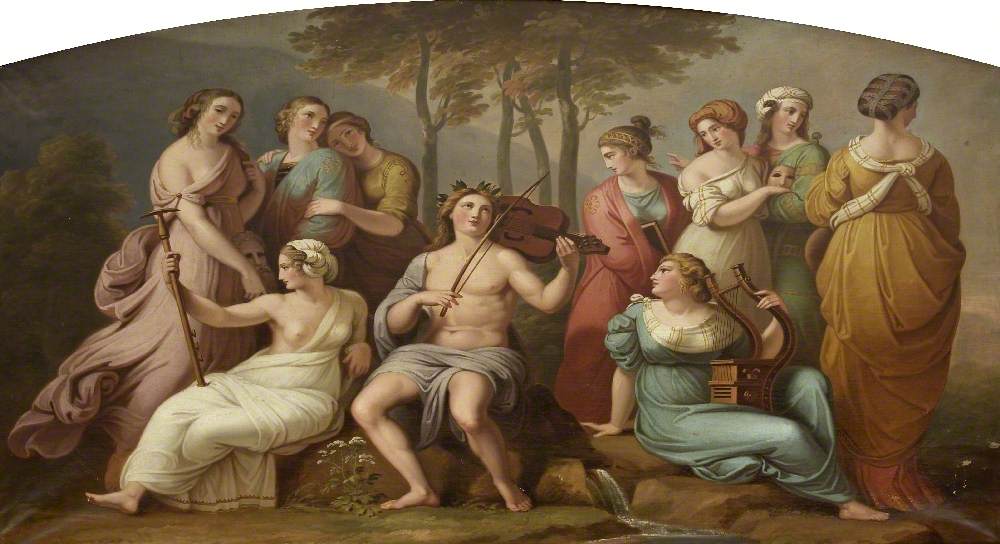
_-_Apollo_and_the_Muses_on_Parnassus_(after_Raphael)_-_732279_-_Stourhead.jpg)
Hymns of Callimachus · Hymn 02
Apollo
εἰς Ἀπόλλωνα
Prayer and ritual
These hymns may be spoken as complete prayers to the Gods. Within the Temple’s practice, a ritual is a direct theurgical act; hymnody gathers the mind and turns it toward the Divine, helping the initiate enter reverent communion with the Gods.
Use a hymn on its own in place of another prayer, or add it to the prayer portion of a suitable ritual. Choose according to the deity addressed and the petition expressed in the hymn. When combining them, preserve the ritual’s prescribed sequence and let the hymn give voice to its purpose.
The petition of this hymn
For Apollo’s radiant presence, the purification of sacred song, healing, and the protection of a flourishing community.
The complete hymn may be offered as a prayer of welcome and praise to Apollo. It may also accompany an established rite of healing, purification, sacred music, or civic blessing, while its accounts of Delos and Cyrene remain the ancient poet’s particular narrative.
English hieratic rendering
Hymn 02 · An English rendering aligned with the Greek lines.
- How Apollo’s branch of laurel has trembled,
- and how the whole sanctuary shakes! Away, away, whoever is impure.
- Surely Phoebus now strikes the doors with his beautiful foot.
- Do you not see? The Delian palm has suddenly nodded
- sweetly, and the swan sings beautifully in the air.
- Now draw back of yourselves, bars of the gates,
- and bolts of yourselves: the god is no longer far away.
- Young men, make ready for song and for the dance.
- Apollo reveals himself to no one save the worthy;
- great is the one who sees him, lowly the one who has not seen.
- We shall see you, Far-worker, and shall never be lowly.
- Let the boys have neither a silent lyre nor a noiseless step
- when Phoebus comes among us,
- if they are to celebrate marriage and shear their gray hair,
- and if the wall is to stand upon its ancient foundations.
- Well done, boys: the tortoise-shell lyre is idle no longer.
- Keep sacred silence as you listen to the song of Apollo.
- Even the sea keeps silence when singers celebrate
- the lyre or the bow, the instruments of Lycoreian Phoebus.
- Nor does mother Thetis lament Achilles with mournful cries
- when she hears “Ie Paieon, Ie Paieon.”
- Even the tearful rock sets aside its grief,
- the wet stone that stands fixed in Phrygia,
- marble in place of a woman whose mouth opens in sorrow.
- Cry “Ie, Ie”: it is grievous to contend with the blessed gods.
- Whoever wars against the blessed gods, let him war against my king;
- whoever wars against my king, let him war against Apollo also.
- Apollo will honor the chorus that sings according to his heart;
- he has that power, for he sits at the right hand of Zeus.
- Nor shall the chorus sing Phoebus for one day alone,
- for he is rich in themes of praise: who could not readily sing Phoebus?
- Golden are Apollo’s garment and its clasp,
- his lyre, his Lyctian bow, and his quiver;
- golden also his sandals, for Apollo is rich in gold.
- Rich too in possessions: Pytho may bear witness.
- Ever beautiful, ever young: never has even down
- come upon the tender cheeks of Phoebus.
- His hair pours fragrant oils upon the ground;
- yet no mere oil drips from Apollo’s locks,
- but the very power that heals all things. In whatever city those
- drops fall to earth, all things become free from harm.
- No one abounds in art so greatly as Apollo:
- the archer falls to his charge, and the singer,
- for both bow and song are entrusted to Phoebus;
- his are the prophetic pebbles and the seers, and from Phoebus
- physicians have learned how death may be delayed.
- We have also called Phoebus the Shepherd ever since
- he tended the horses of the yoke beside Amphrysus,
- burning with love for the young Admetus.
- Readily would the cattle herd increase, nor would the goats
- among the flocks lack young, when Apollo cast his eye
- upon their grazing; nor would the sheep lack milk,
- nor be barren: all would have lambs,
- and a mother of one would soon become a mother of twins.
- Following Phoebus, human beings laid out their cities;
- for Phoebus ever takes delight in cities
- being founded, and Phoebus himself weaves their foundations.
- At four years old Phoebus set his first foundations
- in beautiful Ortygia, beside the circling lake.
- Artemis, hunting, continually brought the heads of goats
- from Cynthus, and Apollo built an altar.
- He made its base of horns, raised the altar
- from horns, and set walls of horns around it.
- Thus Phoebus first learned to raise foundations.
- Phoebus also showed Battus my own deep-soiled city,
- and a raven guided the people as they entered Libya,
- auspicious to their founder; he vowed to give fortified cities
- to our kings, and Apollo is ever faithful to his oath.
- O Apollo, many call you Boedromios,
- and many Clarios, and everywhere your names are many;
- but I call you Carneios, for such is my ancestral custom.
- Sparta, Carneios, was your first dwelling,
- Thera your second, and the city of Cyrene your third.
- From Sparta the sixth generation of Oedipus
- brought you to the colony of Thera; and from Thera
- blessed Aristoteles established you in the land of Asbystis.
- He built you a most beautiful sanctuary, and in the city
- established your yearly festival, at which many
- bulls, O sovereign, fall upon their haunches for the last time.
- Ie, Ie, Carneios, invoked in many prayers! Your altars
- bear in spring as many flowers as the Horae
- bring in varied colors when Zephyr breathes the dew,
- and sweet saffron in winter. Your fire is ever unceasing,
- and ash never feeds around yesterday’s coal.
- Greatly did Phoebus rejoice when the men girded for Enyo’s war
- danced together with the golden-haired women of Libya,
- when the appointed seasons of the Carneian feast arrived.
- The Dorians could not yet draw near the springs of Cyre,
- but dwelt in Azilis, thick with wooded glens.
- The sovereign himself beheld them and showed them to his bride,
- standing upon horned Myrtussa, where the daughter of Hypseus
- slew the lion that ravaged the cattle of Eurypylus.
- Apollo saw no other dance more divine than that,
- and to no city gave as many blessings as to Cyrene,
- remembering his earlier carrying-away of the maiden. Nor did
- the sons of Battus honor any other god above Phoebus.
- We hear “Ie, Ie, Paieon,” for this
- refrain your Delphic people first devised for you
- when you displayed the far-reaching power of your golden bow.
- As you descended to Pytho, a monstrous beast confronted you,
- a terrible serpent. You slew it, sending one after another
- of your swift arrows, and the people cried aloud:
- “Ie, Ie, Paieon! Send forth the shaft!” From the first your mother
- bore you as a helper, and since then you have been sung as such.
- Envy secretly spoke into Apollo’s ear:
- “I do not admire the singer whose song is not as vast as the sea.”
- Apollo drove Envy away with his foot and answered thus:
- “The Assyrian river has a mighty stream, but much
- filth from the earth and much rubbish it carries upon its water.
- Deo’s Bees do not bring water from every stream,
- but only the little drop that rises pure and undefiled
- from a sacred spring, the very flower of its finest water.”
- Hail, sovereign; and let Blame go where Envy has gone.
Ancient Greek & pronunciation
Read the English pronunciation spelling directly below each Greek line.
- οἷον ὁ τὠπόλλωνος ἐσείσατο δάφνινος ὅρπηξ,EE-ohn oh toh-POH-loh-nohs eh-SEE-sah-toh DHAHF-nee-nohs OHR-peeks,
- οἷα δʼ ὅλον τὸ μέλαθρον· ἑκάς, ἑκὰς ὅστις ἀλιτρός.EE-ah dh’ OH-lohn TOH MEH-lah-throhn· eh-KAHS, eh-KAHS OH-stees ah-lee-TROHS.
- καὶ δή που τὰ θύρετρα καλῷ ποδὶ Φοῖβος ἀράσσει·KEH DHEE poo TAH THEE-reh-trah kah-LOH poh-DHEE FEE-vohs ah-RAH-see·
- οὐχ ὁράᾳς; ἐπένευσεν ὁ Δήλιος ἡδύ τι φοῖνιξookh oh-RAH-ahs; eh-PEH-nehf-sehn oh DHEE-lee-ohs ee-DHEE tee FEE-neeks
- ἐξαπίνης, ὁ δὲ κύκνος ἐν ἠέρι καλὸν ἀείδει.ehk-sah-PEE-nees, oh DHEH KEEK-nohs ehn ee-EH-ree kah-LOHN ah-EE-dhee.
- αὐτοὶ νῦν κατοχῆες ἀνακλίνεσθε πυλάων,ahf-TEE NEEN kah-toh-HYEE-ehs ah-nah-KLEE-nehs-theh pee-LAH-ohn,
- αὐταὶ δὲ κληῖδες· ὁ γὰρ θεὸς οὐκέτι μακρήν·ahf-TEH DHEH klee-EE-dhehs· oh GHAHR theh-OHS oo-KEH-tee mah-KREEN·
- οἱ δὲ νέοι μολπήν τε καὶ ἐς χορὸν ἐντύνεσθε.ee DHEH NEH-ee mohl-PEEN teh KEH ehs khoh-ROHN ehn-DEE-nehs-theh.
- ὡπόλλων οὐ παντὶ φαείνεται, ἀλλʼ ὅ τις ἐσθλός·oh-POH-lohn oo pahn-DEE fah-EE-neh-teh, ahl’ OH tees ehsth-LOHS·
- ὅς μιν ἴδῃ, μέγας οὗτος, ὃς οὐκ ἴδε, λιτὸς ἐκεῖνος.OHS meen EE-dhee, MEH-ghahs OO-tohs, OHS ook EE-dheh, lee-TOHS eh-KEE-nohs.
- ὀψόμεθʼ, ὦ Ἑκάεργε, καὶ ἐσσόμεθʼ οὔποτε λιτοί.ohp-SOH-mehth’, OH eh-KAH-ehr-yeh, KEH eh-SOH-mehth’ OO-poh-teh lee-TEE.
- μήτε σιωπηλὴν κίθαριν μήτʼ ἄψοφον ἴχνοςMEE-teh see-oh-pee-LEEN KEE-thah-reen MEET’ AHP-soh-fohn EEKH-nohs
- τοῦ Φοίβου τοὺς παῖδας ἔχειν ἐπιδημήσαντος,TOO FEE-voo TOOS PEH-dhahs EH-hyeen eh-pee-dhee-MEE-sahn-dohs,
- εἰ τελέειν μέλλουσι γάμον πολιήν τε κερεῖσθαι,ee teh-LEH-een MEH-loo-see GHAH-mohn poh-lee-EEN teh keh-REES-theh,
- ἑστήξειν δὲ τὸ τεῖχος ἐπʼ ἀρχαίοισι θεμέθλοις.eh-STEEK-seen DHEH TOH TEE-khohs ehp’ ahr-HYEH-ee-see theh-MEHTH-lees.
- ἠγασάμην τοὺς παῖδας, ἐπεὶ χέλυς οὐκέτʼ ἀεργός.ee-ghah-SAH-meen TOOS PEH-dhahs, eh-PEE HYEH-lees oo-KEHT’ ah-ehr-GHOHS.
- εὐφημεῖτʼ ἀίοντες ἐπʼ Ἀπόλλωνος ἀοιδῇ.eh-fee-MEET’ ah-EE-ohn-dehs ehp’ ah-POH-loh-nohs ah-ee-DHEE.
- εὐφημεῖ καὶ πόντος, ὅτε κλείουσιν ἀοιδοὶeh-fee-MEE KEH POHN-dohs, OH-teh KLEE-oo-seen ah-ee-DHEE
- ἢ κίθαριν ἢ τόξα, Λυκωρέος ἔντεα Φοίβου.EE KEE-thah-reen EE TOHK-sah, lee-koh-REH-ohs EHN-deh-ah FEE-voo.
- οὐδὲ Θέτις Ἀχιλῆα κινύρεται αἴλινα μήτηρ,oo-DHEH THEH-tees ah-hyee-LEE-ah kee-NEE-reh-teh EH-lee-nah MEE-teer,
- ὁππόθʼ ἱὴ παιῆον ἱὴ παιῆον ἀκούσῃ.oh-POHTH’ ee-EE peh-EE-ohn ee-EE peh-EE-ohn ah-KOO-see.
- καὶ μὲν ὁ δακρυόεις ἀναβάλλεται ἄλγεα πέτρος,KEH MEHN oh dhah-kree-OH-ees ah-nah-VAH-leh-teh AHL-yeh-ah PEH-trohs,
- ὅστις ἐνὶ Φρυγίῃ διερὸς λίθος ἐστήρικται,OH-stees eh-NEE free-YEE-ee dhee-eh-ROHS LEE-thohs eh-STEE-reek-teh,
- μάρμαρον ἀντὶ γυναικὸς ὀιζυρόν τι χανούσης.MAHR-mah-rohn ahn-DEE yee-neh-KOHS oh-ee-zee-ROHN tee khah-NOO-sees.
- ἱὴ ἱὴ φθέγγεσθε· κακὸν μακάρεσσιν ἐρίζειν.ee-EE ee-EE FTHEHN-gehs-theh· kah-KOHN mah-KAH-reh-seen eh-REE-zeen.
- ὃς μάχεται μακάρεσσιν, ἐμῷ βασιλῆι μάχοιτο·OHS MAH-hyeh-teh mah-KAH-reh-seen, eh-MOH vah-see-LEE-ee MAH-hyee-toh·
- ὅστις ἐμῷ βασιλῆι, καὶ Ἀπόλλωνι μάχοιτο.OH-stees eh-MOH vah-see-LEE-ee, KEH ah-POH-loh-nee MAH-hyee-toh.
- τὸν χορὸν ὡπόλλων, ὅ τι οἱ κατὰ θυμὸν ἀείδει,TOHN khoh-ROHN oh-POH-lohn, OH tee ee kah-TAH thee-MOHN ah-EE-dhee,
- τιμήσει· δύναται γάρ, ἐπεὶ Διὶ δεξιὸς ἧσται.tee-MEE-see· DHEE-nah-teh GHAHR, eh-PEE dhee-EE dhehk-see-OHS EE-steh.
- οὐδʼ ὁ χορὸς τὸν Φοῖβον ἐφʼ ἓν μόνον ἦμαρ ἀείσει,oodh’ oh khoh-ROHS TOHN FEE-vohn ehf’ EHN MOH-nohn EE-mahr ah-EE-see,
- ἔστι γὰρ εὔυμνος· τίς ἂν οὐ ῥέα Φοῖβον ἀείδοι;EH-stee GHAHR EH-veem-nohs· TEES AHN oo REH-ah FEE-vohn ah-EE-dhee;
- χρύσεα τὠπόλλωνι τό τʼ ἐνδυτὸν ἥ τʼ ἐπιπορπὶςKHREE-seh-ah toh-POH-loh-nee TOH t’ ehn-dhee-TOHN EE t’ eh-pee-pohr-PEES
- ἥ τε λύρη τό τʼ ἄεμμα τὸ Λύκτιον ἥ τε φαρέτρη,EE teh LEE-ree TOH t’ AH-eh-mah TOH LEEK-tee-ohn EE teh fah-REH-tree,
- χρύσεα καὶ τὰ πέδιλα· πολύχρυσος γὰρ Ἀπόλλων.KHREE-seh-ah KEH TAH PEH-dhee-lah· poh-LEE-khree-sohs GHAHR ah-POH-lohn.
- καὶ δὲ πολυκτέανος· Πυθῶνί κε τεκμήραιο.KEH DHEH poh-leek-TEH-ah-nohs· pee-THOH-NEE keh tehk-MEE-reh-oh.
- καὶ μὲν ἀεὶ καλὸς καὶ ἀεὶ νέος· οὔποτε ΦοίβουKEH MEHN ah-EE kah-LOHS KEH ah-EE NEH-ohs· OO-poh-teh FEE-voo
- θηλείῃσʼ οὐδʼ ὅσσον ἐπὶ χνόος ἦλθε παρειαῖς.thee-LEE-ees’ oodh’ OH-sohn eh-PEE KHNOH-ohs EEL-theh pah-ree-EHS.
- αἱ δὲ κόμαι θυόεντα πέδῳ λείβουσιν ἔλαια·eh DHEH KOH-meh thee-OH-ehn-dah PEH-dhoh LEE-voo-seen EH-leh-ah·
- οὐ λίπος Ἀπόλλωνος ἀποστάζουσιν ἔθειραι,oo LEE-pohs ah-POH-loh-nohs ah-poh-STAH-zoo-seen EH-thee-reh,
- ἀλλʼ αὐτὴν πανάκειαν· ἐν ἄστεϊ δʼ ᾧ κεν ἐκεῖναιahl’ ahf-TEEN pah-NAH-kee-ahn· ehn AH-steh-ee dh’ OH kehn eh-KEE-neh
- πρῶκες ἔραζε πέσωσιν ἀκήρια πάντʼ ἐγένοντο.PROH-kehs EH-rah-zeh PEH-soh-seen ah-KEE-ree-ah PAHND’ eh-YEH-nohn-doh.
- τέχνῃ δʼ ἀμφιλαφὴς οὔ τις τόσον ὅσσον Ἀπόλλων·TEHKH-nee dh’ ahm-fee-lah-FEES OO tees TOH-sohn OH-sohn ah-POH-lohn·
- κεῖνος ὀιστευτὴν ἔλαχʼ ἀνέρα, κεῖνος ἀοιδὸνKEE-nohs oh-ee-stehf-TEEN EH-lahkh’ ah-NEH-rah, KEE-nohs ah-ee-DHOHN
- (Φοίβῳ γὰρ καὶ τόξον ἐπιτρέπεται καὶ ἀοιδή),(FEE-voh GHAHR KEH TOHK-sohn eh-pee-TREH-peh-teh KEH ah-ee-DHEE),
- κείνου δὲ θριαὶ καὶ μάντιες· ἐκ δέ νυ ΦοίβουKEE-noo DHEH three-EH KEH MAHN-dee-ehs· ehk DHEH nee FEE-voo
- ἰητροὶ δεδάασιν ἀνάβλησιν θανάτοιο.ee-ee-TREE dheh-DHAH-ah-seen ah-NAH-vlee-seen thah-NAH-tee-oh.
- Φοῖβον καὶ Νόμιον κικλήσκομεν ἐξέτι κείνου,FEE-vohn KEH NOH-mee-ohn kee-KLEE-skoh-mehn ehk-SEH-tee KEE-noo,
- ἐξότʼ ἐπʼ Ἀμφρυσσῷ ζευγίτιδας ἔτρεφεν ἵππουςehk-SOHT’ ehp’ ahm-free-SOH zehv-YEE-tee-dhahs EH-treh-fehn EE-poos
- ἠιθέου ὑπʼ ἔρωτι κεκαυμένος Ἀδμήτοιο.ee-ee-THEH-oo eep’ EH-roh-tee keh-kahv-MEH-nohs ahdh-MEE-tee-oh.
- ῥεῖά κε βουβόσιον τελέθοι πλέον, οὐδέ κεν αἶγεςREE-AH keh voo-VOH-see-ohn teh-LEH-thee PLEH-ohn, oo-DHEH kehn EH-yehs
- δεύοιντο βρεφέων ἐπιμηλάδες ᾗσιν ἈπόλλωνDHEH-veen-doh vreh-FEH-ohn eh-pee-mee-LAH-dhehs EE-seen ah-POH-lohn
- βοσκομένῃσʼ ὀφθαλμὸν ἐπήγαγεν· οὐδʼ ἀγάλακτεςvoh-skoh-MEH-nees’ ohf-thahl-MOHN eh-PEE-ghah-yehn· oodh’ ah-GHAH-lahk-tehs
- οἴιες οὐδʼ ἄκυθοι, πᾶσαι δέ κεν εἶεν ὕπαρνοι,EE-ee-ehs oodh’ AH-kee-thee, PAH-seh DHEH kehn EE-ehn EE-pahr-nee,
- ἡ δέ κε μουνοτόκος διδυμητόκος αἶψα γένοιτο.ee DHEH keh moo-noh-TOH-kohs dhee-dhee-mee-TOH-kohs EHP-sah YEH-nee-toh.
- Φοίβῳ δʼ ἑσπόμενοι πόλιας διεμετρήσαντοFEE-voh dh’ eh-SPOH-meh-nee POH-lee-ahs dhee-eh-meh-TREE-sahn-doh
- ἄνθρωποι· Φοῖβος γὰρ ἀεὶ πολίεσσι φιληδεῖAHN-throh-pee· FEE-vohs GHAHR ah-EE poh-LEE-eh-see fee-lee-DHEE
- κτιζομένῃσʼ, αὐτὸς δὲ θεμείλια Φοῖβος ὑφαίνει.ktee-zoh-MEH-nees’, ahf-TOHS DHEH theh-MEE-lee-ah FEE-vohs ee-FEH-nee.
- τετραέτης τὰ πρῶτα θεμείλια Φοῖβος ἔπηξεteh-trah-EH-tees TAH PROH-tah theh-MEE-lee-ah FEE-vohs EH-peek-seh
- καλῇ ἐν Ὀρτυγίῃ περιηγέος ἐγγύθι λίμνης.kah-LEE ehn ohr-tee-YEE-ee peh-ree-ee-YEH-ohs ehn-GEE-thee LEEM-nees.
- Ἄρτεμις ἀγρώσσουσα καρήατα συνεχὲς αἰγῶνAHR-teh-mees ah-GHROH-soo-sah kah-REE-ah-tah see-neh-HYEHS eh-GHOHN
- Κυνθιάδων φορέεσκεν, ὁ δʼ ἔπλεκε βωμὸν Ἀπόλλων.keen-thee-AH-dhohn foh-REH-eh-skehn, oh dh’ EH-pleh-keh voh-MOHN ah-POH-lohn.
- δείματο μὲν κεράεσσιν ἐδέθλια, πῆξε δὲ βωμὸνDHEE-mah-toh MEHN keh-RAH-eh-seen eh-DHEHTH-lee-ah, PEEK-seh DHEH voh-MOHN
- ἐκ κεράων, κεραοὺς δὲ πέριξ ὑπεβάλλετο τοίχους.ehk keh-RAH-ohn, keh-rah-OOS DHEH PEH-reeks ee-peh-VAH-leh-toh TEE-khoos.
- ὧδʼ ἔμαθεν τὰ πρῶτα θεμείλια Φοῖβος ἐγείρειν.OHDH’ EH-mah-thehn TAH PROH-tah theh-MEE-lee-ah FEE-vohs eh-YEE-reen.
- Φοῖβος καὶ βαθύγειον ἐμὴν πόλιν ἔφρασε ΒάττῳFEE-vohs KEH vah-THEE-yee-ohn eh-MEEN POH-leen EH-frah-seh VAH-toh
- καὶ Λιβύην ἐσιόντι κόραξ ἡγήσατο λαῷKEH lee-VEE-een eh-see-OHN-dee KOH-rahks ee-YEE-sah-toh lah-OH
- δεξιὸς οἰκιστῆρι καὶ ὤμοσε τείχεα δώσεινdhehk-see-OHS ee-kee-STEE-ree KEH OH-moh-seh TEE-hyeh-ah DHOH-seen
- ἡμετέροις βασιλεῦσιν· ἀεὶ δʼ εὔορκος Ἀπόλλων.ee-meh-TEH-rees vah-see-LEHF-seen· ah-EE dh’ EH-vohr-kohs ah-POH-lohn.
- ὤπολλον, πολλοί σε Βοηδρόμιον καλέουσι,OH-poh-lohn, poh-LEE seh voh-ee-DHROH-mee-ohn kah-LEH-oo-see,
- πολλοὶ δὲ Κλάριον, πάντη δέ τοι οὔνομα πολύ·poh-LEE DHEH KLAH-ree-ohn, PAHN-dee DHEH tee OO-noh-mah poh-LEE·
- αὐτὰρ ἐγὼ Καρνεῖον· ἐμοὶ πατρώιον οὕτω.ahf-TAHR eh-GHOH kahr-NEE-ohn· eh-MEE pah-TROH-ee-ohn OO-toh.
- Σπάρτη τοι, Καρνεῖε, τὸ δὴ πρώτιστον ἔδεθλον,SPAHR-tee tee, kahr-NEE-eh, TOH DHEE PROH-tee-stohn EH-dhehth-lohn,
- δεύτερον αὖ Θήρη, τρίτατόν γε μὲν ἄστυ Κυρήνης.DHEHF-teh-rohn AHV THEE-ree, TREE-tah-TOHN yeh MEHN AH-stee kee-REE-nees.
- ἐκ μέν σε Σπάρτης ἕκτον γένος Οἰδιπόδαοehk MEHN seh SPAHR-tees EHK-tohn YEH-nohs ee-dhee-POH-dhah-oh
- ἤγαγε Θηραίην ἐς ἀπόκτισιν· ἐκ δέ σε ΘήρηςEE-ghah-yeh thee-REH-een ehs ah-POHK-tee-seen· ehk DHEH seh THEE-rees
- οὖλος Ἀριστοτέλης Ἀσβυστίδι πάρθετο γαίῃ,OO-lohs ah-ree-stoh-TEH-lees ahz-vee-STEE-dhee PAHR-theh-toh YEH-ee,
- δεῖμε δέ τοι μάλα καλὸν ἀνάκτορον, ἐν δὲ πόληιDHEE-meh DHEH tee MAH-lah kah-LOHN ah-NAHK-toh-rohn, ehn DHEH POH-lee-ee
- θῆκε τελεσφορίην ἐπετήσιον, ᾗ ἐνὶ πολλοὶTHEE-keh teh-leh-sfoh-REE-een eh-peh-TEE-see-ohn, EE eh-NEE poh-LEE
- ὑστάτιον πίπτουσιν ἐπʼ ἰσχίον, ὦ ἄνα, ταῦροι.ee-STAH-tee-ohn PEEP-too-seen ehp’ ees-HYEE-ohn, OH AH-nah, TAH-vree.
- ἱὴ ἱὴ Καρνεῖε πολύλλιτε, σεῖο δὲ βωμοὶee-EE ee-EE kahr-NEE-eh poh-LEE-lee-teh, SEE-oh DHEH voh-MEE
- ἄνθεα μὲν φορέουσιν ἐν εἴαρι τόσσα περ ὯραιAHN-theh-ah MEHN foh-REH-oo-seen ehn EE-ah-ree TOH-sah pehr OH-reh
- ποικίλʼ ἀγινεῦσι ζεφύρου πνείοντος ἐέρσην,pee-KEEL’ ah-yee-NEHF-see zeh-FEE-roo PNEE-ohn-dohs eh-EHR-seen,
- χείματι δὲ κρόκον ἡδύν· ἀεὶ δέ τοι ἀέναον πῦρ,HYEE-mah-tee DHEH KROH-kohn ee-DHEEN· ah-EE DHEH tee ah-EH-nah-ohn PEER,
- οὐδέ ποτε χθιζὸν περιβόσκεται ἄνθρακα τέφρη.oo-DHEH poh-teh khthee-ZOHN peh-ree-VOH-skeh-teh AHN-thrah-kah TEH-free.
- ἦ ῥʼ ἐχάρη μέγα Φοῖβος, ὅτε ζωστῆρες ἘνυοῦςEE r’ eh-KHAH-ree MEH-ghah FEE-vohs, OH-teh zoh-STEE-rehs eh-nee-OOS
- ἀνέρες ὠρχήσαντο μετὰ ξανθῇσι Λιβύσσαις,ah-NEH-rehs ohr-HYEE-sahn-doh meh-TAH ksahn-THEE-see lee-VEE-sehs,
- τέθμιαι εὖτέ σφιν Καρνειάδες ἤλυθον ὧραι.TEHTH-mee-eh EHF-TEH sfeen kahr-nee-AH-dhehs EE-lee-thohn OH-reh.
- οἱ δʼ οὔπω πηγῇσι Κύρης ἐδύναντο πελάσσαιee dh’ OO-poh pee-YEE-see KEE-rees eh-DHEE-nahn-doh peh-LAH-seh
- Δωριέες, πυκινὴν δὲ νάπαις Ἄζιλιν ἔναιον.dhoh-ree-EH-ehs, pee-kee-NEEN DHEH NAH-pehs AH-zee-leen EH-neh-ohn.
- τοὺς μὲν ἄναξ ἴδεν αὐτός, ἑῇ δʼ ἐπεδείξατο νύμφῃTOOS MEHN AH-nahks EE-dhehn ahf-TOHS, eh-EE dh’ eh-peh-DHEEK-sah-toh NEEM-fee
- στὰς ἐπὶ Μυρτούσσης κερατώδεος, ἧχι λέονταSTAHS eh-PEE meer-TOO-sees keh-rah-TOH-dheh-ohs, EE-hyee LEH-ohn-dah
- Ὑψηὶς κατέπεφνε βοῶν σίνιν Εὐρυπύλοιο.eep-see-EES kah-TEH-pehf-neh voh-OHN SEE-neen eh-vree-PEE-lee-oh.
- οὐ κείνου χορὸν εἶδε θεώτερον ἄλλον Ἀπόλλων,oo KEE-noo khoh-ROHN EE-dheh theh-OH-teh-rohn AH-lohn ah-POH-lohn,
- οὐδὲ πόλει τόσʼ ἔνειμεν ὀφέλσιμα, τόσσα Κυρήνῃ,oo-DHEH POH-lee TOHS’ EH-nee-mehn oh-FEHL-see-mah, TOH-sah kee-REE-nee,
- μνωόμενος προτέρης ἁρπακτύος. οὐδὲ μὲν αὐτοὶmnoh-OH-meh-nohs proh-TEH-rees ahr-pahk-TEE-ohs. oo-DHEH MEHN ahf-TEE
- Βαττιάδαι Φοίβοιο πλέον θεὸν ἄλλον ἔτεισαν.vah-tee-AH-dheh FEE-vee-oh PLEH-ohn theh-OHN AH-lohn EH-tee-sahn.
- ἱὴ ἱὴ παιῆον ἀκούομεν, οὕνεκα τοῦτοee-EE ee-EE peh-EE-ohn ah-KOO-oh-mehn, OO-neh-kah TOO-toh
- Δελφός τοι πρώτιστον ἐφύμνιον εὕρετο λαός,dhehl-FOHS tee PROH-tee-stohn eh-FEEM-nee-ohn EH-vreh-toh lah-OHS,
- ἦμος ἑκηβολίην χρυσέων ἐπεδείκνυσο τόξων.EE-mohs eh-kee-voh-LEE-een khree-SEH-ohn eh-peh-DHEEK-nee-soh TOHK-sohn.
- Πυθώ τοι κατιόντι συνήντετο δαιμόνιος θήρ,pee-THOH tee kah-tee-OHN-dee see-NEEN-deh-toh dheh-MOH-nee-ohs THEER,
- αἰνὸς ὄφις. τὸν μὲν σὺ κατήναρες ἄλλον ἐπʼ ἄλλῳeh-NOHS OH-fees. TOHN MEHN SEE kah-TEE-nah-rehs AH-lohn ehp’ AH-loh
- βάλλων ὠκὺν ὀιστόν, ἐπηύτησε δὲ λαός,VAH-lohn oh-KEEN oh-ee-STOHN, eh-pee-EE-tee-seh DHEH lah-OHS,
- ἱὴ ἱὴ παιῆον, ἵει βέλος. εὐθύ σε μήτηρee-EE ee-EE peh-EE-ohn, EE-ee VEH-lohs. ehf-THEE seh MEE-teer
- γείνατʼ ἀοσσητῦρα, τὸ δʼ ἐξέτι κεῖθεν ἀείδῃ.YEE-naht’ ah-oh-see-TEE-rah, TOH dh’ ehk-SEH-tee KEE-thehn ah-EE-dhee.
- ὁ Φθόνος Ἀπόλλωνος ἐπʼ οὔατα λάθριος εἶπενoh FTHOH-nohs ah-POH-loh-nohs ehp’ OO-ah-tah LAH-three-ohs EE-pehn
- οὐκ ἄγαμαι τὸν ἀοιδὸν ὃς οὐδʼ ὅσα πόντος ἀείδει.ook AH-ghah-meh TOHN ah-ee-DHOHN OHS oodh’ OH-sah POHN-dohs ah-EE-dhee.
- τὸν Φθόνον ὡπόλλων ποδί τʼ ἤλασεν ὧδέ τʼ ἔειπεν·TOHN FTHOH-nohn oh-POH-lohn poh-DHEE t’ EE-lah-sehn OH-DHEH t’ EH-ee-pehn·
- Ἀσσυρίου ποταμοῖο μέγας ῥόος, ἀλλὰ τὰ πολλὰah-see-REE-oo poh-tah-MEE-oh MEH-ghahs ROH-ohs, ah-LAH TAH poh-LAH
- λύματα γῆς καὶ πολλὸν ἐφʼ ὕδατι συρφετὸν ἕλκει.LEE-mah-tah YEES KEH poh-LOHN ehf’ EE-dhah-tee seer-feh-TOHN EHL-kee.
- Δηοῖ δʼ οὐκ ἀπὸ παντὸς ὕδωρ φορέουσι Μέλισσαι,dhee-EE dh’ ook ah-POH pahn-DOHS EE-dhohr foh-REH-oo-see MEH-lee-seh,
- ἀλλʼ ἥτις καθαρή τε καὶ ἀχράαντος ἀνέρπειahl’ EE-tees kah-thah-REE teh KEH ah-KHRAH-ahn-dohs ah-NEHR-pee
- πίδακος ἐξ ἱερῆς ὀλίγη λιβὰς ἄκρον ἄωτον.PEE-dhah-kohs ehks ee-eh-REES oh-LEE-yee lee-VAHS AH-krohn AH-oh-tohn.
- χαῖρε ἄναξ· ὁ δὲ Μῶμος, ἵνʼ ὁ Φθόνος, ἔνθα νέοιτο.HYEH-reh AH-nahks· oh DHEH MOH-mohs, EEN’ oh FTHOH-nohs, EHN-thah NEH-ee-toh.
Short sound guide for English speakers
Every line beneath the Greek uses English pronunciation spellings. Say each hyphenated syllable in sequence and emphasize the syllable in CAPITALS. For example, οὐρανόθεν is oo-rah-NOH-thehn. Read adjacent vowels separately: theh-AH has two syllables; oo-rah-NEE-een has four. Hyphens guide the voice; they do not mark pauses.
| Spelling | Sound to make |
|---|---|
| ah · eh · ee · oh · oo | father · met · see · go without its final glide · moon. Keep these vowels clear in unstressed syllables too. |
| th · dh | The unvoiced th in thin · the voiced th in this. Thus DHEE begins with the sound in “thee.” |
| kh | The ch in Scottish loch or German Bach: let air pass at the back of the mouth, without closing it into a k. |
| hy | The breathy beginning of a carefully spoken Hugh. Raise the middle of the tongue toward the roof of the mouth and let air pass without voice. In shy, sound s followed by hy; do not use the English sh sound or the English word “shy.” |
| gh | Make the kh sound above, then add voice. Keep the passage open; this is a flowing sound, not a hard g. |
| y · g | y as in yes, with gentle friction · always a hard g as in get. |
| r | Tap the tongue lightly behind the upper teeth, or use a light roll. |
| ks · ps | Sound both consonants, even at the beginning of a word: ks as in backs, ps as in lips. |
| n-g · m-b · n-d | Sound the nasal and the following consonant. In AHN-geh-leh, the n-g group is like finger, with the g audible. |
Always sound s as in hiss, even at the end of DHEE-kees; z is voiced, as in zero. All other consonants have their usual English sounds. Initial consonant groups may be unfamiliar: sound every written consonant, without inserting an extra vowel. A word without capitals carries no written stress in the Greek. Where two syllables have capitals, both written accents are retained. An apostrophe marks a vowel already elided in the Greek; do not add it back. A hyphen at the end of a Greek verse joins the unfinished word to the next verse.
These spellings follow the Modern Greek liturgical reading used throughout this library. Breathings and iota subscripts are silent; separately pronounced vowels remain separate. The few Greek consonants without an exact English equivalent use the sound cues above. Ancient vowel length, pitch accent and metre are not reconstructed.
Hymn notes
Sacred meaning
Apollo’s arrival awakens the sanctuary, the chorus, and the natural world. His powers embrace music, prophecy, medicine, fruitful herds, and the founding of cities. The final image of pure water makes the quality and purity of praise, rather than its sheer volume, a fitting offering to the god.
Textual note
The ancient chorus speaks from the historical and religious setting of Cyrene; its kings, founders, local festivals, and sacrificial references remain unabridged. The new devotional-use note does not prescribe reenacting those narrative details. Verse88 in the Perseus XML contains a duplicated phrase from verse87 and is restored from Mair’s printed Greek. The Bees in verse110 are the sacred attendants of Deo, Demeter.
Text and attribution
Greek text: A. W. Mair, εἰς Απόλλωνα (1921), Perseus Digital Library. Greek source. The English hieratic rendering and suggested devotional use are new editorial work. The applications are guidance for this library, not additional lines of the ancient poem.