,_Archaeological_museum_Narona,_Vid,_Croatia_(11528135523).jpg)
Hymn of Theocritus · Hymn 22
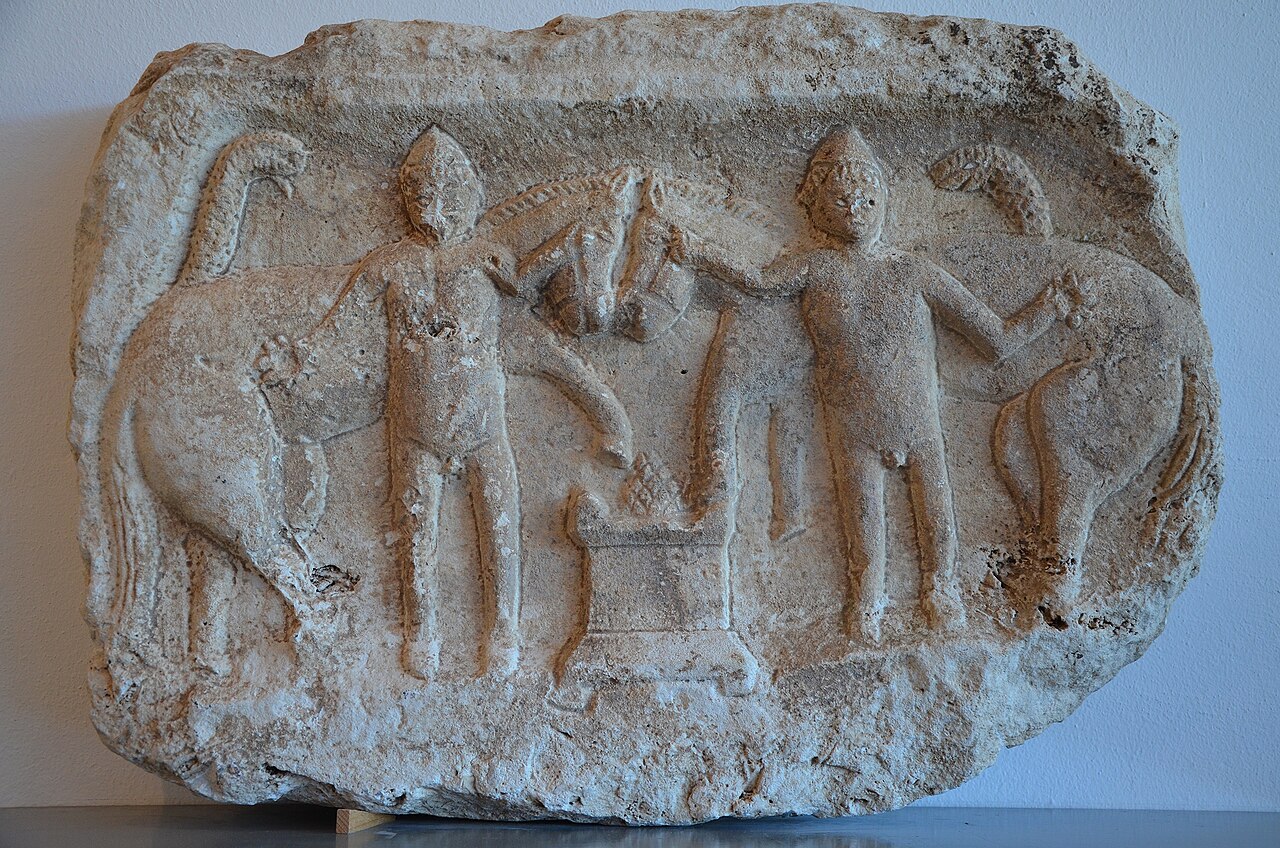
The Dioscuri: Castor and Polydeuces
Διόσκουροι
Prayer and ritual
These hymns may be spoken as complete prayers to the Gods. Within the Temple’s practice, a ritual is a direct theurgical act; hymnody gathers the mind and turns it toward the Divine, helping the initiate enter reverent communion with the Gods.
Use a hymn on its own in place of another prayer, or add it to the prayer portion of a suitable ritual. Choose according to the deity addressed and the petition expressed in the hymn. When combining them, preserve the ritual’s prescribed sequence and let the hymn give voice to its purpose.
The petition of this hymn
For the saving presence of Castor and Polydeuces in danger, especially at sea, and for courage, skill, and the offering of sacred song.
The hymn may be recited as complete praise of the Dioscuri and a prayer for their aid in peril. It may also accompany an established rite for safe travel, protection, or the dedication of an artistic undertaking; the stories of the contests remain the ancient poem’s narratives, while this use note is contemporary guidance.
English hieratic rendering
Hymn 22 · An English rendering aligned with the Greek lines.
- We hymn the sons of Leda and of Zeus who bears the aegis,
- Castor and Polydeuces, whom it is fearsome to challenge with the fists
- when he has wrapped the middle of his hands in straps of oxhide.
- Twice and a third time we hymn the male children
- of the daughter of Thestius, the two Lacedaemonian brothers,
- saviors of people already poised upon a razor’s edge,
- and of horses thrown into turmoil amid the bloody throng,
- and of ships that, defying the stars as they set or traverse the heavens,
- have met with grievous winds.
- The winds raise a great wave against the stern,
- or from the prow, or from whatever quarter each desires,
- and hurl it into the hollow ship, breaking open
- both her sides. All her tackle hangs with the sail,
- broken and scattered; heavy rain falls from heaven
- as night comes on, and the broad sea crashes,
- beaten by blasts and unyielding hail.
- Yet even from the deep you draw the ships upward,
- with the sailors themselves who thought that they must die.
- At once the winds fall silent, and shining calm lies
- across the sea; the clouds disperse, each its own way.
- The Bears appear, and between the Asses the dim
- Manger, signaling weather wholly favorable for sailing.
- O helpers of mortals, both of you, O beloved pair,
- horsemen, lyre-players, athletes, singers!
- Shall I begin with Castor or Polydeuces?
- Hymning both, I shall sing Polydeuces first.
- Argo had escaped the rocks that clash together,
- and the perilous mouth of snowy Pontus,
- and reached the Bebrycians, carrying the dear children of the gods.
- There many men descended by a single ladder from both
- sides of Jason’s ship.
- Setting foot upon the deep shore and sheltered beach,
- they spread their bedding and worked the fire-sticks with their hands.
- Castor of the swift horses and ruddy Polydeuces
- wandered alone together, apart from their companions,
- beholding every kind of wild woodland upon the mountain.
- Beneath a smooth rock they found an ever-flowing spring,
- abundant with undefiled water; the pebbles beneath it
- shone like crystal and silver
- from the depths. Tall pines grew nearby,
- white poplars and plane trees, and cypresses crowned with foliage,
- and fragrant flowers, the dear labor of the downy bees,
- all that crowd the meadows as spring draws to its close.
- There a man of overweening strength sat in the open air,
- terrible to behold, his ears battered by hard blows of the fist.
- His huge breast and broad back swelled round
- with iron flesh, like a colossus wrought by the hammer.
- The muscles in his firm arms, high beneath the shoulders,
- stood out like rounded boulders, which a torrent
- has rolled and polished in its mighty eddies.
- Over his back and the height of his neck
- hung a lion’s hide, tied by the paws.
- Victorious Polydeuces was the first to address him:
- Polydeuces“Hail, stranger, whoever you are. What mortals possess this land?”
- Amycus“How can I rejoice, when I see men I have never seen before?”
- Polydeuces“Take courage. Think not that you behold unjust men, or sons of the unjust.”
- Amycus“I have courage, and it is not for you to teach me that.”
- Polydeuces“Are you savage, hostile toward all, or contemptuous?”
- Amycus“I am as you see me. At least I do not set foot upon your land.”
- Polydeuces“Come to it, and after receiving hospitality return home.”
- Amycus“Do not entertain me, and no hospitality of mine awaits you.”
- Polydeuces“Strange man, would you not even grant a drink of this water?”
- Amycus“You shall learn, if thirst parches your parted lips.”
- Polydeuces“Tell us: is silver the price, or what would persuade you?”
- Amycus“Raise your hands, one man against one, and stand to face me.”
- Polydeuces“As a boxer, or also kicking the legs with the feet?”
- Amycus“Stand upright, your eyes to the front,
- Amycusand stretch out your fists: hold back none of your skill.”
- Polydeuces“Who is the man against whose hands I shall match my straps?”
- Amycus“You see him before you: no womanish weakling, he shall be called the Boxer.”
- Polydeuces“Is a prize also ready, for which we two shall contend?”
- Amycus“I shall be yours if you prevail; if I prevail, you shall be called mine.”
- Polydeuces“Such are the battle-cries of crimson-crested cocks.”
- Amycus“Whether we become like cocks or like lions,
- Amycuswe shall fight for no other prize.”
- So Amycus spoke, and taking a hollow conch, sounded its roar.
- Swiftly beneath the shady plane trees gathered
- the Bebrycians, whose hair is ever long, when the conch was blown.
- Likewise Castor, preeminent in battle, went and summoned
- all the heroes from the Magnesian ship.
- When the two had strengthened their hands with coils of oxhide
- and wound the long straps about their arms,
- they met in the midst, breathing slaughter against one another.
- Then great was their striving, as each pressed hard
- to gain the sunlight at his back.
- By your skill, Polydeuces, you outmaneuvered the mighty man,
- and the rays struck Amycus full in the face.
- Angered in his heart, he charged forward,
- aiming blows with his hands; but upon the point of his chin
- Tyndareus’s son struck him as he came. More enraged than before,
- he threw the combat into confusion, pressing with all his bulk, bent
- almost to the ground. The Bebrycians shouted, and from the other side
- the heroes encouraged mighty Polydeuces,
- fearing lest that man, resembling Tityus, might overpower him
- with his weight in the narrow space.
- But the son of Zeus stepped now here, now there,
- and gashed him with both hands in turn, checking the onrush
- of Poseidon’s son, overbearing though he was.
- He stood drunken with blows, and spat out crimson
- blood; all the champions raised their voices together
- when they saw the grievous wounds about his mouth and jaws.
- His eyes were narrowed by the swelling of his face.
- The sovereign confused him, making empty threats with his hands
- from every side; but when he perceived his helplessness,
- he struck him with his fist upon the brow above the middle of the nose,
- and tore the whole forehead to the bone. The stricken man
- lay stretched upon his back among the flourishing leaves.
- When he arose, the fierce battle began anew:
- they dealt destruction to each other with their hardened straps.
- The leader of the Bebrycians plied his hands against the breast
- and outside the neck; but with disfiguring blows
- unconquered Polydeuces battered the whole face.
- Amycus’s flesh sank with sweat, and from a mighty man
- he soon grew small; the other bore limbs ever fuller,
- and a fresher complexion, as the struggle laid hold of him.
- How then did the son of Zeus bring down the ravenous man?
- Tell me, goddess, for you know; as the spokesman of others,
- I shall speak as you desire, and in whatever way is dear to you.
- Longing to accomplish some mighty deed,
- Amycus seized Polydeuces’s left hand with his own left,
- swerving sideways from his guard, and advancing with the other,
- swung his broad forearm from his right flank.
- Had he struck, he would have injured the king of Amyclae.
- But Polydeuces slipped his head beneath the blow, and with his strong hand
- struck below the left temple, driving the weight of his shoulder behind it.
- Dark blood swiftly poured from the gaping temple.
- With his left he struck the mouth, and the close-set teeth rattled;
- ever more sharply he battered the face with a rain of blows,
- until he crushed the cheeks together. The whole man lay upon the earth,
- bereft of understanding, and raised both hands together,
- yielding the contest, for he was near to death.
- Though victorious, you did him no wanton wrong,
- O boxer Polydeuces; and he swore to you a mighty oath,
- calling upon his own father Poseidon from the sea,
- never again willingly to bring harm to strangers.
- You, sovereign, have now received my hymn. Castor, I shall sing you next,
- son of Tyndareus, swift-horsed, brandisher of the spear, bronze-armored.
- The two sons of Zeus had seized and were carrying away
- the two daughters of Leucippus; the two brothers,
- sons of Aphareus, pursued them eagerly,
- their bridegrooms soon to be, Lynceus and mighty Idas.
- When they reached the tomb of the dead Aphareus,
- all sprang together from their chariots against one another,
- heavy with spears and hollow shields.
- Then Lynceus spoke, crying aloud beneath his helmet:
- “Strange men, why do you long for battle? Why rage over brides
- belonging to others, with naked swords in your hands?
- Long before you, Leucippus pledged these daughters of his
- to us; this marriage was sworn to us by oath.
- But against due order, seeking another’s marriage-bed,
- with oxen and mules and other possessions
- you turned the man aside and stole the marriage with gifts.
- Many times, though I am no man of many words,
- I myself said this to both of you, face to face:
- ‘Friends, it does not befit men of valor thus
- to court women whose bridegrooms already await them.
- Wide is Sparta, wide is Elis where horses run,
- and Arcadia rich in sheep, and the cities of the Achaeans,
- Messene and Argos and all the shore of Sisyphus.
- There beneath their parents’ care are reared maidens
- beyond counting, lacking neither beauty nor understanding.
- From them you may easily wed whichever you desire,
- for many would wish to become fathers-in-law to worthy men.
- You are distinguished among all the heroes,
- as are your fathers and all your ancestral blood from of old.
- But, friends, allow this marriage to reach its fulfillment
- for us; for you we shall all devise another.’
- Many such words I spoke, but the breath of the wind
- carried them to the watery waves, and no favor attended my speech.
- For you cannot be charmed or softened. Yet even now
- be persuaded: you are both our cousins on the father’s side.
- But if your heart desires war, and we must break into
- kindred strife and bathe our spears in blood,
- let Idas and my kinsman, mighty Polydeuces,
- keep their hands from hateful battle.
- We two, Castor and I, shall decide the matter by war,
- since we were born the younger. Let us not leave great grief
- to our parents. One corpse from one house
- is enough; all the others shall gladden their companions
- as bridegrooms in place of dead men, and wed these maidens
- with wedding song. A great quarrel should be ended with a lesser evil.”
- He spoke, and the god would not make his words fruitless.
- The two who were older laid their armor from their shoulders
- upon the ground; Lynceus came into the midst,
- shaking his strong spear beneath the foremost rim of his shield.
- Castor likewise shook the sharp point
- of his spear; upon both their heads the helmet-plumes nodded.
- First they strove with their spears, taking aim
- at one another wherever they might see the flesh exposed.
- But before they could do harm, the spear-points
- broke, fixed in their formidable shields.
- Drawing their swords from the sheaths, they again
- sought each other’s death, and there was no respite from battle.
- Many strokes Castor drove against the broad shield and horsehair helmet,
- and many keen-eyed Lynceus thrust
- into Castor’s shield; his point reached only the crimson crest.
- As Lynceus brought his sharp sword toward Castor’s left knee,
- Castor stepped aside with his left foot and struck off his hand.
- Struck, he dropped his sword and swiftly
- turned to flee toward his father’s tomb, where mighty Idas
- sat leaning, watching the battle of kindred men.
- But Tyndareus’s son rushed after him and drove his broad sword
- right through his flank and navel; the bronze at once
- scattered the entrails within. Lynceus lay face downward,
- and heavy sleep ran over his eyelids.
- Nor did Laocoossa behold her other son
- fulfill a dear marriage beside his father’s hearth.
- For Messenian Idas swiftly tore up the pillar
- that rose from Aphareus’s tomb,
- and was about to strike his brother’s slayer.
- But Zeus came to his defense and dashed the fashioned marble
- from Idas’s hands, burning him with the fiery thunderbolt.
- Thus it is no light thing to wage war upon the sons of Tyndareus:
- they prevail themselves, and were born of one who prevails.
- Hail, children of Leda; send lasting and noble renown
- to our hymns. All singers are dear
- to the sons of Tyndareus, to Helen, and to the other heroes
- who sacked Ilium, coming to the aid of Menelaus.
- For you, sovereigns, the Chian singer devised glory,
- hymning the city of Priam and the ships of the Achaeans,
- the battles at Ilium and Achilles, the bulwark against the battle’s onslaught.
- For you I too bring the soothing gifts of the clear-voiced Muses,
- such as they themselves provide and as my own house affords.
- Such gifts I bear: of honors offered to the gods, songs are the fairest.
Ancient Greek & pronunciation
Read the English pronunciation spelling directly below each Greek line.
- Ὑμνέομεν Λήδας τε καὶ αἰγιόχου Διὸς υἱώ,eem-NEH-oh-mehn LEE-dhahs teh KEH eh-yee-OH-khoo dhee-OHS ee-OH,
- Κάστορα καὶ φοβερὸν Πολυδεύκεα πὺξ ἐρεθίζεινKAH-stoh-rah KEH foh-veh-ROHN poh-lee-DHEHF-keh-ah PEEKS eh-reh-THEE-zeen
- χεῖρας ἐπιζεύξαντα μέσας βοέοισιν ἱμᾶσιν.HYEE-rahs eh-pee-ZEHFK-sahn-dah MEH-sahs voh-EH-ee-seen ee-MAH-seen.
- ὑμνέομεν καὶ δὶς καὶ τὸ τρίτον ἄρσενα τέκναeem-NEH-oh-mehn KEH DHEES KEH TOH TREE-tohn AHR-seh-nah TEHK-nah
- κούρης Θεστιάδος, Λακεδαιμονίους δύʼ ἀδελφούς,KOO-rees theh-stee-AH-dhohs, lah-keh-dheh-moh-NEE-oos DHEE’ ah-dhehl-FOOS,
- ἀνθρώπων σωτῆρας ἐπὶ ξυροῦ ἤδη ἐόντων,ahn-THROH-pohn soh-TEE-rahs eh-PEE ksee-ROO EE-dhee eh-OHN-dohn,
- ἵππων θʼ αἱματόεντα ταρασσομένων καθʼ ὅμιλον,EE-pohn th’ eh-mah-TOH-ehn-dah tah-rah-soh-MEH-nohn kahth’ OH-mee-lohn,
- νηῶν θʼ, αἳ δύνοντα καὶ οὐρανὸν ἐξανύονταnee-OHN th’, EH DHEE-nohn-dah KEH oo-rah-NOHN ehk-sah-NEE-ohn-dah
- ἄστρα βιαζόμεναι χαλεποῖς ἐνέκυρσαν ἀήταις.AH-strah vee-ah-ZOH-meh-neh khah-leh-PEES eh-NEH-keer-sahn ah-EE-tehs.
- οἱ δέ σφεων κατὰ πρύμναν ἀείραντες μέγα κῦμα,ee DHEH sfeh-ohn kah-TAH PREEM-nahn ah-EE-rahn-dehs MEH-ghah KEE-mah,
- ἠὲ καὶ ἐκ πρῴρηθεν, ἢ ὅππῃ θυμὸς ἑκάστου,ee-EH KEH ehk PROH-ree-thehn, EE OH-pee thee-MOHS eh-KAH-stoo,
- ἐς κοίλην ἔρριψαν, ἀνέρρηξαν δʼ ἄρα τοίχουςehs KEE-leen EH-reep-sahn, ah-NEH-reek-sahn dh’ AH-rah TEE-khoos
- ἀμφοτέρους· κρέμαται δὲ σὺν ἱστίῳ ἄρμενα πάνταahm-foh-TEH-roos· KREH-mah-teh DHEH SEEN ee-STEE-oh AHR-meh-nah PAHN-dah
- εἰκῇ ἀποκλασθέντα· πολὺς δʼ ἐξ οὐρανοῦ ὄμβροςee-KEE ah-poh-klahs-THEHN-dah· poh-LEES dh’ ehks oo-rah-NOO OHM-vrohs
- νυκτὸς ἐφερπούσης· παταγεῖ δʼ εὐρεῖα θάλασσα,neek-TOHS eh-fehr-POO-sees· pah-tah-YEE dh’ eh-VREE-ah THAH-lah-sah,
- κοπτομένη πνοιαῖς τε καὶ ἀρρήκτοισι χαλάζαις.kohp-toh-MEH-nee pnee-EHS teh KEH ah-REEK-tee-see khah-LAH-zehs.
- ἀλλʼ ἔμπης ὑμεῖς γε καὶ ἐκ βυθοῦ ἕλκετε νῆαςahl’ EHM-bees ee-MEES yeh KEH ehk vee-THOO EHL-keh-teh NEE-ahs
- αὐτοῖσιν ναύτῃσιν ὀιομένοις θανέεσθαι·ahf-TEE-seen NAHF-tee-seen oh-ee-oh-MEH-nees thah-NEH-ehs-theh·
- αἶψα δʼ ἀπολήγοντʼ ἄνεμοι, λιπαρὴ δὲ γαλάνηEHP-sah dh’ ah-poh-LEE-ghohnd’ AH-neh-mee, lee-pah-REE DHEH ghah-LAH-nee
- ἀμπέλαγος· νεφέλαι δὲ διέδραμον ἄλλυδις ἄλλαι·ahm-BEH-lah-ghohs· neh-FEH-leh DHEH dhee-EH-dhrah-mohn AH-lee-dhees AH-leh·
- ἐκ δʼ ἄρκτοι τʼ ἐφάνησαν, ὄνων τʼ ἀνὰ μέσσον ἀμαυρὴehk dh’ AHRK-tee t’ eh-FAH-nee-sahn, OH-nohn t’ ah-NAH MEH-sohn ah-mah-VREE
- φάτνη σημαίνοισα τὰ πρὸς πλόον εὔδια πάντα.FAHT-nee see-MEH-nee-sah TAH PROHS PLOH-ohn EHV-dhee-ah PAHN-dah.
- ὦ ἄμφω θνητοῖσι βοηθόοι, ὦ φίλοι ἄμφω,OH AHM-foh thnee-TEE-see voh-ee-THOH-ee, OH FEE-lee AHM-foh,
- ἱππῆες κιθαρισταί, ἀεθλητῆρες ἀοιδοί·ee-PEE-ehs kee-thah-ree-STEH, ah-ehth-lee-TEE-rehs ah-ee-DHEE·
- Κάστορος ἢ πρώτου Πολυδεύκεος ἄρξομʼ ἀείδειν;KAH-stoh-rohs EE PROH-too poh-lee-DHEHF-keh-ohs AHRK-sohm’ ah-EE-dheen;
- ἀμφοτέρους ὑμνέων Πολυδεύκεα πρῶτον ἀείσω.ahm-foh-TEH-roos eem-NEH-ohn poh-lee-DHEHF-keh-ah PROH-tohn ah-EE-soh.
- Ἡ μὲν ἄρα προφυγοῦσα πέτρας εἰς ἓν ξυνιούσαςee MEHN AH-rah proh-fee-GHOO-sah PEH-trahs ees EHN ksee-nee-OO-sahs
- Ἀργὼ καὶ νιφόεντος ἀταρτηρὸν στόμα Πόντουahr-GHOH KEH nee-FOH-ehn-dohs ah-tahr-tee-ROHN STOH-mah POHN-doo
- Βέβρυκας εἰσαφίκανε θεῶν φίλα τέκνα φέρουσα.VEH-vree-kahs ee-sah-FEE-kah-neh theh-OHN FEE-lah TEHK-nah FEH-roo-sah.
- ἔνθα μιῆς πολλοὶ κατὰ κλίμακος ἀμφοτέρων ἒξEHN-thah mee-EES poh-LEE kah-TAH KLEE-mah-kohs ahm-foh-TEH-rohn EHKS
- τοίχων ἄνδρες ἔβαινον Ἰησονίης ἀπὸ νηός.TEE-khohn AHN-dhrehs EH-veh-nohn ee-ee-soh-NEE-ees ah-POH nee-OHS.
- ἐκβάντες δʼ ἐπὶ θῖνα βαθὺν καὶ ὑπήνεμον ἀκτὴνehk-VAHN-dehs dh’ eh-PEE THEE-nah vah-THEEN KEH ee-PEE-neh-mohn ahk-TEEN
- εὐνάς τʼ ἐστόρνυντο πυρεῖά τε χερσὶν ἐνώμων.ehv-NAHS t’ eh-STOHR-neen-doh pee-REE-AH teh hyehr-SEEN eh-NOH-mohn.
- Κάστωρ δʼ αἰολόπωλος ὅ τʼ οἰνωπὸς ΠολυδεύκηςKAH-stohr dh’ eh-oh-LOH-poh-lohs OH t’ ee-noh-POHS poh-lee-DHEHF-kees
- ἄμφω ἐρημάζεσκον ἀποπλαγχθέντες ἑταίρων,AHM-foh eh-ree-MAH-zeh-skohn ah-poh-plahnkh-THEHN-dehs eh-TEH-rohn,
- παντοίην ἐν ὄρει θηεύμενοι ἄγριον ὕλην.pahn-DEE-een ehn OH-ree thee-EHV-meh-nee AH-ghree-ohn EE-leen.
- εὗρον δʼ ἀέναον κρήνην ὑπὸ λισσάδι πέτρῃEH-vrohn dh’ ah-EH-nah-ohn KREE-neen ee-POH lee-SAH-dhee PEH-tree
- ὕδατι πεπληθυῖαν ἀκηράτῳ· αἱ δʼ ὑπένερθενEE-dhah-tee peh-plee-THEE-ahn ah-kee-RAH-toh· eh dh’ ee-PEH-nehr-thehn
- λάλλαι κρυστάλλῳ ἠδʼ ἀργύρῳ ἰνδάλλοντοLAH-leh kree-STAH-loh eedh’ ahr-YEE-roh een-DHAH-lohn-doh
- ἐκ βυθοῦ· ὑψηλαὶ δὲ πεφύκεσαν ἀγχόθι πεῦκαιehk vee-THOO· eep-see-LEH DHEH peh-FEE-keh-sahn ahn-KHOH-thee PEHF-keh
- λεῦκαί τε πλάτανοί τε καὶ ἀκρόκομοι κυπάρισσοι,LEHF-KEH teh PLAH-tah-NEE teh KEH ah-KROH-koh-mee kee-PAH-ree-see,
- ἄνθεά τʼ εὐώδη, λασίαις φίλα ἔργα μελίσσαις,AHN-theh-AH t’ eh-VOH-dhee, lah-SEE-ehs FEE-lah EHR-ghah meh-LEE-sehs,
- ὅσσʼ ἔαρος λήγοντος ἐπιβρύει ἀν λειμῶνας.OHS’ EH-ah-rohs LEE-ghohn-dohs eh-pee-VREE-ee ahn lee-MOH-nahs.
- ἔνθα δʼ ἀνὴρ ὑπέροπλος ἐνήμενος ἐνδιάασκε,EHN-thah dh’ ah-NEER ee-PEH-roh-plohs eh-NEE-meh-nohs ehn-dhee-AH-ah-skeh,
- δεινὸς ἰδεῖν, σκληραῖσι τεθλασμένος οὔατα πυγμαῖς·dhee-NOHS ee-DHEEN, sklee-REH-see tehth-lah-ZMEH-nohs OO-ah-tah peegh-MEHS·
- στήθεα δʼ ἐσφαίρωτο πελώρια καὶ πλατὺ νῶτονSTEE-theh-ah dh’ eh-SFEH-roh-toh peh-LOH-ree-ah KEH plah-TEE NOH-tohn
- σαρκὶ σιδηρείῃ, σφυρήλατος οἷα κολοσσός.sahr-KEE see-dhee-REE-ee, sfee-REE-lah-tohs EE-ah koh-loh-SOHS.
- ἐν δὲ μύες στερεοῖσι βραχίοσιν ἄκρον ὑπʼ ὦμονehn DHEH MEE-ehs steh-reh-EE-see vrah-HYEE-oh-seen AH-krohn eep’ OH-mohn
- ἕστασαν ἠύτε πέτροι ὁλοίτροχοι, οὕστε κυλίνδωνEH-stah-sahn ee-EE-teh PEH-tree oh-LEE-troh-hyee, OO-steh kee-LEEN-dhohn
- χειμάρρους ποταμὸς μεγάλαις περιέξεσε δίναις·hyee-MAH-roos poh-tah-MOHS meh-GHAH-lehs peh-ree-EHK-seh-seh DHEE-nehs·
- αὐτὰρ ὑπὲρ νώτοιο καὶ αὐχένος ᾐωρεῖτοahf-TAHR ee-PEHR NOH-tee-oh KEH ahf-HYEH-nohs ee-oh-REE-toh
- ἄκρων δέρμα λέοντος ἀφημμένον ἐκ ποδεώνων.AH-krohn DHEHR-mah LEH-ohn-dohs ah-fee-MEH-nohn ehk poh-dheh-OH-nohn.
- τὸν πρότερος προσέειπεν ἀεθλοφόρος Πολυδεύκης.TOHN PROH-teh-rohs proh-SEH-ee-pehn ah-ehth-loh-FOH-rohs poh-lee-DHEHF-kees.
- Polydeucesχαῖρε ξεῖνʼ, ὅτις ἐσσί. τίνες βροτοί, ὧν ὅδε χῶρος;HYEH-reh KSEEN’, OH-tees eh-SEE. TEE-nehs vroh-TEE, OHN OH-dheh KHOH-rohs;
- Amycusχαίρω πῶς, ὅτε τʼ ἄνδρας ὁρῶ, τοὺς μὴ πρὶν ὄπωπα;HYEH-roh POHS, OH-teh t’ AHN-dhrahs oh-ROH, TOOS MEE PREEN OH-poh-pah;
- Polydeucesθάρσει. μήτʼ ἀδίκους μήτʼ ἐξ ἀδίκων φάθι λεύσσειν.THAHR-see. MEET’ ah-DHEE-koos MEET’ ehks ah-DHEE-kohn FAH-thee LEHF-seen.
- Amycusθαρσέω, κοὐκ ἐκ σεῦ με διδάσκεσθαι τόδʼ ἔοικεν.thahr-SEH-oh, kook ehk SEHV meh dhee-DHAH-skehs-theh TOHDH’ EH-ee-kehn.
- Polydeucesἄγριος εἶ, πρὸς πάντα παλίγκοτος, ἢ ὑπερόπτης;AH-ghree-ohs EE, PROHS PAHN-dah pah-LEEN-goh-tohs, EE ee-peh-ROHP-tees;
- Amycusτοιόσδʼ οἷον ὁρᾷς· τῆς σῆς γε μὲν οὐκ ἐπιβαίνω.tee-OHZDH’ EE-ohn oh-RAHS· TEES SEES yeh MEHN ook eh-pee-VEH-noh.
- Polydeucesἔλθοις, καὶ ξενίων γε τυχὼν πάλιν οἴκαδʼ ἱκάνοις.EHL-thees, KEH kseh-NEE-ohn yeh tee-KHOHN PAH-leen EE-kahdh’ ee-KAH-nees.
- Amycusμήτε σύ με ξείνιζε, τά τʼ ἐξ ἐμεῦ οὐκ ἐν ἑτοίμῳ.MEE-teh SEE meh KSEE-nee-zeh, TAH t’ ehks eh-MEHV ook ehn eh-TEE-moh.
- Polydeucesδαιμόνιʼ, οὐδʼ ἂν τοῦδε πιεῖν ὕδατος σύγε δοίης;dheh-MOH-nee’, oodh’ AHN TOO-dheh pee-EEN EE-dhah-tohs SEE-yeh DHEE-ees;
- Amycusγνώσεαι, εἴ σευ δῖψος ἀνειμένα χείλεα τέρσει.GHNOH-seh-eh, EE sehv DHEEP-sohs ah-nee-MEH-nah HYEE-leh-ah TEHR-see.
- Polydeucesἄργυρος ἢ τίς ὁ μισθός, ἐρεῖς, ᾧ κέν σε πίθοιμεν;AHR-yee-rohs EE TEES oh mees-THOHS, eh-REES, OH KEHN seh PEE-thee-mehn;
- Amycusεἷς ἑνὶ χεῖρας ἄειρον ἐναντίος ἀνδρὶ καταστάς.EES eh-NEE HYEE-rahs AH-ee-rohn eh-nahn-DEE-ohs ahn-DHREE kah-tah-STAHS.
- Polydeucesπυγμάχος, ἢ καὶ ποσσὶ θενὼν σκέλος;peegh-MAH-khohs, EE KEH poh-SEE theh-NOHN SKEH-lohs;
- Amycusὄμματά γʼ ὀρθὸςOH-mah-TAH gh’ ohr-THOHS
- Amycusπὺξ διατεινάμενος σφετέρης μὴ φείδεο τέχνης.PEEKS dhee-ah-tee-NAH-meh-nohs sfeh-TEH-rees MEE FEE-dheh-oh TEHKH-nees.
- Polydeucesτίς γάρ, ὅτῳ χεῖρας καὶ ἐμοὺς συνερείσω ἱμάντας;TEES GHAHR, OH-toh HYEE-rahs KEH eh-MOOS see-neh-REE-soh ee-MAHN-dahs;
- Amycusἐγγὺς ὁρᾷς· οὐ γύννις ἐὼν κεκλήσεθʼ ὁ πύκτης.ehn-GEES oh-RAHS· oo YEE-nees eh-OHN keh-KLEE-sehth’ oh PEEK-tees.
- Polydeucesἦ καὶ ἄεθλον ἑτοῖμον, ἐφʼ ᾧ δηρισόμεθʼ ἄμφωEE KEH AH-ehth-lohn eh-TEE-mohn, ehf’ OH dhee-ree-SOH-mehth’ AHM-foh
- Amycusσὸς μὲν ἐγώ, σὺ δʼ ἐμὸς κεκλήσεαι, αἴκε κρατήσω.SOHS MEHN eh-GHOH, SEE dh’ eh-MOHS keh-KLEE-seh-eh, EH-keh krah-TEE-soh.
- Polydeucesὀρνίθων φοινικολόφων τοιοίδε κυδοιμοί.ohr-NEE-thohn fee-nee-koh-LOH-fohn tee-EE-dheh kee-dhee-MEE.
- Amycusεἴτʼ οὖν ὀρνίθεσσιν ἐοικότες εἴτε λέουσιEET’ OON ohr-NEE-theh-seen eh-ee-KOH-tehs EE-teh LEH-oo-see
- Amycusγινόμεθʼ, οὐκ ἄλλῳ γε μαχεσσαίμεσθʼ ἐπʼ ἀέθλῳ.yee-NOH-mehth’, ook AH-loh yeh mah-hyeh-SEH-mehsth’ ehp’ ah-EHTH-loh.
- Ἦ ῥʼ Ἄμυκος, καὶ κόχλον ἑλὼν μυκήσατο κοίλην.EE r’ AH-mee-kohs, KEH KOH-khlohn eh-LOHN mee-KEE-sah-toh KEE-leen.
- οἱ δὲ θοῶς συνάγερθεν ὑπὸ σκιερὰς πλατανίστουςee DHEH thoh-OHS see-NAH-yehr-thehn ee-POH skee-eh-RAHS plah-tah-NEE-stoos
- κόχλου φυσηθέντος ἀεὶ Βέβρυκες κομόωντες.KOH-khloo fee-see-THEHN-dohs ah-EE VEH-vree-kehs koh-MOH-ohn-dehs.
- ὣς δʼ αὔτως ἥρωας ἰὼν ἐκαλέσσατο πάνταςOHS dh’ AHF-tohs EE-roh-ahs ee-OHN eh-kah-LEH-sah-toh PAHN-dahs
- Μαγνήσσης ἀπὸ νηὸς ὑπείροχος ἐν δαῒ Κάστωρ.mahgh-NEE-sees ah-POH nee-OHS ee-PEE-roh-khohs ehn dhah-EE KAH-stohr.
- οἱ δʼ ἐπεὶ οὖν σπείρῃσιν ἐκαρτύναντο βοείαιςee dh’ eh-PEE OON SPEE-ree-seen eh-kahr-TEE-nahn-doh voh-EE-ehs
- χεῖρας καὶ περὶ γυῖα μακροὺς εἵλιξαν ἱμάντας,HYEE-rahs KEH peh-REE YEE-ah mah-KROOS EE-leek-sahn ee-MAHN-dahs,
- ἐς μέσσον σύναγον φόνον ἀλλήλοισι πνέοντες.ehs MEH-sohn SEE-nah-ghohn FOH-nohn ah-LEE-lee-see PNEH-ohn-dehs.
- ἔνθα πολύς σφισι μόχθος ἐπειγομένοισιν ἐτύχθη,EHN-thah poh-LEES sfee-see MOHKH-thohs eh-pee-ghoh-MEH-nee-seen eh-TEEKH-thee,
- ὁππότερος κατὰ νῶτα λάβοι φάος ἠελίοιο·oh-POH-teh-rohs kah-TAH NOH-tah LAH-vee FAH-ohs ee-eh-LEE-ee-oh·
- ἰδρείῃ μέγαν ἄνδρα παρήλυθες ὦ Πολύδευκες,ee-DHREE-ee MEH-ghahn AHN-dhrah pah-REE-lee-thehs OH poh-LEE-dhehf-kehs,
- βάλλετο δʼ ἀκτίνεσσιν ἅπαν Ἀμύκοιο πρόσωπον.VAH-leh-toh dh’ ahk-TEE-neh-seen AH-pahn ah-MEE-kee-oh PROH-soh-pohn.
- αὐτὰρ ὅγʼ ἐν θυμῷ κεχολωμένος ἵετο πρόσσω,ahf-TAHR OHGH’ ehn thee-MOH keh-khoh-loh-MEH-nohs EE-eh-toh PROH-soh,
- χερσὶ τιτυσκόμενος. τοῦ δʼ ἄκρον τύψε γένειονhyehr-SEE tee-tee-SKOH-meh-nohs. TOO dh’ AH-krohn TEEP-seh YEH-nee-ohn
- Τυνδαρίδης ἐπιόντος· ὀρίνθη δὲ πλέον ἢ πρίν,teen-dhah-REE-dhees eh-pee-OHN-dohs· oh-REEN-thee DHEH PLEH-ohn EE PREEN,
- σὺν δὲ μάχην ἐτάραξε, πολὺς δʼ ἐπέκειτο νενευκὼςSEEN DHEH MAH-hyeen eh-TAH-rahk-seh, poh-LEES dh’ eh-PEH-kee-toh neh-nehf-KOHS
- ἐς γαῖαν. Βέβρυκες δʼ ἐπαΰτεον, οἱ δʼ ἑτέρωθενehs YEH-ahn. VEH-vree-kehs dh’ eh-pah-EE-teh-ohn, ee dh’ eh-TEH-roh-thehn
- ἥρωες κρατερὸν Πολυδεύκεα θαρσύνεσκον,EE-roh-ehs krah-teh-ROHN poh-lee-DHEHF-keh-ah thahr-SEE-neh-skohn,
- δειδιότες μή πώς μιν ἐπιβρίσας δαμάσειεdhee-dhee-OH-tehs MEE POHS meen eh-pee-VREE-sahs dhah-MAH-see-eh
- χώρῳ ἐνὶ στεινῷ Τιτυῷ ἐναλίγκιος ἀνήρ.KHOH-roh eh-NEE stee-NOH tee-tee-OH eh-nah-LEEN-gee-ohs ah-NEER.
- ἤτοι ὅγʼ ἔνθα καὶ ἔνθα παριστάμενος Διὸς υἱὸςEE-tee OHGH’ EHN-thah KEH EHN-thah pah-ree-STAH-meh-nohs dhee-OHS ee-OHS
- ἀμφοτέρῃσιν ἄμυσσεν ἀμοιβαδίς, ἔσχεθε δʼ ὁρμῆςahm-foh-TEH-ree-seen AH-mee-sehn ah-mee-vah-DHEES, EHS-hyeh-theh dh’ ohr-MEES
- παῖδα Ποσειδάωνος ὑπερφίαλόν περ ἐόντα.PEH-dhah poh-see-DHAH-oh-nohs ee-pehr-FEE-ah-LOHN pehr eh-OHN-dah.
- ἔστη δὲ πληγαῖς μεθύων, ἐκ δʼ ἔπτυσεν αἷμαEH-stee DHEH plee-YEHS meh-THEE-ohn, ehk dh’ EHP-tee-sehn EH-mah
- φοίνιον· οἱ δʼ ἅμα πάντες ἀριστῆες κελάδησαν,FEE-nee-ohn· ee dh’ AH-mah PAHN-dehs ah-ree-STEE-ehs keh-LAH-dhee-sahn,
- ὡς ἴδον ἕλκεα λυγρὰ περὶ στόμα τε γναθμούς τε·ohs EE-dhohn EHL-keh-ah lee-GHRAH peh-REE STOH-mah teh ghnahth-MOOS teh·
- ὄμματα δʼ οἰδήσαντος ἀπεστείνωτο προσώπου.OH-mah-tah dh’ ee-DHEE-sahn-dohs ah-peh-STEE-noh-toh proh-SOH-poo.
- τὸν μὲν ἄναξ ἐτάρασσεν ἐτώσια χερσὶ προδεικνὺςTOHN MEHN AH-nahks eh-TAH-rah-sehn eh-TOH-see-ah hyehr-SEE proh-dheek-NEES
- πάντοθεν· ἀλλʼ ὅτε δή μιν ἀμηχανέοντʼ ἐνόησε,PAHN-doh-thehn· ahl’ OH-teh DHEE meen ah-mee-khah-NEH-ohnd’ eh-NOH-ee-seh,
- μέσσης ῥινὸς ὕπερθε κατʼ ὀφρύος ἤλασε πυγμῇ,MEH-sees ree-NOHS EE-pehr-theh kaht’ oh-FREE-ohs EE-lah-seh peegh-MEE,
- πᾶν δʼ ἀπέσυρε μέτωπον ἐς ὀστέον. αὐτὰρ ὁ πληγεὶςPAHN dh’ ah-PEH-see-reh MEH-toh-pohn ehs oh-STEH-ohn. ahf-TAHR oh plee-YEES
- ὕπτιος ἐν φύλλοισι τεθηλόσιν ἐξετανύσθη.EEP-tee-ohs ehn FEE-lee-see teh-thee-LOH-seen ehk-seh-tah-NEES-thee.
- ἔνθα μάχη δριμεῖα πάλιν γένετʼ ὀρθωθέντος·EHN-thah MAH-hyee dhree-MEE-ah PAH-leen YEH-neht’ ohr-thoh-THEHN-dohs·
- ἀλλήλους δʼ ὄλεκον στερεοῖς θείνοντες ἱμᾶσιν.ah-LEE-loos dh’ OH-leh-kohn steh-reh-EES THEE-nohn-dehs ee-MAH-seen.
- ἀλλʼ ὁ μὲν ἐς στῆθός τε καὶ ἔξω χεῖρας ἐνώμαahl’ oh MEHN ehs STEE-THOHS teh KEH EHK-soh HYEE-rahs eh-NOH-mah
- αὐχένος ἀρχηγὸς Βεβρύκων· ὁ δʼ ἀεικέσι πληγαῖςahf-HYEH-nohs ahr-hyee-GHOHS veh-VREE-kohn· oh dh’ ah-ee-KEH-see plee-YEHS
- πᾶν συνέφυρε πρόσωπον ἀνίκητος Πολυδεύκης.PAHN see-NEH-fee-reh PROH-soh-pohn ah-NEE-kee-tohs poh-lee-DHEHF-kees.
- σάρκες δʼ αἱ μὲν ἱδρῶτι συνίζανον, ἐκ μεγάλου δὲSAHR-kehs dh’ eh MEHN ee-DHROH-tee see-NEE-zah-nohn, ehk meh-GHAH-loo DHEH
- αἶψʼ ὀλίγος γένετʼ ἀνδρός· ὁ δʼ αἰεὶ πάσσονα γυῖαEHPS’ oh-LEE-ghohs YEH-neht’ ahn-DHROHS· oh dh’ eh-EE PAH-soh-nah YEE-ah
- ἁπτομένου φορέεσκε πόνου καὶ χροιῇ ἀμείνων.ahp-toh-MEH-noo foh-REH-eh-skeh POH-noo KEH khree-EE ah-MEE-nohn.
- πῶς γὰρ δὴ Διὸς υἱὸς ἀδηφάγον ἄνδρα καθεῖλεν;POHS GHAHR DHEE dhee-OHS ee-OHS ah-dhee-FAH-ghohn AHN-dhrah kah-THEE-lehn;
- εἰπὲ θεά, σὺ γὰρ οἶσθα· ἐγὼ δʼ ἑτέρων ὑποφήτηςee-PEH theh-AH, SEE GHAHR EES-thah· eh-GHOH dh’ eh-TEH-rohn ee-poh-FEE-tees
- φθέγξομαι, ὡς ἐθέλεις σύ, καὶ ὅππως τοι φίλον αὐτῇ.FTHEHNK-soh-meh, ohs eh-THEH-lees SEE, KEH OH-pohs tee FEE-lohn ahf-TEE.
- Ἤτοι ὅγε ῥέξαί τι λιλαιόμενος μέγα ἔργονEE-tee OH-yeh REHK-SEH tee lee-leh-OH-meh-nohs MEH-ghah EHR-ghohn
- σκαιῇ μὲν σκαιὴν Πολυδεύκεος ἔλλαβε χεῖρα,skeh-EE MEHN skeh-EEN poh-lee-DHEHF-keh-ohs EH-lah-veh HYEE-rah,
- δοχμὸς ἀπὸ προβολῆς κλινθείς, ἑτέρῃ δʼ ἐπιβαίνωνdhohkh-MOHS ah-POH proh-voh-LEES kleen-THEES, eh-TEH-ree dh’ eh-pee-VEH-nohn
- δεξιτερῆς ἤνεγκεν ἀπὸ λαγόνος πλατὺ γυῖον.dhehk-see-teh-REES EE-nehn-gehn ah-POH lah-GHOH-nohs plah-TEE YEE-ohn.
- καί κε τυχὼν ἔβλαψεν Ἀμυκλαίων βασιλῆα.KEH keh tee-KHOHN EH-vlahp-sehn ah-mee-KLEH-ohn vah-see-LEE-ah.
- ἀλλʼ ὅγʼ ὑπεξανέδυ κεφαλῇ, στιβαρῇ δʼ ἅμα χειρὶahl’ OHGH’ ee-pehk-sah-NEH-dhee keh-fah-LEE, stee-vah-REE dh’ AH-mah hyee-REE
- πλῆξεν ὑπὸ σκαιὸν κρόταφον καὶ ἐπέμπεσεν ὤμῳ·PLEEK-sehn ee-POH skeh-OHN KROH-tah-fohn KEH eh-PEHM-beh-sehn OH-moh·
- ἐκ δʼ ἐχύθη μέλαν αἷμα θοῶς κροτάφοιο χανόντος·ehk dh’ eh-HYEE-thee MEH-lahn EH-mah thoh-OHS kroh-TAH-fee-oh khah-NOHN-dohs·
- λαιῇ δὲ στόμα κόψε, πυκνοὶ δʼ ἀράβησαν ὀδόντες·leh-EE DHEH STOH-mah KOHP-seh, peek-NEE dh’ ah-RAH-vee-sahn oh-DHOHN-dehs·
- αἰεὶ δʼ ὀξυτέρῳ πιτύλῳ δηλεῖτο πρόσωπον,eh-EE dh’ ohk-see-TEH-roh pee-TEE-loh dhee-LEE-toh PROH-soh-pohn,
- μέχρι συνηλοίησε παρήια. πᾶς δʼ ἐπὶ γαίῃMEH-khree see-nee-LEE-ee-seh pah-REE-ee-ah. PAHS dh’ eh-PEE YEH-ee
- κεῖτʼ ἀλλοφρονέων, καὶ ἀνέσχεθε νεῖκος ἀπαυδῶνKEET’ ah-loh-froh-NEH-ohn, KEH ah-NEHS-hyeh-theh NEE-kohs ah-pahv-DHOHN
- ἀμφοτέρας ἅμα χεῖρας, ἐπεὶ θανάτου σχεδὸν ἦεν.ahm-foh-TEH-rahs AH-mah HYEE-rahs, eh-PEE thah-NAH-too shyeh-DHOHN EE-ehn.
- τὸν μὲν ἄρα κρατέων περ ἀτάσθαλον οὐδὲν ἔρεξας,TOHN MEHN AH-rah krah-TEH-ohn pehr ah-TAHS-thah-lohn oo-DHEHN EH-rehk-sahs,
- ὦ πύκτη Πολύδευκες· ὄμοσσε δέ τοι μέγαν ὅρκον,OH PEEK-tee poh-LEE-dhehf-kehs· OH-moh-seh DHEH tee MEH-ghahn OHR-kohn,
- ὃν πατέρʼ ἐκ πόντοιο Ποσειδάωνα κικλήσκων,OHN pah-TEHR’ ehk POHN-dee-oh poh-see-DHAH-oh-nah kee-KLEE-skohn,
- μήποτʼ ἔτι ξείνοισιν ἑκὼν ἀνιηρὸς ἔσεσθαι.MEE-poht’ EH-tee KSEE-nee-seen eh-KOHN ah-nee-ee-ROHS EH-sehs-theh.
- καὶ σὺ μὲν ὕμνησαί μοι ἄναξ. σὲ δὲ Κάστορ ἀείσω,KEH SEE MEHN EEM-nee-SEH mee AH-nahks. SEH DHEH KAH-stohr ah-EE-soh,
- Τυνδαρίδη ταχύπωλε δορυσσόε χαλκεοθώρηξ.teen-dhah-REE-dhee tah-HYEE-poh-leh dhoh-ree-SOH-eh khahl-keh-oh-THOH-reeks.
- τὼ μὲν ἀναρπάξαντε δύω φερέτην Διὸς υἱὼTOH MEHN ah-nahr-PAHK-sahn-deh DHEE-oh feh-REH-teen dhee-OHS ee-OH
- δοιὰς Λευκίπποιο κόρας· δοιὼ δʼ ἄρα τώγεdhee-AHS lehf-KEE-pee-oh KOH-rahs· dhee-OH dh’ AH-rah TOH-yeh
- ἐσσυμένως ἐδίωκον ἀδελφεὼ υἷʼ Ἀφαρῆος,eh-see-MEH-nohs eh-DHEE-oh-kohn ah-dhehl-feh-OH EE’ ah-fah-REE-ohs,
- γαμβρὼ μελλογάμω, Λυγκεὺς καὶ ὁ καρτερὸς Ἴδας.ghahm-VROH meh-loh-GHAH-moh, leen-GEHFS KEH oh kahr-teh-ROHS EE-dhahs.
- ἀλλʼ ὅτε τύμβον ἵκανον ἀποφθιμένου Ἀφαρῆος,ahl’ OH-teh TEEM-vohn EE-kah-nohn ah-pohf-thee-MEH-noo ah-fah-REE-ohs,
- ἐκ δίφρων ἅμα πάντες ἐπʼ ἀλλήλοισιν ὄρουσαν,ehk DHEE-frohn AH-mah PAHN-dehs ehp’ ah-LEE-lee-seen OH-roo-sahn,
- ἔγχεσι καὶ κοίλοισι βαρυνόμενοι σακέεσσι.EHN-hyeh-see KEH KEE-lee-see vah-ree-NOH-meh-nee sah-KEH-eh-see.
- Λυγκεὺς δʼ αὖ μετέειπεν ὑπὲκ κόρυθος μέγʼ ἀύσας·leen-GEHFS dh’ AHV meh-TEH-ee-pehn ee-PEHK KOH-ree-thohs MEHGH’ ah-EE-sahs·
- δαιμόνιοι, τί μάχης ἱμείρετε; πῶς δʼ ἐπὶ νύμφαιςdheh-MOH-nee-ee, TEE MAH-hyees ee-MEE-reh-teh; POHS dh’ eh-PEE NEEM-fehs
- ἀλλοτρίαις χαλεποί, γυμναὶ δʼ ἐν χερσὶ μάχαιραι;ah-loh-TREE-ehs khah-leh-PEE, yeem-NEH dh’ ehn hyehr-SEE MAH-hyeh-reh;
- ἡμῖν τοι Λεύκιππος ἑὰς ἕδνωσε θύγατραςee-MEEN tee LEHF-kee-pohs eh-AHS EHDH-noh-seh THEE-ghah-trahs
- τάσδε πολὺ προτέροις, ἡμῖν γάμος οὗτος ἐν ὅρκῳ·TAHZ-dheh poh-LEE proh-TEH-rees, ee-MEEN GHAH-mohs OO-tohs ehn OHR-koh·
- ὑμεῖς δʼ οὐ κατὰ κόσμον ἐπʼ ἀλλοτρίοις λεχέεσσινee-MEES dh’ oo kah-TAH KOH-zmohn ehp’ ah-loh-TREE-ees leh-HYEH-eh-seen
- βουσὶ καὶ ἡμιόνοισι καὶ ἄλλοισι κτεάτεσσινvoo-SEE KEH ee-mee-OH-nee-see KEH AH-lee-see kteh-AH-teh-seen
- ἄνδρα παρετρέψασθε, γάμον δʼ ἐκλέπτετε δώροις.AHN-dhrah pah-reh-TREHP-sahs-theh, GHAH-mohn dh’ eh-KLEHP-teh-teh DHOH-rees.
- ἦ μὰν πολλάκις ὔμμιν ἐνώπιον ἀμφοτέροισινEE MAHN poh-LAH-kees EE-meen eh-NOH-pee-ohn ahm-foh-TEH-ree-seen
- αὐτὸς ἐγὼ τάδʼ ἔειπα καὶ οὐ πολύμυθος ἐών περ·ahf-TOHS eh-GHOH TAHDH’ EH-ee-pah KEH oo poh-LEE-mee-thohs eh-OHN pehr·
- οὐχ οὕτω φίλοι ἄνδρες ἀριστήεσσιν ἔοικεookh OO-toh FEE-lee AHN-dhrehs ah-ree-STEE-eh-seen EH-ee-keh
- μνηστεύειν ἀλόχους, αἷς νυμφίοι ἤδη ἑτοῖμοι.mnee-STEH-veen ah-LOH-khoos, EHS neem-FEE-ee EE-dhee eh-TEE-mee.
- πολλή τοι Σπάρτη, πολλὴ δʼ ἱππήλατος Ἦλις,poh-LEE tee SPAHR-tee, poh-LEE dh’ ee-PEE-lah-tohs EE-lees,
- Ἀρκαδίη τʼ εὔμηλος Ἀχαιῶν τε πτολίεθρα,ahr-kah-DHEE-ee t’ EHV-mee-lohs ah-hyeh-OHN teh ptoh-LEE-eh-thrah,
- Μεσσήνη τε καὶ Ἄργος ἅπασά τε Σισυφὶς ἀκτή·meh-SEE-nee teh KEH AHR-ghohs AH-pah-SAH teh see-see-FEES ahk-TEE·
- ἔνθα κόραι τοκέεσσιν ὑπὸ σφετέροισι τρέφονταιEHN-thah KOH-reh toh-KEH-eh-seen ee-POH sfeh-TEH-ree-see TREH-fohn-deh
- μυρίαι οὔτε φυῆς ἐπιδευέες οὔτε νόοιο.mee-REE-eh OO-teh fee-EES eh-pee-dheh-VEH-ehs OO-teh NOH-ee-oh.
- τάων εὐμαρὲς ὔμμιν ὀπυίειν ἅς κʼ ἐθέλητε·TAH-ohn ehv-mah-REHS EE-meen oh-PEE-een AHS k’ eh-THEH-lee-teh·
- ὡς ἀγαθοῖς πολέες βούλοιντό κε πενθεροὶ εἶναι·ohs ah-ghah-THEES poh-LEH-ehs VOO-leen-DOH keh pehn-theh-REE EE-neh·
- ὑμεῖς δʼ ἐν πάντεσσι διάκριτοι ἡρώεσσι,ee-MEES dh’ ehn PAHN-deh-see dhee-AH-kree-tee ee-ROH-eh-see,
- καὶ πατέρες καὶ ἄνωθεν ἅπαν πατρώιον αἷμα.KEH pah-TEH-rehs KEH AH-noh-thehn AH-pahn pah-TROH-ee-ohn EH-mah.
- ἀλλὰ φίλοι τοῦτον μὲν ἐάσατε πρὸς τέλος ἐλθεῖνah-LAH FEE-lee TOO-tohn MEHN eh-AH-sah-teh PROHS TEH-lohs ehl-THEEN
- ἄμμι γάμον· σφῷν δʼ ἄλλον ἐπιφραζώμεθα πάντες.AH-mee GHAH-mohn· SFOHN dh’ AH-lohn eh-pee-frah-ZOH-meh-thah PAHN-dehs.
- ἴσκον τοιάδε πολλά, τὰ δʼ εἰς ὑγρὸν ᾤχετο κῦμαEE-skohn tee-AH-dheh poh-LAH, TAH dh’ ees ee-GHROHN OH-hyeh-toh KEE-mah
- πνοιὴ ἔχουσʼ ἀνέμοιο, χάρις δʼ οὐχ ἕσπετο μύθοις.pnee-EE EH-khoos’ ah-NEH-mee-oh, KHAH-rees dh’ ookh EH-speh-toh MEE-thees.
- σφὼ γὰρ ἀκηλήτω καὶ ἀπηνέες. ἀλλʼ ἔτι καὶ νῦνSFOH GHAHR ah-kee-LEE-toh KEH ah-pee-NEH-ehs. ahl’ EH-tee KEH NEEN
- πείθεσθʼ· ἄμφω δʼ ἄμμιν ἀνεψιὼ ἐκ πατρὸς ἐστόν.PEE-thehsth’· AHM-foh dh’ AH-meen ah-nehp-see-OH ehk pah-TROHS eh-STOHN.
- εἰ δʼ ὑμῖν κραδίη πόλεμον ποθεῖ, αἵματι δὲ χρὴee dh’ ee-MEEN krah-DHEE-ee POH-leh-mohn poh-THEE, EH-mah-tee DHEH KHREE
- νεῖκος ἀναρρήξαντας ὁμοίιον ἔγχεα λοῦσαι,NEE-kohs ah-nah-REEK-sahn-dahs oh-MEE-ee-ohn EHN-hyeh-ah LOO-seh,
- Ἴδας μὲν καὶ ὅμαιμος ἐμός, κρατερὸς Πολυδεύκης,EE-dhahs MEHN KEH OH-meh-mohs eh-MOHS, krah-teh-ROHS poh-lee-DHEHF-kees,
- χεῖρας ἐρωήσουσιν ἀπεχθομένης ὑσμίνης,HYEE-rahs eh-roh-EE-soo-seen ah-pehkh-thoh-MEH-nees ee-ZMEE-nees,
- νῶι δʼ, ἐγὼ Κάστωρ τε, διακρινώμεθʼ ἄρηιNOH-ee dh’, eh-GHOH KAH-stohr teh, dhee-ah-kree-NOH-mehth’ AH-ree-ee
- ὁπλοτέρω γεγαῶτε. γονεῦσι δὲ μὴ πολὺ πένθοςoh-ploh-TEH-roh yeh-ghah-OH-teh. ghoh-NEHF-see DHEH MEE poh-LEE PEHN-thohs
- ἡμετέροισι λίπωμεν. ἅλις νέκυς ἐξ ἑνὸς οἴκουee-meh-TEH-ree-see LEE-poh-mehn. AH-lees NEH-kees ehks eh-NOHS EE-koo
- εἷς· ἀτὰρ ὥλλοι πάντες ἐυφρανέουσιν ἑταίρουςEES· ah-TAHR OH-lee PAHN-dehs eh-ee-frah-NEH-oo-seen eh-TEH-roos
- νυμφίοι ἀντὶ νεκρῶν, ὑμεναιώσουσι δὲ κούραςneem-FEE-ee ahn-DEE neh-KROHN, ee-meh-neh-OH-soo-see DHEH KOO-rahs
- τάσδʼ· ὀλίγῳ τοι ἔοικε κακῷ μέγα νεῖκος ἀναιρεῖν.TAHZDH’· oh-LEE-ghoh tee EH-ee-keh kah-KOH MEH-ghah NEE-kohs ah-neh-REEN.
- εἶπε, τὰ δʼ οὐκ ἄρʼ ἔμελλε θεὸς μεταμώνια θήσειν.EE-peh, TAH dh’ ook AHR’ EH-meh-leh theh-OHS meh-tah-MOH-nee-ah THEE-seen.
- τὼ μὲν γὰρ ποτὶ γαῖαν ἀπʼ ὤμων τεύχεʼ ἔθεντο,TOH MEHN GHAHR poh-TEE YEH-ahn ahp’ OH-mohn TEHF-hyeh’ EH-thehn-doh,
- ὣ γενεῇ προφέρεσκον· ὁ δʼ ἐς μέσον ἤλυθε Λυγκεύς,OH yeh-neh-EE proh-FEH-reh-skohn· oh dh’ ehs MEH-sohn EE-lee-theh leen-GEHFS,
- σείων καρτερὸν ἔγχος ὑπʼ ἀσπίδος ἄντυγα πρώτην·SEE-ohn kahr-teh-ROHN EHN-khohs eep’ ah-SPEE-dhohs AHN-dee-ghah PROH-teen·
- ὣς δʼ αὔτως ἄκρας ἐτινάξατο δούρατος ἀκμὰςOHS dh’ AHF-tohs AH-krahs eh-tee-NAHK-sah-toh DHOO-rah-tohs ahk-MAHS
- Κάστωρ· ἀμφοτέροις δὲ λόφων ἐπένευον ἔθειραι.KAH-stohr· ahm-foh-TEH-rees DHEH LOH-fohn eh-PEH-neh-vohn EH-thee-reh.
- ἔγχεσι μὲν πρώτιστα τιτυσκόμενοι πόνον εἶχονEHN-hyeh-see MEHN PROH-tee-stah tee-tee-SKOH-meh-nee POH-nohn EE-khohn
- ἀλλήλων, εἴ πού τι χροὸς γυμνωθὲν ἴδοιεν.ah-LEE-lohn, EE POO tee khroh-OHS yeem-noh-THEHN EE-dhee-ehn.
- ἀλλʼ ἤτοι τὰ μὲν ἄκρα πάρος τινὰ δηλήσασθαιahl’ EE-tee TAH MEHN AH-krah PAH-rohs tee-NAH dhee-LEE-sahs-theh
- δοῦρʼ ἐάγη, σακέεσσιν ἐνὶ δεινοῖσι παγέντα.DHOOR’ eh-AH-yee, sah-KEH-eh-seen eh-NEE dhee-NEE-see pah-YEHN-dah.
- τὼ δʼ ἄορ ἐκ κολεοῖο ἐρυσσαμένω φόνον αὖτιςTOH dh’ AH-ohr ehk koh-leh-EE-oh eh-ree-sah-MEH-noh FOH-nohn AHF-tees
- τεῦχον ἐπʼ ἀλλήλοισι· μάχης δʼ οὐ γίνετʼ ἐρωή.TEHF-khohn ehp’ ah-LEE-lee-see· MAH-hyees dh’ oo YEE-neht’ eh-roh-EE.
- πολλὰ μὲν ἐς σάκος εὐρὺ καὶ ἱππόκομον τρυφάλειανpoh-LAH MEHN ehs SAH-kohs eh-VREE KEH ee-POH-koh-mohn tree-FAH-lee-ahn
- Κάστωρ, πολλὰ δʼ ἔνυξεν ἀκριβὴς ὄμμασι ΛυγκεὺςKAH-stohr, poh-LAH dh’ EH-neek-sehn ah-kree-VEES OH-mah-see leen-GEHFS
- τοῖο σάκος, φοίνικα δʼ ὅσον λόφον ἵκετʼ ἀκωκή.TEE-oh SAH-kohs, FEE-nee-kah dh’ OH-sohn LOH-fohn EE-keht’ ah-koh-KEE.
- τοῦ μὲν ἄκρην ἐκόλουσεν ἐπὶ σκαιὸν γόνυ χεῖραTOO MEHN AH-kreen eh-KOH-loo-sehn eh-PEE skeh-OHN GHOH-nee HYEE-rah
- φάσγανον ὀξὺ φέροντος ὑπεξαναβὰς ποδὶ ΚάστωρFAHZ-ghah-nohn ohk-SEE FEH-rohn-dohs ee-pehk-sah-nah-VAHS poh-DHEE KAH-stohr
- σκαιῷ· ὁ δὲ πληγεὶς ξίφος ἔκβαλεν, αἶψα δὲ φεύγεινskeh-OH· oh DHEH plee-YEES KSEE-fohs EHK-vah-lehn, EHP-sah DHEH FEHV-yeen
- ὡρμήθη ποτὶ σῆμα πατρός, τόθι καρτερὸς Ἴδαςohr-MEE-thee poh-TEE SEE-mah pah-TROHS, TOH-thee kahr-teh-ROHS EE-dhahs
- κεκλιμένος θηεῖτο μάχην ἐμφύλιον ἀνδρῶν.keh-klee-MEH-nohs thee-EE-toh MAH-hyeen ehm-FEE-lee-ohn ahn-DHROHN.
- ἀλλὰ μεταΐξας πλατὺ φάσγανον ὦσε διαπρὸah-LAH meh-tah-EEK-sahs plah-TEE FAHZ-ghah-nohn OH-seh dhee-ah-PROH
- Τυνδαρίδης λαγόνος τε καὶ ὀμφαλοῦ· ἔγκατα δʼ εἴσωteen-dhah-REE-dhees lah-GHOH-nohs teh KEH ohm-fah-LOO· EHN-gah-tah dh’ EE-soh
- χαλκὸς ἄφαρ διέχευεν· ὁ δʼ ἐς στόμα κεῖτο νενευκὼςkhahl-KOHS AH-fahr dhee-EH-hyeh-vehn· oh dh’ ehs STOH-mah KEE-toh neh-nehf-KOHS
- Λυγκεύς, κὰδ δʼ ἄρα οἱ βλεφάρων βαρὺς ἔδραμεν ὕπνος.leen-GEHFS, KAHDH dh’ AH-rah ee vleh-FAH-rohn vah-REES EH-dhrah-mehn EEP-nohs.
- οὐ μὰν οὐδὲ τὸν ἄλλον ἐφʼ ἑστίῃ εἶδε πατρῴῃoo MAHN oo-DHEH TOHN AH-lohn ehf’ eh-STEE-ee EE-dheh pah-TROH-ee
- παίδων Λαοκόωσσα φίλον γάμον ἐκτελέσαντα.PEH-dhohn lah-oh-KOH-oh-sah FEE-lohn GHAH-mohn ehk-teh-LEH-sahn-dah.
- ἦ γὰρ ὅγε στήλην Ἀφαρηίου ἐξανέχουσανEE GHAHR OH-yeh STEE-leen ah-fah-ree-EE-oo ehk-sah-NEH-khoo-sahn
- τύμβου ἀναρρήξας ταχέως Μεσσήνιος ἼδαςTEEM-voo ah-nah-REEK-sahs tah-HYEH-ohs meh-SEE-nee-ohs EE-dhahs
- μέλλε κασιγνήτοιο βαλεῖν σφετέροιο φονῆα·MEH-leh kah-seegh-NEE-tee-oh vah-LEEN sfeh-TEH-ree-oh foh-NEE-ah·
- ἀλλὰ Ζεὺς ἐπάμυνε, χερῶν δέ οἱ ἔκβαλε τυκτὴνah-LAH ZEHFS eh-PAH-mee-neh, hyeh-ROHN DHEH ee EHK-vah-leh teek-TEEN
- μάρμαρον, αὐτὸν δὲ φλογέῳ συνέφλεξε κεραυνῷ.MAHR-mah-rohn, ahf-TOHN DHEH floh-YEH-oh see-NEH-flehk-seh keh-rahv-NOH.
- οὕτως Τυνδαρίδαις πολεμιζέμεν οὐκ ἐν ἐλαφρῷ.OO-tohs teen-dhah-REE-dhehs poh-leh-mee-ZEH-mehn ook ehn eh-lah-FROH.
- αὐτοί τε κρατέοντε καὶ ἐκ κρατέοντος ἔφυσαν.ahf-TEE teh krah-TEH-ohn-deh KEH ehk krah-TEH-ohn-dohs EH-fee-sahn.
- χαίρετε Λήδας τέκνα, καὶ ἡμετέροις κλέος ὕμνοιςHYEH-reh-teh LEE-dhahs TEHK-nah, KEH ee-meh-TEH-rees KLEH-ohs EEM-nees
- ἐσθλὸν ἀεὶ πέμποιτε· φίλοι δέ τε πάντες ἀοιδοὶehsth-LOHN ah-EE PEHM-bee-teh· FEE-lee DHEH teh PAHN-dehs ah-ee-DHEE
- Τυνδαρίδαις Ἑλένῃ τε καὶ ἄλλοις ἡρώεσσιν,teen-dhah-REE-dhehs eh-LEH-nee teh KEH AH-lees ee-ROH-eh-seen,
- Ἴλιον οἳ διέπερσαν ἀρήγοντες Μενελάῳ.EE-lee-ohn EE dhee-EH-pehr-sahn ah-REE-ghohn-dehs meh-neh-LAH-oh.
- ὑμῖν κῦδος ἄνακτες ἐμήσατο Χῖος ἀοιδός,ee-MEEN KEE-dhohs AH-nahk-tehs eh-MEE-sah-toh HYEE-ohs ah-ee-DHOHS,
- ὑμνήσας Πριάμοιο πόλιν καὶ νῆας Ἀχαιῶνeem-NEE-sahs pree-AH-mee-oh POH-leen KEH NEE-ahs ah-hyeh-OHN
- Ἰλιάδας τε μάχας Ἀχιλῆά τε πύργον ἀυτῆς·ee-lee-AH-dhahs teh MAH-khahs ah-hyee-LEE-AH teh PEER-ghohn ah-ee-TEES·
- ὑμῖν αὖ καὶ ἐγὼ λιγεῶν μειλίγματα Μουσέων,ee-MEEN AHV KEH eh-GHOH lee-yeh-OHN mee-LEEGH-mah-tah moo-SEH-ohn,
- οἷʼ αὐταὶ παρέχουσι καὶ ὡς ἐμὸς οἶκος ὑπάρχει,EE’ ahf-TEH pah-REH-khoo-see KEH ohs eh-MOHS EE-kohs ee-PAHR-hyee,
- τοῖα φέρω. γεράων δὲ θεοῖς κάλλιστον ἀοιδαί.TEE-ah FEH-roh. yeh-RAH-ohn DHEH theh-EES KAH-lee-stohn ah-ee-DHEH.
Short sound guide for English speakers
Every line beneath the Greek uses English pronunciation spellings. Say each hyphenated syllable in sequence and emphasize the syllable in CAPITALS. For example, οὐρανόθεν is oo-rah-NOH-thehn. Read adjacent vowels separately: theh-AH has two syllables; oo-rah-NEE-een has four. Hyphens guide the voice; they do not mark pauses.
| Spelling | Sound to make |
|---|---|
| ah · eh · ee · oh · oo | father · met · see · go without its final glide · moon. Keep these vowels clear in unstressed syllables too. |
| th · dh | The unvoiced th in thin · the voiced th in this. Thus DHEE begins with the sound in “thee.” |
| kh | The ch in Scottish loch or German Bach: let air pass at the back of the mouth, without closing it into a k. |
| hy | The breathy beginning of a carefully spoken Hugh. Raise the middle of the tongue toward the roof of the mouth and let air pass without voice. In shy, sound s followed by hy; do not use the English sh sound or the English word “shy.” |
| gh | Make the kh sound above, then add voice. Keep the passage open; this is a flowing sound, not a hard g. |
| y · g | y as in yes, with gentle friction · always a hard g as in get. |
| r | Tap the tongue lightly behind the upper teeth, or use a light roll. |
| ks · ps | Sound both consonants, even at the beginning of a word: ks as in backs, ps as in lips. |
| n-g · m-b · n-d | Sound the nasal and the following consonant. In AHN-geh-leh, the n-g group is like finger, with the g audible. |
Always sound s as in hiss, even at the end of DHEE-kees; z is voiced, as in zero. All other consonants have their usual English sounds. Initial consonant groups may be unfamiliar: sound every written consonant, without inserting an extra vowel. A word without capitals carries no written stress in the Greek. Where two syllables have capitals, both written accents are retained. An apostrophe marks a vowel already elided in the Greek; do not add it back. A hyphen at the end of a Greek verse joins the unfinished word to the next verse.
These spellings follow the Modern Greek liturgical reading used throughout this library. Breathings and iota subscripts are silent; separately pronounced vowels remain separate. The few Greek consonants without an exact English equivalent use the sound cues above. Ancient vowel length, pitch accent and metre are not reconstructed.
Hymn notes
Sacred meaning
The opening names the twins as rescuers at the edge of destruction, joining mastery of horses, athletics, music, and seafaring in their divine care. The two narratives give Polydeuces and Castor distinct fields of action, while Zeus’s intervention affirms their descent and power. The conclusion returns from heroic deeds to the offering of the hymn itself, presenting song as the finest honor given to the gods.
Textual note
The complete Idyll 22 is presented from Cholmeley’s printed main text as transmitted in the Perseus edition. It consists of 223 numbered metrical verses and 224 displayed source lines, because verse 66 is shared by two speakers and the second part is labeled 66b. The dialogue speakers are displayed separately from the Greek; narrative resumes at 75.
No internal lacuna or fragmentary ending is marked in the printed text. At 8–9 the ships defy the weather warnings indicated by stars; at 21–22 the Bears, Asses, and Manger are celestial names. At 124 the shoulder phrase concerns the force of Polydeuces’s blow. At 173 Polydeuces is called Lynceus’s kinsman; he is not made Lynceus’s brother.
The ancient narratives include the forcible carrying away of Leucippus’s daughters, the opponents’ speeches, and the fatal combat. They are translated in full as the poem presents them. Devotional-purpose and use notes are newly composed and are separate from the ancient narrative.
Text and attribution
Greek text: Roger James Cholmeley, The Idylls of Theocritus, revised edition (1919), pp. 139–147; Perseus Digital Library transcription, checked against print. Read the digitised edition. Greek source. The English hieratic rendering and suggested devotional use are new editorial work. The applications are guidance for this library, not additional lines of the ancient poem.