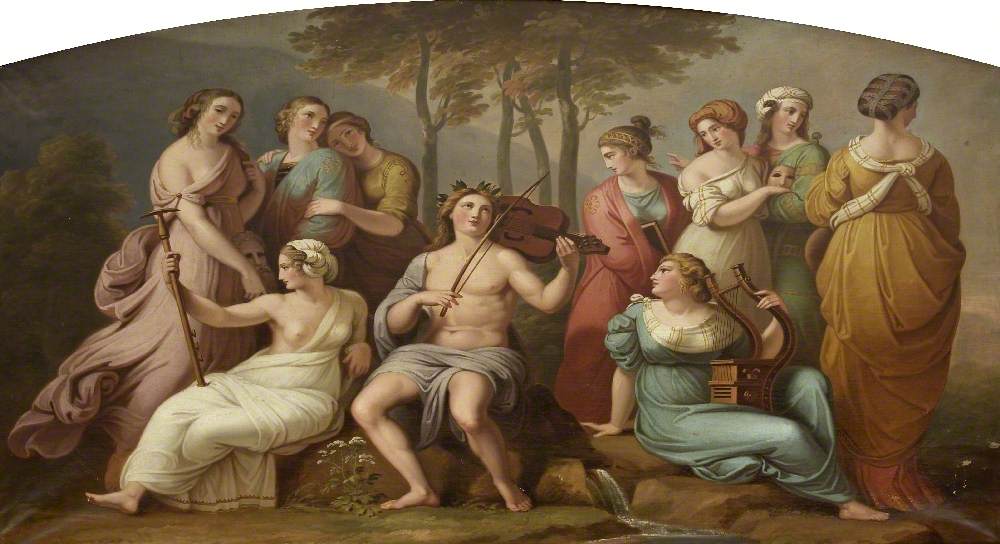
_-_Apollo_and_the_Muses_on_Parnassus_(after_Raphael)_-_732279_-_Stourhead.jpg)
Hymns from Ancient Inscriptions · Hymn 01
Apollo: Paean of Aristonous
Παιὰν εἰς Ἀπόλλωνα
Prayer and ritual
These hymns may be spoken as complete prayers to the Gods. Within the Temple’s practice, a ritual is a direct theurgical act; hymnody gathers the mind and turns it toward the Divine, helping the initiate enter reverent communion with the Gods.
Use a hymn on its own in place of another prayer, or add it to the prayer portion of a suitable ritual. Choose according to the deity addressed and the petition expressed in the hymn. When combining them, preserve the ritual’s prescribed sequence and let the hymn give voice to its purpose.
The petition of this hymn
For Apollo’s gracious presence, enduring protection, and prosperity arising from holy conduct.
Speak the complete paean as praise of Apollo and his Delphic sanctuary. It may accompany purification or a petition for divine guidance and prosperity, with Athena, Earth, Themis, and the other Gods honoured in their places within the hymn.
English hieratic rendering
Hymn 01 · An English rendering aligned with the Greek lines.
- Dwelling at Pytho, the holy-founded seat beside the Delphic rock,
- the seat that ever speaks divine prophecy: ie, ie, Paean!
- Apollo, sacred glory of Leto, daughter of Coeus,
- and of Zeus Most High, by the counsels of the Blessed Ones: O ie, Paean!
- There, from the tripods held by the God, shaking the freshly cut laurel,
- you fulfil the work of prophecy: ie, ie, Paean!
- From the awe-filled inner sanctuary you declare the holy ordinance of things to come through oracles
- and the utterance of the sweet-sounding lyre: O ie, Paean!
- Purified in Tempe by the counsels of Zeus Most High,
- when Pallas sent you onward to Pytho: ⟨ie,⟩ ie, Paean!
- Having persuaded flower-nourishing Earth and Themis, the fair-tressed Goddess,
- you hold the seats fragrant with incense for ever: O ie, Paean!
- Therefore you revere Tritogeneia, guardian before the temple, within the holy oracular precincts,
- rewarding her with immortal gifts: ie, ie, Paean!
- Holding undying remembrance of the ancient favours then bestowed,
- you attend her with the highest honours: O ie, Paean!
- The Immortals bring you gifts: Poseidon, sacred ground;
- the Nymphs, the Corycian caves: ie, ie, Paean!
- Bromios, torches at the returning third-year feast; and holy Artemis
- keeps your places under the tireless watch of her hounds: O ie, Paean!
- O you who adorn your body in Castalia’s dew-fresh streams
- flowing from the hollows of Parnassus: ie, ie, Paean!
- Rejoice in our hymns, grant us lasting prosperity from holy deeds,
- and watch over us in saving power: O ie, Paean!
Ancient Greek & pronunciation
Read the English pronunciation spelling directly below each Greek line.
- Πυθίαν ἱερόκτιτον ναίων Δελφίδ’ ἀμφὶ πέτρανpee-THEE-ahn ee-eh-ROHK-tee-tohn NEH-ohn dhehl-FEEDH’ ahm-FEE PEH-trahn
- ἀεὶ θεσπιόμαντιν ἕδραν, ἰὴ ἰὲ Παιάν,ah-EE theh-spee-OH-mahn-deen EH-dhrahn, ee-EE ee-EH peh-AHN,
- Ἄπολλον, Κοίου τε κόρας Λατοῦς σεμνὸν ἄγαλμαAH-poh-lohn, KEE-oo teh KOH-rahs lah-TOOS sehm-NOHN AH-ghahl-mah
- καὶ Ζηνὸς ὑψίστου, μακάρων βουλαῖς, ὢ ἰὲ Παιάν,KEH zee-NOHS eep-SEE-stoo, mah-KAH-rohn voo-LEHS, OH ee-EH peh-AHN,
- ἔνθ’ ἀπὸ τριπόδων θεοκτήτων, χλωρότομον δάφναν σείων,EHNTH’ ah-POH tree-POH-dhohn theh-ohk-TEE-tohn, khloh-ROH-toh-mohn DHAHF-nahn SEE-ohn,
- μαντοσύναν ἐποιχνεῖς, ἰὴ ἰὲ Παιάν,mahn-doh-SEE-nahn eh-peekh-NEES, ee-EE ee-EH peh-AHN,
- φρικώεντος ἐξ ἀδύτου μελλόντων θέμιν εὐσεβῆ χρησμοῖςfree-KOH-ehn-dohs ehks ah-DHEE-too meh-LOHN-dohn THEH-meen ehf-seh-VEE khree-ZMEES
- εὐφθόγγου τε λύρας αὐδαῖς, ὢ ἰὲ Παιάν.ehf-THOHN-goo teh LEE-rahs ahv-DHEHS, OH ee-EH peh-AHN.
- Ἁγνισθεὶς ἐνὶ Τέμπεσιν βουλαῖς Ζηνὸς ὑπειρόχου,ahgh-nees-THEES eh-NEE TEHM-beh-seen voo-LEHS zee-NOHS ee-pee-ROH-khoo,
- ἐπεὶ Παλλὰς ἔπεμψε Πυθῶδ’, ⟨ἰὴ⟩ ἰὲ Παιάν,eh-PEE pah-LAHS EH-pehmp-seh pee-THOHDH’, ee-EE ee-EH peh-AHN,
- πείσας Γαῖαν ἀνθοτρόφον Θέμιν τ’ εὐπλόκαμον θεάν,PEE-sahs YEH-ahn ahn-thoh-TROH-fohn THEH-meen t’ ehf-PLOH-kah-mohn theh-AHN,
- ⟨αἰ⟩ὲν εὐλιβάνους ἕδρας ἔχεις, ὢ ἰὲ Παιάν.eh-EHN eh-vlee-VAH-noos EH-dhrahs EH-hyees, OH ee-EH peh-AHN.
- ὅθεν Τριτογενῆ προναίαν ἐμ μαντεί⟨ο⟩ις ἁγίοιςOH-thehn tree-toh-yeh-NEE proh-NEH-ahn ehm mahn-DEE-ees ah-YEE-ees
- σέβων ἀθανάτοις ἀμοιβαῖς, ἰὴ ἰὲ Παιάν,SEH-vohn ah-thah-NAH-tees ah-mee-VEHS, ee-EE ee-EH peh-AHN,
- χάριν παλαιᾶν χαρίτων τ⟨ᾶν⟩ τότ’ ἀϊδίους ἔχων μνήμας,KHAH-reen pah-leh-AHN khah-REE-tohn TAHN TOHT’ ah-ee-DHEE-oos EH-khohn MNEE-mahs,
- ὑψίστα⟨ι⟩ς ἐφέπεις τιμαῖς, ὢ ἰὲ Παιάν.eep-SEE-stehs eh-FEH-pees tee-MEHS, OH ee-EH peh-AHN.
- δωροῦνται δέ σ’ ἀθάνατοι, Ποσειδῶν ἁγνοῖς δαπέδοις,dhoh-ROON-deh DHEH s’ ah-THAH-nah-tee, poh-see-DHOHN ahgh-NEES dhah-PEH-dhees,
- Νύμφαι Κωρυκίοισιν ἄντροις, ἰὴ ἰὲ Παιάν,NEEM-feh koh-ree-KEE-ee-seen AHN-drees, ee-EE ee-EH peh-AHN,
- τριετέσιν φαναῖς Βρόμιος· σεμνὰ δ’ Ἄρτεμιςtree-eh-TEH-seen fah-NEHS VROH-mee-ohs· sehm-NAH dh’ AHR-teh-mees
- εὐπόνοις κυνῶν ἐμ φυλακαῖς ἔχει τόπους, ὢ ἰὲ Παιάν.ehf-POH-nees kee-NOHN ehm fee-lah-KEHS EH-hyee TOH-poos, OH ee-EH peh-AHN.
- ἀλλ’ ὦ Παρνασσοῦ γυάλων εὐδρόσοισι Κασταλίας νασμοῖςahl’ OH pahr-nah-SOO yee-AH-lohn ehv-DHROH-see-see kah-stah-LEE-ahs nah-ZMEES
- σὸν δέμας ἐξαβρύνων, ἰὴ ἰὲ Παιάν,SOHN DHEH-mahs ehk-sah-VREE-nohn, ee-EE ee-EH peh-AHN,
- χαρεὶς ὕμνοις ἡμετέροις, ὄλβον ἐξ ὁσίων διδοὺς ἀεὶkhah-REES EEM-nees ee-meh-TEH-rees, OHL-vohn ehks oh-SEE-ohn dhee-DHOOS ah-EE
- καὶ σῴζων ἐφέποις ἡμᾶς, ὢ ἰὲ Παιάν.KEH SOH-zohn eh-FEH-pees ee-MAHS, OH ee-EH peh-AHN.
Short sound guide for English speakers
Every line beneath the Greek uses English pronunciation spellings. Say each hyphenated syllable in sequence and emphasize the syllable in CAPITALS. For example, οὐρανόθεν is oo-rah-NOH-thehn. Read adjacent vowels separately: theh-AH has two syllables; oo-rah-NEE-een has four. Hyphens guide the voice; they do not mark pauses.
| Spelling | Sound to make |
|---|---|
| ah · eh · ee · oh · oo | father · met · see · go without its final glide · moon. Keep these vowels clear in unstressed syllables too. |
| th · dh | The unvoiced th in thin · the voiced th in this. Thus DHEE begins with the sound in “thee.” |
| kh | The ch in Scottish loch or German Bach: let air pass at the back of the mouth, without closing it into a k. |
| hy | The breathy beginning of a carefully spoken Hugh. Raise the middle of the tongue toward the roof of the mouth and let air pass without voice. In shy, sound s followed by hy; do not use the English sh sound or the English word “shy.” |
| gh | Make the kh sound above, then add voice. Keep the passage open; this is a flowing sound, not a hard g. |
| y · g | y as in yes, with gentle friction · always a hard g as in get. |
| r | Tap the tongue lightly behind the upper teeth, or use a light roll. |
| ks · ps | Sound both consonants, even at the beginning of a word: ks as in backs, ps as in lips. |
| n-g · m-b · n-d | Sound the nasal and the following consonant. In AHN-geh-leh, the n-g group is like finger, with the g audible. |
Always sound s as in hiss, even at the end of DHEE-kees; z is voiced, as in zero. All other consonants have their usual English sounds. Initial consonant groups may be unfamiliar: sound every written consonant, without inserting an extra vowel. A word without capitals carries no written stress in the Greek. Where two syllables have capitals, both written accents are retained. An apostrophe marks a vowel already elided in the Greek; do not add it back. A hyphen at the end of a Greek verse joins the unfinished word to the next verse.
These spellings follow the Modern Greek liturgical reading used throughout this library. Breathings and iota subscripts are silent; separately pronounced vowels remain separate. The few Greek consonants without an exact English equivalent use the sound cues above. Ancient vowel length, pitch accent and metre are not reconstructed.
Hymn notes
Sacred meaning
Apollo’s prophetic voice stands within a concord of divine powers. His purification, his gratitude to Athena, and the gifts of the other Gods prepare the final petition: a prosperity rooted in holiness and a protecting presence that endures. The recurring cry names Paean and gathers the community into praise.
Textual note
The whole hymn is present in the cited critical reading. For recitation, its text is arranged here in 24 reading lines, grouping each half-stanza and its refrain; these are not the stone’s line numbers. The source supplies lost letters in χλωρότομον, ἁγίοις, ἀμοιβαῖς and δωροῦνται; those restored words are printed continuously. Angle brackets retain the edition’s other supplements. Letters marked as erroneous by braces in the inscription edition are omitted from this reading text. The written forms σώιζων and ὑψίστα<ι>ς are respectively normalised to σῴζων and retained with the editorial iota visible. The inscription’s εὐφθόνγου is orthographically normalised to εὐφθόγγου (νγ to γγ); this changes the written nasal convention, not the word. Breathings, accents, word division and punctuation otherwise follow the edited reading, with joined inscription line-break words.
Text and attribution
Aristonous, paean to Pythian Apollo, Fouilles de Delphes III.2, inscription 191, inscription lines 3–37; PHI Greek Inscriptions reading. Greek source. The English hieratic rendering and suggested devotional use are new editorial work. The applications are guidance for this library, not additional lines of the ancient poem.