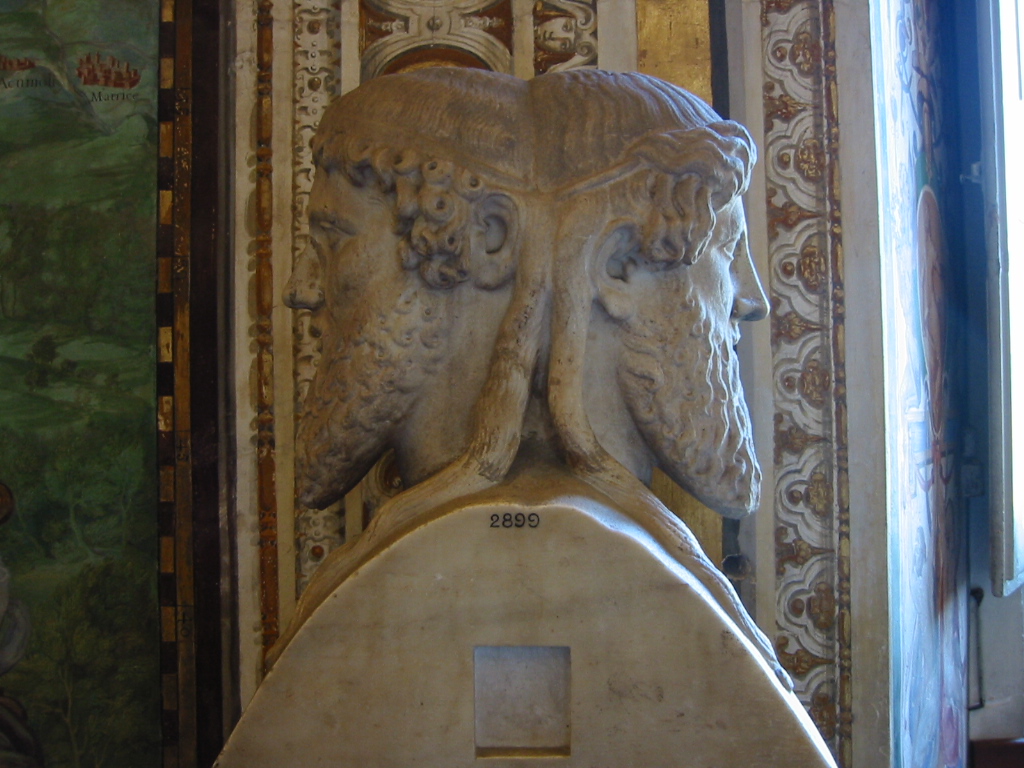

Hymns of Proclus · Hymn 06
Hecate and Janus
Ἑκάτης καὶ Ἰανοῦ
Prayer and ritual
These hymns may be spoken as complete prayers to the Gods. Within the Temple’s practice, a ritual is a direct theurgical act; hymnody gathers the mind and turns it toward the Divine, helping the initiate enter reverent communion with the Gods.
Use a hymn on its own in place of another prayer, or add it to the prayer portion of a suitable ritual. Choose according to the deity addressed and the petition expressed in the hymn. When combining them, preserve the ritual’s prescribed sequence and let the hymn give voice to its purpose.
The petition of this hymn
For a luminous life, purification of the soul, and guidance into the harbour of reverence.
Recite the whole hymn, including its repeated closing salutations, as a prayer for divine guidance. It may supplement a rite of purification or the opening of a sacred undertaking, asking the Gods to extend their hand and show the paths disclosed by divine wisdom.
English hieratic rendering
Hymn 06 · An English rendering aligned with the Greek lines.
- Hail, Mother of the Gods, many-named, glorious in your offspring;
- hail, Hecate of the threshold, greatly strong; and you yourself also,
- hail, Janus the forefather, imperishable Zeus; hail, highest Zeus.
- Make luminous the journey of my life,
- heavy with good things, and drive evil diseases
- from my limbs; draw upward the soul that rages about the earth,
- purified by the rites that awaken the mind.
- Yes, I beseech you, extend your hand, and show the divinely revealed paths
- to me in my need; I shall behold the light of great honour,
- from which there is escape from the misery of dark generation.
- Yes, I beseech you, extend your hand, and with your winds
- bring me, weary, into the harbour of reverence.
- Hail, Mother of the Gods, many-named, glorious in your offspring;
- hail, Hecate of the threshold, greatly strong; and you yourself also,
- hail, Janus the forefather, imperishable Zeus; hail, highest Zeus.
Ancient Greek & pronunciation
Read the English pronunciation spelling directly below each Greek line.
- Χαῖρε, θεῶν μῆτερ, πολυώνυμε, καλλιγένεθλε·HYEH-reh, theh-OHN MEE-tehr, poh-lee-OH-nee-meh, kah-lee-YEH-nehth-leh·
- χαῖρ’, Ἑκάτη προθυραία, μεγασθενές· ἀλλὰ καὶ αὐτὸςHYEHR’, eh-KAH-tee proh-thee-REH-ah, meh-ghahs-theh-NEHS· ah-LAH KEH ahf-TOHS
- χαῖρ’, Ἴανε προπάτορ, Ζεῦ ἄφθιτε· χαῖρ’, ὕπατε Ζεῦ·HYEHR’, EE-ah-neh proh-PAH-tohr, ZEHV AHF-thee-teh· HYEHR’, EE-pah-teh ZEHV·
- τεύχετε δ’ αἰγλήεσσαν ἐμοῦ βιότοιο πορείηνTEHF-hyeh-teh dh’ eh-GHLEE-eh-sahn eh-MOO vee-OH-tee-oh poh-REE-een
- βριθομένην ἀγαθοῖσι, κακὰς δ’ ἀπελαύνετε νούσουςvree-thoh-MEH-neen ah-ghah-THEE-see, kah-KAHS dh’ ah-peh-LAHV-neh-teh NOO-soos
- ἐκ ῥεθέων, ψυχὴν δὲ περὶ χθονὶ μαργαίνουσανehk reh-THEH-ohn, psee-HYEEN DHEH peh-REE khthoh-NEE mahr-YEH-noo-sahn
- ἕλκετ’ ἐγερσινόοισι καθηραμένην τελετῇσι.EHL-keht’ eh-yehr-see-NOH-ee-see kah-thee-rah-MEH-neen teh-leh-TEE-see.
- ναί, λίτομαι, δότε χεῖρα θεοφραδέας τε κελεύθουςNEH, LEE-toh-meh, DHOH-teh HYEE-rah theh-oh-frah-DHEH-ahs teh keh-LEHF-thoos
- δείξατέ μοι χατέοντι· φάος δ’ ἐρίτιμον ἀθρήσω,DHEEK-sah-TEH mee khah-TEH-ohn-dee· FAH-ohs dh’ eh-REE-tee-mohn ah-THREE-soh,
- κυανέης ὅθεν ἔστι φυγεῖν κακότητα γενέθλης.kee-ah-NEH-ees OH-thehn EH-stee fee-YEEN kah-KOH-tee-tah yeh-NEHTH-lees.
- ναί, λίτομαι, δότε χεῖρα καὶ ὑμετέροισιν ἀήταιςNEH, LEE-toh-meh, DHOH-teh HYEE-rah KEH ee-meh-TEH-ree-seen ah-EE-tehs
- ὅρμον ἐς εὐσεβίης με πελάσσατε κεκμηῶτα.OHR-mohn ehs ehf-seh-VEE-ees meh peh-LAH-sah-teh kehk-mee-OH-tah.
- χαῖρε, θεῶν μῆτερ, πολυώνυμε, καλλιγένεθλε·HYEH-reh, theh-OHN MEE-tehr, poh-lee-OH-nee-meh, kah-lee-YEH-nehth-leh·
- χαῖρ’, Ἑκάτη προθυραία, μεγασθενές· ἀλλὰ καὶ αὐτὸςHYEHR’, eh-KAH-tee proh-thee-REH-ah, meh-ghahs-theh-NEHS· ah-LAH KEH ahf-TOHS
- χαῖρ’, Ἴανε προπάτορ, Ζεῦ ἄφθιτε· χαῖρ’, ὕπατε Ζεῦ.HYEHR’, EE-ah-neh proh-PAH-tohr, ZEHV AHF-thee-teh· HYEHR’, EE-pah-teh ZEHV.
Short sound guide for English speakers
Every line beneath the Greek uses English pronunciation spellings. Say each hyphenated syllable in sequence and emphasize the syllable in CAPITALS. For example, οὐρανόθεν is oo-rah-NOH-thehn. Read adjacent vowels separately: theh-AH has two syllables; oo-rah-NEE-een has four. Hyphens guide the voice; they do not mark pauses.
| Spelling | Sound to make |
|---|---|
| ah · eh · ee · oh · oo | father · met · see · go without its final glide · moon. Keep these vowels clear in unstressed syllables too. |
| th · dh | The unvoiced th in thin · the voiced th in this. Thus DHEE begins with the sound in “thee.” |
| kh | The ch in Scottish loch or German Bach: let air pass at the back of the mouth, without closing it into a k. |
| hy | The breathy beginning of a carefully spoken Hugh. Raise the middle of the tongue toward the roof of the mouth and let air pass without voice. In shy, sound s followed by hy; do not use the English sh sound or the English word “shy.” |
| gh | Make the kh sound above, then add voice. Keep the passage open; this is a flowing sound, not a hard g. |
| y · g | y as in yes, with gentle friction · always a hard g as in get. |
| r | Tap the tongue lightly behind the upper teeth, or use a light roll. |
| ks · ps | Sound both consonants, even at the beginning of a word: ks as in backs, ps as in lips. |
| n-g · m-b · n-d | Sound the nasal and the following consonant. In AHN-geh-leh, the n-g group is like finger, with the g audible. |
Always sound s as in hiss, even at the end of DHEE-kees; z is voiced, as in zero. All other consonants have their usual English sounds. Initial consonant groups may be unfamiliar: sound every written consonant, without inserting an extra vowel. A word without capitals carries no written stress in the Greek. Where two syllables have capitals, both written accents are retained. An apostrophe marks a vowel already elided in the Greek; do not add it back. A hyphen at the end of a Greek verse joins the unfinished word to the next verse.
These spellings follow the Modern Greek liturgical reading used throughout this library. Breathings and iota subscripts are silent; separately pronounced vowels remain separate. The few Greek consonants without an exact English equivalent use the sound cues above. Ancient vowel length, pitch accent and metre are not reconstructed.
Hymn notes
Sacred meaning
The Mother of the Gods and Hecate at the threshold are saluted together with ancestral Janus, who is explicitly invoked as imperishable and highest Zeus. The petitions join bodily release from disease to the soul’s purification and ascent. The image of a weary voyager brought into the harbour of reverence gathers the hymn’s practical and sacred purposes into one appeal.
Textual note
Abel VI, printed p. 281. Complete in this edition, 15 verses. Verses 13–15 intentionally repeat verses 1–3 and are retained. The identification of Janus with Zeus belongs to this hymn’s own address and is not an editorial substitution.
Text and attribution
Greek text: Eugenius Abel, Orphica (1885), printed pages 281. The text follows the printed main reading of this edition; source-specific variants are recorded where relevant. Read the digitised edition. Greek source. Manual transcription collated against Abel’s printed main text. The English hieratic rendering and suggested devotional use are new editorial work. The applications are guidance for this library, not additional lines of the ancient poem.