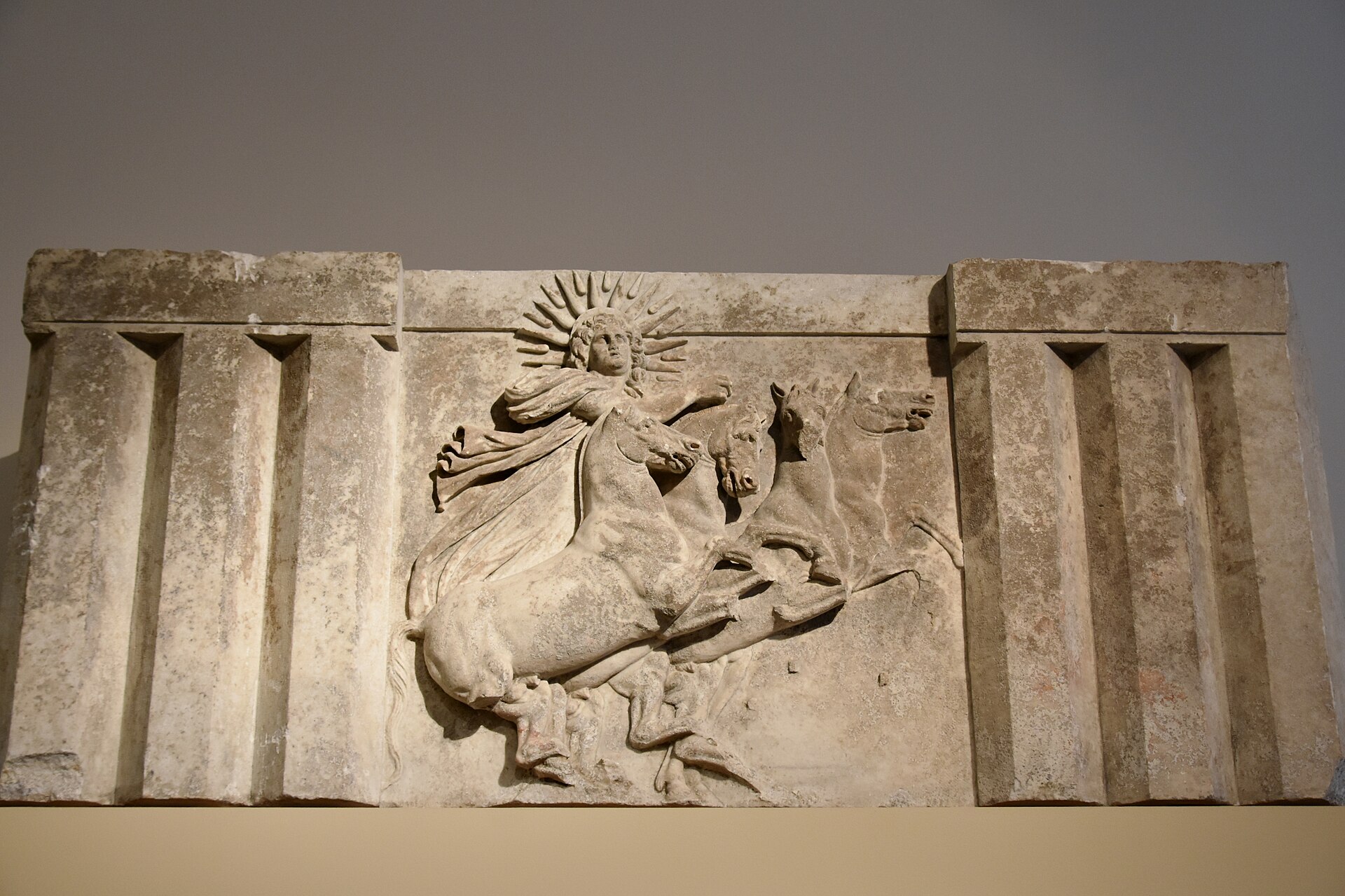
.jpg)
Hymns of Proclus · Hymn 01
Helios, King of Intellective Fire
Ὕμνος εἰς Ἥλιον
Prayer and ritual
These hymns may be spoken as complete prayers to the Gods. Within the Temple’s practice, a ritual is a direct theurgical act; hymnody gathers the mind and turns it toward the Divine, helping the initiate enter reverent communion with the Gods.
Use a hymn on its own in place of another prayer, or add it to the prayer portion of a suitable ritual. Choose according to the deity addressed and the petition expressed in the hymn. When combining them, preserve the ritual’s prescribed sequence and let the hymn give voice to its purpose.
The petition of this hymn
For purification, the soul’s ascent, and the harmonising protection of the solar God.
Recite the hymn as a full prayer to Helios when seeking sacred illumination and the cleansing of fault. It may supplement an existing solar or purification ritual, carrying its petition from the ordering of the cosmos to the soul, body, inherited sacred customs, and the course of life.
English hieratic rendering
Hymn 01 · An English rendering aligned with the Greek lines.
- Hear, King of intellective fire, Titan of the golden reins;
- hear, Keeper of light, O Lord; of its life-sustaining source
- you yourself hold the key, and into the material worlds
- channel from on high the rich stream of harmony.
- Hear: for holding the central seat above the aether,
- and possessing the radiant circle that is the heart of the cosmos,
- you have filled all things with your mind-awakening providence.
- The wandering stars, girded with your ever-burning torches,
- through dances that neither cease nor tire,
- send life-generating drops to those upon the earth.
- Through your chariot-courses that return again,
- every birth has blossomed according to the ordinance of the Seasons.
- The tumult of the elements advancing against one another
- ceased when you appeared from the ineffable Father.
- To you the unshaken chorus of the Fates has yielded;
- they turn back the linen thread of compelling destiny
- whenever you will, for yours is surpassing power and surpassing rule in might.
- From your divine series the King of God-obedient song
- sprang forth, Phoebus; singing wonders to the lyre,
- he lulls the great wave of loudly surging generation.
- From your company that averts evil, gentle in his gifts,
- Paean blossomed and spread his health abroad,
- filling the wide cosmos with harmony free from every harm.
- They hymn you as the renowned Father of Dionysus;
- in the lowest depths of matter, as Attis of the sacred cry;
- others have acclaimed you in their songs as tender Adonis.
- The threat of your swift scourge is feared
- by the fierce-hearted daimons who bring destruction to humankind,
- preparing evils for our sorrowing souls,
- so that forever in the deep of this heavily roaring life
- they may toil beneath the body, enduring its yoke-bonds,
- and forget the high-reaching Father's dwelling of abundant light.
- But, O best of Gods, crowned with fire, blessed divine Spirit,
- image of the all-begetting God, lifter of souls on high,
- hear, and cleanse me ever from every fault.
- Receive my tear-filled supplication; deliver me
- from grievous stains, and guard me far from retributions,
- softening the swift eye of Dike, who has beheld all things.
- Ever through your aid that averts evil,
- grant my soul pure light, rich in blessing,
- dispersing the poisonous mist that destroys mortal life;
- and grant my body wholeness and health splendid in its gifts.
- Set me upon good renown, and within the ordinances of my ancestors
- may I cherish the gifts of the Muses of lovely tresses.
- Grant prosperity unshaken, arising from lovely reverence,
- if you so will, O Lord; for you can accomplish all things
- with ease, possessing strength that is mighty and without limit.
- And if through the fate-spun, circling spindles,
- beneath the threads turned by the stars, something ruinous
- comes upon us, repel it yourself with your great rush of power.
Ancient Greek & pronunciation
Read the English pronunciation spelling directly below each Greek line.
- Κλῦθι πυρὸς νοεροῦ βασιλεῦ, χρυσήνιε Τιτάν,KLEE-thee pee-ROHS noh-eh-ROO vah-see-LEHV, khree-SEE-nee-eh tee-TAHN,
- κλῦθι φάους ταμία, ζωαρκέος, ὦ ἄνα, πηγῆςKLEE-thee FAH-oos tah-MEE-ah, zoh-ahr-KEH-ohs, OH AH-nah, pee-YEES
- αὐτὸς ἔχων κληῖδα καὶ ὑλαίοις ἐνὶ κόσμοιςahf-TOHS EH-khohn klee-EE-dhah KEH ee-LEH-ees eh-NEE KOH-zmees
- ὑψόθεν ἁρμονίης ῥύμα πλούσιον ἐξοχετεύων.eep-SOH-thehn ahr-moh-NEE-ees REE-mah PLOO-see-ohn ehk-soh-hyeh-TEH-vohn.
- κέκλυθι· μεσσατίην γὰρ ἔχων ὑπὲρ αἰθέρος ἕδρηνKEH-klee-thee· meh-sah-TEE-een GHAHR EH-khohn ee-PEHR eh-THEH-rohs EH-dhreen
- καὶ κόσμου κραδιαῖον ἔχων ἐριφεγγέα κύκλονKEH KOH-zmoo krah-dhee-EH-ohn EH-khohn eh-ree-fehn-GEH-ah KEE-klohn
- πάντα τεῆς ἔπλησας ἐγερσινόοιο προνοίης.PAHN-dah teh-EES EH-plee-sahs eh-yehr-see-NOH-ee-oh proh-NEE-ees.
- ζωσάμενοι δὲ πλάνητες αἰθαλέας σέο πυρσοὺςzoh-SAH-meh-nee DHEH PLAH-nee-tehs eh-thah-LEH-ahs SEH-oh peer-SOOS
- αἰὲν ὑπ’ ἀλλήκτοισι καὶ ἀκαμάτοισι χορείαιςeh-EHN eep’ ah-LEEK-tee-see KEH ah-kah-MAH-tee-see khoh-REE-ehs
- ζωογόνους πέμπουσιν ἐπιχθονίοις ῥαθάμιγγας.zoh-oh-GHOH-noos PEHM-boo-seen eh-peekh-thoh-NEE-ees rah-THAH-meen-gahs.
- πᾶσα δ’ ὑφ’ ὑμετέρησι παλιννόστοισι διφρείαιςPAH-sah dh’ eef’ ee-meh-TEH-ree-see pah-lee-NOH-stee-see dhee-FREE-ehs
- Ὡράων κατὰ θεσμὸν ἀνεβλάστησε γενέθλη.oh-RAH-ohn kah-TAH theh-ZMOHN ah-neh-VLAH-stee-seh yeh-NEHTH-lee.
- στοιχείων δ’ ὀρυμαγδὸς ἐπ’ ἀλλήλοισιν ἰόντωνstee-HYEE-ohn dh’ oh-ree-mahgh-DHOHS ehp’ ah-LEE-lee-seen ee-OHN-dohn
- παύσατο σεῖο φανέντος ἀπ’ ἀρρήτου γενετῆρος.PAHF-sah-toh SEE-oh fah-NEHN-dohs ahp’ ah-REE-too yeh-neh-TEE-rohs.
- σοὶ δ’ ὑπὸ Μοιράων χορὸς εἴκαθεν ἀστυφέλικτος·SEE dh’ ee-POH mee-RAH-ohn khoh-ROHS EE-kah-thehn ah-stee-FEH-leek-tohs·
- ἂψ δὲ μεταστρωφῶσιν ἀναγκαίης λίνον αἴσης,AHPS DHEH meh-tah-stroh-FOH-seen ah-nahn-GEH-ees LEE-nohn EH-sees,
- εὖτ’ ἐθέλεις· πέρι γὰρ κρατέεις, πέρι δ’ ἶφι ἀνάσσεις.EHFT’ eh-THEH-lees· PEH-ree GHAHR krah-TEH-ees, PEH-ree dh’ EE-fee ah-NAH-sees.
- σειρῆς δ’ ὑμετέρης βασιλεὺς θεοπειθέος οἴμηςsee-REES dh’ ee-meh-TEH-rees vah-see-LEHFS theh-oh-pee-THEH-ohs EE-mees
- ἐξέθορεν Φοῖβος· κιθάρῃ δ’ ὑπὸ θέσκελα μέλπωνehk-SEH-thoh-rehn FEE-vohs· kee-THAH-ree dh’ ee-POH THEH-skeh-lah MEHL-pohn
- εὐνάζει μέγα κῦμα βαρυφλοίσβοιο γενέθλης.ehv-NAH-zee MEH-ghah KEE-mah vah-ree-FLEEZ-vee-oh yeh-NEHTH-lees.
- σῆς δ’ ἀπὸ μειλιχόδωρος ἀλεξικάκου θιασείηςSEES dh’ ah-POH mee-lee-KHOH-dhoh-rohs ah-lehk-see-KAH-koo thee-ah-SEE-ees
- Παιήων βλάστησεν, ἑὴν δ’ ἐπέτασσεν ὑγείην,peh-EE-ohn VLAH-stee-sehn, eh-EEN dh’ eh-PEH-tah-sehn ee-YEE-een,
- πλήσας ἁρμονίης παναπήμονος εὐρέα κόσμον.PLEE-sahs ahr-moh-NEE-ees pah-nah-PEE-moh-nohs eh-VREH-ah KOH-zmohn.
- σὲ κλυτὸν ὑμνείουσι Διωνύσοιο τοκῆα·SEH klee-TOHN eem-NEE-oo-see dhee-oh-NEE-see-oh toh-KEE-ah·
- ὕλης δ’ αὖ νεάτοις ἐνὶ βένθεσιν εὔιον Ἄττην,EE-lees dh’ AHV neh-AH-tees eh-NEE VEHN-theh-seen EH-vee-ohn AH-teen,
- ἄλλοι δ’ ἁβρὸν Ἄδωνιν ἐπευφήμησαν ἀοιδαῖς.AH-lee dh’ ah-VROHN AH-dhoh-neen eh-peh-FEE-mee-sahn ah-ee-DHEHS.
- δειμαίνουσι δὲ σεῖο θοῆς μάστιγος ἀπειλὴνdhee-MEH-noo-see DHEH SEE-oh thoh-EES MAH-stee-ghohs ah-pee-LEEN
- δαίμονες ἀνθρώπων δηλήμονες, ἀγριόθυμοι,DHEH-moh-nehs ahn-THROH-pohn dhee-LEE-moh-nehs, ah-ghree-OH-thee-mee,
- ψυχαῖς ἡμετέραις δυεραῖς κακὰ πορσύνοντες,psee-HYEHS ee-meh-TEH-rehs dhee-eh-REHS kah-KAH pohr-SEE-nohn-dehs,
- ὄφρ’ αἰεὶ κατὰ λαῖτμα βαρυσμαράγου βιότοιοOHFR’ eh-EE kah-TAH LEHT-mah vah-ree-zmah-RAH-ghoo vee-OH-tee-oh
- σώματος ὀτλεύωσιν ὕπο, ζυγόδεσμα παθοῦσαι,SOH-mah-tohs oht-LEH-voh-seen EE-poh, zee-GHOH-dheh-zmah pah-THOO-seh,
- ὑψιτενοῦς δὲ λάθοιντο πατρὸς πολυφεγγέος αὐλῆς.eep-see-teh-NOOS DHEH LAH-theen-doh pah-TROHS poh-lee-fehn-GEH-ohs ah-VLEES.
- ἀλλά, θεῶν ὤριστε, πυριστεφές, ὄλβιε δαῖμον,ah-LAH, theh-OHN OH-ree-steh, pee-ree-steh-FEHS, OHL-vee-eh DHEH-mohn,
- εἰκὼν παγγενέταο θεοῦ, ψυχῶν ἀναγωγεῦ,ee-KOHN pahn-geh-NEH-tah-oh theh-OO, psee-KHOHN ah-nah-ghoh-YEHV,
- κέκλυθι, καί με κάθηρον ἁμαρτάδος αἰὲν ἁπάσης·KEH-klee-thee, KEH meh KAH-thee-rohn ah-mahr-TAH-dhohs eh-EHN ah-PAH-sees·
- δέχνυσο δ’ ἱκεσίην πολυδάκρυον, ἐκ δέ με λυγρῶνDHEHKH-nee-soh dh’ ee-keh-SEE-een poh-lee-DHAH-kree-ohn, ehk DHEH meh lee-GHROHN
- ῥύεο κηλίδων, ποινῶν δ’ ἀπάνευθε φυλάσσοιςREE-eh-oh kee-LEE-dhohn, pee-NOHN dh’ ah-PAH-nehf-theh fee-LAH-sees
- πρηΰνων θοὸν ὄμμα Δίκης, ἣ πάντα δέδορκεν.pree-EE-nohn thoh-OHN OH-mah DHEE-kees, EE PAHN-dah DHEH-dhohr-kehn.
- αἰεὶ δ’ ὑμετέρῃσιν ἀλεξικάκοισιν ἀρωγαῖςeh-EE dh’ ee-meh-TEH-ree-seen ah-lehk-see-KAH-kee-seen ah-roh-YEHS
- ψυχῇ μὲν φάος ἁγνὸν ἐμῇ πολύολβον ὀπάζοιςpsee-HYEE MEHN FAH-ohs ahgh-NOHN eh-MEE poh-LEE-ohl-vohn oh-PAH-zees
- ἀχλὺν ἀποσκεδάσας ὀλεσίμβροτον, ἰολόχευτον,ah-KHLEEN ah-poh-skeh-DHAH-sahs oh-leh-SEEM-vroh-tohn, ee-oh-LOH-hyehf-tohn,
- σώματι δ’ ἀρτεμίην τε καὶ ἀγλαόδωρον ὑγείην.SOH-mah-tee dh’ ahr-teh-MEE-een teh KEH ah-ghlah-OH-dhoh-rohn ee-YEE-een.
- εὐκλείης τ’ ἐπίβησον ἐμὲ προγόνων τ’ ἐνὶ θεσμοῖςehf-KLEE-ees t’ eh-PEE-vee-sohn eh-MEH proh-GHOH-nohn t’ eh-NEE theh-ZMEES
- Μουσάων ἐρασιπλοκάμων δώροισι μελοίμην.moo-SAH-ohn eh-rah-see-ploh-KAH-mohn DHOH-ree-see meh-LEE-meen.
- ὄλβον δ’ ἀστυφέλικτον ἀπ’ εὐσεβίης ἐρατεινῆς,OHL-vohn dh’ ah-stee-FEH-leek-tohn ahp’ ehf-seh-VEE-ees eh-rah-tee-NEES,
- εἴ κ’ ἐθέλῃς, δός, ἄναξ· δύνασαι γὰρ ἅπαντα τελέσσαιEE k’ eh-THEH-lees, DHOHS, AH-nahks· DHEE-nah-seh GHAHR AH-pahn-dah teh-LEH-seh
- ῥηιδίως, κρατερὴν γὰρ ἔχεις καὶ ἀπείριτον ἀλκήν.ree-ee-DHEE-ohs, krah-teh-REEN GHAHR EH-hyees KEH ah-PEE-ree-tohn ahl-KEEN.
- εἰ δέ τι μοιριδίοισιν ἑλιξοπόροισιν ἀτράκτοις,ee DHEH tee mee-ree-DHEE-ee-seen eh-leek-soh-POH-ree-seen ah-TRAHK-tees,
- ἀστεροδινήτοις ὑπὸ νήμασιν οὐλοὸν ἄμμινah-steh-roh-dhee-NEE-tees ee-POH NEE-mah-seen oo-loh-OHN AH-meen
- ἔρχεται, αὐτὸς ἔρυκε τεῇ μεγάλῃ τόδε ῥιπῇ.EHR-hyeh-teh, ahf-TOHS EH-ree-keh teh-EE meh-GHAH-lee TOH-dheh ree-PEE.
Short sound guide for English speakers
Every line beneath the Greek uses English pronunciation spellings. Say each hyphenated syllable in sequence and emphasize the syllable in CAPITALS. For example, οὐρανόθεν is oo-rah-NOH-thehn. Read adjacent vowels separately: theh-AH has two syllables; oo-rah-NEE-een has four. Hyphens guide the voice; they do not mark pauses.
| Spelling | Sound to make |
|---|---|
| ah · eh · ee · oh · oo | father · met · see · go without its final glide · moon. Keep these vowels clear in unstressed syllables too. |
| th · dh | The unvoiced th in thin · the voiced th in this. Thus DHEE begins with the sound in “thee.” |
| kh | The ch in Scottish loch or German Bach: let air pass at the back of the mouth, without closing it into a k. |
| hy | The breathy beginning of a carefully spoken Hugh. Raise the middle of the tongue toward the roof of the mouth and let air pass without voice. In shy, sound s followed by hy; do not use the English sh sound or the English word “shy.” |
| gh | Make the kh sound above, then add voice. Keep the passage open; this is a flowing sound, not a hard g. |
| y · g | y as in yes, with gentle friction · always a hard g as in get. |
| r | Tap the tongue lightly behind the upper teeth, or use a light roll. |
| ks · ps | Sound both consonants, even at the beginning of a word: ks as in backs, ps as in lips. |
| n-g · m-b · n-d | Sound the nasal and the following consonant. In AHN-geh-leh, the n-g group is like finger, with the g audible. |
Always sound s as in hiss, even at the end of DHEE-kees; z is voiced, as in zero. All other consonants have their usual English sounds. Initial consonant groups may be unfamiliar: sound every written consonant, without inserting an extra vowel. A word without capitals carries no written stress in the Greek. Where two syllables have capitals, both written accents are retained. An apostrophe marks a vowel already elided in the Greek; do not add it back. A hyphen at the end of a Greek verse joins the unfinished word to the next verse.
These spellings follow the Modern Greek liturgical reading used throughout this library. Breathings and iota subscripts are silent; separately pronounced vowels remain separate. The few Greek consonants without an exact English equivalent use the sound cues above. Ancient vowel length, pitch accent and metre are not reconstructed.
Hymn notes
Sacred meaning
Helios holds the key of life-sustaining light and pours harmony into the material worlds. Phoebus, Paean, Dionysus, Attis, and Adonis are named within the hymn’s account of his divine power and series. The prayer asks that the soul remember the Father’s luminous dwelling, receive pure light, and rise through the God’s guidance, while bodily health and honourable earthly life are also preserved.
Textual note
Abel I, printed pp. 276–278. Complete in this edition, 50 verses. “Divine series” renders σειρή as the procession of powers dependent upon a divine source. The distinct actions and divine identifications in the poem are preserved. Verse 31 follows Abel’s παθοῦσαι; verse 46 follows εἴ κ’ ἐθέλῃς and δύνασαι γὰρ ἅπαντα.
Text and attribution
Greek text: Eugenius Abel, Orphica (1885), printed pages 276, 277, 278. The text follows the printed main reading of this edition; source-specific variants are recorded where relevant. Read the digitised edition. Greek source. Manual transcription collated against Abel’s printed main text. The English hieratic rendering and suggested devotional use are new editorial work. The applications are guidance for this library, not additional lines of the ancient poem.