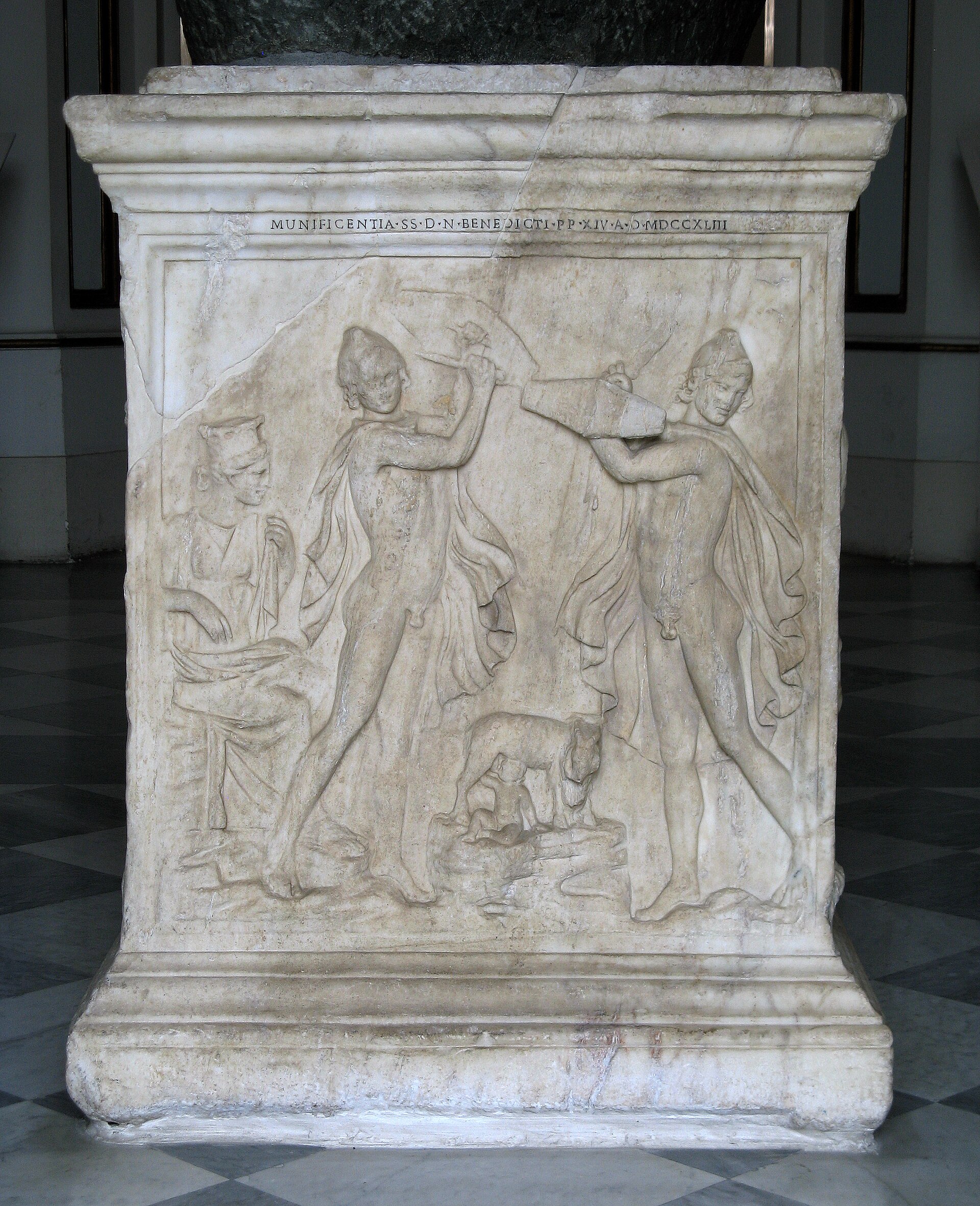
_04.jpg)
Orphic Hymns · Hymn 38
The Curetes: Cosmic Guardians
Κουρήτων
Prayer and ritual
These hymns may be spoken as complete prayers to the Gods. Within the Temple’s practice, a ritual is a direct theurgical act; hymnody gathers the mind and turns it toward the Divine, helping the initiate enter reverent communion with the Gods.
Use a hymn on its own in place of another prayer, or add it to the prayer portion of a suitable ritual. Choose according to the deity addressed and the petition expressed in the hymn. When combining them, preserve the ritual’s prescribed sequence and let the hymn give voice to its purpose.
The petition of this hymn
For the saving breath of the Curetes, protection in sea journeys, and the fruitful ordering of the seasons.
This hymn may stand as a prayer for the Curetes’ gracious guardianship. It may also be recited within a rite of protection, safe passage over water, or seasonal flourishing, following its concluding request for their gentle and fruitful breath.
English hieratic rendering
Hymn 38 · An English rendering aligned with the Greek lines.
- O bronze-resounding Curetes, bearing the arms of Ares,
- heavenly, earthly, and dwelling in the sea, rich in blessings,
- life-generating breaths, glorious saviors of the cosmos,
- you who inhabit Samothrace, the sacred land,
- and ward off dangers from mortals wandering over the sea:
- you first established the rite of initiation for humankind,
- immortal Curetes, bearing the arms of Ares.
- You govern Ocean, you govern the sea and likewise the trees;
- as you come, you make the earth resound beneath your light feet,
- gleaming in your armor; every beast cowers
- at your onset, and the tumult and the cry ascend to heaven;
- with the circling of your feet the dust reaches the clouds
- as you come, and then all the flowers burst into bloom.
- Immortal divine powers, nourishers and also destroyers,
- whenever you rush forth in anger against humankind,
- destroying livelihood and possessions, and the people themselves
- setting aflame, while the great deep-eddying sea groans,
- and high-crested trees fall from their roots to the earth,
- and the heavenly echo rings with the rushing of leaves.
- Curetes, Corybantes, sovereigns of mighty power,
- lords in Samothrace, yourselves also sons of Zeus,
- ever-flowing breaths, nourishers of souls, in the likeness of air,
- who are also called the heavenly twins in Olympus,
- fair-breathing, serene, saving, and gracious:
- breathe upon us, O lords who nourish the seasons and bear fruit.
Ancient Greek & pronunciation
Read the English pronunciation spelling directly below each Greek line.
- Χαλκόκροτοι Κουρῆτες, Ἀρήια τεύχε’ ἔχοντες,khahl-KOH-kroh-tee koo-REE-tehs, ah-REE-ee-ah TEHF-hyeh’ EH-khohn-dehs,
- οὐράνιοι χθόνιοί τε καὶ εἰνάλιοι, πολύολβοι,oo-RAH-nee-ee KHTHOH-nee-EE teh KEH ee-NAH-lee-ee, poh-LEE-ohl-vee,
- ζῳογόνοι πνοιαί, κόσμου σωτῆρες ἀγαυοί,zoh-oh-GHOH-nee pnee-EH, KOH-zmoo soh-TEE-rehs ah-ghah-VEE,
- οἵτε Σαμοθρῄκην, ἱερὴν χθόνα, ναιετάοντεςEE-teh sah-moh-THREE-keen, ee-eh-REEN KHTHOH-nah, neh-eh-TAH-ohn-dehs
- κινδύνους θνητῶν ἀπερύκετε ποντοπλανήτων·keen-DHEE-noos thnee-TOHN ah-peh-REE-keh-teh pohn-doh-plah-NEE-tohn·
- ὑμεῖς καὶ τελετὴν πρῶτοι μερόπεσσιν ἔθεσθε,ee-MEES KEH teh-leh-TEEN PROH-tee meh-ROH-peh-seen EH-thehs-theh,
- ἀθάνατοι Κουρῆτες, Ἀρήια τεύχε’ ἔχοντες·ah-THAH-nah-tee koo-REE-tehs, ah-REE-ee-ah TEHF-hyeh’ EH-khohn-dehs·
- νωμᾶτ’ Ὠκεανόν, νωμᾶθ’ ἅλα δένδρεά θ' αὕτως·noh-MAHT’ oh-keh-ah-NOHN, noh-MAHTH’ AH-lah DHEHN-dhreh-AH th' AHF-tohs·
- ἐρχόμενοι γαῖαν κοναβίζετε ποσσὶν ἐλαφροῖς,ehr-KHOH-meh-nee YEH-ahn koh-nah-VEE-zeh-teh poh-SEEN eh-lah-FREES,
- μαρμαίροντες ὅπλοις· πτήσσουσι δὲ θῆρες ἅπαντεςmahr-MEH-rohn-dehs OH-plees· PTEE-soo-see DHEH THEE-rehs AH-pahn-dehs
- ὁρμώντων, θόρυβος δὲ βοή τ’ εἰς οὐρανὸν ἵκει,ohr-MOHN-dohn, THOH-ree-vohs DHEH voh-EE t’ ees oo-rah-NOHN EE-kee,
- εἱλιγμοῖς τε ποδῶν κονίη νεφέλας ἀφικάνειee-leegh-MEES teh poh-DHOHN koh-NEE-ee neh-FEH-lahs ah-fee-KAH-nee
- ἐρχομένων· τότε δή ῥα καὶ ἄνθεα πάντα τέθηλε.ehr-khoh-MEH-nohn· TOH-teh DHEE rah KEH AHN-theh-ah PAHN-dah TEH-thee-leh.
- δαίμονες ἀθάνατοι, τροφέες καὶ αὖτ’ ὀλετῆρες,DHEH-moh-nehs ah-THAH-nah-tee, troh-FEH-ehs KEH AHFT’ oh-leh-TEE-rehs,
- ἡνίκ’ ἂν ὁρμαίνητε χολούμενοι ἀνθρώποισινee-NEEK’ AHN ohr-MEH-nee-teh khoh-LOO-meh-nee ahn-THROH-pee-seen
- ὀλλύντες βίοτον καὶ κτήματα ἠδὲ καὶ αὐτοὺςoh-LEEN-dehs VEE-oh-tohn KEH KTEE-mah-tah ee-DHEH KEH ahf-TOOS
- πιμπράντες· στοναχεῖ δὲ μέγας πόντος βαθυδίνης,peem-BRAHN-dehs· stoh-nah-HYEE DHEH MEH-ghahs POHN-dohs vah-thee-DHEE-nees,
- δένδρεα δ’ ὑψικάρην’ ἐκ ῥιζῶν ἐς χθόνα πίπτει,DHEHN-dhreh-ah dh’ eep-see-KAH-reen’ ehk ree-ZOHN ehs KHTHOH-nah PEEP-tee,
- ἠχὼ δ' οὐρανίη κελαδεῖ ῥοιζήμασι φύλλων.ee-KHOH dh' oo-rah-NEE-ee keh-lah-DHEE ree-ZEE-mah-see FEE-lohn.
- Κουρῆτες Κορύβαντες, ἀνάκτορες εὐδύνατοί τεkoo-REE-tehs koh-REE-vahn-dehs, ah-NAHK-toh-rehs ehv-DHEE-nah-TEE teh
- ἐν Σαμοθρῄκῃ ἄνακτες, ὁμοῦ Ζηνὸς κόροι αὐτοί,ehn sah-moh-THREE-kee AH-nahk-tehs, oh-MOO zee-NOHS KOH-ree ahf-TEE,
- πνοιαὶ ἀέναοι, ψυχοτρόφοι, ἠεροειδεῖς,pnee-EH ah-EH-nah-ee, psee-khoh-TROH-fee, ee-eh-roh-ee-DHEES,
- οἵτε καὶ οὐράνιοι δίδυμοι κλῄζεσθ’ ἐν Ὀλύμπῳ,EE-teh KEH oo-RAH-nee-ee DHEE-dhee-mee KLEE-zehsth’ ehn oh-LEEM-boh,
- εὔπνοοι, εὔδιοι, σωτήριοι ἠδὲ προσηνεῖς·EHFP-noh-ee, EHV-dhee-ee, soh-TEE-ree-ee ee-DHEH proh-see-NEES·
- ὡροτρόφοι, φερέκαρποι ἐπιπνείοιτε ἄνακτες.oh-roh-TROH-fee, feh-REH-kahr-pee eh-peep-NEE-ee-teh AH-nahk-tehs.
Short sound guide for English speakers
Every line beneath the Greek uses English pronunciation spellings. Say each hyphenated syllable in sequence and emphasize the syllable in CAPITALS. For example, οὐρανόθεν is oo-rah-NOH-thehn. Read adjacent vowels separately: theh-AH has two syllables; oo-rah-NEE-een has four. Hyphens guide the voice; they do not mark pauses.
| Spelling | Sound to make |
|---|---|
| ah · eh · ee · oh · oo | father · met · see · go without its final glide · moon. Keep these vowels clear in unstressed syllables too. |
| th · dh | The unvoiced th in thin · the voiced th in this. Thus DHEE begins with the sound in “thee.” |
| kh | The ch in Scottish loch or German Bach: let air pass at the back of the mouth, without closing it into a k. |
| hy | The breathy beginning of a carefully spoken Hugh. Raise the middle of the tongue toward the roof of the mouth and let air pass without voice. In shy, sound s followed by hy; do not use the English sh sound or the English word “shy.” |
| gh | Make the kh sound above, then add voice. Keep the passage open; this is a flowing sound, not a hard g. |
| y · g | y as in yes, with gentle friction · always a hard g as in get. |
| r | Tap the tongue lightly behind the upper teeth, or use a light roll. |
| ks · ps | Sound both consonants, even at the beginning of a word: ks as in backs, ps as in lips. |
| n-g · m-b · n-d | Sound the nasal and the following consonant. In AHN-geh-leh, the n-g group is like finger, with the g audible. |
Always sound s as in hiss, even at the end of DHEE-kees; z is voiced, as in zero. All other consonants have their usual English sounds. Initial consonant groups may be unfamiliar: sound every written consonant, without inserting an extra vowel. A word without capitals carries no written stress in the Greek. Where two syllables have capitals, both written accents are retained. An apostrophe marks a vowel already elided in the Greek; do not add it back. A hyphen at the end of a Greek verse joins the unfinished word to the next verse.
These spellings follow the Modern Greek liturgical reading used throughout this library. Breathings and iota subscripts are silent; separately pronounced vowels remain separate. The few Greek consonants without an exact English equivalent use the sound cues above. Ancient vowel length, pitch accent and metre are not reconstructed.
Hymn notes
Sacred meaning
The Curetes’ sounding arms reveal powers present in heaven, earth, and sea. They nourish and preserve the cosmos, while their anger manifests as devastation. The hymn turns toward their saving, temperate aspect and asks that their breath sustain souls and ripen the seasons.
Ancient offering rubric: Frankincense.
Textual note
The printed text has “setting aflame” in verse 17. This differs materially from the digital πιμπλάντες and is restored from the scan. The hymn itself joins Curetes, Corybantes, and heavenly twins; the translation preserves those identifications.
Text and attribution
Greek text: Eugenius Abel, Orphica (1885), printed pages 78, 79. The text follows the printed main reading of this edition; source-specific variants are recorded where relevant. Read the digitised edition. Greek source. Wikisource transcription, revision 124324; checked and corrected against Abel’s print. The English hieratic rendering and suggested devotional use are new editorial work. The applications are guidance for this library, not additional lines of the ancient poem.