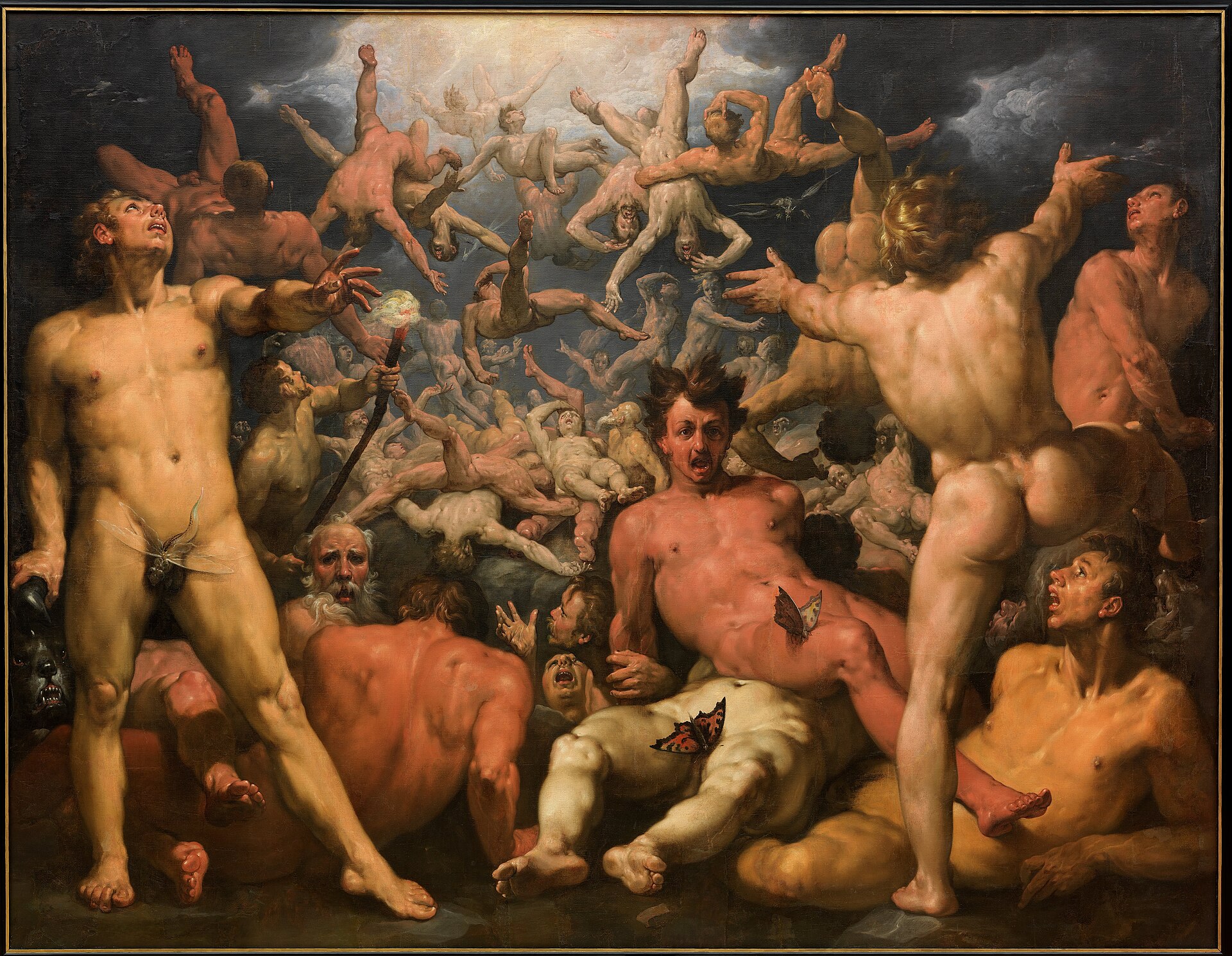

Orphic Hymns · Hymn 37
The Titans
Τιτάνων
Prayer and ritual
These hymns may be spoken as complete prayers to the Gods. Within the Temple’s practice, a ritual is a direct theurgical act; hymnody gathers the mind and turns it toward the Divine, helping the initiate enter reverent communion with the Gods.
Use a hymn on its own in place of another prayer, or add it to the prayer portion of a suitable ritual. Choose according to the deity addressed and the petition expressed in the hymn. When combining them, preserve the ritual’s prescribed sequence and let the hymn give voice to its purpose.
The petition of this hymn
For ancestral divine protection and the turning away of grievous wrath from the household.
Use this hymn as a standalone prayer to the Titans as the ancient sources of embodied life. It may also accompany a household protection or ancestral remembrance rite, preserving its specific petition that wrath from the powers below be sent away.
English hieratic rendering
Hymn 37 · An English rendering aligned with the Greek lines.
- O Titans, glorious children of Earth and Heaven,
- ancestors of our fathers, beneath the earth
- inhabiting Tartarean dwellings in the earth’s deep recess,
- beginnings and springs of all much-suffering mortal creatures,
- those of the sea, the winged, and those who dwell upon the ground:
- from you comes every lineage throughout the ordered world.
- I call upon you to send grievous wrath away,
- if any wrath from the ancestors beneath the earth has drawn near our dwellings.
Ancient Greek & pronunciation
Read the English pronunciation spelling directly below each Greek line.
- Τιτῆνες, Γαίης τε καὶ Οὐρανοῦ ἀγλαὰ τέκνα,tee-TEE-nehs, YEH-ees teh KEH oo-rah-NOO ah-ghlah-AH TEHK-nah,
- ἡμετέρων πρόγονοι πατέρων, γαίης ὑπένερθενee-meh-TEH-rohn PROH-ghoh-nee pah-TEH-rohn, YEH-ees ee-PEH-nehr-thehn
- οἴκοις Ταρταρίοισι μυχῷ χθονὸς ἐνναίοντες,EE-kees tahr-tah-REE-ee-see mee-KHOH khthoh-NOHS eh-NEH-ohn-dehs,
- ἀρχαὶ καὶ πηγαὶ πάντων θνητῶν πολυμόχθων,ahr-HYEH KEH pee-YEH PAHN-dohn thnee-TOHN poh-lee-MOHKH-thohn,
- εἰναλίων, πτηνῶν τε καὶ οἳ χθόνα ναιετάουσιν·ee-nah-LEE-ohn, ptee-NOHN teh KEH EE KHTHOH-nah neh-eh-TAH-oo-seen·
- ἐξ ὑμέων γὰρ πᾶσα πέλει γενεὴ κατὰ κόσμον.ehks ee-MEH-ohn GHAHR PAH-sah PEH-lee yeh-neh-EE kah-TAH KOH-zmohn.
- ὑμᾶς κικλήσκω μῆνιν χαλεπὴν ἀποπέμπειν,ee-MAHS kee-KLEE-skoh MEE-neen khah-leh-PEEN ah-poh-PEHM-been,
- εἴ τις ἀπὸ χθονίων προγόνων οἴκοισι πελάσθη.EE tees ah-POH khthoh-NEE-ohn proh-GHOH-nohn EE-kee-see peh-LAHS-thee.
Short sound guide for English speakers
Every line beneath the Greek uses English pronunciation spellings. Say each hyphenated syllable in sequence and emphasize the syllable in CAPITALS. For example, οὐρανόθεν is oo-rah-NOH-thehn. Read adjacent vowels separately: theh-AH has two syllables; oo-rah-NEE-een has four. Hyphens guide the voice; they do not mark pauses.
| Spelling | Sound to make |
|---|---|
| ah · eh · ee · oh · oo | father · met · see · go without its final glide · moon. Keep these vowels clear in unstressed syllables too. |
| th · dh | The unvoiced th in thin · the voiced th in this. Thus DHEE begins with the sound in “thee.” |
| kh | The ch in Scottish loch or German Bach: let air pass at the back of the mouth, without closing it into a k. |
| hy | The breathy beginning of a carefully spoken Hugh. Raise the middle of the tongue toward the roof of the mouth and let air pass without voice. In shy, sound s followed by hy; do not use the English sh sound or the English word “shy.” |
| gh | Make the kh sound above, then add voice. Keep the passage open; this is a flowing sound, not a hard g. |
| y · g | y as in yes, with gentle friction · always a hard g as in get. |
| r | Tap the tongue lightly behind the upper teeth, or use a light roll. |
| ks · ps | Sound both consonants, even at the beginning of a word: ks as in backs, ps as in lips. |
| n-g · m-b · n-d | Sound the nasal and the following consonant. In AHN-geh-leh, the n-g group is like finger, with the g audible. |
Always sound s as in hiss, even at the end of DHEE-kees; z is voiced, as in zero. All other consonants have their usual English sounds. Initial consonant groups may be unfamiliar: sound every written consonant, without inserting an extra vowel. A word without capitals carries no written stress in the Greek. Where two syllables have capitals, both written accents are retained. An apostrophe marks a vowel already elided in the Greek; do not add it back. A hyphen at the end of a Greek verse joins the unfinished word to the next verse.
These spellings follow the Modern Greek liturgical reading used throughout this library. Breathings and iota subscripts are silent; separately pronounced vowels remain separate. The few Greek consonants without an exact English equivalent use the sound cues above. Ancient vowel length, pitch accent and metre are not reconstructed.
Hymn notes
Sacred meaning
The Titans are addressed as children of Earth and Heaven and as ancestors of human forebears. Their primordial generative power embraces the life of sea, air, and land. The prayer appeals to that shared origin for the household’s protection.
Ancient offering rubric: Frankincense.
Text and attribution
Greek text: Eugenius Abel, Orphica (1885), printed pages 78. The text follows the printed main reading of this edition; source-specific variants are recorded where relevant. Read the digitised edition. Greek source. Wikisource transcription, revision 124321; checked and corrected against Abel’s print. The English hieratic rendering and suggested devotional use are new editorial work. The applications are guidance for this library, not additional lines of the ancient poem.