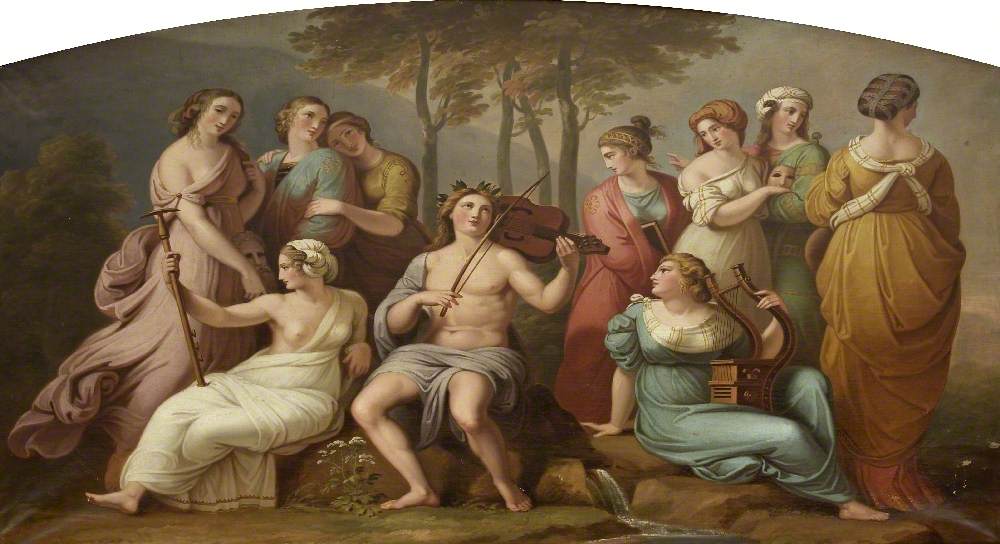
_-_Apollo_and_the_Muses_on_Parnassus_(after_Raphael)_-_732279_-_Stourhead.jpg)
Orphic Hymns · Hymn 34
Apollo
Ἀπόλλωνος
Prayer and ritual
These hymns may be spoken as complete prayers to the Gods. Within the Temple’s practice, a ritual is a direct theurgical act; hymnody gathers the mind and turns it toward the Divine, helping the initiate enter reverent communion with the Gods.
Use a hymn on its own in place of another prayer, or add it to the prayer portion of a suitable ritual. Choose according to the deity addressed and the petition expressed in the hymn. When combining them, preserve the ritual’s prescribed sequence and let the hymn give voice to its purpose.
The petition of this hymn
For Apollo’s illumination, healing presence, prophetic clarity, and the harmonious ordering of life.
Use the hymn as a prayer for Apollo’s saving and illuminating presence. It may also supplement a rite of healing, purification, divination, or sacred music, especially where the rite seeks harmony among the powers of life.
English hieratic rendering
Hymn 34 · An English rendering aligned with the Greek lines.
- Come, blessed Paian, slayer of Tityos, Phoebus of Lycoreia,
- Memphite, splendidly honored, healing one, giver of blessed wealth,
- golden-lyred, lord of seed and plough, Pythian, Titan,
- Grynean, Smintheus, slayer of Python, Delphic prophet,
- wild and light-bearing divine power, beloved and glorious youth,
- striker of the lyre, maker of dances, far-shooter, archer,
- Branchian and Didymaean, lord of Patara, Loxias, pure one,
- Delian sovereign, whose all-seeing eye brings light to mortals,
- golden-haired, revealing pure utterances and oracles:
- hear me praying for the peoples, with a kindly heart.
- For you behold all this measureless aether,
- and the richly favored earth beneath the aether, even through the dusk;
- in the stillness of night, beneath the darkness with its starry eyes,
- you behold the roots below and hold the bounds of the cosmos
- entire: its beginning and its ending are your care.
- All-flourishing one, you tune the whole heavenly vault with your many-stringed lyre,
- now going to the limits of the highest note,
- then to the lowest, and now to the Dorian ordering;
- you blend the whole heaven and distinguish the kinds that nourish life,
- mixing in harmony the universal portion allotted to humankind,
- mingling an equal share of winter and summer with them both,
- assigning winter to the lowest notes, summer to the highest,
- and the Dorian mode to the season’s blossom of much-loved spring.
- Therefore mortals call you by the sovereign name
- Pan, the two-horned god who sends forth the piping of the winds,
- because you possess the seal that gives form to the whole cosmos.
- Hear, O blessed one, this suppliant voice, and preserve the initiates.
Ancient Greek & pronunciation
Read the English pronunciation spelling directly below each Greek line.
- Ἐλθέ, μάκαρ Παιάν, Τιτυοκτόνε, Φοῖβε Λυκωρεῦ,ehl-THEH, MAH-kahr peh-AHN, tee-tee-ohk-TOH-neh, FEE-veh lee-koh-REHV,
- Μεμφῖτ’, ἀγλαότιμος, ἰήιος, ὀλβιοδῶτα,mehm-FEET’, ah-ghlah-OH-tee-mohs, ee-EE-ee-ohs, ohl-vee-oh-DHOH-tah,
- χρυσολύρη, σπερμεῖος, ἀρότριε, Πύθιε, Τιτάν.khree-soh-LEE-ree, spehr-MEE-ohs, ah-ROH-tree-eh, PEE-thee-eh, tee-TAHN.
- Γρυνεῖε, Σμινθεῦ, Πυθοκτόνε, Δελφικέ, μάντι,ghree-NEE-eh, zmeen-THEHV, pee-thohk-TOH-neh, dhehl-fee-KEH, MAHN-dee,
- ἄγριε, φωσφόρε δαῖμον, ἐράσμιε, κύδιμε κοῦρε,AH-ghree-eh, foh-SFOH-reh DHEH-mohn, eh-RAH-zmee-eh, KEE-dhee-meh KOO-reh,
- κρουσιλύρη, χοροποιός, ἑκηβόλε, τοξοβέλεμνε,kroo-see-LEE-ree, khoh-roh-pee-OHS, eh-kee-VOH-leh, tohk-soh-VEH-lehm-neh,
- Βράγχιε καὶ Διδυμεῦ, Παταρήιε, Λοξία, ἁγνέ·VRAHN-hyee-eh KEH dhee-dhee-MEHV, pah-tah-REE-ee-eh, lohk-SEE-ah, ahgh-NEH·
- Δήλι’ ἄναξ, πανδερκὲς ἔχων φαεσίμβροτον ὄμμα,DHEE-lee’ AH-nahks, pahn-dhehr-KEHS EH-khohn fah-eh-SEEM-vroh-tohn OH-mah,
- χρυσοκόμη, καθαρὰς φήμας χρησμούς τ’ ἀναφαίνων·khree-soh-KOH-mee, kah-thah-RAHS FEE-mahs khree-ZMOOS t’ ah-nah-FEH-nohn·
- κλῦθί μευ εὐχομένου λαῶν ὕπερ εὔφρονι θυμῷ·KLEE-THEE mehv ehf-khoh-MEH-noo lah-OHN EE-pehr EH-froh-nee thee-MOH·
- τόνδε σὺ γὰρ λεύσσεις τὸν ἀπείριτον αἰθέρα πάνταTOHN-dheh SEE GHAHR LEHF-sees TOHN ah-PEE-ree-tohn eh-THEH-rah PAHN-dah
- γαῖαν τ’ ὀλβιόμοιρον ὑπ’ αἰθέρι καὶ δι’ ἀμολγοῦ,YEH-ahn t’ ohl-vee-OH-mee-rohn eep’ eh-THEH-ree KEH dhee’ ah-mohl-GHOO,
- νυκτὸς ἐν ἡσυχίῃσιν ὑπ’ ἀστεροομμάτου ὄρφνηςneek-TOHS ehn ee-see-HYEE-ee-seen eep’ ah-steh-roh-oh-MAH-too OHRF-nees
- ῥίζας νέρθε δέδορκας, ἔχεις δέ τε πείρατα κόσμουREE-zahs NEHR-theh DHEH-dhohr-kahs, EH-hyees DHEH teh PEE-rah-tah KOH-zmoo
- παντός· σοὶ δ’ ἀρχή τε τελευτή τ’ ἐστὶ μέλουσα.pahn-DOHS· SEE dh’ ahr-HYEE teh teh-lehf-TEE t’ eh-STEE MEH-loo-sah.
- παντοθαλές, σὺ δὲ πάντα πόλον κιθάρῃ πολυκρέκτῳpahn-doh-thah-LEHS, SEE DHEH PAHN-dah POH-lohn kee-THAH-ree poh-lee-KREHK-toh
- ἁρμόζεις, ὁτὲ μὲν νεάτης ἐπὶ τέρματα βαίνων,ahr-MOH-zees, oh-TEH MEHN neh-AH-tees eh-PEE TEHR-mah-tah VEH-nohn,
- ἄλλοτε δ’ αὖθ’ ὑπάτην, ποτὲ Δώριον ἐς διάκοσμονAH-loh-teh dh’ AHFTH’ ee-PAH-teen, poh-TEH DHOH-ree-ohn ehs dhee-AH-koh-zmohn
- πάντα πόλον κιρνᾶς, κρίνεις βιοθρέμμονα φῦλα,PAHN-dah POH-lohn keer-NAHS, KREE-nees vee-oh-THREH-moh-nah FEE-lah,
- ἁρμονίῃ κεράσας παγκόσμιον ἀνδράσι μοῖραν·ahr-moh-NEE-ee keh-RAH-sahs pahn-GOH-zmee-ohn ahn-DHRAH-see MEE-rahn·
- μίξας χειμῶνος θέρεός τ’ ἴσον ἀμφοτέροισιν,MEEK-sahs hyee-MOH-nohs THEH-reh-OHS t’ EE-sohn ahm-foh-TEH-ree-seen,
- εἰς ὑπάτας χειμῶνα, θέρος νεάταις διακρίνας,ees ee-PAH-tahs hyee-MOH-nah, THEH-rohs neh-AH-tehs dhee-ah-KREE-nahs,
- Δώριον εἰς ἔαρος πολυηράτου ὥριον ἄνθος.DHOH-ree-ohn ees EH-ah-rohs poh-lee-ee-RAH-too OH-ree-ohn AHN-thohs.
- ἔνθεν ἐπωνυμίην σε βροτοὶ κλῄζουσιν ἄνακτα,EHN-thehn eh-poh-nee-MEE-een seh vroh-TEE KLEE-zoo-seen AH-nahk-tah,
- Πᾶνα, θεὸν δικέρωτ’, ἀνέμων συρίγμαθ’ ἱέντα·PAH-nah, theh-OHN dhee-KEH-roht’, ah-NEH-mohn see-REEGH-mahth’ ee-EHN-dah·
- οὕνεκα παντὸς ἔχεις κόσμου σφρηγῖδα τυπῶτιν.OO-neh-kah pahn-DOHS EH-hyees KOH-zmoo sfree-YEE-dhah tee-POH-teen.
- κλῦθι, μάκαρ, σώζων μύστας ἱκετηρίδι φωνῇ.KLEE-thee, MAH-kahr, SOH-zohn MEE-stahs ee-keh-tee-REE-dhee foh-NEE.
Short sound guide for English speakers
Every line beneath the Greek uses English pronunciation spellings. Say each hyphenated syllable in sequence and emphasize the syllable in CAPITALS. For example, οὐρανόθεν is oo-rah-NOH-thehn. Read adjacent vowels separately: theh-AH has two syllables; oo-rah-NEE-een has four. Hyphens guide the voice; they do not mark pauses.
| Spelling | Sound to make |
|---|---|
| ah · eh · ee · oh · oo | father · met · see · go without its final glide · moon. Keep these vowels clear in unstressed syllables too. |
| th · dh | The unvoiced th in thin · the voiced th in this. Thus DHEE begins with the sound in “thee.” |
| kh | The ch in Scottish loch or German Bach: let air pass at the back of the mouth, without closing it into a k. |
| hy | The breathy beginning of a carefully spoken Hugh. Raise the middle of the tongue toward the roof of the mouth and let air pass without voice. In shy, sound s followed by hy; do not use the English sh sound or the English word “shy.” |
| gh | Make the kh sound above, then add voice. Keep the passage open; this is a flowing sound, not a hard g. |
| y · g | y as in yes, with gentle friction · always a hard g as in get. |
| r | Tap the tongue lightly behind the upper teeth, or use a light roll. |
| ks · ps | Sound both consonants, even at the beginning of a word: ks as in backs, ps as in lips. |
| n-g · m-b · n-d | Sound the nasal and the following consonant. In AHN-geh-leh, the n-g group is like finger, with the g audible. |
Always sound s as in hiss, even at the end of DHEE-kees; z is voiced, as in zero. All other consonants have their usual English sounds. Initial consonant groups may be unfamiliar: sound every written consonant, without inserting an extra vowel. A word without capitals carries no written stress in the Greek. Where two syllables have capitals, both written accents are retained. An apostrophe marks a vowel already elided in the Greek; do not add it back. A hyphen at the end of a Greek verse joins the unfinished word to the next verse.
These spellings follow the Modern Greek liturgical reading used throughout this library. Breathings and iota subscripts are silent; separately pronounced vowels remain separate. The few Greek consonants without an exact English equivalent use the sound cues above. Ancient vowel length, pitch accent and metre are not reconstructed.
Hymn notes
Sacred meaning
The many local titles converge upon Apollo’s all-seeing governance of the cosmos. His lyre orders the heaven, the seasons, and the nourishment of living kinds. The hymn’s identification with horned Pan makes its claim of universal harmony explicit and culminates in protection for the initiates.
Ancient offering rubric: Manna.
Textual note
Nete and hypate are rendered by their musical functions, highest and lowest notes, not by their literal string-position names. The difficult seasonal passage is preserved line for line without supplying a missing season. “Manna” renders the ancient incense name without identifying it with a modern manufactured product.
Text and attribution
Greek text: Eugenius Abel, Orphica (1885), printed pages 76, 77. The text follows the printed main reading of this edition; source-specific variants are recorded where relevant. Read the digitised edition. Greek source. Wikisource transcription, revision 124312; checked and corrected against Abel’s print. The English hieratic rendering and suggested devotional use are new editorial work. The applications are guidance for this library, not additional lines of the ancient poem.