.jpg)
Orphic Hymns · Hymn 32
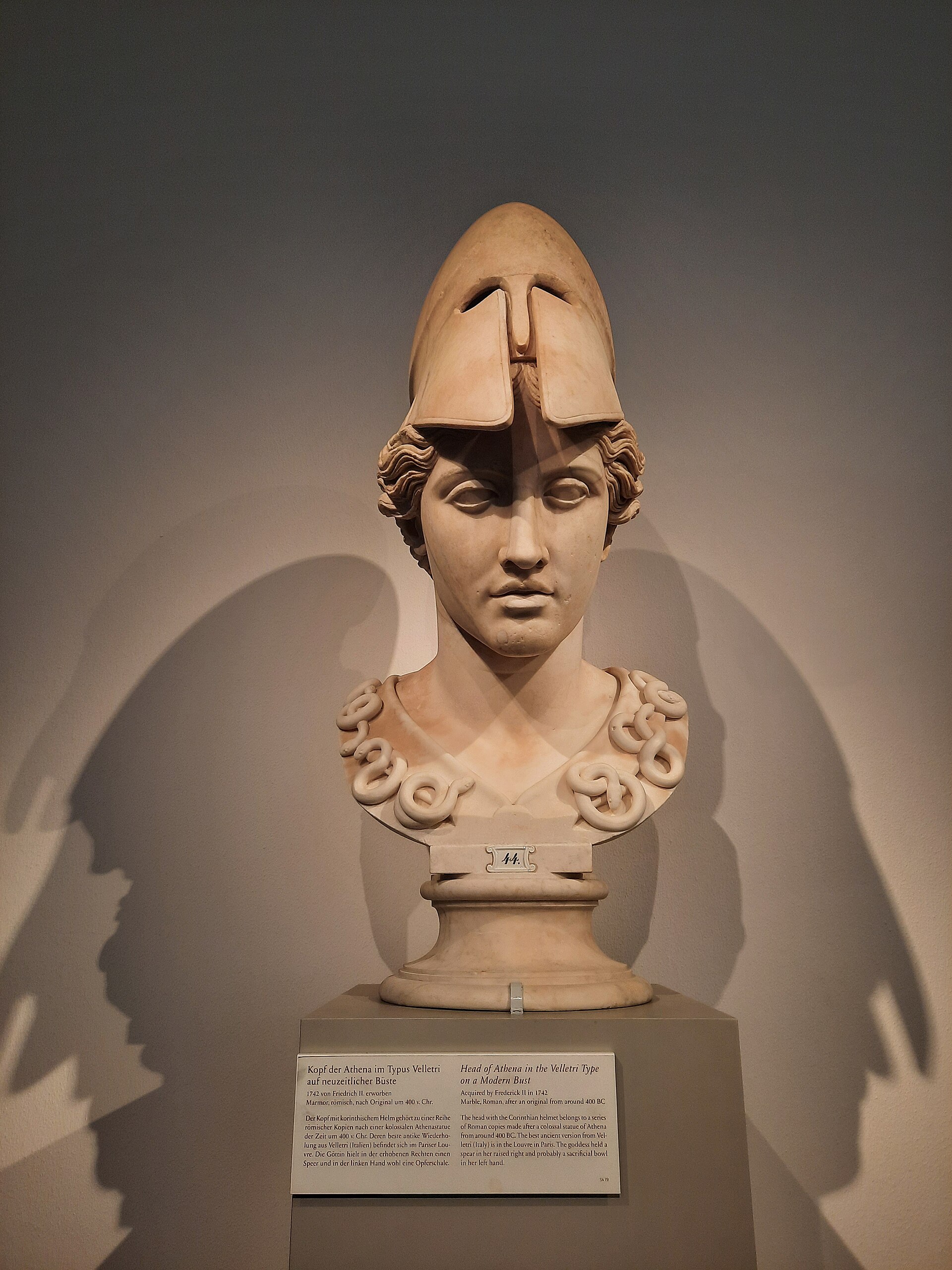
Athena
Ἀθηνᾶς
Prayer and ritual
These hymns may be spoken as complete prayers to the Gods. Within the Temple’s practice, a ritual is a direct theurgical act; hymnody gathers the mind and turns it toward the Divine, helping the initiate enter reverent communion with the Gods.
Use a hymn on its own in place of another prayer, or add it to the prayer portion of a suitable ritual. Choose according to the deity addressed and the petition expressed in the hymn. When combining them, preserve the ritual’s prescribed sequence and let the hymn give voice to its purpose.
The petition of this hymn
For Athena’s wisdom, protection, peace, sufficiency, and health.
This hymn may stand as a prayer for wise action under Athena’s protection. It may also supplement a rite concerned with discernment, skilled work, defense, or peace, with special attention to its final request for prosperity and health.
English hieratic rendering
Hymn 32 · An English rendering aligned with the Greek lines.
- O Pallas, only-begotten, revered offspring of mighty Zeus,
- divine and blessed goddess, shaker of war, strong in spirit,
- unutterable and utterable, of mighty name, dweller in caves,
- you who possess the lofty-sounding summits of the ridges
- and the shadowed mountains, and delight your heart in the glens,
- lover of arms, goading mortal souls with sacred madness,
- maiden who trains and disciplines, bearing an awe-inspiring spirit,
- Gorgon-slayer, shunner of the marriage-bed, richly blessed mother of arts,
- rouser of action, lover of frenzy against the wicked, wisdom to the good:
- male and female are you by nature, O wisdom that brings forth war,
- of shifting form, she-serpent, lover of divine inspiration, splendidly honored,
- destroyer of the Phlegraean Giants, driver of horses,
- Tritogeneia, deliverer from evils, divine bearer of victory,
- bright-eyed discoverer of arts, queen to whom many prayers ascend
- by day and night, ever in the final hours:
- hear me as I pray; grant peace rich in blessings,
- and sufficiency and health in seasons of prosperity.
Ancient Greek & pronunciation
Read the English pronunciation spelling directly below each Greek line.
- Παλλὰς μουνογενές, μεγάλου Διὸς ἔκγονε σεμνή,pah-LAHS moo-noh-yeh-NEHS, meh-GHAH-loo dhee-OHS EHK-ghoh-neh sehm-NEE,
- δῖα, μάκαιρα θεά, πολεμοκλόνος, ὀβριμόθυμε,DHEE-ah, MAH-keh-rah theh-AH, poh-leh-moh-KLOH-nohs, oh-vree-MOH-thee-meh,
- ἄρρητη, ῥητή, μεγαλώνυμος, ἀντροδίαιτε·AH-ree-tee, ree-TEE, meh-ghah-LOH-nee-mohs, ahn-droh-DHEE-eh-teh·
- ἣ κατέχεις ὄχθων ὑψηχέας ἀκρωρείαςEE kah-TEH-hyees OHKH-thohn eep-see-HYEH-ahs ah-kroh-REE-ahs
- ἠδ’ ὄρεα σκιόεντα, νάπῃσί τε σὴν φρένα τέρπεις,eedh’ OH-reh-ah skee-OH-ehn-dah, NAH-pee-SEE teh SEEN FREH-nah TEHR-pees,
- ὁπλοχαρής, οἰστροῦσα βροτῶν ψυχὰς μανίῃσι,oh-ploh-khah-REES, ee-STROO-sah vroh-TOHN psee-KHAHS mah-NEE-ee-see,
- γυμνάζουσα κόρη, φρικώδεα θυμὸν ἔχουσα,yeem-NAH-zoo-sah KOH-ree, free-KOH-dheh-ah thee-MOHN EH-khoo-sah,
- Γοργοφόνος, φυγόλεκτρε, τεχνῶν μῆτερ πολύολβε.ghohr-ghoh-FOH-nohs, fee-GHOH-lehk-treh, tehkh-NOHN MEE-tehr poh-LEE-ohl-veh.
- ὁρμήτειρα, φίλοιστρε κακοῖς, ἀγαθοῖς δὲ φρόνησις·ohr-MEE-tee-rah, FEE-lee-streh kah-KEES, ah-ghah-THEES DHEH FROH-nee-sees·
- ἄρσην μὲν καὶ θῆλυς ἔφυς, πολεμήτοκε μῆτι.AHR-seen MEHN KEH THEE-lees EH-fees, poh-leh-MEE-toh-keh MEE-tee.
- αἰολόμορφε, δράκαινα, φιλένθεος, ἀγλαότιμε·eh-oh-LOH-mohr-feh, DHRAH-keh-nah, fee-LEHN-theh-ohs, ah-ghlah-OH-tee-meh·
- Φλεγραίων ὀλέτειρα Γιγάντων, ἱππελάτειρα.fleh-GHREH-ohn oh-LEH-tee-rah yee-GHAHN-dohn, ee-peh-LAH-tee-rah.
- Τριτογένεια, λύτειρα κακῶν, νικηφόρε δαῖμον,tree-toh-YEH-nee-ah, LEE-tee-rah kah-KOHN, nee-kee-FOH-reh DHEH-mohn,
- γλαυκώφ’, εὑρεσίτεχνε, πολυλλίστη βασίλειαghlahf-KOHF’, eh-vreh-SEE-tehkh-neh, poh-lee-LEE-stee vah-SEE-lee-ah
- ἤματα καὶ νύκτας αἰεὶ νεάτῃσιν ἐν ὥραις,EE-mah-tah KEH NEEK-tahs eh-EE neh-AH-tee-seen ehn OH-rehs,
- κλῦθί μευ εὐχομένου, δὸς δ’ εἰρήνην πολύολβονKLEE-THEE mehv ehf-khoh-MEH-noo, DHOHS dh’ ee-REE-neen poh-LEE-ohl-vohn
- καὶ κόρον ἠδ’ ὑγίειαν ἐπ’ εὐόλβοισιν ἐν ὥραις.KEH KOH-rohn eedh’ ee-YEE-ee-ahn ehp’ eh-VOHL-vee-seen ehn OH-rehs.
Short sound guide for English speakers
Every line beneath the Greek uses English pronunciation spellings. Say each hyphenated syllable in sequence and emphasize the syllable in CAPITALS. For example, οὐρανόθεν is oo-rah-NOH-thehn. Read adjacent vowels separately: theh-AH has two syllables; oo-rah-NEE-een has four. Hyphens guide the voice; they do not mark pauses.
| Spelling | Sound to make |
|---|---|
| ah · eh · ee · oh · oo | father · met · see · go without its final glide · moon. Keep these vowels clear in unstressed syllables too. |
| th · dh | The unvoiced th in thin · the voiced th in this. Thus DHEE begins with the sound in “thee.” |
| kh | The ch in Scottish loch or German Bach: let air pass at the back of the mouth, without closing it into a k. |
| hy | The breathy beginning of a carefully spoken Hugh. Raise the middle of the tongue toward the roof of the mouth and let air pass without voice. In shy, sound s followed by hy; do not use the English sh sound or the English word “shy.” |
| gh | Make the kh sound above, then add voice. Keep the passage open; this is a flowing sound, not a hard g. |
| y · g | y as in yes, with gentle friction · always a hard g as in get. |
| r | Tap the tongue lightly behind the upper teeth, or use a light roll. |
| ks · ps | Sound both consonants, even at the beginning of a word: ks as in backs, ps as in lips. |
| n-g · m-b · n-d | Sound the nasal and the following consonant. In AHN-geh-leh, the n-g group is like finger, with the g audible. |
Always sound s as in hiss, even at the end of DHEE-kees; z is voiced, as in zero. All other consonants have their usual English sounds. Initial consonant groups may be unfamiliar: sound every written consonant, without inserting an extra vowel. A word without capitals carries no written stress in the Greek. Where two syllables have capitals, both written accents are retained. An apostrophe marks a vowel already elided in the Greek; do not add it back. A hyphen at the end of a Greek verse joins the unfinished word to the next verse.
These spellings follow the Modern Greek liturgical reading used throughout this library. Breathings and iota subscripts are silent; separately pronounced vowels remain separate. The few Greek consonants without an exact English equivalent use the sound cues above. Ancient vowel length, pitch accent and metre are not reconstructed.
Hymn notes
Sacred meaning
Athena’s fierce power and her craftsmanship belong to one divine intelligence. She rouses and disciplines the soul, breaks destructive forces, and grants practical wisdom to the good. The hymn’s closing request draws martial victory toward peace, sufficiency, and wellbeing.
Ancient offering rubric: Aromatic substances.
Textual note
The printed closing asks for κόρον, “sufficiency” or “satisfaction,” not the erroneous κόρην in the digital transcription. The paired male and female predicates are retained.
Text and attribution
Greek text: Eugenius Abel, Orphica (1885), printed pages 75, 76. The text follows the printed main reading of this edition; source-specific variants are recorded where relevant. Read the digitised edition. Greek source. Wikisource transcription, revision 124306; checked and corrected against Abel’s print. The English hieratic rendering and suggested devotional use are new editorial work. The applications are guidance for this library, not additional lines of the ancient poem.