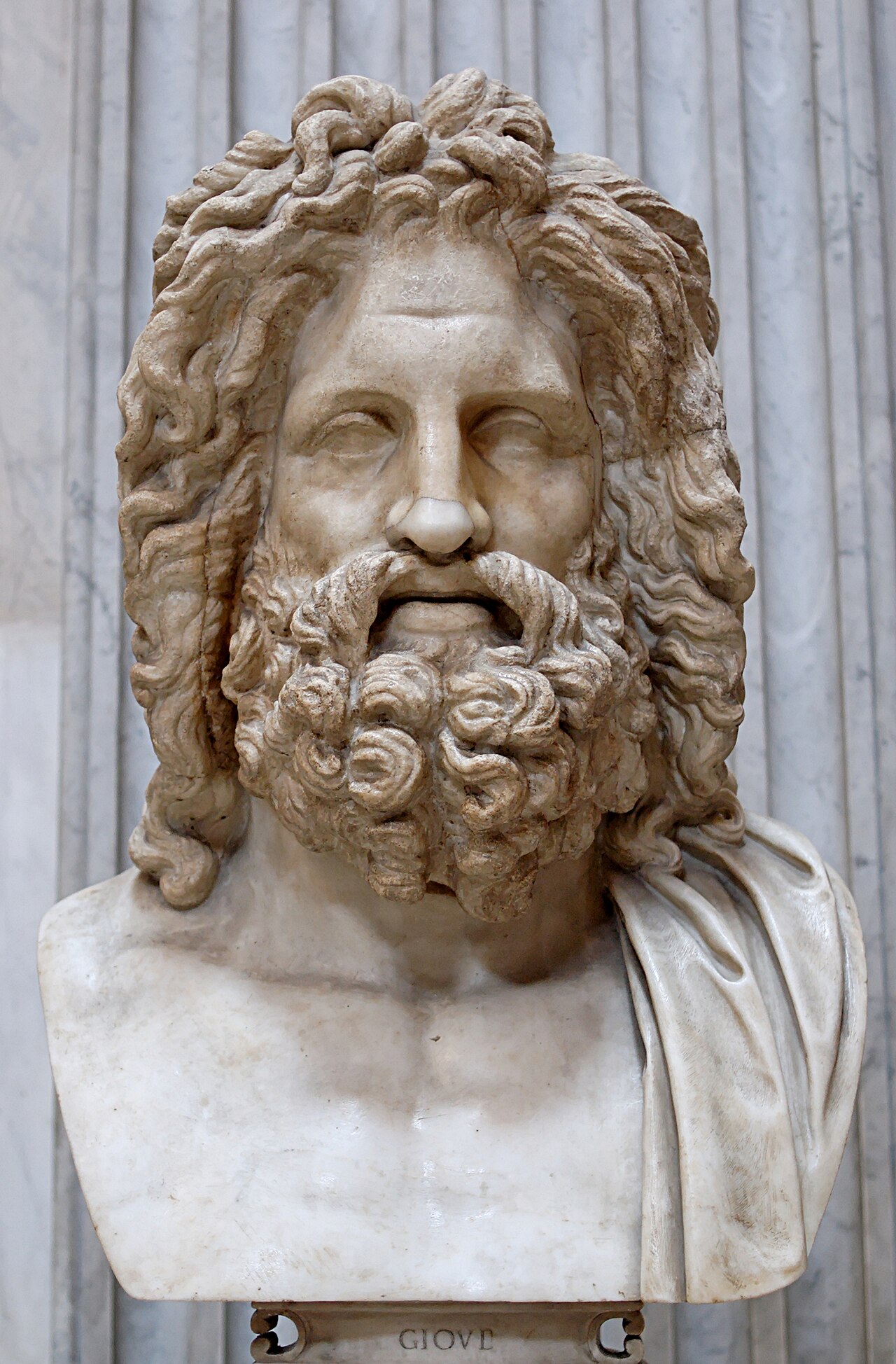

Orphic Hymns · Hymn 15
Zeus
Διός
Prayer and ritual
These hymns may be spoken as complete prayers to the Gods. Within the Temple’s practice, a ritual is a direct theurgical act; hymnody gathers the mind and turns it toward the Divine, helping the initiate enter reverent communion with the Gods.
Use a hymn on its own in place of another prayer, or add it to the prayer portion of a suitable ritual. Choose according to the deity addressed and the petition expressed in the hymn. When combining them, preserve the ritual’s prescribed sequence and let the hymn give voice to its purpose.
The petition of this hymn
Prayer to Zeus as source, ruler, purifier, and fulfiller of all things. It asks for sound health, divine Peace, and wealth held without reproach.
Use independently as a prayer for the ordered flourishing of life. It can supplement an established rite to Zeus, especially a petition for purification, peace, or honourable prosperity, with the final requests spoken as the hymn gives them.
English hieratic rendering
Hymn 15 · An English rendering aligned with the Greek lines.
- Zeus greatly honoured, Zeus imperishable, to you we
- set forth this testimony that brings release, and this prayer.
- O King, through your head these things came easily into being:
- Earth the Mother Goddess, and the high resounding ridges of mountains,
- and the Sea, and all that Heaven encloses within.
- Zeus, son of Kronos, bearer of the sceptre, descending in thunder, mighty of heart,
- begetter of all, beginning of all and ending of all,
- shaker of Earth, increaser, purifier, shaker of all,
- of lightning, of thunder, of the thunderbolt, Zeus the giver of growth,
- hear me, you of many forms, and grant unblemished health,
- and Peace the Goddess, and the blameless glory of wealth.
Ancient Greek & pronunciation
Read the English pronunciation spelling directly below each Greek line.
- Ζεῦ πολυτίμητε, Ζεῦ ἄφθιτε, τήνδε τοι ἡμεῖς,ZEHV poh-lee-TEE-mee-teh, ZEHV AHF-thee-teh, TEEN-dheh tee ee-MEES,
- μαρτυρίην τιθέμεσθα λυτήριον ἠδὲ πρόσευξιν.mahr-tee-REE-een tee-THEH-mehs-thah lee-TEE-ree-ohn ee-DHEH PROH-sehfk-seen.
- ὦ βασιλεῦ, διὰ σὴν κεφαλὴν ἐφάνη τάδε ῥεῖα,OH vah-see-LEHV, dhee-AH SEEN keh-fah-LEEN eh-FAH-nee TAH-dheh REE-ah,
- γαῖα θεὰ μήτηρ ὀρέων θ’ ὑψηχέες ὄχθοι,YEH-ah theh-AH MEE-teer oh-REH-ohn th’ eep-see-HYEH-ehs OHKH-thee,
- καὶ πόντος καὶ πάνθ’, ὁπόσ’ οὐρανὸς ἐντὸς ἐέργει·KEH POHN-dohs KEH PAHNTH’, oh-POHS’ oo-rah-NOHS ehn-DOHS eh-EHR-yee·
- Ζεῦ Κρόνιε, σκηπτοῦχε, καταιβάτα, ὀβριμόθυμε,ZEHV KROH-nee-eh, skeep-TOO-hyeh, kah-teh-VAH-tah, oh-vree-MOH-thee-meh,
- παντογένεθλ’, ἀρχὴ πάντων, πάντων τε τελευτή,pahn-doh-YEH-nehthl’, ahr-HYEE PAHN-dohn, PAHN-dohn teh teh-lehf-TEE,
- σεισίχθων, αὐξητά, καθάρσιε, παντοτινάκτα,see-SEEKH-thohn, ahfk-see-TAH, kah-THAHR-see-eh, pahn-doh-tee-NAHK-tah,
- ἀστράπιε, βρονταῖε, κεραύνιε, φυτάλιε Ζεῦ·ah-STRAH-pee-eh, vrohn-DEH-eh, keh-RAHV-nee-eh, fee-TAH-lee-eh ZEHV·
- κλῦθί μευ, αἰολόμορφε, δίδου δ’ ὑγίειαν ἀμεμφῆKLEE-THEE mehv, eh-oh-LOH-mohr-feh, DHEE-dhoo dh’ ee-YEE-ee-ahn ah-mehm-FEE
- εἰρήνην τε θεὰν καὶ πλούτου δόξαν ἄμεμπτον.ee-REE-neen teh theh-AHN KEH PLOO-too DHOHK-sahn AH-mehmb-tohn.
Short sound guide for English speakers
Every line beneath the Greek uses English pronunciation spellings. Say each hyphenated syllable in sequence and emphasize the syllable in CAPITALS. For example, οὐρανόθεν is oo-rah-NOH-thehn. Read adjacent vowels separately: theh-AH has two syllables; oo-rah-NEE-een has four. Hyphens guide the voice; they do not mark pauses.
| Spelling | Sound to make |
|---|---|
| ah · eh · ee · oh · oo | father · met · see · go without its final glide · moon. Keep these vowels clear in unstressed syllables too. |
| th · dh | The unvoiced th in thin · the voiced th in this. Thus DHEE begins with the sound in “thee.” |
| kh | The ch in Scottish loch or German Bach: let air pass at the back of the mouth, without closing it into a k. |
| hy | The breathy beginning of a carefully spoken Hugh. Raise the middle of the tongue toward the roof of the mouth and let air pass without voice. In shy, sound s followed by hy; do not use the English sh sound or the English word “shy.” |
| gh | Make the kh sound above, then add voice. Keep the passage open; this is a flowing sound, not a hard g. |
| y · g | y as in yes, with gentle friction · always a hard g as in get. |
| r | Tap the tongue lightly behind the upper teeth, or use a light roll. |
| ks · ps | Sound both consonants, even at the beginning of a word: ks as in backs, ps as in lips. |
| n-g · m-b · n-d | Sound the nasal and the following consonant. In AHN-geh-leh, the n-g group is like finger, with the g audible. |
Always sound s as in hiss, even at the end of DHEE-kees; z is voiced, as in zero. All other consonants have their usual English sounds. Initial consonant groups may be unfamiliar: sound every written consonant, without inserting an extra vowel. A word without capitals carries no written stress in the Greek. Where two syllables have capitals, both written accents are retained. An apostrophe marks a vowel already elided in the Greek; do not add it back. A hyphen at the end of a Greek verse joins the unfinished word to the next verse.
These spellings follow the Modern Greek liturgical reading used throughout this library. Breathings and iota subscripts are silent; separately pronounced vowels remain separate. The few Greek consonants without an exact English equivalent use the sound cues above. Ancient vowel length, pitch accent and metre are not reconstructed.
Hymn notes
Sacred meaning
The emergence of earth, mountains, sea, and the contents of heaven through Zeus's head presents creation as grounded in his sovereignty. His power to shake and purify the world is approached through a request for health and blameless abundance.
Ancient offering rubric: Storax.
Textual note
The main hymn is the eleven line text printed by Abel. A manuscript substitute printed separately in brackets after it is not spliced into the hymn or treated as additional lines.
Text and attribution
Greek text: Eugenius Abel, Orphica (1885), printed pages 66, 67. The text follows the printed main reading of this edition; source-specific variants are recorded where relevant. Read the digitised edition. Greek source. Wikisource transcription, revision 124104; checked and corrected against Abel’s print. The English hieratic rendering and suggested devotional use are new editorial work. The applications are guidance for this library, not additional lines of the ancient poem.