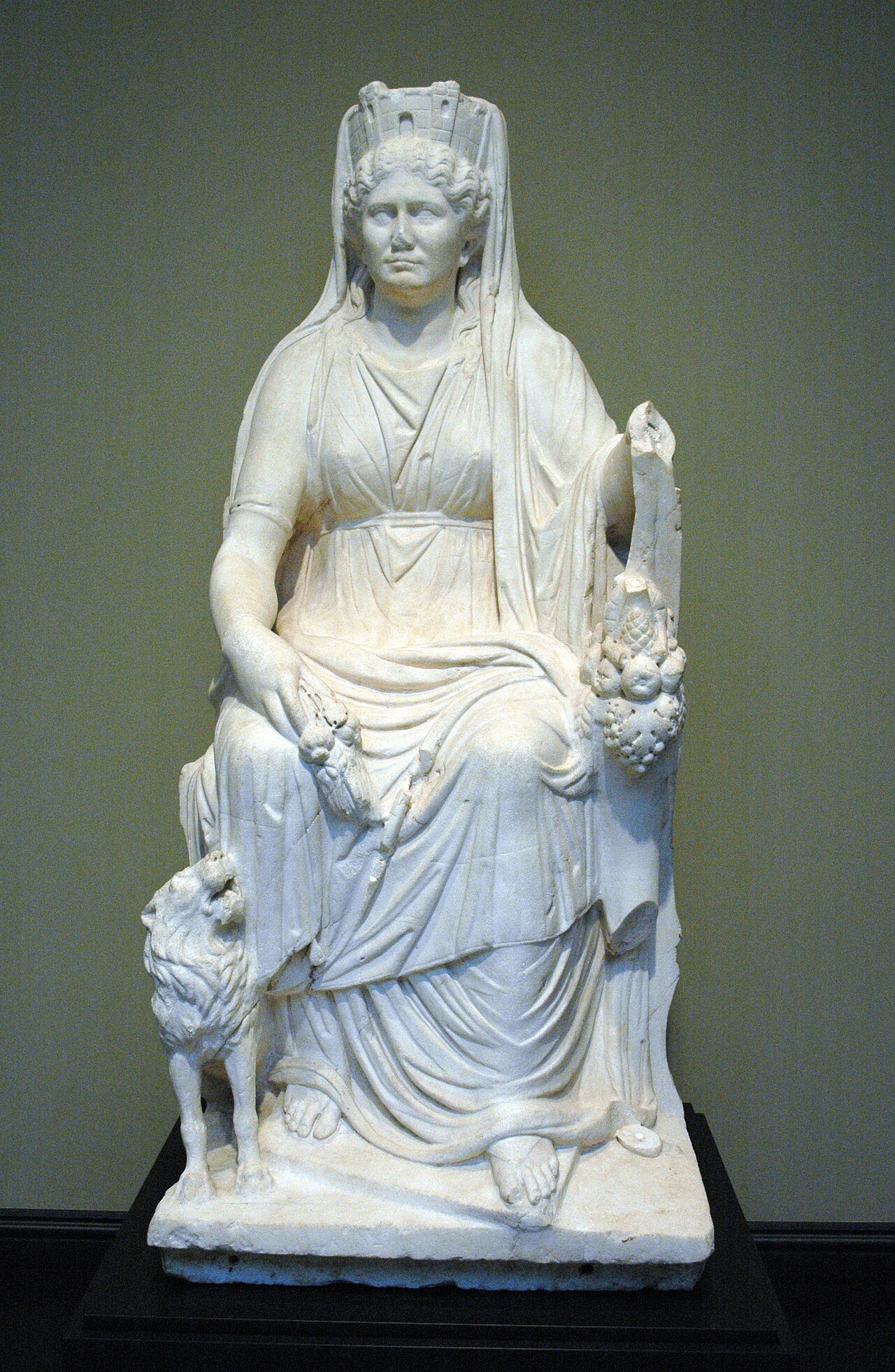

Orphic Hymns · Hymn 14
Rhea
Ῥέας
Prayer and ritual
These hymns may be spoken as complete prayers to the Gods. Within the Temple’s practice, a ritual is a direct theurgical act; hymnody gathers the mind and turns it toward the Divine, helping the initiate enter reverent communion with the Gods.
Use a hymn on its own in place of another prayer, or add it to the prayer portion of a suitable ritual. Choose according to the deity addressed and the petition expressed in the hymn. When combining them, preserve the ritual’s prescribed sequence and let the hymn give voice to its purpose.
The petition of this hymn
Prayer to Rhea for saving presence, peace, and fortunate possessions. Its close asks her to send defilements and destructive powers far away.
Recite alone to seek the Mother's protection and beneficent counsel. It may accompany an established rite of Rhea concerned with purification, household wellbeing, or prosperity, drawing upon the hymn's closing petitions.
English hieratic rendering
Hymn 14 · An English rendering aligned with the Greek lines.
- Sovereign Rhea, daughter of Protogonos of many forms,
- whose chariot with sacred wheels the bull slaying lion draws,
- resounding with drums, lover of ecstatic frenzy, Maiden of the clashing bronze,
- mother of sovereign Olympian Zeus, the bearer of the aegis,
- honoured by all, splendid of form, blessed consort of Kronos,
- who rejoice in the mountains and in the awe filled cries of mortals,
- Rhea, Queen of all, stirring the tumult of battle, mighty of heart,
- saviour through your deception, deliverer, first source of birth,
- mother of the Gods and of mortal humankind;
- for from you are Earth and the broad Heaven above,
- and the Sea and the winds; lover of the coursing way, formed of air.
- Come, blessed Goddess, bringing salvation with kindly counsel,
- bringing down peace together with fortunate possessions,
- sending defilements and powers of doom to the uttermost ends of Earth.
Ancient Greek & pronunciation
Read the English pronunciation spelling directly below each Greek line.
- Πότνια Ῥέα, θύγατερ πολυμόρφου Πρωτογόνοιο,POHT-nee-ah REH-ah, THEE-ghah-tehr poh-lee-MOHR-foo proh-toh-GHOH-nee-oh,
- ᾗ λῖς ταυροφόνος ἱερότροχον ἅρμα τιταίνει,EE LEES tah-vroh-FOH-nohs ee-eh-ROH-troh-khohn AHR-mah tee-TEH-nee,
- τυμπανόδουπε, φιλοιστρομανές, χαλκόκροτε κούρη,teem-bah-NOH-dhoo-peh, fee-lee-stroh-mah-NEHS, khahl-KOH-kroh-teh KOO-ree,
- μῆτερ Ζηνὸς ἄνακτος Ὀλυμπίου, αἰγιόχοιο,MEE-tehr zee-NOHS AH-nahk-tohs oh-leem-BEE-oo, eh-yee-OH-hyee-oh,
- πάντιμ’, ἀγλαόμορφε, Κρόνου σύλλεκτρε μάκαιρα·PAHN-deem’, ah-ghlah-OH-mohr-feh, KROH-noo SEE-lehk-treh MAH-keh-rah·
- οὔρεσιν ἣ χαίρεις θνητῶν τ’ ὀλολύγμασι φρικτοῖς,OO-reh-seen EE HYEH-rees thnee-TOHN t’ oh-loh-LEEGH-mah-see freek-TEES,
- παμβασίλεια Ῥέα, πολεμόκλονος, ὀβριμόθυμε,pahm-vah-SEE-lee-ah REH-ah, poh-leh-MOH-kloh-nohs, oh-vree-MOH-thee-meh,
- ψευδομένη σώτειρα, λυτηριάς, ἀρχιγένεθλε·psehv-dhoh-MEH-nee SOH-tee-rah, lee-tee-ree-AHS, ahr-hyee-YEH-nehth-leh·
- μῆτερ μέν τε θεῶν ἠδὲ θνητῶν ἀνθρώπων·MEE-tehr MEHN teh theh-OHN ee-DHEH thnee-TOHN ahn-THROH-pohn·
- ἐκ σοῦ γὰρ καὶ γαῖα καὶ οὐρανὸς εὐρὺς ὕπερθεehk SOO GHAHR KEH YEH-ah KEH oo-rah-NOHS eh-VREES EE-pehr-theh
- καὶ πόντος πνοαί τε· φιλόδρομος, ἠερόμορφε·KEH POHN-dohs pnoh-EH teh· fee-LOH-dhroh-mohs, ee-eh-ROH-mohr-feh·
- ἐλθέ, μάκαιρα θεά, σωτήριος εὔφρονι βουλῇehl-THEH, MAH-keh-rah theh-AH, soh-TEE-ree-ohs EH-froh-nee voo-LEE
- εἰρήνην κατάγουσα σὺν εὐόλβοις κτεάτεσσι,ee-REE-neen kah-TAH-ghoo-sah SEEN eh-VOHL-vees kteh-AH-teh-see,
- λύματα καὶ κῆρας πέμπουσ’ ἐπὶ τέρματα γαίης.LEE-mah-tah KEH KEE-rahs PEHM-boos’ eh-PEE TEHR-mah-tah YEH-ees.
Short sound guide for English speakers
Every line beneath the Greek uses English pronunciation spellings. Say each hyphenated syllable in sequence and emphasize the syllable in CAPITALS. For example, οὐρανόθεν is oo-rah-NOH-thehn. Read adjacent vowels separately: theh-AH has two syllables; oo-rah-NEE-een has four. Hyphens guide the voice; they do not mark pauses.
| Spelling | Sound to make |
|---|---|
| ah · eh · ee · oh · oo | father · met · see · go without its final glide · moon. Keep these vowels clear in unstressed syllables too. |
| th · dh | The unvoiced th in thin · the voiced th in this. Thus DHEE begins with the sound in “thee.” |
| kh | The ch in Scottish loch or German Bach: let air pass at the back of the mouth, without closing it into a k. |
| hy | The breathy beginning of a carefully spoken Hugh. Raise the middle of the tongue toward the roof of the mouth and let air pass without voice. In shy, sound s followed by hy; do not use the English sh sound or the English word “shy.” |
| gh | Make the kh sound above, then add voice. Keep the passage open; this is a flowing sound, not a hard g. |
| y · g | y as in yes, with gentle friction · always a hard g as in get. |
| r | Tap the tongue lightly behind the upper teeth, or use a light roll. |
| ks · ps | Sound both consonants, even at the beginning of a word: ks as in backs, ps as in lips. |
| n-g · m-b · n-d | Sound the nasal and the following consonant. In AHN-geh-leh, the n-g group is like finger, with the g audible. |
Always sound s as in hiss, even at the end of DHEE-kees; z is voiced, as in zero. All other consonants have their usual English sounds. Initial consonant groups may be unfamiliar: sound every written consonant, without inserting an extra vowel. A word without capitals carries no written stress in the Greek. Where two syllables have capitals, both written accents are retained. An apostrophe marks a vowel already elided in the Greek; do not add it back. A hyphen at the end of a Greek verse joins the unfinished word to the next verse.
These spellings follow the Modern Greek liturgical reading used throughout this library. Breathings and iota subscripts are silent; separately pronounced vowels remain separate. The few Greek consonants without an exact English equivalent use the sound cues above. Ancient vowel length, pitch accent and metre are not reconstructed.
Hymn notes
Sacred meaning
The drum, bronze, lion, and ecstatic cries surround a divine Mother from whom earth, heaven, sea, and winds arise. The phrase saviour through deception recalls her preserving power within divine myth and leads into the prayer for present deliverance.
Ancient offering rubric: Aromatic substances.
Textual note
Line 1 explicitly makes Rhea the daughter of Protogonos. Line 8, ψευδομένη σώτειρα, preserves her saving deception rather than replacing it with a general epithet of truthfulness.
Text and attribution
Greek text: Eugenius Abel, Orphica (1885), printed pages 66. The text follows the printed main reading of this edition; source-specific variants are recorded where relevant. Read the digitised edition. Greek source. Wikisource transcription, revision 124101; checked and corrected against Abel’s print. The English hieratic rendering and suggested devotional use are new editorial work. The applications are guidance for this library, not additional lines of the ancient poem.