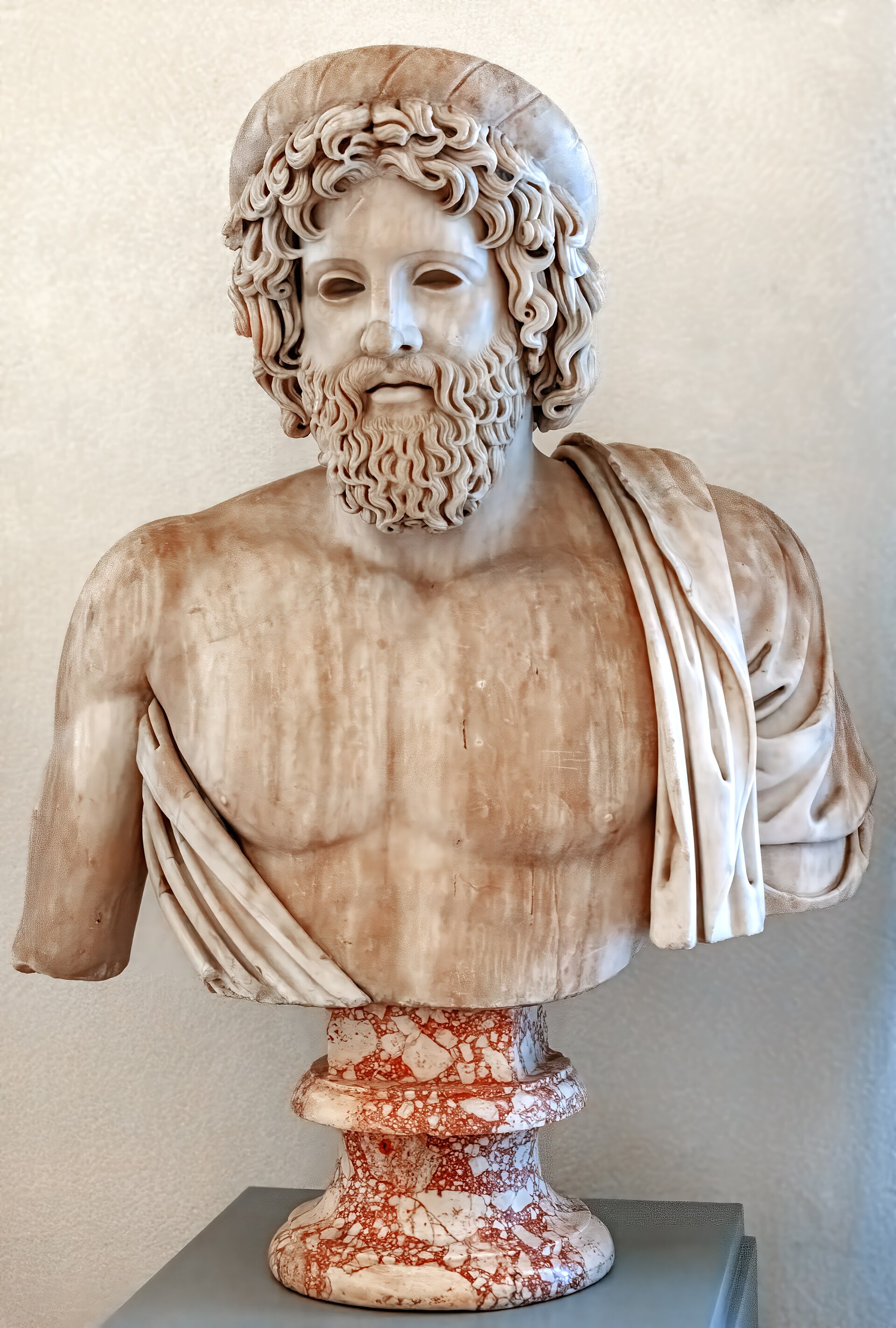
_Bust_of_Asclepius_in_Correr_Museum.jpg)
Hymns from Ancient Inscriptions · Hymn 03
Asklepios: Paean of Isyllus
Παιὰν εἰς Ἀπόλλωνα καὶ Ἀσκλαπιόν
Prayer and ritual
These hymns may be spoken as complete prayers to the Gods. Within the Temple’s practice, a ritual is a direct theurgical act; hymnody gathers the mind and turns it toward the Divine, helping the initiate enter reverent communion with the Gods.
Use a hymn on its own in place of another prayer, or add it to the prayer portion of a suitable ritual. Choose according to the deity addressed and the petition expressed in the hymn. When combining them, preserve the ritual’s prescribed sequence and let the hymn give voice to its purpose.
The petition of this hymn
For manifest health in mind and body, and the flourishing of the community under Apollo and Asklepios.
Sing the paean as a complete prayer for health, preserving its genealogy and its honour for Epidaurus. It may accompany a rite to Apollo and Asklepios or thanksgiving for healing, with the closing petition gathering the welfare of mind, body, and community.
English hieratic rendering
Hymn 03 · An English rendering aligned with the Greek lines.
- Sing the God with the cry ie Paean, O people,
- inhabitants of this most holy Epidaurus.
- For thus the tradition came speaking to the ears
- of our ancestors, O Phoebus Apollo.
- It is said that Father Zeus gave the Muse Erato
- to Malos as his consort in holy marriage.
- And Phlegyas, whose homeland was Epidaurus,
- wedded the daughter of Malos whom mother Erato bore;
- she was called Cleophema.
- From Phlegyas a daughter was born, and she was named Aigla;
- that was her name, but for her beauty she was called Coronis.
- When Phoebus of the golden bow beheld her in the house of Malos,
- he brought her maiden season to its fulfilment.
- You entered the lovely bridal bed, golden-haired son of Leto.
- I revere you. Within the fragrant sanctuary Aigla bore him,
- and her fruitful labour was brought to its release by the daughter of Zeus,
- with the Fates, and Lachesis, the glorious midwife.
- Apollo named him Asklepios after his mother Aigla:
- the one who ends diseases, giver of health, a great gift to mortals.
- Ie Paean, ie Paean, hail, Asklepios!
- Bring increase to your mother-city Epidaurus,
- and send forth health that is manifest
- in our minds and bodies: ie Paean, ie Paean!
Ancient Greek & pronunciation
Read the English pronunciation spelling directly below each Greek line.
- ἱεπαιᾶνα θεὸν ἀείσατε λαοί,ee-eh-peh-AH-nah theh-OHN ah-EE-sah-teh lah-EE,
- ζαθέας ἐνναέται τᾶσδ’ Ἐπιδαύρου.zah-THEH-ahs eh-nah-EH-teh TAHZDH’ eh-pee-DHAH-vroo.
- ὧδε γὰρ φάτις ἐνέπουσ’ ἤλυθ’ ἐς ἀκοὰςOH-dheh GHAHR FAH-tees eh-NEH-poos’ EE-leeth’ ehs ah-koh-AHS
- προγόνων ἁμετέρων, ὦ Φοῖβε Ἀπόλλων.proh-GHOH-nohn ah-meh-TEH-rohn, OH FEE-veh ah-POH-lohn.
- Ἐρατὼ Μοῦσαν πατὴρ Ζεὺς λέγεταιeh-rah-TOH MOO-sahn pah-TEER ZEHFS LEH-yeh-teh
- Μάλῳ δόμεν παράκοιτιν ὁσίοισι γάμοις.MAH-loh DHOH-mehn pah-RAH-kee-teen oh-SEE-ee-see GHAH-mees.
- Φλεγύας δ’, ὃς πατρίδ’ Ἐπίδαυρον ἔναιεν,fleh-YEE-ahs dh’, OHS pah-TREEDH’ eh-PEE-dhah-vrohn EH-neh-ehn,
- θυγατέρα Μάλου γαμεῖ, τὰν Ἐρατὼ γείνατο μάτηρ,thee-ghah-TEH-rah MAH-loo ghah-MEE, TAHN eh-rah-TOH YEE-nah-toh MAH-teer,
- Κλεοφήμα δ’ ὀνομάσθη.kleh-oh-FEE-mah dh’ oh-noh-MAHS-thee.
- ἐγ δὲ Φλεγύα γένετο, Αἴγλα δ’ ὀνομάσθη·ehgh DHEH fleh-YEE-ah YEH-neh-toh, EH-ghlah dh’ oh-noh-MAHS-thee·
- τόδ’ ἐπώνυμον· τὸ κάλλος δὲ Κορωνὶς ἐπεκλήθη.TOHDH’ eh-POH-nee-mohn· TOH KAH-lohs DHEH koh-roh-NEES eh-peh-KLEE-thee.
- κατιδὼν δὲ ὁ χρυσότοξος Φοῖβος ἐμ Μάλου δόμοιςkah-tee-DHOHN DHEH oh khree-SOH-tohk-sohs FEE-vohs ehm MAH-loo DHOH-mees
- παρθενίαν ὥραν ἔλυσε·pahr-theh-NEE-ahn OH-rahn EH-lee-seh·
- λεχέων δ’ ἱμεροέντων ἐπέβας, Λατώιε κόρε χρυσοκόμα.leh-HYEH-ohn dh’ ee-meh-roh-EHN-dohn eh-PEH-vahs, lah-TOH-ee-eh KOH-reh khree-soh-KOH-mah.
- σέβομαί σε· ἐν δὲ θυώδει τεμένει τέκετό νιν Αἴγλα,SEH-voh-MEH seh· ehn DHEH thee-OH-dhee teh-MEH-nee TEH-keh-TOH neen EH-ghlah,
- γονίμαν δ’ ἔλυσεν ὠδῖνα Διὸς παῖςghoh-NEE-mahn dh’ EH-lee-sehn oh-DHEE-nah dhee-OHS PEHS
- μετὰ Μοιρᾶν Λάχεσίς τε μαῖα ἀγαυά.meh-TAH mee-RAHN LAH-hyeh-SEES teh MEH-ah ah-ghah-VAH.
- ἐπίκλησιν δέ νιν Αἴγλας ματρὸς Ἀσκλαπιὸν ὠνόμαξε Ἀπόλλων,eh-PEE-klee-seen DHEH neen EH-ghlahs mah-TROHS ah-sklah-pee-OHN oh-NOH-mahk-seh ah-POH-lohn,
- τὸν νόσων παύστορα, δωτῆρα ὑγιείας, μέγα δώρημα βροτοῖς.TOHN NOH-sohn PAHF-stoh-rah, dhoh-TEE-rah ee-yee-EE-ahs, MEH-ghah DHOH-ree-mah vroh-TEES.
- ἱεπαιάν, ἱεπαιάν, χαῖρεν Ἀσκλαπιέ,ee-eh-peh-AHN, ee-eh-peh-AHN, HYEH-rehn ah-sklah-pee-EH,
- τὰν σὰν Ἐπίδαυρον ματρόπολιν αὔξων,TAHN SAHN eh-PEE-dhah-vrohn mah-TROH-poh-leen AHFK-sohn,
- ἐναργῆ δ’ ὑγίειαν ἐπιπέμποιςeh-nahr-YEE dh’ ee-YEE-ee-ahn eh-pee-PEHM-bees
- φρεσὶ καὶ σώμασιν ἁμοῖς· ἱεπαιάν, ἱεπαιάν.freh-SEE KEH SOH-mah-seen ah-MEES· ee-eh-peh-AHN, ee-eh-peh-AHN.
Short sound guide for English speakers
Every line beneath the Greek uses English pronunciation spellings. Say each hyphenated syllable in sequence and emphasize the syllable in CAPITALS. For example, οὐρανόθεν is oo-rah-NOH-thehn. Read adjacent vowels separately: theh-AH has two syllables; oo-rah-NEE-een has four. Hyphens guide the voice; they do not mark pauses.
| Spelling | Sound to make |
|---|---|
| ah · eh · ee · oh · oo | father · met · see · go without its final glide · moon. Keep these vowels clear in unstressed syllables too. |
| th · dh | The unvoiced th in thin · the voiced th in this. Thus DHEE begins with the sound in “thee.” |
| kh | The ch in Scottish loch or German Bach: let air pass at the back of the mouth, without closing it into a k. |
| hy | The breathy beginning of a carefully spoken Hugh. Raise the middle of the tongue toward the roof of the mouth and let air pass without voice. In shy, sound s followed by hy; do not use the English sh sound or the English word “shy.” |
| gh | Make the kh sound above, then add voice. Keep the passage open; this is a flowing sound, not a hard g. |
| y · g | y as in yes, with gentle friction · always a hard g as in get. |
| r | Tap the tongue lightly behind the upper teeth, or use a light roll. |
| ks · ps | Sound both consonants, even at the beginning of a word: ks as in backs, ps as in lips. |
| n-g · m-b · n-d | Sound the nasal and the following consonant. In AHN-geh-leh, the n-g group is like finger, with the g audible. |
Always sound s as in hiss, even at the end of DHEE-kees; z is voiced, as in zero. All other consonants have their usual English sounds. Initial consonant groups may be unfamiliar: sound every written consonant, without inserting an extra vowel. A word without capitals carries no written stress in the Greek. Where two syllables have capitals, both written accents are retained. An apostrophe marks a vowel already elided in the Greek; do not add it back. A hyphen at the end of a Greek verse joins the unfinished word to the next verse.
These spellings follow the Modern Greek liturgical reading used throughout this library. Breathings and iota subscripts are silent; separately pronounced vowels remain separate. The few Greek consonants without an exact English equivalent use the sound cues above. Ancient vowel length, pitch accent and metre are not reconstructed.
Hymn notes
Sacred meaning
The paean traces Asklepios’s birth through the local sacred lineage of Epidaurus. Apollo names him as the giver of health and the one who brings diseases to an end. Genealogy becomes thanksgiving, and thanksgiving becomes a direct appeal for health in the worshippers’ minds and bodies.
Textual note
This is the whole paean designated in the inscription, not the preceding civic regulations or the following separate account of divine aid. Restored letters in Μάλῳ and the restored relative ὃς follow the inscription edition. Its erased or duplicated spelling around γαμεῖ is resolved as the edition directs; uncertain but readable letters in Λάχεσίς, παύστορα and χαῖρεν are retained. The epigraphic spellings ἐγ, ἐμ and the dialect forms remain. Iota adscripts are normalised to subscripts. The 23 reading lines join words split on the stone; the inscription’s reference is given separately. The etymological connection of Aigla and Asklepios is the hymn’s own account.
Text and attribution
Isyllus of Epidaurus, paean to Apollo and Asklepios, Inscriptiones Graecae IV².1.128, section IV, inscription lines 37–56; PHI Greek Inscriptions reading. Greek source. The English hieratic rendering and suggested devotional use are new editorial work. The applications are guidance for this library, not additional lines of the ancient poem.