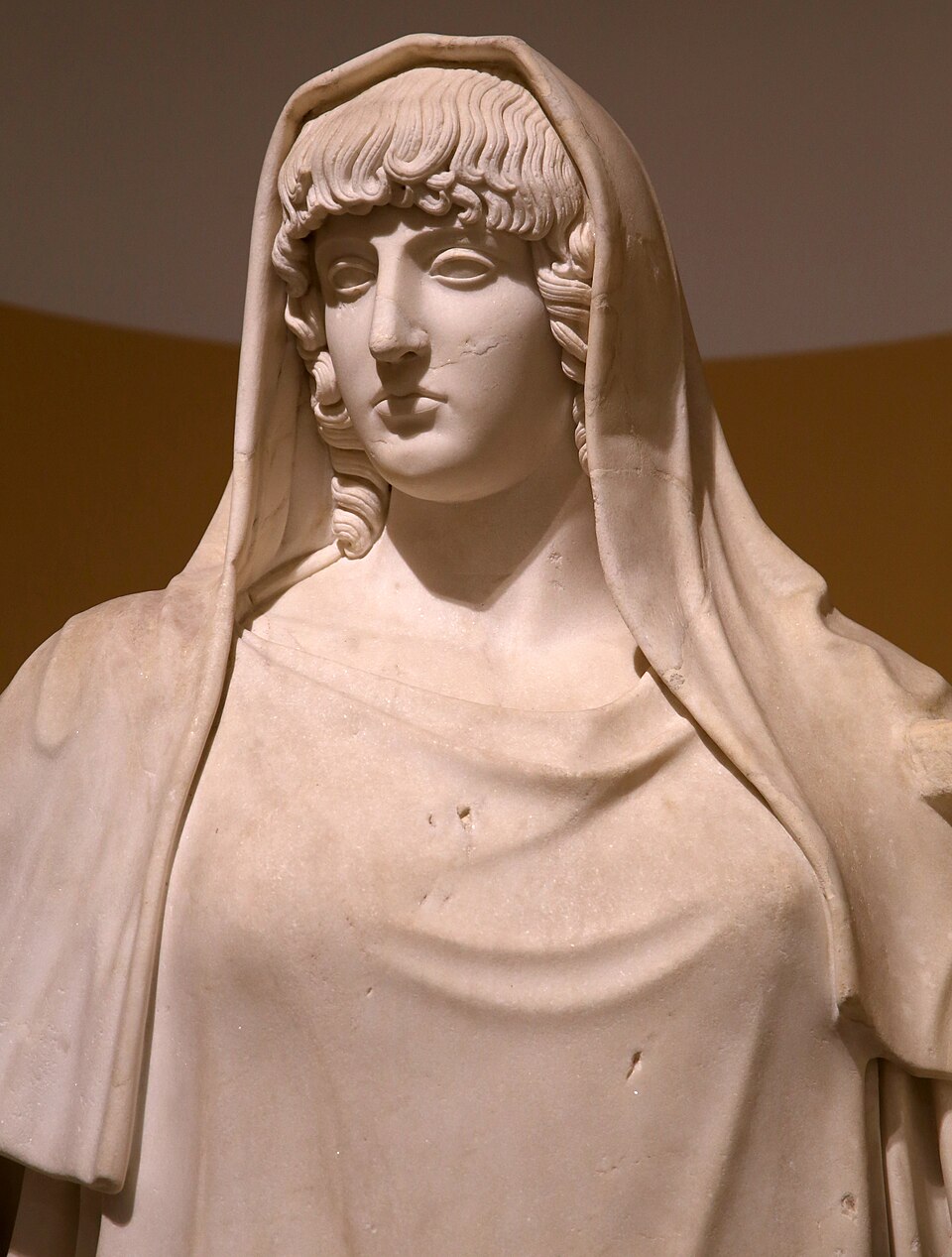

Orphic Hymns · Hymn 84
Hestia
Ἑστίας
Prayer and ritual
These hymns may be spoken as complete prayers to the Gods. Within the Temple’s practice, a ritual is a direct theurgical act; hymnody gathers the mind and turns it toward the Divine, helping the initiate enter reverent communion with the Gods.
Use a hymn on its own in place of another prayer, or add it to the prayer portion of a suitable ritual. Choose according to the deity addressed and the petition expressed in the hymn. When combining them, preserve the ritual’s prescribed sequence and let the hymn give voice to its purpose.
The petition of this hymn
For the sanctification of the household and the flourishing of the initiates around the sacred centre.
Recite the hymn as a prayer at the household hearth or the devotional centre of a gathering. It may supplement the opening or completion of a ritual, asking Hestia to receive the sacred offerings and establish the initiates in purity, blessing, and health.
English hieratic rendering
Hymn 84 · An English rendering aligned with the Greek lines.
- Hestia, royal daughter of mighty Cronus,
- you who hold the central house of the greatest, ever-flowing fire,
- may you establish these initiates in the holy rites,
- making them ever-flourishing, richly blessed, gracious of mind, and pure.
- Dwelling of the blessed Gods, mighty support of mortals,
- everlasting, manifold, most desired, green in your form,
- smiling, blessed one, receive these sacred offerings gladly,
- breathing prosperity and health, O gentle-handed one.
Ancient Greek & pronunciation
Read the English pronunciation spelling directly below each Greek line.
- Ἱστίη εὐδυνάτοιο Κρόνου θύγατερ βασίλεια,ee-STEE-ee ehv-dhee-NAH-tee-oh KROH-noo THEE-ghah-tehr vah-SEE-lee-ah,
- ἣ μέσον οἶκον ἔχεις πυρὸς ἀενάοιο, μεγίστου,EE MEH-sohn EE-kohn EH-hyees pee-ROHS ah-eh-NAH-ee-oh, meh-YEE-stoo,
- τούσδε σὺ ἐν τελεταῖς ὁσίαις μύστας ἀναδείξαις,TOOZ-dheh SEE ehn teh-leh-TEHS oh-SEE-ehs MEE-stahs ah-nah-DHEEK-sehs,
- θεῖσ’ αἰειθαλέας, πολυόλβους, εὔφρονας, ἁγνούς·THEES’ eh-ee-thah-LEH-ahs, poh-lee-OHL-voos, EH-froh-nahs, ahgh-NOOS·
- οἶκε θεῶν μακάρων, θνητῶν στήριγμα κραταιόν,EE-keh theh-OHN mah-KAH-rohn, thnee-TOHN STEE-reegh-mah krah-teh-OHN,
- ἀιδίη, πολύμορφε, ποθεινοτάτη, χλοόμορφε·ah-ee-DHEE-ee, poh-LEE-mohr-feh, poh-thee-noh-TAH-tee, khloh-OH-mohr-feh·
- μειδιόωσα, μάκαιρα, τάδ’ ἱερὰ δέξο προθύμως,mee-dhee-OH-oh-sah, MAH-keh-rah, TAHDH’ ee-eh-RAH DHEHK-soh proh-THEE-mohs,
- ὄλβον ἐπιπνείουσα καὶ ἠπιόχειρ’ ὑγίειαν.OHL-vohn eh-peep-NEE-oo-sah KEH ee-pee-OH-hyeer’ ee-YEE-ee-ahn.
Short sound guide for English speakers
Every line beneath the Greek uses English pronunciation spellings. Say each hyphenated syllable in sequence and emphasize the syllable in CAPITALS. For example, οὐρανόθεν is oo-rah-NOH-thehn. Read adjacent vowels separately: theh-AH has two syllables; oo-rah-NEE-een has four. Hyphens guide the voice; they do not mark pauses.
| Spelling | Sound to make |
|---|---|
| ah · eh · ee · oh · oo | father · met · see · go without its final glide · moon. Keep these vowels clear in unstressed syllables too. |
| th · dh | The unvoiced th in thin · the voiced th in this. Thus DHEE begins with the sound in “thee.” |
| kh | The ch in Scottish loch or German Bach: let air pass at the back of the mouth, without closing it into a k. |
| hy | The breathy beginning of a carefully spoken Hugh. Raise the middle of the tongue toward the roof of the mouth and let air pass without voice. In shy, sound s followed by hy; do not use the English sh sound or the English word “shy.” |
| gh | Make the kh sound above, then add voice. Keep the passage open; this is a flowing sound, not a hard g. |
| y · g | y as in yes, with gentle friction · always a hard g as in get. |
| r | Tap the tongue lightly behind the upper teeth, or use a light roll. |
| ks · ps | Sound both consonants, even at the beginning of a word: ks as in backs, ps as in lips. |
| n-g · m-b · n-d | Sound the nasal and the following consonant. In AHN-geh-leh, the n-g group is like finger, with the g audible. |
Always sound s as in hiss, even at the end of DHEE-kees; z is voiced, as in zero. All other consonants have their usual English sounds. Initial consonant groups may be unfamiliar: sound every written consonant, without inserting an extra vowel. A word without capitals carries no written stress in the Greek. Where two syllables have capitals, both written accents are retained. An apostrophe marks a vowel already elided in the Greek; do not add it back. A hyphen at the end of a Greek verse joins the unfinished word to the next verse.
These spellings follow the Modern Greek liturgical reading used throughout this library. Breathings and iota subscripts are silent; separately pronounced vowels remain separate. The few Greek consonants without an exact English equivalent use the sound cues above. Ancient vowel length, pitch accent and metre are not reconstructed.
Hymn notes
Sacred meaning
Hestia is the royal daughter of Cronus and the central dwelling of inexhaustible fire. The hymn calls her both the house of the blessed Gods and the mighty support of mortals. Her smiling reception of the offerings establishes the initiates in enduring flourishing; the gentle-handed Goddess breathes prosperity and health.
Ancient offering rubric: Aromatic incense.
Textual note
Abel prints ἠπιόχειρ’ ὑγίειαν in verse 8, with “gentle-handed” addressed to Hestia. This is distinguished from the digital reading ἠπιόχειρον ὑγείαν, which would attach the adjective to health.
Text and attribution
Greek text: Eugenius Abel, Orphica (1885), printed pages 100. The text follows the printed main reading of this edition; source-specific variants are recorded where relevant. Read the digitised edition. Greek source. Wikisource transcription, revision 124515; checked and corrected against Abel’s print. The English hieratic rendering and suggested devotional use are new editorial work. The applications are guidance for this library, not additional lines of the ancient poem.